Professor Linda Newnes is a faculty member in the Department of Mechanical Engineering at the University of Bath, leading the Made Smarter Innovation: Centre for People-Led Digitalisation (£5M) and the TRansdisciplinary ENgineering Design (TREND) research group (£1.8M). Her work focuses on transdisciplinary engineering, whole life value analysis, and sustainable manufacturing. She directs The Foundry: Centre for Digital, Manufacturing & Design, emphasizing people-centric digitalization and cross-sector collaboration. Her research integrates natural/social sciences and industry stakeholders to address challenges in aerospace, defense, and energy sectors. Notable projects include models for whole life value (cradle-to-cradle) and tools for transdisciplinary working. She actively promotes Equality, Diversity & Inclusion (ED&I), leading the University’s Aurora programme and Athena SWAN submissions. Recent publications explore digital skill premiums, transdisciplinary frameworks, and AR deployment challenges. She advocates Industry 5.0 principles, emphasizing human-centric innovation and resilience in socio-technical systems. Current grants focus on net-zero transitions and cellular agriculture manufacturing. Her advising spans doctoral students in transdisciplinary engineering, Industry 5.0, and future manufacturing. She collaborates with industry partners like Airbus and Innovate UK to advance cost estimation, decision support tools, and lifecycle analysis.
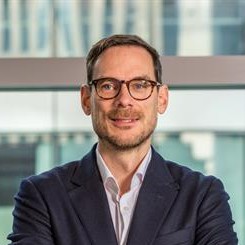
Stefan Haefliger is Professor of Strategic Management & Innovation at Bayes Business School, City, University of London. His research focuses on business model innovation, open strategy, and organization theory in technology-driven environments. Key research streams: Business model portfolios and corporate strategy diversification Organization theory and technology-mediated regulation Open strategy and innovation ecosystems His work examines how technology transforms organizational practices, with empirical studies on compliance systems in investment banks and digital infrastructure governance. Recent projects explore modularity in R&D teams, digital resilience, and human-AI interaction in organizations.
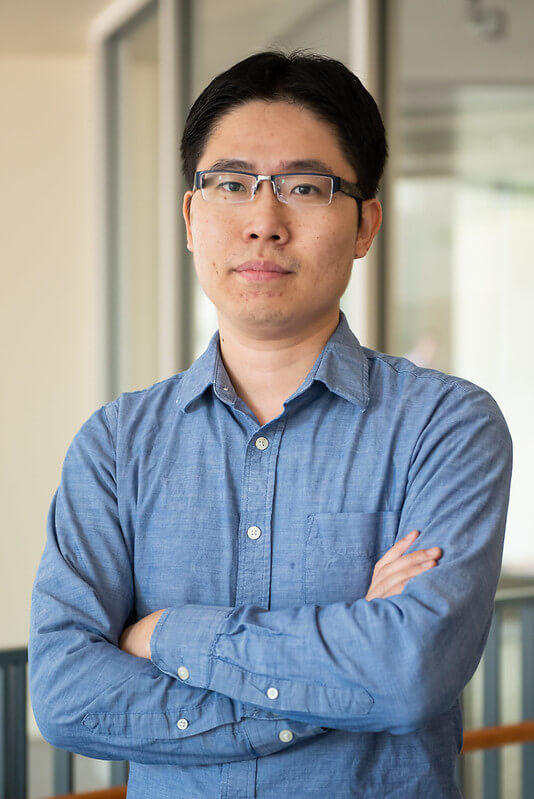
Xianyang Zhang is a Professor in the Department of Statistics at Texas A&M University, affiliated with the College of Arts & Sciences. He holds a Ph.D. from the University of Illinois at Urbana-Champaign (2013) and a B.S. from the University of Science & Technology of China (2008). His research focuses on high-dimensional statistics, functional data analysis, kernel methods, and genomics, supported by grants from NIH, NSF, and Texas A&M. Education: Ph.D., Statistics, University of Illinois at Urbana-Champaign, 2013 B.S., Statistics, University of Science & Technology of China, 2008 Research Interests: Xianyang Zhang develops statistical theories and methodologies for complex data structures, including high-dimensional inference, kernel-based testing, change-point detection, and microbiome analysis. His work bridges computational and theoretical statistics, addressing challenges in genomics, omics-wide studies, and spatial statistics. Key Contributions: Developed KDist , a package for kernel and distance-based statistical inference Authored fastcpd for efficient change-point detection Advanced covariate-adaptive FDR control methods for omics studies Contributed to microbiome analysis tools like MicrobiomeStat and LinDA Advising & Grants: Advises multiple Ph.D. students in statistics and interdisciplinary projects Recipient of NIH and NSF grants for high-dimensional statistical research Collaborates with institutions like Mayo Clinic and Chinese University of Hong Kong Labs/Teams: Leads research groups focused on statistical methodology development, software implementation, and applications in computational biology and genomics.
David Daney is a Senior Researcher (Directeur de recherche) at Inria and HDR-qualified academic, currently serving as Head of Science for the Inria Center at the University of Bordeaux since July 2024. He is the team leader of the Auctus research group, focusing on robotics, cobotics, and human-robot interaction. He is affiliated with Inria and the École Nationale Supérieure de Cognitique (ENSC) at the University of Bordeaux, within the College of Engineering and the Department of Robotics. His research interests include Robotics, Cobotics, Human-Robot Interaction, Human Posture Analysis, Cable-driven Robots, Parameters Identification, Calibration, Interval Analysis, and Haptic Guidance. His work bridges theoretical robotics with industrial applications, particularly in aerospace, automotive, and sustainable agriculture. He has led and participated in numerous industrial collaborations with Airbus, Stellantis, Solvay, AKKA, and Farm3. His recent publications (2023–2025) demonstrate a strong focus on human-robot physical interaction, including real-time capacity estimation (Pycapacity), haptic guidance, model predictive control for dynamic environments, and musculoskeletal modeling for collaborative robotics. These works appear in top-tier journals such as IEEE Transactions on Robotics, Journal of Biomechanical Engineering, and Robotics and Autonomous Systems. HDR (Habilitation à Diriger des Recherches) Principal Investigator of ANR Pacbot Head of Science for Inria Center at University of Bordeaux Erdös number = 3 David Daney supervises multiple PhD students, including Alicia Barsacq, Ahmed-Manaf Dahmani, and Alexis Boulay. He has been principal investigator in several research projects such as LiChIE and ANR Pacbot, focusing on satellite production and human-robot collaboration. He also leads the SHAARE associate team with KAIST’s IRiS lab, advancing shared haptic control. His team develops tools for teleoperation, ergonomic analysis, and robot calibration, with applications in industrial and assistive robotics. He leads the Auctus team at Inria, which develops control and analysis techniques for human-robot physical interaction. The team collaborates with KAIST (SHAARE), ONERA, Pprime Institute, and industrial partners. The MOVER project studies human motor variability for ergonomics, and the Farm3 collaboration explores teleoperated vertical farming robotics.
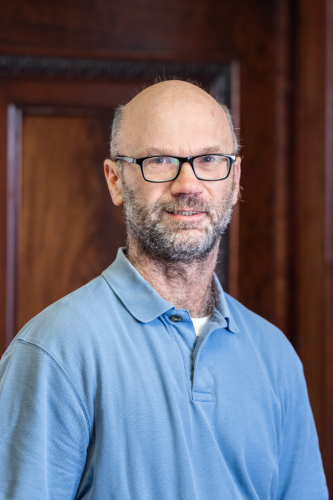
Mark Ainsworth is a Francis Wayland Professor of Applied Mathematics at Brown University and holds a joint faculty appointment with Oak Ridge National Laboratory. He obtained his PhD from Durham University (1989) and has held prominent roles such as Director of the Centre for Numerical Algorithms and Intelligent Software (2011-2012). His research focuses on numerical analysis, particularly finite element methods for partial differential equations, a posteriori error estimation, and high-performance computing challenges like resiliency on exascale systems. Education: PhD in Mathematics, Durham University, 1989 BSc in Mathematics, Durham University, 1986 Research Interests: Numerical approximation of PDEs A posteriori error estimation and adaptive methods High order finite element methods Resiliency of numerical algorithms on emerging architectures Fractional PDEs and scientific data compression Awards: SIAM Fellow (2014) FIMA (2010) Whitehead Prize (2004) J.L. Lions Prize (2004) Fellow of Royal Society of Edinburgh (2003) Grants & Leadership: Co-PI for ARO MURI on fractional PDEs (2015-2020) Directed NAIS center (2011-2012), a £5M multi-institutional initiative Organized major international conferences on computational mathematics Labs/Teams: Collaborations include Oak Ridge National Lab and international research networks in numerical analysis and scientific computing.
Pablo Parra Espada is an Associate Professor at the Department of Automática, University of Alcalá (Spain), affiliated with the Space Research Group (SRG-UAH). He holds a PhD from the University of Alcalá (2012) titled Integración de tecnologías de desarrollo y análisis basadas en componentes bajo un enfoque multi-plataforma , supervised by Dr. Sebastián Sánchez Prieto and Dr. Óscar Rodríguez Polo. His research focuses on space systems engineering , particularly in RISC-V processor design , embedded systems , and model-driven engineering . Key areas include hardware-software co-design for satellite systems, real-time computing, and fault-tolerant architectures. He has contributed to the Solar Orbiter mission through work on the Energetic Particle Detector (EPD) and its on-board software validation. His recent work emphasizes virtualization techniques for LEON processors, FPGA-based digital beamforming , and spaceborne phased array systems . He also explores model-driven approaches for automated configuration of ground support equipment. His interdisciplinary contributions bridge computer architecture with aerospace applications. Prof. Parra Espada has published extensively on topics such as hardware performance monitoring, memory management units for satellites, and system-level verification of space software. His work combines rigorous engineering methodologies with cutting-edge technologies to address challenges in space instrumentation and embedded systems.
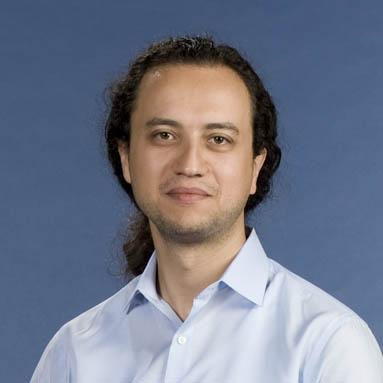
Cagdas Onal is an Associate Professor of Robotics Engineering at Worcester Polytechnic Institute (WPI). He holds a BS and MS from Sabanci University (2003, 2005) and a PhD in Robotics from Carnegie Mellon University (2009). His research focuses on soft robotics, bio-inspired systems, and control theory , emphasizing the development of flexible robotic components for healthcare, industry, and sustainable applications. He leads the Soft Robotics Lab and the Future of Robots in the Workplace (FORW-RD) initiative, advancing human-centric robotics solutions. Research interests include designing bio-inspired soft robots (e.g., origami-inspired snake robots), developing modular actuation systems with embedded sensors, and exploring applications in medical devices and assistive technology. His work aligns with UN Sustainable Development Goals, particularly in healthcare access (SDG 3), quality education (SDG 4), and innovation (SDG 9). Recent projects include origami-based robotic arms for wheelchair users , self-contained underwater robots, and haptic interfaces for teleoperation. His lab collaborates on国家级 grants like the NSF-funded NRT Program and has secured patents for actuator designs (e.g., Hydro Muscle). Labs/Teams: Soft Robotics Lab, FORW-RD, NRT Program. Notable media coverage includes Worcester Telegram & Gazette and Spectrum News for innovations in human-friendly robotics.
Garrett M. Morris is an Associate Professor in Systems Approaches to Biomedicine at the University of Oxford, affiliated with the Department of Statistics and Green Templeton College. He holds roles as Deputy Director of Graduate Studies, Co-Director of the SABS R³ Centre for Doctoral Training, and Research Fellow at Green Templeton College. His research focuses on computational chemistry, drug discovery, and AI integration in biomedicine. He earned his DPhil from Oxford under Prof. W. Graham Richards, with subsequent work at The Scripps Research Institute and Oxford spinouts like InhibOx and Crysalin. Research interests include protein-ligand docking, virtual screening, and machine learning applications in cheminformatics. Notable contributions include the AutoDock software and the FightAIDS@Home project. He co-organizes conferences like the Royal Society of Chemistry’s 'AI in Chemistry' and founded Comp Chem Kitchen. His lab, Oxford Protein Informatics Group (OPIG), develops novel methods for drug discovery and evaluates AI-based docking methods' validity (e.g., PoseBusters). Recent work critiques AI docking methods' physical plausibility and generalizability. He advises numerous graduate students in statistics and drug discovery, with alumni in academia, pharma, and venture capital. Publications span molecular generation, scoring functions, and computational tools for drug design. Collaborations emphasize reproducibility, responsible research, and cloud computing in biomedicine.
Matthew E. Wolak is an Associate Professor in the Department of Biological Sciences at Auburn University, where he leads a research group focused on evolutionary ecology and quantitative genetics. His work bridges empirical field studies, laboratory experiments, and computational modeling to understand how natural selection and inheritance shape phenotypic variation across generations. Education: Ph.D., University of California, Riverside (2013) B.Sc., The College of William and Mary (2007) His research interests center on ecology, evolution, and quantitative methods, particularly in understanding individual differences in morphology, performance, and behavior, and how these affect survival, mating success, and reproductive output. He investigates sexual dimorphism, inbreeding, genetic variance, and the evolutionary consequences of environmental change using both theoretical and data-driven approaches. His recent publications span top-tier journals and reveal a strong focus on meta-analysis, animal models, genetic inheritance, and conservation applications. Themes across his work include the genetic architecture of fitness, repeatability of behavior, and responses to anthropogenic pressures such as urbanization and climate change. Scientific Awards: NSF CAREER Award ($1.2 million) Dr. Wolak actively mentors students, as evidenced by his guidance of PhD candidates like Molly and Jorge. His research is supported by significant grants, including the NSF CAREER award, reflecting national recognition of his contributions. He teaches courses such as Principles of Ecology and Evolutionary Biology at both undergraduate and graduate levels. He is affiliated with the Wolak Research Group at Auburn University, which emphasizes scientific integrity, inclusivity, and collaborative research. The lab fosters a supportive environment committed to equity and academic excellence in evolutionary ecology.
Dr. Panagiotis Andriotis is a Lecturer in Computer Science at the School of Computer Science, University of Birmingham, within the College of Engineering and Physical Sciences. He is also a GIAC Certified Forensic Examiner (GCFE, GASF) and a Senior Fellow of the Higher Education Academy (SFHEA). His interdisciplinary research spans Cyber Security, Human Factors, and Mobile and Ubiquitous Computing. He teaches courses in Computer Science, Cyber Security, and Digital Forensics. His educational background includes a PhD in Computer Science from the University of Bristol (2016), an MSc with Distinction in Computer Science from the same institution (2011), and a BSc in Mathematics from the National and Kapodistrian University of Athens (2004). Dr. Andriotis’s research interests focus on user-centered security, particularly in mobile environments. He investigates how users interact with Android’s permission systems, develops novel authentication mechanisms like Bu-Dash, and explores adversarial machine learning in cybersecurity. His work bridges technical and human aspects, aiming to improve both system robustness and user experience. His recent publications reflect a strong trend in adversarial machine learning, mobile malware detection, usable privacy, and the societal implications of AI in education. He has contributed to high-impact journals such as IEEE Transactions on Cybernetics, ACM Transactions on Privacy and Security, and Elsevier’s Journal of Information Security and Applications. Best Paper Award at HCI International 2020 Impact Award, UWE Bristol Student Union GIAC Certified Forensic Examiner (GCFE) GIAC Advanced Smartphone Forensics (GASF) SANS Lethal Forensicator Coin Dr. Andriotis has advised PhD students, including Andrew McCarthy, and has been involved in funded research projects such as those related to fuzzing, software security, and critical infrastructure protection in collaboration with Airbus. He has served as an External Examiner at Cardiff Metropolitan University and is currently on the editorial boards of Digital Threats: Research and Practice (ACM) and the Journal of Responsible Technology (Elsevier). He has held visiting roles at the National Institute of Informatics in Tokyo, including as a JSPS Fellow and Toshiba Fellow. He leads research in digital forensics and security, with a lab focus on mobile ecosystems, behavioral modeling, and AI-driven threat detection. His team explores both technical and human dimensions of cybersecurity, contributing to tools and frameworks that enhance mobile security and user awareness.
Marcelo Coelho is a Design Tech Innovation Fellow and Visiting Lecturer at Cornell University's Department of Design Tech within the College of Architecture, Art, and Planning. He is also a Lecturer at the MIT Department of Architecture and Director of the MIT Design Intelligence Lab. His interdisciplinary work bridges artificial intelligence, industrial design, and human-computer interaction, with a focus on physical expression and collaboration between humans and machines. Ph.D., MIT Media Lab Faculty, MIT Department of Architecture Director, MIT Design Intelligence Lab Design Tech Innovation Fellow, Cornell University Marcelo Coelho's research centers on Artificial Intelligence, Machine Learning, Interaction Design, and Industrial Design . His work explores how computation can be embodied in physical forms to enable new modes of creative expression and interaction. He investigates the materiality of computation through installations, products, and large-scale performances that merge art, technology, and design. Projects such as Six-Forty by Four-Eighty and Resolution explore redefining digital pixels in physical space, while Window to the Heart and Beyond Vision demonstrate how computation can transform public experiences. His recent publications reflect a strong trend in physical AI and generative design , particularly in creating intelligent objects and environments that respond to human interaction. Themes include tangible interfaces, crowd-driven assembly, and shape-changing technologies, indicating a trajectory toward more embodied, situated, and collaborative forms of artificial intelligence in design contexts. Marcelo Coelho has received numerous accolades for his innovative work, including: Prix Ars Electronica awards (multiple) Design Miami/ Designer of the Future Award (2010) Red Dot Design Award Fast Company’s Innovation by Design Award Core77 Design Awards (2021, 2014) AIGA 50 Books | 50 Covers (2020) Webby Honoree (2020) Times Square Valentine Heart Design Winner (2018) He has led design initiatives at Formlabs as Head of Design, directing an international team across disciplines including industrial design, software, and mechanical engineering. His work has been exhibited globally at venues such as the Rio 2016 Paralympics, Times Square, Ars Electronica, and the Tel Aviv Museum of Art. He collaborates with artists like Vik Muniz and Aranda\Lasch, and his projects often involve public participation and community engagement. His labs and teams, particularly the MIT Design Intelligence Lab, focus on experimental design research at the intersection of computation and physicality.
Andreas Holzinger is a Professor at Graz University of Technology, with additional affiliations at Medical University Graz and University of Natural Resources and Life Sciences Vienna in Austria. He is recognized as an IFIP Fellow (2021) for his significant contributions to information processing and computer science. His work spans multiple institutions across Europe, with notable collaborations extending to the University of Alberta in Canada. Professor Holzinger's research focuses on Human-Centered AI, Explainable AI (XAI), and their practical applications across diverse domains. His work bridges theoretical AI advancements with real-world implementations in healthcare, forestry, and human-robot interaction. He has pioneered approaches in counterfactual explanations, graph neural networks, and human-in-the-loop systems that emphasize transparency and trustworthiness in AI decision-making processes. His recent publications demonstrate a strong trend toward integrating large language models with traditional AI systems while maintaining explainability. Holzinger's work consistently emphasizes the human element in AI systems, ensuring that technological advancements serve human needs rather than obscuring decision processes. His research in medical AI, smart forestry, and agricultural applications shows a commitment to solving practical problems with human-centered technological solutions. Scientific Awards: IFIP Fellow (2021) Professor Holzinger has been instrumental in establishing design guidelines for explainable AI systems, particularly through his work on post-hoc versus ante-hoc explanations. His research on Kandinsky Patterns has provided valuable experimental frameworks for pattern analysis and machine intelligence. He has secured significant research funding for projects bridging AI with practical applications in healthcare and environmental monitoring. His leadership extends to the organization of major conferences and workshops, including the CD-MAKE conference series, where he has fostered interdisciplinary collaboration between AI researchers and domain experts. His work on the CLARUS platform demonstrates practical implementations of interactive explainable AI for medical applications.
Prof. Dr. Matthias Krauledat is a faculty member at Hochschule Rhein-Waal , specifically within the Faculty of Technology and Bionics . His academic career spans both theoretical research and industrial application, with a focus on Machine Learning and Brain-Computer Interfaces . After completing his PhD in Electrical Engineering/Computer Science at Technische Universität Berlin , he has contributed significantly to the advancement of EEG-based communication systems and neural signal processing methodologies. Born in Essen, Germany Studied Mathematics with a minor in Computer Science at University of Münster/Oxford Doctoral research at TU Berlin on Brain-Computer Interfaces Industrial experience at Henkel AG & DMT GmbH Research Interests focus on Machine Learning applications in Neuroscience and Biomedical Engineering , specifically Brain-Computer Interfaces , EEG Signal Processing , and Adaptive Classification Systems . His work explores how algorithms can be developed to enable self-learning computers to solve complex tasks involving neural data interpretation and prediction for previously unseen data in clinical and technological contexts. Publications demonstrate a consistent contribution to Neuroscience and Machine Learning fields, with particular emphasis on Brain-Computer Interface systems from 2004 through 2009. His research has focused on reducing training requirements, improving signal processing accuracy, and developing novel interaction paradigms like the Hex-o-Spell mental typewriter while addressing statistical challenges like covariate shift in neural data analysis. Professional Experience includes academic research at TU Berlin's Intelligent Data Analysis group, industrial software development roles at Henkel AG's Scientific Computing department, and TÜV Nord Group's Optical Metrology and Machine Diagnostics divisions. He maintains active research connections through collaborative publications with leading experts in the field.
Baris Kasikci is an Associate Professor in the Paul G. Allen School of Computer Science & Engineering at the University of Washington. Previously (2017-2023), he was a Morris Wellman Assistant Professor in the Electrical Engineering and Computer Science Department at the University of Michigan. His research focuses on building efficient and trustworthy computer systems through innovative combinations of approaches from systems, computer architecture, and programming languages. Dr. Kasikci received his PhD in Computer Science at EPFL and has held research positions at Microsoft Research Cambridge, Google, Intel, and VMware. His work addresses critical challenges in system reliability, security, and performance in increasingly complex software ecosystems. His research interests center on improving the efficiency of datacenter applications and machine learning systems, analyzing and fixing failures, and enhancing hardware security. His lab develops techniques for automated bug detection, formal verification of distributed systems, and building systems support for heterogeneous hardware architectures. Recent projects include Whisper (profile-guided branch misprediction elimination), Huron (taming false sharing), and Agamotto (automatic detection and repair of bugs in persistent memory applications). Analysis of his recent publications shows a strong trend toward optimizing large language model serving, hardware security, and performance optimization for modern heterogeneous architectures. His work bridges traditional systems research with emerging AI infrastructure needs, particularly in efficient LLM serving, security vulnerabilities in modern hardware, and performance optimization for heterogeneous computing environments. NSF CAREER award Microsoft Research Faculty Fellowship Intel Rising Star Award VMware Early Career Faculty Grant Google Faculty Award Roger Needham PhD Award (best PhD thesis in computer systems in Europe) Patrick Denantes Memorial Prize (best PhD thesis at EPFL) Best Paper Award at OSDI'18 Best Paper Award at MICRO'22 Dr. Kasikci has advised numerous PhD students who have gone on to prestigious positions in academia and industry, including Tanvir Ahmed Khan (Assistant Professor at Columbia University), Akshitha Sriraman (Assistant Professor at CMU), and Jiacheng Ma (AMD). His research has been supported by significant grants from NSF, DARPA, Intel, Google, Microsoft, VMware, and Amazon. His lab, the EfesLab, focuses on building tools and techniques that make computer systems more reliable, secure, and efficient. The EfesLab, led by Dr. Kasikci, brings together postdocs, PhD students, and undergraduate researchers to tackle fundamental challenges in systems reliability and performance. The lab has developed numerous influential tools including Whisper, Huron, and Agamotto that address critical performance and reliability issues in modern computing systems. Current research directions include efficient LLM serving, security of emerging hardware technologies, and automated debugging techniques.
Frank NIELSEN is a Professor at École Polytechnique with expertise in information geometry, data science, and machine learning. He holds a PhD (1996) and HDR (2006) in computer science and has established himself as a leading researcher in geometric approaches to information science. His educational background includes a PhD in computer science (1996) followed by a Habilitation à Diriger des Recherches (HDR) in 2006, the highest academic qualification in France that qualifies one to supervise doctoral candidates. Dr. NIELSEN's research focuses on the Geometric Science of Information , where he develops theoretical frameworks for understanding data through geometric and information-theoretic lenses. His work bridges Computational information geometry Statistical manifold theory Bregman divergences and their applications Machine learning with geometric foundations High-dimensional data analysis He aims to address the challenge of inappropriate data representation in current Data Science by building a theory of Computational Information Geometry to enable Intrinsic Data Science with principled distances. His extensive publication record shows a clear trend toward developing geometric frameworks for understanding statistical divergences, with recent work focusing on Bregman geometry, Fisher-Rao metrics, and their applications in machine learning. His research spans theoretical developments in information geometry to practical implementations like the pyBregMan Python library, demonstrating both theoretical depth and practical relevance. Dr. NIELSEN has made significant contributions through his teaching and publications. He has taught courses at École Polytechnique including INF442, INF517, and INF591. His authored textbooks include Introduction to HPC with MPI for Data Science (2016), A Concise and Practical Introduction to Programming Algorithms in Java (2009), and Visual Computing: Geometry, Graphics, and Vision (2005). He has also edited influential volumes such as Computational Information Geometry for Image and Signal Processing (2016) and Geometric Theory of Information (2014). He actively organizes and participates in academic events, serving on program committees for major conferences including GSI (Geometric Science of Information), CVPR, and ICCV. His work has established him as a key figure in the growing field of geometric approaches to information science.