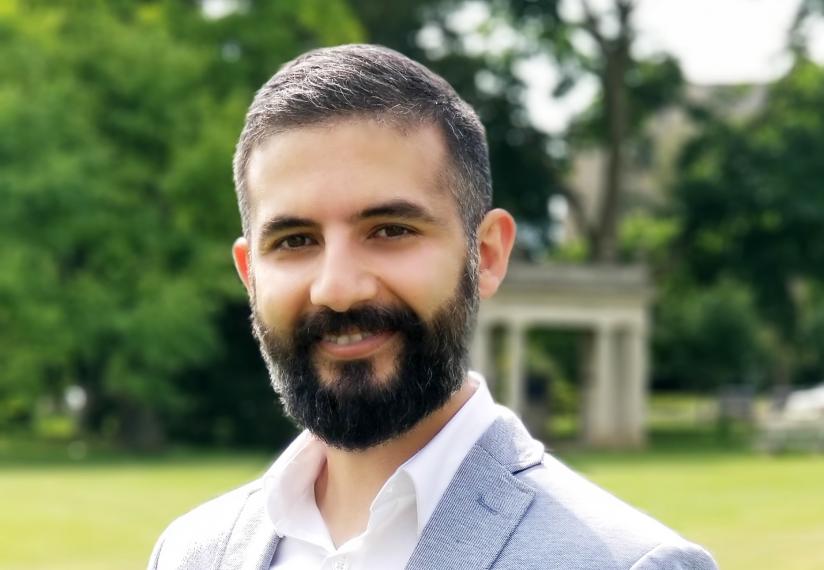
David Schlipf is a Professor at the Fachbereich Energy and Life Science, Hochschule Flensburg, leading the Wind Energy Technology Institute. His expertise spans lidar-assisted control systems, floating offshore wind turbines, and aeroelastic modeling. He actively collaborates with international initiatives like IEA Wind Task 32 and contributes to projects such as the 'Lidar Knowledge Europe (LIKE)' network. His research focuses on enhancing wind turbine efficiency through advanced control strategies and sensor technology integration. He has been instrumental in developing the TorqTwin open-source framework for multibody modeling and has published extensively on topics including wind field reconstruction, load mitigation, and floating platform dynamics. His work bridges academic research with industrial applications, emphasizing practical solutions for offshore wind energy challenges. Notable projects include the evaluation of lidar-assisted control performance, optimization of floating turbine designs, and contributions to wind energy education's role in climate resilience. His research outputs span over 200 publications, highlighting his global impact in advancing renewable energy systems.
Anna-Kaisa Hyrkkänen is a Researcher at Aalto University, specializing in research policy, academic career development, and bibliometrics. Her work focuses on improving responsible research metrics practices, tenure track recruitment, and diversity in career assessment criteria in Finland. She holds a Master's degree in Social Sciences from the University of Tampere (2008). Her research interests include analyzing occupational careers, institutional policies, and the ethical dimensions of research evaluation. She has contributed to national initiatives like the Finnish responsible metrics guide and collaborative projects addressing sustainable research practices. Key publications explore topics such as Finland's academic career assessment frameworks, tenure track professor recruitment at Aalto University, and the role of bibliometric tools in recruitment processes. Her work emphasizes institutional collaboration and policy-driven solutions for equitable research evaluation.
Janki Bhimani is a Professor and Director of the Data Management Research Lab (DaMRL) at the School of Computing and Information Science, Florida International University (FIU). Her research focuses on Memory and Storage Systems, Cloud Computing, Performance Modeling, and Applied Machine Learning. She holds a Ph.D. in Computer Engineering from Northeastern University (2019), an M.S. in Electrical and Computer Engineering (2016), and a B.S. in Electrical and Electronics Engineering from GITAM University (2013). Prior to FIU, she taught at Northeastern University and collaborated with Samsung Semiconductor Research Labs on flash-based SSDs. Her research interests include emerging memory technologies, high-performance computing, and datacenter reliability management. She leads innovative projects like Heimdall (machine learning for storage I/O optimization) and MoKE (modular key-value storage emulation). Awards include FIU Top Scholar and KFSCIS Excellence in Applied Research. Teaching highlights include CIS 3530 (Data Structures), CIS 5346 (Storage Systems), and EECE 2560 (Engineering Algorithms). Her work emphasizes bridging theory and practice, with patents on storage system optimization and machine learning integration.
Ramana Vinjamuri is an Associate Professor in the Department of Computer Science and Electrical Engineering at the University of Maryland, Baltimore County (UMBC). He holds a secondary appointment as Visiting Professor at the Indian Institute of Technology, Hyderabad, India. His academic journey includes a Ph.D. in Electrical Engineering from the University of Pittsburgh (2008), M.S. in Bioinstrumentation from Villanova University (2004), and B.Tech. in Electrical and Electronics Engineering from Kakatiya University (2002). Dr. Vinjamuri's research focuses on Brain-Machine Interfaces (BMIs) for upper-limb prostheses control , neuroprosthetics and exoskeletons , machine learning in motor control , and neurophysiological signal processing . His work extends synergy-based models to control 37-dimensional hand movements, addresses human-robot interaction through emotionally intelligent systems, and develops neurotechnologies for substance use disorder using wearable sensors and AI. NSF CAREER Award (2019) NSF IUCRC BRAIN Center Planning Grant (2020) Harvey N Davis Distinguished Teaching Assistant Professor Award (2018) His publications demonstrate expertise in EEG and EMG signal analysis , deep learning for motor decoding , synergy modeling , and humanoid robot control . The Vinjamuri Lab at UMBC involves graduate, undergraduate, and high school researchers, with international collaborations in India and the US.
Ling Zhao is a distinguished Professor at the School of Management, Huazhong University of Science and Technology, China, with extensive research contributions spanning artificial intelligence, machine learning, information systems, and biomedical applications. With over 150 publications since 2008, Dr. Zhao has established herself as a leading researcher in multiple interdisciplinary domains, particularly in applying computational methods to solve complex real-world problems. Dr. Zhao's research interests encompass a broad spectrum of cutting-edge topics including artificial intelligence, machine learning, data mining, control systems, and information systems. Her work demonstrates exceptional versatility, bridging theoretical computer science with practical applications in healthcare, transportation, cybersecurity, and business management. Notably, she has made significant contributions to sentiment analysis, medical image processing, algorithmic management, and privacy-preserving data analysis. Her research methodology often combines deep learning approaches with domain-specific knowledge to develop innovative solutions. Analysis of Dr. Zhao's recent publications (2023-2025) reveals a strong focus on interdisciplinary applications of AI, with particular emphasis on healthcare informatics (medical image analysis, disease diagnosis), human-computer interaction (algorithmic management effects), and advanced machine learning techniques (graph neural networks, multimodal learning). Her work shows a consistent trend toward increasingly complex and integrated systems that address real-world challenges across multiple domains. Dr. Zhao has made substantial contributions to academic advising and research mentorship, though specific student names aren't detailed in the available publications. Her research has been supported by various grants enabling work in AI applications, biomedical engineering, and information systems. Dr. Zhao maintains active collaborations with researchers across China and internationally, as evidenced by her co-authorship patterns. While specific laboratory information isn't explicitly mentioned in the publication records, Dr. Zhao appears to lead or be significantly involved in research groups focusing on AI applications in management and healthcare. Her work on medical imaging, sentiment analysis, and control systems suggests involvement in multiple specialized research teams addressing different application domains through computational approaches.
Alex Kale is an Assistant Professor of Computer Science at the University of Chicago and a core member of the Data Science Institute. His research focuses on data visualization and human-computer interaction, emphasizing tools that explicitly represent users' cognitive processes during data analysis. He leads the Data Cognition Lab, exploring software for uncertainty visualization, causal inference, and decision-making support. Kale holds a PhD in Information Science from the University of Washington (2022), an MSc from UW (2020), and a BSc in Psychology with minors in Music and Philosophy (2015). Affiliations: University of Chicago, Data Science Institute, Data Cognition Lab Education: PhD, UW (2022); MSc, UW (2020); BSc, UW (2015) Research interests include human-computer interaction, statistical reasoning interfaces, and systems for managing large-scale data. He has developed tools like MetaExplorer for meta-analysis and EVM for exploratory visual modeling. Key awards include the Best Paper Honorable Mention at CHI 2023 and VIS 2021, and the Best Paper Award at VIS 2020. His work bridges visualization design, decision theory, and cognitive science, with applications in participatory budgeting, causal inference, and reproducible research. Courses taught include Visualization for Data Science and Statistical Rethinking.
Dr. Amanda Gigliotti is a Senior Lecturer at the School of Education, University of Wollongong , with expertise in technology-enhanced learning and teacher design practice. Her research investigates how educators integrate technology into pedagogy, focusing on design decisions and professional development. Current role (2025–present): Senior Lecturer, University of Wollongong Previous appointments: Lecturer (2023–2024), Career Development Fellow (2020–2023) PhD in Education (2020), Bachelor of Primary Education (Honours) (2011) Her work emphasizes inclusive digital learning , with grants totaling $292,797.25 as lead investigator. She co-authored 6 journal articles, 2 book chapters, and 2 reports, often collaborating on topics like online curriculum design and WIL simulations. Key awards include the University of Wollongong's Vice Chancellor (Early Career) Award for teaching excellence. She chairs UOW’s Early Career Researcher Committee and founded ASSH’s Early Career Academic Network, mentoring over 100 international academics.
Simon Colreavy Donnelly is an Associate Professor in the Department of Computer Science & Information Systems at the University of Limerick. He is a member of the Interaction Design Centre and focuses on interdisciplinary research at the intersection of artificial intelligence, educational technology, and healthcare informatics. His work spans machine learning applications in medical data analysis, virtual reality (VR) and extended reality (XR) for inclusive education, and deep learning techniques in chemical analysis and spectroscopy. Research Interests: His primary areas of investigation include generative AI for education equity, semisupervised learning algorithms, virtual learning environments design, and the ethical deployment of immersive technologies in healthcare and palliative care. He also explores NMR spectroscopy analysis using deep learning and develops tools for nutritional content estimation through image processing. Collaborations: His recent collaborations span international teams addressing challenges in toxicity-free online discourse (PAN 2024), semisupervised learning distribution mismatches, and VR applications for post-pandemic blended learning. His work integrates computational methods with real-world applications in education, healthcare, and chemical analysis. Labs/Teams: Active within the Interaction Design Centre at UL, his research group develops practical solutions for accessibility in digital education and healthcare systems, emphasizing user-centered design principles for extended reality applications.
Georg Langs is a Full Professor of Machine Learning in Medical Imaging at the Medical University of Vienna and Founding Director of the Computational Imaging Research Lab (CIR). He leads a 25-member interdisciplinary team focusing on machine learning methodologies for medical image analysis. Key roles include Director of the Joint Initiative on AI in Medical Imaging (European Institute of Biomedical Imaging Research) and Scientific Lead of the Respiratory Disease Phenotype Observatory (ZODIAC, UNO/IAEA). He is affiliated with MIT’s CSAIL and serves on advisory boards for global AI initiatives. Education: PhD in Computer Science, Graz University of Technology (2007) M.Sc. in Mathematics, Vienna University of Technology (2003) Research Interests: Machine learning-driven precision imaging, neuroimaging, clinical data phenotyping, and cross-species brain connectivity analysis. His work bridges imaging biomarkers with biological mechanisms and large-scale clinical data integration. Grants & Funding: Over €6M in competitive grants as Principal Investigator in the last two years. Projects include ARTEMIS (fatty liver disease digital twins) and AI-POD (personalized risk scores via imaging). Awards: 2022 IS3R Emerging Leaders Club 2022 National Academy of Medicine Emerging Leader Programme 2018 Advisor, AI Mission Austria 2030 Lab & Teams: CIR Lab focuses on AI-driven medical imaging solutions. Co-founded contextflow GmbH , a MedUni spin-off developing AI software for imaging analysis.
Patrick T. Brandt is a Professor of Political Science, Public Policy, and Political Economy at the University of Texas at Dallas , affiliated with the School of Economic, Political and Policy Sciences . His work integrates advanced statistical methods with political science, focusing on time series analysis, machine learning, and Bayesian modeling to study political dynamics. His research spans international relations , political economy , terrorist targeting , and conflict forecasting . He specializes in developing novel models for event count time series, including the Bayesian Poisson Vector Autoregression and MS-BVAR packages for R. His NSF-funded projects focus on event data generation and real-time conflict forecasting. Recent publications emphasize domain-specific language models (ConfliBERT variants), graph neural networks for conflict prediction, and machine translation challenges in political text analysis. He maintains the OpenEvent Data Repository and develops software like MSBVAR and PESTS for academic use. Scientific Awards : Robert H. Durr Award for Best Methodology Paper, Midwest Political Science Association (2006)
Afshin Ashari is an Assistant Professor in Landscape Architecture at the School of Environmental Design and Rural Development , University of Guelph. Prior to academia, he worked at BrookMcIlroy Inc., an interdisciplinary firm in Toronto, on architectural and landscape projects in public and private sectors. Education : Masters in Landscape Architecture, University of Toronto Bachelor of Computer Engineering, Azad University of Tehran Research Interests : Afshin explores the intersection of computational design and mixed-reality environments, focusing on: Art-Technology Unity in Public Spaces Algorithmic and Parametric Modeling Data-Driven Design Approaches Interactive Immersive Environments Biophilic Design Agricultural Urbanism Article Trends : His publications emphasize: AI tools for design processes Parametric modeling in urban rehabilitation Climate change communication via social media Drones for visual impact assessments Augmented reality in public spaces Historical and future-oriented design frameworks
Zhan Ma is a Professor and PhD Advisor at the School of Electronic Science and Engineering, Nanjing University. He leads research in Neural Video Communication, Smart Cameras, and Computational Vision Models. His work focuses on end-to-end learning for compression, networking, and hardware-software co-design. Dr. Ma holds a PhD from New York University's Tandon School of Engineering (2010), and prior to his current role, he served as Senior Staff Researcher at Huawei (2013-2015) and Senior Researcher at Samsung (2011-2013). Research highlights include pioneering work in point cloud compression (adopted into IEEE standards) and dual-camera systems for high-resolution video acquisition. His algorithms are deployed in WeChat/WeChat Video for rate-quality optimization and in ISO standards for video complexity indicators. Recent work emphasizes machine learning-driven approaches for image/video compression and adaptive streaming frameworks. Honors include the 2023 IEEE CAS Society Outstanding Young Author Award and multiple best paper awards at IEEE WACV, BMSB, and other venues. He leads the Vision Lab at Nanjing University and collaborates with industry partners on practical implementations of his research.
Adrien Depeursinge is a Professor at HES-SO Valais-Wallis - Haute Ecole de Gestion, affiliated with the School of Economics and Services and the Management Information Systems department. His research focuses on radiomics, personalized medicine via image-based analysis, and clinical workflow optimization. He leads the development of the QuantImage platform, a physician-centered web-based tool for radiomics research, and contributes to radiomics standardization efforts through initiatives like the Image Biomarker Standardization Initiative (IBSI). His work emphasizes machine learning applications in healthcare, including tumor segmentation, biomarker extraction, and improving diagnostic accuracy through computational models. Key research themes include: 1) Radiomics – developing quantitative imaging features for cancer diagnosis/prognosis; 2) Medical Imaging Analysis – advancing texture-based models, multi-modal fusion, and automated lesion detection; 3) Physician-AI Collaboration – designing user-centric tools for clinical integration. His contributions span neuro-oncology (brain metastases), head-and-neck cancer, and multiple sclerosis imaging. Publications emphasize methodological advancements (e.g., kernel optimization in CNNs, steerable detectors) and clinical validation (e.g., reproducibility of radiomics features across imaging protocols). He collaborates with institutions like the University Hospital of Lausanne (CHUV) and international teams on projects like the HECKTOR challenge for PET/CT tumor segmentation. His work bridges technical innovation with clinical impact, aiming to translate radiomics into actionable clinical tools. QuantImage v2, his flagship tool, enables no-code development of machine learning models using clinical imaging data. Research also includes phantom-based validation of radiomics features and addressing challenges in feature stability across imaging modalities. Current projects explore improving contour quality for radiomics studies and optimizing AI explainability in medical decision-making.
Claire Dambrin is a Professor of Management Control at ESCP Business School, specializing in qualitative and critical research rooted in the social studies of accounting and control. She investigates performance measurement tools, including accounting systems and incentive frameworks, with a focus on gendered aspects and feminist perspectives. Her work explores how these tools can both empower and constrain individuals. She earned her PhD from Paris Dauphine University in 2005 and previously served as a professor of accounting at HEC Paris (2004–2012). Her research contributions span leading journals in accounting and management. She holds editorial roles at Accounting, Organizations and Society , Management Accounting Research , and Critical Perspectives on Accounting , and co-edits Comptabilité Contrôle Audit / Accounting Auditing Control . Her research interests include performance measurement systems, organizational sociology, and gender studies in business contexts. She critically examines how metrics shape organizational behavior and societal structures, particularly in the pharmaceutical industry and professional service sectors. Her recent work interrogates sustainability, ethical dimensions of control, and technological mediation in management practices. Key projects address topics such as ERP system lifecycle dynamics, CRM software adoption barriers, and the sociopolitical implications of quantification. Her contributions bridge theoretical frameworks (e.g., Latour’s actor-network theory) with empirical insights to challenge conventional managerial practices.
Dr. Marcus Dillender is an Assistant Professor in the Department of Economics at Vanderbilt University, a Faculty Research Fellow at the National Bureau of Economic Research (NBER), and a Research Fellow at the IZA Institute of Labor Economics. His research focuses on the intersection of health, labor, and public economics, with particular attention to occupational health, workers' compensation insurance, and healthcare labor markets. PhD in Economics from the University of Texas at Austin (2013) Prior affiliations: W.E. Upjohn Institute for Employment Research, University of Illinois at Chicago School of Public Health Dr. Dillender's recent work investigates gender disparities in medical evaluations and policy impacts on healthcare markets . He has also studied the effects of air pollution on workplace safety , computerization on employment , and public health funding efficacy . His research appears in journals such as the Journal of Health Economics and Journal of Public Economics. Office hours: Tuesdays, 3-5pm at Vanderbilt University.