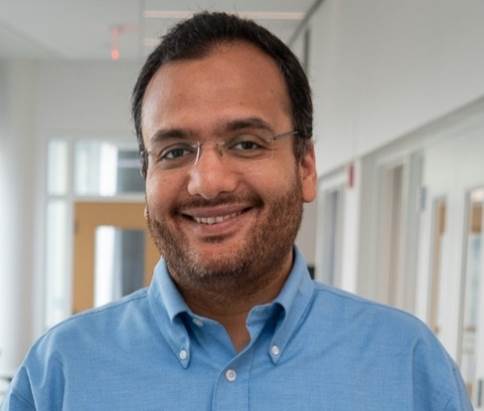
Vipul Goyal is an Associate Professor at the Computer Science Department of Carnegie Mellon University and a Senior Scientist at NTT Research in California. He is on leave from CMU since joining NTT Research in June 2020 after a 7-year tenure at Microsoft Research. His research focuses on Cryptography , Quantum Cryptography , Security & Privacy , and Theoretical Computer Science , supported by grants from NSF, DARPA, Department of Energy NETL, JP Morgan, Cisco, PNC, Ripple, and CyLab initiatives.
Juan Carlos De Martin is a Full Professor of Computer Engineering at the Polytechnic of Turin, where he is also co-founder and co-director of the Nexa Center for Internet & Society. He holds a Faculty Associate position at the Berkman Klein Center for Internet & Society at Harvard University and is a member of the Scientific Council of the Treccani Institute and the Steering Committee of Biennale Democracy. He previously served as Vice Rector for Culture and Communication at the Polytechnic of Turin (2018–2023) and as president of its libraries (2007–2015). His research centers on the societal implications of digital technologies, with a strong emphasis on algorithmic and data justice, digital power, and the democratic challenges posed by modern technology. He advocates for a more democratic and ethical technological future, particularly critiquing the dominance of smartphones and promoting digital sovereignty. His recent publications reflect a clear trend toward ethical AI, data protection, and the social impact of algorithms. He has published on gender bias in language models, GDPR compliance tools, and non-discrimination audits in software, demonstrating a sustained commitment to fairness, transparency, and accountability in digital systems. Best Student Paper Award IEEE ISCC 2011 Best Student Paper Award IEEE ICME 2005 Fellow at Harvard University (Berkman Klein Center) (2011–2015, 2016–2024) Faculty Associate at Collège d'études mondos, France (2016) De Martin has advised PhD students like Marco Rondina on Responsible AI and has led numerous EU-funded research projects such as COMMUNIA and DECODE. He has also played a key role in public policy, serving on ministerial working groups on AI and online hate. He is the founder of the Biennale Tecnologia and has authored influential books on the future of universities and technology, all published under Creative Commons licenses. He leads the Nexa Center for Internet & Society, a multidisciplinary research group focused on the legal, economic, and social aspects of the Internet. The center fosters collaboration between computer scientists, legal scholars, and social scientists to address pressing digital challenges.
Blayne Haggart is a Professor in Political Science at Brock University, Canada. His research focuses on the international political economy of knowledge, particularly intellectual property rights, data governance, and internet governance. He previously worked as a professional journalist and economist with the Parliamentary Information and Research Service before transitioning to academia. BA (Carleton University) MA (University of Toronto) MA (Carleton-NPSIA) PhD (Carleton University) Dr. Haggart's current research explores: International Political Economy frameworks Digital policy and governance Intellectual property rights in the digital age North American political economy dynamics Intersections between sports and politics His scholarly work has been published in leading journals including: Canadian Public Administration Telecommunications Policy Journal of Digital Media & Policy Journal of Information Policy Dr. Haggart serves as: Senior Fellow with the Centre for International Governance Innovation Associate Senior Fellow with the Käte Hamburger Kolleg/Centre for Global Cooperation Research
Dr Harrison Smith is a Lecturer in Digital Media & Society at the University of Sheffield's School of Sociological Studies, Politics and International Relations. He holds a PhD from the University of Toronto’s Faculty of Information, alongside MA and BA degrees in Sociology from Queen’s University, Canada. His research focuses on the political economy of data analytics, particularly in smart cities and consumer surveillance contexts. Education: PhD in Information Studies, University of Toronto (Canada) MA in Sociology, Queen’s University (Canada) BA (Hons) in Sociology, Queen’s University (Canada) Smith’s research examines how data infrastructures shape socio-economic inequality through processes like surveillance, classification, and market segmentation. Key areas include location-based marketing, 5G data infrastructures, and industry consolidation in data analytics. His work critiques how digital technologies reconfigure urban spaces and labor markets, particularly in 'smart city' contexts. Recent publications explore the metaverse's industrial implications, blockchain’s role in dispute resolution, and surveillance practices at music festivals. His teaching includes leading the module SCS2016: The Sociology of the Media. Smith’s expertise bridges media theory, urban informatics, and critical data studies, emphasizing ethical and political dimensions of digital technologies in everyday life.
Dr. Reuben Binns is an Associate Professor of Human Centred Computing at the University of Oxford , where he investigates intersections between computer science, law, and philosophy. His research focuses on data protection , machine learning ethics , and regulation of technology .
Dr. Vivek Nallur is an Assistant Professor in the School of Computer Science at University College Dublin. His research focuses on Machine Ethics, Multi-Agent Systems, emergence in socio-technical systems, and decentralized adaptation mechanisms. He holds a PhD from the University of Birmingham and advanced certifications in university teaching from UCD. Education: BBS, Delhi University Post-Graduate Diploma in Advanced Software Technology, National Centre for Software Technology MS, Carnegie Mellon University PhD, University of Birmingham Prof Cert University Teaching & Learning, University College Dublin Research Interests: Machine Ethics explores ethical decision-making in autonomous systems, while Multi-Agent Systems (MAS) are his primary tool for studying self-adaptation and emergence. He serves on key committees like IEEE P7008 (Ethically Driven Nudging) and the AAAI 2021 Spring Symposium on AI Ethics. His work bridges computer science with philosophy, law, and social sciences. Advising & Grants: Supervises three PhD students focusing on ethical AI, elder-care robotics, and AI governance. Leads the Machine Ethics Research Group and participates in the ML-Labs SFI grant (2019–2027). Professional Roles: Senior Member of IEEE, organizer for AAAI ethics symposia, and contributor to OpenAAL's ELSI panel. Teaches modules on Machine Learning, Operating Systems, and Web Development.
Ben Green is an Assistant Professor in the University of Michigan School of Information and a courtesy Assistant Professor in the Gerald R. Ford School of Public Policy. He holds a PhD in Applied Mathematics from Harvard University with a secondary focus on Science, Technology, and Society. His research examines algorithmic ethics, fairness, and governance, aiming to reduce harms and advance social justice. Notable works include The Smart Enough City (2019) and his forthcoming Algorithmic Realism . He is affiliated with the Berkman Klein Center for Internet & Society at Harvard and the Center for Democracy & Technology. Education: PhD in Applied Mathematics, Harvard University (with secondary field in Science, Technology & Society) BS in Mathematics & Physics, Yale University Research Interests: Algorithmic fairness in public policy Human-algorithm interaction dynamics Regulatory frameworks for AI Equity-centered data science practices Urban technology policy His recent publications explore themes like the limitations of human oversight in algorithmic systems, the sociotechnical challenges of implementing ethical AI, and the intersection of legal reasoning with computational systems. His writing emphasizes actionable solutions to systemic biases in algorithmic governance. Ben’s current projects include advancing algorithmic realism – a framework for grounding data science in socially just practices – and analyzing how counterfactual explanations influence judicial decisions. He serves on multiple interdisciplinary advisory boards and frequently collaborates with policymakers to translate research into actionable strategies.
Yinzhi Cao is an Associate Professor at the Johns Hopkins University Department of Computer Science . He serves as Technical Director of the Johns Hopkins Information Security Institute and is affiliated with the Data Science and Artificial Intelligence Institute and the Institute for Assured Autonomy . Cao joined JHU in 2018 from Lehigh University, where he was an Assistant Professor. Doctor of Philosophy (PhD) in Computer Science, Northwestern University (2014) Bachelor of Engineering (BE) in Electronic Engineering, Tsinghua University (2008) Research Interests focus on security and privacy of web, mobile, and machine learning systems . Key projects include Vulnerability Analysis of Web Applications and Security, Privacy, and Fairness Analysis of ML Systems . His work addresses prototype pollution in JavaScript, node.js vulnerabilities, browser fingerprinting, federated learning privacy, and automated exploit generation. Scientific Recognition includes the NSF CAREER Award (2021) DARPA Young Faculty Award (2022) & Director's Fellowship (2024) Amazon Research Awards (2022, 2017) IEEE Security & Privacy Test of Time Award (2025) Distinguished Paper Awards at IEEE S&P 2025, CCS 2023, USENIX Security 2022 Advising & Grants highlight mentorship of 20+ PhD and Master’s students across institutions. Major grants include $1.2M collaborative CICI TCR grant (2024-2026) with Dr. John Aucott $750K DARPA YFA grant (2022-2025) $500K NSF SaTC grant (2022-2025) NSF EAGER grant (2016-2017) Labs & Teams : Affiliated with Johns Hopkins Information Security Institute , Data Science AI Institute , and Institute for Assured Autonomy . Collaborates with institutions like Columbia, UC Santa Barbara, and SRI International. His group investigates real-world vulnerabilities in over 2,500 websites and NPM packages, uncovering 80+ zero-day issues.
Rui Pedro Figueiredo Marques is a Professor at the Higher Institute of Accounting and Administration, University of Aveiro, where he teaches Information Systems across technical, bachelor's, master's, and doctoral programs. He serves as course director for the Professional Higher Technical Course in Organizational Informatics and Communication and holds a board position at the Institute of Accounting and Administration, University of Aveiro. As a Full Researcher at GOVCOPP's Competitiveness, Innovation and Sustainability (CIS) group, his work focuses on Information Systems for Business, with recent emphasis on AI, Blockchain, and Business Intelligence applications in auditing and accounting contexts. Marques' academic credentials include a Ph.D. in Computer Science (2014, Universities of Minho/Aveiro/Porto), a Master's degree (2008), and a Bachelor's in Electronics and Telecommunications Engineering (2005, University of Aveiro). He has authored/co-authored over 50 publications, including journal articles, conference papers, and book chapters on topics ranging from ERP systems in auditing to digital transformation in low-density territories. He is editor-in-chief of the International Journal of Business Innovation and actively participates in funded research projects addressing governance, competitiveness, and public policies. His research explores intersections between technology and business practices, with notable contributions to AI in auditing, blockchain's role in financial transparency, and sustainable development frameworks for social economy entities. Notable projects include evaluations of ERP systems' impact on internal audit maturity and frameworks promoting accountability in private social solidarity institutions. Marques' work frequently emphasizes practical applications of technology in audit processes, education, and public sector modernization. He collaborates with institutions like the Portuguese Social Solidarity Sector and has advised on digital transformation strategies for tourism and hospitality industries.
Mustafa Aksu is a Professor at Istanbul University's Faculty of Law, Department of Civil Law. His research spans Civil Law , Intellectual Property Law , Information Law , and EU Legal Harmonization . He has advised 26 theses and published extensively on digital rights, family law, and obligations law. Research Interests: Focus on AI and law, copyright exhaustion in digital markets, EU-Turkey legal alignment, domain name regulation, and protection of computer programs. Publications: Recent works include AI's legal frameworks (2023), medical informatics law (2021), and digital exhaustion doctrine (2016). His research emphasizes cross-border IP enforcement and EU court precedents. Contact: Email aksum@istanbul.edu.tr | Office: Hukuk Fakültesi Binası, İkinci Kat, Oda No: 38, Beyazıt, Istanbul, Turkey.
Arun Rai serves as Regents’ Professor and Howard S. Starks Distinguished Chair at Georgia State University's Robinson College of Business, where he co-founded and directs the Center for Digital Innovation. His career spans interdisciplinary research bridging information systems with societal impact through industry-university collaborations across global sectors. His educational foundation includes: Ph.D. from Kent State University MBA from Clarion University of Pennsylvania M.S. from Birla Institute of Technology & Science Rai's research explores digital innovation , AI governance , and societal impacts of technology through investigations of platform ecosystems, supply chain transformation, and digital solutions for poverty and health disparities. His work uniquely connects technical systems design with behavioral and organizational outcomes across contexts from rural India to global corporations. Recent publications (2023-2025) reveal intensifying focus on AI-human collaboration , digital risk assessment , and platform governance tensions , with growing emphasis on healthcare applications and equity implications. The trajectory shows evolution from organizational IT adoption toward complex sociotechnical systems addressing global challenges. His scientific recognition includes: Fellow of the Association for Information Systems Distinguished Fellow of the INFORMS Information Systems Society LEO Award for Lifetime Exceptional Achievement Rai has mentored over 60 doctoral students (30+ as chair) with alumni now holding leadership positions globally. His research attracts major funding from Apollo Hospitals, China Mobile, IBM, Intel, UPS, and federal agencies, enabling real-world implementations like the Global Supply Chain Solutions Program during UPS's digital transformation. Current initiatives focus on generative AI in education and healthcare IT policy impacts. As director of the Center for Digital Innovation, he cultivates cross-sector partnerships advancing digital transformation through collaborative research on AI governance, platform ecosystems, and societal impact measurement.
Dr. Asier Moneva is a Postdoctoral Researcher at the Netherlands Institute for the Study of Crime and Law Enforcement (NSCR) and The Hague University of Applied Sciences , specializing in cybercrime , environmental criminology , and situational crime prevention . His work focuses on offender decision-making in cyberspace, cybercrime victimization patterns, and the application of data science to crime analysis. Education : PhD in Criminology (2020), Master in Crime Analysis and Prevention (cum laude, 2017) from Miguel Hernández University. Current Role : Analyzing cybercrime patterns through environmental criminology frameworks and data science methodologies. Moneva's research examines longitudinal offending patterns in cybercrime, particularly through analyses of web defacement archives ( Zone-H data) and hacker behavior. His studies reveal extreme concentration of cybercrime among chronic offenders, with 2.9% of hackers responsible for 68.5% of defacements. He also investigates repeat victimization dynamics in digital environments and the effectiveness of warning banners as deterrents. Recent publications focus on ransomware payment decisions by SMEs, stolen data markets on Telegram, and the intersection of familial relationships with cybercrime involvement. His work combines quasi-experimental designs , crime scripting , and conjunctive analysis to develop prevention strategies.
Dr. Andrea K. Rorrer is a full-time Professor at the University of Utah's College of Education, Department of Educational Leadership and Policy, and serves as Director of the Utah Education Policy Center (UEPC). With 35 years of education experience, she has held roles as a teacher, principal, policy analyst, and researcher. Her academic career at the University of Utah includes promotions from Assistant Professor (2002-2009) to Associate Professor (2009-2014) and Professor since 2014, alongside serving as Associate Dean for Research from 2014-2023. PhD in Educational Leadership & Policy, University of Texas at Austin (2001) MS in Educational Leadership & Policy, University of Virginia (1995) Dr. Rorrer's research focuses on the intersection of educational leadership, policy implementation, and systemic change with equity as a central theme across early childhood, K-12, and higher education. Her work examines leadership preparation programs, charter school effectiveness, policy mediation, and institutional factors affecting educational outcomes. Recent publications highlight: Leadership preparation program features influencing career intentions (2025) Personalized learning software's impact on teacher-student dynamics (2024) Turnaround reform frameworks (2018) Charter school mobility patterns (2019) Homeschool policy analysis (2012) Scientific recognition includes: UCEA Master Professor Award (2020) College of Education Research Award AERA Dissertation Award (2001) Culbertson Award for early-career contributions Mentorship has been central to her career, with 35 doctoral chairs and 44 committee memberships since 2002. Current teaching activities include Thesis Research and Ed.D. Capstone Project courses.
Christine Cheng serves as Assistant Professor of Accountancy at the University of Mississippi's Patterson School of Accountancy, specializing in Tax and Data Analytics. She previously held a visiting scholar position at the Securities and Exchange Commission Division of Economic and Risk Analysis (2020-2022) and currently contributes to the Financial Accounting Standards Board Taxonomy Advisory Group. Her academic credentials include: Ph.D. in Business Administration from Pennsylvania State University (2011) M.B.A. in Business Administration from Pennsylvania State University Harrisburg (2003) Dr. Cheng's research examines machine-readable financial reporting determinants, tax-influenced decision making, and the intersection of tax analytics with corporate strategy. Her work bridges theoretical accounting frameworks with practical data science applications, particularly in post-Wayfair e-commerce taxation and marriage tax policy analysis. She employs advanced tools like Alteryx and robotic process automation to model complex tax scenarios. Publication trends reveal a strategic shift toward data-driven tax education and regulatory compliance, with 60% of recent work integrating analytics into financial reporting. Her articles frequently address real-world policy impacts, such as same-sex marriage tax implications and hail damage fraud detection, demonstrating applied relevance to both academic and practitioner audiences. Major recognitions include: 2023 Public Interest Section Best Paper Award (American Taxation Association) 2023 Graduate Teacher Award (American Accounting Association) Three ATA/Deloitte Teaching Innovation Awards (2019-2022) 2019 Best Article Award from The Tax Adviser As an educator, she pioneered Ole Miss's Master's of Taxation and Data Analytics program and maintains a YouTube channel with 200+ instructional videos. Her advising includes master's student Taylor, J. (lead author on a 2015 publication), and she has secured multiple curriculum development grants through Deloitte partnerships. Current projects focus on SEC disclosure analytics and blockchain-based tax compliance systems.
Susan Scott is an Associate Professor in the Information Systems and Innovation Group at the Department of Management of The London School of Economics and Political Science. Her research focuses on the intersection of digital innovation and organizational change, particularly examining how information systems reshape work practices and risk management in financial services, travel, and publishing sectors. Education : PhD in Management Studies (University of Cambridge, 1993-1998), MSc in Analysis, Design and Management of Information Systems (LSE, 1991-1992), BA in History and Politics (SOAS, 1987-1990) Research Interests Digital Innovation Work Practices and Organizational Structuring Organizational Technologies Strategy, Structures, and Information Infrastructures Managing Change Materiality and Practice Research Her recent publications analyze the materiality of digital systems through case studies in book publishing and travel , while historical studies trace the evolution of financial infrastructure like SWIFT . She explores how metadata, software standards, and social media reshape organizational accountability and risk practices. Scientific Awards ICIS Best Paper in Field Award (2007) Nordic Exchange Scholarship (2000-2001) ESRC PhD Scholarship (1993-1996) Best Paper Nominations (Academy of Management, ECIS, ICIS) Selected for European Research Paper of the Year (2014, 2015) Grants and Professional Roles Recipient of grants from SWIFT , British Academy , and HEFCE . She has served on editorial boards of Information and Organization and Organization Science , and co-chaired conferences like IFIP 8.2 and ICIS .