University of Illinois Urbana-ChampaignUnited States
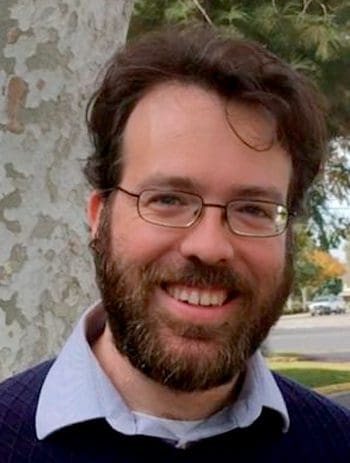
Mayandi Sivaguru is a Researcher at the Biotechnology Center of the University of Illinois . His work bridges biomedicine, geobiology, and advanced imaging techniques. Research interests include: Biomedical applications of biomineralization (e.g., breast calcifications, cardiovascular calcification, kidney stones) Advanced microscopy techniques (SHG, Airyscan, Light Sheet) Geobiological analysis of coral, travertine, and shale systems Biomechanical interactions in collagen fibrils and tissue engineering Recent publications focus on osteopontin-collagen interactions in disease calcification, quantum dot imaging, and geochemical responses in ancient Roman aqueduct travertine. His work often involves interdisciplinary collaborations with institutions like the Carl R. Woese Institute for Genomic Biology and the Department of Geology.
University of Illinois Urbana-ChampaignUnited States
Mattia Gazzola is an Associate Professor in the Department of Mechanical Science and Engineering at the University of Illinois at Urbana-Champaign (UIUC), holding the Charles Conrad Kritzer Faculty Scholar title. He is also a Core Theme Faculty member at the Carl R. Woese Institute for Genomic Biology and a Blue Waters Professor at the National Center for Supercomputing Applications (NCSA). His research focuses on bio-locomotion, bio-hybrid robotics, fluid mechanics, and high-performance computing. Gazzola’s work bridges theory, computation, and experimentation to design novel soft robotic systems and biohybrid machines, such as the CyberOctopus and biohybrid motile bots. He leads the Gazzola Lab, which develops platforms like 'Mind in Vitro' for interfacing with living neurons and 'Elastica' for soft robotic control. Education: PhD Mechanical Engineering, ETH Zurich (2013) MSc Nuclear Engineering, Politecnico di Milano (2006) BSc Energy Engineering, Politecnico di Milano (2003) Research Interests: Bio-locomotion, bio-hybrid robotics, fluid-structure interaction, soft mechanics, and high-performance computing. Recent projects include neural-controlled biohybrid systems and viscous streaming for microscale transport. Key Awards: NSF CAREER Award (2019), Grainger Engineering Dean’s Award (2023), and multiple journal cover features. His team has pioneered biohybrid robots and neuromechanical interfaces, with work published in Nature Communications , Science , and PNAS . Lab & Outreach: The Gazzola Lab emphasizes interdisciplinary collaboration and outreach, such as the Paper2Tree initiative planting trees for scientific publications. Current projects include the NSF Expedition 'Mind in Vitro,' exploring biological computing with living neurons.
University of Illinois Urbana-ChampaignUnited States
Dr. Xiaojia Shelly Zhang is an Associate Professor and David C. Crawford Faculty Scholar in the Department of Civil and Environmental Engineering at the University of Illinois at Urbana-Champaign's Grainger College of Engineering. She also holds affiliate appointments in Mechanical Science and Engineering and is a Faculty Fellow at the National Center for Supercomputing Applications (NCSA). Dr. Zhang directs the MISSION (Multi-functional Structures and Systems design Optimization) Laboratory, where she leads research at the intersection of computational mechanics, materials science, and structural engineering. Her educational background includes a B.S. (Honors) and M.S. in Civil Engineering from UIUC, followed by a Ph.D. in Structural Engineering from Georgia Tech. Dr. Zhang's research focuses on topology optimization, additive manufacturing, and multi-scale materials design, with applications spanning from civil infrastructure to soft robotics and metamaterials. Dr. Zhang's publication record demonstrates consistent excellence with numerous high-impact papers in Science Advances, Nature Communications, and top mechanics journals. Her work shows a clear progression toward increasingly complex multi-physics problems, integrating machine learning, uncertainty quantification, and sustainability considerations. Recent publications (2024-2025) emphasize practical applications in healthcare, sustainable infrastructure, and advanced manufacturing. National Science Foundation CAREER Award recipient DARPA Young Faculty Award and Director's Fellowship Multiple ASME/ASCE early career awards including Hughes Young Investigator and Leonardo da Vinci Award UIUC Campus Distinguished Promotion Award (2025) Consistent teaching excellence recognition since 2020 Dr. Zhang actively mentors students and postdocs in her MISSION Laboratory, with several advisees appearing as first authors on high-impact publications. Her research is supported by major grants from NSF, DARPA, AFOSR, and ARO. She serves on the Executive Committee of the International Society for Structural and Multidisciplinary Optimization and holds editorial positions for the Journal of Applied Mechanics and Structural and Multidisciplinary Optimization.
Brian Camley is an Assistant Professor with joint appointments in Physics & Astronomy and Biophysics at Johns Hopkins University. His research investigates the physics of cell biology, focusing on cell motility, collective behavior, chemotaxis, and subcellular processes like membrane dynamics. He develops computational models to understand how cells respond to signals, move through environments, and organize collectively. Education: Ph.D. in Biophysics from University of California, Santa Barbara (2012) Research explores: (1) mechanisms of cell sensing and gradient detection; (2) physical principles governing collective cell motion; (3) membrane-protein interactions and intracellular transport; (4) hydrodynamic effects in cellular systems; and (5) computational modeling of biological processes.
Seungik Baek is an Associate Professor in the Department of Mechanical Engineering at Michigan State University (MSU), part of the College of Engineering. His research focuses on cardiovascular mechanics, vascular growth/remodeling, mechanobiology, and computational interventions for vascular diseases. He leads the Cardiovascular and Tissue Mechanics Lab, collaborating with institutions like Yale University and the University of Michigan. Education: PhD in Mechanical Engineering (Texas A&M University, 2003) and B.S. in Biosystem Engineering (Seoul National University, 1996). Awards include the NSF CAREER Award (2012) and MSU’s Withrow Distinguished Scholar Award (2013). Research emphasizes image-based multiscale modeling of the cardiopulmonary system, AAA progression prediction, and Bayesian calibration of growth models. His lab explores pulmonary hypertension biomechanics, stem cell mechanotransduction, and biomaterials interactions. Over 60 peer-reviewed publications and active grants from NIH/NSF highlight his contributions to clinical applications and computational frameworks like CRIMSON. Advises graduate/postdoc researchers (e.g., Byron Zambrano, Hamidreza Gharahi) and undergraduate teams. Outreach includes K-12 education programs like Grandparents University and RET teacher collaborations.
Peter Foster is an Assistant Professor of Physics and Astronomy at the University of Southern California, affiliated with the Dornsife College of Letters, Arts and Sciences. He leads the Foster Lab at the USC Michelson Center for Convergent Bioscience and Bridge Institute, where he investigates the physics of living systems through the lenses of active matter and physical bioenergetics. Education includes: Ph.D. in Applied Physics from Harvard University (2017) B.S. in Physics and Mathematics from The University of Iowa (2011) Postdoctoral training as Research Scientist at Brandeis University (2021-2022) Physics of Living Systems Fellow at MIT (2017-2021) His research explores energy transduction and emergent behaviors in biological systems across scales, using experimental biophysics and quantitative modeling. Primary investigations focus on cytoskeletal dynamics, nonequilibrium thermodynamics in cells, and self-organizing properties of active biomaterials. The Foster Lab employs interdisciplinary approaches combining optical microscopy, microfabrication, and theoretical frameworks to decode mechanical principles governing cellular processes. Recent publications (2021-2025) demonstrate consistent focus on active matter physics, with methodological advances in measuring energy dissipation in cytoskeletal networks and uncovering new instability regimes in biological assemblies. Works frequently integrate concepts from soft matter physics, information theory, and biochemical kinetics to establish quantitative models of cellular energetics. No scientific awards are documented in available materials. Current lab activities center on developing novel experimental platforms for studying active emulsions and chiral crystals in biological contexts, with particular emphasis on nonequilibrium pattern formation. Collaborative projects involve cross-disciplinary teams exploring energy propagation in mitochondrial networks and mechanochemical feedback in developmental systems.
Donald Barkauskas, PhD, is an Associate Professor of Clinical Population and Public Health Sciences at the University of Southern California. His research focuses on pediatric oncology, particularly the genetic and molecular mechanisms underlying sarcomas and other solid tumors, with an emphasis on translational research and clinical trial development. He is actively involved in the Children’s Oncology Group (COG), contributing to studies on treatment protocols, biomarker discovery, and genetic predisposition in childhood cancers. Research Interests: Clinical trials for sarcomas and pediatric cancers Genetic and epigenetic biomarkers in cancer Targeted therapy development Germline genetic testing in cancer susceptibility Prognostic and predictive biomarker validation Integration of big data in oncology research Publications Highlight: His recent work explores therapies for fusion-positive tumors (e.g., larotrectinib for infantile fibrosarcoma), immunotherapy approaches (rituximab and T-cell therapies), and the role of genetic variants in cancer outcomes. He has pioneered studies on ctDNA as a prognostic tool and developed data commons (e.g., Osteosarcoma Explorer) to integrate multi-omic datasets. Collaborations: As a key COG investigator, he leads studies on osteosarcoma, rhabdomyosarcoma, and Ewing sarcoma, emphasizing risk-stratified treatment strategies and molecular subtyping. His work bridges clinical practice with cutting-edge genomic and computational methods.
Craig McGowan is an Associate Professor in the Department of Integrative Anatomical Sciences at the Keck School of Medicine of USC. He previously held roles at the University of Idaho and completed postdoctoral training at the University of Colorado, Boulder, and the University of Texas, Austin. Dr. McGowan directs the PhD Program in Integrative Anatomical Sciences and serves as a Research Associate in Mammalogy at the Natural History Museum of Los Angeles County. His research program explores the relationships between musculoskeletal morphology and locomotor biomechanics, focusing on how muscles, tendons, and limb structures enable animals (including humans) to maneuver through complex environments. He integrates in-vivo measurements, musculoskeletal modeling, and computational simulations to address questions about muscle function, habitat adaptation, and prosthetic limb performance. The 15 most recent publications highlight a diverse range of topics, from rodent escape responses and kangaroo rat bio-inspiration for robotics to clinical applications of physical therapy techniques and detailed biomechanical models of muscle-tendon dynamics. These works span fields such as comparative biomechanics, environmental adaptation, and clinical rehabilitation. Scientific honors include election to Alpha Omega Alpha Honor Medical Society (2024), USC’s Outstanding Teaching Award (2023), multiple University of Idaho teaching and mentoring accolades, and the American Society of Biomechanics’ Young Scientist Post-doctoral Award (2010). Dr. McGowan mentors PhD and MS students in comparative biomechanics, including current advisees Mary Pena and Benjamin Pisarz, and lab alumni Jenny Aguilar, Raymond Bernal, and Ariel Vieira. His work has implications for understanding evolutionary musculoskeletal systems and improving human rehabilitation strategies.
Nick Melvin Shillingford, MD is a Clinical Associate Professor of Pathology at the University of Southern California. His expertise spans pediatric pathology, oncology, and molecular diagnostics with a focus on tumor biology, autoimmune conditions, and genetic disorders. He is affiliated with the Keck School of Medicine (implied via USC affiliation) and contributes to medical education through clinician-educator roles. Research interests include pediatric tumor genomics, immunohistochemical techniques, and liver pathology in congenital heart disease patients. His work integrates clinical, genomic, and histopathologic analyses to address diagnostic challenges in rare pediatric conditions. Recent publications (2020–2025) highlight studies on Ewing sarcoma immune microenvironments, DICER1 syndrome-associated tumors, and SARS-CoV-2 post-infectious syndromes. He has contributed to advancements in non-invasive biomarkers for Fontan-associated liver disease and molecular diagnostics for soft-tissue tumors. Collaborations include studies with institutions like the USC Norris Comprehensive Cancer Center. No awards are explicitly listed, but his extensive publication record reflects active research engagement. Advising and grant details are not provided in the text.
Francisco Quismorio, MD is a distinguished Professor of Medicine at the Keck School of Medicine of the University of Southern California, where he has established himself as a leading expert in autoimmune and rheumatic diseases. With over five decades of clinical and research experience, Dr. Quismorio specializes in the immunopathology of systemic lupus erythematosus (SLE) and related connective tissue disorders, contributing significantly to both patient care and scientific understanding in rheumatology. Dr. Quismorio's academic foundation includes: Medical Degree from the University of the Philippines Specialized training through fellowships in Rheumatology at the University of Pennsylvania Hospital Additional fellowship in Immunology and Rheumatic Diseases at the Keck School of Medicine of USC His research program focuses on critical aspects of autoimmune pathogenesis, particularly investigating antiphospholipid antibodies, autoantibody profiles in rheumatic diseases, central nervous system manifestations in SLE, and genetic factors influencing disease susceptibility and progression. Dr. Quismorio's work bridges basic immunological mechanisms with clinical applications, advancing diagnostic approaches and therapeutic strategies for complex autoimmune conditions. Analysis of Dr. Quismorio's extensive publication history reveals consistent thematic focus on autoimmune rheumatic diseases, with particular emphasis on SLE complications, vasculitic manifestations, and overlap syndromes between different connective tissue disorders. His scholarly output demonstrates expertise spanning clinical case reporting, pathophysiological investigations, and immunological research, reflecting a career dedicated to unraveling the complexities of autoimmune disease mechanisms. Dr. Quismorio's exceptional contributions have been recognized through numerous prestigious honors: American College of Rheumatology Master designation (2006) Keck School of Medicine Faculty Teaching Incentive Award (2010-2015) Los Angeles City Council Outstanding Physician Award (2008) Arthritis Foundation Community Service Award (2001) American Lupus Society Fleur de Lis Award (1991) University of the Philippines College of Medicine Outstanding Alumnus in Research (1989) Throughout his career, Dr. Quismorio has demonstrated exceptional commitment to medical education and clinical mentorship, as evidenced by multiple teaching awards from the Keck School of Medicine. While specific details of current research funding are not highlighted in available materials, his continuous publication record through 2025 indicates ongoing active investigation in autoimmune disease mechanisms and clinical management strategies.
Larry Liang Wang is a Clinical Professor of Pathology at the University of Southern California, affiliated with Children’s Hospital Los Angeles (CHLA). His work focuses on pediatric pathology, particularly in oncologic and molecular diagnostics. He holds an MD and PhD, specializing in the intersection of clinical practice and research. Research interests include neuroblastoma biology, hepatoblastoma genetics, pediatric liver diseases, and the molecular mechanisms underlying pediatric tumors. He has contributed extensively to diagnostic standards for peripheral neuroblastic tumors and genomic characterization of mesenchymal tumors. Publications span over two decades, emphasizing tumor classification (e.g., hepatocellular neoplasms), immunohistochemical markers (e.g., Phox2b staining for Hirschsprung disease), and translational research (e.g., NK cell-based immunotherapy for neuroblastoma). No awards or grants are explicitly listed, but his contributions to pediatric pathology are evident through his prolific publication record and collaborative projects like the International Collaboration on Cancer Reporting (ICCR). Labs/teams: Collaborates with institutions such as Children’s Oncology Group and the International Neuroblastoma Pathology Committee. His work integrates morphologic, genomic, and clinical data for improved pediatric tumor diagnosis and treatment strategies.
Shengmei Zhou, MD, is a Clinical Associate Professor of Pathology at the Children’s Hospital Los Angeles (CHLA), affiliated with the University of Southern California. Her research focuses on pediatric pathology, cancer genetics, and molecular diagnostics, with a particular emphasis on pediatric tumors and liver diseases. She has contributed to studies on angiosarcoma, hepatoblastoma, and Wilms tumor, exploring genetic mechanisms, diagnostic markers, and clinical outcomes. Her work integrates genomic and histopathological analyses to improve risk stratification and treatment strategies for pediatric cancers. Recent studies highlight her expertise in tumor genomics, including gene fusions, epigenetic alterations, and immunohistochemical profiling. She has also investigated clinical management approaches, such as postoperative analgesia and surveillance biopsies in liver transplantation. Zhou’s publications reflect a multidisciplinary approach, addressing both basic science and clinical applications in pediatric oncology and hepatology. Her research bridges translational medicine and patient care, emphasizing the development of diagnostic tools and therapeutic targets for rare and complex pediatric conditions.
Dr. Malisa Sarntinoranont is an Associate Professor in the Department of Mechanical & Aerospace Engineering at the University of Florida and a member of the Biomedical Engineering Graduate Faculty. She holds a Ph.D. in Mechanical Engineering from the University of California, Berkeley, and a B.M.E. from Georgia Institute of Technology. Her research focuses on soft tissue mechanics, drug delivery, and computational modeling of biological systems, with applications in brain, spinal cord, tumors, and bioreactors. Dr. Sarntinoranont has authored over 100 journal articles and conference papers and is a Fellow of the American Society of Mechanical Engineers. Her lab, the Soft Tissue Mechanics and Drug Delivery Laboratory, develops image-based computational models to predict drug transport and mechanical behavior in biological tissues. Key projects include modeling interstitial fluid flow in tumors, designing biodegradable metal implants, and using polarized Raman spectroscopy to study tissue alignment. She has advised over 25 graduate students and 50 undergraduates. Scientific contributions include advancements in MRI-based material property assignment for finite element models, capillary-driven perfusion systems, and the effects of shear stress on endothelial cells. Her work bridges engineering and medicine, addressing challenges in targeted drug delivery and tissue regeneration.
Xin Tang is an Assistant Professor in the Department of Mechanical & Aerospace Engineering at the University of Florida. His research focuses on biomechanics, mechanobiology, and soft matter, particularly investigating cell and molecular mechanics in cancer development/metastasis, cardiovascular systems, and neurons. He also develops novel biophysical tools for biological function/structure analysis and explores nanotechnology applications in functional bio-imaging. Education: Ph.D., 2013, University of Illinois at Urbana-Champaign Research interests include unconventional mechano-electrophysiology, quantitative in vivo/vitro imaging, and synthetic biology. His work bridges engineering principles with biological systems to address critical challenges in healthcare and diagnostics. No specific grants, awards, or advised students are listed in the provided information. His lab focuses on interdisciplinary approaches combining mechanics, imaging, and nanotechnology to study disease mechanisms and develop diagnostic tools.
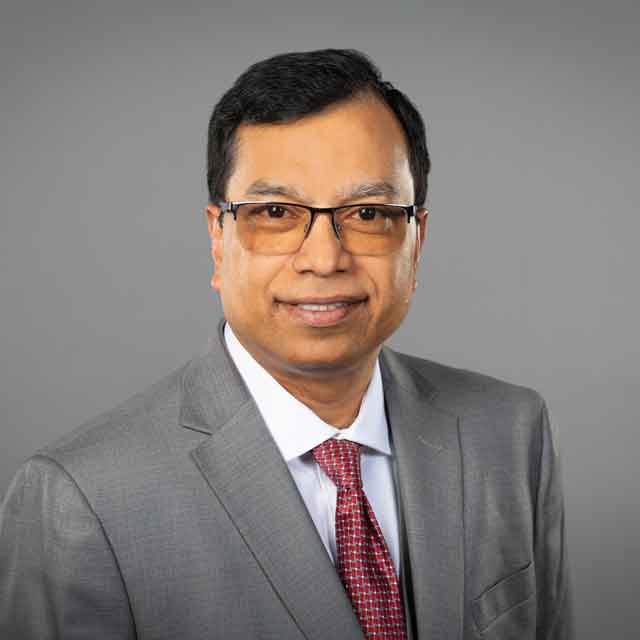
Manoj Mohanty is the Newmont Endowed Professor and Graduate Director at the University of Nevada, Reno, affiliated with the Mackay School of Earth Sciences and Engineering's Mining & Metallurgical Engineering Department. He has held roles including Department Chair (2017-2022), Professor at Southern Illinois University (2008-2017), and earlier academic and industry positions. His research focuses on sustainable mining practices, advanced separation technologies, and environmental remediation. Education: Ph.D. in Engineering Science (SIU Carbondale, 1997), M.S. Mining Engineering (1993), B.S. Mining Engineering (NIT Rourkela, 1985). His expertise spans coal preparation, flotation processes, and geopolymer concrete development. He holds a US Patent (9,126,205B2) for an automated coal spiral system. Research interests include biomining, AMD remediation, and process automation. He has authored books on flotation mechanisms and journal articles on topics like rare earth element extraction from coal ash and coal spirals optimization. Awards include the SME Mineral Industry Education Award (2019) and editorial roles in several journals. Grants and collaborations include Newmont-funded research and industry partnerships. He advises on mining education and policy through roles in the Society of Mining, Metallurgy & Exploration (SME). His work bridges academic research and practical industry solutions.