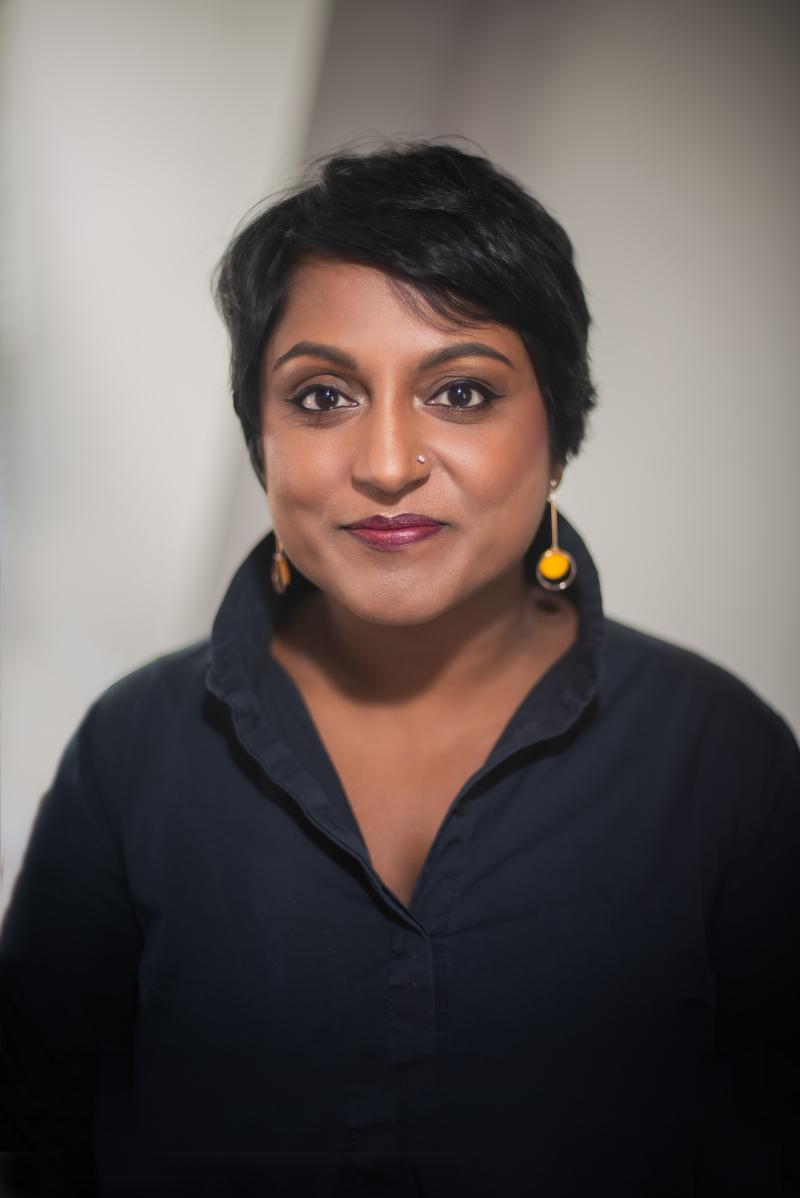
Dr Kingsley Edney is an Associate Professor in International Relations of China at the University of Leeds' School of Politics and International Studies. He holds a PhD (International Relations) and MA (Political Science) from the University of Melbourne, along with a BA(Hons) in Politics and Anthropology from Victoria University of Wellington. Fluent in Chinese and with experience living in Shanghai and Beijing, his research focuses on China's non-material international security dynamics, including cultural diplomacy, propaganda, and ideological strategies to manage global information flows. His expertise includes Chinese soft power, the role of ideology in foreign policy, and the intersection of domestic political cohesion with international security objectives. He teaches undergraduate and master's courses on China's domestic and international politics. Current postgraduate researchers under his supervision are Jinru Huang, Yanyu Lu, and Hengfeng Zhao. Edney's research outputs span topics like public perceptions of China in the Anglosphere, Chinese youth nationalism, and environmental governance. His work often bridges theoretical frameworks with empirical analysis of China's evolving global engagement strategies. He maintains active academic engagement through platforms like Google Scholar and ORCID.
Dr. Mark B. Smith is an Associate Professor in Modern European History at the University of Cambridge’s Department of History. His research focuses on Soviet and European history, particularly the Soviet Union’s social structures, welfare policies, urban development, and cultural dynamics from Stalinism through late socialism. He teaches courses on welfare states, Soviet life, and 20th-century European violence. Key research areas include Soviet urban housing programs, welfare state evolution, and Cold War-era cultural exchanges. His publications analyze topics like Khrushchev’s housing reforms, post-Stalin urban welfare systems, and Soviet pension policies. Smith has co-edited special issues on European urban societies and authored books such as *The Russia Anxiety* (2019) and the forthcoming *Exit Stalin* (2026). He advises doctoral students on Soviet history, welfare states, and Cold War topics. His work bridges legal history, social policy analysis, and cultural studies, emphasizing how everyday life reflected broader ideological and structural changes in Soviet society.
Professor Astrid Nordin holds the Lau Chair of Chinese International Relations at King's College London's Lau China Institute, within the School of Global Affairs. Previously, she was a Professor and Director at Lancaster University's China Centre. Her research bridges Chinese studies and critical international relations, focusing on relational theories and China's global role. Key areas include Chinese foreign policy, surveillance technologies, and decolonial approaches. Education: Peking University, Jilin University, City University Hong Kong, University of Warwick, University of Manchester Research Interests: Chinese world order concepts, relational approaches, critical social theory, and ontology of war. Her work emphasizes interdisciplinary collaboration, impacting policy, media, and cultural sectors. Notable projects include the 'Chinese Anger Diplomacy' study and the 'ESRC IAA: Community-led support for overseas Chinese' initiative. She co-edited the Routledge Handbook of Social Futures (2021) and contributes to public discourse on China's global influence. Awards: KingsCAT Tool Development (2024) alongside interdisciplinary team.
Mauro Barelli is Professor of International Law at The City Law School, City, University of London. He holds a PhD from Cardiff University and an LLM from the University of Bristol, and has been a faculty member at City since 2009, progressing from Lecturer to Professor in 2024. He teaches Advanced Issues of International Law, International Human Rights Law, and a course on Minority and Indigenous Peoples' Rights. He has held visiting positions at the University of Cambridge (Lauterpacht Centre), Nanjing University, the University of Iceland, and the University of Trento. His research focuses on: Rights of ethno-cultural and indigenous peoples Law on the use of force Chinese perspectives on international law Soft law and normative development Minority rights and litigation His publications include four books and numerous articles in leading journals such as Journal of Conflict and Security Law , Human Rights Quarterly , and Asian Journal of International Law . His recent work analyzes China’s engagement with international law, the UK’s relationship with the ICJ, and the synchronization of biodiversity protection with indigenous rights. Key scientific recognitions include: Higher Education Academy Fellow (since 2012) He is an experienced PhD supervisor, having chaired and served on numerous doctoral committees, including as PhD Programme Director. His advisee Engin Firat is currently a research student at City. He has also served in administrative roles such as Assistant Dean (Research). His expertise has been sought by national governments, parliaments, and international NGOs. He is an active participant in international academic events, particularly through the European China Law Studies Association.
Professor Stephen Chan is a faculty member at SOAS University of London in the Department of Politics and International Studies (POL) . With a focus on African political thought and international relations, his work critically examines postcolonialism, decoloniality, and global governance. Key research themes include: Decolonizing international relations theory Sino-African political dynamics Election observation and democratic processes Non-Western cosmopolitanism Comparative diplomatic practices His recent publications analyze the ideological ambiguity of decoloniality (2023), pluralist visions for global security (2017), and the legacy of African liberation movements (2021). He has advised multiple theses on topics ranging from parliamentary governance in Kenya/Zimbabwe to China-Africa media interactions. Notably: Critiqued the misuse of 'decoloniality' as ideological rhetoric (2023) Authored a poetic autobiography of political engagement (2022) Traced Africa's intellectual history of freedom (2021) Examined Zimbabwean elections (2017) Explored non-Western modernity (2018)
Dr. Galina Miazhevich is a Senior Lecturer at the School of Journalism, Media and Culture (JOMEC) at Cardiff University, UK. Previously, she served as a lecturer at the University of Leicester's School of Media, Communication and Sociology (2013-2017) and as the Gorbachev Media Research Fellow at the University of Oxford (2008-2012). Her academic career focuses on media representations in post-communist contexts, with particular expertise in Russian and Eastern European media landscapes. Dr. Miazhevich earned her PhD from the University of Manchester, where she subsequently worked for two years as a Research Associate on an AHRC-funded project examining representations of Islam as a security threat. Her educational background has informed her research trajectory, which bridges media studies, political communication, and cultural analysis of post-Soviet societies. Dr. Miazhevich's research spans several interconnected domains: media representations of Islam and multiculturalism in Europe; media and democracy in post-communist Europe; gender, media, and emergent forms of post-Soviet identity; feminism; Eurovision and popular culture; and diaspora, transnationalism, and media. Her work consistently examines how media shapes and is shaped by political transitions, identity formation, and social movements in post-Soviet contexts, with particular attention to marginalized voices and resistance practices. Analysis of Dr. Miazhevich's recent publications reveals a consistent focus on resistance, identity, and power dynamics in post-Soviet media environments. Her work increasingly examines gender and sexuality as political categories, particularly through the lens of feminist and LGBTQ+ resistance to authoritarian regimes. The Eurovision Song Contest serves as a recurring analytical framework for understanding cultural diplomacy and nation-branding strategies. More recently, her research has pivoted toward documenting anti-war resistance following Russia's invasion of Ukraine, examining how celebrities and media figures navigate political dissent under authoritarian conditions. Dr. Miazhevich has received several notable recognitions for her scholarly contributions: AHRC Leadership grant 'A Quiet Revolution: Discursive Representations of Non-heteronormative Sexuality in Russia' (2018-2020, £250,960) Visiting Fellowship at the Davis Centre for Russian and Eurasian Studies, Harvard University (Fall 2023) Fellow of the Higher Education Academy (FHEA) Associate Editor for the Oxford Encyclopedia of Race, Ethnicity, and Communication (2024) Dr. Miazhevich actively mentors the next generation of scholars, currently co-supervising PhD students Diyana Dobreva (with Professor Martin Innes) and John Tasker (with Professor Paul Bowman). She welcomes PhD proposals in areas including digital culture and resistance, media management and misinformation, media and democracy, representation of minority groups, post-communist identity politics, gender and feminism, Eurovision and popular culture, and geopolitics and nation-branding. Her grant portfolio demonstrates sustained success in securing competitive research funding, including leadership of an AHRC grant and participation in the Academy of Finland project FEMCORUS (2021-2025). Dr. Miazhevich is deeply engaged with academic communities, serving as co-convenor of the (Digital) Media and Culture group at the British Association for Slavic and East European Studies (BASEES) since 2016 and as a member of the Advisory Board of the European Communication Research and Education Association (ECREA) since 2021. Her work extends beyond academia through public engagement, including invited talks at prestigious institutions like Harvard University and participation in policy-relevant events at Chatham House addressing LGBTQ+ politics in Russia.
Cangbai Wang is a Professor of Migration, Heritage and Language at the University of Westminster and co-founder of HOMELandS (Hub On Migration, Exile, Languages and Spaces). He holds a PhD in Asian Studies from the University of Hong Kong (2003) and previously worked as a Post-doctoral Fellow/Honorary Assistant Professor at the University of Hong Kong and Visiting Lecturer at City University of Hong Kong. Academic focus: Transnational migration, Chinese diasporas, cultural heritage Co-Director of HOMELandS since 2014 (elevated to Research Centre in 2023) External Examiner for 20 institutions including University of Birmingham (2024), University of Cambridge (2020), and Nanyang Technological University (2024) His research explores the intersection of migration and material culture , emphasizing how diasporic communities negotiate identity through heritage practices. Recent work examines museum representations of Chinese diasporas and language dynamics in multicultural London. He has led the AHRC-funded Global Diasporic Chinese Museums Network Initiative (2023-2025) and contributed to policy discussions on diaspora engagement with Chinese municipal governments. Key publication: Museum Representations of Chinese Diasporas (Routledge 2021) and Negotiating Identities, Language and Migration in Global London (Multilingual Matters 2024). Supervised PhDs include Denise Kwan’s The talking of objects: migratory experiences and Chinese women in UK (2020) and Xiao Ma’s ongoing London Chinatown: heritage making and diasporic identities . Active in academic leadership: Co-editor: Routledge Research on Museums and Heritage in Asia Editorial board: Social Transformations in Chinese Societies (since 2024) International editorial board: Chinese Overseas Review (since 2020) UKRI FLF Peer Review College member
Barbara Zanchetta is a Senior Lecturer in the Department of War Studies at King’s College London, affiliated with the Faculty of Social Science & Public Policy. She specializes in Cold War history, American foreign policy, and transatlantic relations. Her work examines US-Soviet détente, nuclear arms control, and the strategic implications of post-Cold War policies. She is the author of The Transformation of American International Power in the 1970's and co-author of Transatlantic Relations since 1945 . Currently, she is researching US policies toward the Persian Gulf and their role in the collapse of the Soviet Union. Her teaching includes courses on international history, US national security, and the War on Terror. She is affiliated with the Sir Michael Howard Centre for the History of War, the Latin American Security Research Group, and the Centre for Grand Strategy. Her research explores the intersections of diplomacy, conflict, and security policy, with a focus on Cold War legacies and modern geopolitical challenges. Zanchetta has organized international conferences, including a hybrid event in Paris on the consequences of the Cold War’s end. Her commentary on contemporary issues, such as NATO’s expansion and Russia’s aggression in Ukraine, reflects her expertise in historical and strategic analysis.
Seagh Kehoe is a Senior Lecturer in Chinese Studies at the University of Westminster's School of Humanities, joining in 2019. Previously, he taught at the University of Leicester, University of Nottingham, and University College Dublin. His research focuses on cultural dimensions of social and political transformation in modern China, particularly Chinese media representations of ethnicity, race, gender, sexuality, nationalism, and military. He holds a BA from University College Cork, an MA from Leiden University, and a PhD from the University of Nottingham, with additional studies in Mandarin and Tibetan. His academic work spans journal articles in China Quarterly , positions , and Media, Culture & Society , as well as edited volumes like Cultural China . His research interests include Tibet-China relations, critical university studies, and abolition theory. He supervises undergraduate and postgraduate dissertations on diverse socio-political topics. Kehoe has presented at conferences such as the British Association of China Studies and contributed to workshops on decolonizing Chinese studies. His recent work examines temporal politics in post-2008 Tibet and queer cinema in China. Education: BA Chinese Studies & Sociology (University College Cork) MA East Asian Politics (Leiden University) PhD (University of Nottingham) Mandarin Studies (Sichuan University) Tibetan Studies (Rangjung Yeshe Institute) Grants & Labs: Active in the Contemporary China Centre, contributing to interdisciplinary research on modern China.
London School of Economics and Political Science (LSE)United Kingdom
Dr. Roham Alvandi is Associate Professor of International History at the London School of Economics and Political Science (LSE), where he also serves as Director of the Iranian History Initiative and Master's Programme Director. He is affiliated with the Phelan United States Centre and the Middle East Centre at LSE, and is a Fellow of the British Institute of Persian Studies, the Royal Historical Society, and the Royal Asiatic Society. Dr. Alvandi earned his DPhil and MPhil from the University of Oxford, where his doctoral thesis won the Foundation for Iranian Studies’ Dissertation Prize and the Pavry Memorial Prize. He also holds degrees from the University of Sydney, where he received the University Medal, and the Fletcher School of Law and Diplomacy at Tufts University. His research focuses on modern Iranian history, U.S. foreign relations, and the Global Cold War, with current work exploring human rights activism and the origins of the 1979 Iranian Revolution. His scholarship has been published in leading journals such as Diplomatic History , Cold War History , and Iranian Studies . He is the author of Nixon, Kissinger, and the Shah: The United States and Iran in the Cold War (Oxford University Press, 2014), selected by the Financial Times as one of the best history books of the year, and editor of The Age of Aryamehr: Late Pahlavi Iran and its Global Entanglements (2018). His recent media commentaries and articles—appearing in The New York Times , The Guardian , The Wall Street Journal , and The Washington Post —reflect a consistent focus on Iran’s political trajectory, nuclear ambitions, and societal resistance. The articles highlight themes such as the fragility of the Islamic Republic, the role of historical memory, and the persistent desire for secular democracy among Iranians. Financial Times Best History Book of 2014 Foundation for Iranian Studies’ Dissertation Prize University of Oxford’s Pavry Memorial Prize University Medal, University of Sydney LSE Excellence in Education Promotion Prize (2015) LSE Excellence in Education Award (2018) Dr. Alvandi has supervised PhD students including Jack Roush and Jean-Baptiste Ollieric, and has received LSE teaching awards in recognition of his excellence in education. He has held visiting appointments at the University of Tehran and Columbia University, and previously worked on the strategic planning staff for UN Secretary-General Kofi Annan. He is also a frequent contributor to documentaries by HBO, BBC, and Manoto, serving as a historical consultant on projects such as Hostages and Hoveyda .
Yuka Kobayashi is a Senior Lecturer (Associate Professor) in China and International Politics at SOAS University of London. Currently on leave as a British Academy Global Innovation Fellow at the German Council on Foreign Relations (DGAP), she specializes in China's global governance strategies, economic diplomacy, and international law. Her research integrates fieldwork-based analysis of trade (Belt and Road Initiative/WTO), climate change, human rights, and technology. Education: LLB (Kyoto University, Public International Law specialization), MPhil & DPhil (Oxford University, International Relations). Research focuses on China's economic activities in Central Asia, Europe, Southeast Asia, and Pacific Islands, alongside UK-Japan collaborative projects on geopolitical partnerships. Key advisory roles include specialist advisor to the UK government (2021) and advisory board member for Stiftung Asienhaus (2019-2021). Publications span over two decades, addressing China's compliance with international trade norms, climate diplomacy, and evolving global governance frameworks. Supervises PhD students examining China's Pacific Island strategies and EU-China tech competition dynamics.
Dr Xin Xin is a Reader in International Communications at the University of Westminster , affiliated with the Communication and Media Research Institute (CAMRI) and the Contemporary China Centre . Her academic career spans over three decades, combining journalism, scholarship, and policy engagement. She previously held the RCUK Academic Fellowship (2006-2011) and UK/China Fellowship for Excellence (2008-2009) , focusing on China's soft power, media transformations, and digital labor. Educational Background: BA in Russian Language and Literature (Beijing International Studies University, 1994) MA in International Journalism (University of Westminster, 2003) PhD in Media and Communication (University of Westminster, 2006) Research Focus: Dr Xin's work bridges the political economy of Chinese media , global communications , soft power strategies , sociology of journalism , and grassroots digital practices . She critically examines how marketization, globalization, and digitalization reshape legacy media like Xinhua News Agency, alongside state-corporate soft power deployments and grassroots digital activism. Recent Publications highlight trends in AI-driven journalism , digital labor , party journalism modernization , and soft power analysis . Her articles span empirical studies of Xinhua's financialization and party journalism, comparative public diplomacy, and longitudinal analyses of digital inclusion in BRICS nations. Scientific Awards: RCUK Academic Fellowship (2006-2011) UK/China Fellowship for Excellence (2008-2009) Founding Editorial Board Member of Westminster Papers in Communication and Culture and Interactions: Studies in Communication & Culture Supervision: Dr Xin currently supervises PhD students on topics including Sino-African journalism, Chinese diaspora identity on YouTube, and gender dynamics in Chinese social media. She co-organized 11 international doctoral summer schools and served as second supervisor for over ten PhD candidates. Activities: She has delivered lectures at institutions such as the University of Pennsylvania, University of Birmingham, and Tsinghua University. Her consultancy work includes Oxford Analytica and the Media Diversity Institute, with media citations in Al Jazeera , NBC News , and The Washington Post .
Dr. Luke Robinson is an Associate Professor in Film Studies at the University of Sussex's School of Media, Arts and Humanities, where he has been since 2014. Previously, he taught at the University of Nottingham's Department of Culture, Film and Media. He holds a BA from the University of Cambridge, an MA and PhD from SOAS (University of London), and a certificate from the Hopkins-Nanjing Center. His research focuses on Chinese independent cinema, film festivals as sites of cultural translation, and the global circulation of documentary media. Robinson is co-editor of influential volumes like Chinese Independent Cinema and Chinese Film Festivals , and his work bridges cultural studies, visual anthropology, and media policy analysis. He maintains the Chinese Independent Film Archive and has published widely on topics ranging from Taiwanese subimperialism to the cultural politics of Sundance and CNEX. His teaching spans global cinema studies, film festival curating, and East Asian media aesthetics. Education: BA, History, University of Cambridge MA, Chinese Studies, School of Oriental and African Studies (SOAS), London PhD, Film and Media Studies, SOAS Certificate in Chinese Studies, The Hopkins-Nanjing Center Research Themes: Chinese independent film ecosystems, transnational film festival circuits, documentary as public culture, and the intersection of politics with audiovisual media. Recent work examines humanitarian intervention narratives in documentaries and the evolving role of non-state cultural agents in soft power dynamics.
Professor Richard Thomas is Head of the School of Culture and Communication at Swansea University and holds a Professorship in Media within the department of Media, Communications, Journalism and Public Relations. He is a globally recognized academic in political communication and media research, co-authoring Reporting Elections: Rethinking the Logic of Campaign Coverage , and leading research on alternative media’s role in democracy. His work has been funded by the Economic and Social Research Council (£517,000 project on online political media), influencing 21st-century journalism practices. Research interests span political communication, media methods, and the treatment of elections in alternative media. He employs content analysis and critical discourse analysis to study media framing of economics, politics, and conflict. Recent work explores right-wing media perspectives and UK election coverage. Grants & Impact : Co-led a £517k ESRC project (2019–2022) analyzing alternative political news online. His research informs media regulators and has been published in top journals like International Communication Gazette and Journalism . He is a Fellow of the Higher Education Academy and advises global journalism programs through his role as Global Chair of the Erasmus Mundus Joint Degrees Advisory Board. Teaching & Leadership : Teaches modules on media analysis and 21st-century journalism. Serves on Swansea University Senate and Faculty Leadership. Supervises PhDs on topics like Nigerian activism, gender in sports journalism, and Saudi Arabia media narratives. Publications : Over 30 peer-reviewed articles and books, including works on Brexit media coverage, BuzzFeed’s election reporting, and cricket’s cultural history. Recent focus areas include media literacy via YouTube essays and the BBC’s election role.
Dr. Meera Sabaratnam is an Associate Professor of International Relations at the University of Oxford and a Tutorial Fellow in Politics at New College. She previously held positions at SOAS University of London, the University of Cambridge, and the London School of Economics (LSE), where she earned her MSc and PhD. Her work focuses on the colonial and postcolonial dimensions of world politics, challenging Eurocentric frameworks in International Relations (IR) theory and practice. Education MA in Philosophy, Politics, and Economics (PPE), Balliol College, University of Oxford MSc and PhD in International Relations, London School of Economics (LSE) Her research examines how imperial histories shape contemporary international order, with a particular focus on structural violence , epistemic justice , and anti-colonial resistance . She is currently writing a book titled Complex Indebtedness , analyzing material and moral debts in the liberal international order. Scientific Awards and Grants : Senior Fellowship of the Higher Education Academy Leverhulme Trust Research Fellowship RF-2021-235 Co-investigator for Czech Science Foundation grant (2025-2027) on postcolonial order Previous funding from the Economic and Social Research Council (ESRC) Dr. Sabaratnam co-founded the Colonial/Postcolonial/Decolonial Working Group at the British International Studies Association (BISA) and serves on editorial boards of International Studies Quarterly , Security Dialogue , and Cambridge Review of International Affairs . Her methodological innovations include contrapuntal analysis and histories from below , particularly in studying the Great War's impact on southeast Africa.