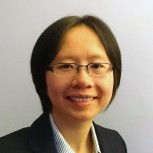
Professor Yan Yan Shery Huang is a Professor of Bioengineering at the University of Cambridge's Department of Engineering, leading the 'Biointerface' research group. She holds a strategic role in the EPSRC Centre for Doctoral Training in Sensor Technologies and serves as an Associate Editor for multiple journals including ACS Applied Materials & Interfaces and Microsystems & Nanoengineering . Her work bridges engineering, biology, and computer science. Education: MEng in Materials Science from Imperial College London (2007), PhD in Physics from Cambridge (2011). Her research focuses on sustainable biofabrication, 3D printing for healthcare, and AI-driven clinical informatics. Key themes include organ-on-a-chip systems, eco-friendly biomaterials, and wearable health sensors. Her group's innovations address personalized medicine, animal-free drug testing, and circular economy solutions. Recent recognition: Winner of the 2024 BioMedEng Innovation Award. She supervises PhD students and actively mentors early-career researchers. Her lab, Biointerface@CUED, emphasizes interdisciplinary collaboration and translational research, with projects spanning bioelectronics, soft robotics, and tissue engineering.
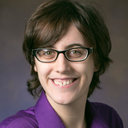
Dr. Rachael Mansbach is an Assistant Professor in the Department of Physics at Concordia University, Montreal, and holds a Tier II Canada Research Chair in Computational Biophysics. She specializes in interdisciplinary research combining computational biophysics, machine learning, and molecular dynamics to address challenges in antimicrobial resistance and therapeutic design. Research Highlights: Developing interpretable machine learning models for antimicrobial peptide design Investigating structural ensembles of disulfide-rich toxins via computational modeling Multi-scale modeling of mucin-like proteins for biomimetic material design Applying network theory to analyze SARS-CoV-2 Spike protein dynamics and deep learning architectures Quantum and molecular dynamics simulations of photosynthetic proteins Collaborations: Partnered with the Chakraborty Lab (Northeastern), Zazubovits Lab (Concordia), and Gauthier Lab (Concordia) on hydrogel design, photosynthesis, and long COVID imaging applications. Scientific Awards: Computational Science and Engineering Fellow (UIUC) Building Future Faculty Fellow (NCSU) Mavis Future Faculty Fellow (UIUC) APS Forum on Graduate Student Affairs Travel Award UIUC Physics Graduate Travel Award
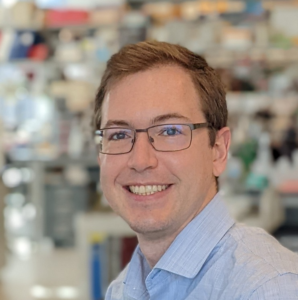
Hyunjoon Kong is the Robert W. Schafer Professor in the Department of Chemical and Biomolecular Engineering at the University of Illinois, with additional affiliations in Bioengineering, Pathobiology, and the Carl R. Woese Institute for Genomic Biology. He received his Ph.D. from the University of Michigan (2001), completed postdoctoral work at the University of Michigan (2001-2004), and served as a Research Associate at Harvard University (2004-2006). His research focuses on developing active biohybrid materials for applications in drug delivery, tissue engineering, and environmental sustainability. Research interests include: Bio-Inspired Materials Drug Delivery Cell Manufacturing and Therapy Tissue Engineering Recent publications highlight work on: Stimulus-responsive hydrogels Self-propelling colloids Cell surface engineering Neurodegenerative disease therapies Scientific honors include: IAMBE Fellow (2023) AIMBE Fellow (2017) NSF CAREER Award (2009) American Heart Association Scientist Development Grant (2008) Prof. Kong advises graduate students in chemical and biomedical engineering and leads the Active bioHybrid Matter lab, which investigates dynamic interfacial systems for human health and sustainability.
Dr. Yuan Cheng is an Adjunct Professor in Materials Science & Engineering at the Monash Suzhou Research Institute, part of Monash University. She holds a PhD from the National University of Singapore (2008) and a Bachelor's from Fudan University (2003). Previously, she worked as Senior Scientist and Group Manager at Singapore's Institute of High Performance Computing (2007–2021) and was a visiting scholar at Brown University (2009). Her research focuses on multiscale modeling of bio-inspired materials , nanomaterial mechanical properties , machine learning for materials science , and skin research with consumer and wearable applications . She leads projects like the 'Hydrogel sensor-based drug delivery system for skin disease theragnostic' (2024–2028). Her work contributes to UN Sustainable Development Goals related to sustainable cities, health, and innovation. Education: Bachelor's: Mechanics & Engineering Science, Fudan University (2003) PhD: Mechanical Engineering, National University of Singapore (2008) Dr. Cheng has published over 100 journal papers (H-index 37) and is a Fellow of the International Association for Computational Mechanics. Her awards include the Suzhou Industrial Park Young International Discipline Leaders (2021). She edits journals like International Journal of Computational Methods and Nanoscale Advances . Her recent projects emphasize flexible nanomaterials , machine learning-driven drug design , and biomedical sensor development . She actively supervises PhD students in bio-inspired materials modeling and nanomaterial applications.
Kei Takashina is a Senior Lecturer in the Department of Physics at the University of Bath, affiliated with the Centre for Nanoscience and Nanotechnology, Condensed Matter Physics CDT, IAAPS, NanoBioElectronics, and Condensed Matter and Quantum Materials research groups. She is actively supervising doctoral students and conducting experimental research in low-dimensional quantum systems. Her research focuses on the physics of low-dimensional systems, particularly the two-dimensional electron gas in semiconductor structures. She investigates fundamental aspects such as band structure, impurities, interfaces, and the development of novel experimental systems using silicon/silicon dioxide nanostructures to create coupled low-dimensional systems. Her work bridges fundamental condensed matter physics with nanotechnology applications. The recent publications reflect a strong trend in quantum materials, particularly valleytronics and spin polarization in silicon-based systems, alongside innovative work on Leidenfrost phenomena with applications in fluid dynamics and science outreach. Her interdisciplinary research spans condensed matter physics, materials science, and thermal physics. Kei Takashina was the Principal Investigator on the EPSRC-funded project 'Silicon Valleytronics' (2011–2013), which explored spin and valley polarization in silicon quantum wells. She has supervised at least 7 research students or projects, indicating an active mentoring role. She is associated with several research centers including the Centre for Nanoscience and Nanotechnology and the Institute for Advanced Automotive Power Systems (IAAPS), where her work contributes to advanced electronic and quantum materials development.
Daniel Franklin is an Assistant Professor in the Institute of Biomedical Engineering at the University of Toronto's Faculty of Applied Science and Engineering. He holds the Ted Rogers Chair in Cardiovascular Engineering at the Ted Rogers Centre for Heart Failure and is affiliated with the Translational Biology & Engineering Program (TBEP). Dr. Franklin's research focuses on the intersection of optics, engineering, and biology to develop next-generation medical technologies. His lab specializes in: Wearable health devices for advanced hemodynamic monitoring (blood pressure, cardiac output, systemic vascular resistance) Wireless implants for physiological monitoring and closed-loop stimuli/feedback Novel materials like liquid crystal for bioresorbable temperature sensors Applications in fundamental understanding of heart disease and commercial health telemetry Dr. Franklin's work has resulted in significant publications including research in Nature Biomedical Engineering, Science Advances, and Physiological Measurement, with findings highlighted by major media outlets including Forbes, Wired, and the World Economic Forum. His scientific achievements have been recognized with prestigious awards: Baxter Young Investigator Award Displaying Futures Award from Merck KGaA, Germany Connaught New Researcher Award from the University of Toronto Dr. Franklin actively mentors graduate students and has secured numerous competitive grants including NSERC Discovery Grants, CIHR Project Grants, and Canadian Foundation for Innovation awards. His lab partners with industry-leading semiconductor manufacturers and hospitals to develop and leverage new sensor technologies for clinical translation. The Franklin Research Lab (FRL) is a multidisciplinary team dedicated to exploring bioelectronic and biophotonic systems to shed light on unexplored aspects of human physiology. The lab's work combines fundamental science with practical applications for medical device commercialization.
D. Kacy Cullen is a Professor of Neurosurgery and Bioengineering (with tenure) at the Perelman School of Medicine, University of Pennsylvania. He serves as Principal Investigator at the Corporal Michael J. Crescenz VA Medical Center in Philadelphia and holds multiple leadership positions including Director of the Center for Neurotrauma, Neurodegeneration & Restoration at the VA Medical Center, Director of the Translational Tissue Engineering & Regenerative Medicine Fellowship Program, and Director of the Porcine Neurointensive Care and Assessment Facility. Dr. Cullen's educational background includes: B.S. in Mechanical Engineering from Georgia Institute of Technology (2000) M.S. in Mechanical Engineering from Georgia Institute of Technology (2002) Ph.D. in Biomedical Engineering from Georgia Institute of Technology (2005) Dr. Cullen's research program operates at the intersection of three complementary fields: Regenerative Medicine , Neural Engineering , and Neurotrauma . In Regenerative Medicine, his lab focuses on novel biofabrication strategies for tissue engineered brain and spinal cord pathways as well as "living scaffolds" for neuroregeneration. His Neural Engineering work develops "biohybrid" neuroprosthetic interface technology and enables synaptically-based neuromodulation. In Neurotrauma research, he applies engineering principles to understand causative mechanisms and pathophysiological responses following traumatic injury to the nervous system, with specific attention to neural injury biomechanics. Analysis of Dr. Cullen's recent publications reveals a strong focus on tissue-engineered neural constructs for repairing nervous system injuries. His work spans from fundamental research on neural injury mechanisms to translational applications of tissue engineering for nerve repair, spinal cord injury, and Parkinson's disease. A notable trend is the development of "living scaffolds" and "biohybrid" neural interfaces that combine biological and engineered components. His research increasingly incorporates large animal models, particularly swine, to enhance translational relevance. Dr. Cullen's laboratory has received significant funding from multiple prestigious sources including the Department of Veterans Affairs, the National Institutes of Health, the Department of Defense, and the University Research Foundation at the University of Pennsylvania. He directs the Translational Tissue Engineering & Regenerative Medicine (T-TERM) Fellowship Program, which is jointly supported by the Department of Veterans Affairs and the University of Pennsylvania. Dr. Cullen leads the Cullen Lab, which operates the Porcine Neurointensive Care and Assessment Facility (NCAF) at the Perelman School of Medicine. His lab applies biomedical engineering principles toward understanding neural injury mechanisms and developing neural tissue engineering-based treatments. The lab maintains active collaborations with multiple research centers including the Penn Center for Brain Injury & Repair, the Penn Center for Musculoskeletal Disorders, the Institute of Regenerative Medicine, and the Institute for Translational Medicine and Therapeutics.
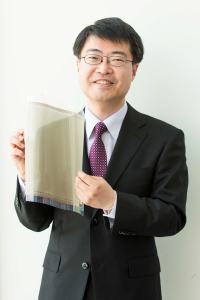
Professor Takao Someya serves as Executive Director, Vice President, and Professor at the University of Tokyo, where he leads research in the Department of Electrical and Electronic Engineering within the School of Engineering. He additionally oversees startup initiatives as Director General of the Division of University Corporate Relations. Recognized globally as an inventor of electronic skins (featured in TIME Magazine as one of the best inventions of 2005), Professor Someya is a pioneer in organic and flexible electronics research. He earned his Ph.D. in Engineering from the University of Tokyo and has held prestigious international positions including Global Scholar at Princeton University, GlobalFoundaries Visiting Professor at National University of Singapore, and Hans Fisher Senior Fellow at Technical University of Munich. In 2024, he became the first person from Asia elected as President of the Materials Research Society in the US. Professor Someya's research focuses on developing next-generation wearable technologies using organic electronics for healthcare, biomedical applications, and robotics. His work spans organic transistors, flexible electronics, plastic integrated circuits, large-area sensors, and plastic actuators. His research group has pioneered innovations in electronic skins, ultraflexible photonic devices, and stretchable electronics that bridge the gap between conventional rigid electronics and biological systems. His publication record reveals a clear progression from fundamental research on organic transistors to sophisticated integrated systems for healthcare monitoring and human-machine interfaces, with increasing emphasis on practical biomedical applications in recent years. 65th Fujihara Award (2024) 16th Leo Esaki Prize (2019) Commendation for Science and Technology by the Minister of Education (2019) Clarivate Highly Cited Researcher (2018, 2021, 2022, 2024) IEEE/EDS Paul Rappaport Award (2009, 2010) Young Scientist Award (2005) Professor Someya has mentored numerous successful researchers including Tomoyuki Yokota (now Associate Professor), Tsuyoshi Sekitani, and Martin Kaltenbrunner. His research has been supported by substantial grants including JST ERATO funding for 'Bio-harmonized Electronics' and various industry collaborations. He actively recruits graduate students and postdoctoral fellows through programs like the International Multidisciplinary Engineering (IME) Graduate Program and JSPS fellowships. The Someya Group Organic Transistor Lab maintains active international collaborations and continues to push boundaries in flexible and wearable electronics, with recent projects focusing on ultra-soft electronics for monitoring cardiomyocytes, breathable wearable electronics for long-term health monitoring, and advanced electronic skins with multi-modal sensing capabilities.