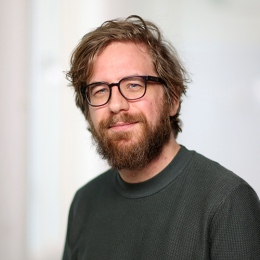
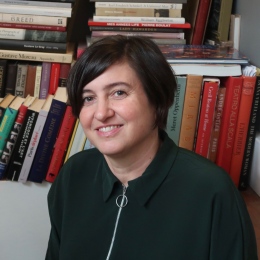
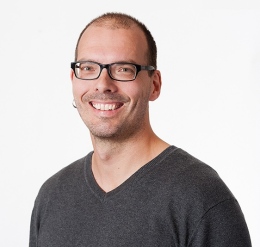
Andreas Johansson is a Researcher at the Centre for Theology and Religious Studies (CTR), Lund University. His work bridges History of Religions , Religious Symbolism , and South Asian Studies , with fieldwork in Sri Lanka and Japan . He examines how religious terms and symbols are used in political contexts, notably in non-fundamentalist parties like the Sri Lanka Muslim Congress (SLMC). His 2017 book on Yakuza Tattoo demonstrates the value of visual anthropology in closed societies. Current projects include a SASNET-funded study (2022–2026) on religion and politics in Sri Lanka.
Henrik Fürst is a Senior Lecturer at the Department of Education , Stockholm University. He serves in the research groups for History of Education and Sociology of Education and Adult Learning , with a focus on educational systems' evolution and adult learning across formal/informal settings. His work examines intersections between careers, valuation, and education in arts, sports, and politics. 2023 Docent in sociology (Uppsala University) and education (Stockholm University) PhD in sociology (Uppsala University, 2017) Postdoctoral researcher in sociology (Uppsala University, 2019-2022) funded by Swedish Research Council His research explores: Creative career sustainability patterns (literary/artistic/sports domains) Valuation mechanisms in cultural reception and talent identification Nordic cultural cooperation dynamics Temporal organization of creative work Cultural significance of folk high schools Economic sociology of creative industries Contact: henrik.furst@edu.su.se | Office: Room 2432, Frescativägen 54, Stockholm University
Anna Sparrman is a Professor at the Department of Thematic Studies - Child Studies (TEMAB) at Linköping University, Sweden, and holds a concurrent position as Professor II in Children's Culture at the Department of Art and Cultural Studies, Inland Norway University of Applied Sciences (2021-2025). Her academic work bridges visual culture, childhood studies, consumption, and sexuality, with a particular focus on how norms and values are created in the everyday practices of children's lives. Sparrman's research is unified by the concept of visual culture as a social theory that questions taken-for-granted aspects of visual everyday practices. She examines how norms and values are created and reproduced through visual interactions: Who gets to look at whom and who gets to be seen in society? Her work focuses on children aged 6-12 years and how children "are made" both by children themselves and through societal conceptions of childhood. She has developed the theoretical framework "Child Studies Multiple," which views children as unstable, changing, hybrid, and complex rather than solid and universal. Her research spans interconnected fields including children and sexuality, children and consumption, children's cultural heritage, and visual methodology. Her current projects investigate how to integrate children's cultural heritage into Swedish cultural heritage and examine children as professional influencers and internet celebrities in the digital age. Methodologically, she combines visual ethnography, photo-elicited focus group discussions, image analysis, and internet-based visual methods, with special attention to the productivity of research methods themselves. Sparrman serves on the Advisory Board for the Childism Institute, the Editorial Board for Childhood journal, and the Advisory Board for the research project "(Re)configuration of parenthood: Political agendas entangling everyday family life" at Roskilde University. She has also participated in media discussions on topics such as "The pedophile gaze" and children's rights to cultural heritage participation.
Claudia Tazreiter is a Professor of Ethnicity and Migration Studies at Linköping University's Department of Culture and Society (IKOS), affiliated with the Division of Migration, Ethnicity and Society (REMESO). Her research focuses on forced migration, human rights, and the intersection of race, gender, and civil society activism. She holds a PhD in Sociology from UNSW (2002) and has extensive teaching experience in sociology, anthropology, and global studies. Education: B.A. (Hons, 1st Class) Sociology, UNSW (1997) PhD in Sociology, UNSW (2002) Graduate Certificate in University Learning and Teaching, UNSW (2008) Research Interests: Tazreiter’s work examines the impacts of migration on human rights, visual cultures of dissent, and the legacy of settler colonialism. She uses ethnographic, qualitative, and mixed methods to explore themes like refugee detention policies, transnational migration, and the role of civil society in social change. Key areas include Australia’s carceral archipelago, spatial politics of exclusion, and the ethical dimensions of migration governance. Professional Roles: Board Member, Academy in Exile (Free University Berlin/Duisburg-Essen University) Communications Secretary, International Sociological Association RC05 (Racism, Nationalism, Indigeneity, and Ethnicity) Steering Committee Member, Kaldor Centre for International Refugee Law Grants & Collaborations: Tazreiter has led interdisciplinary projects like the Forced Migration Research Network (UNSW) and participated in global collaborations (e.g., University of Vienna, CUNY, Sciences Po). Her work bridges academia and activism, addressing contemporary crises like Ukraine’s refugee flows and pandemic-induced vulnerabilities. Labs/Teams: Active in the Institute for Research on Migration, Ethnicity, and Society (REMESO), which emphasizes transnational migration and citizenship studies.
Andrea Kollnitz is a Professor of Art History and Head of the Art History Department at Stockholm University. She serves as Pedagogical Director of studies and teaches courses on Visual Studies and Portraiture, supervising theses at all academic levels. Her research focuses on art and nationalism, early 20th-century art and fashion discourses, Nordic avant-garde movements, and surrealist artists like Leonor Fini. She co-edited key texts such as *Fashion and Modernism* (2018) and leads the research project *Surrealism in Sweden 1930-2000* (2020–present). Kollnitz’s work bridges art history with fashion studies, exploring themes like self-fashioning, transnational art networks, and gender in avant-garde contexts. Her forthcoming monograph on Leonor Fini (2025) examines theatrical self-performances in art and life. She is affiliated with the Forum Modernism research group at Stockholm University, dedicated to modernist studies. Her publications span books, edited volumes, and chapters analyzing Nordic avant-garde exhibitions (e.g., the Stockholm Exhibition 1930), the intersection of fashion and modernism, and surrealist photography. Kollnitz’s academic contributions emphasize interdisciplinary approaches to art history, combining cultural, aesthetic, and socio-political frameworks.
Margareta Wallin Wictorin is a Reader in Art History and Visual Studies at Karlstad University, affiliated with KuFo (the Culture Studies Research Group). She holds a PhD in Art History from the University of Gothenburg, focusing on modernist graphic art and gender perspectives. Her research spans feminist comics, postcolonial studies, contemporary African art, and visual culture, with a focus on intersections of gender, politics, and art. Previously, she served as a senior lecturer at Linnaeus University and participated in major projects like Concurrences (Swedish Research Council, 2011–2014) and a study on feminist comic art (2018–2020). Her work explores topics such as Dak’Art (Senegal’s biennial), Swedish feminist comics, and the role of comics in education and activism. Notable publications include Comic Art and Feminism in the Baltic Sea Region (2021) and articles on queer visibility in African art and craftivism in Swedish feminist comics. Her research emphasizes transnational perspectives, postcolonial theory, and the transformative potential of graphic narratives. She has co-edited volumes on feminist comics activism and contributed to exhibitions and educational initiatives promoting intercultural learning through comics.
Piia Posti is a Senior Lecturer in Literary Studies with a postcolonial focus at Linnaeus University since 2007. She currently serves as Head of the Department of Film and Literature and is a member of the Linnaeus University Centre for Concurrences in Colonial and Postcolonial Studies and the Centre for Childhood Research in Literature, Language and Learning (CHILLL) . PhD in English Literature from Stockholm University (2005) Doctoral thesis: Relationship between landscape, visuality, and exile in Gerald Murnane's writings Research Interests : Postcolonial theory, feelgood literature, children's literature, popular culture, and entrepreneurship in cultural contexts. Her recent work explores Bridgerton as speculative romance, Jane Austen's Mansfield Park through colonial connections, and feelgood literature as a reflection of 21st-century gender dynamics. Publications & Projects : Co-edited the anthology Speglingar av feelgood (2022) and authored the 2024 article Feelgood Literature: Entrepreneurial Robinsonades for the 21st Century Woman . Current projects include postcolonial analysis of Jane Austen and entrepreneurship in feelgood narratives. Teaching Contributions : Developed Sweden's first university course on feelgood literature (2022) and courses on the Nobel Prize, postcolonial studies, and Jane Austen. Her teaching integrates gender studies and cultural sociology perspectives. Leadership Roles : Head of Film and Literature Department (2023-), member of The Cultural University reference group (2024-), and Education Board member (2022).
Tanja Wiehn is an Assistant Professor in Digital Cultures at the Department of Arts and Cultural Sciences, Lund University. Her research bridges critical algorithm studies , digital culture , and platform studies , with a focus on gendered, racial, and class-based dimensions of algorithmic systems. She teaches in the bachelor’s program in Digital Cultures and the ALM master’s program. Education : PhD in Digital Cultures (2021) from the University of Copenhagen. Her work interrogates the synthetic turn in AI data production , addressing socio-political challenges and aesthetic expressions. Current projects include studying synthetic data’s role in privacy preservation and its cultural implications. Recent publications explore themes like datafication of homes , privacy politics , and machine vision aesthetics . She collaborates internationally on initiatives like the Follow Me project (Danish Independent Research Fund) and Digital Culture Research Cluster .
Tommy Jensen is a Professor at the Department of Business Administration, Stockholm Business School, Stockholm University. His research focuses on capitalism, sustainable development, ethics, and organizational theory with an emphasis on power dynamics within institutions. Education: PhD (2004), Umeå University Research Interests: Jensen explores how capitalist and feudalist structures intersect in academia, critiques neoliberal university models, analyzes power relations in mining operations, and examines ethical frameworks in organizational contexts. His work bridges philosophical concepts (e.g., Richard Rorty's pragmatism) with practical organizational challenges. Key Article Trends: Recent publications analyze capitalism's institutional impacts, ethical dilemmas in extractive industries, and methodological innovations like poetic fieldwork. His work spans organizational theory, environmental ethics, and critical analyses of academic and industrial systems. Active Projects: Currently investigating power dynamics in mining work processes through a mobile ethnographic approach. Previously explored topics include adiaphorization in neoliberal universities and stakeholder management critiques.
Ahmad M. Kamal is a Senior Lecturer in Library and Information Science (LIS) at Linnaeus University's Department of Cultural Sciences, serving as programme coordinator for the Digital Humanities Master's Programme. He holds a PhD in LIS from Western University (Canada). His research focuses on knowledge organization in digital humanities, critical bibliometrics, and migrant digital practices, emphasizing international collaboration and multi-method approaches. Teaching responsibilities include courses in Digital Humanities (e.g., programming for DH, digitization of cultural heritage) and LIS (information retrieval, metadata cataloging). His research spans Egyptian post-revolutionary media studies, migrant digital practices, and innovative library services in global contexts like India and Italy. Notable projects include the Critical Knowledge Organization Research Group and leadership in the InKuiS project on cultural entrepreneurship. Recent publications address innovation hesitancy in Sweden's cultural sector, DH curriculum design, and metadata standards for museums and libraries. He actively collaborates with organizations like DARIAH-SE to advance digital humanities infrastructure.
Dr. Ahmed Taiye Mohammed holds a Postdoctoral research fellowship at Linnaeus University's Department of Cultural Sciences, Faculty of Arts and Humanities in Växjö, Sweden. He earned his Master's and PhD from Northern University of Malaysia (UUM) with a thesis on text anomaly detection. His research focuses on Digital Humanities (DH), AI applications in education, and computational thinking for non-engineers. He teaches courses like Digital Humanities Research Methods, Programming for DH, and AI in Healthcare. Key research projects include InKuiS (innovative cultural entrepreneurship) and AI for ISP (supporting academic writing via ChatGPT). He collaborates with Linnaeus University Centre for Data Intensive Sciences (DISA) on e-health initiatives. Recent publications explore AI in K-12 education, automated library classification, and text mining for archaeology. His work spans AI ethics, DH methodologies, and interdisciplinary applications of computational tools. Teaching responsibilities include over 10 courses at undergraduate/master's levels, emphasizing practical skills in DH technologies. Active in developing AI-based educational tools like CHAT4ISP-AI and exploring generative AI for academic writing support. Research also involves social media ecosystems, data mining practices, and satellite image classification using SVM techniques.
Roemer van Toorn is a Professor of Architectural Theory at the Umeå School of Architecture, Umeå University. His research focuses on architecture's role in emancipation, ecology, and cosmopolitical frameworks, emphasizing radical hospitality and Thirdspace theory. Van Toorn holds a PhD from the Estonian Academy of Arts (2022) and a dual background in architecture and engineering from TU Delft. He leads the PhD program at UMA and coordinates initiatives like the 'Relational Architecture' lecture series. His work bridges theory and practice through publications, exhibitions, and international collaborations. Education: PhD in Architecture, Estonian Academy of Arts (2022) Architectural Engineering, TU Delft (Netherlands) Research & Grants: Key projects include 'The Power of Gentleness in Architecture' (funded by UmArts) and co-edited volumes like Rethinking the Social in Architecture . His research addresses spatial justice, urban politics, and posthumanist frameworks. Advising & Teams: Supervises PhD students in architectural theory and urban studies. Collaborates with institutions like ResArc and the Estonian Academy, leading interdisciplinary research groups. Labs/Teams: Directs UMA's architectural theory program and co-founded the Berlage Institute PhD school. Active in global networks through lectures, curatorial work, and photographic exhibitions.
Anna Forssberg is an Associate Professor in Comparative Literature at Karlstad University, affiliated with the Faculty of Arts and Social Sciences and the Department of Language, Literature and Intercultural Studies. She is an active member of KuFo (the culture studies research group) at the university, where she has been conducting research on literary value in Swedish and American literature since 2020, primarily in collaboration with Anna Linzie. Her research interests focus on: Comparative literary value systems Worker literature and representations of labor Author studies, particularly of Selma Lagerlöf and Aksel Sandemose Literary sociology and the representation of social structures Body representation and desire theory in literature Internationalization and transnational reception of literature Literary ecology and nature representation Forssberg's scholarly work demonstrates a consistent engagement with how literature represents work, value systems, and social structures across different cultural contexts. Her recent publications show particular interest in Nordic perspectives on worker literature, the international reception of Swedish authors, and literary representations of the body and desire in industrial contexts. She frequently employs comparative approaches, examining connections between Swedish and American literature while exploring how literary works reflect and shape societal values. Her scientific contributions include numerous publications on Selma Lagerlöf's international reception, worker literature beyond established canons, and the representation of reading and learning in works by Dickens, Zola, and Dos Passos. Forssberg's research often intersects literary theory with sociology, examining how literature reflects and influences social structures and value systems.
Hedvig Mårdh is a Senior Lecturer in Cultural Studies at Karlstad University's Faculty of Arts and Social Sciences. She is affiliated with the Department of Political, Historical, Religious and Cultural Studies. Her research focuses on cultural heritage, museums, exhibitions, and the intersection of art history with silent film and theatre studies. Mårdh has been part of Karlstad University since 2019 and previously held a Researcher position at Uppsala University's Centre for Gender Studies (2019–2023). She serves as Director of Studies at Karlstad and is a member of KuFo (Culture Studies research group). Her work explores topics like the transformation of psychiatric hospitals into residential areas and the cultural memory of the Gustavian era. Mårdh is on the editorial board of Konsthistorisk tidskrift and involved with NORDIK, the Nordic Association for Art Historians. Education: PhD in Art History (2017, Uppsala University), with a thesis examining the Swedish Gustavian style’s cultural heritage and neoclassical revivals. She holds a strong academic background in art history and cultural studies. Research interests emphasize cultural heritage management, museum studies, and historical authenticity. Her funded projects include studies on psychiatric hospital transformations (Swedish National Heritage Board 2017–2019; Formas 2020–2023). Key publications include Komplext kulturarv: från psykiatriskt sjukhus till bostadsområde (2021) and recent work on Hedvig von Numers’ play linked to Gustavian cultural memory (2024). Her articles span interdisciplinary topics from silent film authenticity to scenographic interventions in historic sites. Mårdh’s work bridges academic research with practical cultural heritage preservation, emphasizing public engagement and historical reinterpretation.
Jessica Sjöholm Skrubbe is a Professor in Art History at Stockholm University's Department of Culture and Aesthetics. She coordinates research in Art History and serves as an editor for Konsthistorisk tidskrift/Journal of Art History . As titular member of the Comité International d'Histoire de l'Art (CIHA) , she contributes to international art historical discourse. Education: PhD in Art History (Uppsala University, 2007) Positions: Acting Senior Lecturer, Uppsala University (2003-2009) Research Fellow, Stockholm University (2010-2012) Research Focus: Intersects three key areas: modern art's transnational networks , feminist interventions in art historiography and curatorial practices , and public art's evolving role in urban spaces . Her work challenges conventional narratives about Swedish modernism's Paris-centric focus while examining gendered aspects of artistic mobility. Recent Publications: Analyze transnational artistic practices, feminist art histories, and public art's political dimensions. Notable projects include Swedish artists en route (funded by Swedish Research Council) and studies on Nell Walden's collaborative modernism. Articles span topics like avant-garde postal networks and gendered spatial dynamics in art museums. Collaborative Work: Participates in multiple international research networks, including Transitive Modernities/Modernisms in Transit and Forum modernism at Stockholm University. Serves on advisory boards for projects like The Feminist Legacy in Art Museums and book series published by Stockholm University Press.