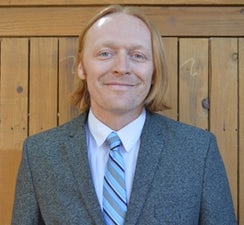
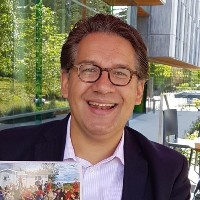
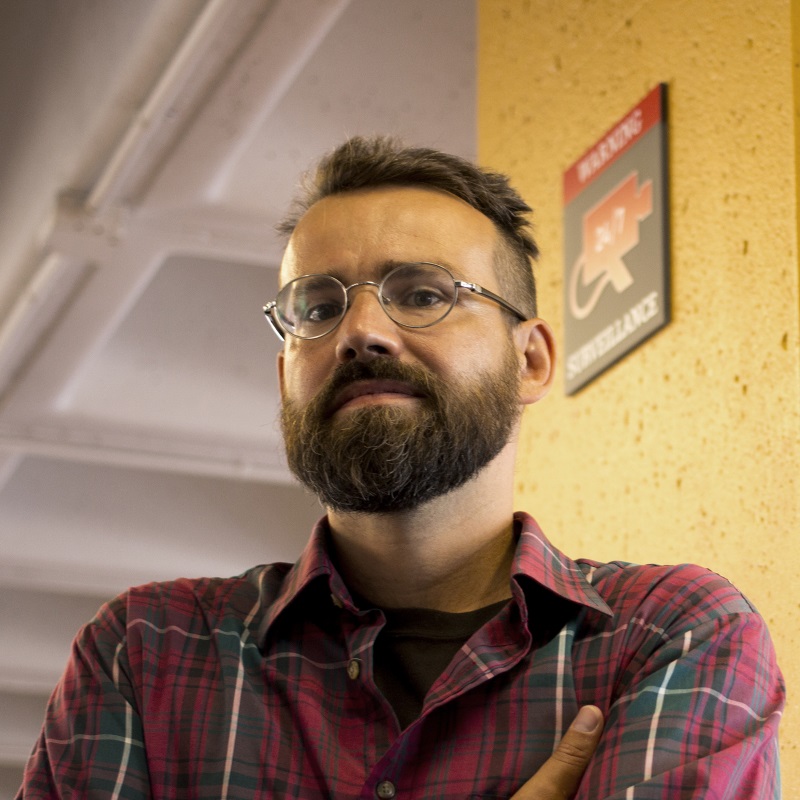
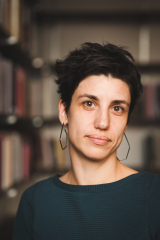
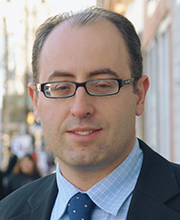
Ben Nobbs-Thiessen is an Assistant Professor of History and Chair of Mennonite Studies at the University of Winnipeg. He holds a PhD from Emory University (2016), with prior roles as a research associate at Arizona State University (2016–18) and a teaching fellow at Washington State University (2018–2020). His research focuses on Mennonite migrations across the Americas, environmental change, and indigenous-settler relations. He teaches courses on Latin American Mennonites and Mennonite Studies II. His research combines archival work, field studies, and oral histories from Bolivia, Paraguay, Mexico, Canada, and the U.S. His 2020 book Landscape of Migration examines Bolivia’s lowland colonization and its intersection with Mennonite and indigenous communities. Current projects include a century-long study of Mexico-Canada Mennonite migrations linked to water scarcity and neoliberal reforms. His publications span journals like Journal of Latin American Studies and Agricultural History , addressing topics like frontier development, foodways, and border conflicts. His transnational approach bridges environmental, migration, and colonial histories. He contributes to interdisciplinary initiatives such as the Newberry Consortium in American Indian Studies and the Centre for Rupert's Land Studies.
Ameil Joseph is an Associate Professor at McMaster University's School of Social Work, where they contribute to critical scholarship at the intersection of mental health, race, and social justice. Their work examines how ideas about difference, normalcy, sexuality, eugenics, race, ability and mental 'illness' cohere and perform within policy, law and practice, with over a decade of professional experience in mental health settings including supportive housing, settlement services, crisis respite, and forensic community treatment. Education: Ph.D in Social Work, York University (2009-2014) MSW, Wilfrid Laurier University (2005-2007) BA in Psychology, University of Waterloo (1998-2003) Dr. Joseph's research engages with critical mental health, postcolonial theory, critical race theory, and critical disability studies to examine the historical production of ideas about difference. Their scholarship particularly focuses on how these ideas manifest in mental health systems, immigration policy, and criminal justice, with attention to issues of social justice, violence, ethics, and confluence. Their work bridges theoretical frameworks with practical implications, addressing the complex interplay of colonialism, racism, sanism, and eugenics in contemporary social systems. Analysis of Dr. Joseph's recent publications reveals a sustained focus on colonial and eugenic violence within mental health, immigration, and criminal justice systems. Their scholarship consistently examines how racism, sanism, and ableism intersect to produce particular forms of state violence, particularly against racialized immigrants with mental health conditions. Recent work has expanded to address temporal dimensions of oppression, data colonialism, and community responses to grief and loss during the pandemic, demonstrating both theoretical sophistication and practical relevance to current social issues. Scientific Awards: University Scholar 2025 - Recognized for research leadership and impact among eight McMaster professors honored as University Scholars Dr. Joseph has secured significant research funding, including nearly $75,000 from the Social Sciences and Humanities Research Council (SSHRC) for community-engaged projects addressing social justice issues. Their teaching portfolio includes advanced courses on critical mental health perspectives, race and colonialism in Canadian society, and social justice theory. While specific graduate students aren't listed in available materials, their extensive co-author network suggests active mentorship and collaboration. Dr. Joseph contributes to community-based initiatives in Hamilton addressing racism in healthcare and mental health systems, connecting academic scholarship with practical community responses to systemic issues. Dr. Joseph maintains an active presence in community responses to contemporary challenges, particularly through initiatives addressing grief during the pandemic and systemic racism in healthcare. Their work exemplifies the integration of scholarly rigor with community engagement, demonstrating how academic research can inform and be informed by real-world social justice efforts.
Christopher M EARLS is a Professor in the Department of Psychology at Université de Montréal's Faculty of Arts and Sciences. He specializes in forensic psychology, psychopathology, and behavioral studies with a focus on sexual delinquency and juvenile prostitution. His research explores the intersections of psychopathy, criminal behavior, and mental health comorbidities. He teaches courses including Psychopathology: Introduction across undergraduate programs in psychology, social sciences, and cognitive neuroscience. His academic contributions span over two decades, with notable work on psychopathy assessment, parenting practices in non-criminal populations, and sexual behavior conditioning. Education Affiliations: Université de Montréal (primary) Teaching Programs: Baccalauréat en psychologie, Neuroscience cognitive, Social Work programs Dr. EARLS has directed 10+ theses and mémoires since 1998, focusing on forensic psychology topics like sexual delinquency correlates and psychopathy measurement validity. His work bridges clinical psychology with sociocultural factors, particularly in marginalized populations like sex workers and juvenile offenders. Research Highlights: Clinical assessment tools comparison (paper vs. digital psychopathy scales) Gender differences in psychopathy expression Impact of childhood trauma on sexual interest development Though no formal awards are listed, his extensive publication record reflects sustained contributions to forensic and clinical psychology research.
David B. MacDonald is a full Professor of Political Science at the University of Guelph's Department of Political Science, housed within the College of Social & Applied Human Sciences. He holds an honorary academic position at the University of Auckland and previously taught at the University of Otago and ESCP Business School in Paris. His research focuses on Indigenous-settler relations, genocide studies, decolonization, and comparative politics in Canada, New Zealand, Australia, and the U.S. He has held significant grants from the Social Sciences and Humanities Research Council (SSHRC), including principal investigator roles on projects like 'Complex Sovereignties' and 'Bi-Nationalism as Reconciliation.' Education: PhD in International Relations from the London School of Economics (2001). Key publications include The Sleeping Giant Awakens (2019) and co-authored textbooks like Comparative Politics (2020). He is North American series editor for Palgrave Macmillan's Global Political Sociology. Research interests emphasize settler colonialism, Indigenous sovereignty, and truth and reconciliation processes. He has contributed to policy discussions, including advising the Canadian Senate on the National Council for Reconciliation. His work bridges academic scholarship with activism, aiming to address systemic inequalities and promote Indigenous rights. SSHRC Grants: Over $200k in grants since 2008, focusing on Indigenous self-determination and colonialism. Publications: 4 sole-authored books; 31 refereed articles; numerous edited volumes. Awards: Shortlisted for the John McMenemy Prize (2013, 2017).
Adèle Garnier is an Associate Professor at the Department of Geography, Université Laval's Faculty of Forestry, Geography and Geomatics. She serves as Director of undergraduate geography programs and the certificate in sustainable tourism. Her research focuses on political geography, migration dynamics, and humanitarian governance, particularly examining refugee labor market participation, temporary migration policies, and technological impacts on immigration systems. Education : PhD in Political Science (Macquarie University/Universität Leipzig, 2012), MA in Political Science (Universität Leipzig, 2006), Diploma in Political Science (Paris, 2002) Her research integrates political geography , migration studies , and geographies of inequality , analyzing power structures in migration governance. Recent work explores Canada's digitalization of immigration, multiscalar impacts of refugee policies, and settler-colonial migration frameworks. Current research trends focus on technological governance of migration , refugee resettlement , and marketization of humanitarian services , with interdisciplinary approaches bridging political science and geography. Research Units : Graduate School of International Studies (ESEI), Immigration Research Team (ERIQA), Cultures-Arts-Societies Center (CELAT) Collaborations : Study Group on Ethnic Relations (Flers), Center for Refugee Studies (York University), Peace Research Institute Oslo She supervises graduate students in geography and co-leads multiple funded projects, including Liberating Migrant Labour (2023-2030) and digital migration governance research (2023-2028).
Rodney Harrison is a Reader in Archaeology, Heritage and Museum Studies at the UCL Institute of Archaeology, University College London. He serves as the founding editor of the Journal of Contemporary Archaeology and has been Vice President of the Association of Critical Heritage Studies since 2012. His research focuses on critical heritage studies, contemporary archaeology, and future-making practices in heritage contexts. Harrison's work challenges traditional boundaries between past, present, and future in heritage discourse, emphasizing how heritage functions as a future-oriented practice. His research spans cultural and natural heritage, exploring connections between heritage conservation and other material legacy management systems, including nuclear waste disposal. Harrison leads the major international 'Heritage Futures' research program funded by the UK Arts and Humanities Research Council. This project represents one of the largest critical, comparative ethnographic studies of heritage practices, examining how different forms of heritage function as distinctive future-making practices across diverse contexts. His scholarly contributions include more than a dozen books and over 60 peer-reviewed articles. Notable publications include Collecting, Ordering, Governing: Museums, Anthropology and Liberal Government (2016), Heritage: Critical Approaches (2013), Reassembling the Collection (2013), Understanding the Politics of Heritage (2011), and The Heritage Reader (2008). Harrison's work consistently engages with critical theory, challenging conventional heritage frameworks and exploring innovative approaches to understanding how material and cultural legacies shape future possibilities. His research has significant implications for heritage policy, conservation practice, and theoretical developments in critical heritage studies.
Jeffrey Monaghan is an Associate Professor at the Institute for Criminology and Criminal Justice (ICCJ) at Carleton University. He holds a Ph.D. in Sociology from Queen’s University and serves on the editorial board of Criminological Encounters . His research focuses on the intersections of policing, surveillance, and systemic inequality, with a particular emphasis on settler colonialism, Indigenous movements, and the global expansion of security practices. Monaghan teaches courses on criminological theories, policing, and justice frameworks. His work examines how security and policing practices criminalize marginalized communities, especially Indigenous peoples and social movements resisting extractive development. Key projects include analyses of counterterrorism strategies, disability injustice in criminal systems, and the securitization of Canadian foreign aid. He has authored/co-authored books like Security Aid: Canada and the Development Regime of Security and Policing Indigenous Movements , and edited volumes such as Protests in the Information Age . Monaghan’s research integrates critical criminology, colonial studies, and sociolegal analysis. He is cross-appointed to Carleton’s Department of Sociology and Anthropology and the School of Canadian and Indigenous Studies, amplifying interdisciplinary engagement with security governance and social justice issues.
Shauna Brail is Professor and Director at the Institute for Management & Innovation, University of Toronto Mississauga, with cross-appointments at the Munk School of Global Affairs & Public Policy. As an economic geographer and urban planner, her research examines urban transformation through economic, social, and technological change, particularly focusing on platform economy impacts, mobility innovation, and governance shifts in 21st-century cities. Education: PhD in Geography (University of Toronto), MA in Urban Planning (University of British Columbia), BA in Urban Studies/Geography (University of Toronto). Leadership Roles: Former Associate Director of Mobility Network, Director of Urban Studies Program, Associate Director of Partnerships & Outreach at School of Cities, and Interim Director of Master of Urban Innovation. Her work appears in top journals across geography, urban planning, and urban studies . Recent publications analyze pandemic impacts on cities, platform economy regulation, public housing finance models, and autonomous vehicle governance. She advises governments and civic organizations on housing, transportation, and digital platform policy while serving on editorial boards for Applied Geography , Progress in Economic Geography , and Canadian Geographies . Academic partnerships include collaborations with researchers like Tara Vinodrai, Ben Donald, and international scholars. Her current projects examine post-pandemic urban recovery, mobility-as-a-service business models, and equitable transportation technology implementation across Canadian cities.
Professor Lisa Strohschein holds dual roles as a Professor in the Sociology Department and Director of Undergraduate Programs at the University of Alberta's Faculty of Arts. Her research focuses on family dynamics and health inequalities, employing longitudinal methodologies to analyze large datasets. She teaches courses on health sociology, mental illness, and socialization, emphasizing sociological perspectives on health distribution and care systems. Her research interests include the interplay between socioeconomic factors and mental health, gender disparities in marital outcomes, and generational shifts in parenting practices. She has published extensively on topics like teen pregnancy correlates, poverty dynamics, and the mental health implications of family structures. Strohschein has received the 2019-20 Killam Annual Professorship and serves as Editor-in-Chief of Canadian Studies in Population, a peer-reviewed journal focusing on demographic research. She also contributes to policy through roles like membership in Statistics Canada's Demographic Statistics Advisory Committee and past presidency of the Canadian Population Society. Her scholarly work bridges theoretical frameworks (life course, stress process theory) with methodological rigor, often using growth curve models and competing risks analysis. Current research trends emphasize cross-national comparisons and applied policy relevance, particularly in understanding how family transitions impact health across the life course.
Kevin Manaugh is an Associate Professor at McGill University, specializing in Urban Planning with a focus on sustainable transportation and spatial justice. His research examines how decision-making processes in urban development balance environmental, economic, and social equity goals, particularly through transport systems. He holds a PhD in Urban Planning from McGill University (2013). His key research interests include integrating social equity into land use policies, analyzing accessibility impacts on socioeconomically diverse populations, and studying behavior change related to sustainable transportation. Current projects explore equitable transit accessibility, responses to local mobility policies, and health/well-being effects of sustainable transport choices. Manaugh has published extensively on transportation equity, urban form analysis, and GIS applications. His work bridges theoretical frameworks with practical policy implementation, emphasizing participatory approaches to urban planning. Notable contributions include studies on pandemic street reallocation equity and cycling infrastructure prioritization strategies. His research has been supported by interdisciplinary collaborations and applied to Canadian urban contexts. Despite prolific output, Manaugh maintains an active engagement with public discourse on urban mobility challenges and equitable urban futures.
Aya Aboelenien is an Associate Professor in the Department of Marketing at HEC Montréal, a leading business school in Montréal, Canada. Her research focuses on morality and ethics in consumption, consumer culture theory, qualitative methods, aesthetics, and social media. She holds a Ph.D. (Marketing) from Concordia University, an M.B.A. and BBA from the American University in Cairo. Research Interests Aya’s work examines ethical consumption trends, influencer dynamics, and marketplace morality. She explores how brands navigate ethical dilemmas and how social media influencers shape consumer behavior. Her recent studies include analyses of cancel culture’s impact on brands, the ethical dimensions of influencer marketing, and meat consumption’s cultural symbolism. Recent Contributions Her 2024 papers in Journal of Brand Management and Journal of Business Research address brand response strategies to changing market logics and the formation of marketplace moral sentiments. Earlier work in Journal of Marketing Management (2023) and Consumption Markets & Culture (2022) further highlight her focus on ethical influencers and contested consumption practices. Awards & Supervision She received the Best Competitive Paper Award at the 2025 Consumer Culture Theory Conference. Since 2021, she has supervised five MSc projects on topics like green marketing, influencer strategies, and brand repositioning. She teaches courses in consultancy-based marketing research and strategic marketing. Affiliations Aya is affiliated with HEC Montréal’s marketing department and collaborates with global scholars on projects involving consumer ethics and digital marketing innovations.
Katherine Lemons is an Associate Professor in the Department of Anthropology at McGill University's Faculty of Arts. Her research focuses on Islamic family law adjudication in India, examining its implications for understanding Muslim gender and kin relations, secularism, minority politics, and legal pluralism in postcolonial contexts. She has established herself as a leading scholar in the anthropology of law with her groundbreaking work on Muslim divorce practices and their relationship to Indian secularism. Dr. Lemons earned her Ph.D. from the University of California, Berkeley in 2010. Her academic journey has centered on the intersections of religion, law, and gender in South Asian contexts, with particular attention to how religious legal systems operate within secular states. Her research interests span multiple interconnected fields including the anthropology of law, Islamic legal studies, secularism theory, feminist anthropology, and South Asian studies. Lemons approaches these topics through careful ethnographic work in India, particularly examining how Muslim communities navigate family law disputes through non-state Islamic institutions. Her work challenges conventional understandings of the relationship between religious and secular law, arguing that Muslim divorce practices in India represent a critical site for understanding the complexities of secular governance in postcolonial contexts. She investigates how legal pluralism functions in practice, how religious legal authority is established adjacent to secular states, and how gender relations are shaped through these intersecting legal regimes. Dr. Lemons' scholarly output reveals a consistent focus on the tensions between religious legal traditions and modern secular governance, with particular attention to how marginalized communities navigate these complex legal landscapes. Her work demonstrates how legal practices often blur the boundaries between religious and secular domains, challenging simplistic understandings of secularism. She has made significant contributions to understanding how Islamic law functions in non-Muslim majority contexts, both in India and more recently in her research on sharia courts in Ontario. Michelle Z. Rosaldo Prize from the Association for Feminist Anthropology, American Anthropological Association (Honorable Mention) Critical Anthropology Book Prize from the Association for Political and Legal Anthropology (Honourable Mention) South Asian Muslim Studies Association Book Award (Honourable Mention) As an academic mentor, Dr. Lemons advises graduate students working at the intersections of anthropology, law, and religious studies. Her research has been supported by various academic grants that have enabled extensive fieldwork in India and Canada. She is currently developing two major research projects: "Traveling for Justice," which examines transnational dimensions of Islamic legal knowledge, and "Adjacent to the State," an ethnographic study of sharia courts in Ontario. Dr. Lemons is affiliated with several research centers at McGill University that focus on South Asian studies, legal anthropology, and religious studies. Her work connects with broader scholarly communities through collaborations with researchers studying legal pluralism, secularism, and Islamic jurisprudence across multiple national contexts.
Jino Distasio is a Professor and Acting Dean of Science at The University of Winnipeg, Department of Geography. He teaches Urban Geography, Cultural Geography, and Social Geography, with courses like GEOG-3413 Urban Revitalization and GEOG-3430 Housing and Neighbourhood Planning . His research focuses on housing and neighborhood development, city planning, urban revitalization, homelessness, mental health, and urban transportation. Teaching Areas : Urban Geography, Cultural Geography, Social Geography Key Collaborations : Institute of Urban Studies (U. of Winnipeg), Housing First initiatives, interdisciplinary teams in public health and social policy His recent publications highlight Housing First interventions, urban policy impacts on homelessness, and social determinants of health. Scientific awards and honors were not explicitly mentioned in the provided text.
Raphaël Fischler is a Full Professor and former Dean of the Faculty of Urban Planning and Landscape Architecture at the University of Montreal. He holds dual expertise in urban planning theory, history, and practice, with a focus on North American urban development, land-use regulation, and governance. His academic roles include teaching at McGill University and serving as Dean from 2018–2023, during which he led strategic initiatives like the Quartier de l’Innovation and addressed urban challenges such as housing affordability and metropolitan governance. **Education:** PhD in Urban Planning, UC Berkeley (1993) Master of City Planning, MIT (1987) Master of Science in Architecture, MIT (1987) Bachelor of Engineering, Eindhoven University of Technology (1984) **Research Interests:** Fischler’s work explores urban planning’s historical foundations, particularly zoning’s evolution, and integrates reflective practice into pedagogy. He advises on municipal projects and contributes to policy debates on density, public participation, and sustainable urbanism. His research bridges academia and practice, emphasizing ethical planning and community engagement. **Articles Trends:** His recent publications analyze zoning’s historical role, social justice in urban redevelopment, and governance challenges in Montréal. He critiques systemic issues like housing affordability and advocates for equitable urban policies. **Awards & Recognition:** Fellow of the Canadian Institute of Planners (2020) Émérite Member, Order of Quebec Urban Planners (2014) McGill Principal’s Excellence in Teaching Award (2013) **Grants & Teams:** He collaborates with institutions like the Centre de recherche interdisciplinaire en études montréalaises (CRIEM) and advises public agencies on metropolitan development. His work spans academic leadership, professional practice, and public advocacy, addressing urban challenges through interdisciplinary approaches. **Labs/Teams:** Affiliated with the CRIEM , focusing on Montréal’s urban history and contemporary planning issues. He mentors students in urban policy and design through studio courses and thesis supervision.
Professor Jennifer M. Welsh is a leading scholar in global governance and security, holding the Canada 150 Research Chair at McGill University. She previously served as Professor at the European University Institute and the University of Oxford, where she co-founded the Oxford Institute for Ethics, Law and Armed Conflict. Her work focuses on humanitarian intervention, the 'Responsibility to Protect' (R2P), UN Security Council dynamics, and Canadian foreign policy. Welsh advised UN Secretary-General Ban Ki-moon on R2P (2013–2016) and directed a five-year European Research Council project on 'The Individualisation of War.' Education : D.Phil. in International Relations, St. Antony's College, University of Oxford (Oxford, England) Masters and Doctorate from University of Oxford (Rhodes Scholar) BA, University of Saskatchewan (Canada) Research Interests : Welsh examines ethical and legal dimensions of armed conflict, atrocity prevention, and norms governing state sovereignty. Her work bridges theoretical analysis and policy implementation, with key contributions to R2P frameworks and non-state actor engagement in conflict zones. Recent publications explore localization in governance, Canada's geopolitical role, and civilian self-protection mechanisms. Key Awards : Leverhulme Trust Research Fellowship Trudeau Fellowship Grants & Advising : Directed a €2.5M ERC-funded project (2014–2019) Advisory roles include Peace Research Institute Frankfurt, Global Centre for R2P, and Auschwitz Institute Editorial boards: Global Responsibility to Protect , International Journal , and Ethics and International Affairs Labs/Teams : Directs McGill's Centre for International Peace and Security Studies (CIPSS), fostering interdisciplinary research on global security challenges.