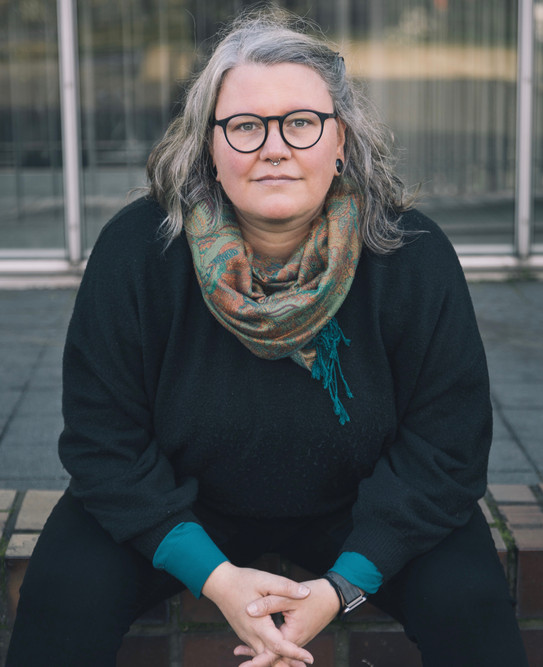
Dr. Anike Krämer is a Lecturer and Researcher at the Chair of Sociology of Gender Relations , Faculty of Social Sciences, TU Dortmund University. She is also a Visiting Researcher at the Institute of Sociology, Innsbruck University, and a member of the Advisory Board Mittelbau of the Network Women's and Gender Studies NRW. Doctorate in Sociology (summa cum laude), Ruhr University Bochum (2020) Master of Arts in Social Science, Ruhr University Bochum (2014) Bachelor of Arts in Social Science/Comparative Studies, Ruhr University Bochum (2011) Her research focuses on the construction of gender in family contexts , examining how power relations and medicalization affect individuals, particularly parents of intersex children. She explores themes like intersex experiences , gender binarism , parental strategies , and medical habitus , situated within sociological theory and critical gender studies. Her publications emphasize intersex , parental coping , and medicalization processes , with recent works addressing gender norms and knowledge production . She has contributed to policy projects like inter-nrw.de and engaged in public discourse through CNN , Deutschlandfunk Nova , and Frankfurter Rundschau . 2025 - Mobility grant, Research Academy Ruhr for Stockholm University 2023 - Prize of the Network Qualitative Family Research 2021 - Second Prize, German Study Award (Social Sciences) 2021 - Wilhelm-Hollenberg Prize, Ruhr University Bochum 2018 - Travel grant PR.INT, Ruhr University Bochum 2013-2014 - German scholarship, Köhler Foundation
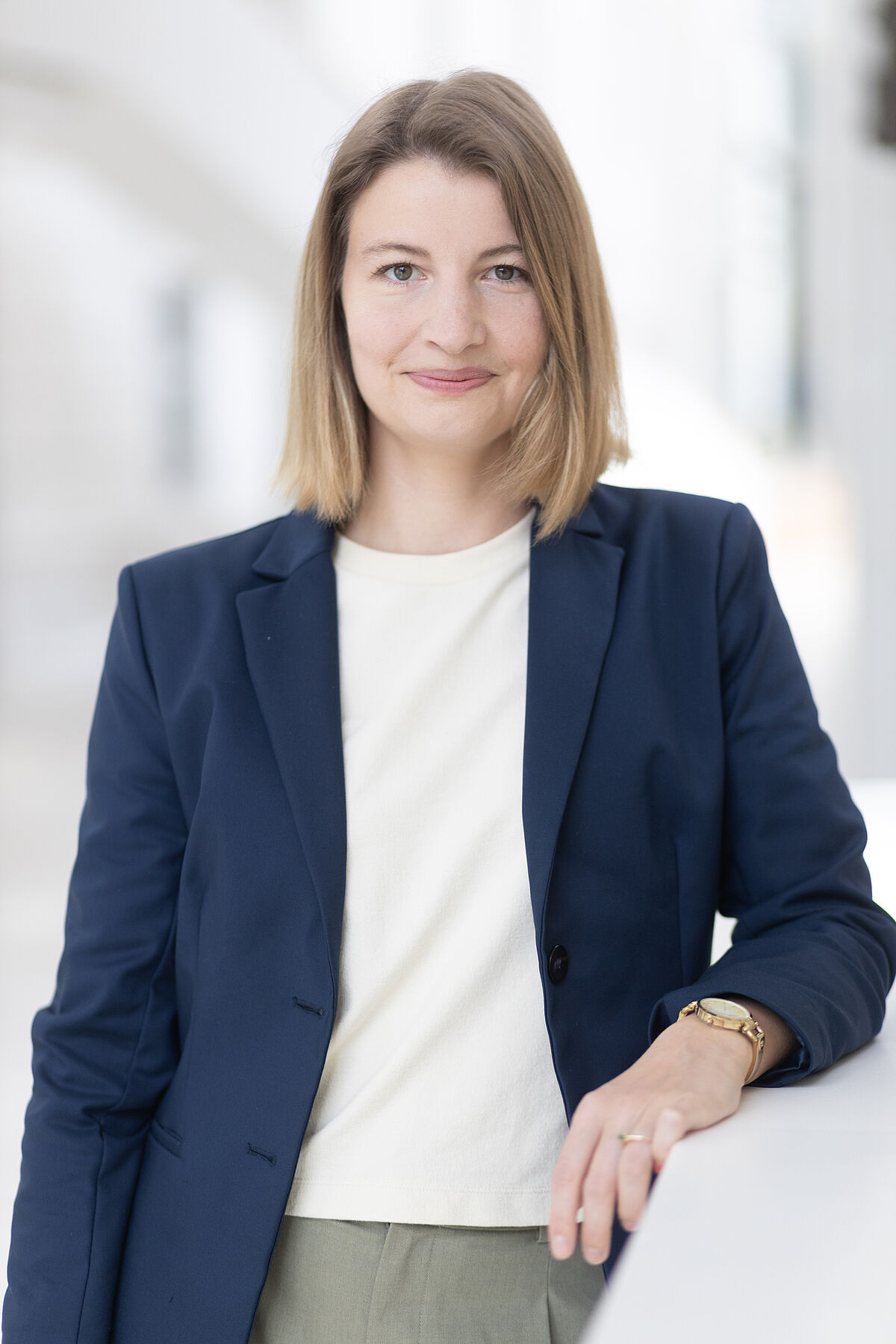
Alica Repenning is a Postdoctoral Researcher in Human Geography at the University of Greifswald. She holds a PhD in Geography from Humboldt University Berlin and has held research roles at institutions like the Leibniz-Institute for Research on Society and Space (IRS). Her work bridges digital platforms, urban economies, and feminist geographies. Education : M.Sc. in Geography and Geoinformatics from Copenhagen University, B.Sc. in Geography from Heidelberg University, and an Erasmus exchange at Loughborough University. Research Interests focus on the platform economy’s impact on sustainability, time-space dynamics in digital mediation, feminist approaches to geography, and the spatial transformations of the Baltic Sea region. Her recent work explores how digital platforms reshape creative industries and urban-economic challenges. Publications span journals like Journal of Economic Geography and Environment and Planning A , with a monograph addressing time-space friction in platform mediation. Collaborative works include policy papers on regional digital platforms. Professional Roles include membership in the DFG-funded network on disruptive innovation processes, representation of doctoral and postdoctoral researchers in geography, and spokespersonship for the Labour Geography Working Group.
Anna-Carolina Haensch is a Lecturer at the University of Munich in the Chair of Statistics and Data Science in Social Sciences and the Humanities and an Assistant Professor at the University of Maryland in the International Program in Survey and Data Science. Her interdisciplinary work bridges statistics, computational social science, and natural language processing, with a focus on methodological innovation in social research. Education: PhD in Sociology, University of Mannheim (2017-2021) M.Sc. in Survey Statistics, University of Bamberg (2014-2017) B.A. in Political Science/Sociology, Ludwig-Maximilians-Universität München (2011-2014) Dr. Haensch's research centers on missing data, synthetic data, and big data applications in social sciences. She develops advanced statistical methods for survey data harmonization, multiple imputation techniques, and leverages natural language processing to analyze complex social phenomena. Her work consistently addresses methodological challenges in social research with practical applications for data collection and analysis. Her recent publications reveal a significant trend toward integrating large language models with traditional survey methodology, exploring how AI can enhance data collection, analysis, and interpretation in social science research. She has made substantial contributions to understanding missing data patterns, developing synthetic data approaches, and examining the societal implications of AI tools across multiple domains including mental health, political science, and housing policy. Scientific Awards: 2022 AAPOR Burns "Bud" Roper Fellow Award 2022 AAPOR Warren J. Mitofsky Innovators Award (as part of CTIS team) 2022 AAPOR Policy Impact Award (as part of CTIS team) 2011-2017 Max-Weber-Programm (undergraduate and graduate stipend) Dr. Haensch actively mentors the next generation of researchers, currently supervising 3 PhD theses on statistical education, machine learning applications in social sciences, and synthetic data generation with LLMs. She has guided approximately 6 master's theses and 15 bachelor's theses at the University of Munich since 2022, with topics primarily related to synthetic data, multiple imputation, and LLM applications. Her teaching spans statistical methods, data science techniques for survey researchers, and specialized topics in big data analysis. She has secured teaching grants including a €20,000 promotion for the RAINER project (R Assistant IN Error Resolution) for 2024-2025 and a €10,000 LMU-NYU Scholarship in 2023. She serves on several important boards including the Eurostat EMOS Board (2024-2026), the Ethics Commission of Faculty 16 at LMU (2023-2025), and as Women's Representative at the Institute for Statistics, LMU (2024-2026). Her collaborative work with the University of Maryland Social Data Science Center and involvement in the Global COVID-19 Trends and Impact Survey demonstrates her commitment to large-scale data collection initiatives and real-time social research.
Jun.-Prof. Dr. Sina Leipold is an Assistant Professor and Head of the Chair of Societal Transition and Circular Economy at the University of Freiburg, Germany. Her work bridges political science, sociology, economics, and engineering to explore governance mechanisms for sustainable resource flows and the circular bio-economy. Doctor of Philosophy (Summa cum Laude), University of Freiburg M.A. Social Sciences, FLACSO Argentina & University of Freiburg B.A. Political Science and History, Ruhr University Bochum Sina leads the interdisciplinary research group Circulus , funded by the German Ministry of Education and Research (BMBF), focusing on discourses and material processes shaping the circular economy in Europe. Her research integrates political/social science theories with environmental and engineering approaches. She has co-organized seminars like Freiburg Talks on Environment and Society and Linking Mind & Environmental Sustainability , and served on editorial boards and review panels for journals and funding agencies. Awards: Deutsche Studienpreis (2017), Robert Bosch Foundation Fast-Track Program (2017), BMBF Nachwuchsforschungsgruppe Grant (2016)
Luca Scheunpflug is a Research Associate and doctoral student at the Institute for Sociology and Cultural Organization (ISKO) at Leuphana University, and a member of the Centre for Digital Cultures (CDC). His interdisciplinary work bridges multiple research centers within the university with international experience spanning Germany, Spain, and Latin America. His research program critically examines: Infrastructures and urban nature through urban political ecology frameworks Environmental justice dimensions in water-urban society relationships Spatiotemporal dynamics between water systems and urban communities amid climate change Power-driven political ontologies emerging around digital infrastructure technologies More-than-human relationships in urban environments Scheunpflug's scholarly foundation includes previous research on public service remunicipalization, social movement mobilization, and water conflict dynamics. Beyond academia, he actively engages in political education addressing urban development, postcolonial continuities, global interdependencies, and climate justice in adaptation processes.
Mirjana Spasojevic is a researcher and collaborator in Human-Computer Interaction , Distributed Systems , and Interactive Media . She has contributed to innovations in Augmented Reality for family engagement Context-aware mobile interfaces Collaborative digital storytelling Ubiquitous computing systems Preschooler communication tools Her work bridges technical research with social implications, emphasizing user experience and accessibility. Research Trends from her 15 most recent publications (1994-2023) show sustained focus on Human-robot interaction and failure detection (2023) Smart jewelry and wearable interfaces (2015) Family videochat and connected reading (2010-2011) Early mobile photoware systems (2010) Networked toys for distance play (2011) Asynchronous messaging for children (2011) Academic Contributions span from foundational distributed systems research in the 1990s to modern interactive media explorations. Her collaborations with institutions like Carnegie Mellon University (via Mahadev Satyanarayanan) and tech companies suggest cross-disciplinary impact.
Prof. Dr. Sérgio Costa is a University Professor of Sociology of Latin America at the Institute of Sociology and the Latin America Institute of Freie Universität Berlin since February 2008. He holds a prominent position in German-Latin American academic relations and has made significant contributions to sociological theory with a focus on Latin America. His research interests span Racism and Anti-racism , Living together in diversity , Social inequality , and Postcolonial theories . Costa's work bridges German and Latin American academic traditions, with particular attention to the Black Atlantic, conviviality frameworks, and entangled inequalities. His theoretical contributions have shaped contemporary discussions on social cohesion in unequal societies. Costa's scholarly output reveals consistent focus on the interconnections between conviviality and inequality, with recent work examining these dynamics during the pandemic, in middle-class formations, and in intersectional politics. His publications demonstrate interdisciplinary reach across sociology, political science, and area studies. Iberoamericano Buchpreis der Latin American Studies Association (2021) for 'Entre el Atlántico y el Pacífico Negro' Preis der Dahlem Research School für Exzellente Betreuung (2020) Costa has supervised 24 completed PhD dissertations and currently advises 10 doctoral candidates at Freie Universität Berlin, in addition to numerous master's theses. His research is supported by multiple grants including the Maria Sibylla Merian Centre for Advanced Studies on Conviviality in Unequal Societies, where he serves as Speaker, and the Berlin University Alliance project 'Beyond Social Cohesion: Repertoires of Living Together.' He leads the International Graduate College 'Temporalities of Future' and the 'Minor Cosmopolitanisms' Graduate College, demonstrating his leadership in shaping next-generation scholarship on global inequalities and alternative futures.
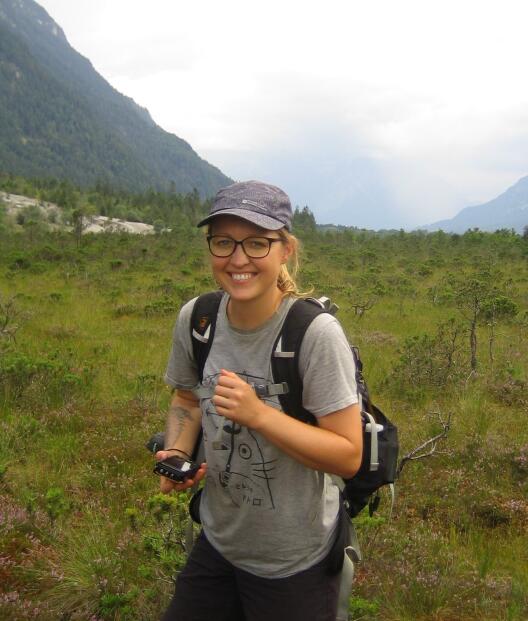
Dr. Denise Rupprecht is a Research Associate at the Biodiversity and Ecosystem Research Group within the Institute of Landscape Ecology at the University of Münster, where she has worked since completing her PhD in 2021. Her research focuses on grassland restoration and sustainable management practices, particularly examining grazing effects on vegetation dynamics in dry grasslands, heaths, and forest ecosystems. Her educational background includes a PhD in Landscape Ecology (2021), Master of Science in Landscape Ecology (2014), and Bachelor of Science in Landscape Ecology (2011), all from the University of Münster. Her doctoral thesis was titled "Contributions to the Restoration of grasslands in Central Europe," while her Master's thesis examined "Vegetation and structure-diversity of year-round grazed nutrient-poor sites" and her Bachelor's thesis focused on "Year-round grazing in wetlands - Overview of German grazing projects in nature conservation." Dr. Rupprecht's research interests center on grassland restoration ecology, particularly examining how different grazing regimes impact vegetation composition and biodiversity. She investigates extensive year-round pastures in nature conservation contexts, sheep grazing on nutrient-poor grasslands, and the influence of wildlife (particularly fallow deer) on vegetation dynamics in calcareous grasslands. Her work also extends to Central European forest ecosystems, studying vegetation succession and restoration processes. Her research combines long-term field monitoring with experimental approaches to understand ecological dynamics and develop evidence-based conservation strategies. Her publication record shows a strong focus on grazing effects across multiple ecosystems, with particular attention to calcareous grasslands and nutrient-poor habitats. Her work demonstrates how different grazing regimes (sheep versus deer, year-round versus seasonal) affect vegetation composition, biodiversity, and restoration outcomes. She frequently employs long-term monitoring approaches, with several studies spanning multiple years to capture ecological dynamics that might be missed in shorter-term research. Student Poster Prize Overall Runners-up at the EAB2017 Dr. Rupprecht actively supervises numerous Bachelor's and Master's theses, typically serving as first or second supervisor for projects related to grassland ecology, restoration, and conservation. Her supervisory role extends across various research topics including vegetation dynamics under different grazing regimes, effects of urbanization on biodiversity, forest ecology in the context of climate change, and restoration techniques for endangered habitats. She teaches several courses including botanical identification exercises, vegetation ecology field exercises, woody plant identification, and Mediterranean ecology seminars. Her professional activities include membership in several ecological organizations including the Floristic-sociological working group (FlorSoz), Academy for Ecological Regional Research (AföL), Society for Ecology (GfÖ), and Renaturation Network. Dr. Rupprecht works within the Biodiversity and Ecosystem Research Group at the University of Münster, collaborating closely with Prof. Dr. Norbert Hölzel and other researchers in the Institute of Landscape Ecology. Her research often involves field sites across Germany, particularly in the Teutoburg Forest region, and frequently examines the interface between scientific research and practical conservation management.
Rhenish Friedrich Wilhelm University of BonnGermany
Prof. Dr. David Kaldewey is a faculty member at the University of Bonn, affiliated with the Department of Science Studies within the Faculty of Arts and Humanities. He holds the position of Professor and is actively engaged in research and teaching. His office is located at Heussallee 18-24, Room 1,210 in Bonn, Germany, and he can be reached via email at kaldewey@uni-bonn.de or by phone at +49 228 73-62998. Prof. Kaldewey's research focuses span several key areas in the study of science: Science Communication and Journalism Epistemology and History of Science Globalization and Internationalization of Science Science Policy and Politics Diversity in Higher Education Pandemic Science Communication Conceptual History of Scientific Concepts His recent work demonstrates a strong engagement with contemporary issues in science studies, particularly examining the intersection of science, society, and policy during the COVID-19 pandemic. Prof. Kaldewey has been actively researching the crisis of facticity, science skepticism, and the challenges of communicating scientific knowledge in complex social contexts. His scholarship spans both theoretical examinations of the nature of scientific knowledge and practical analyses of science communication practices. Analysis of his publication trends shows increasing focus on the tension between internationalization and diversity management in higher education, the role of science in times of crisis, and the conceptual evolution of key terms in science policy discourse. His work connects historical perspectives with contemporary challenges, providing valuable insights into the evolving relationship between science and society across multiple cultural contexts including Germany, India, Poland, and African nations. Prof. Kaldewey's research contributes significantly to understanding how scientific evidence is produced, communicated, and utilized in political decision-making processes, particularly during emergencies. His methodological approach combines qualitative analysis, discourse analysis, and conceptual history to examine the social dimensions of scientific knowledge production across different cultural and institutional settings.
Hazal Budak-Kim is a Researcher at the Department of Gender & Diversity Studies , Institute of Social Sciences, Christian-Albrechts-University of Kiel , Germany. Her work focuses on: Migrant self-positioning in sports Urban refuge spaces Gender-body relations Qualitative methodologies Research contributions include: Co-editor of Transformation Processes in the City as a Place of Refuge (2022, Springer VS) Key publications on anti-Muslim knowledge production in sports Intersectional analysis of structural discrimination (EMMD project) She has organized workshops like the European Forum on Integration (2019) and teaches courses on urban sociology and qualitative methods. Current projects include the KUSS instrument for migration-sensitive oncology care and EMMD (Federal Anti-Discrimination Agency funded).
Anindya Sekhar Purakayastha is a Professor at the Department of English, Kazi Nazrul University, India, and currently affiliated with the School of Translation and Cultural Studies at the Institute of Language Studies and Research (ILSR), Kolkata, India. He has held visiting positions at institutions such as the Institute for Critical Social Inquiry at the New School for Social Research (New York), Linnaeus University (Sweden), and the University of Massachusetts, Amherst as a Fulbright Fellow. Research focuses on postcolonial literature and cultural practices Specializes in critical theory, violence studies, and citizenship rights Co-coordinator of the Centre for Critical Social Inquiry at Kazi Nazrul University Co-founder of the Postcolonial Studies Association of the Global South (PSAGS) His joint research project with Pavan Malreddy, Anarchiving Social Change , examines caste, ethnic, and racial conflicts through the philosophies of B.R. Ambedkar and W.E.B. DuBois. Selected publications include works on Deleuze and Guattari, social movements, and violence in South Asia. Notably, he advocates for the concept of 'anarchiving' to reimagine archives as tools for social critique. Fulbright Fellow (University of Massachusetts, Amherst) Editorial contributions to Violence in South Asia and Deleuze and Guattari and Terror
Uwe Lübken is a Professor and Research Fellow at the Ludwig Maximilian University of Munich (LMU), affiliated with the Chair of Environmental Humanities and the Rachel Carson Center. He coordinates LMU's Master Program Environment and Society and serves on the ProEnviron Board. Research Interests: Environmental History Transnational Historical Analysis Urban Environmental Dynamics Climate Change Narratives Disaster Studies River Management Systems Scientific Awards: Prize-winning book on US perception of Nazi threat to Latin America Publications Trends: Recent works analyze urban-river interactions (2016), climate-induced displacement (2019), flammable cities (2012), and flood mitigation technologies (2024). His scholarship bridges historical analysis with environmental policy.
Justin J.W. Powell is a Full Professor of Sociology of Education and Head of the Department of Social Sciences at the University of Luxembourg, Faculty of Humanities, Education and Social Sciences. Previously, he served as Acting Professor of Sociology of Education at Leibniz University Hannover (2011-2012) and held research positions at WZB Berlin Social Science Center (2007-2012), Georg-August-University Göttingen (2005-2007), London School of Economics (2010), and Johns Hopkins University (2009). Professor Powell received his doctorate (Dr. phil., summa cum laude) in Sociology from Freie Universität Berlin in 2004. He holds an M.A. in Sociology and Political Science from University of North Carolina at Chapel Hill and Humboldt University of Berlin (1999, with distinction), and a B.A. in Sociology, Social Policy, and German Studies from Swarthmore College (1992, with distinction). His academic journey began with coordinating German-American academic programs at the Social Science Research Council in New York (1993-1998). Professor Powell's research focuses on comparative institutional analysis of education systems, examining the dynamics of persistence and change in special and inclusive education, vocational training, higher education, and science systems. His work intersects sociology, political science, and education, with particular attention to cross-national comparative frameworks and institutional analysis. His scholarship has significantly advanced understanding of disability classification systems, educational equity, and the relationship between vocational and academic education pathways. His publication record demonstrates consistent engagement with comparative education research, particularly examining institutionalization processes across national boundaries. His work reveals strong thematic continuity in analyzing policy frameworks and their impact on educational outcomes, with particular attention to inclusion, equity, and system convergence in European and transatlantic contexts, reflecting his expertise in both historical and contemporary educational developments. Professor Powell has received several prestigious awards for his scholarly contributions: Irving K. Zola Award from the Society for Disability Studies (2006) Outstanding Book Award from the American Educational Research Association (Division B) (2012) Association for the Study of Higher Education's Award for Significant Research on International Higher Education Professor Powell has led multiple significant research projects including 'Internationalization of Vocational and Higher Education Systems in Transition (INVEST),' 'Shifting Tensions between Vocational and General Education: France and Germany Compared (VOCGENE),' and the 'OECD Cross-national Study of Transitions of Students with Disabilities beyond Secondary Education.' His extensive grant portfolio reflects his leadership in comparative educational research across international contexts and demonstrates his ability to secure funding for complex multinational studies. Professor Powell maintains active research collaborations across Europe and North America, having held visiting positions at the University of Oxford, Bielefeld University, Institute for Higher Education Research Halle-Wittenberg, University of Gothenburg, and University of Zurich. His work contributes to advancing the fields of comparative education and sociology of education and science through international scholarly networks and interdisciplinary approaches, fostering cross-border academic exchange and knowledge production.
Prof. Rafael Wittek is a Full Professor at the University of Groningen in the Faculty of Behavioural and Social Sciences, Department of Sociology. He serves as Scientific Director of the interdisciplinary research center SCOOP: Sustainable Cooperation and Coordinating Principal Investigator for the SOCION consortium. His research spans: Sociology of Organizations Economic Sociology Social Network Analysis Sociological Theory Humanitarian Action Recent research focuses on: Sustainable cooperation mechanisms Institutional decay theories Healthcare intern behavior during crises Hybrid organizational forms Refugee integration strategies Major grants include: NWO Gravitation Grant (18.8M€, 2017) NWO SUMMIT Grant (30.6M€, 2024) Scientific recognition: Bi-Annual James Coleman Best Book Award (2014) Best Conference Paper Awards (2012, 2005, 2004) Elected member, European Academy of Sociology (2010) He supervises numerous PhD candidates and teaches in the Research Master Behavioral and Social Sciences and the Transdisciplinary PhD-Training Program Sustainable Cooperation (SCOOP).
Anette Eva Fasang is a Professor at the Institute of Social Sciences, Humboldt University, specializing in microsociology. She serves as the Director of the Institute and holds the Women's Representative role, indicating her commitment to gender equality in academia. Her research focuses on life course analysis, social inequality, family sociology, and labor dynamics across diverse contexts like Germany, Israel, Senegal, and Egypt. Institution: Humboldt University, Berlin Department: Institute of Social Sciences Role: Director and Women's Representative Her methodological expertise lies in sequence analysis and life course-sensitive statistical methods, with recent work examining economic vulnerability, time-use patterns, and intersectional inequalities. Publications highlight comparative social policy across Europe and the Middle East, emphasizing temporal dimensions in employment and family trajectories. The 2024-2025 articles particularly focus on youth economic opportunities, welfare state dynamics, and gendered labor supply patterns.