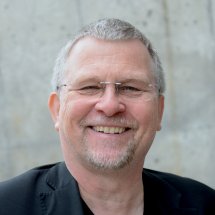
Dag Henrik Tuastad is a Professor of Middle East Studies at the Department of Culture Studies and Oriental Languages (IKOS) at the University of Oslo. His research focuses on kinship dynamics in Palestinian politics, rebel governance (notably Hamas rule in Gaza 2007–2023), political representation crises, and the intersection of sports and politics in the Middle East. Current projects include senior research at Football and Religion in the Middle East (FORM) , funded by the Norwegian Research Council (2021–2026) Former project leader for Rebel Governance in the Middle East (2017–2021) PhD in Social Anthropology (2008) on kinship in Palestinian politics His recent publications analyze Hamas’s symbolic authority, football’s role in Jordanian-Palestinian identity formation, and the erosion of legal frameworks in the West Bank. He critiques media bias (e.g., in Qatar World Cup coverage) and explores how football culture reflects broader political tensions. Teaching: Courses on Middle East history, cultural anthropology, and conflict resolution Regional Focus: Palestine, Jordan, Gaza, and the Levant
Sveinung Sandberg is a Professor at the Department of Criminology and Sociology of Law, University of Oslo. His research spans marginalization, illegal drug markets, radicalization, and narrative criminology, combining theoretical frameworks from Bourdieu and narrative analysis. Academic Interests: Marginalisation, Legal & Illegal Drugs, Violence, Radicalization, Bourdieusian Criminology, Narrative Criminology, Latin American Studies, Social Movements Education: PhD from University of Bergen Research Focus includes: Street capital theory in criminology Drug market cultural dynamics Narrative approaches to extremism Latin American criminal trajectories Recent Publications examine pandemic-related crime shifts, gendered drug use patterns, and narrative mechanisms in criminal justice. His 2021-2025 projects Radicalization and Resistance and Crime in Latin America (CRIMLA) involve cross-country life-story analyses. Scientific Awards: Fridtjof Nansen's Award for Young Researchers (2011) The Meltzer Prize for Young Researchers (2010) Editorial Roles include board memberships at Theoretical Criminology , Deviant Behavior , and International Criminal Justice Review . He has conducted fieldwork in Mexico and held visiting positions at institutions including CIDE (Mexico City) and European Monitoring Centre for Drugs and Drug Addiction (Lisbon).
Vladimir Tikhonov is a Professor at the Department of Culture Studies and Oriental Languages, Faculty of Humanities, University of Oslo. Specializing in Korean history, his research focuses on Korean Buddhism, nationalism, modernity in East Asia, and labor movements. He holds a PhD from Moscow State University (1996) and has taught at KyungHee University (1997-2000). Current roles include co-leadership of the 'Militarism and Religions in Modern Asia' project and responsibility for the MA program in East Asian Culture and History. Research interests span colonial-era Korean perceptions of Japan and Russia, religious militarism, and the intersection of nationalism with Buddhist thought. Notable works include Buddhism and Violence (2012) and Modern Korea and Its Others (2015). Ongoing projects explore Korean communist movements and critical biographies of nationalist figures like Han Yongun. Teaching covers East Asian culture, history, and politics, with courses like EAST4510 and KOR4504. His publications combine historical analysis with transnational perspectives, addressing topics from colonial-era intellectual debates to contemporary South Korean military chaplaincy dynamics.
Michael Rauhut is a Professor at the University of Agder where he leads the PhD specialization in popular music performance and represents subject teachers within scientific disciplines at the Department of Rhythmic Music . His academic work focuses on popular music studies and musicology, with supervisory responsibilities for master's and doctoral candidates. Rauhut's research explores the intersection of music, politics, and society, with particular emphasis on: Popular music history in socialist contexts (especially the GDR) Cultural transfer during the Cold War Blues, rock, and jazz as forms of cultural expression Youth cultures and music under authoritarian systems Church-state dynamics in musical expression His work demonstrates how music functioned as both state propaganda and vehicle for dissent. Analysis of Rauhut's publications reveals consistent focus on: Cultural mechanisms in socialist states (75% of recent works) Transnational music exchanges across the Iron Curtain Archival methodologies for reconstructing musical histories Identity formation through popular music State censorship and artistic resistance strategies His documentary filmography expands these themes into visual media. As PhD supervisor, Rauhut guides research in popular music performance and musicology. His extensive conference participation includes keynote addresses in Germany, USA, Georgia, and Ukraine, covering topics from blues reception to music's role in political revolutions.
Rune Svarverud is a Professor at the Department of Culture, Religion, Asian and Middle Eastern Studies, Faculty of Arts, University of Oslo. His research spans two major periods in Chinese history: early Chinese philosophy (pre-Qin to Han dynasties) and modern China (post-Opium War cultural encounters). Key research areas include conceptual history, environmental history, political philosophy, and cross-cultural translation studies. Permanent employee since 2004 Head of Department since 2021 Former PhD committee member and research leader (2007-2014) Active in international collaborations with Fudan, Nanjing, Kansai, and Zhejiang Universities His academic work focuses on: History of concepts and textual analysis in Chinese thought Environmental history and terminology evolution in modern China Qing dynasty legal and political philosophy Translation of Western knowledge into Chinese Interactions between Chinese and Western modernity Individualism in 20th-century Chinese society Recent publications examine environmental terminology, cross-cultural scientific translation, and conceptual frameworks in Qing reform. His interdisciplinary approach connects philosophy, law, and environmental studies through historical analysis. Co-edited works on standard languages and cultural communication Contributor to ACTA ORIENTALIA and PNAS Recipient of multiple research grants for Transsustain project
Mette Andersson is a Professor at the Department of Sociology and Social Geography, University of Oslo. She holds a PhD from the University of Bergen (1995-99) and has held visiting fellowships at Goldsmiths College, University of London (2000) and Yale University (2003). Previously, she served as Professor of Sociology at the University of Bergen (2009-2014), where she taught migration, race, transnationalism, and social movement theory. Her research focuses on cultural/political sociology, migration, ethnicity, social movements, globalization, and sport. Current projects include an antiracism study examining generational divides in activism and identity dynamics within Norwegian social movements. She employs qualitative methods like interviews, focus groups, and web-ethnography. Key contributions include analyzing racialization processes, public sphere debates on multiculturalism, and the role of sport in integration. Her work bridges theoretical conceptualization and empirical case studies, emphasizing comparative research and policy relevance. Notable collaborations include a multi-authored book chapter on antiracism dilemmas in Norway and research on Polish migrant workers' racialization. She actively engages in public debates on migration and racism through media contributions and policy-oriented research.
MF Norwegian School of Theology, Religion and SocietyNorway
Trine Anker is a Professor of Religious Studies with Subject Didactics at MF University of Applied Sciences' Faculty of Religious Studies and Society. She holds a PhD from the Norwegian School of Theology (2011), specializing in youth perspectives on respect in multicultural schools. Her academic career includes roles as Associate Professor at Østfold University College and MF University, with extensive experience in teacher education and professional development. Research interests focus on religious didactics, aesthetic teaching methods, ethics in education, and controversial topics like terrorism and memory culture. Notable contributions include analyzing the sacralization of July 22nd events in schools and exploring folk religions in Argentine football culture. She received the 2024 Distinguished Lecturer award for pedagogical innovation. Teaching responsibilities include courses on research methodology (MET-EMP910), pedagogy (PPU1010/1015), and didactic practices. She leads projects like EtiPP (Ethics in Professional Practice) and ReDi (Religion and Dialogue in Modern Societies), investigating ethical frameworks for educators and interfaith dialogue strategies. Publications span 30+ articles in journals like Journal of Moral Education and Prismet , addressing topics from classroom ethics to youth religious expression. Her 2020 textbook Analyse i praksis guides master's students in practical research methods.
Sivert Skålvoll Urstad is an Associate Professor at the Department of Sociology and Social Work , University of Agder , Norway. His academic interests include Sociology of Religion , Secularization , Sociological Theory , and Quantitative Research Methods . He is affiliated with research groups on Religious Minorities and Diversity , Social Studies Didactics , and Sociological Theory Development . Email: sivert.s.urstad@uia.no Phone: +47 38141868 Research Themes - Urstad's work focuses on the sociology of religion, secularization trends, and non-religious identity in the Nordic context. His studies often employ quantitative methods to analyze gender disparities in religiosity, vaccine skepticism, and organizational behavior in educational settings. Recent Article Trends - His publications include analyses of afterlife beliefs , vaccine distrust , gender equality skepticism , and non-religious identity in Norway. Collaborative works explore organizational HRM strategies and internal branding in schools. Advising and Collaborations - While no advisees are listed, Urstad frequently collaborates with scholars like Inger Furseth and Dag Yngve Dahle on interdisciplinary projects spanning sociology, education, and organizational behavior. Labs/Teams - He contributes to the Religious Minorities and Religious Diversity group and Sociological Theory Development at University of Agder.
Professor Aike Peter Rots holds a position at the University of Oslo's Faculty of Humanities, Department of Japanese Studies. His research examines religion, culture, and nature in contemporary Asia, with specialization in Japan and Vietnam. Rots leads the ERC-funded project 'Whales of Power' (2019-2025) investigating cetacean worship and environmental change in maritime East Asia. His scholarship spans multiple domains: sacred space and ritual theory; heritage-making processes; environmental humanities; Shinto transformations; indigenous traditions; and religion-corporate interactions. His work critically analyzes how religious practices adapt to environmental crises and heritage preservation efforts. Publications demonstrate consistent focus on nature-culture relationships, with recent work examining Vietnamese whale worship amid plastic pollution crises, Japanese whale festivals, and East Asian perspectives on utopia and ritual. His research methodology emphasizes cross-cultural comparison and challenges methodological nationalism. Rots received the prestigious European Research Council Starting Grant for his innovative work on human-aquatic mammal relationships. He has authored 'Shinto, Nature and Ideology in Contemporary Japan' and co-edited volumes including 'Sacred Heritage in Japan'. Current projects include monographs on whale rituals in Japan/Vietnam and an introductory Shinto textbook.
Queen Maud University College of Early Childhood EducationNorway
Ann-Kathrin Bretfeld-Wolf serves as an Associate Professor in the Department of Language, Art and Culture at Diakonova University College, where she is a core member of the Research Group for Religion, Beliefs and Ethics (RLE). Her primary responsibilities include teaching Religion, Worldview and Ethics (RLE) across multiple bachelor's programs, with specific course-responsibility for BMSRL1023 and BMSRL2023 during the 2024-2025 academic year while also instructing BKNSRL2023, BHSRL2023, and BDBUL1002. She further contributes to the BA program in Early Childhood Teacher Education with an Emphasis on Multicultural Understanding as the coordinator for Society, Religion, Worldview and Ethics (SRLE) courses. Educational Background: PhD in Religious Studies, NTNU Trondheim, 2023 MA in Religious Studies, Ruhr University Bochum, 2012 BA in Religious Studies and German Language & Literature, Ruhr University Bochum, 2010 Research Focus: Bretfeld-Wolf's scholarship critically examines South Asian religious history through narrative analysis and postcolonial frameworks, with concentrated expertise in Buddhist textual traditions. Her work investigates how religious stories—particularly Buddha Gotama's life narrative—undergo cross-cultural adaptation in Norwegian kindergarten settings and children's literature, highlighting power dynamics in multicultural education. She also explores historical intersections between religion and print culture in colonial Sri Lanka and contemporary civil society roles of Thai-Buddhist centers. Publication Trends: Her scholarly output reveals a cohesive trajectory across Buddhist studies in South/Southeast Asia, emphasizing narrative adaptation as a lens for understanding religious agency. Key themes include decolonizing religious historiography (evident in her Pāli textual research), resistance to missionary influence through print media, and Buddhist contributions to civil society. The recurring focus on Norway's multicultural educational landscape demonstrates applied relevance of historical/religious analysis to modern pedagogical challenges. Scientific Awards: No awards, fellowships, or medals are documented in the source materials. Advising and Grants: While actively teaching undergraduate courses, no evidence of graduate student supervision (PhD/Master's) or externally funded research grants appears in the provided texts. Her dissemination activities include academic lectures on Buddhist narrative adaptation in early childhood education, suggesting knowledge mobilization priorities. Research Infrastructure: She operates within Diakonova's Research Group for Religion, Beliefs and Ethics (RLE), which provides the organizational context for her investigations into religious ethics, worldview pluralism, and multicultural pedagogy in Norwegian educational institutions.
Jørn Øyrehagen Sunde is a Professor of Legal History at the Department of Public Law, University of Oslo. He previously held a professorship at the Faculty of Law in Bergen (2007–2019). He leads major research projects such as the National Law Project (2014–2024) and DigiReg (2023–present), focusing on legal history, medieval law, and digital dissemination of law. His work includes editing the Landslova commentary (2024) and leading studies on the National Act of 1274. Sunde is an active public communicator, delivering over 1,000 lectures, creating historical exhibitions, and receiving the Meltzer Prize (2012) for communication and the Sarton Medal (2023) for legal historical research. He holds adjunct roles at the National Library and Baroniet Rosendal Museum, and his research spans legal method, legislative doctrine, and law's intersection with technology and religion. Education can. jur. (1999) dr. jur. (2007) Research Interests Sunde’s work centers on Norwegian legal history, medieval legal systems, and the evolution of legal thought. He explores how communication technology (e.g., digital law dissemination) and historical frameworks shape modern legal institutions. Key themes include the rule of law, legislative processes, and the interplay between religion and legal systems. His recent projects analyze the Landslova of 1274 as a foundational text and the historical development of Norwegian police law. Publications His recent works include monographs on legal history, edited volumes on Scandinavian legal comparisons, and articles on medieval administrative law and legal culture. His 2025 book Har eg rettstryggleik? examines democratic legal systems. Awards Sarton Medal (2023) Meltzer Prize (2012) Three-time teaching award, Bergen Faculty of Law Grants & Projects He leads the DigiReg project (digital law dissemination) and co-leads a study on Norwegian police law history. Past roles include directing the Supreme Court history project (2011–2015). Labs/Teams Associated with the National Law Project team and the medieval legal history group at the University of Oslo.
MF Norwegian School of Theology, Religion and SocietyNorway
Jan-Olav Henriksen is a Professor of Systematic Theology at MF University College of Theology, Religion and Society, specializing in philosophy of religion and interdisciplinary studies. He holds a Dr. philos. from the University of Oslo and has held visiting professorships at institutions like the University of Iceland and Oxford University. His research focuses on religious experience, postsecular society, and theology's role in addressing the climate crisis. He has supervised over 30 doctoral students and authored/co-authored numerous books and articles. Education and Positions: Dr. philos., University of Oslo (2002) Cand. theol., MF University College (1982) Professor of Systematic Theology since 1994 Dean of Research at MF (2013–2017) Member of the Theological Council of the Bishops' Conference (2012–2020) Research Interests: Henriksen explores the intersection of theology with philosophy, psychology, and sociology, particularly addressing contemporary challenges like climate change and postsecular dynamics. His work emphasizes practical theology, interdisciplinary dialogue, and the relevance of religious practices in modern society. Key Contributions: Over 500+ publications, including books on theological anthropology, climate theology, and pragmatic approaches to religion. His recent work focuses on reimagining theological practices to address ecological and ethical crises. Advising and Grants: Supervisor of over 30 doctoral students. Active in research groups like the Religion and the Natural Environment at CTI Princeton and the Nordic Research School Religion Values Society. Labs/Teams: Collaborates with international networks such as the Center of Theological Inquiry (Princeton) and the University of Amsterdam's theology department.
MF Norwegian School of Theology, Religion and SocietyNorway
Ingrid Storm is a Professor of Sociology at MF University College of Theology, Religion and Society, serving as Head of the Department of Religion, School and Society since December 2022. She previously held roles at the University of Birmingham (Birmingham Fellow, 2018–2022) and the University of Manchester, including a British Academy Postdoctoral Fellowship (2015–2017). Her expertise spans religious change, quantitative methods, and the interplay between religion, identity, and social attitudes. Storm’s research focuses on topics such as reactive religiosity, economic insecurity’s impact on religious behavior, and immigration attitudes. She has conducted EU-funded projects on youth radicalization and inequality, and her work often utilizes large-scale survey data. She teaches courses including Religion and Society in Europe and the USA and methodological training for undergraduate and graduate students. Her scholarly contributions explore how religious identity intersects with ethnicity, nationalism, and social capital, with a focus on Europe. Key themes include secularization trends, the role of religion in civic engagement, and the influence of parental socialization on religious practices. She has served on councils for institutions like the Nordic Association for the Sociology of Religion and the SCORE Initiative.
Eirik Brazier serves as Associate Professor in the Department of Culture, Religion and Social Studies at the Faculty of Humanities, Sports and Educational Sciences, University of South-Eastern Norway (USN), where he teaches history and social studies in teacher education programs and international politics through IFOS (Year-long course in international understanding and cooperation). His academic appointments include editorial roles at Store norske leksikon as subject editor for First World War, Canadian, and Australian history, and as topic editor for Norway at 1914-1918 online, the International Encyclopedia of the First World War. His research spans multiple interconnected domains including British colonial history, Norwegian involvement in World War I (despite official neutrality), intelligence operations during wartime, and the cultural history of bicycles. Recent scholarly output demonstrates particular focus on Norwegian war decorations from World War II, German military brothels during occupation, and Scandinavian participation in Allied forces. His methodological approach combines traditional archival research with digital history techniques and analysis of gaming culture's relationship to historical understanding. Academic trends in his publication record reveal increasing specialization in transnational military history, with growing emphasis on microhistorical case studies (e.g., individual soldiers like Knut Werswick) alongside broader analyses of imperial structures. His work consistently bridges academic and public history through popular science contributions in media outlets like Dagbladet and radio appearances on NRK P2, particularly regarding Haus Sphinx brothel investigations and Norwegian-American combat experiences. Brazier actively participates in multiple research collectives including the Political Culture Research Group at USN, the Social Science Didactics Research Group, the Nordic Surveillance History Network ("Maktens øyne og ører"), and international collaborations like the Australia Canada New Zealand Research Network. His current projects explore Scandinavia's role in World War I, digital tools for historical education, and the social history of cycling as cultural phenomenon.
Jon Vidar Sigurdsson is a Professor and Head of Department in the Department of Archaeology, Conservation and History at the University of Oslo, where he has served since September 2006 and assumed departmental leadership in January 2021. His distinguished career includes previous appointments as Associate Professor at both the University of Bergen (1991-1994) and the University of Oslo (1995 onwards), and Director of the Centre for Viking and Medieval Studies (2002-2004). His educational background features a BA in history and Icelandic literature from the University of Iceland (1984), a Cand. Philol from the University of Bergen (1987), and a PhD from the University of Bergen (1993). Prior to his academic career, he worked at the Directorate for Cultural Heritage in Bergen. Professor Sigurdsson's research focuses on Viking Age and Medieval Scandinavian societies, with particular expertise in political culture, Old Norse religion, Christianization processes, church history, saga literature, social structures, and gender studies. His current major project examines Nordic 'civil wars' in the High Middle Ages through cross-disciplinary and comparative analysis. His extensive publication record reveals consistent scholarly focus on Icelandic political structures, chieftaincy systems, and religious transformations, with recent work expanding into comparative civil war studies, saint cults, and medieval standardization processes. His research demonstrates methodological sophistication through interdisciplinary approaches that bridge historical analysis with archaeological, anthropological, and literary perspectives. Major scholarly contributions include 'Chieftains and Power in the Icelandic Commonwealth' (1999) 'Den vennlige vikingen. Vennskapets makt i Norge og på Island ca. 900-1300' (2010) Co-edited volumes including 'Medieval and Modern Civil Wars' (2021) Leadership of the 'Nordic Elites in Transformation' research series As department head, he oversees academic programs and research initiatives that position the department as a leading center for Nordic historical studies. His scholarly influence extends through numerous PhD supervisions, editorial board memberships, and international collaborations that have shaped contemporary understanding of medieval Scandinavian societies.