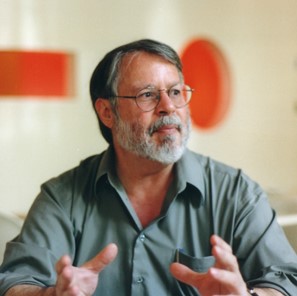
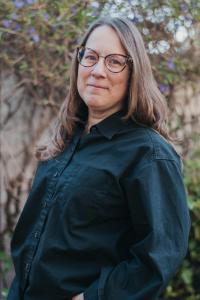
Michael Lucey is the Sidney and Margaret Ancker Chair and Distinguished Professor of French and Comparative Literature at the University of California, Berkeley. His work bridges French literature from the 19th to 21st centuries with social theory, sexuality studies, and linguistic anthropology. He has authored the critically acclaimed What Proust Heard: Novels and the Ethnography of Talk (2022) and Thinking about Sexuality with Novels (forthcoming). As founding director of the Center for the Study of Sexual Culture , he has shaped interdisciplinary research in queer theory and gender studies. Current research focuses on novels as ethnographic tools Specializes in Proust, Balzac, Woolf, and contemporary French fiction Translation work includes Didier Eribon and Édouard Louis His recent articles explore phonetics in narrative, readability frameworks, and sociological implications of literary form. He actively engages with comparative methodologies and critical theory, while his teaching spans British and American literature’s intersections with French modernism. Lucey’s academic leadership includes directing Berkeley’s Center for the Study of Sexual Culture, which supports global discourse through fellowships and conferences. His office hours are held in Dwinelle Hall and via Zoom. Contact: mlucey@berkeley.edu
Lillie Padilla is an Assistant Professor of Spanish Linguistics at Sam Houston State University's Department of World Languages and Cultures. Holding a Ph.D. and M.A. in Spanish Linguistics from Arizona State University alongside a Bachelor of Arts from the University of Ghana, her research explores interdisciplinary connections between: Afro-Latinx representation in educational materials Discourse analysis and language ideologies Sociolinguistic studies in Equatorial Guinea Critical race theory applications in language teaching Her work focuses on Spanish subject pronoun expression patterns in multilingual contexts and curriculum development for inclusive pedagogy. Recent publications examine: Representation gaps in Spanish language textbooks Methodological challenges in Equatorial Guinea research Critical discourse analysis of Netflix's Elite series Intersectional representation of Afro-Latinx women Scientific achievements include: Finalist for American Association of Linguistics 2025 award for co-edited volume Representation, Inclusion and Social Justice in World Language Teaching Padilla's research continues to shape conversations about linguistic diversity and marginalized voices in language education through both empirical studies and theoretical frameworks.
Mark Liberman is a Trustee Professor at the University of Pennsylvania , holding appointments in the Department of Linguistics and Department of Computer and Information Science . He serves as Director of the Linguistic Data Consortium and Faculty Director of Ware College House . His career spans linguistics, speech technology, and computational methods. Education: Harvard University (1965-1969), MIT (M.S. 1972, Ph.D. 1975) Professional Experience: AT&T Bell Laboratories (1975-1990), University of Pennsylvania (1990-present) His research interests include: Corpus-based Phonetics : Analyzing speech patterns via large-scale datasets. Clinical Applications : Developing speech biomarkers for neurodegenerative diseases. Tonal Phonology : Studying lexical tone and intonation in languages like Yoruba and Mandarin. Formal Annotation Models : Creating frameworks for linguistic data standardization. Recent publications highlight automated speech analysis, cross-linguistic prosody, and digital biomarkers for conditions like ALS-FTD and Alzheimer’s. His collaborations span computational linguistics , neurology , and cognitive science . Scientific awards include the IEEE James L. Flanagan Award (2017), Antonio Zampolli Prize (2010), and fellowships from the AAAS and Linguistic Society of America . He advises PhD students May Chan and Jonathan Him Nok Lee and contributes to editorial boards for journals like Cognition and Annual Review of Linguistics . His work bridges speech science , language technology , and neurocognitive research .
Sharese King is the Neubauer Family Assistant Professor of Linguistics at the University of Chicago, where she has taught since 2018. She earned her Ph.D. and Master's in Linguistics from Stanford University, focusing on language variation across African American communities. Her research bridges sociolinguistics, critical race theory, and phonetics to examine how African American speech is constructed, racialized, and socially evaluated. Education: Ph.D., Linguistics, Stanford University (2018) M.A., Linguistics, Stanford University Research Interests: Sociolinguistics Language Variation & Change African American Language Critical Race Theory Phonetic and experimental analysis Dialect and judicial systems Notable Contributions: Interdisciplinary studies on raciolinguistics and courtroom bias Analysis of /s/ articulation in intersectional contexts Reconceptualization of AAVE as AAL to emphasize linguistic diversity Fieldwork in Bakersfield, Rochester, and Chicago Publications in American Speech , Journal of Sociolinguistics , Language , and Nature Scientific Awards: Provost's Postdoctoral Fellowship Neubauer Family Assistant Professorship Labs & Projects: Co-founder of the Chicagoland Language Project
Andrew Lynch serves as Professor and Associate Dean for Program Development in the Department of Modern Languages & Literatures within the College of Arts and Sciences at the University of Miami. His academic leadership extends beyond teaching responsibilities to include significant administrative contributions to program development across the institution. Lynch's research interests center on sociolinguistics with particular focus on Spanish language dynamics in Miami, heritage language socialization, bilingualism, and language ideology. His work examines how language functions within specific social contexts, especially in workplace environments where Spanish heritage speakers navigate linguistic demands. He investigates the complex interplay between language, identity, and social structures in postmodern urban settings, with special attention to the Cuban diaspora experience in South Florida. His publication record reveals consistent scholarly engagement with heritage language education, Spanish language variation, and the sociolinguistic landscape of global cities. Lynch's research demonstrates how language practices in Miami reflect broader patterns of linguistic adaptation and resistance within diasporic communities. His work often addresses the tension between linguistic heritage and social integration, examining how language ideologies shape educational practices and community identity. Lynch's scholarly contributions span multiple formats, including single-authored books, co-authored publications, handbook chapters, and journal articles in both English and Spanish. His work frequently appears in high-impact sociolinguistics and language education journals, reflecting his interdisciplinary approach that bridges theoretical linguistics with practical educational implications.
Jonathan Rosa is Associate Professor in the Graduate School of Education, Center for Comparative Studies in Race and Ethnicity, and, by courtesy, Departments of Anthropology, Linguistics, and Comparative Literature at Stanford University. He serves as Director of Stanford's Program in Chicanx-Latinx Studies and has held leadership positions including President of the Association of Latina/o and Latinx Anthropologists of the American Anthropological Association. Dr. Rosa's educational background includes: Ph.D. in Sociocultural and Linguistic Anthropology from the University of Chicago (2010) M.A. in Sociocultural and Linguistic Anthropology from the University of Chicago (2006) B.A. in Linguistics and Educational Studies from Swarthmore College (2003) Dr. Rosa's research examines the co-naturalization of language and race as a key feature of modern governance, tracking colonially structured interrelations among racial marginalization, linguistic stigmatization, and institutional inequity. His scholarship centers on raciolinguistic ideologies, Latinx studies, and educational justice, with a community-based approach that develops tools for challenging systemic vulnerability. He investigates how race and language are jointly defined across historical, geopolitical, and institutional contexts, with particular focus on Latinx communities and educational settings. His recent publications demonstrate a consistent thematic focus on decolonizing linguistic and educational frameworks, challenging standard language ideologies, and examining the intersections of race, language, and power. The work spans multiple disciplines including sociolinguistics, anthropology, education, and critical race studies, increasingly emphasizing undoing raciolinguistics and addressing coloniality in language education and assessment practices. Dr. Rosa has received numerous prestigious awards for his scholarship: Distinguished Summer Scholar, Banks Center for Educational Justice, University of Washington College of Education (2024) Outstanding Book of the Year Award for "Looking like a Language, Sounding like a Race," American Association of Teaching and Curriculum (2022) First Book Award for "Looking like a Language, Sounding like a Race," American Association for Applied Linguistics (2021) Prose Award for Excellence in Language & Linguistics for "Looking like a Language, Sounding like a Race," Association of American Publishers (2020) Charles A. Ferguson Award for Outstanding Scholarship, Center for Applied Linguistics (2018) Dr. Rosa actively mentors doctoral students across multiple programs, serving as primary advisor for students researching race, ethnicity, language, and education. His research has been supported by major grants from the National Science Foundation, Andrew W. Mellon Foundation, Woodrow Wilson National Fellowship Foundation, and Ford Foundation. He collaborates extensively with community organizations, particularly in Chicago, to develop educational approaches grounded in decolonial praxis, focusing on how scholarship can serve as a platform for social transformation. Dr. Rosa co-directed Stanford's Center for Global Ethnography (2021-2023) and directed Stanford's Program in Chicana/o-Latina/o Studies (2020-2023). He serves on multiple editorial boards including Current Anthropology and Equity & Excellence in Education, and has held leadership positions in professional organizations including President of the Association of Latina/o and Latinx Anthropologists (2020-2022).
Wei Xu is an Associate Professor at Georgia Institute of Technology's College of Computing and School of Interactive Computing, with affiliations to the Machine Learning Center. Their research bridges machine learning, natural language processing, and social media with focus areas in large language models, cultural bias mitigation, multilingual capabilities, and human-AI collaboration in text evaluation. NSF CAREER and Google Academic Research Award recipient Director of NLP X Lab PhD from New York University, BSMS from Tsinghua University Research interests span: Multilingual Multicultural LLMs addressing representational gaps and cultural adaptation in language models (NAACL 2025, ACL 2024); Robustness and Reasoning through dynamic AGI evaluations (ACL 2024, EMNLP 2024); Interdisciplinary NLP applications in security, healthcare, and law (EMNLP 2024, ACL 2024). Recent publications focus on multilingual alignment (NAACL 2025), privacy risk estimation (arXiv 2025), cultural bias analysis (ACL 2024), and medical text simplification (EMNLP 2024). Key themes include bias mitigation, multimodal processing, and practical LLM evaluation. Scientific Awards : NSF CAREER, Google/Sony/Criteo research awards, ACL'24 Best Social Impact Award, COLING'18 Best Paper Advising 15 PhD/MS/BSMS students including Yao Dou (human-centered LLM evaluation), Tarek Naous (multilingual LLMs), and alumni like Chao Jiang (Apple AI/ML) and Yang Chen (NVIDIA research scientist). Teaches graduate courses on NLP and LLMs.
Marlyse Baptista is the President's Distinguished Professor of Linguistics at the University of Pennsylvania, Department of Linguistics. She is affiliated with the School of Arts & Sciences and MindCore initiative. Her research focuses on language contact, creolization processes, bilingualism, and experimental methods in creole studies. Baptista leads the Language Contact and Cognition Lab, previously known as the Cognition, Convergence and Language Emergence (CCLE) group at the University of Michigan. Education includes a PhD in Linguistics (Harvard, 1997), MA degrees from Harvard and the Université de Bordeaux III, and extensive training in multilingual education. Her work bridges generative syntax with experimental approaches, including artificial language learning to study language convergence. Key themes include the cognitive underpinnings of creole formation, bidirectional influences in Cape Verdean Creole, and the role of congruence in language acquisition. Research highlights include studies on Cape Verdean Creole's grammatical properties, genetic-linguistic admixture correlations, and pedagogical resources for creole language education. Recent projects explore experimental validation of creole genesis theories through multilingual acquisition studies. Scientific Awards: President's Distinguished Professorship (University of Pennsylvania) Labs/Teams: Language Contact and Cognition Lab, MindCore Grants/Projects: MULTI Project (creole language educational resources), NSF-funded studies on creole genesis mechanisms Baptista's work emphasizes interdisciplinary approaches, integrating syntax theory, psycholinguistics, and sociolinguistics to address foundational questions in contact linguistics and creolistics.
University of California, Los AngelesUnited States
H. Samy Alim is a Professor and David O. Sears Presidential Endowed Chair in the Division of Social Sciences at UCLA, holding a joint appointment in the Department of Anthropology. He serves as Associate Director of the Ralph J. Bunche Center for African American Studies and leads the UCLA Hip Hop Initiative. Alim’s research focuses on Hip Hop Culture, Black Language, and Culturally Sustaining Pedagogies, with over 25 years of scholarship in these areas. His work bridges academia and activism, emphasizing Hip Hop’s transformative role in global social justice movements. Alim earned his PhD in Anthropology from Stanford University (2003), following MA (2002) and BA (1999) degrees. His academic contributions include twelve authored/edited books, such as Freedom Moves (2023) and Articulate While Black (2012). His research spans Hip Hop’s linguistic innovations, racialized language politics, and its pedagogical potential in education. Key projects include ethnographic studies in Cape Town, South Africa, and collaborative initiatives like the UC Press Hip Hop Studies Book Series. He co-edits the Oxford Handbook of Language and Race and directs the Center for Race, Ethnicity, and Language. Alim has engaged with global Hip Hop artists (e.g., Chuck D of Public Enemy) to co-produce knowledge, emphasizing Hip Hop as a site of theorizing and activism. His teaching and research highlight intersections of language, race, and power, advocating for pedagogies that sustain cultural identities while fostering equity. Collaborations with organizations like Heal the Hood in South Africa reflect his commitment to community-driven scholarship.
Laurel MacKenzie is an Associate Professor in the Department of Linguistics at New York University (NYU), affiliated with the Faculty of Arts and Science. She specializes in variationist sociolinguistics, dialectology, and language change, with a focus on English and French varieties. Her work integrates quantitative analysis of speech data to explore intra-speaker variation and language evolution. She co-directs the NYU Sociolinguistics Lab and leads the NSF-funded NYC Individual Differences Corpus project, alongside the Our Dialects initiative, an online atlas of British English dialects. Education: PhD in Linguistics, University of Pennsylvania (2012) BA in Linguistics and French, University of California, Berkeley (2006) Research Interests: Morphological and syntactic variation Regional dialects of English and French Linguistic pedagogy and public engagement Recent Projects: Recent work includes publications on participle leveling in English, sociolinguistic replication studies, and grammatical variation analysis. She has also collaborated on dialect mapping tools and consulted for media projects on language change and accents. Awards: No awards explicitly listed in provided texts. Labs/Teams: NYU Sociolinguistics Lab (Co-Director) Our Dialects Project (Academic Lead)
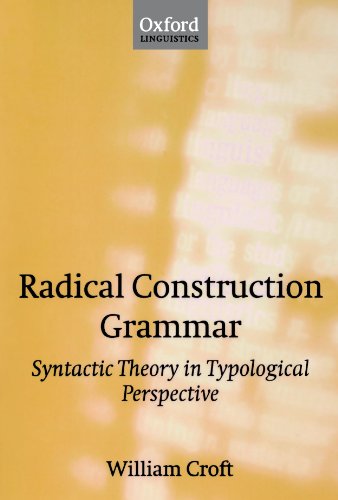
William Albert Croft is an American linguistics educator and Professor of Linguistics at the University of Manchester, United Kingdom. Born on November 13, 1956, in San Francisco, California, he holds a Doctor of Philosophy from Stanford University (1982–1986). His academic career includes roles as Research Fellow, Lecturer, and Reader at the University of Manchester (1994–2005), alongside an Assistant Professorship at the University of Michigan (1996–1998). He is renowned for developing Radical Construction Grammar, a syntactic theory using box-diagrams to analyze cross-linguistic grammar features. His research focuses on functional and cognitive linguistics, language typology, and syntactic universals. Educations: Doctor of Philosophy, Stanford University, California, 1982–1986 Research Interests: Dr. Croft’s work integrates cognitive and functional perspectives to explain language structure and change. His theories emphasize cross-linguistic comparison and the role of usage-based mechanisms in grammatical evolution. He has authored influential textbooks on linguistic typology and syntax, including Radical Construction Grammar and Typology and Universals . Awards: Listed in Marquis Who's Who as a Noteworthy Linguistics Educator Professional Activities: Member of the Philological Association, Linguistic Association of Great Britain, and Linguistic Society of America. Former Councillor of the Save-the-Redwoods League (San Francisco, 1987).
David Bamman is an Associate Professor in the School of Information at UC Berkeley, specializing in applying Natural Language Processing (NLP) and machine learning to cultural and social science questions. He leads research in born-literary NLP, computational humanities, and cultural analytics, with affiliated roles in EECS, Linguistics, and Computational Precision Health. Bamman holds degrees from Carnegie Mellon (Ph.D., 2015), Boston University (M.A., 2006), and University of Wisconsin-Madison (B.A., 1998). His work is supported by NEH, NSF, and industry grants. Educations: Ph.D. in Computer Science (2015), Carnegie Mellon University M.A. in Applied Linguistics (2006), Boston University B.A. in Classics (1998), University of Wisconsin-Madison Research Interests: NLP for underserved domains (e.g., literature, social media), coreference resolution, cultural analytics, and computational methods for studying literature and culture. Projects include LitBank and BookNLP datasets. Grants & Awards: Hellman Fellow (2019), Amazon Research Award (2017), NSF CAREER Award, and NEH funding. Teaching: Courses include Natural Language Processing (Info 159/259), Computational Humanities (INFO 190), and Applied NLP (INFO 256). His research group explores topics like racial representation in high school literature, Hollywood diversity metrics, and the sociocultural implications of LLMs. Bamman advises multiple PhD students and collaborates on datasets like CMU Book Summaries and 11K Latin Books.
Elaine Francis is a Professor of English and Linguistics at Purdue University's College of Liberal Arts, where she serves as Associate Head of the Department of English and directs the Experimental Linguistics Lab. She holds additional affiliations as an Affiliate Faculty Member in the Department of Linguistics and a Courtesy Faculty Member in the Department of Speech, Language, and Hearing Sciences. Ph.D. in Linguistics, University of Chicago (1999) B.A. in Linguistics, College of William and Mary (1993) MA in Linguistics, University of Chicago (1995) Former Assistant Professor at the University of Hong Kong (1999-2002) Professor Francis's research focuses on syntax and its interfaces with semantics, discourse information structure, and language processing in production and comprehension. She employs experimental methods to investigate syntactic, semantic, discourse-pragmatic, and cognitive factors underlying complex sentence structures. Her primary research areas include word order alternations, filler-gap dependencies, resumptive pronouns, and grammatical acceptability. She examines how various factors contribute to grammatical alternations in language use and explores how processing pressures in production and comprehension contribute to grammatical conventions. Her recent publication record shows consistent output across multiple linguistic subfields, with a strong emphasis on experimental syntax and psycholinguistics. Her 2022 book, Gradient Acceptability and Linguistic Theory , represents a significant contribution to understanding acceptability judgment tasks in relation to syntactic theory. Her work spans theoretical syntax, experimental linguistics, second language acquisition, and cross-linguistic comparison, often bridging the gap between theoretical frameworks and empirical evidence. Regularly teaches short courses at Linguistic Society of America Linguistic Institutes Member of Linguistic Society of America Ethics Committee Editorial board member of Glossa Psycholinguistics Co-editor of Polymorphous Linguistics: Jim McCawley's Legacy (2005) Co-editor of Mismatch: Form-Function Incongruity and the Architecture of Grammar (2003) Professor Francis actively supervises graduate students in linguistics, though she has indicated she will be unable to take on new graduate students for the 2025-2026 academic year. She has received research support for her experimental work, particularly for investigating syntactic phenomena through controlled experiments and corpus analysis. Her collaborative work extends across multiple institutions and disciplines, including collaborations with researchers in computational linguistics, cognitive science, and clinical linguistics. She directs the Experimental Linguistics Lab at Purdue University, which conducts research on syntactic processing using various experimental methodologies. The lab investigates how speakers produce and comprehend complex sentence structures, with particular attention to how grammatical knowledge interacts with processing constraints. Current projects include research on relative clauses, syntactic islands, and acceptability gradient phenomena across multiple languages.
Meredith Tamminga is an Associate Professor of Linguistics at the University of Pennsylvania, where she directs the Language Variation and Cognition Lab . Her work bridges sociolinguistics , psycholinguistics , and theoretical linguistics , focusing on how linguistic variability is represented in mental grammar and how social context influences speech perception and production. She co-leads the Philadelphia Signs Project , exploring sign language sociolinguistics with collaborators at Penn and Gallaudet University. PhD in Linguistics (2014), University of Pennsylvania BA in Linguistics (2009), McGill University Her research integrates experimental methods with naturalistic speech analysis to study individual and group-level language change. Keywords include phonetics-phonology mapping , intraspeaker variation , and quantitative modeling . Notable grants include NSF awards and SAS Dean’s Mentorship Award . Key affiliations include MindCORE , Penn’s hub for integrative mind sciences, and collaborative ties to the Phonetics Lab , Child Language Lab , and Cultural Evolution of Language Lab . Her lab emphasizes cross-departmental research and welcomes undergraduate RAs and PhD students.
University of California , Santa Barbara (UCSB)United States
Mary Bucholtz is a Professor in the Department of Linguistics at the University of California, Santa Barbara (UCSB). She holds affiliations with multiple departments including Anthropology, Feminist Studies, Spanish and Portuguese, the Gevirtz Graduate School of Education, Comparative Literature, and Latin American and Iberian Studies. Her research integrates sociocultural linguistics with anthropological, gender, and social justice frameworks. Education: PhD in Linguistics, University of California, Berkeley (1997) Bucholtz's work examines how language shapes and is shaped by social identities, particularly among youth, through dimensions like race, gender, and cultural practices. She emphasizes community-centered research , linguistic activism , and interdisciplinary methodologies to address systemic inequalities. Recent publications explore affective agency in Latinx youth, educational equity, and antiracist linguistics. Her collaborative projects often involve partnerships with educational institutions and youth communities in California, focusing on translanguaging , Black language justice , and raciolinguistic ideologies . Grants from the National Science Foundation, Spencer Foundation, and Wenner-Gren Foundation support her research. She co-edited the open-access volumes Decolonizing Linguistics and Inclusion in Linguistics (Oxford University Press, 2024), alongside authoring White Kids: Language, Race, and Styles of Youth Identity (Cambridge, 2011) and Talking College: Making Space for Black Language Practices in Higher Education (Teachers College Press, 2022).