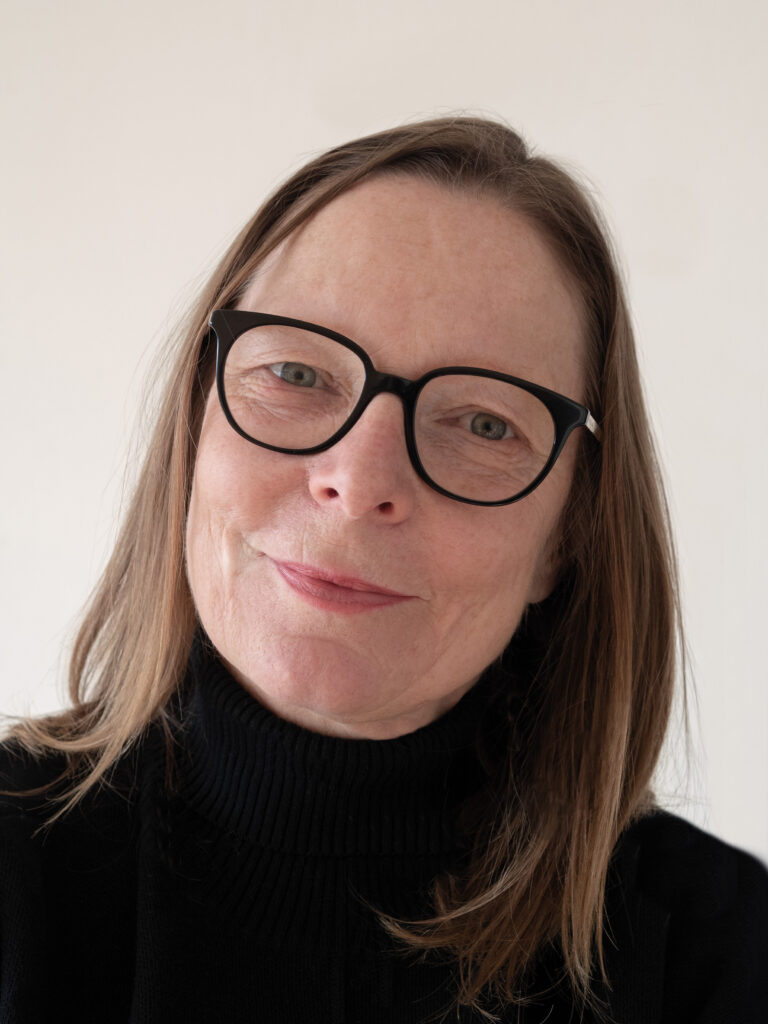
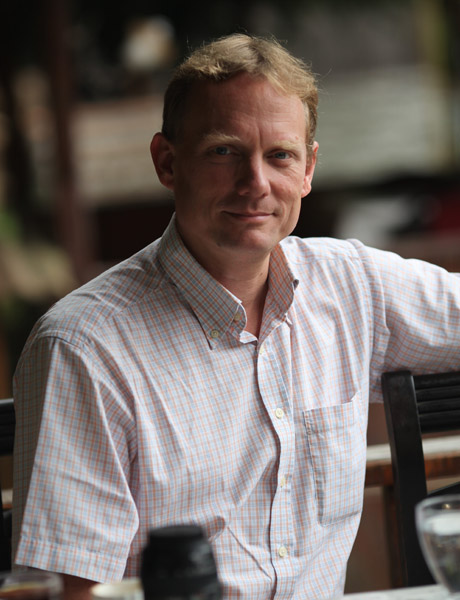
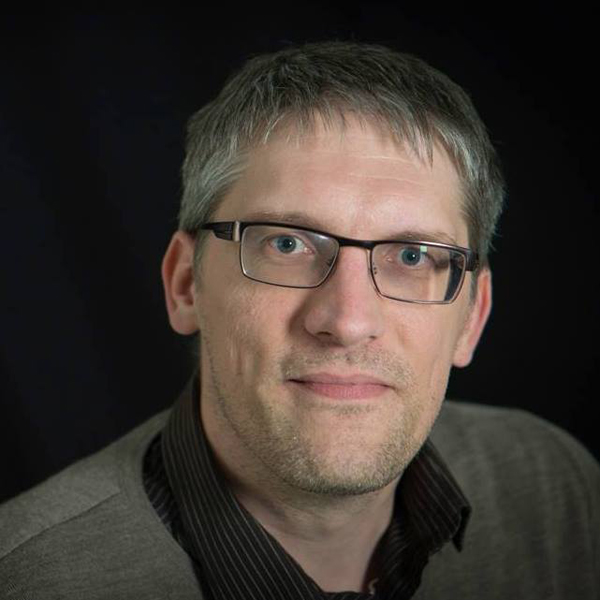
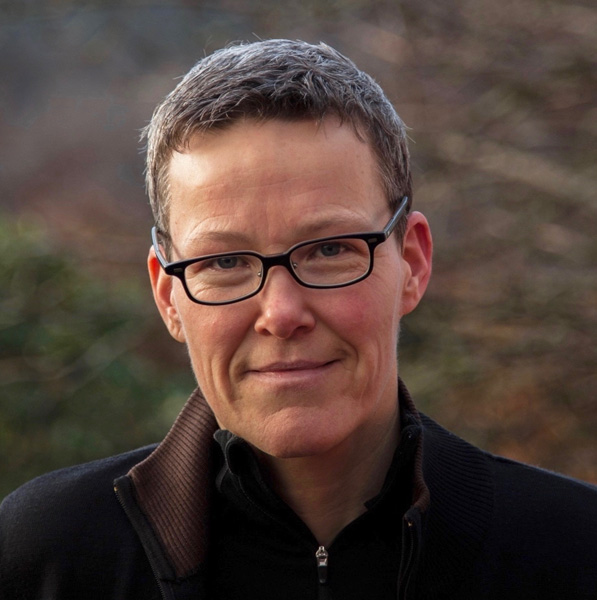
Eva Vetter is a full Professor at the University of Vienna , affiliated with both the Department for Teacher Education and the Department of Linguistics . She specializes in multilingualism, language teaching methodologies, and minority language education, with a focus on integrating climate justice themes into linguistic pedagogy. Email: eva.vetter@univie.ac.at Office: Porzellangasse 4, 1st floor, 1090 Vienna Her research interests include: Applied linguistics in educational contexts Minoritized language preservation Language policy and equity Interdisciplinary approaches to multilingualism Recent teaching activities focus on: Developing communication spaces for multilingual learners Empirical research methods in language education Climate justice integration in linguistic curricula Doctoral supervision in applied linguistics She actively mentors educators through professional development programs and leads research initiatives at the intersection of linguistics and teacher education.
Thede Kahl is a University Professor for Southern Slavic and Southeastern European Studies at the University of Jena, Germany, and director of the Department of Slavistics and Caucasus Studies (until 2016). He leads major research projects such as BalkanNOMAD, IRDICH, and LaZAR, focusing on intangible cultural heritage, data archiving, and interethnic dynamics. His career includes roles at the Austrian Academy of Sciences, the Austrian Institute of East and Southeast European Studies, and teaching positions at Phillips University of Marburg and the University of Münster. Fields of expertise: Cultural relations of Southern Slavs, endangered dialects, interethnic coexistence, and minority studies in Southeast Europe. Notable awards: Dr. honoris causa (2015), Medal of Merit of Gagauzia (2016), and membership in prestigious academies. His research integrates fieldwork, sociolinguistics, and historical analysis, with projects funded by FWF, DFG, EU, and private entities like Henkel. He has authored/co-authored over 10 key publications on Balkan linguistics, cultural heritage, and minority communities.
Jürgen Spitzmüller is a Professor and Deputy Head of the Department of Linguistics at the University of Vienna. His academic work focuses on sociolinguistics, metapragmatics, and language ideologies, with a particular emphasis on discursive practices in digital and institutional contexts. Current role: Deputy Head, Department of Linguistics Teaching: Applied Linguistics, Theory of Science, Yiddish Studies Email: juergen.spitzmueller@univie.ac.at His research explores the intersection of language ideologies, social positioning, and discursive practices. Key areas include typographic variation as a social phenomenon, the role of multimodal elements in communication, and the construction of public spheres in digital contexts. Recent publications highlight trends in analyzing graphic variation, the socio-political implications of text design, and the interplay between language and cultural identity. His work often bridges theoretical frameworks from sociolinguistics, discourse analysis, and media studies. Spitzmüller’s teaching includes courses such as Introduction to Applied Linguistics , Methods of Applied Linguistics , and specialized seminars on Yiddish and language ideologies. He has also contributed to academic discourse through editorial work and collaborative research projects.
Eleanor Dickey is a Professor of Classics at the University of Reading. She has held academic positions at Columbia University, the University of Exeter, and the University of Ottawa. Her research focuses on Greek and Latin linguistics, classical literature, and ancient language use, with a particular emphasis on papyrology and historical pragmatics. She holds a D.Phil. in Literae Humaniores from the University of Oxford and has held fellowships at institutions including the Institute for Advanced Study in Princeton and All Souls College, Oxford. Education: BA (summa cum laude) and MA from Bryn Mawr College; M.Phil. and D.Phil. from Oxford University. Her research interests include the study of ancient language pedagogy, sociolinguistics in antiquity, and the analysis of Greek and Latin texts in papyri. She has authored several influential books, including Ancient Greek Scholarship and Latin Forms of Address . Her work explores the intersection of language, culture, and social dynamics in the ancient world. Key awards include the 2014 Fellowship of the British Academy and the 1996 Hellenic Foundation Prize. Her contributions to classical scholarship have been recognized through teaching accolades and research fellowships worldwide.
Inci Dirim is a Professor at the Department of German Studies within the Faculty of Philology and Cultural Studies at the University of Vienna . Her work focuses on German as a Second Language (DaZ) , multilingualism, migration pedagogy, and educational equity. She has developed diagnostic tools for language assessment, contributed to curriculum design, and critically analyzed discrimination mechanisms in language education. Education : Magistra Artium (MA) in Linguistics and German Studies from the University of Bremen (1991); PhD in Educational Science from the University of Hamburg (1997) Her research emphasizes language diagnostics , cultural identity , and reflexive pedagogy , particularly in contexts of linguistic and social heterogeneity. She has led projects like TESSLA (language support for multilingual children) and Unterrichtsbegleitende Sprachstandsbeobachtung DaZ (classroom language assessment). Recent publications explore inter- and transdisciplinary approaches to DaZ, normative foundations in language teaching, and separation practices in language promotion. She serves as a key figure in the Austrian Association for German as a Foreign/Second Language (ÖDaF) and the German Society for Educational Science (DGfE) , advocating for critical perspectives on language, migration, and education. Her teaching includes courses on Basics of German as a Foreign and Second Language , Modern German Literature , and Language Diagnostics .
François Alexandre is a Senior Research Fellow (Research Fellow) at the CNRS, holding tenured positions in departments LaCiTO (2015–2018) and LaTTiCe (2018–present). He concurrently serves as Honorary Associate Professor in the School of Culture, History & Language at the Australian National University (ANU). He leads major research initiatives such as the ComPLETE project on complex predicates and the HéLiCéO project on Pacific languages preservation. Education: PhD in Linguistics (2001, Université Paris IV Sorbonne), Habilitation à Diriger des Recherches (2014, INALCO). His work focuses on Oceanic languages of Vanuatu and Solomon Islands, emphasizing grammatical description, typology, and language documentation. He conducted extensive fieldwork in Vanuatu (since 1997) and Solomon Islands (since 2005), producing 15+ educational books and bilingual dictionaries for endangered languages. Research interests include linguistic typology, language dynamics, areal linguistics, and semantic change. Recent projects involve semantic databases (Evo Sem) and collaborative archival efforts. Awards include the CNRS Bronze Medal (2004) and election to Academia Europeae (2020). Grants: PI of ANR grant (2004–2007), ELDP Legacy Grant (2017–2018) Service: Convenor of 7 research groups, editor for 3 journals, organizer of major conferences (ICAL11, APLL9) Labs/Teams: Leads CNRS research units and collaborates internationally on language revitalization projects.
Susanne Reichl is a full Professor at the Department of English and American Studies within the Faculty of Philological and Cultural Studies at the University of Vienna. She serves as Head of the interdisciplinary research platform Mediatised Lifeworlds: Young people's narrative constructions, connections and appropriations, a position she has held since autumn 2021 for its second period. Reichl maintains an active teaching schedule, offering courses on contemporary British literature, children's and young adult literature, and teaching methodology for literature and culture. Her research interests span contemporary British literature and culture, children's and young adult literature, cognitive approaches to literature, tales of time travel, Black and Asian British literature, and teaching literature at university and school. Reichl's work demonstrates a consistent focus on how young people engage with literature and media, particularly examining narrative construction in digital environments and the intersection of reading practices with identity formation. Reichl's recent publications reveal a strong trend toward interdisciplinary research connecting literary studies with media studies, cognitive science, and educational theory. Her work on youth media practices, particularly through the #YouthMediaLife platform, demonstrates innovative approaches to understanding how young people navigate contemporary digital landscapes through narrative construction. She has made significant contributions to understanding time travel narratives, multimodal literature, and social reading practices, particularly on platforms like Goodreads. Figdor-prize of the Austrian Academy of Sciences for literary studies (2005) Erwin-Schrödinger international scholarship by the FWF (Austrian research fund) (2005/2006) Reichl has supervised numerous master's students, though she has announced she cannot take on new master supervision until March 2026. Her research platform Mediatised Lifeworlds has secured significant institutional support at the University of Vienna, indicating successful grant acquisition. Reichl maintains an active research agenda with consistent publication output across multiple formats including monographs, edited collections, journal articles, and book chapters. As Head of the interdisciplinary research platform Mediatised Lifeworlds, Reichl leads a collaborative team examining young people's narrative constructions in digital environments. This platform brings together researchers from multiple disciplines to investigate how youth appropriate and connect through mediatised experiences, with particular attention to the narrative frameworks they employ in social media and other digital spaces.
Dirk Geeraerts is a full Professor of Linguistics at the University of Leuven (KU Leuven), where he has held a faculty position since 1993. He studied Germanic languages (Dutch and English) and holds a bachelor's degree in Philosophy, earning his PhD in 1981. His academic career includes professorships at the Kortrijk campus of the University of Leuven (1986–1993) and the University of Leiden (1985–1986), as well as foundational research at the Instituut voor Nederlandse Lexicologie (1977–1985). Research Focus : Geeraerts specializes in lexical semantics , lexicology , and cognitive linguistics , particularly examining social variation , diachronic change , and empirical semantic methods . His work bridges theoretical and applied lexicography, notably through his editorial role in the Van Dale Groot woordenboek van de Nederlandse taal (1995–2005). Scientific Contributions : Founded the international journal Cognitive Linguistics Co-editor of The Oxford Handbook of Cognitive Linguistics Managing editor of the Cognitive Linguistics Research monograph series Honors and Awards : 1978: L.K. Engels Award 1992: Flemish Government Award for Wat er in een woord zit 2003: Member of the Royal Academy for Dutch Language and Literature (KANTL) 2020: Matthias de Vries Medal for Dutch lexicology contributions Labs and Teams : Established the Quantitative Lexicology and Variational Linguistics (QLVL) research group at the University of Leuven, advancing empirical approaches to lexical and semantic studies.
Manfred Kern serves as Professor and Head of the Department of German Studies at Paris Lodron University Salzburg. With an extensive publication record dating back to 1995 and continuing through 2025, he maintains an active research profile in medieval literature and digital humanities. His leadership role as department head and project manager for significant research initiatives demonstrates his standing within the academic community. Professor Kern's research interests center on medieval literary cultures, particularly through the lens of digital humanities. His work on the Wenceslas Bible represents a significant interdisciplinary contribution, combining traditional philological approaches with cutting-edge computer vision techniques. His recent editorial work on disability representation in art ( Kunst und Gebrechen ) demonstrates expanding scholarly interests at the intersection of cultural history and visual studies. His research consistently bridges historical scholarship with contemporary methodological innovations. Kern's publication trends reveal a strategic evolution from traditional literary studies toward digital humanities applications. His most recent work (2024-2025) shows a strong emphasis on computational analysis of historical manuscripts, particularly the Wenceslas Bible project, while simultaneously developing theoretical frameworks for understanding disability representation in historical art contexts. This dual focus represents a sophisticated integration of technical and humanistic approaches to cultural heritage. As project manager for significant research initiatives including WB-DEA (The Wenceslas Bible - Digital Edition and Analysis, 2022-2024), TALC_ME (Textual and Literary Cultures in Medieval Europe, 2014-2017), and ALIENA (Old literature re-aestheticized in the experience space, 2010-2013), Professor Kern has secured substantial research funding and built collaborative networks across institutions. His organizational role in numerous academic events, including the IZMF lecture series and the In Nomine conference on medieval naming practices, further demonstrates his leadership in the field. Professor Kern actively participates in departmental and university governance, serving on habilitation committees and appointment committees (Berufungskommission). His academic service extends to editorial work and conference organization, reflecting his commitment to scholarly community building. His leadership of the German Studies department at Paris Lodron University Salzburg positions him at the center of academic activity in his field.
Wolfgang Ulrich Dressler is a Full Member of the Division of Humanities and Social Sciences at the Austrian Academy of Sciences since 1992 and maintains primary affiliation with the University of Vienna. His scholarly identity centers on foundational contributions to linguistic theory across multiple subdisciplines. His research traverses General linguistics, Psycholinguistics, Sociolinguistics, and Cognitive linguistics with particular emphasis on morphological processes, phonological structures, and the mental lexicon. Recent work demonstrates sustained focus on German morphonotactics and literary language phenomena, bridging theoretical frameworks with empirical corpus analysis. Publications from 2020-2024 reveal consistent investigation into word formation mechanisms, obstruent cluster patterning, and developmental lexicon acquisition. His scholarship integrates cognitive, corpus-based, and cross-linguistic methodologies while maintaining strong connections to literary and theatrical language contexts. Dr. Dressler's exceptional contributions are recognized through: Multiple honorary doctorates (Sorbonne, University of Athens, Adam Mickiewicz University) Prestigious lifetime achievement awards (Grand Cardinal Innitzer Prize, Theodor Körner Prize) Membership in leading academies including Norwegian Academy of Sciences, Academia Europaea, and Hungarian Academy of Sciences Honorary status in major linguistic societies (Linguistic Society of America, Societas Linguistica Europaea) His international standing is further evidenced by affiliations with the Royal Danish Academy, Accademia Nazionale dei Lincei, and Accademia della Crusca.
Stefan-Michael Newerkla is a University Professor of West Slavic Linguistics at the Department of Slavonic Studies, Faculty of Philology and Cultural Studies, University of Vienna. He has served as Head of the Institute of Slavic Studies since 2022, following previous leadership roles as Deputy Head (2018-2022) and Head (2005-2008). His academic leadership extends to significant positions including Member of the Academy Council of the Austrian Academy of Sciences (2022-2026), Member of the International Board of Palacký University Olomouc (2022-2026), and Member of the Scientific Council of the Czech Academy of Sciences (since 2013). Professor Newerkla earned his doctorate in 1998 with a dissertation on "Intended and actual linguistic reality in Bohemia. Diglossia in the school system of the Czech-speaking countries of the Habsburg Monarchy 1740–1918 using the example of the West Bohemian district town of Plzeň (Pilsen)" and completed his habilitation in 2003 on "Language Contacts Czech – German – Slovak. German Loanwords in Czech and Slovak: Historical Development, Evidence, Previous and New Interpretations." His academic journey began with studies in Slavic Studies, English Studies, and American Studies at the University of Vienna from 1992-1998. His research focuses on West Slavic linguistics with particular emphasis on contact linguistics, areal linguistics, linguistic geography, and historical sociolinguistics. He investigates the development of linguistic contacts between German, Hungarian and Slavic languages, examining Central Europe as a linguistic area with special attention to Austriazisms and Internationalisms research. His work also explores the school system and language teaching in the Habsburg Monarchy, analyzing language legislation versus language reality and diglossia or polyglossia in the educational system. Additional research interests include the National Renewal in the Bohemian Lands, Vienna's role in the Czech National Renewal, the Slovak national awareness process, and the grammatology and grammarography of West Slavic languages. Analysis of his recent publications (2023-2025) reveals a continued focus on historical language contact in Central Europe, particularly examining multilingualism in the Habsburg Monarchy and linguistic heritage. His work increasingly incorporates interdisciplinary approaches, connecting linguistic analysis with historical, educational, and cultural studies perspectives. Recent publications show particular attention to Czech language in Austria, language teaching methodologies, and the reconstruction of historical language contact phenomena, with several multilingual publications reflecting his expertise in cross-cultural communication. Professor Newerkla's scientific achievements have been recognized with numerous prestigious awards: Medal of the Minister for Foreign Affairs of the Czech Republic (August 7, 2024) for Services to Diplomacy Premia Bohemica for 2023 for outstanding contribution to promoting Czech literature abroad Josef-Dobrovský-Ehrenmedaille of the Czech Academy of Sciences (April 25, 2017) Full member of the Austrian Academy of Sciences (since 2018) Corresponding Member of the Austrian Academy of Sciences (since 2014) Member of the Academic Assembly of the Czech Academy of Sciences (since 2010) Award from University of Vienna for Innovative Teaching (June 22, 2001) As an academic leader, Professor Newerkla has supervised numerous theses across various levels of study. His research is supported by significant grants, most notably his role since 2016 as consortium member and board member of the Special Research Programme "German in Austria. Variation – Contact – Perception" (SFB F 60-G23), where he heads Task Cluster C and subprojects 05 and 06. He also led the research project "Slavists in Exchange: Austria and Russia 1849-1939" (2021-2025). His administrative roles have included Chairman of the Curricular Commission of the Senate of the University of Vienna (2010-2016) and Member of the Senate of the University of Vienna (2009-2016). Professor Newerkla is actively involved in multiple international research teams and collaborations, including the Permanent Conference of Austrian and Czech Historians on Common Cultural Heritage (SKÖTH), which he has co-chaired since 2009. His research group at the University of Vienna's Institute of Slavic Studies focuses on West Slavic linguistics, with particular expertise in historical language contact phenomena and the linguistic heritage of Slavic languages in Central Europe. He has also served as editor for numerous publications including the Vienna Slavic Yearbook (New Series) since 2013.
Ingunn Lunde is a full-time Professor of Russian at the Department of Foreign Languages , Faculty of Humanities , University of Bergen, Norway. She also holds a part-time (20%) Professor II position in Russian literature and culture at the University of Tromsø (2012–2019). Research Focus: Russian sociolinguistics, Slavic medieval culture, 19th–21st-century Russian literature, Byzantine hagiography, and digital media. Leadership: Head of the Research Group for Contemporary Russia at the University of Bergen. Projects: Principal Investigator for Landslide of the Norm (2005–2008) and The Future of Russian (2008–2013), funded by the Research Council of Norway. Publications: 85 works including 3 monographs, 56 articles, and 13 edited books. Notable works: Language on Display (2018), Fragmenter av fortid (2019), and Digital Russia (2014). Founding editor of the Slavica Bergensia book series (2000–present). Scientific Awards: Ugleprisen (2020) FUND-status (2019) Spurveugleprisen (2017) Fellowship at Wissenschaftskolleg zu Berlin (2014/15) Meltzer Prize for Young Researchers (2000) Outreach: Regular public speaker, media commentator, and contributor to the Great Norwegian Encyclopaedia on Russian literature.
Vienna University of Economics and BusinessAustria
Gerlinde Mautner is a Full Professor at the Vienna University of Economics and Business (WU) , where she has held a chair since 2000. Her research focuses on the intersection of language with business and legal frameworks , combining corpus linguistics and critical discourse analysis . She has published extensively on topics like marketized language, interdisciplinary methodology, and linguistic landscapes. PhD in English from University of Vienna Habilitation (1997) at WU Visiting professorships at Cass Business School, Durham Business School, and Nottingham Business School Her methodological expertise includes mixed methods research and corpus-assisted discourse studies . Recent work examines large language models and public signage through discourse analysis. She has held leadership roles at WU as Vice-Rector for International Relations (1998-2002) and Head of Department (2005-2015), and served as Vice-President for Humanities at the Austrian Science Fund until 2024. Her textbooks on academic writing reflect her commitment to pedagogy across undergraduate, postgraduate, and executive programs. Notable trends in her 15 most recent publications include: Challenges of AI in discourse studies (2024) Methodological integration of corpus linguistics with qualitative analysis (2024) Analysis of managerial language evolution (2020) Critique of marketization in education (2005)
Vienna University of Economics and BusinessAustria
Susanne Kopf is a Lecturer at the Institute for English Business Communication at Vienna University of Economics and Business (WU Wien), where she holds a venia docendi in applied linguistics. With a PhD from Lancaster University, UK, she specializes in critical discourse analysis with a focus on digital communication platforms and their social implications. PhD in Applied Linguistics, Lancaster University, UK Venia Docendi (Habilitation) in Applied Linguistics, WU Wien Dr. Kopf's research sits at the intersection of Critical Discourse Studies and corpus linguistic methods, examining how digital platforms shape communication and power dynamics. Her work particularly focuses on Wikipedia as a site of knowledge production, EU representation in digital spaces, and social media discourse surrounding political events like Brexit. Her methodological approach uniquely combines qualitative linguistic analysis with quantitative corpus methods to uncover patterns in large-scale digital communication. Analysis of her recent publications reveals a consistent focus on digital discourse practices across multiple platforms. Her work shows how Wikipedia functions as a transnational public sphere, how social media platforms moderate content through vague policies, and how political events like Brexit are discursively constructed across different cultural contexts. These studies collectively demonstrate how digital communication both reflects and shapes broader social and political dynamics. Oberösterreichische Talentförderungsprämie Alois Mock science prize While specific details about her advising activities aren't provided in the available information, Dr. Kopf's extensive publication record and editorial work (including co-editing 'Discourses of Brexit' with Routledge) demonstrate significant scholarly leadership. Her research has been supported through academic positions at WU Wien that have enabled her substantial contributions to the field of digital discourse studies. Dr. Kopf maintains active research collaborations across European institutions, as evidenced by her multi-authored publications. Though not explicitly mentioned in the provided materials, her research focus on Wikipedia and digital platforms suggests engagement with digital humanities research groups and potentially corpus linguistics laboratories that support her methodological approach to analyzing large-scale digital communication.
Arne Ziegler is a full Professor at the Institute of German Studies within the Faculty of Humanities at the University of Graz, Austria. His academic career spans over two decades, with current leadership of the Austrian Science Fund (FWF)-supported Special Research Programme 'German in Austria' (DiÖ), running from 2016 to 2026. He maintains active roles in international academic governance and editorial boards. Professor Ziegler's research centers on grammatical variation in Standard German , with particular emphasis on Austrian German dialects, urban sociolinguistics, and youth language phenomena. His work bridges theoretical linguistics and practical applications, examining how regional, social, and historical factors shape language structures. Key contributions include the development of the 'Variant Grammar of Standard German' – a comprehensive digital reference work documenting areal grammatical differences across German-speaking regions. Analysis of his recent publications reveals consistent focus on urban language dynamics, grammatical variation patterns, and reference grammar development. His work demonstrates methodological innovation through quantitative analysis of spoken interaction, spatial distribution mapping of linguistic features, and interdisciplinary approaches combining sociolinguistics with historical text analysis. The 'German in Austria' project represents the cornerstone of his current research, investigating language variation, contact phenomena, and speaker perception across Austria. Professor Ziegler has secured significant competitive funding including three major FWF projects: 'German in Austria' (2016-2026), 'Youth language(s) in Austria' (2013-2016), and 'Variant Grammar of Standard German' (2015-2018). These initiatives involve extensive collaboration with researchers across German-speaking countries and support large-scale empirical investigations into contemporary language use. He holds prominent leadership positions including Chair of the International Association for German Studies (IVG) since 2000, Chair of the Society for German Language History since 2008, and editorial roles for 'Technical language' (International Advisory Board) and 'Contingentia' (Editorial Board). His academic service extends to co-editing six major book series including 'Writings on the German Language in Austria' (Peter Lang) and 'Lingua Historica Germanica' (de Gruyter), significantly shaping publication venues for German linguistic research.