Kunihiko Kaneko is a Professor at the Niels Bohr Institute, University of Copenhagen, with a distinguished career in theoretical biophysics and complex systems. He received his PhD and MSc in Physics from the University of Tokyo, and has held leadership roles at the Universal Biology Institute and Center for Complex Systems Biology. PhD Physics, 1984 - University of Tokyo MSc Physics, 1981 - University of Tokyo His research spans five primary areas: Universal Biology, Evolutionary Constraints, Ecosystem Dynamics, Neural Cognition, and Universal Anthropology. He has published extensively on multi-level consistency principles, dimensional reduction in biological systems, and reciprocity between robustness and plasticity across scales. Recent publications show strong focus on microbial ecosystems (2025), evolutionary game theory (2025), neural modular architectures (2024), and dimensional reduction in cellular systems (2024). His work bridges physics and biology through dynamical systems theory applied to diverse phenomena from protocells to human societies.
Christopher Storie is a Professor of Geography at the University of Winnipeg, specializing in GIS, Remote Sensing, and Urban Geography. He holds an office in Lockhart Hall (5L03) and teaches courses such as Introduction to GIS, Remote Sensing, and Urbanization in the Developing World. His research focuses on Deep Learning applications for automated land use/land cover mapping, informal settlement mapping, and urban-rural fringe detection. Key research interests include leveraging neural networks for geospatial analysis, urban dynamics in regions like Mexico City, and collaborative international fieldwork. He has contributed to over 20 peer-reviewed articles since 2000, emphasizing satellite imagery analysis and environmental monitoring. His work bridges technical geospatial methods with socio-environmental challenges in urban and developing regions.
Ivano Cardinale is a Professor and Head of the Institute of Management Studies at Goldsmiths, University of London. He previously held a Junior Research Fellowship at Emmanuel College, Cambridge, and has been a Visiting Fellow at Clare Hall, Cambridge. He founded and directs the Structural Economic Analysis Unit and serves as Editor-in-Chief of Structural Change and Economic Dynamics . PhD, University of Cambridge 2022 Feltrinelli Giovani Prize for Social Sciences (Italy's top award for researchers under 40) 2019 Guest Faculty, Learning Innovation Laboratory, Harvard University His research in Structural Political Economy examines how material, social, and cognitive structures shape economic conflicts and policy outcomes. Key areas include institutional theory, industrial dynamics, and energy transition frameworks. He analyzes systemic interests, sectoral conflicts, and structural conditions through theoretical and empirical studies. Recent publications explore gas market vulnerabilities in EU energy policy, Pasinetti's institutional theory, and networked economic structures. His work appears in Structural Change and Economic Dynamics , Energy Economics , and Cambridge Journal of Economics . Scientific awards include: 2022: Feltrinelli Giovani Prize (Social Sciences) 2019: Political Economy Research Fellowship (ISRF) 2016: Life Membership, Clare Hall, Cambridge He contributes to academic governance through editorial roles and co-edited major handbooks including The Palgrave Handbook of Political Economy (2018) and The Political Economy of the Eurozone (2017).
Jian Zhao is an Associate Professor at the University of Waterloo's School of Computer Science, specializing in Information Visualization (InfoVis), Human-Computer Interaction (HCI), and Data Science. With a Ph.D. from the University of Toronto (2016), his research emphasizes interactive visualization techniques, AI integration in design processes, and socio-technical systems. He explores how human-AI collaboration can enhance data analysis, presentation, and user experience in complex systems. Key research areas include: 1) AI-Driven Design (e.g., code generation via sketching, infographic creation), 2) Health Informatics (therapeutic AI tools for autism support), 3) Immersive Technologies (VR/AR interfaces for presentations and education), and 4) Social Computing (remote family communication, multi-modal emoticons). His work bridges technical innovation with human-centered design principles. His publications (2021–2025) reflect a focus on interactive visualization frameworks (e.g., iTrace for cross-view data analysis), AI-human collaboration (CoLadder for hierarchical code editing), and specialized applications like TherAIssist for art therapy and EMooly for autism support. Zhao frequently explores novel interaction modalities , including gesture-based VR interfaces and sketch-based programming tools. He leads projects in computational notebooks (EDAssistant, Slide4N), visual analytics (MissBin for bipartite networks), and neurofeedback training games (Eggly). His work often emphasizes systematic design considerations for missing data, cross-view analysis, and contextual visualization in spatial AR environments.
Dr. Michael Sinclair is a Lecturer in Urban Analytics at the University of Glasgow , affiliated with the Division of Urban Studies and Social Policy and the Urban Big Data Centre . He convenes the MSc in Urban Analytics and co-leads the Socio-Environmental Action research cluster . His research focuses on leveraging novel data sources (e.g., mobile apps, social media) to address societal and environmental challenges, particularly human-nature interactions and greenspace valuation. Sinclair leads projects funded by the UK Government’s Department for Culture, Media and Sport and the Economic and Social Research Council (ESRC). His work emphasizes ethical use and representativeness of big data, with applications in urban policy, ecosystem services, and environmental sustainability. Sinclair has secured grants totaling over £1M, including projects on greenspace accessibility and urban data dashboards. He supervises students on GIS and urban analytics topics and contributes to policy-relevant datasets like Tamoco Open Spaces . Notable achievements include developing methodologies for valuing nature-based recreation and advancing spatial interaction models for urban green spaces. His research bridges Human Geography and Environmental Science, with publications in journals like Ecosystem Services and Global Environmental Change .
Dr. Ava Fatah gen. Schieck is a Professor of Media Architecture and Urban Digital Interaction at The Bartlett School of Architecture, University College London (UCL) , where she has been affiliated since 2001. She teaches in the MSc Architectural Computation program, focusing on embodied interactions and urban digital experiences. Education: ATQ03 - Recognised by the HEA as a Fellow (UCL, 2008) Certificate in Learning and Teaching (UCL, 2007) Master of Science (UCL, 2001) Her research explores the intersection of architecture, digital media, and urban spaces. Key themes include: Mediated spatial experiences in museums and public environments Embodied interactions through dance, movement, and performative design Urban screens and community-centered digital installations Smart city critiques focusing on marginalized communities Pervasive computing's impact on social dynamics Her publication corpus (149+ outputs) predominantly addresses media architecture, HCI, museum technology, and sensory interactions , with recent work emphasizing olfactory interfaces, pandemic urbanism, and heritage digitization. Awards & Honors: Fellow of the Royal Society of Arts (FRSA, 2023) Projects & Grants: As Principal Investigator for the EPSRC-funded 'Screens in the Wild' , she examines networked urban screens for community engagement. She previously led the 'SCREAM' project (UrbanBuzz program) and contributed to EPSRC's 'Urban Design and Pervasive Systems'. She reviews grants for EPSRC, UKRI, SNSF, and other international bodies. She directs research through UCL's Space Research Group and VR Centre for the Built Environment , collaborating globally. As program chair for the Media Architecture Biennale (2012-2020), she fosters interdisciplinary dialogue across architecture, HCI, and interaction design.
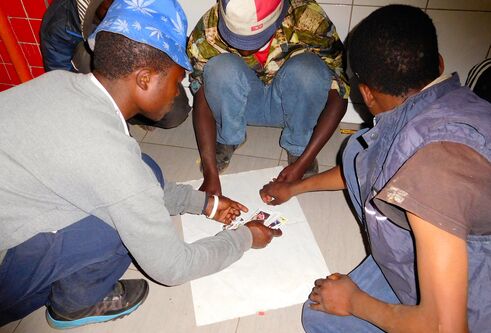
Lorraine van Blerk is a Professor of Human Geography at the University of Dundee's School of Humanities, Social Sciences and Law. She serves as Chair of Human Geography and leads the Research Centre for Transformative Change: Educational & Life Transitions (TCELT) in Education and Society. Her work focuses on street children/youth, refugees, and global inequalities. Academy of Social Sciences Fellow (2021) Stephen Fry Awards - Public Engagement Project of the Year (2017) Market Research Society President’s Medal (2015) Research interests include: Street youth resilience mapping Intergenerational partnerships Transitions to adulthood in crises Policy development for marginalized groups Coastal socio-ecological systems Cultural geographies of homelessness Recent publications address global street youth resilience frameworks (2REST project) and cinema's role for Harare street youth. Key collaborations include universities in Pretoria, Cape Town, Makerere, and Ryerson University. Scientific contributions recognized through: 6 major research prizes 16 funded projects 149+ research outputs International visiting appointments (Toronto Metropolitan University, National University of Singapore)
Jule Thober is a Scientific Manager at the Helmholtz Centre for Environmental Research - UFZ , leading Topic 5 "Landscapes of the Future" in the Helmholtz Program and managing the Integration Platform "Robust Pictures of the Future". She contributes to cross-disciplinary research in Smart Models / Monitoring and Computational Hydrosystems , focusing on agent-based models, sustainable land management, and climate risk analysis. Roles : Scientific Manager (2022–), Postdoc (2017–2021), PhD Student (2013–2016) Projects : Copernicus Contract Ulysses 2, LandYOUs Game Development Research Interests center on socio-environmental systems, integrating agent-based models with ecological economics. Her work explores decision-making under climate uncertainty, land use policy, and resilience of pastoral systems through computational methods. Publication Trends (15 most recent) span ecological complexity, environmental informatics, and computational hydrosystems. Key themes include agent-based land use models , climate risk mitigation , and participatory decision support tools . Collaborations involve UFZ departments, international institutions, and interdisciplinary teams in Germany and abroad. She contributes to Helmholtz POF IV programs and EU-funded initiatives like 4DHydro.
Jonas Eliasson is a Visiting Professor at Linköping University's Department of Science and Technology (ITN), focusing on Communications and Transport Systems. He concurrently serves as Director of Transport Access at the Swedish National Transport Administration and chairs the Planning & Construction committee of the Royal Academy of Engineering Sciences. Previously, he was Director of the Stockholm City Transportation Administration (2016–2019) and a professor at the Royal Institute of Technology (KTH) from 2007 to 2016. His research emphasizes transport policy design and evaluation, including cost-benefit analysis, transport pricing, railway capacity allocation, and public acceptability of policies. He advises governments on sustainable transport planning, congestion pricing, and socio-economic appraisals. His work bridges theoretical frameworks and practical implementation, with a focus on accessibility, equity, and climate targets. Key research themes include infrastructure cost overruns, traffic demand reduction strategies, and the integration of passenger and freight transport systems. Recent publications analyze policy impacts, forecasting methods, and carbon-neutral transportation systems. His interdisciplinary approach addresses both technical and socio-political dimensions of transport challenges. Eliasson collaborates with research groups like Railway and Public Transport and contributes to initiatives like the 'Next Generation Smart Transportation Systems' project. Despite extensive professional roles, no formal student advisees are listed. His work is disseminated through journals like Transportation Research Part A and policy reports for national and regional governments.
Dr. Rachel Seary is a Lecturer in Marine Conservation at the University of Kent's Durrell Institute of Conservation and Ecology (DICE). She holds an MSc from the University of St Andrews and a PhD in Geography from the University of Cambridge. Her work focuses on applied marine conservation solutions that balance ecological preservation with community needs, particularly in coastal and fishing communities. Key areas include dynamic ocean management, mangrove-fisheries interactions, and mitigating human-wildlife conflicts in fisheries. Professional Roles: Member of PICES Working Group 51, Editorial Board Member for Frontiers in Marine Science and Bulletin of Marine Science . Education: PhD in Geography, University of Cambridge (2019) MSc in Ecosystem-based Management of Marine Systems, University of St Andrews Research Interests: Social-ecological systems, sustainable fisheries, marine protected areas, and participatory conservation approaches. Her research spans global contexts including California, Indonesia, Cambodia, Greece, and the UK. Notable projects include studying whale-fishery interactions on the US West Coast and assessing mangrove-fisheries in South-East Asia. She advocates for interdisciplinary solutions to ensure biodiversity goals align with human well-being under climate and regulatory changes. Teaching includes modules on environmental sustainability, the Anthropocene, conservation policy, and climate change impacts. She supervises postgraduate research in marine conservation and resource management topics.
Cleotilde (Coty) Gonzalez is a Research Professor of Decision Sciences at Carnegie Mellon University, with primary affiliation in the Department of Social and Decision Sciences (SDS). She serves as the Founding Director of the Dynamic Decision Making Laboratory (DDMLab) and Research Co-Director of the NSF National Institute for AI for Societal Decision Making (AI-SDM). Her extensive academic affiliations include the Security and Privacy Institute (CyLab), the Societal Computing program in the Software and Societal Systems Department (S3D), the Human-Computer Interaction Institute (HCII) in the School of Computer Science, and the Center for Behavioral Decision Research (CBDR) and Center for Neural Basis of Cognition (CNBC). Dr. Gonzalez holds a Ph.D. in Management Information Systems and has developed Instance-Based Learning Theory (IBLT), a significant contribution to cognitive science that explains how people make decisions based on past experiences. Her research spans experimental studies and computational modeling of cognitive processes in dynamic decision environments, with applications in cybersecurity, human-machine teaming, and societal decision making. Her recent publications reveal a strong focus on human-AI collaboration, collective intelligence, cybersecurity, and cognitive modeling. The research trends show increasing integration of AI systems with human decision processes, particularly examining how humans and AI can complement each other in complex decision environments. Her work increasingly addresses cybersecurity challenges through behavioral science perspectives, exploring how cognitive models can improve defense mechanisms against social engineering attacks. Lifetime Fellow of the Cognitive Science Society Lifetime Fellow of the Human Factors and Ergonomics Society Member of the Governing Board of the Cognitive Science Society Member at Large of the Policy Council of the System Dynamics Society Committee member of the National Academies Division Committee for the Behavioral and Social Sciences and Education Dr. Gonzalez has mentored over 50 post-doctoral fellows and doctoral students, with many going on to successful careers in academia, government, and industry. Her research has been supported by major collaborative efforts including Collaborative Research Alliances (CRA) and Multi-University Research Initiative grants from the Army Research Laboratories (ARL) and Army Research Office (ARO), as well as projects with the Defense Advanced Research Projects Agency (DARPA). She directs the Dynamic Decision Making Laboratory, which conducts research involving laboratory experiments and cognitive computational models to derive theoretical conclusions about dynamic decision making and develop applications for societal problems.
Alex Arenas is a Full Professor in the Department of Computer Engineering and Mathematics at Universitat Rovira i Virgili (URV), Tarragona, Spain. He is also an External Faculty member at the Complexity Science Hub in Vienna and Chief of Complex Systems Science at the Pacific Northwest National Laboratory, USA. His research spans complex systems, network science, computational epidemiology, and multilayer dynamics, with applications in public health, neuroscience, and social systems. Research Interests: His work focuses on the physics of multilayer networked systems, particularly the interplay between structure and function in complex networks. Key areas include synchronization, epidemic modeling, network medicine, the physics of the microbiome, and higher-order interactions in spreading processes. He investigates dynamic transitions using functional multilayer frameworks and develops models for real-world systems like urban mobility and misinformation diffusion. The recent articles highlight a strong trend in computational epidemiology, especially post-COVID modeling of vaccination strategies, rebound dynamics, and wastewater surveillance. There is also significant work on synchronization in oscillator networks, chimera states, and higher-order network effects, reflecting a deep engagement with nonlinear dynamics and theoretical network science. Applications span medicine, urban planning, and social systems. Scientific Awards: Fellow, American Physical Society (2018) Fellow, Network Science Society (2020) ICREA Academia (2011, 2017, 2022) Narcís Monturiol Medal (2022) Web Science Trust Test of Time Award (2024) Complex Systems Society Senior Award (2024) Advising and Grants: Arenas has supervised numerous PhD students and postdoctoral researchers, though specific names are not listed. He has been Principal Investigator on 47 research projects, including EU FP7 projects, a James S. McDonnell Foundation grant, and Horizon Europe's CREXDATA project. He has served as an editor for Physical Review E , Journal of Complex Networks , and Network Neuroscience , and has reviewed for major funding agencies including ERC, MINECO, and international bodies. Labs and Teams: He leads the Alephsys Lab at URV, which develops tools like Radatools for network analysis and community detection. His team focuses on interdisciplinary modeling of real-world complex systems using data-driven and theoretical approaches.
Mathieu Couttenier serves as Professor of Economics at Ecole Normale Superieure de Lyon and Head of the Center for Economic Research on Governance, Inequality and Conflict (CERGIC). He is additionally a Research Fellow at the Centre for Economic Policy Research (CEPR) specializing in International Trade, Regional Economics, and Political Economy. His interdisciplinary research spans political economy, economic development, civil conflicts, natural resources, and media dynamics, with significant contributions to understanding conflict determinants and resource-driven socio-economic impacts. His academic trajectory includes a PhD in Economics from University Paris 1 Sorbonne (2011), followed by positions as Assistant Professor at the University of Geneva and post-doctoral researcher at the University of Lausanne. He has held visiting appointments at Stanford University, Sciences Po Paris, and the University of Bologna, building expertise in spatial conflict analysis and resource economics. PhD in Economics, University Paris 1 Sorbonne (2011) Assistant Professor, University of Geneva Post-doctoral researcher, University of Lausanne Visiting researcher: Stanford University, Sciences Po Paris, University of Bologna Couttenier's research program centers on microeconomic analyses of conflict diffusion, examining how income shocks, climate variability, and natural resource extraction influence violence patterns across space and time. His work integrates economic modeling with geospatial techniques to investigate resource-conflict linkages and local development impacts, particularly in African contexts. His publication record reveals a consistent methodological evolution toward spatial and quantitative approaches, with recent work employing deep learning for geospatial mining detection and network analysis for conflict cost measurement. Key thematic threads connect natural resource governance, media effects on political behavior, and climate-conflict interactions across his American Economic Review, Journal of EEA, and Economic Journal publications. Major scientific recognition includes: ERC Consolidator Grant (2023) for socio-economic impact research on African artisanal mining Ongoing CEPR Research Fellowship status As head of CERGIC and EMR CNRS 5001 Equality and Conflict, Couttenier directs research teams investigating governance structures and inequality drivers. His current ERC-funded project will conduct field studies on artisanal mining communities in Africa, aiming to produce evidence-based policy recommendations for sustainable resource management and conflict prevention through interdisciplinary collaboration.
Alejandro Tirachini is an Associate Professor in Transport Planning at the University of Chile, specializing in transportation systems research with emphasis on public transport optimization, emerging technologies, and socio-economic impacts. His work bridges engineering, urban planning, and policy analysis to address global mobility challenges. His research spans public transport operations, road transportation systems, autonomous vehicle integration, and sustainable mobility solutions. Key methodologies include agent-based modeling, statistical analysis, and mathematical programming for optimization. Tirachini investigates environmental externalities, economic systems in transport, and behavioral responses to innovations like real-time information apps and teleworking. Analysis of his 2023-2025 publications reveals a strong focus on practical transport solutions: bus scheduling algorithms, electrification barriers, real-time information impacts, and railway barrier effects. His work consistently compares developed and developing country contexts, with significant Chilean case studies. Methodologically, he combines quantitative techniques with socio-technical analysis to evaluate policy interventions across environmental, economic, and behavioral dimensions.
Professor Martial Staub holds the position of Professor of Medieval History at the University of Sheffield, serving as Internationalisation Officer and SRDS Director within the School of History, Philosophy and Digital Humanities. He joined the university in 2004 after a research fellowship at the Max Planck Institute of History in Göttingen, Germany. His academic training includes degrees from the University of Paris I Panthéon-Sorbonne, Paris X Nanterre, and the Ecole des Hautes Etudes en Sciences Sociales, alongside studies at the Ecole Normale Supérieure de Fontenay/St Cloud. Staub’s research focuses on late medieval European history, particularly South German and Italian cities, with expertise in medieval philanthropy, historiography, and spatial mobility. He co-directs the Centre for the Study of Abrupt, Violent and Traumatic Change and leads projects on medieval global citizenship. His teaching spans undergraduate courses like 'Pagans, Christians and Heretics in Medieval Europe' and postgraduate programs such as 'Approaching the Middle Ages.' Professional roles include editorial board memberships for journals like Zeitschrift für Ideengeschichte and German History , alongside affiliations with institutions such as the Görres-Gesellschaft. His work bridges interdisciplinary collaborations, addressing themes of exile, urban history, and the interplay between medieval and modern contexts.