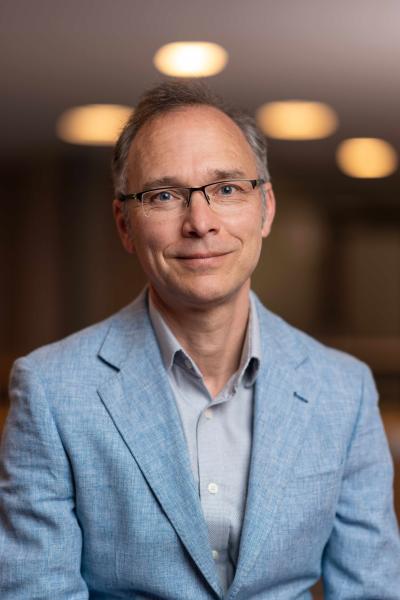
Joel Andreas is a Professor of Sociology at Johns Hopkins University since 2003, serving as Program Director of the East Asian Studies Program. His research focuses on political contention, social inequality, and social change in contemporary China. He holds a PhD in Sociology from UCLA and teaches social theory, political sociology, and courses on Chinese society. He has held visiting positions at universities including the University of Sydney, Hong Kong University, and Ningxia University. His work examines labor movements, rural land policies, and class dynamics in China. Recent research includes analyses of staff-worker congresses, rural land dispossession, and the persistence of militarism in U.S. policy. He critiques market reforms and explores the legacy of the Cultural Revolution. Andreas has contributed to debates on China’s transition to capitalism and the decline of socialist systems. His publications span topics from urbanization to state coercion in rural development. He maintains an active role in academic exchanges and policy-relevant research on China’s socio-political landscape.
Dr. phil. Andrej Holm is a Researcher at the Institute of Social Sciences , Humboldt University of Berlin, specializing in Urban and Regional Sociology . As a Women's Representative and active academic, he focuses on gentrification, housing policy in international comparison, and European urban policy. His work bridges academia and activism, contributing to housing referendums and social movement analysis. Research Themes : Gentrification dynamics, financialization of housing, socio-ecological housing transformation, and post-socialist urban development. Key Projects : Expert analysis for Berlin housing socialization referendum (2022), comparative studies on Amsterdam/Barcelona/Berlin/Vienna (2022), and social infrastructure reconceptualization (2021). Holm's publications span urban policy critiques and housing justice , with recent 2025 works examining financial investors' impact on Berlin housing and pandemic-era housing conditions. His research integrates political economy with spatial inequality frameworks.
Patrick Le Galès is a CNRS Research Professor at Sciences Po's Centre for European Studies and Comparative Politics (CEE), where he contributes to research on urban governance, public policy, and European political sociology. He was the founding Dean of the Sciences Po Urban School (2015–2022) and remains an active faculty member, teaching and leading research groups on urban transformation and state restructuring. His research interests span urban sociology, comparative public policy, political economy, and the governance of European cities. He investigates themes such as financialization of housing, digital cities, urban inequalities, and the reconfiguration of the modern state. His work combines sociological and political science approaches to analyze how cities and states adapt to economic and social change. The 15 most recent publications reflect a consistent focus on urban governance, state transformation, and European integration. These works span subfields including smart cities, policy instruments, metropolitan conflict, and institutional change, with keywords in political science, sociology, and urban studies. His research often adopts a comparative framework across European and global cities. Fellow of the British Academy (FBA) Member of Academia Europaea CNRS Silver Medal (2018) Stein Rokkan Prize (2002) Regional Studies Association Best Paper Award (2017) CNRS Bronze Medal (1996) GRALE CNRS Prize (1991) Mattei Dogan Foundation Award of Excellence (2007) Le Galès has supervised numerous PhD candidates and junior researchers, though specific advisees are not listed. He has led and participated in multiple funded research projects, including European, national, and international contracts. He has served on ERC panels and editorial boards of leading journals such as British Journal of Political Science , Socio-Economic Review , and European Urban and Regional Studies . He co-edits book series on Governance (Presses de Sciences Po) and Urban and Social Change (Wiley/Blackwell). He is involved in the 'Cities are back in town' and 'Restructuring the state' research groups at the Centre for European Studies and Comparative Politics. He also contributes to the Transversal Seminars and thematic seminar series on urban and policy transformations. His ongoing project LAC-EU (2024–2028) explores Latin American challenges in the 21st century, expanding his comparative urban research globally.
Dr. Kevin P. Gallagher is a Professor of Global Development Policy at Boston University (BU) and Director of the Global Development Policy Center (GDP Center). He focuses on economic development, trade/investment policy, international environmental policy, and Latin America. His research emphasizes global financial governance, climate resilience, and equitable development. Education includes a BA from Northeastern University, and MA and PhD from Tufts University. He has held visiting/adjunct roles at institutions like Johns Hopkins SAIS, Fletcher School, and Tsinghua University. Research interests center on reforming Bretton Woods institutions, China’s global development finance, and climate policy integration into IMF frameworks. He co-authored influential books such as The Case for a New Bretton Woods and The China Triangle . Recent work addresses debt sustainability in developing countries, climate transition risks, and innovative financing mechanisms like Sustainable Future Bonds. He advises global bodies like the UN Committee for Development Policy and chairs task forces on green transitions and China competition. Key contributions include advocating for IMF surcharge reforms, evaluating climate risks in energy projects, and analyzing China’s overseas development finance impacts on biodiversity and socio-ecological systems.
Panagiotis Zervopoulos is an Associate Professor at the Department of Business Organization and Administration within the School of Economics, Business and International Studies at the University of Piraeus. Previously, he served as Associate Professor and Director of the PhD Program in Business Administration at the School of Business Administration of the University of Sharjah in the UAE. His research interests focus on operations research, efficiency and performance measurements, optimization methods, and econometrics. Specifically, he specializes in developing new data envelopment analysis (DEA) techniques, Bayesian methods, parametric and non-parametric econometric models, with innovative applications across multiple disciplines. His methodological contributions have been applied in diverse fields including supply chain management, financial systems, environmental efficiency, and corporate governance. Zervopoulos has published extensively in top-tier journals such as European Journal of Operational Research, Journal of the Operational Research Society, Annals of Operations Research, Journal of Financial Stability, and Journal of Cleaner Production. His recent work (2023-2024) demonstrates continued innovation in efficiency measurement techniques, particularly in network DEA models with bias correction, environmental efficiency analysis, and systemic risk measurement. His publications show strong international collaboration patterns, frequently working with researchers from different countries and institutions. He has served as Guest Editor for journals including Socio-Economic Planning Sciences and IMA Journal of Management Mathematics, demonstrating recognition of his expertise by the academic community. Zervopoulos has held research fellowships at prestigious institutions worldwide, including Peking University (China), the London School of Economics (United Kingdom), the Academy of Athens (Greece), and the Foundation for Economic and Industrial Research (Greece). He also participates in the World Economic Survey and the Economic Expert Group of the Ifo Institute (Germany). Professionally, he has served as Senior Consultant Modeling Statistician at IRi Worldwide and as Project Manager and Expert in Quantitative Analysis and Public Sector Reform through technical support projects with the European Public Law Agency.
Prof. Dr. Sakura Yamamura is a Junior Professor (Assistant Professor) in Digital Methods in Human Geography at RWTH Aachen University, holding a Dr. rer. nat. in Geography from the University of Hamburg (2018). Her research focuses on migration, transnationalism, superdiversity, and urban studies, with a particular emphasis on digital methods applied to spatial and social dynamics. She has held postdoctoral and visiting fellowships at institutions including the Max Planck Institute and Maastricht University. Yamamura’s work bridges geography, sociology, and economics, examining how transnational migrants shape global cities like Tokyo and the impacts of globalization on urban spaces and policies. Her recent studies address the intersectionality of entrepreneurship, pandemic effects on LGBTQ+ activism, and digital transformations in urban production. Research interests include the socio-spatial dimensions of migration, intersectional approaches to entrepreneurship, and the interplay between digital tools and human geography. Her academic contributions span peer-reviewed articles in journals like Ethnic and Racial Studies and Urban Studies , as well as edited volumes on superdiversity and global urbanization. She actively engages in interdisciplinary dialogue, addressing topics such as mediated social touch and the methodological challenges of fieldwork in transnational contexts. Yamamura’s career includes roles as a guest lecturer at Adam Mickiewicz University (Poland) and SKEMA Business School (France), reflecting her commitment to international collaboration and teaching. She has advised numerous research projects and contributes to policy discussions on migration and urban development. Her current work at RWTH Aachen emphasizes leveraging digital methods to analyze complex urban systems and transnational networks.
Seongtae Kim is an Assistant Professor of Supply Chain Management at Aalto University School of Business. He joined Aalto in 2019 after postdoctoral research at the Swiss Federal Institute of Technology Zurich. His PhD in Supply Chain Management was obtained from the University of Hull’s Logistics Institute (2013–2016). His research focuses on supply chain sustainability, risks, complex networks, and digital transformation. Key projects include a four-year Academy of Finland-funded initiative on supply chain restructuring amid disruptions. He serves as an associate editor for the International Journal of Operations and Production Management and editorial board member for Decision Sciences and Journal of Supply Chain Management , earning review service awards. His work emphasizes interdisciplinary connections between environmental, social, and governance issues in global supply chains. Research awards include the JSCM Best Paper Award (2020) and Chris Voss Best Paper Award (2022). Current grants involve analyzing supply chain resilience during megadisruptions. His articles span topics like ethical sourcing, shareholder value effects of disruptions, and green practices in multi-tier networks. He advocates for integrating diversity, equity, and inclusion into sustainable operations, addressing paradoxes in lean manufacturing and sustainability performance.
Professor John Bone is a Personal Chair in the Department of Sociology at the University of Aberdeen, School of Social Science. His work bridges sociology, political economy, neuroscience, and environmental policy, with a strong focus on just transitions, social well-being, and the biosocial impacts of contemporary capitalism. PhD in Sociology, University of Aberdeen (2004) MA Hons in Sociology, University of Aberdeen (1998) John Bone’s research centers on political economy, social and biosocial theory, and energy justice. He has developed an original biosocial framework known as the 'social map' to analyze how human biological capacities interact with social structures, affecting identity, health, and cohesion. His recent book, The Great Decline (2024), critiques the psychological and societal harms of hyper-mediated, neoliberal societies and warns of unpreparedness for AI and climate change. His empirical work examines energy transitions, particularly in Aberdeen, where he leads the Aberdeen Just Transitions Lab. His recent publications span interdisciplinary themes in just transition, climate governance, and social theory. Key trends include the development of metrics for equitable energy transitions, stakeholder engagement in nuclear decommissioning, and the role of deliberative democracy in climate assemblies. His work frequently addresses regional policy, social inequality, and the psychological impacts of economic precarity. Philip Abrams Memorial Prize 2007 (Joint Winner, Best First Book in Sociology) John Bone has supervised numerous PhD students, including David Magee, Karen Lumsden, and Lorna Watson. He has been a co-applicant on major grants such as UKRI’s Just-Systems project (£5.7M) and NIHR’s Aberdeen Health Determinants Research Collaborative (£1.3M). His leadership roles include Head of Department (2013–2019), Social Science Enterprise Champion, and Coordinator of the Aberdeen Just Transitions Lab. He has also served as Chair of the British Sociological Association (2018–2021). He leads the Aberdeen Just Transitions Lab and collaborates with the Aberdeen Health Determinants Research Centre. His research teams engage with policymakers, NGOs, and community groups, including Aberdeen City Council, NHS Grampian, and the Just Transition Commission, to ensure research has real-world impact on policy and social equity.
Margot Salomon is Associate Professor in the Law Department at the London School of Economics and Political Science (LSE), where she directs the Laboratory for Advanced Research on the Global Economy at LSE Human Rights and coordinates a cross-departmental research group on Globalisation, Poverty and Responsibility. She is also an Associate of LSE and Leeds's Centre for Climate Change Economics and Policy (CCCEP). Her educational background includes a PhD in International Law from LSE, an LLM in International Human Rights Law from University College London, an MA in Comparative European Social Studies from the University of Amsterdam, and a BA from Concordia University in Montreal. Salomon's research critically examines the relationship between international law, poverty, and economic globalization. Her work spans socio-economic rights, indigenous rights, environmental justice, and the political economy of international law. She explores how international legal frameworks interact with capitalism and investigates possibilities for transformative human rights approaches that challenge dominant economic paradigms. Her recent scholarship has focused on peasant rights, debt, austerity, and the potential for emancipatory legal frameworks that move beyond conventional human rights approaches. Her publications reveal a consistent focus on the structural dimensions of poverty and inequality within international legal frameworks. She has pioneered work on extraterritorial obligations through the Maastricht Principles and has examined how economic governance structures impact human rights. Her scholarship demonstrates a growing emphasis on radical alternatives to conventional human rights approaches, particularly through engagement with peasant movements, commons-based approaches, and post-growth paradigms. European Society of International Law Book Prize (2019) for The Misery of International Law Belgian European Francqui Chair (2018) Salomon has supervised numerous PhD candidates in areas including socio-economic rights, development and international law, and environmental rights, often working in cross-disciplinary supervisory teams. Her advisory work extends to significant policy impact, having served as consultant to the UN High Commissioner for Human Rights on extreme poverty and human rights, and to the World Bank on Human Rights and Economics. She has been involved with major initiatives including the Maastricht Principles on Extraterritorial Obligations and has advised the Speaker of the Greek Parliament on socio-economic rights during the debt crisis. She directs the Laboratory for Advanced Research on the Global Economy at LSE Human Rights, which serves as an interdisciplinary hub for critical research on the global economic order and its relationship to human rights. The Laboratory fosters dialogue between legal scholars, economists, political scientists, and activists working on transformative approaches to global justice.
Tat Kong is a Professor in the Department of Politics and International Studies at SOAS University of London, specializing in East Asian political economy with particular expertise in Korean studies, Taiwan politics, and North Korea's political economy. His research spans comparative political economy, economic reform processes, labor relations, and international relations in East Asia. Professor Kong's research interests focus on the political economy of East Asia, with particular emphasis on: The political economy of South Korea, including labor relations, economic reform, and democratic transitions North Korea's economic policies, marketization processes, and political constraints on reform Taiwan's political development and socio-economic inequality China-North Korea relations and China's foreign policy toward the Korean Peninsula Comparative analysis of East Asian capitalism and socio-economic inequality The interplay between state security, regime stability, and economic development in East Asia His extensive publication record demonstrates consistent scholarly engagement with East Asian political economy over three decades. Kong's research shows a clear evolution from studying South Korea's democratization and economic development in the 1990s to more recent analyses of North Korea's economic reforms and changing patterns of inequality across East Asia. His work frequently employs comparative frameworks, examining how different East Asian states have responded to globalization while maintaining distinctive political systems. Professor Kong has contributed significantly to policy discussions on Korean Peninsula issues, having provided written evidence to the UK House of Commons Foreign Affairs Select Committee on North Korea's nuclear capacity and security issues. His research combines theoretical sophistication with policy relevance, making important contributions to understanding the complex political economies of East Asia.
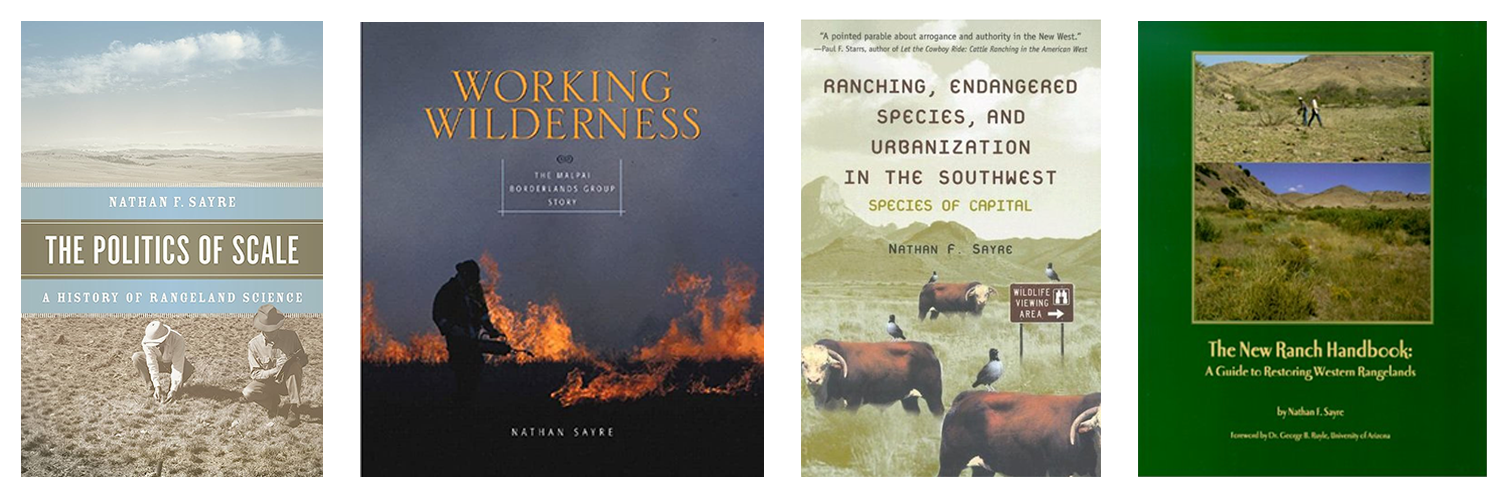
Nathan Sayre is a Professor in the Department of Geography at the University of California, Berkeley, where he researches environmental geography, political ecology, and rangeland management. His work critically examines how landscapes are governed, commodified, and studied, with a focus on the interplay between capital, state power, and scientific knowledge. He specializes in rangelands—covering 45% of Earth's land surface—using archival, ethnographic, and interdisciplinary methods to address conservation challenges and socio-ecological dynamics. Education: Ph.D., University of Chicago (1999) Research spans seven key areas: (1) Scale and political economy, exploring capitalism's spatial dynamics; (2) Historical critiques of environmental limits (e.g., carrying capacity); (3) Science and technology studies in rangeland science; (4) Historical-political ecology of North American landscapes; (5) Rangeland sustainability and marginality; (6) Community-based conservation; and (7) Cannabis legalization impacts. Current projects include California cannabis regulation effects, a food-environment textbook, and the 1861–65 California mega-flood/drought as a climate-political case study. His publications demonstrate a consistent focus on rangeland socio-ecology, scale theory, and conservation governance, with recent work emphasizing climate adaptation, ecosystem services, and cannabis industrialization. Articles frequently integrate historical analysis with critiques of policy and scientific practice. Awards: CHOICE Outstanding Academic Title Award (2017) for The Politics of Scale He teaches courses including GEOG 130 (Food and the Environment), GEOG 203 (Nature and Culture), and GEOG 220 (Capital, Value, and Scale), emphasizing interdisciplinary approaches to environmental issues. As part of UC Berkeley's Cannabis Research Center, he investigates rural impacts of cannabis legalization.
Clive Potter is Professor of Environmental Policy at Imperial College London's Centre for Environmental Policy within the Faculty of Natural Sciences. His interdisciplinary work bridges environmental science and social science to inform government policy, with specific focus on plant biosecurity, ecosystem services, and stakeholder engagement in rural and urban contexts. Professor Potter's research centers on agricultural restructuring and sustainable land use governance in industrialized nations, examining 25+ years of policy evolution and farmer responses to market, policy, and socio-cultural shifts. He investigates policy learning mechanisms and public involvement in environmental risk management, particularly regarding tree disease epidemics like ash dieback, analyzing how historical knowledge and local observations integrate into biosecurity frameworks. His approach combines natural science collaborations with social survey methodologies across UK and EU contexts. Recent publications (2021-2024) reveal intensifying focus on urban forestry dynamics during crises (including COVID-19), socio-ecological art-science collaborations, and policy innovations for landscape-scale conservation. Key trends include systematic analysis of tree pest impacts in cities, integration of public health co-benefits in climate policy, and novel stakeholder engagement methods using digital tools. His work increasingly addresses equity dimensions in environmental governance and the role of diverse knowledge systems in managing complex socio-ecological risks.
Professor Ali Coşkun Tunçer is an economic historian at University College London's History Department, specializing in financial markets, Middle Eastern history, and the Ottoman Empire. He holds a PhD from the London School of Economics (2011), with prior degrees from Turkish and Greek institutions. His current research includes funded projects on urban wealth distribution in the Ottoman Empire (1600-1914) and stock exchange development in the Middle East. Education: PhD in Economic History, London School of Economics (2011) MPhil, MSc, and BA degrees in Turkey and Greece Research Focus: Combines social science methods with historical analysis to explore financial systems, political economy, and socio-economic structures. Active projects investigate religious segregation's economic impacts, domestic debt in emerging markets, and the interplay between political systems and sovereign debt risk. Grants & Collaborations: "Domestic public debt in emerging markets" with Rui Esteves and Leo Weller (Swiss National Science Foundation, 2023-26) "Urban wealth inequality in the Ottoman Empire" with Dr Gürer Karagedikli (TÜBİTAK, 2021-24) "Democracy, autocracy and sovereign debt" with Leo Weller (British Academy Newton Fund, 2016-2021) Teaching & Academic Roles: Teaches quantitative history methods and economic history courses. Serves as Honorary Treasurer of the Economic History Society and editorial board member of Economic History of Developing Regions. Leads the IHR's Economic and Social History of the Early Modern World Seminar.
Susana Santos serves as a Visiting Professor at NOVA School of Law, NOVA University Lisbon, and concurrently at the School of Sociology and Public Policy at ISCTE – Lisbon University Institute. As an integrated researcher at the Center for Research and Studies in Sociology (CIES), she actively contributes to international socio-legal discourse through leadership roles in the International Sociological Association. Her academic credentials include: PhD in Sociology (2012) from ISCTE – University Institute of Lisbon Master's in Communication, Culture and Information Technologies (2007) from ISCTE Degree in Sociology (2002) from ISCTE Santos' research critically examines the intersection of law, society, and communication, with particular emphasis on gender dynamics in legal professions, insolvency systems, and socio-legal movements. Her work consistently employs empirical methodologies to analyze professional socialization, workplace culture in law firms, and the impact of legal reforms on judicial systems. She investigates how structural inequalities manifest in elite educational trajectories and legal practice, especially through feminist and comparative lenses. Her publication record reveals a sustained focus on socio-legal evolution since 2012, with increasing attention to gendered workplace dynamics and transnational legal practices. Recent works demonstrate methodological diversity spanning qualitative narrative analysis, comparative institutional studies, and empirical evaluations of legal procedures, all contributing to global conversations on justice accessibility and professional ethics. Santos coordinates significant research initiatives including a European Commission-funded Humanitarian Action project (2021-2024) implementing summer schools in Mozambique and Cape Verde, and the IN_SOLVENS multidisciplinary analysis of Portuguese insolvency law. She spearheaded the 7th Global Meeting on Sociology of Law (2022), mobilizing over 2,000 international participants to advance comparative socio-legal scholarship. Professionally, she co-coordinates the Sociology of Law and Justice section of the Portuguese Sociological Association and contributes to International Sociological Association working groups on Comparative Legal Professions and Comparative History and Sociology of Law, driving collaborative research across national contexts.
Frank Jotzo is a Professor at the ANU Crawford School of Public Policy and holds leadership roles as Head of Energy at the ANU Institute for Climate, Energy and Disaster Solutions (ICEDS) and Director of the Centre for Climate and Energy Policy. His research focuses on climate change economics, energy transition policies, decarbonisation strategies, and international climate policy. He has contributed to major policy initiatives, including the NSW Net Zero Commission and Australia's Carbon Leakage Review, and served as a Lead Author for the IPCC. His work emphasizes economic instruments for climate change mitigation, regional transition policies, and the analysis of hydrogen and coal sector dynamics. He teaches climate policy and economics at ANU and engages in executive education programs. Research interests include the economics of decarbonisation, zero-emissions industries, and structural economic changes in Australia, Europe, China, and Indonesia. He has advised governments on climate policy design, energy transitions, and the socio-economic impacts of coal phase-outs. Key projects include studies on green hydrogen cost competitiveness, China's coal import reduction strategies, and regional recovery post-coal plant closures. He holds a Dipl-VWL from Berlin and advanced degrees from ANU (MEcDev and PhD). Frank Jotzo’s contributions span over 80 publications, focusing on energy economics, climate policy frameworks, and the interplay between environmental and economic development. His work bridges academic research with policy implementation, particularly in Asia-Pacific contexts. He leads ANU's engagement in global climate policy dialogues and is a sought-after advisor on sustainable development strategies.