Mr. Dr. Gerdien Oldenhuis is an Assistant Professor at the Faculty of Law of the University of Groningen, specializing in Labor Law and Social Security Law. He holds multiple roles including Coordinator and Head Teacher of the post-academic social security law course (PAO), Member of the Supervisory Board of the Groninger Leergang Arbeidsrecht, and Coach for the National Team of the Hugo Sinzheimer Moot Court Competition. His expertise spans work contract law, social security claims, and legal policy analysis. He contributes to academic publications such as the Tijdschrift voor Ontslagrecht and Tijdschrift Arbeidsrechtpraktijk . Oldenhuis teaches courses on work contracts, social law fundamentals, legal research methodologies, and thesis supervision. His research focuses on labor transitions, dismissal law, and the intersection of employment and social security policies. Ancillary activities include roles at the Bestuursacademie Nederland, Schuldhulpacademie, and editorial work for legal journals. He actively participates in policy discussions and legal education initiatives, emphasizing practical applications of law in real-world scenarios.
Sjanne Marie van den Groenendaal is an Assistant Professor at the Department of Human Resource Studies, Tilburg School of Social and Behavioral Sciences, Tilburg University. Her research focuses on sustainable employability of self-employed workers and inclusive Human Resource Management (HRM), with a particular interest in freelancers' employment relationships, organizational needs, and psychological contracts. She has been recognized with multiple awards, including the Best Paper Award (2016) and Best Teacher Awards (2014-2016). Her work bridges HRM practices with societal policies, emphasizing inclusive labor markets and strategic HRM approaches. Education: Master of Science (MSc) External Roles: Founder/Consultant at van den Groenendaal Consultancy since 2020. Her research explores topics such as triad employment relationships, technological impacts on HR education, and the interplay between social security policies and strategic HRM. She actively engages in academic activities, including workshops on qualitative data analysis and invited talks on career development in turbulent contexts. Awards: Best Paper Award (second place), 2016 Best Teacher Award (2014-2016) Societal Impact Competition Award, 2019 Professional Contributions: Advises on inclusive HRM strategies, delivers courses on coaching and development in the Bachelor of Personeelwetenschappen program, and collaborates internationally on research projects.
Prof. Dr. Madalina Busuioc is a Full Professor of Public Governance at the Department of Political Science and Public Administration, Vrije Universiteit Amsterdam. She serves as Director of the Graduate School of Social Sciences and co-Director of the R&I Lab on Artificial Intelligence and Digital Governance. Her ERC-funded research explores public accountability in the AI era, with a focus on algorithmic governance and cognitive biases in administrative decision-making. She holds a PhD cum laude from Utrecht University (2010). Her research interests center on public power dynamics, algorithmic governance, and institutional accountability. Notable contributions include work on AI's impact on citizen-state interactions, reputational authority in bureaucracy, and regulatory oversight mechanisms. Her book European Agencies: Law and Practices of Accountability (Oxford UP) and peer-reviewed articles in Public Administration Review , Journal of Public Administration Research and Theory , and Governance highlight her scholarly impact. Teaching contributions include designing the MSc Public Administration: Artificial Intelligence and Governance program, which integrates technical and governance perspectives. Awards include the Haldane Prize (2016) and Fernand Braudel Fellowship (2021). She advises on AI policy through ancillary roles like membership in the Meijers Commission on international law. Her research projects address AI ethics, algorithmic accountability, and regulatory innovation. Recent work explores behavioral dimensions of human-AI collaboration in public services and the societal implications of AI adoption in administrative systems.
Remco Breuker is a Professor of Korean Studies at Leiden University’s Humanities Institute for Area Studies (LIAS), specializing in medieval Korean and Northeast Asian history, North Korean affairs, and contemporary issues. His research bridges historical analysis with modern geopolitical challenges, particularly focusing on marginalized voices and historical narratives. He leads ERC-sponsored and LeidenAsiaCentre-funded projects on Manchurian histories and North Korean forced labor in the EU. Breuker holds a PhD from Leiden University and has held post-doctoral and visiting researcher roles at institutions like the Australian National University. Education: MA in Japanese Studies (Leiden University, 1997) MA in Korean Studies (Leiden University, 1997) MA in Korean History (Seoul National University, 2001) PhD in Korean History (Leiden University, 2006) Research Interests: Breuker’s work examines medieval Korea’s Koryŏ dynasty, Northeast Asian historiography, and modern North Korean political dynamics. He translates modern Korean literature into Dutch, emphasizing marginalized perspectives and cultural hybridity. Recent projects include analyzing North Korean forced labor networks and reinterpreting ancient Manchurian histories’ contemporary relevance. Awards: 2010 KNAW Heineken Young Scientist Award Academy of Korean Studies Translation Grants (2010, 2008) NWO VENI Research Grant (2008) Advisees & Grants: Supervises PhD candidates researching Korean-Vietnam War linkages, Japanese-Korean relations, and North Korean forced labor. Secured grants exceeding €600,000 for translation projects and interdisciplinary research. Leads LIAS initiatives and serves on Leiden’s Slavery Studies Association. Labs/Teams: Coordinates the History as Social Practice project and the Slavery Studies Leiden network, fostering collaborative research on historical narratives and modern exploitation systems.
Sergio Carrera serves as Senior Research Fellow and Head of the Justice and Home Affairs Unit at the Centre for European Policy Studies (CEPS), a prominent Brussels-based think tank. Additionally, he holds the position of Adjunct Professor at the Paris School of International Affairs (PSIA) in SciencesPo, France, where he contributes to academic teaching and research in international affairs. Dr. Carrera's academic background includes a Ph.D. on immigration and citizenship from Maastricht University (The Netherlands), an LL.M. in European, Comparative and International Law from the University of Maastricht, and a Law Degree from Universidad de Salamanca in Spain. His extensive educational foundation in European and international law underpins his expertise in EU justice and home affairs policy. His primary research interests focus on EU justice and home affairs (JHA) law and the Area of Freedom, Security and Justice policy, with particular emphasis on migration, asylum, citizenship, and Schengen policies. Dr. Carrera's expertise also extends to EU criminal justice law and police cooperation, examining their impacts on data protection, privacy, and the rights of the defense. His work consistently addresses the intersection between security measures and fundamental rights within the European context. Dr. Carrera has produced an extensive body of scholarly work, with over 190 published publications according to the available information. His recent research has particularly focused on EU-US data transfers, rule of law challenges in the context of migration management, global asylum governance, and the evolving landscape of EU security policy. His publications demonstrate a consistent concern with ensuring that security and migration policies uphold fundamental rights and the rule of law. Among his notable contributions are policy analyses on the European Green Deal's implications for climate policy, assessments of the EU's response to the Ukraine crisis, and examinations of the impact of the Trump administration on EU security policy. His research often bridges academic analysis with practical policy recommendations for EU institutions. Dr. Carrera leads and participates in numerous research projects addressing critical issues in EU policy. Current initiatives include "Reclaiming our past, rebuilding our future: new approaches to fighting antigypsyism" (2024-2026) and the "Study on Mapping Civil Dialogue Practices in the EU Institutions" (2024-2025). Previous significant projects include "Global Asylum Governance and European Union's Role" (ASILE, 2019-2023), "Pan-European Response to the ImpactS of COVID-19" (PERISCOPE, 2020-2023), and "IT tools and methods for managing migration FLOWS" (ITFLOWS, 2020-2023). His work has been commissioned by various EU institutions, including the European Parliament's Policy Department for Citizens' Rights and Constitutional Affairs, demonstrating the policy relevance and impact of his research. Dr. Carrera's expertise is frequently sought for task forces addressing timely issues such as EU-US data transfers, digital justice, and cross-border cooperation in criminal matters.
P.J. (Peter) Verovsek, PhD is an Assistant Professor in History and Theory of European Integration at the University of Groningen's Faculty of Arts. His research focuses on European integration, memory studies, and critical theory, with particular emphasis on Jürgen Habermas and 20th-century intellectual history. He holds a PhD from Yale University and previously taught at the University of Sheffield. Verovsek is a Book Reviews Editor for Contemporary Political Theory and serves on Slovenia's Quality Assurance Agency Executive Council. Education: PhD, MPhil, MA in Political Science, Yale University (2007-2013) A.B., Summa cum laude, Dartmouth College (2002-2006) Research Interests: Verovsek examines collective memory, democratic theory, and the role of public intellectuals. His monograph Memory and the Future of Europe (2020) explores post-World War II integration dynamics. He is currently completing an intellectual biography of Jürgen Habermas, analyzing his public engagement and the role of scholars in modern democracy. Recent Work Trends: His articles critically engage Habermas’s work alongside Lyotard and Foucault, reinterpreting modernity debates. Themes of European crisis governance, generational leadership shifts, and transitional justice frequently appear in his scholarship. Awards & Fellowships: British Academy mid-Career Fellowship (2019-2021) DAAD Graduate Fellowship (2010-2011) Fulbright Research Fellowship (2006-2007) Service & Outreach: Verovsek advises Slovenia’s higher education accreditation body and contributes to public discourse via outlets like Social Europe and Europzine . He reviews for leading journals and serves on editorial boards of interdisciplinary political science publications. Labs/Teams: Affiliated with the Center for International Relations Research (CIRR) and collaborates on projects about critical theory’s contemporary relevance.
Liesbeth Enneking is Professor of Corporate Responsibility and Sustainability at Erasmus School of Law (Erasmus University Rotterdam). She obtained her PhD in 2012 for research on civil litigation's role in corporate accountability for human rights and environmental violations. Her work focuses on legal frameworks for responsible business conduct in global value chains. Active legal expert in CSR debates Consulted for European Commission, Dutch ministries, NWO, and AXA Research Fund Current ancillary roles: Monitoring Committee for Dutch Insurance Sector's IRBC Agreement (since 2018), Dutch NCP for OECD Guidelines (since 2021), ABP Pension Fund CSR Committee (since 2022) Her research spans transnational litigation, private international law, and tort law applications to corporate accountability. Key projects include foreign direct liability cases, Shell Nigeria litigation, and EU sustainability directive implementation. Recent publications emphasize integrated compliance strategies and judicial remedies for host country communities. Scientific recognition includes: Rotating Professorship at University of Leuven (2015-2016) Utrecht University Focus program grants (2010-2012) 'Scriptie uit de la' prize (2007) Enneking has held positions at Utrecht Center for Accountability and Liability Law (2013-2017) and contributes to multidisciplinary research projects. She analyzes intersections between psychology and legal decision-making, particularly in evidence evaluation and liability determination.
Netherlands Institute for the Study of Crime and Law EnforcementNetherlands
Dr. Asier Moneva is a Postdoctoral Researcher at the Netherlands Institute for the Study of Crime and Law Enforcement (NSCR) and The Hague University of Applied Sciences , specializing in cybercrime , environmental criminology , and situational crime prevention . His work focuses on offender decision-making in cyberspace, cybercrime victimization patterns, and the application of data science to crime analysis. Education : PhD in Criminology (2020), Master in Crime Analysis and Prevention (cum laude, 2017) from Miguel Hernández University. Current Role : Analyzing cybercrime patterns through environmental criminology frameworks and data science methodologies. Moneva's research examines longitudinal offending patterns in cybercrime, particularly through analyses of web defacement archives ( Zone-H data) and hacker behavior. His studies reveal extreme concentration of cybercrime among chronic offenders, with 2.9% of hackers responsible for 68.5% of defacements. He also investigates repeat victimization dynamics in digital environments and the effectiveness of warning banners as deterrents. Recent publications focus on ransomware payment decisions by SMEs, stolen data markets on Telegram, and the intersection of familial relationships with cybercrime involvement. His work combines quasi-experimental designs , crime scripting , and conjunctive analysis to develop prevention strategies.
Beatrice de Graaf is a Professor of History of International Relations & Global Governance at Utrecht University's Department of History and Art History, within the Faculty of Humanities. She serves as Scientific Director of the Adapt! Academy (2025–2035), a consortium funded by a NWO Gravitation grant, focusing on societal crisis resilience. Her roles include core editorships of Terrorism and Political Violence and Journal of Modern European History , and membership in the Netherlands Academy of Sciences (KNAW) and Academia Europaea. She is also a Visiting Fellow at the University of Cambridge and holds fellowships at the Center for Advanced Security Studies in Bonn and George Washington University's Extremism Project. Education: She earned her PhD from Utrecht University (2004) on GDR, Dutch churches, and the peace movement, awarded the Max van der Stoel Human Rights Award. She holds a master's in Modern History and German from Utrecht and Bonn universities. Notable achievements include the NWO Stevin Prize (2018), Arenberg European Prize (2022), Comenius Prize (2022), and Brouwer Trust Prize (2023). Research focuses on security state evolution, counterterrorism, crisis management, and their impacts on democratic values. Key projects include TerInfo (classroom terrorism education), Security History Network, and JISRA’s 'Reimagining Religion, Security and Social Transformation' (2022–2025). Her work bridges historical analysis with contemporary policy, emphasizing resilience and interdisciplinary collaboration. Media engagement includes columns in NRC Handelsblad , international TV/radio appearances, and the Huizinga Lecture (2024).
Peter Driessen is a full Professor of Environmental Governance at the Copernicus Institute of Sustainable Development (Utrecht University) since 2004. His research focuses on governance strategies for sustainability transitions , particularly in climate adaptation , water management , and science-policy interfaces . He leads the Environmental Governance research group and contributes to global debates on resilient governance and institutional reform . Key research themes include: Sustainable Urban Development : Analyzing institutional frameworks for climate-resilient cities Water Governance : Exploring legal and social conditions for effective water policy Science-Policy Interfaces : Enhancing decision-making through interdisciplinary collaboration His recent publications emphasize anticipatory governance in the Global South, city-to-city learning for water management, and institutional shifts in flood risk governance. Driessen’s work bridges theoretical analysis with practical policy recommendations, focusing on legitimacy , efficiency , and effectiveness of sustainability governance models. Contact: p.driessen@uu.nl
Dr. Anke Wonneberger is an Associate Professor at the University of Amsterdam's Faculty of Social and Behavioural Sciences, within the Communication, Organizations and Society department. She specializes in environmental communication, media studies, and climate change discourse. Her research explores how media frames environmental issues, public perceptions of sustainability, and the role of social movements and litigation in shaping policy. She is reachable at A.Wonneberger@uva.nl and active on LinkedIn , Google Scholar , and ResearchGate . Her work bridges communication theory and practice, analyzing media coverage of climate change, agricultural biotechnology, and energy policies. Recent studies include examining polarization around biomass debates in the Netherlands and the sociotechnical imaginaries of gene editing. She also investigates innovative methods like virtual reality to enhance public engagement with environmental challenges. Key themes in her research include the interplay between economic and environmental priorities, the role of litigation in climate responsibility, and cross-platform discourse dynamics. Her publications span over two decades, demonstrating sustained focus on environmental communication and its societal impacts. No scientific awards or grants are explicitly listed in the provided materials. Her teaching and academic contributions reflect her commitment to advancing communication science in environmental and social contexts.
Dr. Ekaterina Rashkova-Gerbrands is an Associate Professor of Comparative Politics at the Public Governance and Management unit within the School of Governance at Utrecht University. She also serves as the LEG Faculty co-director of the PPE College Utrecht since Spring 2024, managing curriculum development and strategic positioning of this interdisciplinary program. Her academic background includes: PhD in Political Science from the University of Pittsburgh (2010) Master in Political Economy and Public Policy from Washington University in St. Louis Bachelor in Economics from Washington University in St. Louis Dr. Rashkova-Gerbrands specializes in electoral and party systems, political representation, and the strategic behavior of political actors. Her research examines how institutions shape political decisions and outcomes, with particular focus on party system development, electoral regulation, and representation of marginalized groups. She has developed significant expertise in gender politics and immigrant integration within both established and new democracies, with special attention to Central and Eastern Europe. Her recent scholarly work demonstrates a consistent trajectory examining institutional effects on political behavior, with increasing attention to transnational dynamics such as diaspora politics and the representation of non-citizen residents. Her publications span top political science journals with emphasis on comparative European politics, particularly focusing on Southeastern Europe and post-communist transitions. Notable awards and recognitions: UniCredit and Universities Foundation Best CEE PhD Thesis Award (2011) EURIAS Junior Fellowship Grant (2015-2016) Swarovski Research Foundation award for "Women in High Politics" project (2015) Dr. Rashkova-Gerbrands has served as editor of European Political Science journal from 2015 to 2022 and has been an active peer reviewer for numerous prestigious journals including European Political Science Review, West European Politics, and Politics & Gender. She has supervised multiple PhD students focusing on comparative party politics and representation, and has secured competitive research funding for projects examining electoral systems in Central and Eastern Europe and gender politics in Southeastern Europe. She is currently leading research on "the party abroad," investigating connections between national political parties and their diaspora communities, while also examining the effects of the Covid-19 pandemic on party system development and electoral accountability.
Juliette Koning serves as Professor of Business in Society and Head of the Organisation, Strategy & Entrepreneurship Department at Maastricht University's School of Business and Economics. With a PhD in Social Anthropology from the University of Amsterdam, she brings interdisciplinary expertise spanning organizational studies, entrepreneurship, and business ethics. Her academic career includes prior appointments at Oxford Brookes University, Vrije Universiteit Amsterdam, Tilburg University, and Wageningen University. Her research centers on two interconnected domains: (1) small business organizations and entrepreneurship in Southeast Asia—particularly focusing on ethnic Chinese owner-managers—and (2) security studies including maritime security in Indonesia and organizational approaches to security across South Africa, the UK, and the Netherlands. Koning employs extensive qualitative methodologies, often incorporating creative and arts-based approaches, with publications in top journals including Organization Studies , Journal of Business Ethics , and Entrepreneurship & Regional Development . Analysis of her recent publications reveals a consistent focus on identity construction within organizational contexts, ethical dimensions of business practices, and the intersection of cultural-religious frameworks with economic activities. Her work demonstrates increasing engagement with security governance and cross-border cooperation, particularly evident in her NWO-funded research on interorganizational crime control. Koning actively contributes to academic discourse as Associate Editor of Human Relations and has secured significant research funding including an NWO SSH Open Competition grant for her project 'Cross-border Interorganizational Cooperation in Crime Control' investigating Euregional police cooperation in the Meuse-Rhine border region. Her methodological expertise in qualitative approaches extends to mentoring researchers through publications on autoethnography and ethnographic practice.
Erik Meinema is an Assistant Professor at the Department of Philosophy and Religious Studies , Utrecht University . His work bridges Religious Pluralism , Cultural Heritage , and Religion and Conflict in East Africa . As a member of the Religious Matters in an Entangled World research group led by Birgit Meyer, he explores youth culture and political secularism . PhD in Religious Studies (2021) - Utrecht University Research Talent Grant recipient (NWO) for PhD work His research focuses on religious diversity , material religion , and youth resilience in postcolonial contexts. Current projects include a NWO Veni-funded study on Giriama traditions as art/heritage/religion . Publications span journals like Religion , Africa , and edited volumes with Brill. Scientific accolades include the Gerardus van der Leeuw PhD Dissertation Award (2023) . He actively contributes to interdisciplinary conferences on topics like weapon symbolism and multiple secularities. Teaching involves Theories & Methods in Religious Studies and Religion & Violence courses.
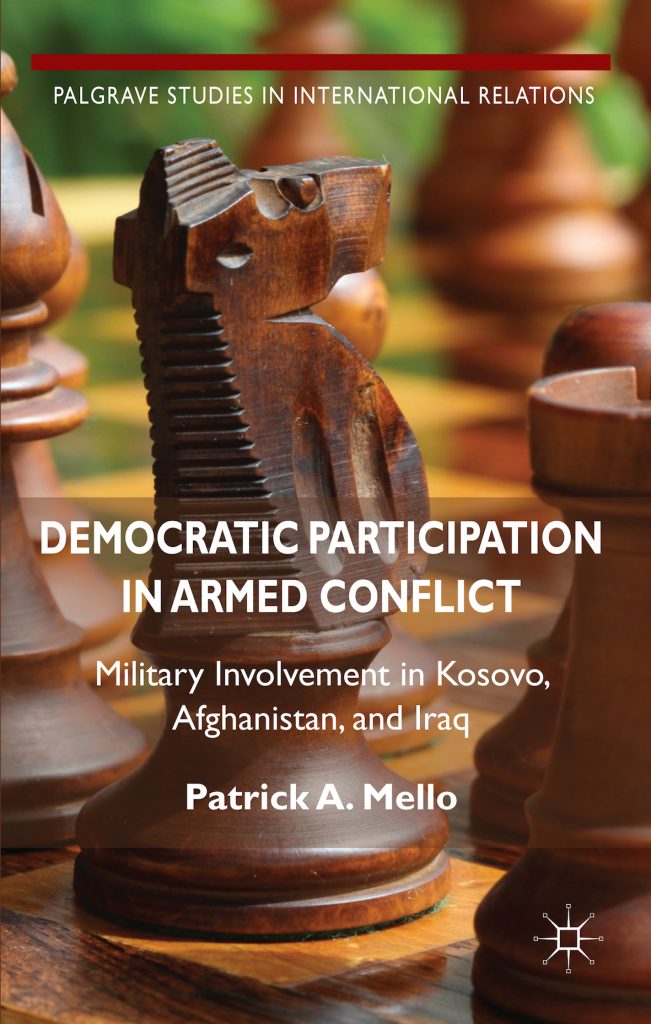
Dr. Patrick Mello is Assistant Professor of International Security in the Department of Political Science and Public Administration at Vrije Universiteit Amsterdam. His research examines foreign policy, military interventions, and democratic governance using Qualitative Comparative Analysis (QCA). He holds a habilitation from Technical University Munich and a PhD from Humboldt University Berlin. Education: Habilitation, Technical University Munich (2020) PhD, Humboldt University Berlin (2012) MA Contemporary European Studies, University of Bath BA English Studies/Law, Universität Bayreuth Research Interests: Configurational analysis of security policies, parliamentary war powers, and methodological innovations in foreign policy research. Current projects include European responses to geopolitical crises and UN sanction impacts. Awards: Teaching Excellence Award (2018, 2021) Best Dissertation Award, German Political Science Association (2015) Bernard Brodie Prize Nominee (2023) Leadership: Editorial board member for International Studies Quarterly and Foreign Policy Analysis ; elected to German Political Science Association Ethics Committee. Teaching: Courses on Qualitative Methods, International Security, and War Theory.