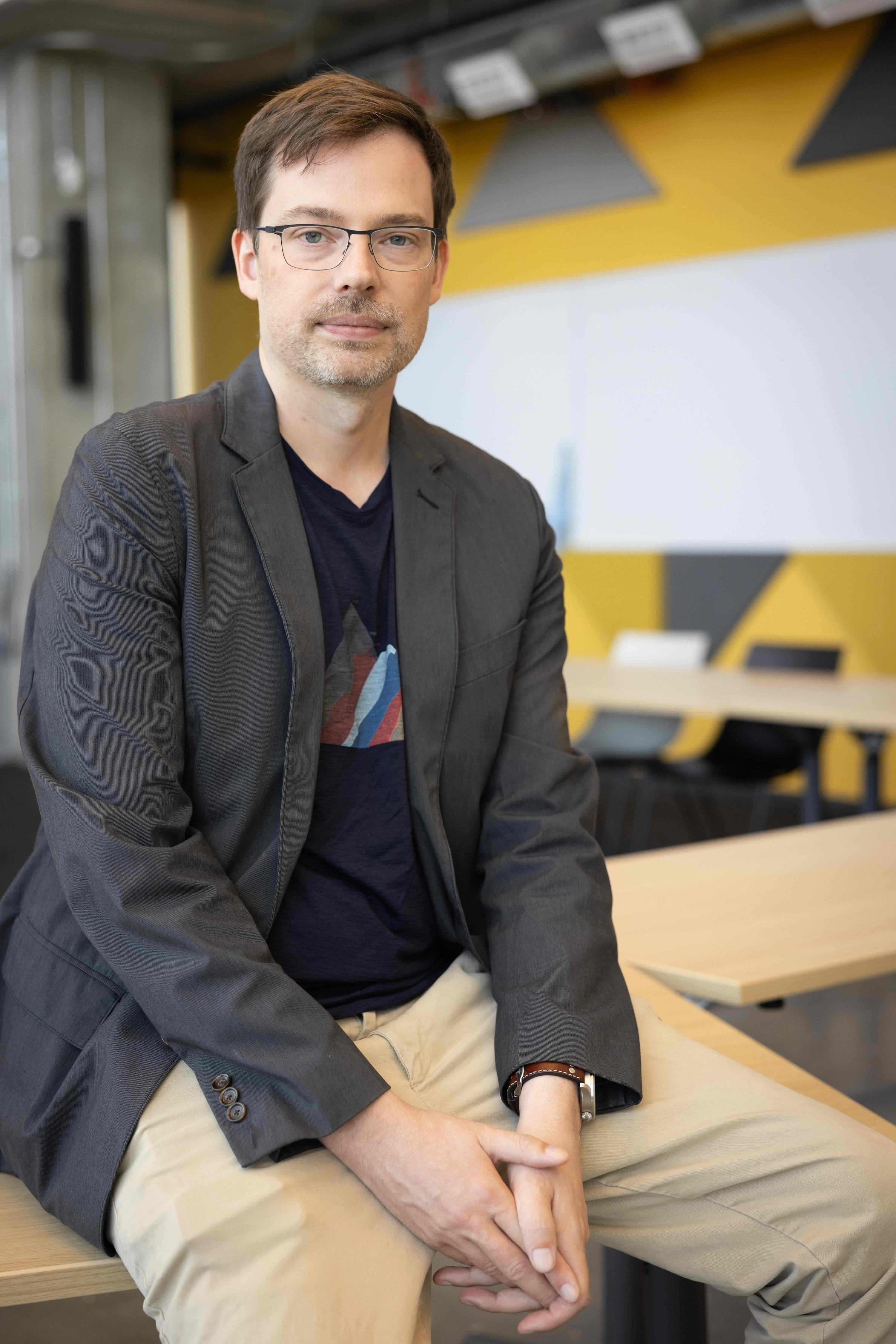
Alan Ritter is an Associate Professor at the School of Interactive Computing , Georgia Institute of Technology, with additional affiliation to the Machine Learning Center . His research focuses on Natural Language Processing , particularly robust models across domains/languages with fewer labels and efficient resource use, plus data-driven dialogue agents for open-topic conversations. Research Interests : Robust NLP models, cross-lingual transfer, resource-efficient learning, dialogue systems, cultural bias measurement, and privacy-aware language models Students : Mentors Ph.D. students in Georgia Tech's ML and CS programs, including Junmo Kang, Yang Chen, and Duong Minh Le. Alumni include Fan Bai (Ph.D. 2023), Yang Chen (Ph.D. 2024), and Andrew Li (M.S. 2024). Awards : NSF CAREER Award, Amazon Research Award, ACL 2024 Best Social Impact Paper, IUI 2009 Best Student Paper. Recent Work : Studies training budget allocation between supervised and preference-based finetuning, cross-lingual information extraction, cultural bias in LLMs, and privacy risk mitigation in social media disclosures. Service : Served as Program Chair for NAACL 2025, Area Chair for multiple top-tier conferences (COLM, EMNLP, ACL, EACL, AAAI). Email : alan.ritter@cc.gatech.edu
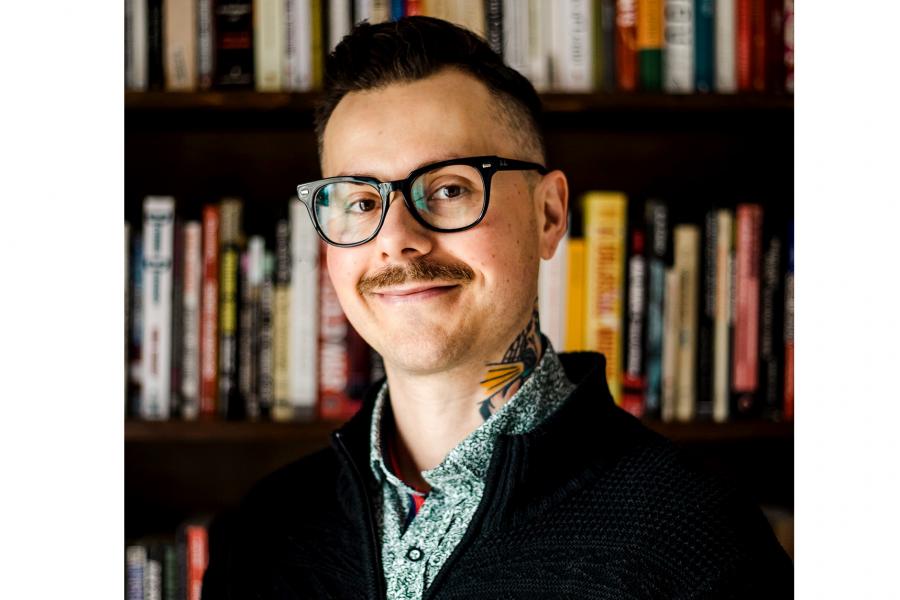
Ameil Joseph is an Associate Professor at McMaster University's School of Social Work, where they contribute to critical scholarship at the intersection of mental health, race, and social justice. Their work examines how ideas about difference, normalcy, sexuality, eugenics, race, ability and mental 'illness' cohere and perform within policy, law and practice, with over a decade of professional experience in mental health settings including supportive housing, settlement services, crisis respite, and forensic community treatment. Education: Ph.D in Social Work, York University (2009-2014) MSW, Wilfrid Laurier University (2005-2007) BA in Psychology, University of Waterloo (1998-2003) Dr. Joseph's research engages with critical mental health, postcolonial theory, critical race theory, and critical disability studies to examine the historical production of ideas about difference. Their scholarship particularly focuses on how these ideas manifest in mental health systems, immigration policy, and criminal justice, with attention to issues of social justice, violence, ethics, and confluence. Their work bridges theoretical frameworks with practical implications, addressing the complex interplay of colonialism, racism, sanism, and eugenics in contemporary social systems. Analysis of Dr. Joseph's recent publications reveals a sustained focus on colonial and eugenic violence within mental health, immigration, and criminal justice systems. Their scholarship consistently examines how racism, sanism, and ableism intersect to produce particular forms of state violence, particularly against racialized immigrants with mental health conditions. Recent work has expanded to address temporal dimensions of oppression, data colonialism, and community responses to grief and loss during the pandemic, demonstrating both theoretical sophistication and practical relevance to current social issues. Scientific Awards: University Scholar 2025 - Recognized for research leadership and impact among eight McMaster professors honored as University Scholars Dr. Joseph has secured significant research funding, including nearly $75,000 from the Social Sciences and Humanities Research Council (SSHRC) for community-engaged projects addressing social justice issues. Their teaching portfolio includes advanced courses on critical mental health perspectives, race and colonialism in Canadian society, and social justice theory. While specific graduate students aren't listed in available materials, their extensive co-author network suggests active mentorship and collaboration. Dr. Joseph contributes to community-based initiatives in Hamilton addressing racism in healthcare and mental health systems, connecting academic scholarship with practical community responses to systemic issues. Dr. Joseph maintains an active presence in community responses to contemporary challenges, particularly through initiatives addressing grief during the pandemic and systemic racism in healthcare. Their work exemplifies the integration of scholarly rigor with community engagement, demonstrating how academic research can inform and be informed by real-world social justice efforts.
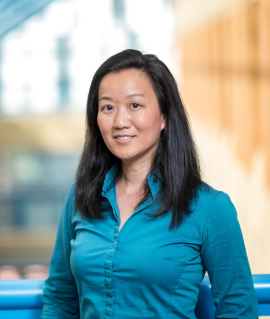
Aya Aboelenien is an Associate Professor in the Department of Marketing at HEC Montréal, a leading business school in Montréal, Canada. Her research focuses on morality and ethics in consumption, consumer culture theory, qualitative methods, aesthetics, and social media. She holds a Ph.D. (Marketing) from Concordia University, an M.B.A. and BBA from the American University in Cairo. Research Interests Aya’s work examines ethical consumption trends, influencer dynamics, and marketplace morality. She explores how brands navigate ethical dilemmas and how social media influencers shape consumer behavior. Her recent studies include analyses of cancel culture’s impact on brands, the ethical dimensions of influencer marketing, and meat consumption’s cultural symbolism. Recent Contributions Her 2024 papers in Journal of Brand Management and Journal of Business Research address brand response strategies to changing market logics and the formation of marketplace moral sentiments. Earlier work in Journal of Marketing Management (2023) and Consumption Markets & Culture (2022) further highlight her focus on ethical influencers and contested consumption practices. Awards & Supervision She received the Best Competitive Paper Award at the 2025 Consumer Culture Theory Conference. Since 2021, she has supervised five MSc projects on topics like green marketing, influencer strategies, and brand repositioning. She teaches courses in consultancy-based marketing research and strategic marketing. Affiliations Aya is affiliated with HEC Montréal’s marketing department and collaborates with global scholars on projects involving consumer ethics and digital marketing innovations.
Adam King is an Assistant Professor in the Labour Studies Program at the Faculty of Arts, University of Manitoba. His research focuses on labor regulation, employment standards enforcement, Indigenous labor dynamics, deindustrialization impacts, and labor market policy. He co-investigates a SSHRC Partnership Grant project on migrant labor in settler-colonial contexts. Education: PhD in Sociology (York University, 2019) MA in History (University of Toronto, 2011) BA in Sociology/History (Trent University, 2010) His research examines the political economy of labor regulation, including enforcement mechanisms in federally regulated sectors and contested Indigenous labor relations. He analyzes deindustrialization's social consequences and contributes to debates on job guarantee proposals and right-wing populism's influence on labor movements. Recent publications explore topics like Indigenous labor law frameworks, precarious creative workers' unionization, and gendered identities in deindustrializing communities. He actively engages with media outlets such as CBC, The Globe and Mail, and The Maple's 'Class Struggle' newsletter.
Erik Bohlin is a Professor at Western University's Ivey Business School in the Business, Economics and Public Policy department. He holds the Ivey Chair in Telecommunication Economics, Policy and Regulation and serves as Editor-in-Chief of Telecommunications Policy . Currently on leave from Chalmers University of Technology, he combines economic theory with telecommunications policy analysis. PhD in Economics of Technology from Chalmers University of Technology (1995) BA in Business Administration and Economics from Stockholm School of Economics (1987) Masters and Bachelor in Theology from Community Chapel College (1984-1985) His research focuses on telecommunications policy, digitalization's socioeconomic impact, broadband regulation, and technology diplomacy. He examines network effects, market entry strategies, and digital infrastructure's role in economic growth. Recent publications analyze 5G regulation, AI's societal impact, digital technology adoption strategies, and broadband's economic effects. These works span telecommunications economics, policy analysis, and technology's macroeconomic influence. Scientific Affiliation : Member of Swedish Royal Academy of Engineering Past Chair of International Telecommunications Society Teaching activities include developing and instructing graduate courses on Digital Strategy and Policy. The Chair receives funding from Ivey Business School, Bell Canada, and TELUS.
Rafael Grohmann is an Assistant Professor of Media Studies at the University of Toronto Scarborough (UTSC), with a graduate cross-appointment at the Faculty of Information (iSchool). He leads the DigiLabour Initiative and is a researcher with Fairwork, focusing on Critical Platform and Data Studies. His research emphasizes platform labour, the platformization of work, and resistance strategies among workers in Latin America. Grohmann holds a PhD in Communication from the University of São Paulo and has held prior academic positions at institutions in Brazil, including Unisinos University. His research interests span platform cooperativism, public policies for technology and labor, AI's impact on work, and data-driven labour practices. He is an editorial board member for Big Data & Society and Work, Employment and Society , and contributes to UCLA’s Center for Critical Internet Inquiry (C2i2). His work examines intersections of technology, labour precarity, and solidarity economies, with a focus on global South contexts. Recent publications analyze click farm labour in Brazil, gender dynamics in platform cooperatives, and global-local trends in platform worker organizing. Grohmann’s work bridges critical theory with action research, advocating for fair work standards in digital economies. He participates in initiatives like the Platform Cooperativism Consortium and the Labor Tech Research Network.
Dr. Carola Weil serves as Dean of McGill University's School of Continuing Studies and Associate Professor in the Department of Political Science since July 2018, following leadership roles as founding Dean at American University and Senior Associate Dean at USC's Annenberg School. Her educational background includes: Post-Doctoral Fellowship, University of Southern California School of International Service Post-Doctoral Fellowship, Harvard University John F. Kennedy School of Government Belfer Center Ph.D. and M.A. in Political Science, University of Maryland Master of Public Management, University of Maryland B.A. in History (Minor in Politics), Bryn Mawr College Dr. Weil's research centers on human security, migration, and conflict transformation with specialized expertise in gender dynamics in international relations and public diplomacy . Her work bridges policy analysis and practical applications in humanitarian intervention, while her recent focus explores lifelong learning systems and the impact of digital technologies on adult education , addressing evolving workforce demands through innovative educational frameworks. Her publication trajectory reveals a strategic evolution from foundational work on women in international security (1990s) to contemporary analyses of digital media diversity and global communication challenges in higher education. Early scholarship examined military intervention dilemmas in humanitarian crises, later pivoting toward systemic analyses of information ecosystems and educational accessibility in the digital age. Dr. Weil co-founded Women In International Security (WIIS) and serves on multiple non-profit boards, leveraging her dual German-American citizenship and multilingual capabilities to advance organizational development initiatives. Her peacebuilding consultancy spans Pakistan, Afghanistan, Darfur, Colombia, and the African Great Lakes region with specific attention to gender-inclusive journalism practices. Her leadership extends to advising on global strategy for technology-enhanced education and future workforce development, though no formal student advisement lists or grant details appear in the source material.
Dr. Jillianne Code is an Associate Professor at the University of British Columbia's Faculty of Education, Department of Curriculum & Pedagogy, directing the ALIVE Research Lab. Her work focuses on learner agency, educational technologies, and social media's impact on student success. Specializes in immersive virtual environments for assessment Researches self-regulated learning and formative feedback Investigates health education through digital interventions Her recent publications examine pandemic-era educational transitions, digital literacy in teacher training, and cognitive tools in virtual reality. She has received Outstanding Paper Awards for her work on immersive assessment. Dr. Code leads research projects on learning analytics, student engagement in digital spaces, and technology education sustainability. Her work bridges educational theory with practical interventions through digital badges, mobile health applications, and 3D learning environments.
Chris Darimont is a Professor and Raincoast Research Chair in Applied Conservation Science within the Department of Geography at the University of Victoria's Faculty of Social Sciences. His work bridges natural and social sciences to address urgent conservation challenges, with a geographic focus on British Columbia's Central Coast (Great Bear Rainforest) but designed for global relevance. His research spans three primary domains: landscape ecology at the marine-terrestrial interface, conservation biology of harvest management, and conservation ethics. Darimont maintains deep collaborations with First Nations communities and conservation organizations like the Raincoast Conservation Foundation (where he previously served as Science Director) and Hakai Institute. His work frequently integrates Indigenous Knowledge with scientific methods, exemplified by projects like the Nuxalk Sputc (Eulachon) initiative and Heiltsuk bear monitoring. Darimont's publication record shows consistent focus on human-wildlife interactions, particularly bear-salmon ecosystems, trophy hunting ethics, and Indigenous-led conservation. His highly cited 2009 PNAS paper "Human predators outpace other agents of trait change in the wild" and 2015 Science paper "The unique ecology of human predators" established foundational frameworks in conservation science. Recent work increasingly emphasizes decolonial approaches and Two-Eyed Seeing methodologies. As an educator, he teaches GEOG 391 (Contemporary Topics in Coastal Conservation) and GEOG 353 (Coastal and Marine Resources), prioritizing student mentorship as his "favourite form of outreach." His research is regularly featured in high-profile media including National Geographic and The New York Times, reflecting his commitment to science communication and public engagement.
Dr. Frank Rudzicz is an Associate Professor in the Faculty of Computer Science at Dalhousie University. His research lies at the intersection of artificial intelligence, natural language processing, and healthcare, with a focus on developing machine learning systems that improve clinical decision-making, patient outcomes, and accessibility in medicine. He holds a BSc from Concordia University (2004), an MEng from McGill University (2006), and a PhD from the University of Toronto (2011). His research interests include Natural Language Processing, Machine Learning, Healthcare, Speech Technologies, Explainable AI, and Fairness in ML. Dr. Rudzicz's recent publications span a wide range of topics, including Alzheimer's detection through speech analysis, surgical outcome prediction, mental health monitoring, privacy in AI, and the application of large language models in clinical settings. His work consistently emphasizes ethical AI, patient privacy, and real-world clinical integration. He has received several awards, including a Best Paper award at EMNLP 2020, a Best Student Paper award at ICASSP 2021, and the ISCA Best Student Paper award in 2013. His research has been published in top-tier journals such as Nature Scientific Reports , JAMA Network Open , IEEE Access , and Frontiers in Human Neuroscience , as well as leading conferences including NeurIPS, ACL, ICML, and Interspeech. Dr. Rudzicz supervises a dynamic research group working on AI for health, with active projects in voice-based diagnostics, ambient clinical documentation, explainable AI for surgery, and wearable-based monitoring for chronic diseases. He collaborates widely across disciplines, including with clinicians, neuroscientists, ethicists, and public health experts. He is also involved in major initiatives such as the Genetics Navigator study and Bridge2AI-Voice, aiming to build ethically sourced, diverse biomedical datasets. His lab actively explores the societal implications of AI in healthcare, including fairness, trust, and resistance to malicious fine-tuning.
Darren Dahl is a Professor at the University of British Columbia (UBC) Sauder School of Business , holding the RBC Financial Group Professor of Entrepreneurship chair. His research focuses on new product development , creativity , consumer emotions , social influence , and social marketing . Education: BCom from the University of Alberta, PhD from UBC Leadership: Dean of the Sauder School of Business Research Trends: Recent work emphasizes innovation strategies , consumer identity dynamics , ethical marketing , and social impact . He explores how organizational structures influence perceptions, the role of identity in consumption, and the psychological drivers of prosocial behavior. Contact: Office HA 769, Tel: 604-822-8556, Email: darren.dahl@sauder.ubc.ca
Nathan Nunn is a Professor at the Vancouver School of Economics at the University of British Columbia. He holds a Canada Research Chair in cultural economics and is affiliated with multiple prestigious research organizations including the Canadian Institute for Advanced Research (CIFAR), the National Bureau of Economic Research (NBER), and BREAD. His office is located in the Iona Building 172 at UBC. Professor Nunn's primary research interests span political economy, economic history, economic development, cultural economics, and international trade. His work focuses on the historical and dynamic processes of economic development, particularly examining how institutions and cultures evolve across societies. He has published extensively on historical factors crucial for economic development, including distrust, gender norms, religiosity, conflict, immigration, state formation, and support for democracy. His contemporary research examines the effects of Fair Trade certification, CIA interventions during the Cold War, foreign aid, school construction, climate shocks, and trade policies, with particular emphasis on how local context influences development policy effectiveness. Nunn's recent publications reveal a strong focus on the relationship between culture, institutions, and economic outcomes. His work increasingly examines how zero-sum thinking affects economic behavior and political divides, the persistence of traditional religious beliefs in Africa, and the historical roots of contemporary economic phenomena. His publications frequently appear in top economics journals including the Quarterly Journal of Economics, Econometrica, American Economic Review, and Science. His scientific contributions have been recognized through fellowships and editorial positions, including serving as an editor at the Quarterly Journal of Economics. He has advised numerous PhD students who have gone on to faculty positions at leading universities worldwide. Professor Nunn actively disseminates his research through various media channels, including podcasts, online courses, and public lectures. His teaching includes courses on economic history, development economics, and political economy, with a particular focus on how historical perspectives inform contemporary economic issues.
Dr. Frances Chen is a Professor and Area Coordinator in the Department of Psychology at the University of British Columbia (UBC), located on the traditional, ancestral, and unceded territory of the Musqueam People. She holds a PhD from Stanford University (2009). Her research integrates health psychology, social psychology, and neuroendocrinology to explore how social experiences influence mental and physical health. Key areas include the physiological impacts of loneliness, social support, and hormonal changes during puberty on adolescent development. Education: PhD, Psychology, Stanford University, 2009 Research Focus: Dr. Chen investigates how social interactions 'get under the skin' through studies on loneliness, stress, conflict negotiation, and hormonal mechanisms. Her work emphasizes interventions to enhance social connection and reduce health disparities. Recent Article Trends: Recent publications highlight interdisciplinary approaches, including genetic influences on depression, effects of near-infrared lighting on cognition, and longitudinal studies on adolescent hormonal contraceptive use. Her work bridges basic science and applied health outcomes. Awards & Grants: Michael Smith Health Research BC C2 Award (2022) Killam Faculty Research Fellowship (2019) Teaching & Learning Enhancement Fund Grant (2025) SSHRC Prosociality Project Funding (2023) Lab & Mentorship: Director of the Social Health Lab, she mentors graduate and undergraduate students, prioritizing equity and inclusion. Recent lab achievements include studies on teen health development and interventions to improve student success in psychology programs. Lab Initiatives: UBC Teen Health and Development Study (longitudinal hormonal/mental health tracking) NIR lighting health impact research (collaborative interdisciplinary project) Prosociality 'in the Wild' SSHRC project
Professor Diana Inkpen is a faculty member at the School of Electrical Engineering and Computer Science, University of Ottawa. She holds a Ph.D. from the University of Toronto's Department of Computer Science and degrees from the Technical University of Cluj-Napoca, Romania (M.Sc. and B.Eng.). Her research focuses on computational linguistics, natural language processing (NLP), and artificial intelligence, with specialties in natural language understanding/generation, lexical semantics, and semantic web agents. Education: Ph.D., Computer Science, University of Toronto M.Sc., Computer Science and Engineering, Technical University of Cluj-Napoca B.Eng., Computer Science and Engineering, Technical University of Cluj-Napoca Affiliations: Director, NLP Lab Editor-in-Chief, Computational Intelligence journal Associate Editor, Natural Language Engineering journal Her research has led to roles such as program co-chair for AI 2012 and leadership in organizing international workshops. She has received funding from NSERC, SSHRC, and OCE, and was honored with a Visiting Professor title at the University of Wolverhampton, UK. Her teaching spans courses like Information Retrieval, Natural Language Processing, and Prolog programming. Professor Inkpen's work bridges NLP innovations with societal challenges, including mental health surveillance via social media analysis and bias mitigation in AI systems. She actively contributes to interdisciplinary projects, such as detecting hate speech and legal text entailment, while maintaining a global research network through collaborations and international conference involvement.
Alfred Hermida is a Professor at the University of British Columbia (UBC), holding a joint appointment in the School of Journalism, Writing, and Media. He is renowned for his contributions to digital journalism, media innovation, and the societal impact of social media and artificial intelligence. Hermida was honored as a Fellow of the International Communication Association (ICA) in 2024, recognizing his transformative scholarly work in communication studies. His career spans academic research, teaching, and leadership. Before joining UBC in 2006, he spent 16 years as a BBC journalist, including foundational roles in the BBC News website. As Director of UBC’s Graduate School of Journalism from 2015 to 2020, he secured major SSHRC grants, including two $2.5M Partnership Grants. He co-founded The Conversation Canada in 2017, a platform bridging academic research with public discourse. Research focuses on journalism’s evolution amid technological shifts, including the Global Journalism Innovation Lab, a SSHRC-funded initiative examining innovation practices and policy frameworks shaping journalism’s future. His publications, such as Data Journalism and the Regeneration of News (2019) and Tell Everyone (2014), explore digital media’s role in information sharing and verification. Hermida’s teaching spans media innovation, visual journalism, and research methods. Colleagues praise his triple threat: exceptional scholarship, pedagogy, and administrative leadership. His work consistently bridges theory and practice, emphasizing journalism’s societal relevance in an algorithm-driven world.