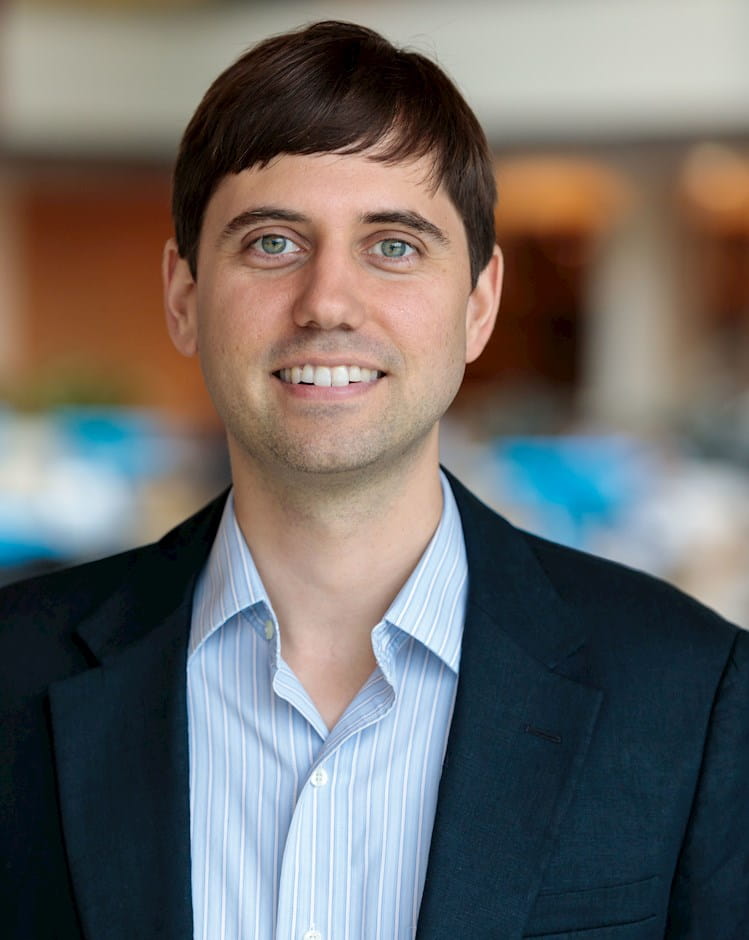
Flavio Vasconcellos Comim is a Full Professor at IQS School of Management in Barcelona, Spain, holding the Chair of Ethics and Christian Thought (intercenter). His research focuses on the intersections of Sustainability, Economics, and Ethics. Fields of Interest : Human Development, Capability Approach, Social Exclusion, Regional Development, AI Ethics, Poverty Stigma (Aporophobia), Sustainable Development, Social Welfare, Justice, and Happiness. Recent research includes publications on youth HDI in Spain (2025), AI bias against the poor (2024), and critiques of Sen's social choice theory (2024). He leads projects like Big data applied to the study of aporophobia and Population Medicine and Sustainable Development collaborations with China. His academic output spans journals like Regional Studies , AI and Society , and Cambridge Journal of Regions, Economy and Society , with keywords spanning Economics, Machine Learning, Human Development, and Social Justice. No formal students or awards are listed in available records.
Richard Hornbeck is the V. Duane Rath Professor of Economics at the University of Chicago Booth School of Business. He is an economic historian and applied-micro economist whose research focuses on the historical development of the American economy, examining why some places and people have become wealthier while others have remained poorer. Hornbeck is a research associate at the National Bureau of Economic Research, affiliated with programs on the Development of the American Economy, Development Economics, and Environmental and Energy Economics. Hornbeck's research spans multiple critical areas of economic history, with particular emphasis on slavery and emancipation economics, environmental history (especially the Dust Bowl migration), gender dynamics in 19th-century manufacturing, railroad development, and agricultural economics related to the Ogallala Aquifer. His work frequently utilizes newly digitized historical data to provide fresh insights into longstanding economic questions, connecting historical events to contemporary economic issues of wealth distribution and regional disparities. His publication record shows strong trends in American economic development research, with recent work focusing on the economic impacts of emancipation, historical manufacturing patterns by gender, and urban economic development. Many of his papers have been published as lead articles in top journals including the Journal of Political Economy, American Economic Review, and Review of Economics and Statistics. Hornbeck has received several prestigious honors including the Alfred P. Sloan Fellowship in 2014 and selection for the 2009 Review of Economic Studies Tour. His NBER affiliations demonstrate his standing in multiple subfields of economics research. Prior to joining Chicago Booth in 2015, Hornbeck was the Dunwalke Associate Professor of American History in the Economics Department at Harvard University. He received his PhD in economics from MIT in 2009 and a bachelor's degree in economics from the University of Chicago in 2004. His teaching includes courses on applied microeconomics in economic history and business in historical perspective, with course schedules extending through 2026.
Anna Villarroya Planas is a Professor at the Universitat de Barcelona, serving as Director of the Research Center for Information, Communication and Culture. She holds a law degree and economics degree from the Universitat de Barcelona, and a PhD in Public Sector Economics from the same institution. Affiliated with both the Faculty of Information and Audiovisual Media and the Department of Economics, she has been teaching courses related to cultural economics and cultural policies since 1993. Her research focuses on digital culture and content, with special emphasis on open access to science and economic studies on culture, particularly examining gender perspectives in cultural sectors. She serves as President of the European Association of Cultural Researchers and coordinates the Interuniversity Doctoral Program in Gender Studies: Cultures, Societies and Policies. Analysis of her recent publications (2022-2024) reveals a strong focus on gender equality in cultural sectors, particularly examining gender discrimination in the performing arts, LGBTQ perspectives in information studies, and cultural policies with gender perspectives. Her work spans multiple disciplines including cultural economics, gender studies, library science, and policy analysis, demonstrating interdisciplinary approaches to understanding cultural production, consumption, and policy implementation. She has participated in numerous research projects funded by public entities including the World Bank, Council of Europe, ERICarts, Organization of Ibero-American States, Spanish Ministry of Culture, Catalan Department of Culture, and Barcelona Provincial Council, as well as private foundations like "la Caixa" Banking Foundation, Carulla Foundation, and Alternativas Foundation. Since 2006, she has authored the report on cultural policy in Spain included in the Compendium of Cultural Policies and Trends, and since 2017 has been a member of the Council of the Association of the Compendium of Cultural Policies and Trends. Her leadership extends to directing research projects focused on gender perspectives in information and media studies, including the GEMPIMS (Gender Perspective Mentoring Program in Information & Media Studies) initiative at the University of Barcelona.
Francisco Javier Murillo Torrecilla is a Professor of Research Methods and Evaluation in Education at the Autonomous University of Madrid (UAM). He serves as Director of multiple educational journals ( REICE , Revista Iberoamericana de Evaluación Educativa , Revista Internacional de Educación para la Justicia Social ) and leads research groups like 'Educational Change for Social Justice' (GICE) and the Ibero-American Research Network on School Change and Effectiveness (RINACE). His work focuses on Education for Social Justice , School Segregation , and Educational Leadership . He holds degrees in Mathematics and Education Sciences, and a PhD in Education Sciences from Universidad Complutense de Madrid. With 5 research sexenios and over 200 publications, his citations exceed 25,000 (h-index: 84) in Google Scholar. He has led 25 competitive research projects, including the 'Network of Excellence' RILME (EDU2017-90606-REDT). Coordinated UNESCO's Latin American Laboratory for Educational Quality Evaluation (LLECE) Former Director of Spain's Centre for Educational Research and Documentation (CIDE) Director of UAM's UNESCO Chair in Education for Social Justice and Institute DEMOSPAZ His research projects on social justice in education include five consecutive Spanish State Program grants (2010-2021) and books like La investigación sobre eficacia escolar (2005). He has consulted for UNESCO, OECD, and governments in Latin America.
Libertad González is an Associate Professor of Economics at Universitat Pompeu Fabra and a researcher at the Barcelona School of Economics (Barcelona GSE). She is affiliated with the Department of Economics and Business, located at the Ciutadella Campus in Barcelona. She holds prestigious research grants, including an ICREA Academia Award and an ERC Consolidator Grant, underscoring her leadership in economic research. Research Interests: Her work spans Labor Economics, Public Economics, and Health Economics, with a strong focus on policy-relevant issues such as reproductive rights, parental leave, gender equality, and the socioeconomic impacts of health policies and pandemics. She uses rigorous empirical methods to evaluate long-term outcomes of social and health interventions. Her recent publications analyze the effects of abortion legalization, paternity leave reforms, and the impact of the Covid-19 pandemic on reproductive health. These studies reflect a consistent theme of evaluating how institutional and policy changes affect individual behavior and long-term socioeconomic and health outcomes, particularly for women and families. Scientific Awards: ICREA Academia Award ERC Consolidator Grant Advising and Grants: While specific students are not listed, she leads major funded research projects, including an ERC Consolidator Grant, which supports independent, high-impact research. Her ICREA Academia award recognizes excellence in both research and teaching, suggesting active mentorship and academic leadership. Labs and Research Teams: She collaborates with leading institutions and researchers across Europe, including the Centre for Economic Performance (LSE) and Nada Es Gratis. She is actively engaged in policy communication, presenting her findings through videos, interviews, and public blogs.
Xavier Bonal is a Professor of Sociology at Universitat Autònoma de Barcelona (UAB) and Special Professor of Education and International Development at the University of Amsterdam (UvA). He directs the Globalisation, Education and Social Policies (GEPS) research group at UAB and coordinates the GLOBED Erasmus Mundus Master on Education Policies for Global Development. His work focuses on comparative social policy, welfare state dynamics, education equity, and globalization's impact on education systems. Bonal has coordinated major projects such as ECASS (European Cities Against School Segregation) and contributed to UNESCO, UNICEF, and the European Commission. His research emphasizes school segregation mechanisms, educational markets, and policy responses to inequality. Over 200 scholarly outputs include books on education policy and globalisation, with a focus on spatial disparities and policy implementation. His recent publications analyze post-pandemic educational inequities, digital divides, and the role of private actors in education. Bonal’s work bridges academic research with policy advocacy, addressing systemic challenges in education systems globally.
Devin G. Pope is the Steven G. Rothmeier Professor of Behavioral Science and Economics at the University of Chicago's Booth School of Business. His research examines psychological biases in economic decision-making using observational data across diverse markets including healthcare, voting, transportation, and consumer behavior. Pope has published extensively in top economics journals (American Economic Review, Quarterly Journal of Economics), general science publications (Science, Nature), and interdisciplinary outlets (Management Science, Psychological Science). His research interests bridge behavioral economics and psychology, focusing on vaccination incentives , racial bias measurement , consumer decision heuristics , and observational data analysis . Recent work leverages smartphone data to study religious attendance patterns, voting wait times, and geographic mobility. Pope's research methodology emphasizes real-world field experiments and large-scale observational datasets to identify psychological biases affecting economic outcomes. Notable scientific contributions include: Co-editing the American Economic Review Amazon Scholar appointment (2019-2021) Robert King Steel Faculty Fellowship Steven G. Rothmeier Professorship Pope advises PhD students and teaches graduate courses including Behavioral Economics and Workshop in Behavioral Science. His research has received significant external funding for pandemic response studies and behavioral interventions. Pope maintains active research collaborations across economics, psychology, and public health disciplines through the Booth School's research centers and workshops.
Jordi Roca Girona is a Professor at the Universitat Rovira i Virgili, specializing in Anthropology, Gender Studies, and Migration. His research focuses on binational couples, migration for love, and intercultural dynamics. He has led multiple qualitative research projects under Spain’s National Plan for R+D+i, analyzing how gender systems and global mobility shape cross-cultural relationships. His work bridges ethnography with critical theory, exploring themes like marriage migration policies, digital matchmaking platforms, and the intersection of love and globalization. He has co-authored books and articles on topics such as transnational families, gender roles in binational unions, and methodological challenges in longitudinal studies. Key projects include a 12-year investigation (2006–2018) on binational couples, examining gender relations and cultural adaptation. His methodologies emphasize fieldwork in contexts like Eastern European matchmaking agencies and virtual dating spaces, highlighting the commodification of intimacy in globalized societies. He collaborates with institutions like the Arxiu d'Etnografia de Catalunya and has advised on grants exploring maternal experiences in advanced modernity. His contributions reflect a commitment to critical cosmopolitanism, demonstrating how intimate relationships enact broader socio-cultural transformations.
Carlos Manuel Gradin Lago is a Full Professor at the Department of Applied Economics, Faculty of Economics and Business, University of Vigo (Spain). His research focuses on the economics of inequality, poverty, and polarization, with a particular emphasis on poverty dynamics, income mobility, gender and ethnic economics, and issues related to developing countries. His recent publications analyze inequality of opportunity in Chile, spatial consumption inequality in Mozambique, and the role of the middle class in income distribution. He has contributed to global inequality debates through work with institutions like UNU-WIDER and Oxford University Press. His research is characterized by innovative methodological approaches such as Shapley decomposition and recentered influence function techniques. Economics of Inequality Poverty Dynamics Gender and Ethnic Economics Developing Countries His work spans comparative studies in China, India, South Africa, and Spain, addressing issues like racial income distribution, occupational segregation, and welfare policy. A notable award includes the IPUMS-International Research Award (2012). His research is disseminated through open-access publications in journals like World Development , Feminist Economics , and Journal of Economic Inequality .
Xavier Casanovas Combalia is a Professor at the IQS School of Engineering (Ramon Llull University) and holds the Chair of Ethics and Christian Thought . With dual doctorates in Philosophy (University of Barcelona) and Mathematics (Polytechnic University of Catalonia), he previously served as director of the Center d'Estudis Cristianisme i Justícia (2014-2021). His research focuses on political theology , philosophical anthropology , and technoethics , with an emphasis on sustainability, economics, and ethics. Research Trends: His recent publications examine the crisis of progress narratives , post-secular spirituality , and ethical implications of AI . Projects like MobilePressure address digital well-being in families, while the SEE (Sustainability, Economics, and Ethics) initiative explores broader socio-ethical frameworks.
Dr. José Miguel Morales Asencio is a University Professor in the Department of Nursing at the University of Málaga (UMA) since 2010. He served as Department Director from 2010 to 2018 and currently holds the roles of Vice Dean of Research and Postgraduate Studies and Coordinator of the Doctoral Program in Health Sciences (since 2020). He is a visiting professor at several universities, including the University of Hertfordshire (UK) and Coimbra (Portugal). Research Interests : His work focuses on Health service models for chronic and dependent populations Gender inequalities in chronic disease Clinical safety and risk management Knowledge translation in healthcare Advanced nursing practice He leads the CTS-970 research group on "Chronicity, Dependency, Care, and Health Services" under the Biomedical Research Institute of Málaga (IBIMA) and is a member of the European Academy of Nursing Science. Article Trends : His recent publications address evidence-based nursing, chronic disease management, and clinical safety. Key areas include multimorbidity prediction, caregiver health economics, and transcultural validation of assessment tools. Grants & Projects : He has led 13 funded projects, including the 2023-2025 Spanish Cancer Association-funded Cui-DAR Cudeca Plan validation study (€133,412) and the 2020-2023 Ministry of Health-funded clinical prediction rule study (€55,535). His work spans randomized trials, longitudinal cohort studies, and systematic reviews. Advising : He has directed 45+ PhD theses, such as "Effectiveness of hydrophobic dressings in vascular ulcers" and "Impact of socioeconomic factors on caregiver burden." Labs & Teams : Collaborates with the European Academy of Nursing Science and IBIMA, integrating healthcare policy and clinical research.
Aníbal García Arregui is a Lecturer (Professor Lector) in the Department of Social Anthropology at the University of Barcelona, affiliated with the Faculty of Geography and History. He holds the prestigious Serra Húnter Program position, emphasizing research excellence. His work bridges environmental anthropology, multispecies ethnography, and urban ecology, focusing on human-nonhuman interactions in contexts like Amazonian communities and urban wild boar populations in Barcelona. Research interests include wild species dynamics, infrastructures of coexistence, and postcolonial ecological frameworks. Notable projects explore wild boar urbanization, Amazonian Quilombola movements, and the socio-political dimensions of aluminum mining. Publications span academic journals (e.g., American Ethnologist , Journal of the Royal Anthropological Institute ) and edited volumes, with a recent book Infraespecie challenging species categorizations. He coordinates the HOLB network (Human and Other Living Beings EASA Network) and is part of CINAF (Research Group on Nature Cultures). His work integrates fieldwork in Amazonia and Barcelona, addressing biosecurity crises (e.g., African Swine Fever) and urban wildlife governance. Collaborations with institutions like ResearchGate and ORCID highlight interdisciplinary engagement.
María José Piñeira Mantinán is a Professor at the University of Santiago de Compostela, affiliated with the Department of Geography within the Faculty of Geography and History. She is part of the Institute of Studies and Development of Galicia (IDEGA) and leads the ANTE research group focused on territorial analysis. Her doctorate (2005) from the same university examined urban structures in A Coruña, supervised by Dr. Xosé Manuel Santos Solla and Dr. Petros Petsimeris. Her research interests center on urban geography, particularly urban planning, tourism impacts, social vulnerability, housing policy, and regional development. She explores how urbanization processes intersect with economic, social, and environmental challenges, with a focus on Spanish cities and peripheral regions. Her recent work highlights trends in urban segregation, the effects of touristification on historical centers, and innovative housing solutions. She has also addressed environmental challenges like flood mitigation in Niamey and fisheries policy impacts in Galician ports. Her interdisciplinary approach combines spatial analysis with socio-economic frameworks. No scientific awards are explicitly mentioned. She has advised one doctoral thesis (2005) and collaborates with IDEGA and ANTE to advance urban governance and territorial development initiatives. Her involvement with research groups like ANTE and IDEGA positions her at the forefront of urban studies in Galicia, contributing to policy-oriented research on sustainable urbanization and regional resilience.
Warn N. Lekfuangfu is an Associate Professor of Economics at Universidad Carlos III de Madrid (UC3M), holding a prestigious Ramón y Cajal Research Grant from the Spanish Ministry of Science and Innovation. He is a co-investigator in the ERC Starting Grant-funded project MISMATCH and affiliated with multiple research institutions including IZA, J-PAL, CReAM (UCL), and CBEE (Chulalongkorn University). His research focuses on Labour Economics, Development Economics, and Behavioural Economics, particularly examining inequality mechanisms, early childhood development, subjective wellbeing, and intergenerational mobility. He employs micro-econometric and experimental methods to address systemic social issues. Lekfuangfu earned his PhD in Economics (2015) from University College London, MSc in Global Market Economics from the London School of Economics (201?), and BA in Politics and Economics from the University of York. His work has been published in top journals like the Journal of Economic Behavior & Organization and Journal of the European Economic Association . He currently serves on the Executive Board of the Asian and Australasian Society of Labour Economics (AASLE) and contributes to policy discussions through projects like Thailand’s pension reform and labour market restructuring analyses. His research has explored topics ranging from gender occupational sorting in the UK to the socio-economic impacts of landmines in Cambodia.
Dr. Jesus Barreal Pernas serves as Assistant Professor in the Department of Quantitative Economics at the Faculty of Economic and Business Sciences, University of Santiago de Compostela. His research bridges environmental policy, tourism economics, and educational innovation with significant regional impact in Galicia and broader European relevance. His academic foundation includes a 2015 PhD from the University of Santiago de Compostela with thesis "Wildfires in Galicia: causality, forest policy and risk in forest management" supervised by Dra. Maria L. Loureiro. This environmental economics work established his expertise in spatial analysis of forest systems. Barreal Pernas' research program demonstrates three converging trajectories: First, environmental economics focusing on wildfire patterns and forest policy in Galicia using spatial econometrics. Second, tourism economics examining sustainable financing mechanisms (particularly green tax willingness), international tourist segmentation, and PDO region development. Third, educational innovation through gamification techniques for teaching statistics in economics and tourism degrees. His recent publications reveal increasing emphasis on gender perspectives in financial inclusion and pandemic-related economic impacts. Analysis of his 2023-2025 publications shows methodological sophistication in spatial modeling and survey-based behavioral research, with strong policy relevance for Galician regional authorities and European tourism sectors. Key thematic clusters include sustainable tourism financing (12% of recent output), educational technology applications (18%), wildfire management (8%), and gender economics (7%). No scientific awards are documented in the provided materials, though his collaborative network spans multiple European institutions as evidenced by co-authorship patterns. His advisory role appears focused on thesis supervision within USC's economics programs, with research projects frequently addressing practical challenges in Galician tourism and environmental management. Current initiatives suggest expansion into post-pandemic tourism recovery and advanced gamification frameworks for quantitative education.