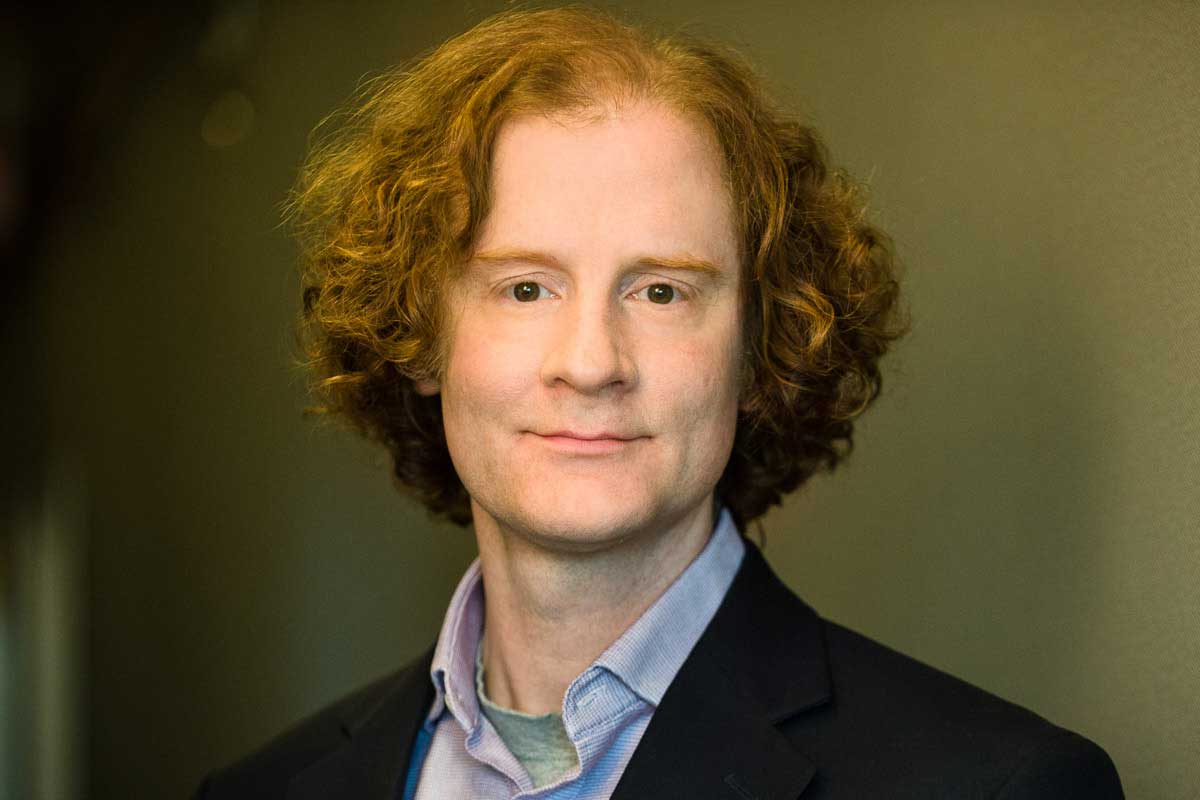
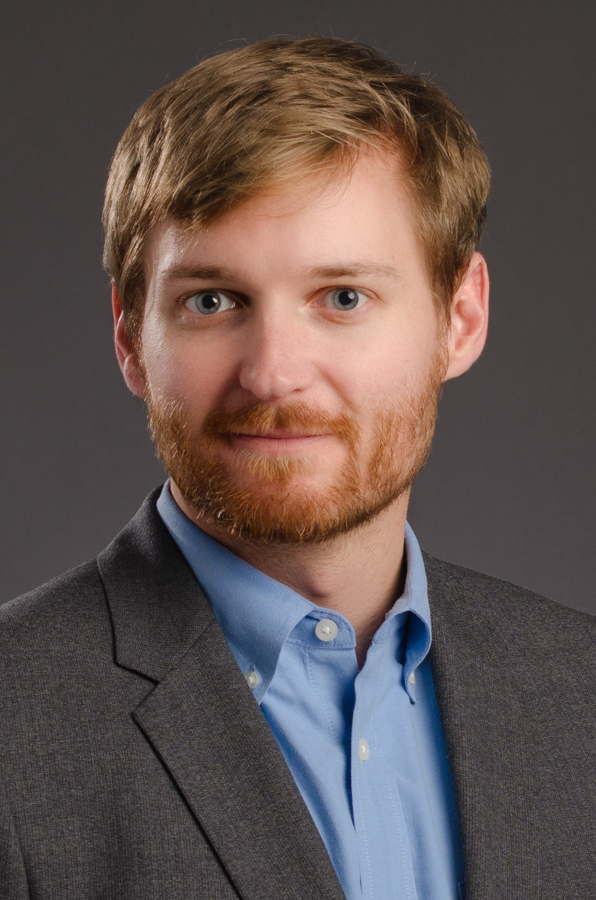
David A. Smith is an Associate Professor at the Khoury College of Computer Sciences, Northeastern University. His research focuses on Natural Language Processing (NLP) and computational linguistics, with applications in machine translation, information retrieval, digital humanities, and social sciences. He is a founding member of the NULab for Texts, Maps, and Networks, a research center focused on digital humanities and computational social sciences. Smith's work has been funded by grants from the Mellon Foundation, NEH, and IMLS, supporting projects such as the Viral Texts initiative analyzing 19th-century newspaper networks and the Oceanic Exchanges project tracking transnational information flows. He has contributed to advancements in OCR for historical texts, text reuse detection, and computational analysis of classical languages. He has advised numerous PhD students, including Shijia Liu, Si Wu, and Ryan Muther, and teaches courses like Natural Language Processing and Information Retrieval. His research has been featured in outlets like Wired and the Economist .
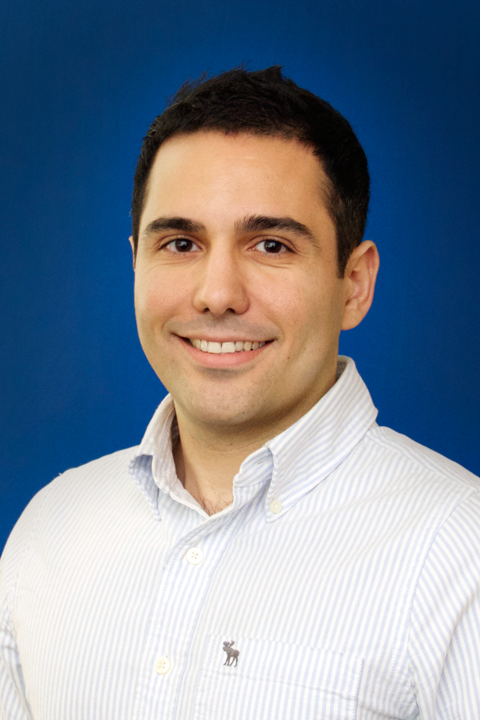
Panos Ipeirotis is a Professor at the Leonard N. Stern School of Business at New York University, affiliated with the Department of Technology, Operations, and Statistics. He also serves as the George A. Kellner Faculty Fellow and is associated with the Center for Data Science and Computer Science departments at NYU. PhD in Computer Science (Columbia University, 2004) MSc in Computer Science (Columbia University, 2001) BSc in Computer Engineering & Informatics (University of Patras, 1999) His research spans crowdsourcing, machine learning, human-AI collaboration, online labor markets, and social media analytics. He pioneered human-machine loop systems that combine human and machine intelligence to achieve superior outcomes. His work has applications in data quality assurance, visual media search (e.g., Google Project Glass), and economic valuation of user-generated content. Recent publications focus on algorithmic fairness in hiring systems, occupational segregation analysis, and theoretical advancements in crowdsourcing consensus mechanisms. Earlier work includes foundational studies on data quality in crowdsourcing platforms, economic impacts of product reviews, and query optimization for text-centric tasks. 2015 Lagrange Prize in Complex Systems NSF CAREER Award SIGKDD Test of Time Award (2020) Multiple Best Paper awards (WWW 2011, KDD 2008, SIGMOD 2006) He has received significant grants, including a $1.5 million Google Research Grant (2013) for integrating crowdsourcing with machine learning algorithms. His work bridges computer science, economics, and social psychology, with implications for policy-making and business strategy.
Max Planck Institute for Intelligent SystemsGermany
Celestine Mendler-Dünner is a Principal Investigator at the ELLIS Institute in Tübingen, co-affiliated with the Max Planck Institute for Intelligent Systems and the Tübingen AI Center. She leads the Algorithms and Society research group, focusing on machine learning in social contexts and the role of prediction in digital economies. Her work bridges theoretical machine learning with practical societal impact, developing tools for safe, reliable, and equitable AI ecosystems. Her educational background includes a PhD from ETH Zurich in collaboration with IBM Research, followed by an SNSF postdoctoral fellowship at UC Berkeley hosted by Moritz Hardt. She was previously a group leader at the Max Planck Institute for Intelligent Systems before joining the ELLIS Institute. Mendler-Dünner's research spans several interconnected themes including performative prediction (where predictions change the behavior they aim to predict), algorithmic collective action (how participants can steer AI systems toward common goals), and the role of LLMs in social science research. Her work combines theoretical foundations with practical implementations, addressing challenges in interactive machine learning, optimization in dynamic environments, and context-specific evaluation of AI systems. She particularly examines how algorithmic predictions mediate services and platforms at societal scale, exploring concepts of economic power in digital markets. Her publication record shows a clear evolution from system-aware machine learning algorithms (including foundational work on IBM Snap ML) toward increasingly sociotechnical questions at the intersection of machine learning, economics, and policy. Recent work focuses on measuring performative power in digital economies, evaluating LLMs as risk scores, and developing frameworks for algorithmic collective action in recommender systems and labor markets. Among her notable recognitions are the ETH Medal for her dissertation, the IBM Research Division Award, the Fritz Kutter Award, and the IBM Eminence and Excellence Award. She is an ELLIS Scholar, a fellow of the Elisabeth-Schiemann-Kolleg, and affiliated with several prestigious research programs including the International Max Planck Research School for Intelligent Systems and the Max Planck ETH Center for Learning Systems. ETH Medal (dissertation award) IBM Research Division Award Fritz Kutter Award IBM Eminence and Excellence Award SNSF Early Postdoc Mobility Fellowship Mendler-Dünner actively mentors the next generation of researchers, advising PhD student Patrik Wolf and supervising research interns including Joachim Baumann, Haiqing Zhu, and Anna Badalyan, as well as Master's student Dorothee Sigg. She serves as core faculty for the International Max Planck Research School and associated faculty for the Max Planck ETH Center for Learning Systems. Her group has secured significant research funding through fellowships and institutional support, enabling work on projects like Powermeter (measuring search engine influence) and Snap ML (resource-efficient machine learning library with over 1 million PyPI downloads). She leads the Algorithms and Society research group, which examines machine learning as part of broader sociotechnical ecosystems. The group explores human-population interactions with algorithmic systems and incorporates these insights into learning system fundamentals. Current projects include investigating economic incentives in digital platforms, developing tools for systematic LLM evaluation in social science contexts, and creating frameworks for collective action in algorithmic systems. Mendler-Dünner also co-organizes the Algorithmic Collective Action workshop at NeurIPS 2025, demonstrating her leadership in emerging research directions at the AI-society interface.
Philip S. Yu is a Distinguished Professor in the Department of Computer Science at the University of Illinois at Chicago and holds the Wexler Chair in Information Technology. Previously, he led the Software Tools and Techniques department at IBM Thomas J. Watson Research Center. Education: B.S. in Electrical Engineering, National Taiwan University M.S. and Ph.D. in Electrical Engineering, Stanford University M.B.A., New York University His research spans data mining , big data , social networks , privacy-preserving data publishing , graph/network mining , recommender systems , and deep learning . He has authored over 970 papers with 74,500+ citations and an H-index of 127. Recent work focuses on heterogeneous graph representation, quantum walks in network analysis, and federated unlearning. Scientific Honors: ACM SIGKDD 2016 Innovation Award IEEE Computer Society 2013 Technical Achievement Award IEEE ICDM 2003 Research Contributions Award IEEE Region 1 Award (1999) UIC Research of the Year (2013) IBM Master Inventor with 300+ patents AI 2000 Most Influential Scholar Honorable Mentions (2024-2025) He served as Editor-in-Chief for ACM Transactions on Knowledge Discovery from Data and IEEE Transactions on Knowledge and Data Engineering , and on steering committees for ACM KDD and IEEE Data Mining. His work bridges theoretical advances in graph neural networks , deep learning , and privacy-preserving systems with applications in healthcare, social media, and enterprise analytics.
Osman Yağan is a Research Professor in the Department of Electrical and Computer Engineering at Carnegie Mellon University (CMU), with affiliate faculty status in the School of Computer Science. He is also a core member of CyLab Security and Privacy Institute. Prior to joining CMU in 2013, he was a Postdoctoral Research Fellow at CyLab. He holds a Ph.D. in Electrical and Computer Engineering from the University of Maryland (2011) and a B.S. from Middle East Technical University (2007). His research focuses on modeling, analysis, and optimization of computing systems, leveraging applied probability, network science, data science, and machine learning. Key areas include multi-armed bandits, resilient machine learning, contagion processes in networks, and cybersecurity. Research Interests include Machine Learning, Data Science, Network Science, Cybersecurity, and Robustness in Cyber-Physical Systems. He has advised numerous students, including current PhD candidates Yurun Tian, Orkun İrsoy, and Ishank Juneja, as well as notable alumni such as Mansi Sood (now at MIT) and Jun Zhao (Assistant Professor at Nanyang Technological University). Key Awards include the CIT Dean's Early Career Fellowship, IBM Academic Award, and Best Paper Awards at ICC 2021, IPSN 2022, and ASONAM 2023. His work spans theoretical contributions (e.g., contagion models in multi-layer networks) and applied research (e.g., mitigating cascading failures in power systems). He leads or co-leads grants from ONR, NSF, and ARO, focusing on resilient machine learning, network robustness, and pandemic modeling.
David Stillwell serves as Professor of Computational Social Science at Cambridge Judge Business School and Academic Director of The Psychometrics Centre, University of Cambridge. His research leverages big data to understand human psychology and behavior, with significant contributions in personality prediction from digital footprints and personalized advertising applications. His educational background includes: BSc in Psychology from the University of Nottingham (2007) MSc in Research Methods from the University of Nottingham (2008) PhD in Decision Making from the University of Nottingham (2012) Dr. Stillwell's research centers on computational social science and psychometrics, pioneering the myPersonality Facebook application that collected data from over 6 million users. His work demonstrates computers can predict personality as accurately as spouses, reveals psychological targeting's advertising effectiveness, and establishes links between personality-matched spending and life satisfaction. He also explores linguistic honesty markers through profanity analysis and personality-based dating patterns. His recent publications (2019-2025) reveal a strong trajectory toward AI evaluation using psychometric frameworks, particularly in medical and general-purpose AI assessment. Key themes include fairness metrics in language models, crisis emotional responses through social media, and computational personality recognition - demonstrating consistent innovation at the psychology-technology intersection. He has received significant recognition: Top 10 most influential papers of 2013 by Altmetric Nieman Journalism Lab highlight of 2013 Named in 'top 30 thinkers under 30' by Pacific Standard Magazine Dr. Stillwell maintains active industry engagement through consultancy with Barclays, Hilton, and Ubisoft on projects spanning computer-adaptive testing systems to interactive experiences like Predictive World for Watch Dogs 2. His policy impact is substantial, with citations by the European Data Protection Supervisor, World Bank, and multiple national governments, leading to speaking engagements at the European Parliament and Bank of England. As Academic Director of The Psychometrics Centre, he leads a global hub for advancing psychological assessment through innovative methods including Concerto open-source software, collaborating with organizations ranging from the European Commission to major corporations on psychometric applications in people analytics and digital behavior.
Ajmal Mian is a Professor of Computer Science at the University of Western Australia (UWA), affiliated with the School of Physics, Maths and Computing. He holds an Australian Research Council Future Fellowship (2022) and leads research in Artificial Intelligence, Computer Vision, and Machine Learning. His work focuses on 3D computer vision, adversarial AI defense, and explainable AI. His research interests include 3D point cloud analysis, face recognition, human action recognition, and remote sensing. He has published over 300 papers and secured major grants from ARC, NHMRC, and DARPA, totaling millions in funding. He has supervised 29 PhD students and mentored 12 postdoctoral researchers. Key projects include 3D diffusion models for scene generation, robust 3D vision systems, and defense against AI deception attacks. He serves as a fellow of IAPR, an ACM Distinguished Speaker, and has editorial roles at IEEE Transactions on Neural Networks and Pattern Recognition. Research Awards: HBF Mid-Career Scientist of the Year, West Australian Early Career Scientist of the Year, IAPR Best Scientific Paper Award. Grants: ARC Discovery Projects, National Intelligence & Security Discovery grants, DARPA grants for AI security. His teaching spans computer vision, machine learning, and programming courses. Collaborations include defense, medical, and agricultural applications.
University of North Carolina at Chapel HillUnited States
Zhun Deng is a tenure-track Assistant Professor at the Department of Computer Science, University of North Carolina at Chapel Hill. His research bridges machine learning, statistics, and theoretical computer science, focusing on rigorous frameworks for responsible AI systems. He previously held postdoctoral positions at Columbia University and completed his Ph.D. at Harvard's Theory of Computation group under Cynthia Dwork. Ph.D. in Computer Science, Harvard University (2022) B.Sc. in Mathematics, Chu Kochen Honors College, Zhejiang University His research spans theoretical foundations of machine learning, including: Quantile-based risk control and conformal prediction Fairness guarantees in algorithmic decision-making Uncertainty quantification for LLMs Copyright frameworks for generative AI Physics-informed hybrid models Multi-agent reinforcement learning with constraints Recent work analyzes LLM alignment through distribution-free methods (ICML 2025), explores performativity challenges (ICML 2025), and develops calibration techniques (ICLR 2024). Collaborations include research interns from Stanford, MIT, and NYU. Students in his group include: Ruomeng Ding (Ph.D., UNC) Xiaowei Yin (Ph.D., UNC) Kaicheng Zhang (Ph.D., UNC)
Karl Gustafsson is a Professor at Stockholm University within the Department of Economic History and International Relations. His work bridges security studies , collective memory , and digital research methods in international relations. Current Role: Professor of International Relations, Stockholm University Previous Positions: Post-Doc at Lund University, Researcher at Swedish Institute of International Affairs Visiting Appointments: University of Tokyo, Osaka University, Keio University, Academia Sinica, Nordic Institute of Asian Studies Research Focus: Karl specializes in memory politics , ontological security , and anxiety-driven international dynamics , particularly in Sino-Japanese relations and digital platforms . His studies explore how historical narratives and online memory construction influence state identity and policy. Awards & Grants: Recipient of the Wang Gungwu Prize (2014) and Stockholm University Association’s award (2011). Holds Swedish Research Council and Marianne & Marcus Wallenberg Foundation grants for projects on apologies in international politics and digital memory in East Asia . Publications: His work appears in journals such as International Studies Quarterly , European Journal of International Relations , and Memory Studies , addressing topics like narrative power in East Asia, anxiety’s role in policy change , and digital humanities applications in IR.
Massachusetts Institute of TechnologyUnited States
Dean Eckles is an Associate Professor of Marketing at MIT Sloan School of Management and serves as an Associate Director of the MIT Institute for Data, Systems, and Society (IDSS). He is also affiliated with the MIT Schwarzman College of Computing through the Institute for Data, Systems & Society and its Statistics and Data Science Center. Additionally, he leads the analytics research area at the Initiative on the Digital Economy and organizes the annual Conference on Digital Experimentation (CODE@MIT). His educational background includes a BA in philosophy, BS and MS in cognitive science, MS in statistics, and PhD in communication, all from Stanford University. Prior to joining MIT, Eckles worked as a scientist at Facebook, where he contributed to areas including News Feed, messaging, advertising, tools for randomized experiments, and survey methods. He previously held research positions at Nokia and Yahoo. Eckles's research primarily focuses on social influence mediated by interactive technologies, examining how communication technologies mediate, amplify, and direct social influence. His work spans multiple specific areas including social interactions, contagion, and interventions in networks; experimental design and inference in networks; and methods for causal inference. His research often combines social science with advanced statistical methods. His notable publications include research on long ties in social networks and their relationship to economic prosperity, how network structure affects social contagions, and algorithmic transparency in social media platforms. His work has appeared in prestigious journals including PNAS and Nature Human Behaviour, and he has provided expert testimony before the US Senate on algorithmic ranking. Long ties, disruptive life events and economic prosperity (PNAS) Long ties accelerate noisy threshold-based contagions (Nature Human Behaviour) Algorithmic transparency and assessing effects of algorithmic ranking (Senate testimony) Eckles actively shares his research through social media platforms including Bluesky, Twitter, and Mastodon, as well as through his blog and contributions to the Gelman et al. blog. His work bridges academic research with practical applications in technology and policy.
Lexing Xie is a Professor in Computer Science at the Australian National University. He leads the ANU Computational Media Lab ( http://cm.cecs.anu.edu.au ) and the ANU Integrated AI Network. His work focuses on the intersection of machine learning, social media analysis, and multimedia understanding. Dr. Xie's research broadly focuses on innovative design and use of machine learning algorithms, especially on large-scale graph data and collective behaviour. His recent work spans several key areas: Popularity in social media -- understanding, predicting, and optimization Multimedia knowledge graphs, vision and language integration Humanising machine intelligence through better understanding of social dynamics His publications reveal a strong trend toward understanding information diffusion patterns in social media, particularly through visual content. He has made significant contributions to the study of visual memes, popularity prediction using point processes, and multimodal learning that connects vision with language. His work often bridges theoretical machine learning with practical applications in social media analysis. Dr. Xie has received recognition for his research, including an Honourable Mention at CSCW 2019 for his work on attention flow in online video networks. His research has been supported by collaborations with major institutions including IBM Research and Columbia University. As an advisor, Dr. Xie has mentored numerous students who have gone on to contribute significantly to publications in top-tier conferences. His lab, the ANU Computational Media Lab, serves as a hub for interdisciplinary research connecting computer science with social sciences.
London School of Economics and Political Science (LSE)United Kingdom
Professor Andrew Murray is a leading academic in Law with expertise in New Media and Technology Law. He holds the position of Professor of Law at the LSE Law School and directs the LSE Law, Society and Technology Group. His research focuses on digital rights, AI ethics, and regulatory frameworks for emerging technologies. Murray has held roles including Fellow of the Royal Society for the Arts and advisor to the Saudi Arabian government on e-commerce law. He has advised parliamentary committees, including the House of Lords Communications Committee on digital regulation, and delivered the prestigious TMC Asser Lecture on AI and human agency. Education: LL.B. Hons from Edinburgh University (1994), followed by academic roles at Stirling University and LSE since 2000. Professional memberships include the Society of Computers and Law (SCL) and the Higher Education Academy (HEA). He has been a visiting professor at Amsterdam Law and Technology Institute and Sciences Po Paris. Research interests span cyberspace regulation, AI governance, and the intersection of technology with human rights. Key publications include Human Rights in the Digital Age (2004) and The Regulation of Cyberspace (2007). Awards include recognition as an Independent Expert in Nominet UK dispute resolution (2001–2008) and a 2024 Leibniz Prize reviewer. Advocacy includes contributions to EU e-commerce directives and UK surveillance law debates. His work emphasizes balancing innovation with legal accountability in digital spaces.
Peter Henderson is an Assistant Professor at Princeton University with joint appointments in the Department of Computer Science and the School of Public and International Affairs. He is affiliated with the Center for Information Technology Policy (CITP), Princeton Language and Intelligence Initiative (PLI), Center for Statistics and Machine Learning (CSML), and Program in Law & Public Policy (PLAW). J.D./Ph.D., Stanford University, 2023 M.Sc., McGill University and Montréal Institute for Learning Algorithms Henderson's research focuses on the critical intersection of artificial intelligence and law, with particular emphasis on AI safety, methods to improve reasoning in foundation models, interdisciplinary approaches to law and AI, and AI governance. His work spans language-grounded reinforcement learning, alignment techniques, strategic decision-making in legal contexts, and public interest artificial intelligence. He investigates how legal frameworks can guide the development of AI systems that benefit society while addressing potential harms. Henderson's recent publications reveal a strong trajectory toward addressing the safety, governance, and legal implications of foundation models. His work combines rigorous technical AI research with deep legal analysis, particularly examining how intellectual property law interacts with AI development, regulatory pathways that balance innovation with harm prevention, and the role of law in shaping responsible AI deployment. A significant thread throughout his research is the development of better evaluation methodologies for AI systems, especially in critical domains like law. SEAS Excellence in Teaching Award (2025) Henderson leads the Princeton Law+Language, AI, & Society (POLARIS) Lab, where he advises students and researchers working at the intersection of AI and legal studies. His research has been supported through collaborations with government agencies, including work with the IRS on audit selection algorithms. His findings have informed practical applications in government efficiency and equity, as well as legal system improvements. Henderson runs the POLARIS Lab at Princeton, which focuses on developing AI systems that work for the public interest, particularly in legal contexts. His team develops sequential decision-making systems for government efficiency, foundation models capable of reasoning about law, and improved safety evaluation frameworks for AI systems. The lab maintains strong connections with legal practitioners and policymakers to ensure research has real-world impact.
Sarah Dean is an Assistant Professor in the Computer Science Department at Cornell University, affiliated with the College of Engineering. Her research focuses on the interplay of machine learning, optimization, and dynamics in real-world systems, particularly in control theory, recommendation systems, and ethical AI. Education: PhD in EECS, University of California, Berkeley (2021) Postdoctoral Research, University of Washington (2021-2022) Research Interests: Data-driven control systems, reinforcement learning, recommendation systems, user dynamics, algorithmic fairness, and the societal impacts of AI. She emphasizes foundational understanding of how learning systems interact with human and social processes. Recent Work Trends: Her articles explore topics like bilinear system identification, user participation dynamics in recommendation platforms, and ethical considerations in AI development. Recent work includes harm mitigation strategies and mathematical modeling of AI-human feedback loops. Awards: AI2050 Early Career Fellow (2024) Best Paper at ICML 2018 (Delayed Impact of Fair Machine Learning) Best Student Paper in Imaging Systems (OSA Congress 2018) Advising & Labs: Advises over 15 graduate and undergraduate students. Leads research on interactive ML systems, with contributions to projects like the 'MSGD' repository for streaming data learning. Active in the GEESE group, promoting socially responsible computing.
Min Yen Kan is an Associate Professor and Vice Dean of Undergraduate Studies at the National University of Singapore's School of Computing, Department of Computer Science. With a PhD from Columbia University (2002), he leads the Web Information Retrieval / Natural Language Processing Group (WING.NUS) and serves as ACL Ethics Committee co-chair. His research spans Natural Language Processing , Large Language Models , Digital Libraries , and Information Retrieval , with specific focus on scientific discourse analysis, fact verification, and multimodal systems. Current projects include Scholarly Document Information Extraction (TRL 6), Task-Oriented Dialogue Systems (TRL 4), and Recommendation Systems (TRL 5). Recent publications reveal strong trends in LLM limitations (bias, hallucination, evaluation), conversational recommendation systems , and misinformation detection . His work consistently bridges theoretical NLP with real-world applications in digital libraries and scientific communication. Award highlights include: CIKM 2019 Best Paper Award ACL Distinguished Service Awards Vannevar Bush Best Paper Award (JCDL 2012) ACM Distinguished Speaker designation Kan mentors PhD students with placements at Google and USTC, and serves as associate editor for Information Retrieval and survey editor for Journal of AI Research . His lab WING.NUS develops practical tools like SciWING for scientific document processing and FANG for fake news detection. Media engagements include commentary on AI regulations in Southeast Asia and workforce implications in the AI era.