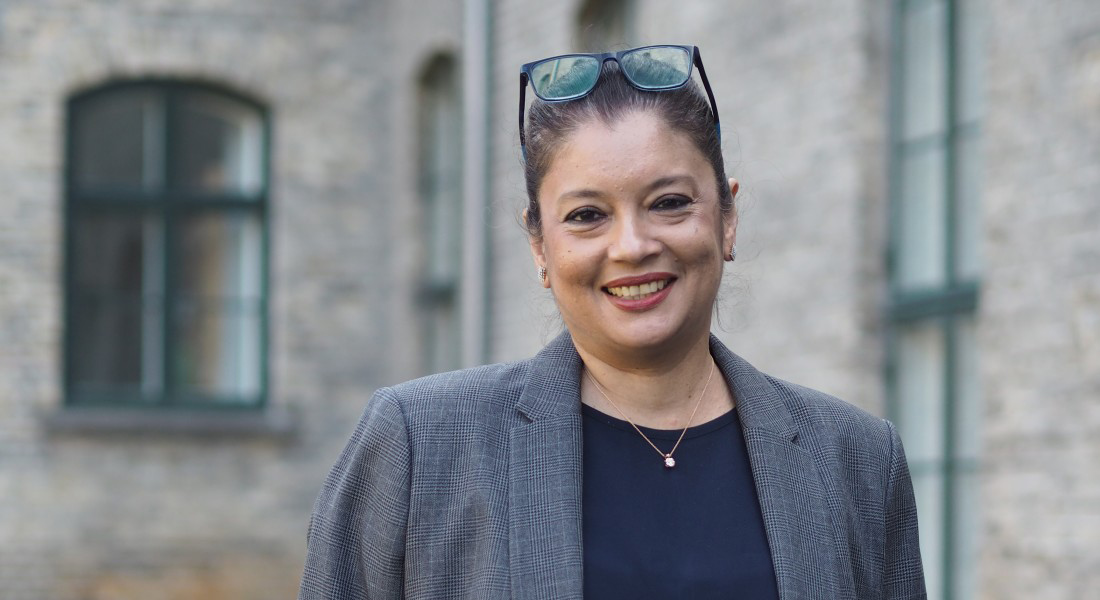
Alena Thiel is an Associate Professor at the Centre of African Studies within the Faculty of Social Sciences at the University of Copenhagen. Her research examines digital technologies' impact on state formation and knowledge systems across Africa, with primary field sites in Ghana, Senegal, Botswana, and Kenya. Her core research areas include: State knowledge systems (biometric ID, census histories, DHIS2 health records) Digital governance (addressing systems, payment solutions, disaster risk datafication) African/feminist AI development and implementation Anthropology of the state through Science and Technology Studies (STS) frameworks Recent publications (2024-2025) reveal concentrated analysis of health data infrastructures in Ghana, trust dynamics in Africa's global networks, and critical sociological examinations of digital identification. Her work consistently bridges anthropological theory with practical governance challenges in African contexts. As an active member of the Centre of African Studies, she maintains interdisciplinary collaborations across multiple African countries and European institutions, with particular emphasis on Ghanaian research partnerships and editorial leadership for Africa Spectrum journal.
Ana Antic is a Professor in the Department of English, Germanic and Romance Studies at the University of Copenhagen, Faculty of Humanities. She is also affiliated with the Centre for Culture and the Mind, where she leads an ERC-funded project titled Decolonising madness: Transcultural psychiatry, international order and the birth of a ‘global psyche’ . Her academic journey includes a PhD in Modern European History from Columbia University (2012) and prior appointments at universities in the UK and US before joining the University of Copenhagen in August 2020. PhD in Modern European History, Columbia University (2012) Ana Antic’s research lies at the intersection of social and cultural history, focusing on the history of modern Europe, war and violence, and the 'psy' sciences—particularly psychiatry and psychoanalysis. Her work critically explores the decolonisation of psychiatric practices and concepts in the second half of the 20th century, examining how transcultural psychiatry emerged in the aftermath of WWII and during decolonisation. She investigates how Western and non-Western experts redefined the relationship between culture, race, and the individual psyche, and whether new frameworks succeeded in moving beyond colonial legacies. Her recent publications reflect a strong trend in global and transnational history, especially in the fields of transcultural psychiatry, Cold War science, and postcolonial mental health. The articles span interdisciplinary journals in history, global health, and medical humanities, often emphasizing decolonial critique and the politics of knowledge. A recurring theme is the role of experts from the Global South and Eastern Europe in shaping global psychiatric discourse. She has received multiple prestigious awards, including: Fraenkel Prize for Contemporary History (2016) British Academy Rising Star Engagement Award (2017) ERC Starting Grant (2019) Dan David Prize (March 2023) Ana Antic is actively involved in research leadership and academic collaboration. She currently heads the DNRF Centre for Culture and the Mind and leads a major ERC-funded project. She has organized international conferences and workshops, including the DECOLMAD Workshop and New Perspectives in Transcultural and Postcolonial Psychiatry . While no direct list of PhD students is provided, her leadership roles suggest active supervision and mentorship. Her work bridges history, psychiatry, and global health, contributing to a deeper understanding of the cultural and political dimensions of mental health. She is involved with the Centre for Culture and the Mind, a research environment that fosters interdisciplinary work on the intersections of culture, cognition, and history. Her project Decolonising madness brings together historians, anthropologists, and mental health professionals to re-examine the foundations of global psychiatric knowledge.
Kunihiko Kaneko is a Professor at the Niels Bohr Institute, University of Copenhagen, with a distinguished career in theoretical biophysics and complex systems. He received his PhD and MSc in Physics from the University of Tokyo, and has held leadership roles at the Universal Biology Institute and Center for Complex Systems Biology. PhD Physics, 1984 - University of Tokyo MSc Physics, 1981 - University of Tokyo His research spans five primary areas: Universal Biology, Evolutionary Constraints, Ecosystem Dynamics, Neural Cognition, and Universal Anthropology. He has published extensively on multi-level consistency principles, dimensional reduction in biological systems, and reciprocity between robustness and plasticity across scales. Recent publications show strong focus on microbial ecosystems (2025), evolutionary game theory (2025), neural modular architectures (2024), and dimensional reduction in cellular systems (2024). His work bridges physics and biology through dynamical systems theory applied to diverse phenomena from protocells to human societies.
Stine Krøijer is an Associate Professor in the Department of Anthropology at the University of Copenhagen, Faculty of Social Sciences. Her research focuses on political anthropology, nature-culture relations, cosmology, time, multispecies ethnography, anarchism, autonomy, and indigenous peoples, with regional expertise in the Amazon and Scandinavia. She is actively involved in major research projects such as 'Lokale Landvindinger' (2021–2025) and 'Fire and Political Alterity in Amazonia' (2023–), funded by the Velux Foundation and the Danish Research Council, respectively. Her educational background includes a PhD in Anthropology from the University of Copenhagen, awarded in 2011. Prior to her academic career, she worked with Oxfam_IBIS on forest, climate, and indigenous rights issues in the Amazon basin from 2002 to 2007 and again from 2010 to 2014. Stine Krøijer’s research explores the political agency of non-human entities like trees, the performative aspects of climate activism, and the temporalities of radical politics. Her work bridges anthropology with environmental studies, political theory, and indigenous epistemologies. She investigates how radical environmental change—such as deforestation, peatland restoration, and forest fires—reshapes political subjectivities and social futures. Her recent publications reflect a strong trend in climate politics, environmental activism, and the ontological status of nature. Themes include the agency of trees, dystopian imaginaries in environmental movements, and the co-creation of landscapes in Denmark. Her research combines ethnographic depth with theoretical innovation, particularly in understanding how ecological crises generate new forms of political alterity. Member, Expert Council on Nature National Parks, Ministry of Environment, Denmark Coordinator, Green Solution Centre, University of Copenhagen Editor, Tidsskriftet Antropologi She teaches courses on climate, nature, environment, global flows, project design, and fieldwork methods. Her advisory and grant activities are centered on externally funded research projects focusing on climate change, indigenous rights, and environmental transformation. She is also involved in public engagement through lectures and exhibitions such as 'Amazon Trails' and 'Climate/Kettle: Aesthetics of Resistance'. Stine Krøijer leads and participates in research groups focused on nature, environment, and climate. She collaborates with interdisciplinary teams across Denmark and Latin America, particularly in the Amazon region. Her work is embedded in both academic and policy-oriented networks, contributing to the Green Solution Centre and national environmental councils.
Trine Mygind Korsby is an Assistant Professor at the Department of Anthropology, University of Copenhagen, Faculty of Social Sciences. Her research is centered on the anthropology of transnational crime, with a focus on human trafficking, sex work, pimping, and criminal livelihoods. She conducts long-term ethnographic fieldwork in Romania, Italy, Portugal, and Denmark. Her primary research interests include: Anthropology of the body, desire, and labor Morality, perpetration, and ethnographic unease Skills and social relationships in criminal economies Collaborative concept-work and experimental research methods Her recent publications (2023–2025) reflect a deep engagement with the lived realities of traffickers and victims, the ambiguities of fieldwork in criminal settings, and the moral complexities of perpetration. Themes such as agency, visibility, time, and freedom recur across her work, particularly in urban and transnational contexts. She has received significant recognition, including: Marie Skłodowska-Curie Global Fellowship (2022) Elite Research Travel Grant from the Danish Ministry of Higher Education and Science (2013) Individual Postdoc Grant from the Independent Research Fund Denmark (2015) Korsby is affiliated with the Centre for Global Criminology and was a visiting scholar at UC Berkeley (2013) and a postdoc at Stanford University (2016–2018). In 2023–2024, she was selected for the UCPH Forward program for research leadership. Her current project, TRAFFICKER, explores the social relationships of convicted human traffickers and their integration of legal and illegal work, with a research stay at CUNY Graduate Center (2024–2025). She has co-edited a special issue on transnational street economies in Migration & Society (2023) and has contributed to public discourse through media appearances and articles challenging simplistic narratives about traffickers and victims.
James A. Evans is the Max Palevsky Professor of Sociology and Data Science at the University of Chicago, where he is a faculty member in the Department of Sociology within the Division of the Social Sciences. He is the director of Knowledge Lab and the Faculty Director of the Masters Program in Computational Social Science . He holds additional affiliations as an External Professor at the Santa Fe Institute , External Faculty at the Complexity Science Hub, Vienna , and Visiting Faculty Researcher at Google . Education: B.A. in Anthropology, Brigham Young University (1994) M.A. in Sociology, Stanford University (1999) Ph.D. in Sociology, Stanford University (2004) His research centers on the collective system of thinking and knowing , exploring how ideas emerge, spread, and evolve through social and technical systems. He investigates innovation, collective intelligence, and the science of science , using large-scale data modeling, machine learning, generative AI, and network analysis to study knowledge creation. His work spans domains including science, technology, law, and religion, with a focus on how AI is reshaping discovery processes. The most recent publications highlight trends in AI and scientific discovery , with a strong emphasis on innovation, knowledge systems, and human-machine intelligence . His research increasingly explores AI as a transformative agent in science , including the concept of 'alien intelligence' and the development of complementary AI to augment human capacity. Projects like the $20M NSF-funded APTO initiative aim to build language models that predict technological outcomes by analyzing historical data. Scientific Recognition and Funding: Research supported by the National Science Foundation (NSF) , National Institutes of Health (NIH) , Air Force Office of Scientific Research (AFOSR) , and philanthropic sources Work published in Nature, Science, PNAS , and leading social science journals Featured in The New York Times, The Economist, The Atlantic, Wired, NPR, BBC, Le Monde , and others James Evans advises on science policy and funding strategies, emphasizing the importance of diversity, interdisciplinary collaboration, and demographic balance in fostering innovation. He critiques current academic incentives and proposes alternative discovery regimes. He leads Knowledge Lab , a collaborative research environment that conducts seminars, grants, and employment opportunities in computational social science and AI.
Quentin Gausset is an Associate Professor in the Department of Anthropology at the University of Copenhagen, Faculty of Social Sciences. His work bridges environmental anthropology, development studies, and climate action, with extensive fieldwork across West, Southern, and East Africa, as well as Southeast Asia and Denmark. He leads the SAMSKAB research project focused on green transitions and community-driven sustainability. His research interests include environmental anthropology, natural resource management, development, HIV/AIDS, ethnicity, autochthony, indigeneity, kinship, religion, and interdisciplinary field methods. He is a member of the Anthropological Research Group on Nature, Environment and Climate (NEC), reflecting his deep engagement with ecological and societal transformations. The recent scholarly output of Quentin Gausset demonstrates a strong shift toward climate action, citizen-driven environmental initiatives, and sustainable community models, particularly in Denmark. His publications analyze eco-villages, carbon footprinting, and collective behavioral change, emphasizing the cultural and social dimensions of the green transition. This reflects a broader interdisciplinary trend in his work, linking anthropological insight with sustainability science and policy. While no formal scientific awards are listed in the provided material, his editorial leadership in key books on climate mitigation and green transitions underscores his influence in the field. His collaboration with institutions such as Gulu University and participation in research networks highlight his international academic engagement. Quentin Gausset has advised or collaborated on numerous research initiatives and projects, including the Citizen Driven Environmental Action (CIDEA) project and initiatives on natural resource management in Africa. He has contributed to interdisciplinary teaching and capacity-building programs in Southeast Asia and southern Africa, demonstrating a commitment to collaborative and applied research. He is actively involved in the Anthropological Research Group on Nature, Environment and Climate (NEC) at the University of Copenhagen, which serves as a hub for interdisciplinary research on environmental change, sustainability, and community governance. His work often involves collaborative networks across Denmark and internationally, particularly in Africa and Southeast Asia.
Britta Timm Knudsen is a Professor at Aarhus University, affiliated with the School of Communication and Culture, where she contributes to both the Experience Economy and Scandinavian Studies programs. Her research spans critical cultural theory, decolonial practices, digital media, and affective experimentation. University: Aarhus University School: School of Communication and Culture Position: Professor Email: norbtk@cc.au.dk Location: Jens Chr. Skous Vej 2, 8000 Aarhus C, Denmark Her research interests focus on cultural heritage, film and video, aesthetics, colonial legacies, and affective ambivalence. She explores how media and artistic practices engage with decolonial resistance, emotional geographies, and urban cultural memory. Her work often intersects with Indigenous perspectives, digital activism, and experimental methodologies. The recent articles reflect a strong engagement with decolonial visualities, translocal media events (such as the George Floyd video in Denmark), and playful resistance through internet memes. Her scholarship combines critical heritage studies with affect theory, digital culture, and postcolonial critique, forming a cohesive trajectory around memory, power, and representation. Britta Timm Knudsen has been involved in significant research projects such as Playing with Ghosts and ECHOES: European Colonial Heritage Modalities in Entangled Cities . She has supervised visiting PhD students, including Shama Patel, and secured external research funding. Her editorial roles in journals like International Journal of Heritage Studies and Nordicom Review demonstrate her academic leadership. Playing with Ghosts - Affective ambivalence in decolonial art practices (2023–2025) ECHOES: European Colonial Heritage Modalities in Entangled Cities (2018–2021) Emotionel geografi netværk (2008–ongoing) She is actively engaged in public discourse, having contributed to Danish media outlets such as DR P1 and various radio programs, discussing topics ranging from nostalgia in film to existential themes. Her work bridges academic research and public engagement, particularly in the context of colonial heritage and cultural memory.
Atreyee Sen is Professor in the Department of Anthropology at the University of Copenhagen , Faculty of Social Sciences, a position she assumed on 1 February 2025 after serving as Associate Professor since 2015. She holds a PhD in Social Anthropology from SOAS, University of London (2003), and previously held academic roles at the University of Sussex and the University of Manchester. BA in Sociology, University of Calcutta (1994) MA in Sociology, Jawaharlal Nehru University (1996) PhD in Social Anthropology, SOAS, University of London (2003) Her research centers on urban South Asia , particularly India, with a focus on gender, violence, political mobilization, and subaltern communities . She investigates how marginalized groups—such as women in Mumbai slums, Muslim youth in Hyderabad, and former Maoist guerrillas in Calcutta—navigate and resist structural violence through political activism and cultural production. Her ethnographic work explores themes of prisons, moral policing, custodial disappearances, and urban poverty , challenging reductive narratives about the 'poor' and 'violent' in non-Western contexts. The recent articles in her publication record reveal a sustained engagement with political violence, urban precarity, and resistance . Her work spans ethnographic studies of child vigilantes, anti-Romeo squads, and informal economies in Indian cities, often highlighting the intersection of gender, state power, and everyday survival . She employs comparative frameworks, such as between Chicago and Mumbai, to broaden anthropological theory. Her research is deeply interdisciplinary, drawing from political science, sociology, and gender studies. Sutasoma Award for Outstanding Research Towards a PhD (2002) NirmalChunder Basu Ray Memorial Award, University of Calcutta (1994) Atreyee Sen has been actively involved in public scholarship through media engagements, including interviews and documentaries with BBC Radio 4 on topics such as the Delhi rape case, women vigilantes, and Indian elections. She has also led major research projects, including an ERC Advanced Grant on global political anger and a project on cashless economies and urban debt. She is currently writing a monograph titled ‘Morgue tags and body bags’ -- Ethno-histories, custodial death/disappearances and state torture in urban India . She has served in leadership roles in international academic bodies, including the Association of Social Anthropologists (ASA) and the World Council of Anthropological Associations (WCAA). While no formal lab or team is specified, her collaborative research outputs and network suggest active engagement with global academic communities. She has not indicated any future work beyond her current monograph and ongoing projects.
Ditte Alexandra Winther-Lindqvist is a Professor at the Danish Institute of Education (Aarhus University), specializing in Educational Psychology. Her work focuses on early childhood education, pedagogy of care, play theory, and grief psychology, with a strong emphasis on sustainability and ethical practices in educational settings. Research Interests: Ethics of care, pedagogy, children's wellbeing, play dynamics, grief in educational contexts, and sustainable development goals. Projects: Leads the UNESCO CHAIR initiative 'Supporting Early Years Care and Education' (2022–2027) and contributes to 'Strengthening pedagogical care in daycare institutions' (2024–2027). Scientific Awards: Recipient of the 2023 Award for best practice in School-Based Family Counseling for ‘Green transition and Worldcare in ECEC’. Collaborations: Active in international networks, including the International Society for Theoretical Psychology (ISTP) and the International Play Association, Denmark.
Elena Irene Zavala serves as an Assistant Professor in the Section of Forensic Genetics and Guest Researcher at the Globe Institute, Section for Geogenetics at the University of Copenhagen's Faculty of Health and Medical Sciences. Her work bridges forensic science with paleogenetic research, focusing on ancient human DNA analysis and population genetics. Dr. Zavala's research interests span ancient DNA analysis, paleogenetics, forensic genetics, human evolution, population genetics, archaeogenetics, and anthropological genetics. Her work demonstrates a consistent focus on understanding human evolutionary history through genetic analysis, with particular emphasis on migration patterns, adaptation to diverse environments, and the development of methodological approaches for analyzing degraded DNA samples. She has made significant contributions to understanding Neanderthal admixture timing and early human dispersal into Europe. Her publication record shows a strong trend toward high-impact interdisciplinary research, with numerous publications in Nature and other top-tier journals. Her work frequently involves international collaborations across multiple institutions, reflecting the global nature of paleogenetic research. A notable pattern in her recent publications is the integration of multiple analytical approaches (genomic, isotopic, archaeological) to reconstruct human history. Young Investigator Award (2019) Miller Postdoctoral Fellowship (2022) Peter M. Schneider ISFG Fellowship (2023) Novo Nordisk Hallas-Møller Emerging Investigator Grant (2024) Dr. Zavala has secured significant research funding including the prestigious Novo Nordisk Hallas-Møller Emerging Investigator Grant in 2024, indicating strong institutional support for her research program. Her work has garnered substantial attention with multiple publications being picked up by hundreds of news outlets and referenced across social media platforms and academic networks. As a Guest Researcher at the Globe Institute's Section for Geogenetics, Dr. Zavala collaborates with interdisciplinary teams focused on ancient DNA and human evolutionary history. Her research often involves large international collaborations, as evidenced by the extensive author lists on her publications, suggesting she works within substantial research networks dedicated to paleogenetic investigations.
Anders Koed Madsen is a Professor at the Department of Culture and Learning, Faculty of Humanities and Social Sciences, Aalborg University. He is affiliated with the Technoanthropological Laboratory and leads research initiatives including AI for the People and MASSHINE. His work centers on digital methods, urban belonging, smart cities, and citizen science, often integrating ethnographic and participatory approaches. His research interests lie at the intersection of technology and society, focusing on digital placemaking , urban sensing , pragmatist philosophy , and inclusive urban planning . He explores how digital tools can be used to understand lived experiences in cities, especially among marginalized communities. His methodological focus includes participatory digital methods, geospatial photovoice, and computational ethnography. The recent articles highlight a consistent trend toward using digital and ethnographic methods to study urban life, technology assessment, and democratic participation. Themes include generative AI , digital epistemology , friction in machine reasoning , and inclusive city planning . His work increasingly incorporates large language models and open-source toolkits to democratize research and planning processes. Scientific Awards: European Union Prize for Citizen Science (2023) World Summit Awards (WSA) shortlist, Urban Belonging Project (2024) Ziman Award 2020: TANTlab AAU Talent (2018) Videnskabsministeriets EliteForsk-rejsestipendium (2011) Anders Koed Madsen has been actively involved in research grants and collaborative projects such as the Urban Belonging Project , Digital Placemaking and Soft City Sensing Research Network , and GE-AI: Generative Ethnographic AI . He frequently collaborates with interdisciplinary teams and institutions like IT University of Copenhagen and Gehl Architects. He advises on public engagement and has contributed to national and international discourse on digitalization and urban futures. He is a core member of the Technoanthropological Laboratory , which fosters interdisciplinary research on technology and society. The lab supports initiatives in digital methods, citizen science, and urban innovation. Madsen also contributes to public understanding through media engagement and workshops, promoting humanistic perspectives in technological development.
Søren Andkjær is an Associate Professor in the Department of Sports Science and Clinical Biomechanics at the University of Southern Denmark, Faculty of Health Sciences. He is affiliated with the Research Unit of Active Living, where he conducts interdisciplinary research at the intersection of outdoor recreation, health, and cultural practices. His work emphasizes participatory approaches and real-world impact through community engagement and public dissemination. Research Interests: His primary research areas include friluftsliv as a cultural phenomenon, outdoor education, the health-promoting potential of outdoor environments, and safety in outdoor activities. He explores how nature-based experiences contribute to personal development, mental health, and social cohesion, particularly among children and adolescents. The recent articles reflect a strong trend in environmental health, outdoor education, and digital engagement with nature . His work combines qualitative methodologies such as thematic analysis and netnography with systematic reviews and participatory design, focusing on Danish and international contexts including New Zealand. Key themes include children’s active living in coastal areas, friluftsliv therapy for mental health, and the cultural significance of online outdoor communities. Scientific Engagement: Active contributor to conferences and public discourse on outdoor life and health. Regularly featured in Danish media discussing nature, health, and community. Editorial board member for research journals and peer reviewer. Søren Andkjær is actively involved in teaching and supervision, particularly in courses related to active outdoor life and event design in outdoor spaces. He has led and participated in research projects evaluating programs that promote children’s engagement with nature. His collaborative network spans academia, public organizations, and community initiatives, reflecting a commitment to translating research into practice. He has not received any explicitly mentioned scientific awards in the provided text. Labs and Research Units: He is a key member of the Research Unit of Active Living, which investigates how physical activity in natural and urban outdoor environments can promote health and wellbeing across the lifespan.
Anja Simonsen is an Associate Professor at the Department of Anthropology, University of Copenhagen, specializing in Somali migrant and refugee experiences across East Africa and Europe. Her research intersects with migration, social invisibility, biometric technologies, and Mediterranean migrant deaths. University of Copenhagen Department of Anthropology Active in The Young Academy and UCPH Migration & Refugee Research Platform Research Interests: Focused on migrant journeys, biometric governance, European border regimes, and the social life of deceased migrants. Key themes include temporality, clan relations, and humanitarian aid from diasporas. Grant Leadership: Principal Investigator of the ERC Starting Grant SOLID (2024) and co-participant in the Danish Free Research Fund network (2024-2027). Academic Awards: ERC Starting Grant (2024) Danish Free Research Fund (2024-2027) Carlsberg Fund Stipend (2020) VELUX Foundation Grant (2016-2019) FKK Grant (2013-2017) Teaching & Supervision: Course coordinator for advanced migration courses, supervisor for 1 PhD student (2024–), former co-supervisor for another (2022–2023), and mentor for 10+ MA/BA students since 2017. Fieldwork: Extensive ethnographic work in Italy, Greece, Somaliland, Turkey, and Ethiopia, with methodological innovations in collaborative forensic-migration studies.
Christian Groes is a Visiting Professor at Roskilde University's Department of Communication and Humanities and a member of the Center for Gender, Power and Diversity. His work focuses on gender, migration, development studies, and cultural anthropology. He holds a PhD in Anthropology from the University of Copenhagen (2011) and was a Research Fellow at Columbia University (2008). His research explores themes such as transactional sex, intimate economies, and postcolonial identities in transnational contexts. Education: PhD in Anthropology, University of Copenhagen (2011) MSc in Anthology, University of Copenhagen Research Interests: Groes examines gender dynamics in migration, sexual cultures, and the intersection of power and inequality. His recent work addresses sugardating among marginalized youth in Denmark and Mozambican women’s migration patterns. He employs ethnographic methods to analyze intimate labor, moral economies, and postcolonial frameworks. Publications Trends: His articles bridge anthropology and sociology, focusing on transnational intimacy, gender-based vulnerabilities, and the socio-cultural impacts of migration. Recent work critiques management culture myths and explores how marginalized groups navigate global inequalities through intimate economies. Awards: Sapere Aude Young Elite Scientist (2012) Society for Medical Anthropology CAR Book Prize (2018) Grants/Advisory Roles: Lead researcher on the ‘Sugardating among marginalized young people’ project (2019–2021) Member of the EQUALIS Advisory Board (2022–2025) Labs/Teams: Affiliated with Roskilde University’s Center for Gender, Power and Diversity, which focuses on intersectional research in global contexts.