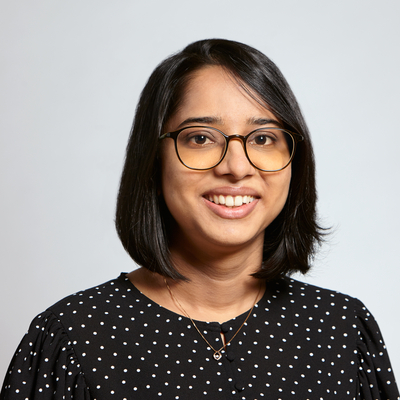
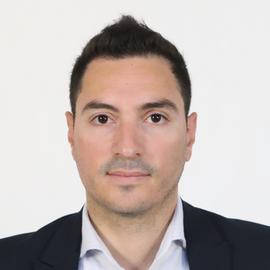
Shweta Shinde is an Assistant Professor at ETH Zürich's Department of Computer Science. She leads the Secure & Trustworthy Systems (SECTRS) group and is affiliated with the Institute of Information Security and the ZISC Center. Her research focuses on foundational and practical aspects of trusted computing, system security, and program analysis to protect devices ranging from smartphones to cloud servers. Key areas include AMD SEV-SNP, Arm CCA, Intel SGX, and hardware-software co-design for security. Dr. Shinde has made significant contributions to confidential computing, including frameworks like OpenCCA and tools for analyzing hardware vulnerabilities. Her work has been recognized with Best Paper Awards and Distinguished Paper Awards at top venues. She advises a group of PhD students, including Mark Kuhne, Supraja Sridhara, and Benedict Schlüter. Her service includes program committee roles at IEEE Security & Privacy, USENIX Security, and as Track Co-Chair for AsiaCCS 2026.
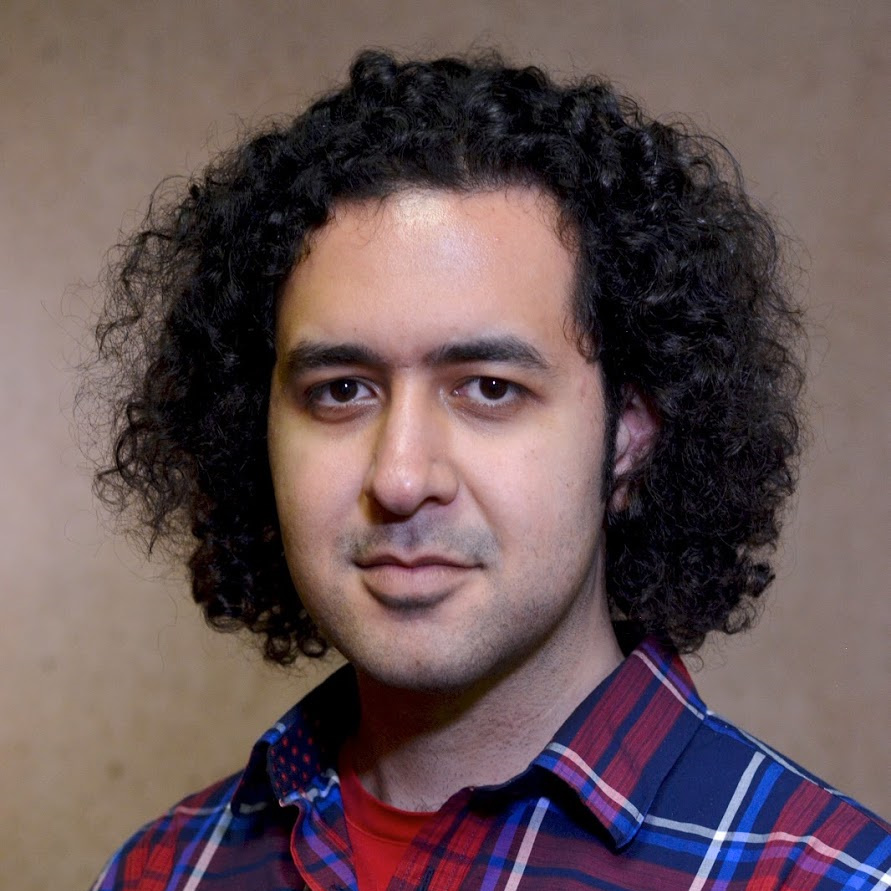
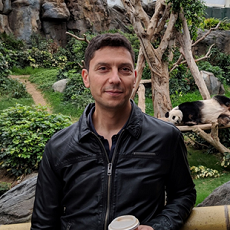
Ardalan Amiri Sani is an Associate Professor in the Computer Science Department at the University of California, Irvine (UCI), affiliated with the Donald Bren School of Information & Computer Sciences. He leads the Trustworthy Systems Lab (TrussLab), focusing on secure and reliable mobile systems, operating systems, and virtualization. His research bridges mobile computing, security, and OS design, addressing challenges in I/O devices, kernel hardening, and verifiable provenance. Education: Ph.D. and M.Sc. from Rice University (ECE), B.Sc. from Sharif University of Technology. Awards include the NSF CAREER Award, Google ASPIRE Award, and UCI Dean's Mid-Career Research Award. He has advised numerous graduate and undergraduate students, many of whom now work in academia and industry. Research highlights include Tabellion (secure legal contracts on mobile devices), ProvCam (verifiable video provenance), and work on minimizing smartphone TCBs via hardware isolation. His grants include NSF funding for OS kernel security and NSA support for provenance systems. Education: Ph.D., Electrical and Computer Engineering, Rice University, 2014 B.Sc., Electrical Engineering, Sharif University of Technology Grants: $500K NSF Award (with UCR) for OS kernel security (2020) NSF SaTC Award for GPU security in browsers Google ASPIRE Award for Android system call filtering Labs/Teams: Trustworthy Systems Lab (TrussLab), collaborating with industry partners like Intel and Broadcom.
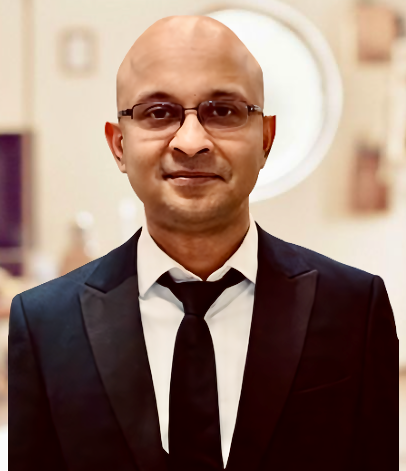
Valerie Viet Triem Tong is a Research Professor at the Paris Institute of Electrical and Electronic Engineering, School of Electrical and Electronic Engineering. She has established herself as a leading researcher in cybersecurity with a particular focus on information flow control systems, Android security, and malware analysis. Her work spans both theoretical foundations and practical security tools development. Her research interests center on Information Flow Control , where she has developed frameworks for monitoring and enforcing security policies at both operating system and application levels. She has made significant contributions to Android Security , creating tools for detecting malicious behavior in mobile applications and addressing privacy concerns in smartphone environments. Her work in Malware Analysis includes developing advanced techniques for tracking and visualizing malware behavior, with emphasis on evasive Windows malware and Android malware in the wild. She also investigates Peer-to-Peer Network Security , focusing on Sybil attack resistance and distributed identity management. Analysis of her publication record reveals a consistent trajectory from foundational work in information flow theory to increasingly applied security research. Her recent work shows a strong emphasis on practical security tools (DaViz, GUI-Mimic, BAGUETTE), security evaluation methodologies (Digital twin, CERBERE), and addressing contemporary challenges in malware analysis (debiasing datasets, handling obfuscated applications). A notable trend is her integration of visualization techniques with security analysis to make complex security data accessible to both experts and machine learning systems. As an advisor, she has mentored numerous researchers who have become first authors on significant publications, including Radoniaina Andriatsimandefitra, Tomás Concepcion Miranda, and Cedric Herzog. Her research has been supported by multiple grants focused on cybersecurity infrastructure, though specific grant details are not provided in the available information. Dr. Tong is actively involved with the CIDre security research group in Rennes, contributing to collaborative projects that bridge theoretical security models with practical implementation challenges. Her work on information flow monitoring has evolved from basic research to applied systems that address real-world security concerns across multiple platforms.
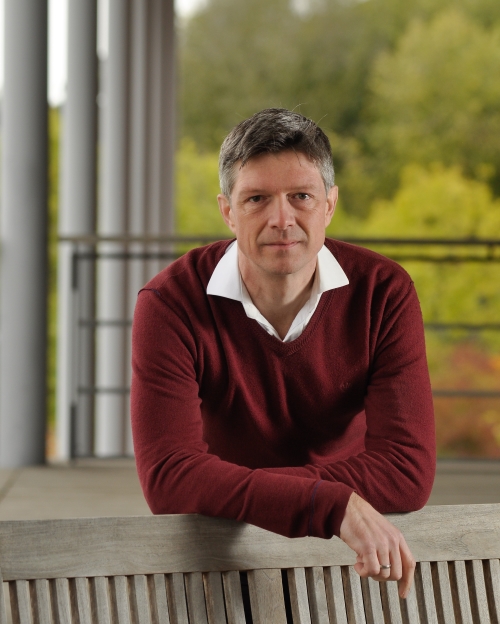
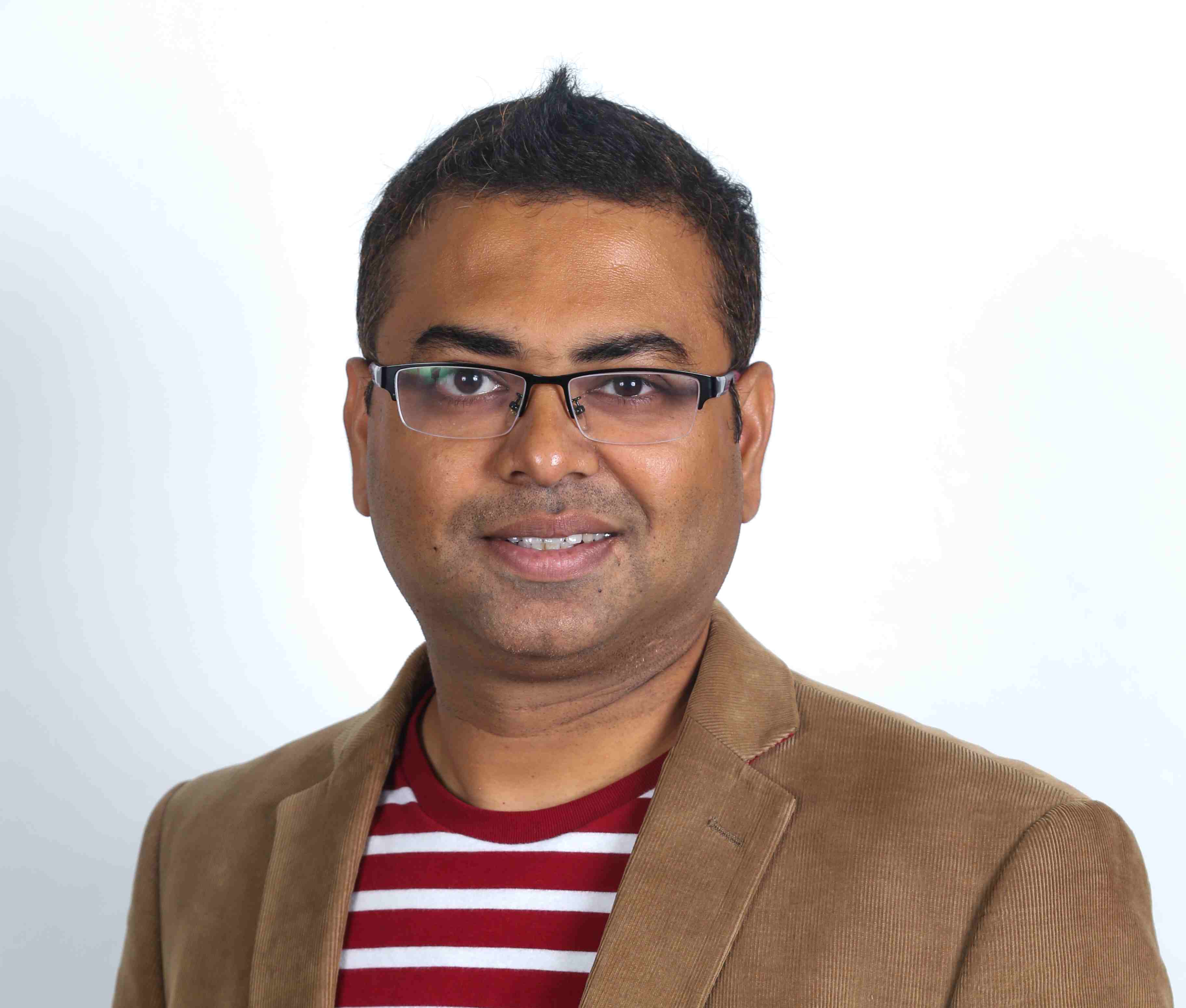
Alastair Beresford is Professor of Computer Security and Head of the Department of Computer Science and Technology (The Computer Laboratory) at the University of Cambridge. He is also the Robin Walker Fellow in Computer Science at Queens' College, Cambridge. His leadership spans both academic administration and research innovation within one of the world's leading computer science departments. Professor Beresford's research focuses on the security and privacy of large-scale distributed computer systems, with particular emphasis on networked mobile devices such as smartphones, tablets, and laptops. His work examines both device-level security and the privacy implications of interactions between mobile devices and cloud-based services. His methodological approach combines critical evaluation of existing products, development of novel prototype technologies, and empirical measurement of human behavior in security contexts. His recent publications reveal a strong focus on confidentiality computing, anonymity networks, mobile security, and secure group communication. Notable projects include Pudding (private user discovery in anonymity networks), CoverDrop (secure whistleblower-journalist communication), and research on the practical viability of anonymity networks on smartphones. His work consistently bridges theoretical security concepts with practical implementations that have led to real-world security improvements in iOS, Android, and OpenSSH. Scientific Awards: Andreas Pfitzmann Best Student Paper Award (PETS 2022) for work on secure initial contact between whistleblowers and journalists Professor Beresford leads several major collaborative research initiatives including the Centre for Mobile, Wearable Systems and Augmented Intelligence (co-directed with Prof Cecilia Mascolo), the Cambridge Cybercrime Centre, and the Raspberry Pi Computing Education Research Centre. He also serves as technical director for the Isaac Learning Platform, which has supported over 500,000 users making more than 120 million question attempts since 2015. His research has practical impact, with findings leading to security fixes in major commercial products including iOS 12.2 (CVE-2019-8541), watchOS 5.2, Android 11, and OpenSSH 9.8 (CVE-2024-39894).
Chang Xu is a Professor and Ph.D. supervisor at Nanjing University, affiliated with the State Key Laboratory for Novel Software Technology, School of Computer Science, and Institute of Computer Software (ICS). He has been a full-time faculty member since 2010, when he joined as an associate professor and was later promoted to full professor in 2015. Education: Ph.D. from The Hong Kong University of Science and Technology (HKUST) in 2008 (advisor: Prof. S.C. Cheung) M.Eng. from Institute of Software, Chinese Academy of Sciences (ISCAS) in 2003 B.Eng. from University of Science and Technology of China (USTC) in 2000 Research Interests: Professor Xu's research focuses on big data software engineering, intelligent software testing and analysis, and adaptive and autonomous software systems. His recent work centers on constructing and providing runtime support for intelligent software in open environments, with emphasis on inconsistency detection and resolution for environments, and quality assurance for adaptive, concurrent, learning-based, smartphone-based, and spreadsheet-based applications. His work bridges theoretical foundations with practical applications in software engineering, particularly in program analysis, software testing, and self-adaptive systems. Scientific Awards: ACM SIGSOFT Distinguished Paper Award from ICSE 2025 Best Student Paper Award from EUROSYS 2025 ACM Distinguished Member in 2024 Best Paper Award from SOSP 2023 Best Paper Candidate from ISSRE 2022 Yangtze River Scholar by the Ministry of Education in 2021 Multiple ACM SIGSOFT Distinguished Paper Awards from conferences including ASE, ICSE National Science and Technology Progress Award (Second Class) in 2011 Academic Service and Advising: Professor Xu has served on numerous program committees for top software engineering conferences including ICSE, ASE, ESEC/FSE, and ISSTA. He is an editorial board member for several journals including Journal of Computer Science and Technology and Frontiers of Computer Science. He has supervised numerous Ph.D. and MSc students, with research topics spanning program analysis, software testing, self-adaptive systems, and more. His students have gone on to successful careers in both academia and industry. Research Groups: Professor Xu is associated with the SPAR research group at Nanjing University and the CASTLE research group at HKUST, focusing on software analysis, reliability, and testing.
Soteris Demetriou is a Senior Lecturer of Computer Systems Security at Imperial College London's Department of Computing, within the Faculty of Engineering. He leads the Applications, Platforms, and Systems Security (APSS) Research Lab and directs the Academic Centre of Excellence in Cyber Security Research (ACE-CSR). His research focuses on securing mobile, IoT, and cyber-physical systems through techniques like explainable AI, reverse engineering, and trusted computing. Notable contributions include tools for privacy preservation in machine learning models, detection of LiDAR spoofing attacks, and securing Android's middleware. Education: PhD and MSc in Computer Science (University of Illinois at Urbana-Champaign), Diploma in Electrical and Computer Engineering (University of Patras). Research Interests: Mobile/IoT security, AI security, trusted computing, and vulnerability analysis. Key areas include privacy in generative models, adversarial attacks on autonomous systems, and large-scale distributed systems. Publications: Over 50 peer-reviewed papers in top venues like NDSS, CCS, and SOSP. Recent work addresses privacy in speech generation, LiDAR security for autonomous vehicles, and hyperscale serverless architectures at Meta. Awards: Distinguished Paper Award at NDSS 2018, Best Paper at SafeThings 2024, and multiple travel grants. Served on technical committees for PETS, CCS, and AutoSec. Grants & Collaborations: SPRITE+ grant for Bio-IoT security, collaboration with Meta on distributed systems, and leadership in ACE-CSR. Labs: APSS Lab focuses on systems and AI security, with interdisciplinary projects in healthcare and autonomous systems.
Dr. Mohammad Iftekhar Husain is a Professor and Graduate Coordinator in the Department of Computer Science at California State Polytechnic University, Pomona (Cal Poly Pomona). He serves as the Inaugural Director of the PolySec Cyber Lab, a federally funded center for cyber security and forensics education, research, and outreach (~$2.5M in grants), and directs the university's Virtual Reality Lab. His career spans over a decade of leadership in cyber security program development, extramural funding, and academic governance. Education: B.S., Computer Science, Yamagata University (Japan) M.S. & Ph.D., Computer Science and Engineering, SUNY-Buffalo Dr. Husain's research focuses on data privacy in social networks, neurophysiological cyber security solutions, and blockchain applications. He has secured $18.4M in principal investigator grants, including NSF SFS, EAGER, and REU Site projects, and trained students placed in top institutions like UC campuses, MIT Lincoln Lab, and government agencies such as NSA and DHS. His work on brainwave authentication earned a US patent (USPTO 10,198,566) and media coverage in Time Magazine and PC Magazine . Scientific Awards: 2016 College of Science Distinguished Teaching Award Early Promotion and Tenure (2016) 2020 Faculty Learning Community for Leadership Pipeline Development Cohort As academic leader, he founded the Cal-Bridge CS Ph.D. pathway program for underrepresented students, chairs the CPP Academic Senate Academic Programs committee, and led university IT initiatives including Cyber Security Cluster Hiring and High-Performance Computing Lab development.
Byungwoon Park is a Professor in the Department of Aerospace Engineering at Sejong University, specializing in Global Navigation Satellite Systems (GNSS) and precision positioning technologies. His research focuses on advancing navigation systems through innovations in Real Time Kinematics (RTK), smartphone sensor integration, and aviation applications. Professor Park's primary research interests include Global Navigation Satellite System (GNSS), Real Time Kinematics (RTK), smartphone sensor integration, aviation navigation, and urban positioning systems. His work has significantly contributed to improving positioning accuracy in challenging environments such as urban canyons and deep urban areas. He has developed techniques for achieving sub-meter accuracy in smartphone positioning and has made substantial contributions to international GNSS standardization efforts. His recent research has focused on multi-constellation GNSS integration, lunar navigation systems, tropospheric error modeling using LEO satellites, and advanced smartphone positioning techniques. Professor Park has successfully implemented methods to achieve 1m horizontal accuracy in Android smartphone positioning using SFMC SBAS and has developed Compact Network RTK technology that reduces bandwidth requirements for GPS correction in 100x100 km areas to 700bps. 'Google Smartphone Decimeter Challenge 2022' Gold Medal Third Place Winner of the Smartphone Decimeter Challenge (2024) Professor Park leads the Navigation Systems Laboratory at Sejong University, which conducts research on various navigation systems including GNSS. His work spans theoretical research, practical implementation, and industry collaboration, with numerous publications in prestigious journals and conference proceedings. He has advised multiple graduate students and has been actively involved in both domestic and international research collaborations focused on advancing navigation technologies.
Dr. Panagiotis Andriotis is a Lecturer in Computer Science at the School of Computer Science, University of Birmingham, within the College of Engineering and Physical Sciences. He is also a GIAC Certified Forensic Examiner (GCFE, GASF) and a Senior Fellow of the Higher Education Academy (SFHEA). His interdisciplinary research spans Cyber Security, Human Factors, and Mobile and Ubiquitous Computing. He teaches courses in Computer Science, Cyber Security, and Digital Forensics. His educational background includes a PhD in Computer Science from the University of Bristol (2016), an MSc with Distinction in Computer Science from the same institution (2011), and a BSc in Mathematics from the National and Kapodistrian University of Athens (2004). Dr. Andriotis’s research interests focus on user-centered security, particularly in mobile environments. He investigates how users interact with Android’s permission systems, develops novel authentication mechanisms like Bu-Dash, and explores adversarial machine learning in cybersecurity. His work bridges technical and human aspects, aiming to improve both system robustness and user experience. His recent publications reflect a strong trend in adversarial machine learning, mobile malware detection, usable privacy, and the societal implications of AI in education. He has contributed to high-impact journals such as IEEE Transactions on Cybernetics, ACM Transactions on Privacy and Security, and Elsevier’s Journal of Information Security and Applications. Best Paper Award at HCI International 2020 Impact Award, UWE Bristol Student Union GIAC Certified Forensic Examiner (GCFE) GIAC Advanced Smartphone Forensics (GASF) SANS Lethal Forensicator Coin Dr. Andriotis has advised PhD students, including Andrew McCarthy, and has been involved in funded research projects such as those related to fuzzing, software security, and critical infrastructure protection in collaboration with Airbus. He has served as an External Examiner at Cardiff Metropolitan University and is currently on the editorial boards of Digital Threats: Research and Practice (ACM) and the Journal of Responsible Technology (Elsevier). He has held visiting roles at the National Institute of Informatics in Tokyo, including as a JSPS Fellow and Toshiba Fellow. He leads research in digital forensics and security, with a lab focus on mobile ecosystems, behavioral modeling, and AI-driven threat detection. His team explores both technical and human dimensions of cybersecurity, contributing to tools and frameworks that enhance mobile security and user awareness.
Urs Hengartner is an Associate Professor at the Department of Computer Science, University of Waterloo. His research focuses on information privacy, computer and network security with emphasis on smartphones, IoT, and machine learning-based authentication systems. He holds a Ph.D. (2005) and M.Sc. (2003) from Carnegie Mellon University, and a Diploma from ETH Zürich (1997). His work spans Adaptive security attacks on ML systems Implicit user authentication frameworks Privacy-preserving technologies for location and genomic data Secure authentication systems resilient to voice/spoofing attacks Recent publication trends show a strong focus on adversarial attack detection (e.g., watermarking evasion, diffusion model attacks) and context-aware authentication systems . His frameworks like MRAAC and SHRIMPS address multi-stage authentication challenges in mobile ecosystems. Key contributions include frameworks for evaluating multi-user authentication systems (SHRIMPS), risk-aware access control (MRAAC), and novel defense strategies against collaborative robot traffic fingerprinting. His work bridges security mechanisms with user-centric design principles.
Dennis Akos is a Professor in the Department of Aerospace Engineering Sciences at the University of Colorado Boulder. He is affiliated with the Research and Engineering Center for Unmanned Vehicles (RECUV) and the Colorado Center for Astrodynamics Research (CCAR). His research focuses on RF signal processing, RF interference mitigation, integrated navigation systems, and VHF modulation. He holds a Ph.D. in Electrical and Computer Engineering from Ohio University (1997), with earlier degrees from the same institution. His professional experience includes roles at Stanford University’s GPS Laboratory and the Lulea Institute of Technology. He has received notable awards such as the Institute of Navigation Fellow (2022), Thurlow Award (2009), and multiple best paper awards. His work emphasizes GNSS security, spoofing detection, and low-cost receiver solutions. Recent articles highlight advancements in GNSS RFI localization, Android device navigation, and software-defined radio applications. His lab explores innovations in space situational awareness, multi-sensor PVT solutions, and interference-resistant systems. Collaborative projects leverage crowdsourced smartphone data to enhance GNSS reliability. Awards: Fellow of the Institute of Navigation, Thurlow Award, Samuel M. Burka Award, and FAA Excellence in Aviation Research. Grants/Advising: Advising on GNSS security and Android-based navigation systems; involved in federally funded research on interference mitigation and satellite clock stability. Labs/Teams: Leads research at RECUV and CCAR, focusing on unmanned systems and astrodynamics challenges.
Omar Haider Chowdhury is a SUNY Empire Innovation Scholar and Associate Professor in the Department of Computer Science at Stony Brook University. Previously, he was an Assistant Professor at the University of Iowa where he received the Dean's Scholar Award. He completed his postdoctoral research at Cylab, Carnegie Mellon University and Purdue University. His educational background includes a Ph.D. in Computer Science from the University of Texas at San Antonio under the supervision of Prof. Jianwei Niu and Prof. William H. Winsborough (deceased), and undergraduate education in Computer Science and Engineering at the Bangladesh University of Engineering and Technology (BUET). Chowdhury's research focuses on Computer Security and Privacy, with particular emphasis on applying formal verification, automated reasoning, runtime verification, programming languages, software engineering, and human-computer interaction techniques to solve practical security problems. His work addresses security challenges in SSL/TLS, X.509 PKI, Cellular Networks, Wi-Fi, Internet-of-Things (IoT), and Regulatory Compliance. He is also interested in fundamental problems in automated reasoning and formal verification. His recent publications demonstrate a strong focus on applying formal methods to practical security problems, with particular emphasis on cellular networks (4G/5G), IoT systems, and cryptographic protocols. His research shows a consistent pattern of bridging theoretical verification techniques with real-world security implementations, resulting in enhancements to widely used protocols like 4G LTE, 5G, and WPA2 enterprise. His scientific contributions have been recognized with numerous awards including: 2023 Test of Time Award, ACM SACMAT 2022 Dean's Scholar Award, University of Iowa 2021 Best Paper Award (Runner Up), ACM CCS 2020 Best Paper Award, ACNS 2019 DARPA Young Faculty Award Multiple Best Paper Awards at IEEE DASC, ACSAC, and NDSS Chowdhury has successfully mentored several PhD students including Dr. Moosa Yahyazadeh (now at Apple Inc.), and currently advises students including Joyanta Debnath, Muhammad Daniyal Pirwani, and Aliakbar Sadeghi. His research has been funded by both National Science Foundation (NSF) and Defense Advanced Research Projects Agency (DARPA), including a prestigious DARPA Young Faculty Award. His group's findings have directly influenced improvements in widely used security protocols and cryptographic libraries. He leads a research group focused on high-assurance software design and implementation, recently teaching courses on these topics at Stony Brook University. His research group combines expertise in formal methods, security analysis, and practical implementation to tackle emerging security challenges in modern computing systems.
Masato Uchida is a Professor at the School of Fundamental Science and Engineering, Waseda University, with a focus on information security and network systems. His career spans roles at Chiba Institute of Technology and Kyushu Institute of Technology, and he holds degrees in Engineering from Hokkaido University. Education: Master of Engineering (Hokkaido University, 2001), Doctor of Philosophy (Hokkaido University, 2005) His research interests include network security, peer-to-peer systems, machine learning for cybersecurity, and traffic analysis. His work addresses anomaly detection, malware classification, and resource allocation fairness in networks. Recent publications analyze adversarial machine learning, cloud service abuse, and domain parking security. Uchida's articles demonstrate expertise in cybersecurity, network modeling, and data science. He has received multiple awards for research excellence, including IEEE Outstanding Paper Awards and IEICE Communications Society honors. His leadership in committees like the Ministry of Internal Affairs and Communications' technical task forces highlights his policy influence. Scientific Awards: Outstanding Paper Award, IEEE International Conference on Teaching, Assessment, and Learning for Engineering (2020) MWS Outstanding Paper Award, Computer Security Symposium (CSS 2020) IEICE Activity Contribution Award (2016) Best Poster Award, SCIS & ISIS (2014) IEICE Network Systems Research Award (2012) He advises students in cybersecurity and collaborates on projects involving traffic load balancing, Android malware analysis, and cloud security. His professional memberships include IEEE, ACM, and the Information Processing Society of Japan.
Shahrear Iqbal is an Adjunct Associate Professor at Queen's University and a Cyber Security Researcher at the National Research Council (NRC) Canada . He holds a PhD in Cybersecurity (2017) and MSc in Combinatorial Optimization (2011) from Queen's University, along with a BSc in Computer Science and Engineering (2008) from Bangladesh University of Engineering and Technology. Research Focus: Security and Privacy of Smart Systems, including in-vehicle security, self-aware operating systems, IoT-cloud security, and AI-driven cybersecurity. Teaching: Previously taught CISC490: Cybersecurity at Queen's University. Key Projects: Droid Mood Swing (DMS) for context-aware Android security policies Securing ECU Communications in connected vehicles FCFraud for user-side click-fraud detection
Represa Pérez, César is a faculty member at the University of Burgos , affiliated with the School of Engineering . He has contributed extensively to computer science, parallel computing, and embedded systems through research articles, educational materials, and conference presentations. Education: Doctorate in Parallel & Hybrid Programming (2002). Research Areas: Parallel computing (MPI/CUDA), 3D virtual labs, sensor technology, Android applications, and embedded systems design. Key Collaborations: Co-authored works with José María Cámara Nebreda, Pedro L. Sánchez Ortega, and others on technical education and hardware-software integration. Recent Trends: Focus on smartphone-driven sensors, additive manufacturing monitoring, and educational tools for engineering students.