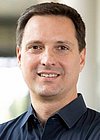
Roberto Carlos Hincapie ReyesView profile
Research Professor
Roberto Carlos Hincapie Reyes is a Research Professor at Pontifical Bolivarian University, Medellín, Colombia, affiliated with the Research and Development Group for Information and Communication Technologies Applications (GIDATIC). With a Doctor of Engineering in Telecommunications, he has produced 76 scientific works from 2006-2025 and participated in 8 research projects as co-investigator. His research spans telecommunications engineering and environmental health, with key interests in Smart Grids, Wireless Networks, Data Aggregation, IoT Applications, and the exposome concept. The fingerprint of his work shows strong expertise in Smart Meters (100%), Passive Optical Networks (92%), Data Aggregation (72%), Wireless Mesh Networks (57%), and Smart Grids (53%). His recent work bridges engineering with public health, particularly studying environmental exposures and children's health. Analysis of his publications from 2023-2025 reveals a significant shift toward environmental health research, particularly through the PROMESA cohort study. These works examine how environmental exposures affect DNA and respiratory health in Colombian children, combining engineering approaches with epidemiological methods. His publications show growing impact with citations in Scopus and attention from news outlets. Dr. Hincapie Reyes actively contributes to research funding through multiple projects including Flexibility 2030 (2025-2026), Red Espacios Museo (2024-2026), and Aisladores Eléctricos GEB (2023). His collaborative approach is evident in projects involving multiple Colombian institutions and researchers across disciplines. As a member of GIDATIC, he contributes to the Research and Development Group for Information and Communication Technologies Applications, working at the intersection of telecommunications engineering, data science, and environmental health research. His collaborations extend to national institutions including Corporación Parque Explora, Fundación Jardín Botánico, and Universidad de los Andes.