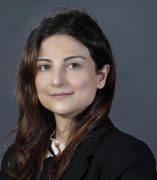
Kari Lappalainen is an Assistant Professor in the Department of Electrical Engineering at Tampere University, affiliated with the Faculty of Information Technology and Communication Sciences. His research focuses on photovoltaic power systems, energy storage technologies, and renewable energy integration. He leads studies on photovoltaic module aging, parameter identification, and energy storage system optimization for power smoothing and ramp rate control. Key research interests include: Photovoltaic module diagnostics and performance analysis Energy storage system design for hybrid renewable plants Impact of environmental factors (e.g., temperature, cloud cover) on PV efficiency Advanced modeling techniques for photovoltaic systems Recent work emphasizes real-time monitoring of PV degradation via current-voltage curve analysis and optimization of energy storage configurations to mitigate power fluctuations. Over 50 peer-reviewed publications demonstrate sustained contributions to renewable energy systems research. Notably absent are awards or formal advisee listings, though collaboration with institutions like EU PVSEC and frequent conference participation indicate active academic engagement.
Natalia Villanueva-Rosales is an Associate Professor in the Department of Computer Science at The University of Texas at El Paso (UTEP). As Co-Principal Investigator at the NSF-funded Cyber-ShARE Center of Excellence, she leads the iLink Research Group focusing on semantic technologies and smart city initiatives. Ph.D. in Computer Science, Carleton University (2011) M.Sc. in Artificial Intelligence, University of Edinburgh (2005) B.Sc. in Computer Science & Statistics, Universidad Panamericana & CINVESTAV-IPN (2002) Her research bridges Semantic Web technologies with Smart Cities applications, particularly in Water Sustainability and Senior Mobility . Key projects include ontology-based frameworks for freight performance data integration and community-driven smart mobility solutions. Recent publications demonstrate her interdisciplinary approach across Environmental Informatics (2022-2025) and Urban Mobility (2019-2022). She holds editorial and leadership roles in semantic science initiatives while actively mentoring through the ACM-W WICS student group. 2019 HEENAC Education Award 2019 NCWIT Undergraduate Research Mentoring Award Her NSF grants include IRES-1658733 for US-Mexico Smart Cities collaboration and OAC-1835897 for the SWIM water sustainability project. The iLink Research Group under her leadership develops ontological frameworks for cross-domain data integration and trust establishment in collaborative environments.
Dr. Ihab Hijazi is a researcher at the Chair of Geoinformatics , Technical University of Munich, specializing in 3D geospatial modeling and BIM-GIS integration . He teaches courses such as CAFM - Facility Management and GIS and contributes to advancing CityGML standards and urban digital twins . Research Focus : Hijazi’s work bridges Building Information Modeling (BIM) and Geographic Information Systems (GIS) , emphasizing interoperability , semantic transformation , and smart city infrastructures . His projects include the Smart Sustainable Districts (SSD) and Smart District Data Infrastructure , focusing on urban energy systems and data harmonization. Publications highlight his contributions to CityGML utility networks , urban growth simulations , and semantic modeling frameworks. He actively develops 3DCityDB and participates in standardization initiatives like the DIN Spec 91607 Digital Twin for Cities .
Jordi Guitart Fernández is a Professor at the Department of Computer Architecture, Barcelona School of Informatics (FIB), Universitat Politècnica de Catalunya (UPC). He is also affiliated with the Barcelona Supercomputing Center (BSC-CNS), a leading national supercomputing facility. He leads the CROMAI research group, focusing on Computing Resources Orchestration and Management for AI. His work bridges high-performance computing, cloud systems, and artificial intelligence. Research Interests: Cloud Computing and Edge Computing Green and Energy-Efficient Computing Containerization and Virtualization for HPC Resource Orchestration and Management Autonomic and Self-Adaptive Systems Machine Learning Workflow Management AI-Driven System Optimization His recent publications reveal a strong focus on intelligent management of computing resources across cloud, edge, and HPC environments using machine learning and agent-based frameworks. He investigates performance, efficiency, and reliability in containerized AI and HPC workloads, particularly within Kubernetes and distributed infrastructures. His work increasingly integrates human-in-the-loop and trustworthiness aspects into AI systems. Scientific Awards: CLOUD Conference 2025 Best Paper Award VISIGRAPP 2025 Best Student Paper Award Premi Extraordinari de Doctorat 2025 - Àmbit d'Enginyeria de les TIC Test of Time Award Honorable Mention (e-Energy) Reconeixement als Mèrits Docents d'Especial Qualitat Top reviewers for Polytechnic University of Catalonia (Computer Science) - September 2017 Advising and Grants: He has advised doctoral students, including Peini Liu. He leads and participates in numerous competitive R+D+i projects, such as CROMAI and DALEST, funded by national and European programs like HORIZON 2020 and the Spanish State Research Plans. His work is supported by grants focused on knowledge generation and industrial leadership in computing technologies. Labs and Teams: He is the leader of the CROMAI - Computing Resources Orchestration and Management for AI research group at UPC. He also collaborates closely with the Barcelona Supercomputing Center (BSC-CNS), contributing to large-scale computing initiatives and strategic research agendas in Europe.
Agustín Zaballos Diego is an Assistant Professor in the Department of Computer Engineering at University Ramon Llull (URL), Barcelona, Spain, since 1999. He serves as Research Coordinator in the Department of Engineering at La Salle Campus Barcelona and leads the R&D Networking and Security Area since 2002. His academic background includes a PhD in Data Networks and Internet Technologies (2012), an International MBA (2014), and an M.S. in Electronic Engineering (2000). University: University Ramon Llull (URL) Department: Department of Computer Engineering Research Group: GRITS Research Focus: Real-time QoS-aware routing protocols in Smart Grids, Ubiquitous Sensor Networks, and IoT communications. His work bridges telecommunications, computer science, and energy systems through projects like OPERA (FP6), INTEGRIS (FP7), and FINESCE (FP7). Publication Trends: Recent articles highlight advancements in HF communications for Antarctic research, hybrid genetic algorithms for traffic engineering, IPv6 testing, and Industry 4.0-related networking solutions. Keywords span Smart Grids, IoT, Sensor Networks, and QoS optimization. Collaborative Projects: Key initiatives include the Antarctica Project , ATHIKA (ICT in healthcare), ENVISERA (environmental sensor networks), HOTSUP (online teaching innovation), PLANET4 (AI/ML in industry), and XIoT (IoT scalability challenges).
Rui Pedro Figueiredo Marques is a Professor at the Higher Institute of Accounting and Administration, University of Aveiro, where he teaches Information Systems across technical, bachelor's, master's, and doctoral programs. He serves as course director for the Professional Higher Technical Course in Organizational Informatics and Communication and holds a board position at the Institute of Accounting and Administration, University of Aveiro. As a Full Researcher at GOVCOPP's Competitiveness, Innovation and Sustainability (CIS) group, his work focuses on Information Systems for Business, with recent emphasis on AI, Blockchain, and Business Intelligence applications in auditing and accounting contexts. Marques' academic credentials include a Ph.D. in Computer Science (2014, Universities of Minho/Aveiro/Porto), a Master's degree (2008), and a Bachelor's in Electronics and Telecommunications Engineering (2005, University of Aveiro). He has authored/co-authored over 50 publications, including journal articles, conference papers, and book chapters on topics ranging from ERP systems in auditing to digital transformation in low-density territories. He is editor-in-chief of the International Journal of Business Innovation and actively participates in funded research projects addressing governance, competitiveness, and public policies. His research explores intersections between technology and business practices, with notable contributions to AI in auditing, blockchain's role in financial transparency, and sustainable development frameworks for social economy entities. Notable projects include evaluations of ERP systems' impact on internal audit maturity and frameworks promoting accountability in private social solidarity institutions. Marques' work frequently emphasizes practical applications of technology in audit processes, education, and public sector modernization. He collaborates with institutions like the Portuguese Social Solidarity Sector and has advised on digital transformation strategies for tourism and hospitality industries.
Mingzhou Jin is a Professor and Department Head in the Department of Industrial and Systems Engineering at the University of Tennessee, Knoxville, within the Tickle College of Engineering. He also directs the Institute for a Secure and Sustainable Environment (ISSE) and the FERSC Center, a DOT/UTC Tier-1 Center. Holding the John D. Tickle Professorship, he is a recognized leader in sustainability, optimization, logistics, and smart manufacturing. PhD, Industrial and Systems Engineering, Lehigh University, 2001 MS, Management Science, Zhejiang University, 1998 BS, Electrical Engineering and Mixed Class, Zhejiang University, 1995 Dr. Jin's research focuses on sustainability, climate change, transportation and logistics, supply chain engineering, additive and smart manufacturing, and energy efficiency. His work integrates operations research and systems engineering to solve complex environmental and industrial challenges. He has secured over $19 million in research funding from agencies including NSF, DOE, DOT, DHS, and industry partners like FedEx, Boeing, and Schneider Electric. His recent publications span high-impact journals such as Nature , Nature Communications , and European Journal of Operational Research , with themes in net-zero strategies, wildfire modeling, smart manufacturing, and sustainable supply chains. The research demonstrates a strong trend toward interdisciplinary, data-driven solutions for global environmental and industrial systems. 2023 Dr. Kenneth Kirby Endowed Faculty Award 2021 UTK Award for Success in Multidisciplinary Research 2020 UTK Chancellor’s Research and Creative Achievement Award 2020 TCE Research Achievement Award IISE Fellow (2018) Multiple teaching, advising, and service awards from TCE and UTK Dr. Jin has advised numerous graduate students and led large-scale research initiatives. He has served as Editor-in-Chief of Cleaner and Circular Bioeconomy , Executive Editor of Journal of Cleaner Production , and held leadership roles in IISE. His research has been supported by extensive grants from federal agencies and industry, reflecting strong collaboration and real-world impact. He also held adjunct professorships at Zhejiang University and Central South University of Forestry and Technology. He leads the Institute for a Secure and Sustainable Environment (ISSE) and the FERSC Center, fostering interdisciplinary research in sustainability, energy, and resilient infrastructure. These centers bring together experts from engineering, environmental science, and policy to address pressing global challenges through systems-level innovation.
Anomadarshi Barua is an Assistant Professor in the Department of Cyber Security Engineering at George Mason University, leading the System Design and Security research group. His work spans hardware-software co-design for securing cyber-physical systems (CPS), robotics, and sensors. Prior Affiliation: PhD from University of California, Irvine (2023) Industry Experience: Intel Corporation, Solidigm, Nordic Semiconductor, IDEAS Research Themes: Focuses on multimodal system security (audio, visual, electromagnetic data), analog-digital signal integrity, and quantum-inspired defenses in CPS. Key applications include healthcare systems, smart grids, and industrial control systems (ICS). Recent ACSAC 2024 paper acceptance Best Paper Award at ACSAC 2022 NSF panel reviewer (2024) Labs & Collaborations: Collaborates with University of Louisville on robotics and works on Commonwealth-funded UG research (2024). Publications in ACM CCS, USENIX, CHES, and IEEE Transactions (TDSC, TIFS).
Massimo Bongiorno is an Assistant Professor in Electrical Engineering at Chalmers University of Technology. He holds a Master’s degree in Electronics Engineering from the University of Palermo (2002) and earned his Licentiate and PhD from Chalmers University. His research focuses on power electronics applications in power systems, particularly grid-forming converter systems, power quality, and renewable energy integration. MSc in Electronics Engineering (University of Palermo, 2002) Licentiate and PhD (Chalmers University of Technology) Research interests include: Power electronics in power systems Grid-forming converter stability Renewable energy integration Modular multilevel converter design Small-signal and large-signal stability analysis Energy storage system applications Recent publications highlight trends in: Converter control strategies for grid stability Dynamic modeling of power electronics systems Applications in offshore wind and hydro microgrids Impedance analysis and resonance mitigation Advanced fault ride-through techniques Multi-terminal HVDC grid control
Yeonghyeon Gu serves as Assistant Professor in the Department of Artificial Intelligence Data Science at Sejong University, South Korea, a position held since 2022 after progressing from Principal Researcher (2014-2019) to Acting Professor (2019-2022). He maintains active affiliation with the university's AI Convergence Research Center and has produced 84 research outputs with 795 Scopus citations and an h-index of 14. His academic credentials include: B.A. from Sejong University (2004) M.A. from Sejong University (2006) Ph.D. from Sejong University (2014) Dr. Gu's research centers on Artificial Intelligence with specialization in Meta Learning, Transfer Learning, and Deep Learning methodologies. His work demonstrates strong interdisciplinary application across robotics, agricultural technology, energy systems, and meteorology. Key contributions include district heater load forecasting using parallel CNN-LSTM attention, image-based hot pepper disease diagnosis, and potato late blight prediction models. Analysis of his 2024-2025 publications reveals concentrated innovation in hybrid AI architectures, particularly combining graph networks with reinforcement learning for blockchain security and integrating physical models with deep learning for weather prediction. His work consistently addresses real-world engineering challenges through novel neural network applications while maintaining strong theoretical foundations in transfer learning frameworks. No scientific awards were documented in the source materials. While specific student advisees and grant details weren't listed, his extensive publication record (29 outputs in 2025 alone) and international collaborations suggest active mentorship and research funding. His work shows particular strength in cross-institutional projects with researchers from Turkey, Nigeria, Saudi Arabia, and South Korea. As a core member of Sejong University's AI Convergence Research Center, Dr. Gu contributes to institutional initiatives bridging AI theory with practical implementation across multiple sectors. The center's structure facilitates his interdisciplinary approach, connecting computer science with engineering, agriculture, and environmental science domains through shared computational infrastructure and collaborative research frameworks.
Prof. Xing Yang is a Professor at KU Leuven's Institute for Sustainable Metals and Minerals (ISM2), leading the Process Engineering for Sustainable Systems (ProcESS) research group. His work focuses on developing membrane-based technologies for sustainable resource recovery and environmental protection, with strong emphasis on metallurgical and wastewater applications. His research centers on advanced membrane engineering for separation processes, particularly membrane distillation, electrodialysis, and solvent extraction-based systems. Key interests include designing stimuli-responsive membranes, optimizing ion-selective transport, and developing energy-efficient processes for metal recovery from end-of-life batteries and industrial waste streams. His work bridges materials science, chemical engineering, and environmental sustainability to address critical resource scarcity challenges. Analysis of his 15 most recent publications (2024-2025) reveals a dominant focus on lithium and transition metal recovery through electro-driven membrane processes. He pioneers innovations in membrane architecture – including macrocycle-based channels, zwitterionic coatings, and PVDF modifications – to achieve unprecedented selectivity in complex matrices. His research consistently targets industrial applicability, with demonstrated applications in battery recycling, wastewater valorization, and CO 2 capture systems. The ProcESS research group operates within KU Leuven's Institute for Sustainable Metals and Minerals, collaborating across metallurgy, environmental engineering, and materials science disciplines. Their work integrates experimental membrane fabrication with process modeling to develop scalable solutions for circular economy implementation in resource-intensive industries.
Nora MAREÏ, CNRS Researcher at PRODIG (UMR 8586), specializes in transport geography, territorial development, and urban dynamics across European, Mediterranean, and West African contexts. Her work bridges macroregional geoeconomic analysis with local territorial realities, focusing on infrastructure, logistics, and regional integration processes. Doctorate from University of Nantes (2012 thesis: Le détroit de Gibraltar, Porte du Monde, Frontière de l’Europe ) 2022-2026: Coordinator of ANR Trans-Log project on logistics cities 2021-2025: Member of LMI Movida II international lab Research interests include: Comparative analysis of institutional vs. private territorial production Metropolitanization and circulation patterns in Global South cities Eurafrican connectivity through ports like Tanger-Med Maritime chokepoints (Gibraltar, Suez) as development catalysts Recent publications examine: 2024: Morocco's role in Mediterranean-African transport hubs 2022: Tanger-Med's networked territorial challenges 2021: Dualization in Global South city logistics 2020: Regional integration models Scientific recognition: 2013 CNU Mappemonde thesis prize finalist 2023 'The Waters of Discord' award Teaching contributions: Master's courses on fieldwork methodology (since 2019) International transport geopolitics instruction (since 2013)
Oliver Kosut is an Associate Professor at the School of Electrical, Computer and Energy Engineering at Arizona State University (ASU), where he has worked since August 2012. He was promoted to Associate Professor in 2018 and received the NSF CAREER award in 2015. His research spans information theory, machine learning, cybersecurity, and power systems, with a focus on theoretical foundations and applications to privacy, security, and smart grid resilience. Education: B.S. in Electrical Engineering and Mathematics from MIT (2004), Ph.D. in Electrical and Computer Engineering from Cornell University (2010) His recent work explores differential privacy, adversarial robustness in decentralized networks, and information-theoretic approaches to cybersecurity. He advises graduate students with strong mathematical backgrounds, particularly those interested in fundamental theory for applied problems. Scientific accolades include the IEEE Information Theory Society Distinguished Lecturer (2023–2024) and NSF CAREER award. Key research areas: Information Theory, Privacy, Machine Learning, Power System Security Students: Obai Bahwal, Atefeh Gilani, Naima Tasnim (current); Nima Bazargani, Andrea Pinceti, Jingwen Liang, Zhigang Chu, Fatemeh Hosseinigoki, Nematollah Iri, Kousha Kalantari, Roozbeh Khodadadeh (former)
Azadeh Haghighi serves as an Assistant Professor in the Department of Mechanical and Industrial Engineering at the University of Illinois Chicago, with her office located in the Engineering Innovation Building (EIB) at 945 W Taylor St, Chicago, IL 60608. She can be contacted via email at ahaghi3@uic.edu or by phone at 312.355.8306. Her academic credentials include: Ph.D. in Industrial Engineering and Operations Research from the University of Illinois Chicago (2020) M.Sc. in Mechanical Engineering (Production Engineering and Management) from KTH Royal Institute of Technology, Sweden (2013) B.Sc. in Industrial Engineering from Sharif University of Technology (2011) Dr. Haghighi's research program pioneers next-generation manufacturing systems with emphasis on: Smart manufacturing integrating IoT and real-time analytics Additive manufacturing for complex component fabrication In-space manufacturing for extraterrestrial environments Printed electronics for flexible circuit production Multi-robot coordination in additive processes AI-driven decision support for intelligent production She leads research activities through the Smarture Lab, which focuses on the convergence of robotics, data science, and advanced manufacturing methodologies. Information regarding academic advising, grant funding, and scientific awards is not specified in the available documentation.
Alan Briones Delgado is a researcher at the La Salle School of Engineering , Universitat Ramon Llull , with a focus on Internet of Things , Cybersecurity , and Transport Protocols . His work spans projects funded by the European Commission and national grants, including EXCEL4HOUSING4.0 , WeB-Nimbus , and NG-SOC , addressing challenges in cloud computing education, ecological monitoring, and security operations. His research integrates Artificial Intelligence and Wireless Sensor Networks for sustainable solutions. Key research areas include Quality of Service in heterogeneous networks, Environmental Conservation via IoT, and Teaching and Learning strategies for Big Data. Projects like EcoSentinel and BTL-COP highlight his commitment to Environmental Monitoring and Community Policing applications. His collaborations extend to institutions in the UK , Albania , and Western Balkans . Contact: alan.briones@salle.url.edu