James Gibert is an Associate Professor of Mechanical Engineering at Purdue University's West Lafayette School of Mechanical Engineering. His research focuses on vibrations and nonlinear dynamics, smart material systems, non-pneumatic tires, optimization of mechanical systems, and additive manufacturing. He holds a B.S., M.S., and Ph.D. from Clemson University (2002-2009). His work spans fundamental dynamics, material behavior, and applications in transportation and energy harvesting. Key research contributions include studies on ultrasonic additive manufacturing dynamics, viscoelastic materials for cushioning, and nonlinear energy harvesting systems. His awards include the Emerald Engineering Outstanding Doctoral Award (2012) and NSF fellowships. Recent publications explore bistable systems, metamaterials, and advanced robotics. Awards highlight his academic and research excellence, including recognition for doctoral work and impactful papers on ultrasonic consolidation dynamics. His advising and grants focus on mechanical systems optimization and advanced manufacturing technologies. Ongoing efforts involve collaborative projects on energy-efficient materials and smart systems integration.
Chi-Kwan Lee is a Professor at the University of Technology Sydney (UTS), School of Electrical and Data Engineering since 2024. Previously, he held roles including Associate Professor (2018-2023) and Assistant Professor (2012-2017) at the University of Hong Kong. He earned his B.Eng. and Ph.D. in Electronic Engineering from City University of Hong Kong (1999 and 2004). His research focuses on electric power conversion, electromagnetic devices, wireless power transfer, renewable energy, and smart grid technologies. He was a Visiting Researcher at Imperial College London (2010-2020). Research Highlights: Prof. Lee has pioneered advancements in wireless power transfer for medical devices (e.g., capsule endoscopy) and electric vehicles, with breakthroughs in efficiency optimization and misalignment mitigation. His work on hybrid stepper motor systems and magnetoresistive sensors addresses challenges in contactless actuation and high-voltage current sensing. Awards & Contributions: A Senior Member of IEEE and recipient of the 2015 IEEE Power Electronics Society Transactions First Prize Paper Award. He serves on IEEE PELS committees and editorial boards of key journals like IEEE Transactions on Power Electronics. Grants & Labs: Active in funded research projects related to wireless charging systems, smart grids, and renewable energy integration. His work spans academic collaborations, industry partnerships, and international conferences.
Prof. Chris Dent is a Professor at the University of Edinburgh's School of Mathematics, specializing in the intersection of mathematical sciences and engineering. He holds a fellowship at the Alan Turing Institute and directs the Statistics Consultancy Unit. His career spans theoretical physics, operational research, and energy systems analysis, with notable contributions to National Grid strategies, policy-driven decision support, and pandemic data communication. Education: MMath (Cambridge), PhD in Theoretical Physics, MSc in Operational Research (Edinburgh). Research focuses on energy system reliability, uncertainty quantification, and interdisciplinary policy modeling. He critiques data communication practices in crises, advocating for rigorous reporting frameworks. Key activities include projects on electricity supply security, smart grid optimization, and post-pandemic economic recovery. Collaborations involve government bodies, the National Grid, and international energy networks. The Statistics Consultancy Unit supports cross-disciplinary projects in academia and industry.
Ronald Zirbs is a Research Fellow at the Institute of Colloid and Biointerface Science , University of Natural Resources and Life Sciences, Vienna (BOKU). With a PhD in Polymer Chemistry (Martin-Luther-University Halle/Saale, 2007-2009; TU Wien, 2005-2006), his research focuses on nanoparticle synthesis , surface-active ionic liquids , and thermoresponsive polymer architectures .
Professor Anne Remke leads the safety-critical systems group at the Faculty of Mathematics and Computer Science at Westfälische Wilhelms-Universität Münster since October 2014. She is also affiliated with the Design and Analysis of Communication Systems group at the University of Twente, where she served as assistant professor from June 2010 and became associate professor in March 2016. Her research focuses on dependability and security in critical infrastructures, particularly electrical power systems and telecommunication networks. Her educational background includes a PhD (2008) and MSc (2004) in Computer Science from the University of Twente and RWTH Aachen respectively. Her doctoral research focused on 'Model Checking Structured Infinite Markov Chains,' for which she publicly defended her thesis in June 2008. Professor Remke's research interests center on cyber-physical systems, with particular focus on evaluation of charging strategies for local energy storage in smart homes and security of control networks (SCADA) in smart grids. Her work bridges theoretical model checking techniques with practical applications in critical infrastructure protection. She has made significant contributions to the analysis of hybrid Petri nets, stochastic models, and the development of tools for dependability evaluation. Her recent publications demonstrate a strong trend toward integrating machine learning with formal verification methods for cyber-physical systems. The research spans stochastic hybrid systems, reachability analysis, and security evaluation of smart grid infrastructures, showing consistent growth in both theoretical foundations and practical applications of dependability analysis. Veni award from Dutch Science foundation (NWO) for 'Counting on a reliable water supply' GI/ITG MMB prize for best diploma thesis in computer and communication systems Best Paper Award at Valuetools 2023 conference Best Repeatability and Artifact Evaluation Award at QEST21 Teaching award from Fachschaft FB10 (2019) Professor Remke has successfully secured multiple research grants including the DFG project 'RealyST: Reachability Analysis for Stochastic Hybrid Systems' in collaboration with RWTH Aachen. She has supervised numerous students including Katharina Sichma, Pauline Blohm, Joanna Delicaris, Verena Menzel, Mathis Niehage, Jonas Stübbe, and Lisa Willemsen. Her research group actively participates in international collaborations and standardization efforts in critical infrastructure security. The safety-critical systems group maintains several research tools including HYPEG (for simulation and analysis of hybrid Petri nets), TimeNET (a GUI for modeling hybrid Petri nets), and a Smart Neighbourhood Simulation Tool for community energy storage and trading. These tools support their research in modeling and evaluating complex critical infrastructures through both analytical methods and simulation techniques.
Dr. Mario Wriedt is an Associate Professor of Chemistry and Biochemistry at the University of Texas at Dallas (UTD), where he holds the Francis S. and Maurine G. Johnson Chair. His research focuses on designing and characterizing metal-organic frameworks (MOFs) and porous organic polymers (POPs) for applications in energy, health, and environmental challenges. Education: Bachelor's, Master's, and Doctoral degrees in Chemistry from Christian-Albrecht University of Kiel (Germany); postdoctoral work at Texas A&M University Research Interests include: Structure-property relationships of porous materials via X-ray diffraction Tailoring MOFs/POPs for water harvesting from low-humidity environments Carbon dioxide capture and sequestration Pollutant removal from water Viral genome detection Drug delivery systems Collaborations & Funding : Research supported by the Department of Defense, National Science Foundation, Estée Lauder Companies (advanced skincare), and Corning Inc. (smart-glass materials). He organizes national crystallography workshops and mentors graduate/undergraduate students using cutting-edge instrumentation like the Bruker Venture X-ray diffractometer. Awards : Kodak CAMP Distinguished Professor
Krist Vaesen is an Associate Professor in the Philosophy of Innovation at Eindhoven University of Technology (TU/e), within the Department of Philosophy & Ethics in the School of Industrial Engineering and Innovation Sciences. He is a founding member of the Eindhoven Meta-Science Center (META/e) and maintains an external position as a Research Fellow at Leiden University's Human Origins Group, Faculty of Archaeology. Dr. Vaesen earned his degrees in Applied Biology (1998) and Philosophy (2003) from the University of Leuven, Belgium, and completed his PhD at TU/e in 2008 with a dissertation on artifacts and norms. His academic career progressed from post-doctoral researcher (2008-2012) in the NWO program 'Things that make us smart' to Assistant Professor (2012), and eventually to his current Associate Professor position. He received a prestigious NWO Vidi grant in 2014 for his research on cultural evolutionary theory. Vaesen's research spans multiple interconnected domains including the philosophy of innovation, meta-science, cultural evolution, and the philosophy of scientific models. His current work focuses extensively on meta-scientific questions examining science funding practices, interdisciplinary research challenges, PhD attrition causes, academic research values, and research integrity. He is preparing a book titled 'Neophilia--why our obsession with innovation leads to bad science' addressing replication crises in science. His publication record shows consistent scholarly output, with 49 research outputs documented through 2025, appearing in high-impact journals across multiple disciplines including Proceedings of the National Academy of Sciences, Behavioral and Brain Sciences, PLoS ONE, and various philosophy and anthropology journals. His work demonstrates a clear trajectory toward increasingly meta-scientific concerns, with recent publications focusing on research values, PhD attrition, and science funding ethics. NWO Vidi Award (2013) for 'The Darwinisation of culture' Excellence grant from TU/e's Executive Board for work on the 'Things that make us smart' program Elected member of the Eindhoven Young Academy of Engineering (2018) Vaesen has supervised multiple graduate students (with 4 supervised works documented) and secured significant research funding, including his Vidi grant for the 'Darwinizing culture' project (2014-2019). He has been actively involved in science policy discussions, particularly regarding research funding reform and interdisciplinary research assessment. His work has generated substantial media attention, with 127 press/media mentions including coverage by Times Higher Education, Volkskrant, and various radio outlets. As co-founder of the Eindhoven Meta-Science Center, Vaesen plays a key role in advancing meta-scientific research at TU/e. His external position at Leiden University's Human Origins Group demonstrates his interdisciplinary reach across philosophy, anthropology, and evolutionary studies. He teaches courses including 'Metascience' (since 2024), 'Philosophy of science and technology,' and 'Research methodology for the innovation sciences,' shaping the next generation of scholars in these critical areas.
Gaurav Nanda serves as an Assistant Professor in the School of Engineering Technology at Purdue University, where he leads research at the intersection of artificial intelligence and human-centered systems. His work develops intelligent decision support frameworks applicable across critical domains including occupational safety, smart manufacturing infrastructure, healthcare analytics, and educational technology. Education Background Ph.D. in Industrial Engineering, Purdue University Dual Degree: B.Tech. and M.Tech. in Agricultural and Food Engineering (Major) with Electrical Engineering Minor, Indian Institute of Technology Kharagpur His research program integrates applied machine learning and natural language processing to solve complex problems in safety analytics (injury surveillance systems), Industry 4.0 (IoT-enabled manufacturing), healthcare (breast cancer prediction models), and STEM education (MOOC feedback analysis). Current projects emphasize human-AI collaboration, with growing focus on ethical AI implementation and social justice integration in engineering contexts. The INDESS Research Group he directs develops systems that balance algorithmic precision with human factors considerations. Recent publications (2023-2025) demonstrate accelerating adoption of large language models and vision-language systems across application domains, particularly in safety analytics and educational technology. Key trends include human-in-the-loop validation frameworks, explainable AI interfaces, and multimodal data integration (eye-tracking, text, sensor data). His work increasingly addresses fairness considerations in AI deployment, especially regarding diversity in engineering education and workplace safety systems. Dr. Nanda actively mentors the next generation of engineers through the INDESS Research Group , advising Ph.D. candidates Madhumathi Ponnusamy and Shuning Yin, while previously supervising Master's graduates including Srushti Vichare and Meet Suthar. His research receives support through Purdue-affiliated institutes including ICON (Control/Optimization Networks), RDE (Digital Enterprise), and FWL (Future Work/Learning). He maintains active service roles as Editorial Board Member for the International Journal of Industrial Ergonomics and as reviewer for leading publications including IEEE Transactions on Learning Technologies and Safety Science. The research group maintains strong industry connections through the Purdue School of Engineering Technology, with projects spanning manufacturing automation, healthcare informatics, and educational technology platforms. Current initiatives focus on real-time anomaly detection systems, ethical AI frameworks for safety-critical applications, and inclusive curriculum development for engineering education.
Andreas Huth is a prominent researcher at the Helmholtz Centre for Environmental Research (UFZ) in Leipzig, Germany, where he works within the Department of Ecological Systems Analysis. His research focuses on developing and applying computational models to understand complex ecological systems, with particular emphasis on vegetation dynamics, biodiversity patterns, and environmental interactions. Huth is actively involved in several major research initiatives including the FORMIND project, which simulates forest growth using individual-based vegetation models, and contributes to the UFZ's research program on Smart Models and Monitoring. Huth's research interests span ecological modeling, vegetation dynamics, biodiversity assessment, and environmental system analysis. He specializes in developing sophisticated computational frameworks that integrate atmospheric, ecological, and spatial data to model complex environmental processes. His work often involves coupling different modeling approaches, such as connecting atmosphere and vegetation radiative transfer models to study cloud-vegetation interactions. Huth is particularly interested in understanding spatial patterns in ecological systems, species-habitat relationships, and the impacts of environmental change on biodiversity. His methodological expertise includes agent-based modeling, individual-based modeling, and developing digital twin technologies for environmental systems. Analysis of Huth's recent publications reveals a strong focus on integrating different modeling approaches to address complex environmental questions. His work demonstrates a progression from basic ecological modeling toward more sophisticated integrative frameworks that connect atmospheric processes with vegetation dynamics, and social systems with ecological outcomes. A notable trend is his increasing involvement in digital twin technology for environmental systems, particularly for biodiversity monitoring and prediction. His research spans multiple scales - from microbial ecosystems to continental-scale species distributions - while maintaining a consistent methodological thread of spatially explicit modeling and causal analysis in complex systems. Huth collaborates extensively with researchers across the UFZ and internationally, as evidenced by his co-authorship on numerous interdisciplinary publications. While specific awards are not mentioned in the available information, his consistent publication record in high-impact journals and leadership in major modeling initiatives like FORMIND indicate significant recognition within the ecological modeling community. His work has practical applications for environmental policy, conservation planning, and climate change adaptation strategies. Huth is an active member of the Ecological Systems Analysis research group at UFZ, which develops and applies computational models to investigate key mechanisms in ecological systems. He contributes to several major research platforms including FORMIND (an individual-based vegetation model for species-rich forests) and participates in the UFZ's broader research initiatives on environmental monitoring and sustainable technologies. His work is integrated within the UFZ's research program on Smart Models and Monitoring, which aims to develop innovative approaches for understanding and predicting environmental change.
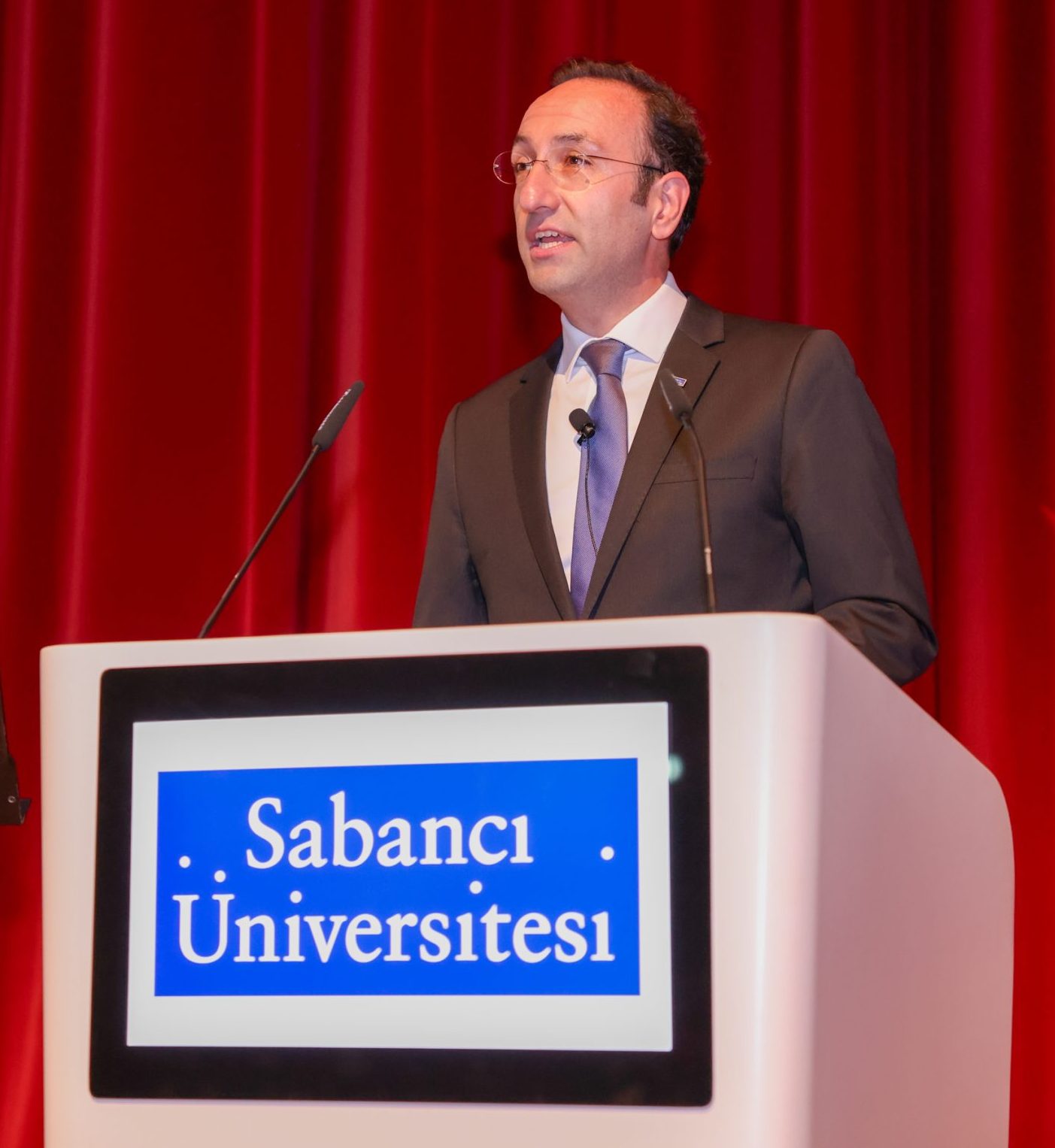
Eren İnci is a Professor of Economics at the Faculty of Arts and Social Sciences, Sabanci University. His research focuses on Urban Economics and Transportation Economics , particularly the economics of parking, traffic congestion, and urban sustainability. He holds a PhD (2007), MA (2004), and BA in Management Engineering (2002) from Boston College and Istanbul Technical University. Education PhD (Economics), Boston College, 2007 MA (Economics), Boston College, 2004 BSc (Management Engineering), Istanbul Technical University, 2002 Research Interests center on urban transport systems, parking policies, retail leasing, and their environmental impacts. His work bridges economic theory with real-world policy challenges, including sustainable city planning and market design for shared resources. Scientific Awards include: TUBITAK Incentive Award (2018) Outstanding Young Scientist Award (TUBA-GEBIP) (2014) Young Scientist Award (BAGEP) (2014) Best Overall Paper Prize (International Transportation Economics Association) (2016) FASS Teaching Award (2011) Professional Roles include Vice Dean (2017–2024), Executive Committee Member of the International Transportation Economics Association (2016–present), and Research Member at the Smart Mobility and Logistics Lab (2018–present). He has held visiting positions at MIT, University of California, Riverside, and ZEW.
Kevin T. Turner is the John Henry Towne Department Chair and Professor of Mechanical Engineering and Applied Mechanics at the University of Pennsylvania's School of Engineering and Applied Science, with a secondary affiliation in Materials Science and Engineering. He leads the Turner Research Group, which investigates mechanics, materials, and manufacturing challenges, specializing in micro/nano-systems, adhesion, fracture mechanics, and advanced manufacturing. His research focuses on three primary thrusts: Materials with programmable mechanical properties (e.g., electroadhesives for robotics) Fracture and adhesion in structured/heterogeneous materials Printed and flexible sensors (including biodegradable cellulose-based variants) Key projects include tunable adhesion surfaces, architected materials for damage tolerance, and additive manufacturing stress control. Turner's recent publications (2022-2023) demonstrate a strong emphasis on adhesion mechanics, robotics applications, and nanomaterial design. Trends include bio-inspired structures, machine learning optimization, and interdisciplinary approaches bridging mechanics with biomedicine and agriculture. Computational methods like physics-informed neural networks are increasingly utilized for material property analysis. He directs an active research laboratory developing novel sensor technologies and materials systems, collaborating widely across engineering and applied science disciplines.
Massimo Poncino is a Full Professor at the Department of Control and Computer Science (DAUIN) within the Faculty of Engineering at Politecnico di Torino. He serves as Scientific Advisor for the STMicroelectronics partnership and coordinates basic engineering subjects. A Senior Member of IEEE since 2012 and Fellow since 2012, he has served on editorial boards for IEEE Transactions on Computer-Aided Design, IEEE Design & Test of Computers, and ACM Transactions on Design Automation. Education: Laurea in Electronic Engineering (1989) and PhD in Computer and Systems Engineering (1993) from Politecnico di Torino Academic Career: Visiting Scientist University of Colorado (1993-1994), Researcher at Politecnico di Torino (1995-2001), Associate Professor at University of Verona (2001-2004), Full Professor at Politecnico di Torino (2006-present) His research focuses on energy-efficient digital systems , including design automation of SoCs, hardware-aware AI, battery management, cyber-physical systems, and embedded systems. Recent publications highlight advancements in digital twins for batteries , low-power neural network deployment , and IoT privacy . Scientific Awards: Recognition of Service Award - ACM (2013) Certificate of Appreciation - IEEE Circuits and Systems Society (2006, 2008, 2009) IEEE Fellow (2012-) Research Involvement: EU H2020, VI/VII Framework Programs evaluator Scientific Director for projects: Approxim@ction, EMBAI, DISLO-MAN, DAMASCO Member of EDA research group Teaching: Course director for Energy Management for IoT (2019-2025) Lecturer for Computer Science courses (2003-2025)
Maurizio Marco Bocconcino is an Associate Professor in the Department of Structural, Building and Geotechnical Engineering (DISEG) at Politecnico di Torino. He is a member of the Interdepartmental Center R3C (Responsible Risk Resilience Center) and serves as Coordinator of basic subjects for the 2nd year of Engineering. His academic work bridges civil engineering and architectural design, with a strong focus on representation and digital modeling. His research interests include engineering drawing, territorial and urban surveying, geographic information systems (GIS), Building Information Modeling (BIM), data representation, and tools for urban and social regeneration. He investigates methods for surveying historic buildings, urban resilience, and the integration of digital technologies in heritage and urban planning. His work is aligned with UN Sustainable Development Goals 11 and 17, emphasizing sustainable cities and collaborative research. Bocconcino's recent publications explore digital archives for academic heritage, analog artifacts in engineering education, urban form, LEAN-BIM integration, and the visualization of social impact. His research outputs span journals such as DISEGNO , International Archives of the Photogrammetry, Remote Sensing and Spatial Information Sciences , and AGATHÓN , as well as conference proceedings in representation and urban planning disciplines. He is actively involved in research projects, including the EU-funded MAINCODE project on urban climate shelters and multiple commercial consulting contracts as Scientific Manager, focusing on urban and social regeneration. His teaching responsibilities include courses in engineering drawing, digital modeling, and graphic language across Civil, Environmental, and Building Engineering programs. Bocconcino collaborates with researchers such as Mariapaola Vozzola, Giorgio Garzino, Martino Pavignano, and Fabio Manzone. His affiliations with ERC sectors highlight expertise in civil engineering, computational modeling in culture, computer graphics, design, and information systems.
Laurence Brooks is Professor of Information Systems at the Information School (iSchool), University of Sheffield, and Visiting Professor of Technology and Social Responsibility at De Montfort University’s Centre for Computing and Social Responsibility (CCSR). He has held significant academic leadership roles, including Director of the Doctoral College at DMU and Programme Coordinator at the iSchool. His work bridges technology and societal impact, with a focus on ethics, governance, and development. Education: PhD in Information Systems, University of Liverpool, UK BSc (Hons) in Psychology, University of Bristol, UK His research interests center on the ethical and societal implications of emerging technologies, especially in public sectors. He employs social theories such as Structuration Theory, Actor Network Theory, and Sociomateriality to investigate how ICT shapes and is shaped by individuals, groups, and institutions. Key domains include eGovernment, ICT4D, healthcare informatics, and digital policy. His methodological approach is predominantly qualitative, emphasizing interpretive and ethnographic methods. The recent publications reflect a sustained engagement with big data governance, digital public services in developing countries, and ethical AI. Trends show a focus on institutional arrangements, user trust, and socio-technical design in complex environments. His work often involves cross-cultural and international case studies, particularly in Nigeria, Bangladesh, and Zambia. Scientific Awards and Recognition: Brunel University London Star Award (2012) Shortlisted for Brunel Innovative Teaching Award (2012) Volunteer Spotlight Award, AIS (2008) ICIS Best Paper Nomination (2005) ECIS Best Paper Award (2000) Laurence Brooks has supervised several PhD students, including Ruairi Blake, Daniel Malok, Abigail Udoma, Tonii Leach, and Vincent Bryce. He has secured major research grants, including the €4 million EU Horizon 2020 TechEthos project and the €2.9 million SHERPA project, both focused on ethical dimensions of smart information systems. He is also a local PI for the EPSRC Horizon CDT on digital identity and data creativity. He is actively involved in research communities, having served as Past President of UKAIS, UKSS, and AIS SIG on Philosophy of IS. He contributes as an editorial board member for journals like Journal of the AIS and Information Technology and People , and has led numerous conference tracks and panels. He also co-chairs the ICT4D North of England group.
Dr Ismini Vasileiou is an Associate Professor at De Montfort University within the School of Computer Science and Informatics, Faculty of Computing, Engineering and Media. She serves as Director of the East Midlands Cyber Security Cluster, leading regional and national cybersecurity initiatives. Her work bridges academia, industry, and government, focusing on cyber resilience, policy, education, and inclusion. Her research interests include: Cybersecurity Policy and Governance Human Factors and Social Engineering Cyber Resilience and Risk Management Cybersecurity Education and Pedagogy Diversity, Equity, and Inclusion in Cybersecurity AI and Cybersecurity Secure by Design Principles Her recent publications reflect a strong interdisciplinary focus on cybersecurity education, human behavior, digital transformation, and workforce development. Trends show a consistent emphasis on experiential learning, threshold concepts, and addressing the cyber skills gap through degree apprenticeships and inclusive practices. She has received several honors, including: Cyber Security Diversity Academic Champion, EMIC Network (2024) Winner, Students as Partners Cup (2014) Runner-up, WISE Advisor Award (2014, 2012) Most Dedicated Project Supervisor SSTAR Award, University of Plymouth (2012) Dr Vasileiou supervises multiple PhD students and has secured substantial external funding, including £5.8 million from the Office for Students and £100,000 from DSIT. She has led bids for major initiatives like the Leicester and Leicestershire Institute of Technology. She actively mentors students in areas such as cyber behavior, learning analytics, and agile medical device development. She is involved in key labs and networks, notably the East Midlands Cyber Security Cluster, and contributes to national frameworks through advisory roles with NCFE, QAA, IfATE, and the Institute of Apprenticeships. Her leadership extends to professional societies including BCS, IFIP, and UCISA.