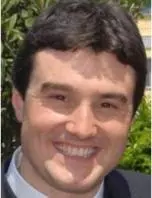
Anees BaqirView profile
Assistant Professor
Anees Baqir is an Assistant Professor of Data Science at Northeastern University London, affiliated with the CoMENS Faculty's Data and AI department. He is also a research fellow at the Complex Human Behavior (CHuB) lab at Fondazione Bruno Kessler (FBK), Trento, Italy, contributing to the European-funded AI-CODE project studying misinformation and polarization in social media. His research focuses on analyzing online information dynamics, polarization, and machine learning applications in healthcare, crime prediction, and language processing. Education details are not explicitly provided here, but his work bridges computer science and social sciences through interdisciplinary projects. He is part of the Complex Systems Society and collaborates globally, leveraging Northeastern University's transnational network across 13 campuses in the UK, US, and Canada. Research interests include: (1) Misinformation spread and polarization in digital ecosystems, (2) Machine learning for health analytics and behavioral prediction, (3) NLP innovations for Urdu and multilingual content analysis, (4) Spatio-temporal crime modeling for smart cities, and (5) Computational social science methods for political and societal dynamics. His recent publications span 2020–2025, exploring topics like Twitter-based PTSD detection, Urdu language processing systems, and AI-driven crime prediction. His work frequently intersects technical methodologies with societal impact, such as analyzing polarization in Pakistan’s political discourse or developing frameworks for university course scheduling. He holds no explicitly listed academic awards but is actively involved in research initiatives addressing global challenges like misinformation and public health surveillance. His advisory roles and grant activities are not detailed here, though his CHuB lab affiliation suggests collaborative funding opportunities. Key affiliations include the CHuB lab (FBK, Italy), Complex Systems Society, and Northeastern’s global network. He contributes to projects like AI-CODE, focusing on federated social media analysis and European misinformation trends.