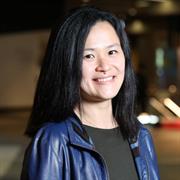
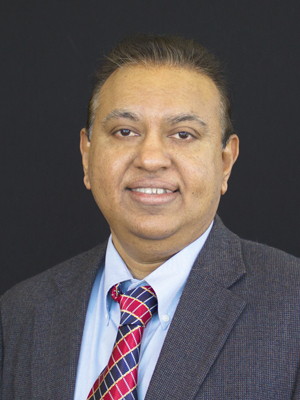
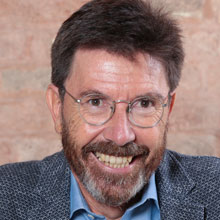
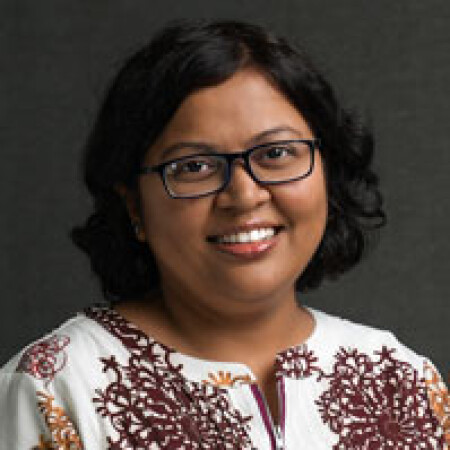
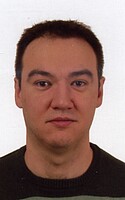
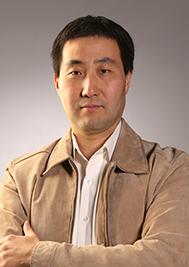
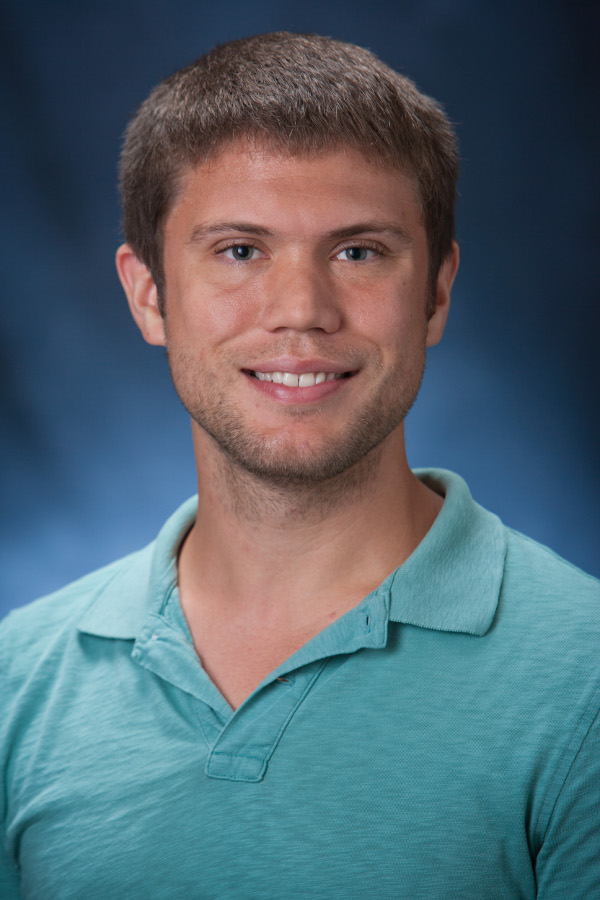
Dr Timothy Lee is a Senior Research Fellow at the University of Southampton, affiliated with the Smart Lasers and Special Fibres research group. His work focuses on advancing optical fiber sensor technologies, laser machining, and photonics applications in composite materials. He currently supervises three PhD students in the Optoelectronics Research Centre (ORC). Research interests include distributed optical fiber sensors, laser-machined optical structures, and the integration of photonics into advanced manufacturing processes. His recent publications highlight innovations in fiber fabrication techniques, composite material monitoring, and compact sensor design. Timothy collaborates with interdisciplinary teams on projects involving structural health monitoring and nanophotonic devices. No specific awards are listed, but his active involvement in high-impact conferences and journals underscores his contributions to the field.
Flora Salim is a Professor in the School of Computing Technologies at RMIT University. She serves as co-Deputy Director of the RMIT Centre for Information Discovery and Data Analytics (CIDDA) and an Associate Investigator of the ARC Centre of Excellence in Automated Decision Making and Society. Her research focuses on human behavior modeling, machine learning with time-series and spatio-temporal data, and edge AI applications in IoT and wearables. Flora has secured over $10M in research funding from ARC, industry partners, and government bodies. Notable awards include the 2021 PACM IMWUT Distinguished Paper Award, 2019 Humboldt-Bayer Fellowship, and RMIT's 2018 Research Impact Award. She leads the CRUISE research group and has held visiting professorships at the University of Kassel and University of Cambridge. Editorial roles: Associate Editor of PACM on IMWUT, Area Editor of Pervasive and Mobile Computing Steering Committee member of ACM UbiComp Her work bridges ubiquitous computing and machine learning, with applications in urban analytics, mobility, and health monitoring. Recent projects include self-supervised learning for multimodal data and forecasting with heterogeneous time-series. Supervision areas: Deep learning for sensor data, explainable AI, and wearable-based emotion sensing Teaching programs: Master of Artificial Intelligence and Master of Data Science
Dr. Abdur Forkan is a Senior Research Fellow in AI and Machine Learning at Swinburne University of Technology's School of Science, Computing and Emerging Technologies. He also holds honorary research positions at Peter MacCallum Cancer Centre and Northern Health. His work focuses on applied AI and machine learning across digital health, Industry 4.0, FinTech, AgriTech, and supply chain optimization. He has led over a dozen industry projects, delivering impactful solutions such as AI-driven healthcare systems, manufacturing efficiency tools, and agricultural disease prevention models. Education: PhD in Computer Science, RMIT University (2016) B.Sc. in Computer Science and Engineering, Bangladesh University of Engineering and Technology (2007) Research Interests: Data Science and Health Informatics Pervasive Computing and IoT Applications AI in Healthcare and Industry Awards: 2023 iAwards National Winner (Government/Public Sector Solution) 2023 iAwards VIC Winner (Technology Platform Solution) RMIT CSIT Publication Award (2015) Grants & Collaborations: Lead on projects with industry partners like VidVersity, Sphere Holdings, and Northern Health Focus on digital twin technologies, AI in clinical decision support, and healthcare platform development Teaching & Supervision: Sessional academic at RMIT and Swinburne Supervising HDR students on topics like AI in healthcare, greenspace health impacts, and chronic disease management
Madhav Erraguntla is a Teaching Professor of Industrial & Systems Engineering at Texas A&M University , affiliated with the TEES Center for Remote Health Technologies and Systems . He holds the Mike and Sugar Barnes APT Faculty Fellow title. His research focuses on applying machine learning and AI to healthcare and supply chain management, particularly in diabetes, wearable sensor technologies, and predictive modeling. With over 25 years of industry experience, Dr. Erraguntla has contributed to analytics at AT&T (smart home technologies) and i2 Technologies (retail CRM systems). He leads projects funded by DoD, HHS, and NASA, including national blood inventory surveillance systems. He is a Professional Engineer in Texas and a member of the Institute of Industrial and Systems Engineers (IISE). Education : Ph.D., Industrial Engineering, Texas A&M University (1996); M.Tech., Industrial Engineering, NITIE, India (1989) Key Projects : SBIR grants, mosquito population modeling, diabetes management algorithms, and wearable sensor development His work bridges healthcare innovation and engineering, emphasizing real-world applications in diabetes, emergency hospital management, and public health surveillance. Recent research highlights include AI-driven glucose forecasting, hypoglycemia detection systems, and environmental impacts on disease vectors like Zika virus transmission.
Chi Zhou is an Associate Professor and Director of Graduate Studies in the Department of Industrial and Systems Engineering at the University at Buffalo. He also holds an adjunct appointment as Adjunct Associate Professor in the Department of Computer Science and Engineering. His research focuses on additive manufacturing, rapid prototyping, and advanced material systems. Zhou has a PhD in Industrial and Systems Engineering (2011) from the University of Southern California, with additional degrees in Computer Science and Industrial Engineering. His work bridges manufacturing processes, material science, and computational methods. Key research areas include inkjet printing process optimization, hydrogel-based 3D printing, thermal insulation materials from agricultural byproducts, and smart material systems like magnetorheological metamaterials. He has pioneered methods for real-time process monitoring and defect detection in additive manufacturing. Zhou’s recent publications emphasize sustainable manufacturing solutions, such as bio-based insulation materials and cost-effective silica aerogel production. His contributions also span energy harvesting (e.g., conductive hydrogel generators) and advanced structural designs using triply periodic minimal structures. He has led interdisciplinary projects integrating digital twins for cyber manufacturing systems and geometric deep learning for mass customization applications.
Agostino Cortesi is a Full Professor at Ca' Foscari University of Venice , affiliated with the Department of Environmental Sciences, Informatics and Statistics. He serves as Rector's Delegate for Research Quality Assessment and Deputy Coordinator of the Scientific Committee for the Innovation Ecosystem Project. His academic career includes a PhD in Applied Mathematics and Informatics from the University of Padova (1992), a postdoctoral fellowship at Brown University, and visiting professor roles at institutions such as the University of Illinois and École Normale Supérieure Paris. Research interests focus on software engineering , static analysis , security applications , and abstract interpretation . He has pioneered techniques for formal verification of software systems and explored cybersecurity in e-Government and robotics. His work spans over 200 publications in top journals and conferences (e.g., ACM TOPLAS, IEEE TSE, POPL, PLDI). Key contributions include advancements in abstract domains for behavioral property verification and security-oriented analysis frameworks. He has held leadership roles including Vice-Rector at Ca' Foscari, Dean of Computer Science programs, and Chair of the Department of Computer Science. Cortesi coordinates EU Horizon 2020 projects (e.g., Families_Share €1.6M) and regional initiatives like CEVID (€360K). He founded Factors , a university spin-off focused on robotic systems verification, which won the 2020 Veneto SmartCup ICT Prize. Education: PhD in Applied Mathematics and Informatics (1992, University of Padova) Editorial Roles: Co-Editor-in-Chief of Springer’s 'Services and Business Process Reengineering', and member of editorial boards for 'Computer Languages' and others Grants: Over €3M in EU and regional funding for projects in cybersecurity, Industry 4.0, and digital innovation Teaching includes courses on Software Correctness , Data Programming , and Computer Networks across Computer Science and Management programs. His research lab actively engages in industrial partnerships with Cisco, Leonardo, and AGID (Italy’s Digital Agency).
Ifana Mahbub is an Associate Professor at the Erik Jonsson School of Engineering and Computer Science , University of Texas at Dallas, specializing in Electrical & Computer Engineering . Her research focuses on energy-efficient integrated circuits, wireless power transfer systems for biomedical sensors, and advanced antenna designs for UAV and mm-wave applications. She leads the Integrated Biomedical, RF Circuits and Systems Lab . Education: Ph.D. in Electrical Engineering (2017), University of Tennessee, Knoxville B.S. in Electrical Engineering (2012), Bangladesh University of Engineering and Technology Research interests include: Ultrawideband/mm-wave phased-array antennas Far-field wireless power beaming V2V communication for UAVs Energy harvesting via reverse electrowetting Implantable/wearable sensor systems Recent work highlights advancements in high-efficiency rectennas, beamforming algorithms, and AI-driven metasurface design. Her systems address critical challenges in biomedical telemetry and aerial communication.
George N. Karystinos is currently a Professor and Dean of the School of Electrical and Computer Engineering at the Technical University of Crete , Greece. He joined TUC in 2005 and was promoted to full Professor in 2019. His academic journey began with a Ph.D. in Electrical Engineering from SUNY Buffalo (2003) and a Diploma in Computer Engineering and Science from the University of Patras (1997). Specialty: Communication theory, coding theory, adaptive signal processing Key research areas: Wireless communications, signal waveform design, L1-norm principal component analysis Leadership: Dean of School of ECE (2021–present) His work focuses on noncoherent detection for RFID/IoT systems and L1-norm PCA for robust signal processing. Recent publications explore power line communication and low-complexity sequence detection . Scientific Awards: 2003 IEEE Transactions on Neural Networks Outstanding Paper Award 2001 IEEE ICT Best Paper Award 2018 IEEE MOCAST Best Student Paper Award 2015 IEEE ICASSP Best Student Paper Award 2013 IEEE ISWCS Best Paper Award 2011 IEEE RFID-TA Second Best Student Paper Award He is affiliated with the Telecommunications Laboratory at TUC and has supervised award-winning research in wireless systems and signal processing.
Professor Paul Brereton is Director of Strategic Alliances at the School of Biological Sciences, Queen's University Belfast, and leads the Institute for Global Food Security. He has coordinated major EU projects including €20M TRACE and €12M FOODINTEGRITY, and currently directs QUB's contributions to the UKRI Sus-Health programme and €11M TITAN Horizon Europe project. Active in food safety, authenticity, and sustainability Co-Director of UKRI Integrating Finance and Biodiversity Programme Chairs European Commission PRIMA Foundation evaluation panel His research spans food chemistry, risk assessment, and policy development, with recent focus on financial instruments for ecological restoration and combined nutritional-environmental metrics. Key projects address antimicrobial resistance, dietary sustainability, and blockchain applications in food traceability. Scientific honors include Fellow of the Royal Society of Chemistry and international awards from AOAC and OIV. His work contributes to UN Sustainable Development Goals 2 (Zero Hunger), 3 (Health), and 12 (Responsible Consumption).
Christian Haubelt is a Professor at the Institute of Computer and Network Engineering, School of Engineering, University of Rostock, Germany. He is actively engaged in research and teaching in the areas of embedded and cyber-physical systems, smart implants, and IoT. His work is supported by multiple national and international projects including ELAINE (SFB 1270), SmILE (EU), 6G-Health (BMBF), and GenerIoT (BMBF). His research interests include: Embedded and Cyber-Physical Systems Smart Sensors and Smart Implants System-Level Design Methodologies SystemC-based Modeling and Verification Design Space Exploration and Multi-Objective Optimization Industrial Internet of Things and 6G for Healthcare His recent publications focus on real-time communication protocols, 5G/6G localization, smart implants, and secure IoT systems. Trends show a strong emphasis on integrating embedded systems with medical and industrial applications, particularly leveraging TSN, MQTT-SN, and OPC UA for reliable and secure communication. His work bridges theoretical modeling with practical implementation in safety-critical domains. Christian Haubelt has supervised multiple researchers including Michael Nast, Benjamin Rother, Nico Kalis, and Nico Graumüller. He leads several funded research projects such as ELAINE, SmILE, 6G-Health, and SUSTAIN, which focus on smart implants, secure IoT, and next-generation medical systems. These projects involve collaboration with DFG, EU, and BMBF. He is involved in the following research labs and teams: Embedded Systems and Cyber-Physical Systems Group Smart Implants Research Team (SmILE, ELAINE) 6G-Health Localization Team Industrial IoT Security (SUSTAIN, CargoAssist)
Dr. Liang (Leon) Dong is an Associate Professor in the Department of Electrical and Computer Engineering at Baylor University, where he conducts research and teaches in the areas of signal processing, wireless communications, and artificial intelligence. He leads the Laboratory of Signal Processing, Communications, and Artificial Intelligence, fostering innovation in next-generation communication systems, IoT, and AI-driven applications. PhD, Electrical & Computer Engineering, The University of Texas at Austin (2002) MS, Electrical & Computer Engineering, The University of Texas at Austin (1998) BS, Applied Physics with Minor in Computer Engineering, Shanghai Jiao Tong University (1996) Dr. Dong's research focuses on advancing digital signal processing and wireless communications, with strong emphasis on artificial intelligence applications. His work spans NextG wireless systems , IoT and smart cities , cyber-physical system security , and AI in healthcare and industrial automation . He applies deep learning to domains such as autonomous driving and drug discovery, and investigates energy-efficient, secure, and reliable communication protocols. The recent publications highlight a strong trend toward integrating AI into traditional signal processing and communications. Topics include mRNA vaccine stability prediction , smart city infrastructures , secure cyber-physical systems , and deep learning for biomedical and industrial applications . His work bridges theoretical innovation with real-world impact in defense, transportation, and public health. Dr. Dong has earned recognition as a Senior Member of IEEE and a Member of the American Physical Society. He has also served as Faculty Advisor for Baylor University's InterVarsity chapter. Senior Member, Institute of Electrical and Electronics Engineers (IEEE) Member, American Physical Society (APS) He has successfully advised numerous graduate and undergraduate students, many of whom now hold academic and industry positions at institutions like Stanford, Intel, NASA, L3Harris, and Cummins. His research is generously supported by Baylor's VP for Research, the National Science Foundation, NASA, the Department of Defense (TARDEC), the Michigan Department of Transportation, and industry leaders including Intel, L3Harris, ExxonMobil, and Denso. He actively mentors students through research assistantships and senior design projects. Dr. Dong leads the Laboratory of Signal Processing, Communications, and Artificial Intelligence, which provides a collaborative environment for advancing research in signal processing, communications, and AI. The lab supports graduate and post-doctoral researchers and offers opportunities for undergraduate involvement in AI programming, circuit design, and embedded systems.
Jose Costa Requena is a Researcher and Research Manager at Aalto University, serving as a Staff Scientist in the Department of Information and Communications Engineering within the School of Electrical Engineering. His work centers on advanced networking infrastructure for next-generation wireless systems. Education: Doctoral degree in Engineering and Technology, Helsinki University of Technology (2007) Licentiate degree in Engineering and Technology, Helsinki University of Technology (2004) Research Interests: Dr. Costa Requena specializes in 5G/6G mobile communication, network slicing, and IoT systems. His research bridges theoretical networking concepts with industrial applications, focusing on low-latency solutions, deterministic networking for robotics, and scalable data generation frameworks for distributed sensor networks. He actively develops experimental testbeds for validating novel communication architectures. Recent Publication Trends: His 2024-2025 publications reveal a concentrated effort on practical 5G/6G implementation challenges, including QUIC-based name resolution, time-sensitive networking for industrial automation, and Sub-THz backhauling solutions. These works consistently address reliability, latency, and scalability constraints in mission-critical applications. Scientific Awards: No specific awards are documented in the available information. Advising and Grants: He has supervised at least one thesis. As principal investigator, he leads major EU and nationally funded projects including FUWIRI 2+ (2025-2027), 6G-EXP (2023-2024), and ZERO-SWARM (2022-2024), focusing on wireless infrastructure innovation and 6G test network development. Labs and Teams: Costa Requena operates within Aalto's Networked Systems research group and maintains strategic collaboration with VTT Technical Research Centre of Finland, contributing to Finland's national 5G/6G test network initiatives in Otaniemi.
Chi-Kwan Lee is a Professor at the University of Technology Sydney (UTS), School of Electrical and Data Engineering since 2024. Previously, he held roles including Associate Professor (2018-2023) and Assistant Professor (2012-2017) at the University of Hong Kong. He earned his B.Eng. and Ph.D. in Electronic Engineering from City University of Hong Kong (1999 and 2004). His research focuses on electric power conversion, electromagnetic devices, wireless power transfer, renewable energy, and smart grid technologies. He was a Visiting Researcher at Imperial College London (2010-2020). Research Highlights: Prof. Lee has pioneered advancements in wireless power transfer for medical devices (e.g., capsule endoscopy) and electric vehicles, with breakthroughs in efficiency optimization and misalignment mitigation. His work on hybrid stepper motor systems and magnetoresistive sensors addresses challenges in contactless actuation and high-voltage current sensing. Awards & Contributions: A Senior Member of IEEE and recipient of the 2015 IEEE Power Electronics Society Transactions First Prize Paper Award. He serves on IEEE PELS committees and editorial boards of key journals like IEEE Transactions on Power Electronics. Grants & Labs: Active in funded research projects related to wireless charging systems, smart grids, and renewable energy integration. His work spans academic collaborations, industry partnerships, and international conferences.
Brent Lagesse is an Associate Professor at the University of Washington - Bothell , affiliated with the Division of Computing & Software Systems under the School of Science, Technology, Engineering & Mathematics . His research focuses on security in emerging environments , particularly secure machine learning and privacy in sensor-rich systems . Ph.D. in Computer Science from the University of Texas at Arlington (2009) Research Interests include: Detecting and locating hidden webcams Scalable AI/ML defense mechanisms Privacy-preserving video sharing AI systems for air quality prediction Automated yeast cell analysis CRISPR/CAS9 guide-donor libraries Article Trends : Recent publications emphasize secure machine learning for smart city applications, privacy-preserving technologies , and resource-constrained security in crowdsensing environments . Collaborative work spans cybersecurity education , environmental monitoring , and context-aware systems . Scientific Awards : Cybersecurity Fulbright Scholar (University of Cambridge, 2018) Johann-von-Spix International Guest Professorship (University of Bamberg, 2019-20) Advising & Grants : Advises current research students Neil Prakasam and Nicholas Handaja NSA grant ($96k) for GenCyber curriculum development (2022) NSF grant ($300k) for AI-enhanced cybersecurity workforce studies (2021) T-Mobile grants for ML security metrics and dataset anonymization (2020-2022) Laboratory : Leads the Security of Emerging Environments (SEE) Lab , developing practical and theoretical frameworks for smart city security and privacy-preserving technologies .
Gaurav Nanda serves as an Assistant Professor in the School of Engineering Technology at Purdue University, where he leads research at the intersection of artificial intelligence and human-centered systems. His work develops intelligent decision support frameworks applicable across critical domains including occupational safety, smart manufacturing infrastructure, healthcare analytics, and educational technology. Education Background Ph.D. in Industrial Engineering, Purdue University Dual Degree: B.Tech. and M.Tech. in Agricultural and Food Engineering (Major) with Electrical Engineering Minor, Indian Institute of Technology Kharagpur His research program integrates applied machine learning and natural language processing to solve complex problems in safety analytics (injury surveillance systems), Industry 4.0 (IoT-enabled manufacturing), healthcare (breast cancer prediction models), and STEM education (MOOC feedback analysis). Current projects emphasize human-AI collaboration, with growing focus on ethical AI implementation and social justice integration in engineering contexts. The INDESS Research Group he directs develops systems that balance algorithmic precision with human factors considerations. Recent publications (2023-2025) demonstrate accelerating adoption of large language models and vision-language systems across application domains, particularly in safety analytics and educational technology. Key trends include human-in-the-loop validation frameworks, explainable AI interfaces, and multimodal data integration (eye-tracking, text, sensor data). His work increasingly addresses fairness considerations in AI deployment, especially regarding diversity in engineering education and workplace safety systems. Dr. Nanda actively mentors the next generation of engineers through the INDESS Research Group , advising Ph.D. candidates Madhumathi Ponnusamy and Shuning Yin, while previously supervising Master's graduates including Srushti Vichare and Meet Suthar. His research receives support through Purdue-affiliated institutes including ICON (Control/Optimization Networks), RDE (Digital Enterprise), and FWL (Future Work/Learning). He maintains active service roles as Editorial Board Member for the International Journal of Industrial Ergonomics and as reviewer for leading publications including IEEE Transactions on Learning Technologies and Safety Science. The research group maintains strong industry connections through the Purdue School of Engineering Technology, with projects spanning manufacturing automation, healthcare informatics, and educational technology platforms. Current initiatives focus on real-time anomaly detection systems, ethical AI frameworks for safety-critical applications, and inclusive curriculum development for engineering education.