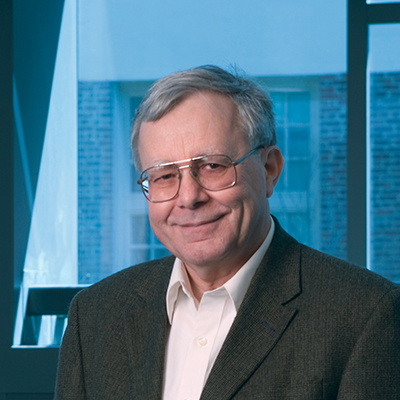
Haim H. Bau is the Richard H. & S. L. Gabel Professor of Mechanical Engineering at the University of Pennsylvania. His research bridges mechanical engineering, biomedical applications, and nanotechnology, focusing on microfluidics and molecular detection technologies. Key affiliations: School of Engineering and Applied Science, Department of Mechanical Engineering and Applied Mechanics Research Highlights: Active Control of Flow Patterns Carbon Nanopipettes for Cellular Probes Electrokinetics and Dielectrophoresis In Situ Electron Microscopy (Nanoaquarium) Magneto-Hydrodynamics (MHD) Lab-on-a-Chip for Point-of-Care Diagnostics Scientific Awards: Richard H. & S. L. Gabel Professorship Article Trends: Recent work emphasizes portable microfluidic diagnostics (e.g., SARS-CoV-2, HIV, Zika), CRISPR-enhanced mutation detection, and biophysical studies of microswimmers like C. elegans. Keywords include Molecular Diagnostics, Microfluidics, and Nanotechnology.
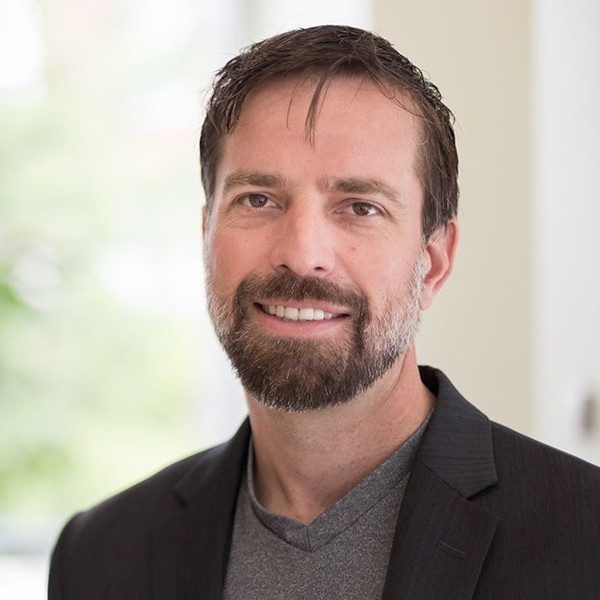
Yuta Sugiura is an Associate Professor in the Department of Information and Computer Science at Keio University's Faculty of Science and Technology. His research focuses on innovative human-computer interaction techniques, particularly in wearable computing, tangible interfaces, and novel input methods. Previously, he worked as a postdoctoral researcher at the National Institute of Advanced Industrial Science. Dr. Sugiura's research interests span Human-Computer Interaction, Wearable Computing, Augmented Reality, Tangible User Interfaces, Gesture Recognition, Ubiquitous Computing, Haptics, and Virtual Reality. His work often explores how everyday objects and environments can become interactive surfaces, with notable projects including the iRing (intelligent ring), SenSkin (skin as interface), and EarHover (mid-air gesture recognition for hearables). He has developed numerous novel interaction techniques that leverage physical properties of materials and human physiology for input and output. His recent publications indicate a strong focus on hearable computing, medical applications of HCI, edible interfaces, and novel authentication methods. The research shows a consistent pattern of exploring unconventional interaction surfaces and leveraging subtle physical phenomena for input sensing. His work has significant implications for healthcare applications, particularly in neurological disorder screening and rehabilitation. Best Paper Award Dr. Sugiura has advised numerous students who have gone on to publish significant work in top-tier HCI venues. His research has been supported by various grants enabling the development of novel interaction techniques and systems. He maintains strong collaborations with researchers across Japan and internationally, particularly in the fields of wearable computing and medical applications of HCI. His laboratory appears to focus on lifestyle computing, developing interfaces that integrate seamlessly into daily activities. Current projects include exploring edible displays, adaptive ear interfaces, and novel authentication methods using wearable devices. Future work seems to be heading toward more medical applications of HCI, particularly in neurological assessment and rehabilitation.
Zachary Doerzaph is an Associate Professor in Virginia Tech’s Department of Biomedical Engineering and Mechanics, and serves as Executive Director of the Virginia Tech Transportation Institute (VTTI) and President of the Global Center for Automotive Performance and Simulation (GCAPS). His research focuses on automotive safety, connected/automated vehicles, driver behavior, and infrastructure design. He leads a multidisciplinary team addressing next-gen transportation challenges through advanced technologies like big data analytics and AI. Education : Ph.D. Industrial and Systems Engineering (2007), Virginia Tech M.S. Industrial and Systems Engineering (2004), Virginia Tech B.S. Mechanical Engineering (2001), University of Idaho Research Interests : Connected/automated vehicle systems Driver-vehicle interaction Risk prediction and mitigation Infrastructure safety design Human factors in transportation Key Contributions : Developed PREPARES rear-end collision mitigation system Advanced LiDAR/radar fusion for vehicle sensing Guided automated vehicle handover studies Testified on autonomous tech impacts to U.S. Senate (2018) Awards : Virginia Business 100 (2022) Virginia Tech Distinguished Leader in Research (2021, 2023) Labs/Initiatives : Virginia Tech Transportation Institute Global Center for Automotive Performance and Simulation
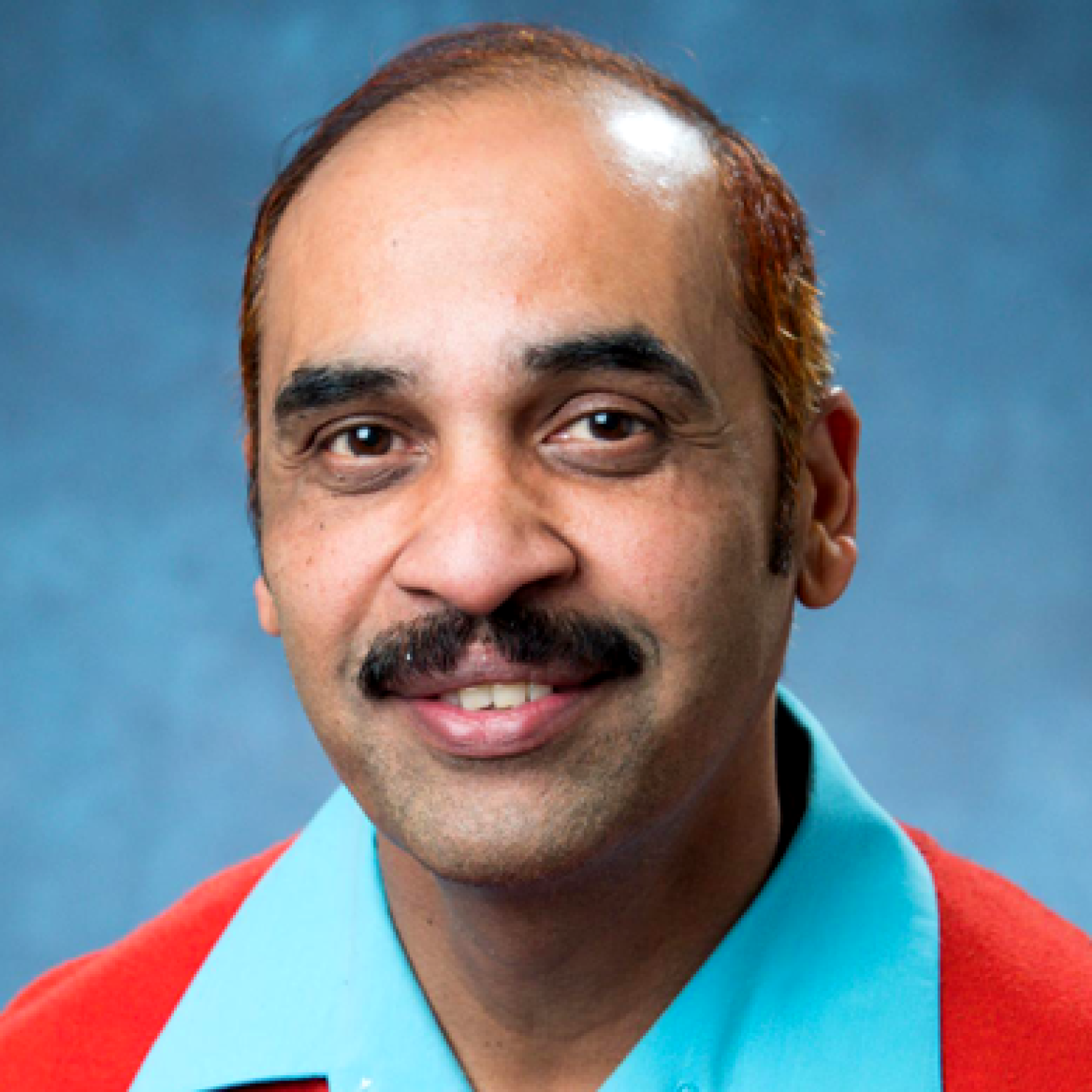
Prof. Venkat N. Krovi serves as the Michelin Endowed Chair Professor of Vehicle Automation in the Departments of Automotive Engineering and Mechanical Engineering at Clemson University's College of Engineering, Computing and Applied Sciences (CECAS). He directs the Automation, Robotics and Mechatronics Laboratory (ARMLab) at the International Center for Automotive Research (CU-ICAR), focusing on smart embedded systems for autonomy in challenging environments. He earned his Ph.D. in Mechanical Engineering and Applied Mechanics from the University of Pennsylvania in 1998. His research leverages distributed autonomy and human-robot synergy to extend human capabilities, with applications spanning plant automation, consumer electronics, automobile, defense, and healthcare. The work emphasizes lifecycle treatment (design through verification) of robotic systems under uncertainty. Recent publications (2024-2025) demonstrate strong trends in digital twin frameworks for autonomous vehicle validation, sim2real transfer via reinforcement learning, and integration of large language models for editable simulations. Key themes include scalable cloud-based architectures, Koopman operator theory for robustness, and containerization for reproducible robotics development. His accolades include: National Science Foundation (NSF) CAREER Award Petro-Canada Young Innovator Award Multiple best paper awards at conferences and journals ASME Dedicated Service Award (2024) Prof. Krovi has advised doctoral students including Dr. Srivatsan Srinivasan (2024). His research receives substantial funding from NSF, DARPA, ARO, and industrial partners like Michelin. He leads the NSF I/UCRC RoSeHuB center and the AutoDRIVE ecosystem for autonomous driving education. As ARMLab director, he oversees projects including OpenCAV, the Robotics for AV Systems Bootcamp, and containerized terramechanics simulations. The lab specializes in mechatronic design, verification/validation frameworks, and human-autonomy coexistence studies for next-generation mobility solutions.
Shivakant Mishra is a Professor in the Department of Computer Science at the University of Colorado, Boulder, and currently on leave as a Program Director at the NSF's CSR (Computer Systems Research) program. He holds roles as Site Co-Director of the NSF IUCRC Pervasive Personalized Intelligence Center and co-founded the Colorado Research Center for Democracy and Technology. Affiliations: Department of Computer Science, College of Engineering and Applied Sciences Professional Roles: NSF Program Director, Center Leadership Education: Ph.D. in Computer Science (University of Arizona), M.S. (Southern Illinois University), B.Tech. (IIT Bombay). Research focuses on distributed systems, edge computing, socio-technical systems for environmental justice, CyberSafety, and technology's role in democracy. Key projects include the C70 community impact study and smart agriculture systems. His work integrates technology with societal challenges, such as mitigating highway construction impacts and combating cyberbullying. Teaching includes courses on operating systems, distributed systems, and special topics like democracy through technology. Advised Ph.D. students Fei Hu and Jinpeng Miao. Professional activities include organizing conferences (e.g., DSN 2017, CyberSafety workshops) and serving on NSF panels.
Gabriela F. Ciocarlie is a Researcher at SRI International, focusing on advancing cybersecurity, IoT security, and formal verification techniques. Her work bridges theoretical computer science with practical applications in critical infrastructure protection and manufacturing systems. She has contributed to over 48 publications across conferences like CCS, NDSS, and IEEE venues. Her research interests span adversarial machine learning, secure manufacturing automation, and resilient biomanufacturing systems. Notable projects include developing frameworks for verifying manufacturing design integrity and creating end-to-end security solutions for cyber-physical systems. She has also pioneered work on deployable adversarial attacks against neural networks and automated attack investigation tools like autoMPI. Key collaborations include partnerships with institutions like Columbia University (former affiliation) and industry leaders. Her work often addresses real-world challenges such as pandemic-resilient biomanufacturing and securing critical infrastructure through cyber-physical integration.
Prof. Stefan Sieber is a Professor at the Leibniz Centre for Agricultural Landscape Research (ZALF), leading the 'Sustainable Land Use in Developing Countries' working group under Program Area 2 'Land Use and Governance'. His expertise spans food security, climate change adaptation, bioenergy systems, and agricultural policy. He holds a doctoral degree (Dr. agr. habil.) from Humboldt University of Berlin. His work emphasizes decision support systems for sustainability, policy coordination, and knowledge management in international development contexts. Research interests focus on interdisciplinary approaches to sustainable land use, integrating socioeconomic factors with ecological resilience. Recent projects include analyzing wildfire impacts in Cameroon, stakeholder dynamics in forest landscape restoration (FLR), and policy interventions for deforestation-free cocoa production in Côte d'Ivoire. He coordinates global research initiatives, advising on climate-smart agricultural practices and environmental governance frameworks. Publications highlight FLR adoption in Togo, climate change impacts on crop yields in Kenya, and energy transitions in Zambia. His work bridges academic research with practical policy solutions, particularly in vulnerable regions facing climate and development challenges. Collaborations span Sub-Saharan Africa, Southeast Asia, and Latin America, emphasizing participatory methodologies and equitable resource management.
Marion K. Matters-Kammerer is a Full Professor of Electrical Engineering at Eindhoven University of Technology, leading research in terahertz (THz) and millimeter-wave systems. She holds positions in the Center for Wireless Technology, THz Electronics and Integration Lab, and RF Sensing & Communication Lab. Her expertise includes integrated circuits, antenna design, and power amplifier systems. She has led EU projects like 3DmicroTune and ULTRA, and co-authored over 70 journal/conference papers with 13 US patents. Education: MSc in Physics from École Normale Supérieure (Paris) and TU Berlin (1999), PhD in Physics from RWTH Aachen (2007). Past roles include Senior Scientist at Philips Research (1999–2011) and Guest Professor at RWTH Aachen (2009–2010). Research focuses on THz spectroscopy, mm-wave integrated circuits, and energy-efficient wireless systems. Key projects involve THz biosensing, 60 GHz sensor networks, and co-integration of photonics and electronics. Her work addresses UN SDGs like affordable and clean energy, and industry-academia collaboration via NXP Smart Mobility projects. Recent articles highlight advancements in mm-wave power amplifiers, waveguide integration, and radar signal processing. Grants include €2.5M for TeraIBs (2025–2028) and €1.8M for Future Wireless Interfaces (2024–2029). Labs include THz Electronics Lab and RF Sensing Team, advancing sensor and communication technologies.
Dr. Ahmad Alsharif is an Assistant Professor in the Department of Computer Science at the University of Alabama's College of Engineering. His research expertise spans applied cryptography, IoT security, cyber-physical systems security, and blockchain applications. He received his B.S. and M.S. in Electrical Engineering from Benha University, Egypt, and Ph.D. in Electrical and Computer Engineering from Tennessee Tech University. Research focuses on security challenges in critical infrastructure systems including smart grids, IoT networks, and UAV systems. Current projects investigate privacy-preserving machine learning techniques, adversarial attack resilience, secure data marketplaces, and attack detection mechanisms for distributed energy systems. His work combines cryptographic protocols with machine learning for trustworthy systems. Awards include the NSF Research Initiation Initiative Grant (NSF CRII) and Young Innovator Award from Egyptian Industrial Modernization Center.
Professor Minh N. Do is the Thomas and Margaret Huang Endowed Professor in Signal Processing & Data Science at the University of Illinois at Urbana-Champaign (UIUC), with primary appointment in the Department of Electrical and Computer Engineering. He holds multiple affiliate appointments across campus including with the Coordinated Science Laboratory, Beckman Institute for Advanced Science and Technology, Department of Bioengineering, Department of Computer Science, Institute for Genomic Biology, College of Medicine, and School of Computing and Data Science. Additionally, he serves as Director of the joint VinUni-Illinois Smart Health Center and holds an Honorary Vice-Provost position at VinUniversity. Professor Do received his B.Eng. in Computer Engineering (First Class Honors) from the University of Canberra, Australia in 1997, followed by his Dr.Sci. in Communication Systems from the Swiss Federal Institute of Technology Lausanne (EPFL) in 2001. His educational journey was marked by exceptional achievement, earning the University Medal from the University of Canberra and a Silver Medal from the 32nd International Mathematical Olympiad. Professor Do's research focuses on developing new multidimensional signal processing tools with applications across several domains. His primary research interests include smart health, data science, computational imaging, and signal processing. His work spans biomedical imaging, machine learning, computer vision, and robotics, with particular emphasis on geometric image representations, integrating image formation and processing, and image processing from multiple sensors. His research bridges theoretical investigations with practical applications, creating impactful solutions in healthcare, diagnostics, and AI systems. His recent publications demonstrate a consistent trajectory toward multimodal AI systems, robust learning frameworks, and healthcare applications. Professor Do's work increasingly integrates signal processing with deep learning approaches to address challenges in medical imaging, cross-modal transfer, and real-world deployment of AI systems. His research shows strong emphasis on practical applications with societal impact, particularly in healthcare diagnostics and smart health technologies. Professor Do's scientific achievements have been recognized with numerous prestigious awards: Member of the National Academy of Artificial Intelligence (2025) Fellow of Asia-Pacific Artificial Intelligence Association (2023) Thomas and Margaret Huang Endowed Professor, UIUC (2020-present) Fellow of IEEE (2014) Young Author Best Paper Award, IEEE Signal Processing Society (2008) CAREER award from the National Science Foundation (2003) Best Doctoral Thesis Award from EPFL (2001) As an educator, Professor Do has taught numerous courses spanning digital signal processing, probability, data science, and image processing. His teaching excellence has been recognized with multiple "Teachers Ranked as Excellent" awards at UIUC. He also maintains active industry connections through tech-transfer efforts, having co-founded Personify and served as Chief Scientist of Misfit. His leadership extends to administrative roles, having served as Vice-Provost for VinUniversity during 2020-2021. Professor Do leads research initiatives at the intersection of signal processing and healthcare applications, with particular focus on the Smart Health Center collaboration between UIUC and VinUniversity. His lab develops innovative solutions for medical diagnostics, point-of-care testing, and neurological assessment using advanced signal processing and AI techniques.
Dr. Sepideh Ghodrat is an Assistant Professor of Shape Morphing Design at TU Delft's Faculty of Industrial Design Engineering. She bridges materials science and design, focusing on stimuli-responsive materials for dynamic, interactive products. Her research emphasizes 4D printing, smart materials, and sustainable applications. Research Projects include 4D Printing Magnetically Activated Shape Morphing Objects and SereniSleeve (wearables for anxiety modulation). Courses taught: Materials and Manufacturing (2023-2024). Research Interests : Shape Morphing Design (SMD) Stimuli-Responsive Materials (e.g., shape memory alloys, polymers) 4D Printing and Magnetic Soft Materials Applications in healthcare, automotive, and sustainability Key Contributions : Developed modular self-folding hinges (Mimosa Kit). Explored haptic wearables for visually impaired users. Advocates for adaptive, environment-responsive products. Labs/Teams : Involved in multiple interdisciplinary research teams at TU Delft, focusing on smart materials and sustainable design engineering.
Valentina Breschi is an Assistant Professor in the Control Systems Group at the Department of Electrical Engineering, Eindhoven University of Technology (TU/e). She holds a Ph.D. from IMT School for Advanced Studies Lucca, with postdoctoral and junior faculty experience at Politecnico di Milano. Her research focuses on data-driven control, jump model learning, meta-learning for system identification, and human-centered policy design for mobility systems. She contributes to UN Sustainable Development Goals related to sustainable infrastructure and innovation. Education: B.Sc. in Electronic and Telecommunication Engineering (University of Florence, 2011) M.Sc. in Electrical and Automation Engineering (University of Florence, 2014) Ph.D. in Control Systems (IMT School for Advanced Studies Lucca, 2018) Research Interests: Her work spans data-driven control methodologies, including LPV control, predictive control, and ethical frameworks for policy design. She explores applications in sustainable mobility, energy systems, and healthcare, emphasizing fairness and social impact. Labs/Teams: She is part of the Control Systems Group, collaborating on projects like the CONSIDER study and the design of fair-MPC frameworks. Her work integrates theoretical control principles with real-world applications in smart systems and social networks.
Safa Otoum is an Assistant Professor at the College of Technological Innovation (CTI), Zayed University, UAE, and holds an adjunct role at the School of Computer Science and Electrical Engineering. She is a licensed Professional Engineer (P.Eng.) in Ontario and a member of IEEE and ACM. Her expertise spans network security, blockchain, AI, and IoT, with a focus on intrusion detection and prevention systems. Education: She earned a M.A.Sc. (2015) and Ph.D. (2019) in Computer Engineering from the University of Ottawa, Canada, followed by postdoctoral research there. She has held roles as a data scientist at Cheetah Networks and as a researcher in reputable institutions. Research Interests: Her work emphasizes AI-driven security solutions, blockchain applications in IoT, federated learning, and sustainable smart city infrastructure. She explores machine/deep learning for cybersecurity and has pioneered architectures for secure vehicular networks and healthcare systems. Publications: Over 15 peer-reviewed articles in top journals/conferences like IEEE Transactions on Network, ACM TOIT, and GLOBECOM. Notable contributions include highly cited blockchain surveys and award-winning intrusion detection frameworks. Awards: Recipient of prestigious scholarships (NSERC, Canada Graduate Scholarship) and grants (RIF, TII). Honored with a Best Paper Award for intrusion detection research in critical infrastructure. Service Roles: She serves as Area Editor for Springer's Cluster Computing, chairs international workshops on securing healthcare systems, and organizes conferences on network security and intelligent transportation. She also guest-edits special issues on AI-driven healthcare in journals like Electronics.
Dr. José Garcia-Bravo is an Associate Professor at the Purdue Polytechnic Institute, Department of Mechanical Engineering Technology, specializing in fluid power systems, additive manufacturing, and smart manufacturing using Industrial Internet of Things (IIoT) technologies. His work bridges applied research with educational innovation, including the development of a miniature electro-hydraulic excavator arm and the Fluid Power Student Club. Education: Ph.D. in Engineering (Fluid Power), Purdue University, 2011 M.Sc. in Engineering, Purdue University, 2006 M.A. in Teaching of Spanish, Purdue University, 2004 B.Sc. in Mechanical Engineering, Universidad de Los Andes, 2002 His research interests span fluid power & motion control, digital twins, reverse osmosis systems, and mixed reality applications in manufacturing. He focuses on optimizing hydraulic systems for heavy-duty vehicles, embedding sensors in 3D-printed components, and advancing water purification technologies. Recent publications highlight innovations in digital hydraulics, bio-based packaging materials, and reverse osmosis efficiency. He has secured patents for 3D-printed lens gratings and processes for additive manufacturing. Scientific Awards: Purdue Polytechnic Outstanding Faculty in Learning Award (2019) Purdue Polytechnic Outstanding Faculty in Engagement Award (2022) Dr. Garcia-Bravo actively engages in globalizing fluid power education, facilitating student exchanges with Latin American countries and contributing to international standards for hydraulic components through ISO committees.
Wout Weijtjens is a Research Fellow at Vrije Universiteit Brussel, affiliated with the Acoustics & Vibration Research Group in Applied Mechanics. His research focuses on structural health monitoring (SHM) of offshore wind turbines, fatigue analysis, and vibration-based damage detection using advanced signal processing and machine learning techniques. Current projects include FIRMEST (fatigue assessment of offshore wind turbine substructures) and FOOS (Forced Oscillations in turbines). His research interests span: Operational modal analysis for offshore structures Machine learning applications in SHM Fatigue life prediction under environmental variability Sensor networks for infrastructure monitoring Wind turbine dynamics under harsh conditions Recent publications demonstrate a consistent focus on developing predictive maintenance frameworks through multivariate sensor data analysis, uncertainty quantification in SHM systems, and validation of computational models against full-scale field measurements. Article trends emphasize machine learning integration with physical models for improved fatigue life assessment. Awards and recognitions include: Best Paper Award (2nd place, 2022) Poster Award (2017) Solvay Award (2015) As principal investigator on multiple grants including VLADBC7 and VLADBC9 projects, he supervises PhD candidates in vibration-based SHM and leads experimental validation at OWI-Lab's Large Climate Chamber. His team develops IoT monitoring solutions for civil infrastructure through the SMART TOWERS initiative.