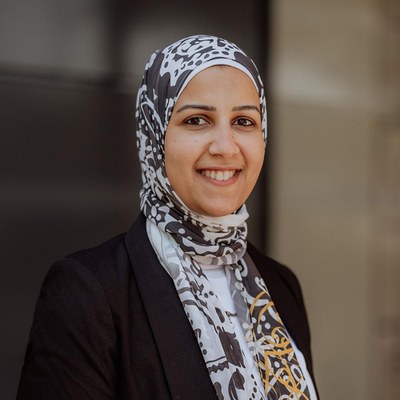
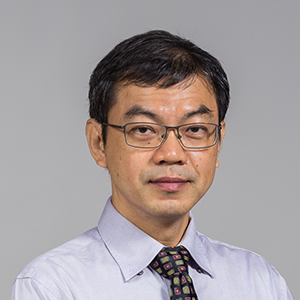
Anne Catherine Hahn is a Lecturer in Law and Compliance at Kalaidos Law School (part of Kalaidos University of Applied Sciences). As a Partner at Wartmann Merker, she specializes in corporate litigation, arbitration, and compliance risk management. Dr. iur., LL.M., Universität Fribourg and University of Michigan Her research focuses on legal compliance in digital transformation, corporate liability, and arbitration law. She explores intersections between technology regulation, data privacy, and business ethics, with a particular emphasis on cross-border compliance challenges. Recent publications analyze AI regulation, digital medical applications, and corporate liability frameworks. Awards include Walter Hug Preis and Peter Jäggi Preis for her doctoral work. Walter Hug Preis Peter Jäggi Preis She leads continuing education programs and contributes to ethics committees, including serving as President of the Equal Opportunities Mediation Commission for the ETH domain.
Malcolm Innes is a Senior Lecturer at the Edinburgh Napier University's School of Arts and Creative Industries . With over 10 years of research outputs, his work spans lighting design, smart textile applications, and heritage conservation. Specializes in lighting for historical sites Leader in community co-design urban lighting Expert in light-sensitive material preservation Research trends focus on: Merging art and science in illumination Smart textiles for performance environments Heritage site lighting innovation Projects include: 12 Closes Community Co-design (2016-2022) Dunbar SciFest Projection (2015) Edinburgh Zoo Night Trail (2014-2015)
Hui Yang is a Professor of Industrial and Manufacturing Engineering and Biomedical Engineering at Pennsylvania State University , holding the Gary and Sheila Bello Chair Professor title. He is affiliated with multiple institutions including the Penn State Cancer Institute , Clinical and Translational Science Institute , and Institute for Computational and Data Sciences . Currently serving as PI and Site Director of the NSF Center for Health Organization Transformation (CHOT) , his career includes leadership roles in professional societies such as IISE Data Analytics and Information Systems Society (President 2017-2018) and INFORMS Quality, Statistics and Reliability (QSR) society (President 2015-2016). As Associate Editor for journals like IISE Transactions , IEEE JBHI , and IEEE Transactions on Automation Science , he maintains strong editorial influence. His research integrates nonlinear stochastic dynamics with sensor-based system informatics to advance both smart manufacturing and healthcare engineering . Recent work explores digital twin technologies , blockchain applications , and AI-driven disease modeling for conditions like Alzheimer's and cardiovascular disease . Key scientific contributions include developing character-level linguistic biomarkers for early dementia detection, self-organizing network representations of cardiac systems, and privacy-preserving neural networks for Industry 4.0 environments. His research group has received significant external funding from NSF , DOE , and NIST to address challenges in heterogeneous manufacturing networks , adaptive failure prognosis , and spatiotemporal optimization . Fulbright Award in Science, Technology and Innovation (2022) IISE Fellow (2021) NSF CAREER Award (2015) Through his Virtual Learning Factory and SCOUT spatiotemporal framework , Yang bridges manufacturing analytics with health informatics , creating cross-domain methodologies for system diagnostics/prognostics , process optimization , and smart health monitoring . His Cross Recurrence Analysis Toolbox provides open-source methods for nonlinear time series analysis.
Dr. Yomna Abdelrahman is a Professor of Usable Security and Privacy at the Bundeswehr University Munich . Her research focuses on thermal imaging for security and privacy , virtual reality usability, eye tracking , and biometric authentication . She collaborates with researchers like Florian Alt and Albrecht Schmidt on projects exploring how thermal sensing can enhance user identification and privacy awareness . Key Research Areas : Thermal Imaging, Human-Computer Interaction, Virtual Reality, Password Security, Biometric Authentication, Eye Tracking, Privacy Her recent publications address VR emotion detection , password usability , and privacy implications of thermal imaging . She has contributed to conferences like CHI, MUM, and INTERACT, often examining security-privacy trade-offs and non-invasive biometric systems . Notably, her work on thermal attacks reveals vulnerabilities in mobile authentication through thermal residue. She holds a PhD in Computer Science from the University of Stuttgart (2018), where her thesis, "Thermal Imaging for Amplifying Human Perception," laid the foundation for her later work on thermal-based interaction and cognitive load estimation . Her collaborations span diverse domains, from smart home notifications to industrial worker assistance , reflecting her interdisciplinary approach to usable security and interactive systems .
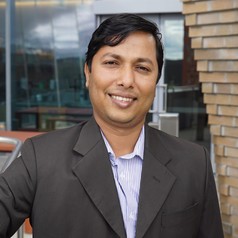
Sanjoy Paul is an Associate Professor at the University of Technology Sydney (UTS) Business School, specializing in supply chain management and operations research. He holds roles as Associate Editor of Business Strategy and the Environment and Global Journal of Flexible Systems Management . His research focuses on supply chain resilience, risk modeling, and sustainable practices, with applications to global disruptions like pandemics and IT outages. Paul has published in top-tier journals such as the European Journal of Operational Research and secured grants from government bodies including the Department of Defence. Education and Career: Prior to UTS, he worked at RMIT University and Bangladesh University of Engineering and Technology. He holds a PhD from UNSW, recognized with the Stephen Fester Prize for outstanding thesis. His career spans academic roles from Lecturer (2017) to Senior Lecturer (2019) before his current position since 2023. Research Contributions: Paul’s work bridges theoretical models and real-world applications, including recovery frameworks for supply chains during crises and strategies for sustainable practices in post-pandemic contexts. He frequently advises media on supermarket pricing, supply chain disruptions, and business strategies, appearing in outlets like The Guardian and ABC News . Awards and Recognition: His honors include the ASOR Rising Star Award, Research with Relevance Award, and inclusion in the top 2% global scientists (2020–2023). He has contributed to policy debates on supermarket competition, EV market dynamics, and Australia’s industrial strategies.
Kevin Kircher is an Assistant Professor of Mechanical Engineering at Purdue University's West Lafayette School of Mechanical Engineering. He holds a PhD in Mechanical Engineering from Cornell University (2019). His research focuses on building electrification, grid integration of flexible loads, and advanced control strategies for energy systems. He leads the Kircher Research Group and is affiliated with Purdue's Center for High Performance Buildings. Key research areas include optimizing heat pump systems, model predictive control for HVAC, and mitigating grid strain through demand response. Recent work includes field studies on thermostat behavior, residential electrical infrastructure protection, and DC lighting systems for buildings. His contributions span 70+ peer-reviewed publications in journals like Applied Energy and Building and Environment , and conferences such as the International High Performance Buildings Conference. He has pioneered open-source tools like the BLDG toolbox and EDGIE simulation framework. Current projects address building-grid interactions, occupant behavior impacts, and decarbonization strategies for commercial/residential sectors. His work bridges mechanical engineering with data-driven control methodologies to advance sustainable energy systems.
Karen Marais is a Professor and Associate Head for Undergraduate Education in the School of Aeronautics and Astronautics at Purdue University. She holds degrees from the University of Stellenbosch (B.Eng., 1994), University of South Africa (B.Sc., 1997), and MIT (S.M., 2001; Ph.D., 2005). Her research focuses on safety and risk analysis, systems engineering education, and aviation policy, with a value-centric approach to system design. Notable achievements include a Best Paper Award at the 2006 Digital Avionics Systems Conference. Her research integrates control theory, environmental policy, and organizational behavior. Key areas include resilient system design, aviation environmental impact analysis, and policy frameworks for technology adoption. She leads the Virtual Reality Safety Systems (VRSS) lab, advancing safety protocols for urban UAS operations and extraterrestrial habitats. Publications emphasize systemic risk analysis, maintenance optimization, and aviation safety. Recent work explores 3D risk zones for drones, lunar habitat resilience, and cognitive biases in flight safety. She collaborates with NASA and industry on policy and technology transition challenges. Awards: Best Paper in Session (2006) Labs/Teams: Virtual Reality Safety Systems (VRSS) Lab Grants: Not explicitly listed Futuristic projects include spaceport site selection, digital twin applications, and construction safety in extraterrestrial environments.
Jin-Kyu Jung is a Professor at the School of Interdisciplinary Arts & Sciences, University of Washington Bothell, and an Adjunct Professor in the Department of Geography at the University of Washington (Seattle). His expertise spans urban geography, GIS, and community-based research. He holds a Ph.D. in Geography from SUNY Buffalo, alongside degrees in Urban Engineering and Urban Planning. Dr. Jung’s research focuses on critical GIS, geovisualization, and urban inequality. He integrates qualitative and quantitative methods to explore socio-spatial dynamics, particularly in marginalized communities. His work emphasizes participatory engaged research and community-based learning, aiming to bridge academic knowledge with real-world applications. He teaches courses on GIS, geovisualization, and urban planning, promoting student-centered and experiential learning. His recent projects include studies on smart cities in Seattle and climate change in the Ecuadorian Andes. He also serves as a Senior Research Fellow at SUNY Buffalo’s Center for Urban Studies. Dr. Jung’s publications span topics like GIS methodologies, urban policy, and child-centered spatial research. His teaching and research highlight interdisciplinary approaches to spatial justice and equitable urban development.
Giuseppe De Giacomo is a Professor of Computer Science at the University of Oxford's Department of Computer Science and a Governing Body Fellow at Green Templeton College. Previously, he held a Professorship at the University of Roma 'La Sapienza'. His research focuses on Knowledge Representation, Automated Planning, Reactive Synthesis, and Formal Verification, with notable contributions to LTLf-based systems and service composition. He leads the ERC Advanced Grant project WhiteMech, exploring self-programming mechanisms. His research interests span Artificial Intelligence, including formal methods for autonomous systems, temporal logic synthesis, and multi-agent systems. He serves on the Board of EurAI and chairs the steering committee of ESSAI. Notable awards include AAAI Fellow, ACM Fellow, and EurAI Fellow. Recent work emphasizes LTLf extensions, environment specifications in planning, and resilient manufacturing via Markov Decision Processes. He advises students like Christoph Weinhuber and collaborates on projects such as Digital Twin Composition in Smart Manufacturing. His publications explore topics like LTLf synthesis under unreliable inputs, temporal abstraction in planning, and ethical responsibility attribution in autonomous systems. Professional service includes Program Chair roles for ECAI 2020 and KR 2014, and contributions to conferences like IJCAI and ICAPS. His research bridges theoretical foundations with practical applications in AI and formal verification.
Dr. Evangelos Markopoulos is a Lecturer at the University College London School of Management, specializing in Knowledge & Innovation Management, Entrepreneurship, and Futuristic Interactive Technologies. He holds a PhD in MIS Project Management and has extensive industry experience with IBM, Siemens, and Bell Labs. His research focuses on integrating Digital Twins, Metaverse Applications, and ESG Compliance into organizational strategies. He has published 120+ papers and authored a book on Innovative Organizational Cultures. Notable achievements include a Clinton commendation and two Global Social Innovation Awards (HultPrize). His teaching emphasizes real-world industry collaboration through internships and competitions. Education: BSc Computer Science → MSc Computer Science/Artificial Intelligence → PhD MIS Project Management. He has taught at QMUL, UCL, Essex, and others. Research interests span Digital Transformation, Sustainable Leadership, and Gamification in Education. Current projects include VR safety training for maritime sectors and democratic innovation frameworks. Key Research Themes: ESG-SDGs Alignment, Metaverse in Maritime Training, Democratic Organizational Culture Student Impact: Mentored teams to global awards in social innovation Industry Collaboration: Founder of companies in Project Management, Enterprise Engineering, and Innovation Apps
Dr Aisha Sobey is a Postdoctoral Associate at Jesus College, University of Cambridge, and a Research Fellow and Research Program Coordinator at the Leverhulme Centre for the Future of Intelligence (CFI). Her interdisciplinary work critically examines power dynamics in digital technologies, with a focus on AI ethics, fat liberation, and the political economy of smart cities, bridging geography, human-computer interaction, and social justice frameworks. Her academic journey includes a BA from Queens University Belfast, an MPhil in International Relations and Politics from the University of Cambridge, and a PhD from Cambridge's Department of Architecture. Her doctoral research, conducted as the inaugural Lee Kuan Yew Scholar at Fitzwilliam College, analyzed Singapore's Smart Nation initiative through the lens of neoliberal-developmental governance. Sobey's research interrogates how digital systems enforce societal norms—particularly regarding body size and citizenship—while advocating for design justice. She pioneers critical analysis of anti-fat bias in AI, as demonstrated in her groundbreaking work on generative image models, and explores how smart city narratives privilege certain populations while marginalizing others. Her approach integrates queer and feminist scholarship to challenge techno-solutionism. Her publications reveal a consistent trajectory from smart city governance (2023) to contemporary AI ethics crises (2025), with increasing emphasis on embodied experiences and systemic discrimination. Key themes include the weaponization of data metrics, the construction of 'normate' bodies in generative AI, and the intersection of digital systems with healthcare decision-making. Her scientific awards include: Lee Kuan Yew PhD Scholarship (2018) Digital X Scholarship with the Norman Foster Foundation (2019) College Senior Scholarship for top performing PhD students at Fitzwilliam College (2020-2021) As Research Programmes Coordinator at CFI, Sobey directs the Blog, Research Ethics Committee, and chairs the Wellbeing, Inclusion, Diversity and Equity (WIDE) working group. She serves as a University of Cambridge Data Champion for ethical data handling and mentors through the SAH Summer School, demonstrating deep commitment to institutional change and widening participation in academia. She leads the Desirable Digitisation project at CFI, applying intersectional anthropology to AI design for sustainable futures. Her leadership in the WIDE group and creation of critical thinking resources for students on social media wellbeing exemplify her praxis-oriented approach to creating inclusive research ecosystems beyond traditional academic boundaries.
CHANG Ee-Chien is an Associate Professor in the Department of Computer Science at the School of Computing, National University of Singapore (NUS). He serves as the Lead Principal Investigator of the National Cybersecurity R&D Laboratory (NCL) and previously served as Deputy Director of the Center for Technology, Robotics, Artificial Intelligence and the Law (TRAIL) from 2019 to 2022. He also chaired the Joint Academic Committee for the Bachelor of Computing in Information Security program from 2016 until April 2023. Dr. Chang received his Ph.D. in Computer Science from New York University in 1998, following his M.Sc. and B.Sc. in Mathematics from the National University of Singapore in 1993 and 1991 respectively. He completed postdoctoral work with DIMACS at Rutgers University and NEC Labs America. His research focuses on information security, multimedia security, and their intersection. His work spans from foundational research in cryptographic techniques for noisy data and image watermarking to contemporary challenges in data privacy, cloud security, and adversarial machine learning. Dr. Chang has published extensively in top-tier security and computer science venues including CCS, EUROCRYPT, USENIX Security, and ACM Multimedia. Analysis of his recent publications reveals a strong emphasis on practical security solutions using hardware features like Trusted Execution Environments, innovative approaches to watermarking using generative models, and addressing emerging threats in machine learning systems. His work bridges theoretical cryptography with real-world security challenges, particularly in cloud infrastructure and privacy-preserving technologies. Active leadership in National Cybersecurity R&D Laboratory Extensive service on program committees for major security conferences Consultancy roles with Huawei, i-Sprint, and Singapore Accreditation Council Media commentary on cybersecurity issues for major Singaporean outlets Dr. Chang has mentored numerous research fellows and students who have gone on to academic and industry positions worldwide. His educational contributions include developing cybersecurity curriculum and innovative teaching methods such as penetration testing using real-world university applications. He has taught core security courses including CS2107 Introduction to Information Security continuously since 2014.
Rem Collier is an Associate Professor in the School of Computer Science at University College Dublin (UCD). He holds a PhD in Computer Science from UCD (2001) and has held academic roles including Assistant Lecturer (2004), College Lecturer (2005–2018), and his current position since 2018. His research focuses on Multi-Agent Systems (MAS), Agent-Oriented Software Engineering (AOSE), Hypermedia MAS, Digital Twins, and applications in smart agriculture and urban simulation. He leads the CONSUS project (2022–2024) and collaborates on CAMEO (2021–2024). Education: BSc (Pure/Applied Mathematics, University of Bristol, 1994), MSc (Computation, UMIST, 1995), MPhil (UMIST, 1996), PhD (UCD, 2001). Research interests include Agent Factory Framework, ASTRA programming language, and integrating MAS with microservices. Notable achievements include the CIA System Innovation Award 2003 (ACCESS architecture) and Best Paper Awards at EMAS2020 and Mobile Learning 2006. His work spans over 150 peer-reviewed publications and grants such as HOTAIR (2004–2005) and SIFT (2008–2011). Teaching includes modules on Multi-Agent Systems, Distributed Systems, and Security. He has coordinated courses at UCD and the Joint UCD-Fudan program in Beijing and Sri Lanka. Labs/Teams: Active in Hypermedia MAS Simulation, collaborating on projects like CONSUS and CAMEO, emphasizing smart agriculture and distributed knowledge graphs.
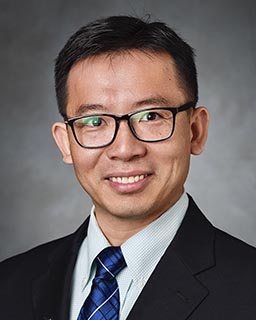
Jun Wang is Assistant Professor and Director of the Mississippi Transportation Research Center in the Department of Civil and Environmental Engineering at Mississippi State University. He holds a Ph.D. in Civil Engineering from McMaster University, with research interests spanning smart construction, sustainable infrastructure, human-robot collaboration, and construction safety. Awarded the prestigious NSF CAREER grant ($557,391) for VR and AI research in construction robotics, he leads projects sponsored by NSF, DOT, CDC, and industry partners. Key research areas include: Virtual Reality and AI for safety training Human-in-the-loop cyber-physical systems Sustainable infrastructure development Construction automation technologies His recent publications explore drone systems for marine debris management, VR safety training, AI-powered PPE detection, and digital twin frameworks, with work appearing in leading engineering and computing venues.
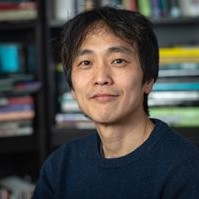
Marc Pomplun is a Professor and Chair of the Department of Computer Science at the University of Massachusetts Boston, and Director of the Visual Attention Laboratory. His research focuses on analyzing, modeling, and simulating human vision through eye-tracking, cognitive modeling, and interdisciplinary applications in education, neuroscience, and human-computer interaction. Education: Ph.D. in Cognitive Science (University of Bielefeld, Germany, 1998) Diploma Thesis in Computer Science (University of Bielefeld, 1994) Research Interests: Marc’s work spans visual attention, eye movements, dyslexia, human-computer interaction, and computational modeling of vision. He uses eye-tracking to study reading, memory, and visual search, and applies findings to assistive technologies and educational tools. Publications & Trends: His recent work includes AI-driven medical imaging for Alzheimer’s and cancer detection, gaze-based biometric identification, and adaptive learning systems for neurodiverse learners. He has published extensively in journals like Vision Research , PLoS ONE , and Journal of Vision . Scientific Awards: No specific awards are listed in the provided text. Advising & Grants: While no specific students are named, Marc has mentored numerous researchers and received funding for projects like GeoGaze, which integrates gaze data into geoscience education for neurodiverse learners. Labs & Teams: He directs the Visual Attention Laboratory at UMass Boston, focusing on interdisciplinary research in vision science and technology.