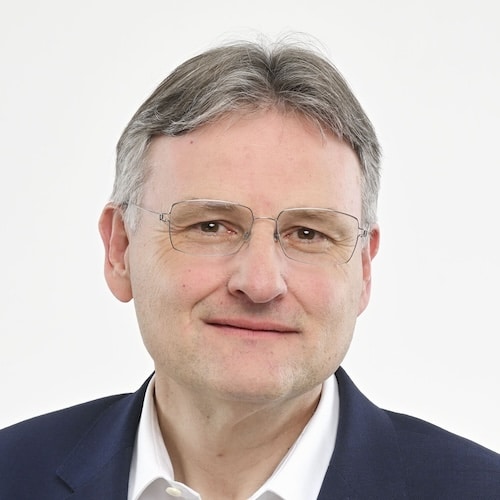
Juan C. Vasquez is a Professor at Aalborg University's Faculty of Engineering and Science, Department of Energy Technology, and Co-Director of the Center for Research on Microgrids (CROM). He holds a PhD in Automatic Control from the Technical University of Catalonia and has held academic positions at Aalborg University since 2011. His research focuses on microgrid control, renewable energy integration, power electronics, and smart grids. He has supervised numerous PhD and master’s students and leads projects funded by EU and national grants. Education: BS in Electronics Engineering (Autonomous University of Manizales, Colombia, 2004); PhD in Automatic Control (Technical University of Catalonia, Spain, 2009). Research interests include operation and control strategies for AC/DC microgrids, maritime microgrids, energy management systems, and IoT integration in smart grids. He has authored 648+ publications, including highly cited works, and received awards like the Young Investigator Award (2019) and Clarivate’s Highly Cited Researcher status since 2017. Key projects: EU-DREAM (Digital Services for Energy Transition), NEST (National Research Infrastructure), and ActRes (Resilience in Energy Systems). Collaborations include Virginia Tech and Ritsumeikan University.
Mehdi Mehrali serves as a Senior Researcher in the Department of Civil and Mechanical Engineering at the Technical University of Denmark (DTU), Denmark. His research spans advanced materials engineering with focus on sustainable construction and biomedical applications. Research Focus: Dr. Mehrali's work centers on geopolymer engineering , hydrogel development , and nanomaterial reinforcement for 3D-printed construction. His fingerprint reveals expertise in biomaterials (39%), graphene (45%), and phase change materials (27%), contributing to UN Sustainable Development Goals through sustainable infrastructure solutions. Publication Trends: Recent work demonstrates convergence of civil engineering with AI-driven material design (e.g., machine learning for geopolymer extrusion) and biomedical applications (e.g., antibacterial hydrogels). His 2025 publications show strong emphasis on multifunctional composites with self-sensing capabilities and robotic integration. Awards & Recognition: 6 similar researcher profiles identified in global networks 5 Mendeley readers for recent work Featured in 3 X (Twitter) discussions Supervision & Grants: Actively supervises three PhD candidates on 3D-printed construction materials while collaborating on major projects including COOLBATTERY (€2.1M) and RESTORATIVE grid-scale energy storage. His research attracts significant downloads (321 for hydrogel review) and citations (30+). Laboratory Focus: Leads research in Materials and Surface Engineering at DTU's Produktionstorvet facility, specializing in printable geopolymers, hydrogel robotics, and cement-based smart materials for sustainable construction.
Professor Poul Alberg Østergaard is affiliated with Aalborg University's Department of Sustainability and Planning, focusing on sustainable energy planning and smart energy systems. His work aligns with UN Sustainable Development Goals, emphasizing energy transition, renewable integration, and decarbonization strategies. Professor in Energy Planning Expertise: Energy Systems Analysis, District Heating, Renewable Energy Transition Key Projects: Sustainable Heating Roadmaps, Municipal Energy Planning (e.g., Aalborg 2020-2050 Strategy) Research interests include 100% renewable energy systems, smart grids, energy storage, and policy frameworks. He has contributed to over 287 publications and 25 projects since 1996, with notable work on island energy transitions, hydrogen pathways, and district heating optimization. Media engagements highlight his role as an advisor on energy pricing, district heating dynamics, and nuclear energy debates. He organizes international conferences like the Smart Energy Systems series and collaborates globally on energy policy and modeling tools like EnergyPLAN. Labs/Teams: Member of the Sustainable Energy Planning Research Group and contributor to initiatives like the Smart Island Energy Systems (SMILE) project.
Henrik Wenzel is a Professor at the Department of Green Technology, University of Southern Denmark, and a key figure in the SDU Climate Cluster. His work focuses on integrating renewable energy systems, carbon management, and sustainable resource recovery. Active in projects like FLEX-ENVIRONMENT (smart electrolysis systems) and CARMA-Green Fuels (carbon management) Contributions to Power-to-X technologies, biogas optimization, and circular economy frameworks Research trends from his publications include: Life Cycle Assessment (LCA) of emerging energy systems Optimization of hydrogen production and regional energy parks Addressing water-conscious energy production and carbon capture challenges Scientific awards: SDU Innovation Prize (2022) TEK Innovation Prize (2022) Fyens Stiftstidendes Forskerpris (2015) Current supervision includes MSc theses on biomass resources for carbon management and global Power-to-X collaboration.
Thomas Ebel is Professor and Head of the Centre for Industrial Electronics at the University of Southern Denmark (SDU) , Institute of Mechanical and Electrical Engineering. A leading expert in power electronics, high-voltage engineering and capacitor technology, he directs large, multi-partner research projects and teaches/supervises at both graduate and PhD levels. Education & Career Path Prof. Ebel holds the academic title Dr. rer. nat. and has been appointed full Professor at SDU. He concurrently serves as Head of Section at the Centre for Industrial Electronics, orchestrating cross-disciplinary research teams and infrastructure. Research Interests Power Electronics & Power Conversion: advanced converter topologies, WBG devices (GaN, SiC), high-frequency magnetics, grid-forming control. Dielectric Materials & Capacitors: polymer and hybrid nanocomposite dielectrics, self-healing metallized film capacitors, aluminium electrolytic capacitors, lifetime modelling and reliability. High-Voltage Engineering & Breakdown Physics: breakdown mechanisms in nanocomposites, corona and partial discharge, insulation coordination. IoT & Data-Driven Monitoring: real-time condition monitoring, digital twins, data-driven RUL estimation for power components. Publication Trends Across 133 research outputs (2018-2025) the dominant themes are (i) construction and reliability of 700 V-class aluminium polymer electrolytic capacitors, (ii) GaN-based power converter optimisation, (iii) hybrid AC/DC microgrid control and harmonic mitigation, and (iv) nanocomposite dielectrics for next-generation capacitors. The 15 most recent articles (2025) reinforce these directions while adding socio-technical energy analytics and green-vehicle powertrains. Scientific Awards Tek Innovation Prize 2023 – awarded for outstanding contributions to power electronics research and industrial innovation. Advising & Funding Prof. Ebel currently supervises ~10 PhD candidates and post-docs including L. Tavares, M. A. Khan, R. Maheshwari, S. Mateen, A. N. Pinky and others. He is Principal Investigator or Head Coordinator of six active projects (2024-2027) valued at >€8 M, spanning ultra-high-efficiency drives, hydrogen-PtX converters, self-healing capacitors and hybrid power-plant concepts. Laboratory & Teams He heads the High-Voltage Power Electronics Laboratory at SDU, equipped with 700 V/200 A capacitor test rigs, GaN/SiC converter prototyping benches, and environmental chambers for accelerated ageing studies. The centre collaborates with 20+ industrial partners and coordinates the international IEA Wind Task 50 on hybrid power plants.
Kirsten Gram-Hanssen is a Professor at Aalborg University, specifically within the Department of Construction, Urban and Environmental Engineering at the Faculty of Engineering and Science. Her academic work is centered in the Section for City, Housing and Property, where she leads the Research Group for Sustainable Cities and Everyday Practice. She maintains an active research profile with numerous publications and projects focused on sustainable energy systems. Her educational background is not explicitly detailed in the provided text, but her PhD specialization in socio-technical analyses forms the foundation of her interdisciplinary approach connecting social sciences with engineering perspectives on sustainability. Gram-Hanssen's research interests focus on housing, everyday life, and consumption from a climate and energy perspective . She examines differences in household consumption practices through a practice-theoretical lens that emphasizes routines and technical infrastructures. Her work demonstrates that social organization of everyday life matters as much for home energy consumption as the technical efficiency of buildings and appliances. She also investigates how new technologies like private solar panels and smart home controls affect both energy consumption and daily life practices. Her research has significant implications for sustainable transitions and energy policy. Her recent publications show a clear trend toward addressing the energy crisis, sustainable consumption practices, and the intersection of technology with everyday life. The research spans domains including housing, food, and mobility, with a strong focus on practical solutions for energy transition and sustainability challenges. Her work increasingly addresses inequality, ethics, and policy implications of energy transitions. Active Principal Investigator on multiple major research projects including SGD: Shared Green Deal (2022-2027), FoMoHo: Food, Mobility and Housing in the Sustainable Transition of Everyday Life (2021-2025), and GECKO: Building greener societies (2021-2024) Frequent media commentator on energy and sustainability issues, with 197 media appearances documented Extensive research dataset creation including the eCAPE energy crisis interviews (2024) and smart home interviews (2022) Regular contributor to international conferences and workshops on sustainable consumption and energy practices Professor Gram-Hanssen has supervised numerous PhD students (9 documented) and actively participates in the academic community through peer review, conference organization, and editorial work. Her research group, the Research Group for Sustainable Cities and Everyday Practice, works at the intersection of social science and engineering to address sustainability challenges through understanding everyday practices and their relationship to energy systems.
Diego F. Aranha is an Associate Professor in the Department of Computer Science at Aarhus University . His research focuses on cryptographic systems, cybersecurity, and privacy-preserving technologies with applications in voting systems, post-quantum cryptography, and secure computation. He has contributed extensively to homomorphic encryption, secure multiparty computation (MPC), and cryptanalysis of cryptographic implementations. Key projects include: MPCC (2025-2028) : Multi-Party Computation in the Confidential Cloud SCI (2024-2027) : Secure Computation Infrastructures for the Retail Industry RENAIS (2021-2026) : Residue Number Systems for Cryptography His work emphasizes practical efficiency and formal verification of cryptographic protocols. Recent publications highlight advancements in lattice-based cryptography, secure voting schemes, and mitigating side-channel vulnerabilities in post-quantum algorithms. He actively collaborates on open-source cryptographic libraries and standards, with a focus on bridging theoretical security and real-world implementation challenges.
Maurizio Teli is an Associate Professor in the Department of Sustainability and Planning at Aalborg University, part of The Technical Faculty of IT and Design. His work focuses on participatory design, sustainable development, and computing for social good. He coordinates major projects such as Reworlding (Horizon Europe, 2024–2027) addressing socio-environmental challenges and EDUS (ERASMUS+, 2023–2026) developing training methodologies for sustainable education. Teli is affiliated with the AI for the People Centre, Danish Centre for Health Informatics, and Green Societies, emphasizing interdisciplinary collaboration. His research spans participatory design methodologies, sustainability transitions, and the role of technology in fostering commoning practices. Notable contributions include exploring non-human stakeholders in sustainable development and infrastructuring public history. Teli has authored over 70 publications, including book chapters and peer-reviewed articles in journals like interactions and Radiography . Advising and grants include leadership roles in 7 active projects totaling €10M+ funding. His work bridges academia and practice, with datasets like 'Community Radio Guidelines' (Zenodo, 2019) promoting accessible design practices. Teli’s labs and networks focus on digital sustainability, healthcare informatics, and participatory urban planning.
Andreas Kugi is the Scientific Director at the AIT Austrian Institute of Technology and a full professor of Complex Dynamical Systems at TU Wien (Vienna University of Technology) in the Faculty of Electrical Engineering and Information Technology, Institute of Automation and Control. He has held significant academic and leadership roles across Europe, including professorships at Saarland University and offers from TU Dresden and KIT. His research focuses on the modeling, control, and optimization of complex dynamical systems , with strong applications in mechatronics, robotics, and industrial automation . He has led major research centers such as the Christian Doppler Laboratory for Model-Based Process Control in the Steel Industry and the Center for Vision, Automation & Control at AIT. His work bridges theoretical control design and real-world industrial implementation. The recent publications reflect a consistent focus on nonlinear, hybrid, and distributed parameter systems , with applications in robotics, manufacturing, energy, and process industries. His research integrates advanced control theory with practical engineering challenges, emphasizing real-time optimization, robustness, and system efficiency. Scientific Awards: Mechatronic Systems Outstanding Investigator Award (IFAC, 2022) Goldene Stefan-Ehrenmedaille (OVE, 2023) 16 best paper awards Andreas Kugi has supervised over 50 completed PhD dissertations and has been deeply involved in research leadership, including serving as Editor-in-Chief of Control Engineering Practice (2010–2017) and Vice President of the OVE Austrian Electrotechnical Association (2017–2023). He has secured and led numerous research grants, particularly through industrial collaborations in automation and process control. He leads and contributes to major research initiatives, including the Center for Vision, Automation & Control at AIT and the Christian Doppler Laboratory , fostering interdisciplinary teams focused on industrial digitalization and smart systems.
Peter Bach Andersen serves as Head of Section and Senior Researcher at the Department of Wind and Energy Systems, Technical University of Denmark (DTU). Based at Elektrovej 329A in Kgs. Lyngby, he leads research in electric vehicle integration and prosumer energy systems with an ORCID identifier 0000-0002-5202-3584. His work spans grid services, battery storage, and smart charging infrastructure within DTU's EV Lab ( www.evlab.dk ). Andersen's research focuses on electric vehicle grid integration , specializing in charging infrastructure planning, battery energy storage systems, and virtual power plant concepts. His fingerprint analysis reveals dominant expertise in Electric Vehicle Engineering (100%), Battery Engineering (13%), Ancillaries (12%), and Power Engineering (11%). Current projects emphasize flexibility quantification, grid service delivery through EV clusters, and Nordic grid characteristics. His work contributes significantly to UN Sustainable Development Goals related to clean energy and sustainable cities. His publication portfolio shows strong trends toward grid-interactive EV systems with recent emphasis on conditional connection agreements, fast-charging urban impacts, and data-driven battery health prognosis. The research demonstrates increasing focus on practical implementation challenges and market integration aspects of vehicle-grid systems. Andersen actively supervises four PhD students (Menchaca, Striani, Unterluggauer, Sevdari) across projects including charging infrastructure planning, EV clustering methods, and urban charging infrastructure impacts. He leads the FLOW project (2022-2026) investigating flexible energy systems for optimal EV integration while participating in multiple EU-funded initiatives. His research group maintains strong industry connections through DTU's EV Lab, focusing on real-world validation of grid services using commercial EVs and chargers.
Per Lynggaard is a Professor of Electronics at the Technical University of Denmark (DTU) , leading the B.Eng. program in Electronics. Previously, he held an Associate Professor role at Aalborg University, combining academic excellence with a robust industrial career in technical-scientific research and development. Education: M.Sc. in Electrical Engineering and Information Technology (EE and IT) Ph.D. in Electronics from Aalborg University Research Interests: Focus on Integrated Circuit Design, Wireless Sensor Networks (WSN), Machine Learning, IoT, and Smart City Technologies . His work emphasizes energy-efficient systems, cybersecurity in IoT, AI-driven interference mitigation, and sustainable energy harvesting solutions. He has contributed to UN Sustainable Development Goals through projects addressing smart infrastructure and environmental monitoring. Projects & Collaborations: Leads and participates in EU-funded initiatives such as InnoTech (2023–2025) for green transition solutions and TransportTech (2023–2026) for Industry 4.0 logistics. Active in cybersecurity research via projects like Jamming Against Critical Wireless Communication , aiming to protect critical infrastructure. Awards: Recognized with multiple honors and rewards during his industrial career, though specific names are not listed. His work has been cited widely, with notable impact in IoT security and energy-efficient systems. Advising & Grants: Supervises Turnip T.N. in a PhD project on 6G security protocols. Engaged in securing funding for projects like F2D2: The Community for Dynamic Data (2021–2030), focusing on dynamic data systems and cybersecurity. Labs & Teams: Collaborates in interdisciplinary teams such as the InnoTech TaskForce and F2D2 Community , advancing IoT and AI integration. His research bridges academia and industry, with outputs spanning smart cities, healthcare IoT, and sustainable energy systems.
Mohammad Hassan Khooban is an Associate Professor at the Department of Electrical and Computer Engineering, specializing in Electrical Energy Technology at Aarhus University . His research emphasizes advanced control strategies for power systems, renewable energy integration, and smart grid technology. While specific educational background details are not explicitly stated, his work demonstrates expertise in power electronics, control systems, and machine learning applications. His projects include pioneering initiatives like QuantumEcoCircuits (2024–2027) and Smart Synergy Mechanism (2023–2025), focusing on sustainable energy systems, electric vehicle charging dynamics, and resilient grid operations. His research interests span adaptive control methodologies, grid resilience under cyber threats, and the optimization of energy storage systems. He has contributed to peer-reviewed journals such as IET Renewable Power Generation and IEEE Transactions on Smart Grid , exploring topics ranging from PID controllers to fractional-order sliding mode control for unmanned aerial vehicles. No scientific awards are listed, but his work is supported through grants and collaborative projects. He is actively involved in lab initiatives related to power systems and renewable energy technologies.
Kasper Jessen is an Assistant Professor at Aalborg University's Faculty of Engineering and Science, affiliated with the Esbjerg Energy Section. He holds a Master's in Sustainable Energy Engineering (Offshore Energy Systems, 2018) and a Bachelor's in Energy Engineering (Dynamic Systems, 2016). His research focuses on sustainable energy technologies with emphasis on power electronics, microgrid stability, and solid oxide electrolysis systems. Primary research domains include: Design and control of DC microgrid infrastructure Robust power conversion for renewable energy systems Real-time simulation of electrochemical processes Advanced control algorithms for power-to-X applications Dynamic modeling of solid oxide electrolyzers His recent publications (2023-2024) demonstrate strong focus on microgrid stability solutions, real-time emulation of electrolysis systems, and advanced control schemes for power converters. Research consistently addresses renewable integration challenges through experimental validation and simulation. Currently leads or contributes to several major projects: Control and Protection of DC Microgrids (PI, ongoing since 2019) BlueBARGE : Renewable electricity for maritime applications (EU Commission, 2024-2026) Robust And Dynamic Electrolysis for Power-to-X (2024-2027) EMPOWER : Sustainable batteries for zero-emission transport (2022-2025) DynEfuel : Dynamic eFuel production technology (2023-2025)
Peyman Afzali Gorouh is a Postdoctoral Researcher in the Applied Power Electronic Systems group within the Faculty of Engineering and Science at Aalborg University, Denmark. His research focuses on developing innovative models for energy communities, smart grids, and renewable energy integration. Dr. Afzali's research interests span power engineering, smart grid technologies, renewable energy systems, and energy communities. His work particularly emphasizes prosumer economics, peer-to-peer energy trading, risk modeling in power systems, and energy democracy frameworks. He has developed novel approaches for optimizing energy communities while considering socio-economic-environmental factors, demand response, and uncertainty management. His recent publications (2020-2024) demonstrate a consistent focus on energy community modeling, with particular emphasis on peer-to-peer trading mechanisms, risk-constrained optimization, and multi-objective planning. His work bridges technical power system challenges with socio-economic considerations, creating integrated models that address both engineering and human aspects of modern energy systems. Dr. Afzali maintains an active research profile with numerous publications in high-impact journals including IEEE Transactions on Engineering Management, Energy and Buildings, Applied Sciences, and Sustainable Cities and Society. His research shows strong international collaboration, particularly with researchers from Iranian institutions.
Niels Aage is an Associate Professor in the Department of Civil and Mechanical Engineering at the Technical University of Denmark (DTU). His research focuses on topology optimization, biomechanics, and multiphysics modeling, with applications in acoustic devices, biomedical implants, and microelectromechanical systems (MEMS). He holds roles such as Vice President of the International Society for Structural and Multidisciplinary Optimization (2023–2027). Education and Professional Background: Conducted a 5-month research visit at the University of Colorado, Boulder (USA) in 2010. Specializes in giga-scale numerical modeling, finite element methods, and topology optimization algorithms. Research Interests: Develops novel methods for topology optimization of fluidic, thermal, and acoustic systems. Explores applications in patient-specific spinal implants, metamaterials with vibroacoustic bandgaps, and nonlinear dynamic substructuring. His work integrates machine learning and reduced-order modeling for efficient simulation. Publications: Over 100 peer-reviewed articles, including recent contributions on connectivity promotion in topology optimization (2025), vibroacoustic metamaterial design (2025), and anatomically conforming spinal fusion cages (2024). Research emphasizes high-resolution modeling and bridging computational design with additive manufacturing. Scientific Awards: ISSMO Haftka Young Investigator Award (2021), Equinor Prize 2020, and Hyperion Innovation Excellence Award (2017). Recognized for contributions to structural optimization and computational mechanics. Advising and Grants: Supervises multiple PhD projects, including work on vibroacoustic shape optimization, quantum-opto-mechanical systems, and smart hearing aid modeling. Engages in collaborative projects funded by industry and academia. Labs/Teams: Collaborates with DTU’s Solid Mechanics group and industry partners on projects involving topology optimization, multiphysics simulation, and biomedical engineering. Active in international conferences and serves on editorial boards.