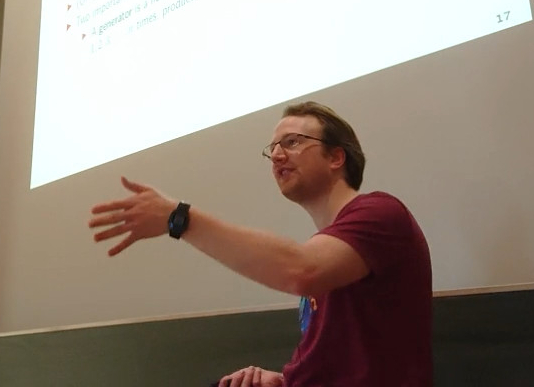
Pol Van Aubel is a Lecturer in the Digital Security group at Radboud University's Institute for Computing and Information Sciences in Nijmegen, Netherlands. His research focuses on critical infrastructure security, particularly privacy implications in smart metering and industrial control systems. He has contributed to projects like the Charge & Go EV-charging infrastructure initiative and the Betuwe Energie Samenwerking energy sustainability project. Teaching roles include courses on网络安全, operating systems security, and network security within Computing Science programs. Notable publications address privacy risks in smart meter data compression and PUF-based hardware security. His work combines practical security solutions with theoretical advancements in privacy-preserving technologies.
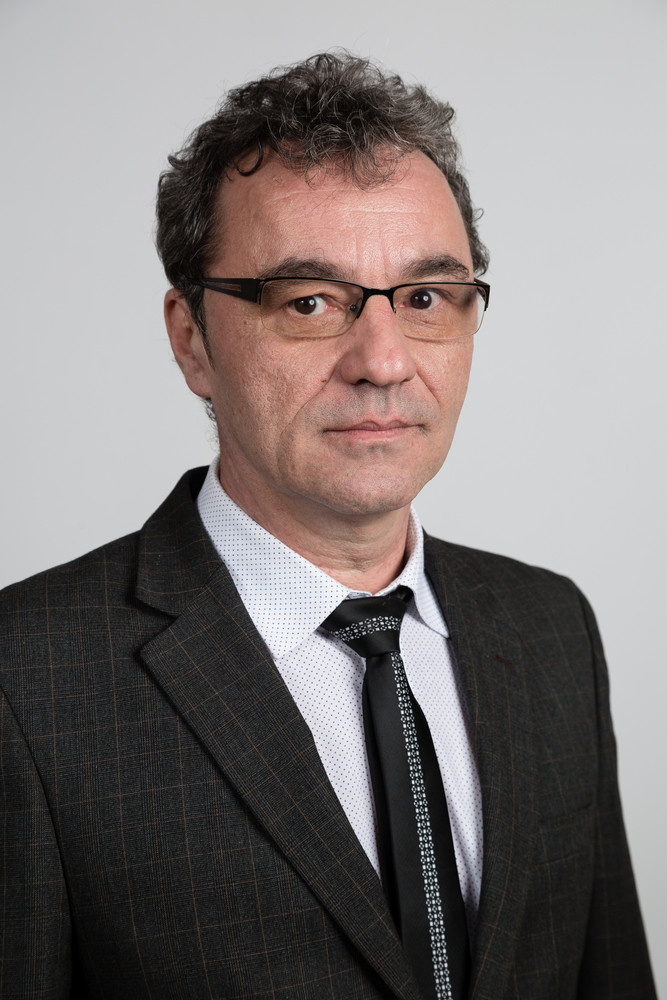
Pertti Pakonen is a University Lecturer at Tampere University's Faculty of Information Technology and Communication Sciences, Department of Electrical Engineering. His research focuses on power quality, partial discharge analysis, high voltage systems, and smart grid technologies. He has contributed extensively to understanding grid stability, electromagnetic compatibility, and renewable energy integration. Key research areas include partial discharge diagnostics in cables and transformers, power quality monitoring in distributed networks, and the impact of emerging technologies like electric vehicle charging stations and LED lighting on grid performance. His work emphasizes data-driven methods for fault detection, predictive maintenance, and grid optimization. Recent publications highlight advancements in HVDC/HVAC grid qualification, machine learning for load control detection, and synchronization challenges in power quality data. His research bridges theoretical analysis with practical applications in industrial and urban electrical systems. Mr. Pakonen's work has addressed challenges in rural grid management, including reserve power solutions and cabling practices. He collaborates on interdisciplinary projects involving energy economics, smart metering systems, and grid-industry interactions.
Ghanshyamsinh Gohil is an Assistant Professor in the Department of Electrical Engineering at the University of Texas at Dallas (UT Dallas), affiliated with the Erik Jonsson School of Engineering and Computer Science. His research focuses on advanced power electronics systems, including medium-voltage (MV) power conversion, smart grid technologies, and renewable energy integration. He leads the Power Electronics Lab, which develops innovative solutions for electric mobility, grid interface systems, and high-efficiency energy conversion. Research interests include the characterization of silicon carbide (SiC) devices for MV applications, medium-frequency isolated converters, and electromagnetic emission mitigation. His work addresses challenges in extreme fast charging for electric vehicles, microgrid management, and DC grid architectures. The lab also explores multi-objective optimization of power electronics systems and harmonic filter design for high dv/dt converters. Dr. Gohil’s publications span topics such as modular multilevel converters, dual active bridge (DAB) topologies, and distributed control algorithms for microgrids. His research emphasizes practical implementation, with a focus on real-time grid-edge systems and energy management solutions compliant with utility standards. Though no scientific awards are explicitly mentioned, his contributions to power electronics and renewable energy integration reflect a strong academic and applied research profile. Advising and grants details are not provided in the available text, but his lab’s active projects suggest ongoing collaborative efforts in industry and academia. The Power Electronics Lab at UT Dallas serves as a hub for interdisciplinary research, bridging electrical engineering with smart energy systems. Key projects include the design of grid-forming energy routers, MV DC grid interfaces, and intelligent fault current limiters to enhance grid reliability and resilience.
Prof. Marius Marcu is a full Professor and Department Manager at the Department of Automation, Computers, Electrical and Power Engineering within the Faculty of Mechanical and Electrical Engineering at the University of Petroșani. His work focuses on energy security, power systems resilience, and automation technologies. He leads the Electroenergetics Laboratory and has contributed extensively to modernizing electrical installations and energy efficiency practices. His research emphasizes critical infrastructure protection, grid stability, and the integration of renewable energy sources. Notable projects include risk assessments for high-voltage substations and the development of meditation-based brain-computer interface applications. He has also published extensively on energy policy and strategic management, advocating for institutional frameworks to enhance national energy security. Prof. Marcu’s technical contributions span power electronics, industrial automation, and safety standards compliance. His work bridges theoretical advancements with practical implementations in mining, agriculture, and smart grid technologies. He maintains active collaborations across Europe, addressing transnational energy challenges and cybersecurity for power infrastructure.
Maria Efpraxia is an Associate Professor at the Technical University of Crete within the School of Chemical and Environmental Engineering . Her academic career focuses on the intersection of environmental law, remote sensing technologies, and sustainable energy policies across the European Union. Develops legal frameworks for emerging technologies Specializes in EU environmental compliance Conducts interdisciplinary research on energy-landscape interactions Her publications demonstrate a strong emphasis on balancing technological advancements with regulatory requirements: 2025: Drone use in disaster management and privacy implications 2021: Remote sensing data protection in Greece 2020: Natura 2000 forest conservation 2015: Urban gardens for energy poverty mitigation
Dr. Katarzyna Mazur is a Senior Lecturer at the Chair of Cybersecurity and Computer Linguistics, Institute of Computer Science and Mathematics, within the Faculty of Mathematics, Physics and Computer Science at Maria Curie-Skłodowska University in Lublin, Poland. Her academic work focuses on practical cybersecurity education through hands-on CTF methodologies and security modeling for both networked systems and critical infrastructure. Current position since at least 2014 Active research in security metrics and energy-efficient data center security Developed innovative teaching approaches for web application security Contributed to IEEE/MDPI/Springer-indexed publications Research interests span cybersecurity , IoT security , and security modeling with specific focus on attack surface quantification , secure sensor networks , and energy-aware security solutions . Her publications from 2014-2022 reveal consistent work on security-performance tradeoffs in distributed systems. Recent publications show increasing emphasis on pedagogical innovation using capture-the-flag competitions alongside traditional research in critical infrastructure protection . Key technical areas include LoRa communication security , DDoS defense mechanisms , and access control modeling . Available contact: katarzyna.mazur@mail.umcs.pl . Office located at room 412, 4th floor, Institute of Computer Science, 9 Akademicka St, Lublin. Offers consultations by prior electronic arrangement.
Dr. Matthew McKague is a Senior Lecturer in the School of Computer Science at Queensland University of Technology (QUT), Faculty of Science. His interdisciplinary research bridges computer science, cryptography, and quantum computing, with a strong focus on secure and privacy-preserving technologies for decentralized systems. Research Interests: Cryptography and Post-Quantum Cryptography Quantum Self-Testing and Quantum Computing Blockchain and Decentralized Ledgers Network and IoT Security Privacy-Preserving Protocols Secure Critical Infrastructure (e.g., Smart Grids) His recent publications highlight a shift toward practical applications of post-quantum cryptography in blockchain systems, emphasizing scalability, confidentiality, and security assurance. His work frequently appears in journals such as IEEE Access, Cryptography, and Sensors, covering both theoretical foundations and real-world implementations in energy markets, IoT, and forensic systems. Scientific Awards: No awards are listed in the provided text. Advising and Grants: Matthew has successfully supervised multiple PhD students to completion, with research topics including zero-knowledge contracts, blockchain security in electricity markets, anonymity in cryptocurrencies, and SDN security. While specific grants are not mentioned, his research themes—such as blockchain, post-quantum security, and smart grid cybersecurity—suggest involvement in funded projects related to national infrastructure and cybersecurity innovation. Labs and Teams: Though specific lab affiliations are not detailed, his work at QUT is likely connected to cybersecurity and quantum computing research groups within the School of Computer Science, potentially collaborating with interdisciplinary teams in engineering and information systems.
Ponnusamy Vijayakumar is a researcher affiliated with SRM University in Kanchipuram, India, within the College of Engineering and Department of Electrical & Computer Engineering . His work spans interdisciplinary domains including Machine Learning , IoT Security , and Deep Learning , with additional expertise in Blockchain , Augmented Reality , and Cyber-Physical Systems . Research Interests : Vijayakumar focuses on applying advanced machine learning techniques to real-world problems such as energy sector optimization , food safety , and medical diagnostics . His recent work explores federated learning for secure IoT environments, predictive analysis using stochastic methods, and computer vision for rehabilitation and security applications. Article Trends : Over the past five years, he has contributed to IoT security through anomaly detection frameworks, augmented reality for plant disease detection, and blockchain for credentialing systems. His publications also address deep learning applications in agricultural quality analysis and medical imaging for musculoskeletal disorders. Collaborations : Vijayakumar has collaborated extensively with experts in Serbia, India, and Germany, particularly with researchers like Nemanja Zdravkovic , Aman Kumar Mishra , and Sowmya Natarajan , across conferences such as BISEC and journals like IEEE Access .
Johannes Saurer is a Professor at the Faculty of Law , University of Tübingen, specializing in Public Law, Environmental Law, and Comparative Federalism. His work focuses on the legal frameworks governing energy transitions, climate policy, and European Union regulatory mechanisms. Born in 1975, he holds a Dr. iur. from the University of Bayreuth (2004) and an LL.M. from Yale University (2007). Appointed as a full Professor in 2013, initially at Bielefeld (2013-2014) and currently at Tübingen since 2014. Research interests include energy transition law , EU environmental governance , climate litigation , and federal legal systems . Recent research emphasizes the transformation of EU legal instruments (2023-2026 DFG project), analyzing shifts from directives to regulations and delegated acts. His publications span comparative studies of German, US, and European climate laws , with notable work on cooperative federalism and renewable energy governance . Articles frequently appear in journals like Transnational Environmental Law , Die Verwaltung , and Natur und Recht , highlighting trends in environmental planning , judicial review , and administrative accountability .
Qian Cheng is a Professor at the National University of Defense Technology, specifically affiliated with the College of Electronic Science in Changsha, China. With an extensive publication record spanning from 2013 to 2025, Dr. Cheng has established a significant research presence across multiple interdisciplinary domains. Their work bridges theoretical computer science with practical applications in agriculture, medical imaging, and remote sensing technologies. Dr. Cheng's research primarily focuses on the intersection of machine learning, computer vision, and domain-specific applications. Their work demonstrates particular expertise in applying advanced computational techniques to solve real-world problems in precision agriculture, where they've developed innovative approaches for crop monitoring using UAV technology and spectral analysis. In medical imaging, Dr. Cheng has contributed to photoacoustic imaging techniques for bone characterization and ophthalmic disease diagnosis. The research portfolio also includes significant contributions to autonomous systems, including UAV path planning and autonomous driving technologies. Analysis of Dr. Cheng's recent publications (2023-2025) reveals a strong trend toward interdisciplinary applications of artificial intelligence, with particular emphasis on transfer learning approaches that can adapt models across different domains and conditions. The research consistently demonstrates practical implementation value, with numerous applications in agricultural monitoring, medical diagnostics, and autonomous vehicle technologies. This work often involves collaboration with large research teams across multiple institutions, reflecting the complex, multidisciplinary nature of the problems being addressed. Dr. Cheng actively mentors numerous researchers, with several students appearing as co-authors on publications. Their research group appears to focus on developing practical AI solutions that can be deployed in real-world settings, particularly in agricultural and medical contexts where precise monitoring and analysis are critical.
Xia Zhao is a Professor at Beijing University of Technology's College of Metropolitan Transportation, specializing in Intelligent Transportation Systems. With over 150 publications spanning from 2002 to 2025, Dr. Zhao has established a strong research profile in transportation engineering, machine learning, and human-machine interface technologies. The research program integrates computational methods with transportation applications, focusing particularly on driver behavior analysis, urban rail transit systems, and intelligent vehicle technologies. Dr. Zhao's research interests center on applying advanced computational techniques to transportation challenges. The work spans intelligent transportation systems, with emphasis on driver state monitoring, lane change prediction, and passenger flow forecasting in urban transit networks. A significant portion of the research applies deep learning and ensemble methods to analyze driver distraction, fatigue detection, and human-machine co-driving systems. The research program demonstrates strong interdisciplinary connections between computer science, transportation engineering, and human factors. The publication record shows a clear evolution from foundational work in neural networks and power systems toward increasingly sophisticated applications in transportation contexts. Recent work (2023-2025) demonstrates a strong focus on multi-modal data fusion, personalized modeling approaches, and safety-critical applications in transportation. The research shows consistent collaboration with Engang Tian and other Chinese institutions, with growing international collaboration in computer vision and healthcare applications of machine learning techniques. Dr. Zhao has supervised multiple graduate students working on transportation-related machine learning projects, with research supported by Chinese national and provincial funding agencies focused on intelligent transportation systems and urban infrastructure development. The work contributes significantly to Beijing University of Technology's reputation in metropolitan transportation research. The research laboratory maintains strong connections with transportation authorities and automotive industry partners, facilitating real-world validation of developed models through access to urban transit data and driving simulators. Current work focuses on integrating multi-sensor data for real-time driver state assessment and developing predictive models for urban mobility patterns.
Daniel T. Ramotsoela is an academic researcher at the University of Pretoria's Department of Electrical, Electronic and Computer Engineering, within the College of Engineering, Built Environment and Information Technology. His research focuses on cybersecurity applications for critical infrastructure, particularly water distribution systems and industrial control environments. With over 30 publications spanning from 2015 to 2024, he has established himself as a significant contributor to the fields of intrusion detection, machine learning applications in critical infrastructure protection, and wireless sensor network security. Dr. Ramotsoela's research interests center around applying machine learning techniques to enhance security in critical infrastructure systems. His work particularly emphasizes water distribution networks, where he has published extensively on anomaly detection methods using neural networks and other AI approaches. He also investigates security challenges in 5G networks, industrial environments, and microgrids, with a strong focus on practical implementation challenges. His recent work shows an increasing emphasis on reinforcement learning applications for network resource allocation and admission control in next-generation communication systems. Analysis of his publication trends reveals a consistent focus on applying machine learning to infrastructure security problems, with a clear progression from foundational surveys to more sophisticated technical implementations. His early work (2017-2019) established survey papers on anomaly detection in industrial wireless sensor networks, particularly using water systems as case studies. From 2020 onward, his research became more specialized, addressing specific challenges like behavioral intrusion detection, data imputation in sensor networks, and biometric authentication systems for industrial applications. The most recent publications (2023-2024) demonstrate advanced applications of deep reinforcement learning and multi-agent systems for 5G network optimization and security.
Jean Herveg is a Researcher at the LIS Department (CRIDS) within the Faculty of Law at the University of Namur . With a Doctorate in Law , his work focuses on legal frameworks for technology , particularly in eHealth , AI regulation , and data protection . He has contributed to 119 research outputs and collaborated on 12 projects since 1994. Education : Doctorate in Law, University of Namur Research interests span data privacy , medical device regulation , and ethical AI , with a strong emphasis on European Commission policy and UN Sustainable Development Goals (digital ethics, health equity). His INSPEX project (2017-2019) integrated smart spatial exploration systems with legal safeguards. Recent publications (2022) analyze AI regulation , collaborative energy management , and personal data protection in European law, reflecting his expertise in digital ethics and health informatics . He received the Les Etoiles de l'Europe Prize (2020) for his contributions to the H2020 INSPEX project and was recognized with the Study of the Month (2007) by the European Commission for his eHealth research. Scientific awards include "Les Etoiles de l'Europe" (2020) - French Ministry of Higher Education, Research and Innovation Study of the Month (2007) - European Commission (ICT for Health) Collaborations with institutions like the Académie Royale des Sciences de Belgique and projects such as TRUEDEV (trust in end-user devices) demonstrate his cross-disciplinary impact. His work aligns with SDGs related to responsible innovation and health data equity .
Dr. Athanassios Dagoumas is an Associate Professor of Energy Economics at the Department of International & European Studies, University of Piraeus, and Director of the Energy and Environmental Policy Lab. He holds a Ph.D. in Electrical and Computer Engineering from Aristotle University of Thessaloniki. His professional experience includes roles as a Special Scientist at the Greek Power Exchange (LAGHE) and Power System Operator (DESMHE), and as an advisor to the Greek Ministry of Energy, Environment, and Climate Change. His research focuses on energy markets, climate policy, renewable integration, and electricity systems modeling. Notable projects include techno-economic assessments of low-carbon systems in Cameroon, analysis of European energy geopolitics in the Eastern Mediterranean, and optimization models for power system scheduling under carbon constraints. He has collaborated with Cambridge University's Climate Change Mitigation Research Center and contributed to EU-funded initiatives on energy security and sustainability. Dr. Dagoumas leads interdisciplinary teams addressing urban climate resilience, energy poverty mitigation, and policy design for decarbonization. His work emphasizes practical solutions through mathematical modeling, scenario analysis, and stakeholder engagement. Over 150 publications span electricity market design, renewable forecasting, and the macroeconomic impacts of energy policies. He coordinates international research networks focused on Africa's energy transitions and has advised energy companies on market strategies. His lab develops innovative tools for grid flexibility, demand response, and climate policy evaluation, bridging academic research with real-world energy system challenges.
Amir Shahirinia is an Associate Professor of Electrical and Computer Engineering at the University of the District of Columbia (UDC), leading the Electrical Engineering Undergraduate Program and directing the Smart Grids & Artificial Intelligence Laboratory (SGAI) and the Center of Excellence for Renewable Energy (CERE). He holds a Ph.D. in Electrical and Computer Engineering from the University of Wisconsin-Milwaukee. His research focuses on power electronics, renewable energy systems, AI-driven smart grid optimization, and electric vehicle technologies. He has secured grants from the National Science Foundation, Department of Defense, and other agencies, and has been recognized with awards such as the UDC Outstanding Professor (2020-21) and Chancellor Award for Academic Excellence (2010-14). Research interests include developing high-efficiency power converters, integrating renewable energy into smart grids, applying machine learning for grid resilience, and advancing wireless power transfer systems. He is an editorial board member of Frontiers in Energy Research and has presented at IEEE conferences on topics like copula-based dependence modeling and Kalman filter applications. His work spans academic leadership, curriculum development, and K-12 outreach in energy systems and cybersecurity. Leadership Roles: Director of SGAI Lab, CERE, and EE Undergraduate Program Key Awards: NSF grants (2019-2020), Best Paper Awards (2020), and multiple teaching recognitions Grants: Includes projects on wind-penetrated systems, robotics in smart grids, and streamflow modeling using Bayesian methods Labs/Teams: SGAI Lab (AI in energy systems), CERE (renewable energy innovation)