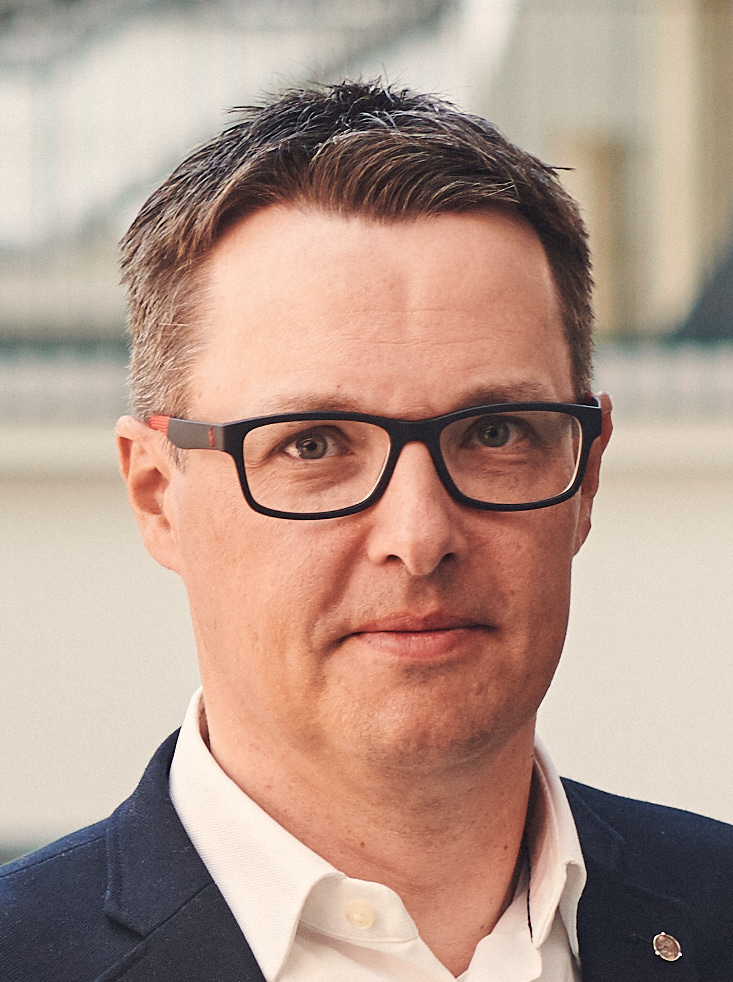
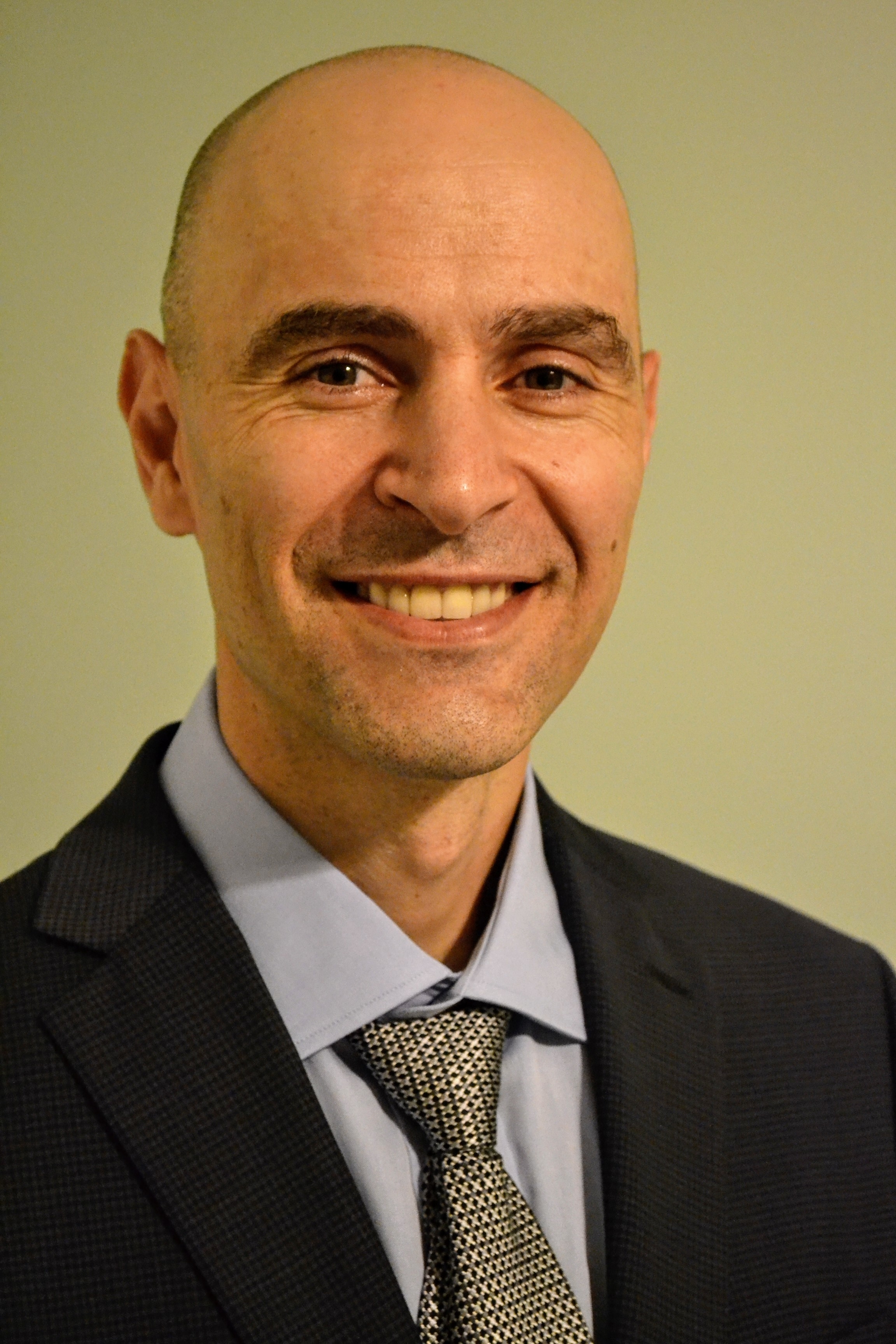
Seth Blumsack is a Professor at the Pennsylvania State University in the Department of Energy and Mineral Engineering and serves as Director of the Center for Energy Law and Policy . He holds an Adjunct Research Professor position at the Carnegie Mellon Electricity Industry Center and is affiliated with the Santa Fe Institute as an External Faculty member. His research spans energy economics , power grid reliability , and complex infrastructure networks . Key projects include: Interdependent natural gas and electricity systems analysis Governance of regional transmission organizations Smart grid consumer behavior studies Power grid reliability tools development He has secured funding from the U.S. National Science Foundation , Department of Energy , Environmental Protection Agency , and private industry. His Best paper award at Hawai’i International Conference on System Sciences (2011) and John T. Ryan, Jr. Fellowship (2011-17) highlight his scientific recognition. Publications emphasize electricity market deregulation , energy infrastructure resilience , and consumer response to smart grid technologies . His work has been cited in major media outlets like The New York Times and The Los Angeles Times , and he has consulted for National Renewable Energy Laboratory , U.S. Department of Energy , and other industry stakeholders.
Jukka Manner is a Full Professor (tenured) of Networking Technology at Aalto University's Department of Communications and Networking (Comnet), School of Electrical Engineering. With a career spanning over two decades in internet technologies, he leads research in networking, wireless systems, and energy-efficient ICT solutions. Dr. Manner received his MSc (1999) and PhD (2004) degrees in computer science from the University of Helsinki. His academic journey has been marked by significant contributions to internet standardization through the IETF since 1999, where he served as co-chair of the NSIS working group. Professor Manner's research focuses on networking, software and distributed systems, with particular emphasis on wireless and mobile networks, transport protocols, energy efficient ICT and cyber security. His work bridges theoretical advancements with practical applications, addressing critical challenges in modern communication systems, sustainable networking practices, and security frameworks. His research group has made significant contributions to 5G technologies, UAV communications, and energy-efficient network design. His extensive publication record shows a clear evolution toward sustainability in networking technologies, with recent work focusing on energy efficiency in 5G systems, sustainable web technologies, and the environmental impact of digital infrastructure. The research demonstrates strong interdisciplinary connections between telecommunications engineering, computer science, and environmental science, with particular emphasis on reducing the carbon footprint of digital systems while maintaining performance. Cross of Merit, Signals (2014) Medal for Military Merits for contributions in national defence and C4 (2015) Professor Manner has supervised over 200 MSc theses and more than 20 doctoral dissertations, establishing himself as a dedicated mentor in the field. He has been principal investigator and project manager for over 15 national and international research projects, including serving as Academic Coordinator for the Finnish Future Internet research programme (2008-2012). His leadership extends to conference organization, having served as local co-chair of Sigcomm 2012 in Helsinki, and active participation as a peer reviewer and member of various Technical Program Committees. As an active contributor to internet standardization through the IETF, Professor Manner's work has practical impact on global networking technologies. His research group maintains strong connections with industry partners and participates in shaping future networking standards and practices, particularly in the areas of sustainable networking, 5G evolution, and security frameworks for emerging technologies.
Mustafa Gül is a Professor in the Department of Civil and Environmental Engineering at the University of Alberta’s Faculty of Engineering. He also serves as Director of Internationalization at the Faculty of Engineering’s Deans Office. His research focuses on smart, sustainable, and resilient cities, with an emphasis on infrastructure monitoring and energy-efficient systems. Education: PhD in Civil Engineering (University of Central Florida, 2009), MSc in Electrical Engineering (University of Central Florida, 2011), MSc in Civil Engineering (Boğaziçi University, 2004), BSc in Civil Engineering (Boğaziçi University, 2002). Dr. Gül’s research spans two primary domains: Crowdsensing-based Monitoring of Built and Natural Environments (CoMBiNE) using AI, signal processing, and data analytics for infrastructure health; and Energy-Efficient Smart Cities through solar PV integration, IoT applications, and net-zero energy homes. His work bridges structural engineering, machine learning, and sustainable urban development. Recent publications highlight advancements in smartphone-based damage detection, UAV-assisted disaster assessment, and AI-driven energy systems. His team’s work on crowdsensing bridges, solar PV optimization, and smartphone analytics has been widely recognized in journals like Structural Control and Health Monitoring and Energy and AI . Notably, his 2017 paper earned the Best Paper Award at ISARC. Students supervised include Azim, R. , Keskin, M. , and Do, N. T. , among others. Scientific Awards: Best Paper Award, 34th International Symposium on Automation and Robotics in Construction (ISARC 2017) Dr. Gül’s projects often involve interdisciplinary collaboration, leveraging sensor networks, computer vision, and optimization algorithms to address urban resilience and energy sustainability. His leadership extends to course CIV E 779 and ongoing research initiatives in Alberta, Canada.
Associate Professor Paola Leardini holds dual roles as Director (Research) and Associate Professor at the University of Queensland's School of Architecture, Design and Planning, within the Faculty of Engineering, Architecture and Information Technology. Her work bridges design and performance in built environments, focusing on net-zero targets, urban resilience, and circular economy strategies in construction. She is a key researcher in the Centre for Future Building Structures and advises on Queensland’s social/affordable housing through the Design Excellence Panel. Leardini earned a PhD in building energy efficiency and environmental quality from Politecnico di Milano, supervised by Prof. P. Ole Fanger. Her educational journey includes studies in Milan, Berlin, Leicester, and Copenhagen. Research highlights include eco-retrofitting of historical districts (e.g., Milan’s Quartiere Mazzini), Passive House adaptations for subtropical climates, and timber construction innovations with the ARC Advance Timber Hub. She co-founded Passive House Institute New Zealand (PHINZ) and collaborates globally on projects like water-sensitive cities and flood-resilient urban design. Her recent publications emphasize timber’s role in sustainable construction, circular economy frameworks, and climate-responsive building systems. Advising includes leading an ARC Linkage project on adaptable housing while fostering industry partnerships through projects like Norman Creek Catchment flood resilience studies. She actively contributes to labs/teams advancing timber use and urban resilience, aligning with UQ's mission for future-ready built environments.
Birgitte Bak-Jensen is a Professor at the Department of Energy, Aalborg University, where she has worked since 1988. She specializes in intelligent control of power distribution systems, with research focusing on grid stability, power quality, and integration of dispersed generation and smart grid technologies. Her work also addresses multi-energy system interactions between electrical grids, heating, and transport sectors. Projects : Led EU H2020 projects (SERENE, SUSTENANCE) and Danish initiatives (EFFORT, SMARTCE2H) Publications : Over 250 papers on distribution grid control and smart energy systems Her research combines renewable energy integration , electric vehicle grid interaction , and energy storage optimization . Recent work includes explainable AI for wind forecasting and voltage control strategies for EV charging. 2025 Awards : Best Student Paper Award (2023), Best Paper Award (2021), CIGRE Technical Council Award (2018) Organizational Roles : Vice Head of AAU Energy Research, leadership positions in IEEE and CIGRE
Lei Wu is a Professor and Anson Wood Burchard Chair Professor in the Department of Electrical and Computer Engineering at Stevens Institute of Technology. He holds a B.S. (2001) and M.S. (2004) in Electrical Engineering from Xi'an Jiaotong University, and a Ph.D. (2008) in Electrical Engineering from Illinois Institute of Technology. His research focuses on power system optimization, renewable energy integration, microgrid control, and cyber-physical systems resilience. Education: B.S. Electrical Engineering, Xi'an Jiaotong University (2001) M.S. Systems Engineering, Xi'an Jiaotong University (2004) Ph.D. Electrical Engineering, Illinois Institute of Technology (2008) Research Interests: Dr. Wu's work addresses challenges in power system operations, including optimization of renewable energy integration, electricity market design, and resilient microgrid control. He develops advanced algorithms for unit commitment, stochastic modeling of renewable resources, and cyber-physical security. His research emphasizes practical applications in grid resilience, demand response, and multi-energy system coordination. Awards: Fellow of IEEE (2022) NSF CAREER Award (2013) IBM Smarter Planet Faculty Innovation Award (2011) Grants & Professional Service: He leads grants on smart grid optimization, including projects from NSF, DOE, and industry partners. He serves as Editor for IEEE Transactions on Smart Grid and other journals, and has advised numerous students on energy-related research. His work on microgrid control and cyber-physical security has been widely recognized in industry and academia. Labs & Teams: Leads the Stevens Energy Systems Lab, focusing on advanced grid technologies and interdisciplinary collaborations between power systems, AI, and cybersecurity.
Robert Winter is a Full Professor of Business IT at the University of St. Gallen (HSG), Switzerland, and Director of the Institute of Information Management (IWI-HSG). He serves as Founding Director of HSG’s Executive MBA in Business Engineering and has led the School of Management’s Doctoral Program. His roles include Vice Editor-in-Chief of Business & Information Systems Engineering and current editorial board membership at MIS Quarterly Executive. Education M.Sc. Business Administration (1984), Goethe University, Frankfurt M.Sc. Business Education (1986), Goethe University, Frankfurt Ph.D. in Social Sciences (1989), Goethe University, Frankfurt Venia legendi (1995), Goethe University, Frankfurt Research Interests Focuses on Design Science Research, Enterprise Architecture Management, and governance of digital platforms. His work explores methodologies for collaborative innovation, data-driven transformation, and complexity management in large-scale systems. Key areas include enterprise transformation steering, data mesh adoption, and agile methodologies in public-sector contexts. Key Contributions Developed frameworks for enterprise architecture governance and digital platform ecosystems Authored influential papers on design science methodology and simulation-based research Recipient of AIS Senior Scholars’ Global Best Paper Award (2017) and Herbert A. Simon Award (2022) Professional Roles President of the School of Management Doctoral Program Member of editorial boards for leading journals (e.g., European Journal of Information Systems) Leadership in professional associations: VHB Board (2011–2014), AIS Swiss Chapter President (2012–2016)
Rajesh Karki is a Professor in the Department of Electrical and Computer Engineering at the University of Saskatchewan’s College of Engineering. He holds a B.E., M.Sc., and Ph.D. in related fields. His research focuses on power system reliability, renewable energy integration, and microgrid resilience, with particular emphasis on addressing challenges posed by extreme weather, cyber threats, and decarbonization targets. Dr. Karki’s work spans theoretical modeling, probabilistic analysis, and practical implementation strategies for smart grids, energy storage systems, and distributed generation. His educational background includes advanced degrees in electrical engineering, complemented by professional engineering licensure (P.Eng.). His research has explored diverse topics such as wind energy curtailment mitigation, energy storage optimization, and demand response mechanisms in developing economies like Nepal. He has authored numerous peer-reviewed publications on grid resilience, reliability economics, and cyber-physical system security. Key themes in his work include: (1) quantifying the reliability value of energy storage in active distribution systems, (2) modeling cyber-physical threats to microgrids, and (3) developing frameworks for extreme weather-resilient infrastructure. Despite the volume of his publications (over 50 articles), no specific awards or grants are explicitly listed in the provided materials. His research often intersects technical, economic, and policy dimensions of sustainable energy systems.
Antonello Monti is a Professor and Director of the Institute for Automation of Complex Power Systems at RWTH Aachen University. His research focuses on modern power systems, including smart grid technologies, hybrid AC-DC grids, and quantum computing applications in energy systems. Recent publications demonstrate innovations in grid resilience, EV charging optimization, quantum-assisted power system planning, and advanced simulation techniques. His team develops open-source tools like JuliaGrid for power system analysis and validates concepts through real-time testing platforms. Research addresses energy transition challenges including renewable integration, grid modernization, cyber-physical security, and next-generation optimization methods combining quantum computing with traditional power engineering approaches.
Satadru Dey serves as an Assistant Professor in the Department of Mechanical Engineering at Penn State University, where he leads research at the intersection of energy infrastructure and smart city systems. His work spans battery technology, transportation networks, and cyber-physical security, with institutional affiliations including the Integrated Energy Systems and Equitable Communities research initiatives. His primary research focuses include battery safety and security (covering fault diagnosis, thermal management, and fast charging protocols), second-life applications for batteries/supercapacitors, secure autonomous transportation systems, and socio-technical traffic modeling. He employs advanced control theory, machine learning, and physics-based modeling to address critical challenges in energy storage and urban mobility infrastructure. Analysis of his 15 most recent publications (2022-2024) reveals a consistent trajectory toward cyber-physical security in battery and transportation systems, with 60% of works addressing battery fault detection and 40% focused on transportation security. His methodologies increasingly integrate partial differential equations, reinforcement learning, and socio-technical data fusion across electrical engineering, mechanical engineering, and computer science domains. Scientific Awards: No awards or fellowships were documented in the source material. Advising and grant activities are not explicitly detailed in the provided information, though his editorial leadership for the 2024 Special Issue on Energy in Smart Infrastructures indicates academic service responsibilities. The absence of student listings suggests either early-career status or non-publication of advising relationships. Dr. Dey directs a specialized research laboratory focused on integrated energy systems within smart city frameworks, with documented projects spanning battery management, transportation security, and equitable infrastructure development. His lab maintains active collaborations across mechanical engineering, electrical systems, and urban planning disciplines as evidenced by multi-departmental publication venues.
Yuanbo Xiangli is a postdoctoral researcher at Cornell University , advised by Prof. Noah Snavely. Previously, he obtained his Ph.D. from the Multimedia Lab in the Department of Information Engineering at the Chinese University of Hong Kong (CUHK) , supervised by Prof. Dahua Lin. His research focuses on 3D computer vision and deep generative modeling for urban scene reconstruction. 3D scene reconstruction from sparse images Neural rendering and Gaussian splatting Deep generative modeling for urban environments Multi-source geospatial data processing City-scale modeling and synthetic datasets His recent work includes advanced NeRF extensions (BungeeNeRF, GridNeRF), Gaussian splatting enhancements (GSDF, Scaffold-GS), and urban scene datasets (MatrixCity, OmniCity). A pioneer in combining classical vision techniques with modern deep learning approaches. ICLR 2020 Spotlight Award Collaborates with leading researchers in photorealistic rendering, including Noah Snavely and Dahua Lin. Develops systems enabling efficient 3D reconstruction from diverse data sources like satellite imagery and street-level panoramas.
Mustafa A. Mustafa is a Senior Lecturer (Associate Professor) in the Department of Computer Science at The University of Manchester, where he leads the Trusted Digital Systems Cluster as part of the university-wide Centre for Digital Trust and Society. His academic journey spans prestigious institutions including The University of Manchester, where he completed his PhD, and KU Leuven in Belgium, where he served as a post-doctoral research fellow. Dr. Mustafa earned his educational qualifications through an impressive academic path: a B.Sc. in communications from the Technical University of Varna, Bulgaria (2007), an M.Sc. in communications and signal processing from Newcastle University, UK (2010), and a Ph.D. in computer science from The University of Manchester, UK (2015). His doctoral research focused on "Smart Grid Security: Protecting Users' Privacy in Smart Grid Applications," laying the foundation for his subsequent research career. Dr. Mustafa's research expertise centers on information security, data privacy, and applied cryptography with particular focus on smart grid systems, smart city applications, e-health, and IoT. His work addresses critical challenges in securing peer-to-peer electricity trading markets, smart metering infrastructure, electric vehicle charging systems, and health data management. He has developed innovative solutions for keyless car sharing systems, frictionless authentication mechanisms, and privacy-preserving protocols for data collection and distribution. His scholarly contributions demonstrate a consistent trajectory toward increasingly sophisticated privacy-preserving techniques applied across multiple domains. Recent work shows a growing integration of artificial intelligence and machine learning approaches with traditional cryptographic methods, particularly in federated learning systems and large language model verification. His research bridges theoretical cryptography with practical implementations in energy systems and healthcare applications. Dr. Mustafa's scientific achievements have been recognized with several prestigious awards: Winner of the Student Video Competition at IEEE SmartGridComm 2017 for "Secure and Privacy-friendly Local Electricity Trading" Best Paper Award at SECURWARE 2017 Distinguished Achievement Award as Postgraduate Research Student of the Year nominee by the School of Computer Science of The University of Manchester (2015) Dame Kathleen Ollerenshaw Research Fellowship (2018-2023) As an academic supervisor, Dr. Mustafa has mentored numerous graduate students through their PhD and Master's research, with a particular focus on privacy and security challenges in emerging technologies. His current supervision portfolio includes research on privacy-friendly multi-agent systems for smart grids, security for IoT in e-health, vulnerability detection in IoT cryptography, and bot detection systems. He has secured significant research funding through multiple competitive grants including EnnCore: End-to-End Conceptual Guarding of Neural Architectures (EPSRC, 2020-2024), SCorCH: Secure Code for Capability Hardware (EPSRC, 2019-2023), and SNIPPET: Secure and Privacy-friendly Peer-to-peer Electricity Trading (FWO-SBO project, 2019-2023). Dr. Mustafa leads the Trusted Digital Systems Cluster within the Centre for Digital Trust and Society at The University of Manchester. His research group comprises PhD students, postdoctoral researchers, and collaborators working on cutting-edge security and privacy solutions. The team maintains strong international collaborations, particularly with KU Leuven in Belgium, and contributes to standards development as evidenced by Dr. Mustafa's role as an expert in the IEC/SYC/WG 3 "IEC Smart Energy Roadmap."
Lei Lei is an Associate Professor at the University of Guelph, specializing in Computer Engineering. Her research focuses on Machine Learning/Deep Reinforcement Learning, Internet of Things (IoT)/Internet of Vehicles (IoV), Mobile Edge Computing, and Smart Grid Optimization. She explores cutting-edge applications in energy-efficient systems, autonomous vehicles, and intelligent transportation networks. Her work integrates advanced AI techniques with real-world challenges in communication and control systems. Key research areas include optimizing electric vehicle charging schedules using hierarchical deep reinforcement learning and enhancing vehicular networks through 6G communication protocols. She has pioneered methods for joint communication-control systems, securing federated learning models, and developing robust resource allocation strategies in IoT and edge computing environments. Lei Lei’s publications emphasize interdisciplinary solutions, bridging computer science, electrical engineering, and transportation systems. Her recent work addresses challenges in smart grid security, multitimescale control systems, and the application of AI tools like ChatGPT in connected vehicles. She is affiliated with the AI Affiliated Faculty at the University of Guelph, reflecting her contributions to artificial intelligence research.
Erald Troja is a Tenured Associate Professor in the Mathematics, Computer Science and Science Division at St. John's University's Collins College of Professional Studies. He serves as the acting Program Director for the Cyber Security Systems program and the Director of the National Security Agency Center of Academic Excellence in Cybersecurity (NCAE). He holds a Ph.D. in Computer Science from The Graduate Center, CUNY, and previously served as an Assistant Professor at IONA College. With over 20 years of industry experience, he worked as a Sr. Systems Engineer at Time Warner Cable and Charter Communications. His research focuses on cybersecurity, privacy-preserving computations, location privacy, applied cryptography, and mobile computing. Recent work includes gamification of cybersecurity education using the metaverse, AI integration in cybersecurity curricula, and mitigating threats in autonomous systems. He has published in top-tier venues like IEEE Access, Ad Hoc Networks, and IEEE VTC. Teaching interests include network security, wireless security, and cryptography. He has developed innovative pedagogical methods like escape room-style learning and virtual reality-based training. His contributions to cybersecurity education and research have positioned him as a leader in advancing practical cybersecurity solutions and educational frameworks.
Alasdair Reid is a Lecturer at Edinburgh Napier University within the School of Computing, Engineering and the Built Environment. He specializes in sustainable urban development and Smart Cities research, with a particular focus on planning and development. His academic background includes a BSc (Hons) in Real Estate Management (RICS accredited), an MSc in City Planning and Regeneration (RTPI accredited), and a PG Cert in Learning, Teaching and Assessment Practice in Higher Education. His research interests span across: Sustainable urban development Smart Cities Urban Studies Planning and Development Real Estate Management Reid's scholarly work demonstrates a strong focus on the intersection of urban development, digital technologies, and sustainability. His recent publications analyze the evolution of smart city research, identify methodological approaches to overcome research divisions in the field, and explore strategic principles for smart city development based on European best practices. He has made significant contributions to understanding smart specialization strategies and their implementation in regional policy contexts, with particular attention to the transition from Triple to Quadruple Helix innovation models. His notable scientific achievements include: Chartered Planning and Development Surveyor (MRICS) - 2020 Fellow of the Higher Education Academy (FHEA) - 2017 Reid has been actively involved in several significant research projects including SURegen, CLUE, EXPGOV, Smart Accelerator, and Online S3. His current work includes the "Phase 2: Digital Transformation Of The Building Standards System" project running from 2023-2025, which supports the Scottish Government's commitments to digital transformation in building standards. He also contributes to the Institute for Sustainable Construction, focusing on sustainable urban development within the Culture and Communities research theme.