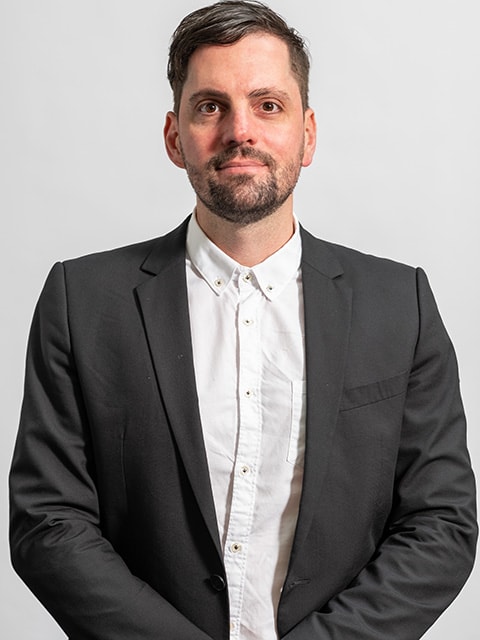
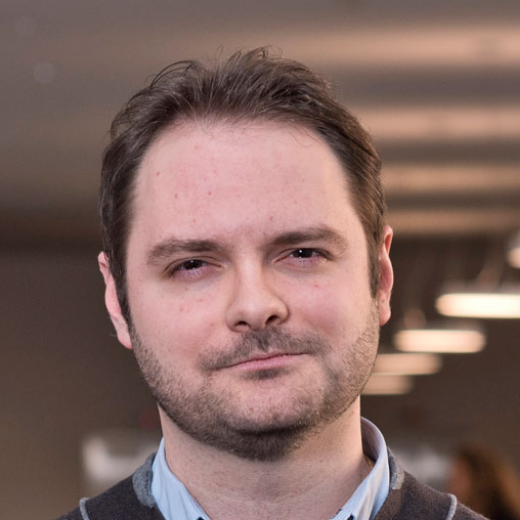
Matyas Gutai is a Lecturer in Architecture and Construction Technology, specializing in sustainable construction and advanced façade design. His research focuses on hybrid materials like Water-Filled Glass (WFG), lifecycle carbon assessment, and energy-efficient building envelopes. He is affiliated with the Architecture and Building Energy research groups. Education: MArch, MEng, PhD. Research Expertise: Water-Filled Glass (WFG) technology and its applications Life-cycle carbon assessment of construction projects Innovation in sustainable design and construction Collaborative projects with enterprises and universities globally Grants and Projects: EU GINOP-funded Water-Glass panel development Taiwan MOST-funded Water House 2.0 project JSPS Postdoctoral Fellowship at Kengo Kuma Lab (Tokyo) Awards: Japanese Society for the Promotion of Science (JSPS) Postdoctoral Research Fellowship Current supervision focuses on sustainable vertical neighborhoods and mass customization in housing through computational design.
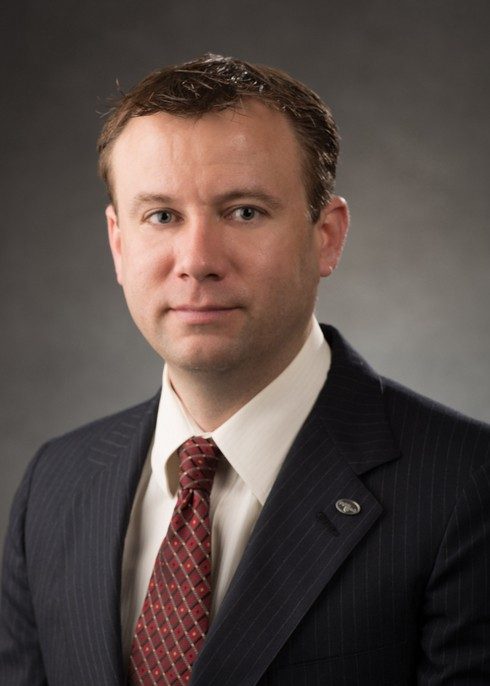
Professor Gernot Kurt Boiger is a faculty member at ZHAW Zurich University of Applied Sciences, leading the Research Area 'Multiphysics Modelling and Imaging' within the School of Engineering's Institute of Computational Physics. His primary role is Professor for Modelling Multiphysics Applications, combining academic teaching with advanced research in computational physics and industrial applications. Education : PhD in Thermofluiddynamic Simulation & Model Development (2009) - University of Leoben MSc in Process Engineering for Industrial Environmental Protection (2009) - University of Leoben BSc and Continuing Education in Higher Professional Education (2005) - ZHAW Research Interests : Boiger specializes in multiphysics simulation for product/process development, focusing on CFD, particle-laden flows, and microstructure analysis. His work integrates OpenFOAM-based computational tools with experimental validation, addressing challenges in filtration, energy systems (e.g., wood gasification), and material optimization. Key applications include: Electrostatic powder coating simulations Thermofluid dynamics in solid oxide fuel cells Acoustic metamaterials for vibration control Articles Overview : His recent publications (2020–2024) emphasize multiphysics modeling in energy systems, materials science, and industrial applications. Notable themes include SOFC electrode microstructure optimization, magnetorheological elastomers for acoustic control, and CFD validation for CO₂ plume transport. Awards : Rektor Platzer Ring (2005) - University of Leoben Grants & Projects : Lead or deputy leader on over 20 industrial projects, including: Simulation-based optimization of pharmaceutical production processes Development of ceramic heaters for extreme temperatures Cloud-based simulation platforms (e.g., kaleidosim) Labs & Teams : Head of the OpenFOAM for Multiphysics Applications team (2014–2018) and currently leads the Multiphysics Modelling and Imaging research group. He also contributes to the International Society of Multiphysics as Vice President Europe and editorial board member.
Professor Sangarapillai Lambotharan is a Professor of Digital Communications and Head of the Signal Processing and Networks Research Group at Loughborough University's Wolfson School of Mechanical, Electrical and Manufacturing Engineering. He holds qualifications including BEng, PhD, DIC, PGCAP, and is a Senior Member of IEEE, Fellow of IET, and Fellow of the Higher Education Academy. His research focuses on advanced wireless communication technologies such as Massive MIMO, Cognitive Radio Networks, and Smart Grids, alongside Machine Learning, Data Mining, and Cyber Security. He has authored over 200 publications in top-tier journals and conferences. His work integrates machine learning with signal processing to address challenges in adversarial attacks, federated learning, and network optimization. Recent research emphasizes intelligent reflecting surfaces (RIS), OTFS satellite communications, and federated learning defenses against model poisoning. Prof. Lambotharan's contributions span theory development, algorithm design, and practical implementations in 5G/6G systems, UAV networks, and edge computing environments. He leads collaborative projects on secure communications, distributed intelligence, and blockchain-based network security mechanisms. Prof. Lambotharan's academic leadership includes editorial roles at IET Signal Processing and teaching Digital Signal Processing and Information Theory. His lab explores cutting-edge topics like RIS-aided systems, anomaly detection in IoT, and context-aware caching strategies for heterogeneous networks. Key achievements include pioneering work on Kalman filtering for channel estimation and game-theoretic solutions for resource allocation in cognitive radio networks.
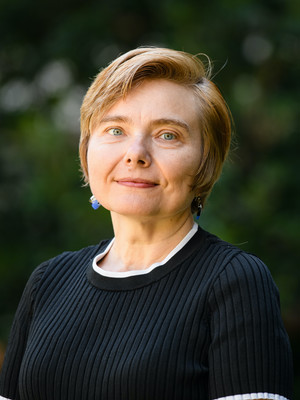
Professor Michael Philen is a Professor and Assistant Department Head for Laboratory Facilities in the Kevin T. Crofton Department of Aerospace and Ocean Engineering at Virginia Polytechnic Institute and State University . He directs the Aerospace Structures and Materials Laboratory (ASML) and is a core member of the Center for Research and Engineering in Aero/Hydrodynamic Technologies (CREATe) . Education Ph.D. Mechanical Engineering, The Pennsylvania State University, 2006 M.S. Mechanical Engineering, The Pennsylvania State University, 2005 B.S. Mechanical Engineering, Texas A&M University, 1998 Research Interests Professor Philen’s research centers on adaptive structures and smart materials . He investigates how advanced actuator and sensor technologies—such as piezoelectrics, shape-memory alloys, magnetorheological fluids, and fluidic flexible matrix composites—can be integrated to create intelligent systems that adapt to external stimuli. His work spans morphing aircraft control surfaces , prosthetic sockets with adaptive fit , energy-harvesting composites , structural health monitoring , and variable-stiffness structures . Recent publications (2020–2024) demonstrate a strong emphasis on translating fundamental material science into practical biomedical and aerospace devices, with particular attention to experimental validation and multi-scale modeling. The body of work evidences a trend toward multifunctional composites that simultaneously provide structure, sensing, actuation, and energy harvesting. Honors & Awards 2020 Dean's Award for Excellence in Service 2015 AIAA Associate Fellow 2011 Dean’s Award for Excellence in Teaching 2010 Dean’s Award for Outstanding New Assistant Professor 2009 ASME Adaptive Structures and Material Systems Best Paper Award in Structural Dynamics and Control 2008–2009 Certificate of Teaching Excellence 2008 Ralph E. Powe Junior Faculty Enhancement Award (ORAU) 2008 Air Force Summer Faculty Fellowship 1998–2006 Eastman Kodak Research Fellow Service, Grants & Labs Professor Philen has served as Chair (2020–present) of the ASME Aerospace Division Adaptive Structures and Material Systems Branch Committee, and as General Chair of the 2016 ASME SMASIS Conference . He is an Associate Editor for the Journal of Intelligent Material Systems and Structures and Smart Materials and Structures , and has held numerous guest-editor roles for special issues in these journals. He directs the Aerospace Structures and Materials Laboratory (ASML) at Virginia Tech, a facility dedicated to advanced diagnostics, experimental testing, and development of adaptive structures and smart materials. ASML houses capabilities for structural dynamics, control testing, and characterization of multifunctional composites.
Dr. Alexandre Borges de Miranda is an Assistant Professor at the Department of Electromechanical Engineering, University of Beira Interior (Portugal). His work focuses on energy systems, sustainability, and thermal engineering, with a particular emphasis on renewable energy solutions, biomass utilization, and 3D printing applications. He teaches courses such as Energy and Sustainability , Aircraft Design , and Computer-Aided Design . His research explores innovative approaches in geothermal energy utilization, heat pump optimization, and biomass gasification. Recent projects include smart asset management for heat pumps and feasibility studies for cold generation in agrarian systems. Selected publications span topics like virtual sensor implementation in energy systems, experimental analysis of boilers, and additive manufacturing for fluid dynamics applications. While no scientific awards are explicitly listed, his contributions to energy efficiency and sustainable technologies are highlighted through his academic publications and teaching roles.
Dr. Jeffrey Richards is an Assistant Professor in the Department of Chemical and Biological Engineering at Northwestern University's McCormick School of Engineering. His research focuses on establishing structure-property relationships in multicomponent soft materials to enable next-generation technologies for energy storage and conversion. The Richards Lab develops novel experimental methods to characterize colloidal systems using combined rheological and electrical measurements. Research interests include carbon black suspensions for battery applications, rheo-electric characterization techniques, nanoparticle self-assembly, and flowable semiconducting materials. Recent work examines lithium-ion battery slurry processing (2025), anisotropic conductive composites (2025), and dielectric spectroscopy during shear deformation (2023). Publications demonstrate innovations in electroless nanoparticle deposition (2023), carbon suspension rheology (2023), and high-throughput mechanical characterization (2023). The lab develops open-source tools like FSVPy for velocimetry analysis. Dr. Richards leads a research group including postdoctoral fellows and graduate students, with a commitment to diversity in materials science. He obtained his PhD from the University of Washington in 2014.
Ioannis Chatzis is a Professor at the University of Waterloo, with a focus on interfacial phenomena, porous media, and heavy oil recovery. His research spans environmental engineering, chemical engineering, and petroleum engineering, addressing challenges in energy systems, CO2 sequestration, and fluid dynamics in fractured media. Education: Doctorate in Chemical Engineering (University of Waterloo, 1979) Master's in Chemical Engineering (University of Waterloo, 1976) Bachelor's in Chemical Engineering (University of Waterloo, 1974) Research Trends: Over the past 15 years, his work has emphasized enhanced oil recovery (EOR) techniques like SAGD, VAPEX, and ASP flooding. He also explores CO2 sequestration, asphaltene precipitation modeling, and microfluidics for subsurface applications. Recent publications include energy system analysis in the Middle East and thermodynamic modeling for hydrogen production. Scientific Collaboration: Chatzis frequently collaborates with researchers in petroleum engineering, chemical processing, and environmental technologies, as evidenced by co-authorships in applied thermodynamics and reservoir simulation studies.
Dr. Lim Lam Ghai is a Lecturer at the School of Engineering, Monash University Malaysia. He holds a PhD in Electrical and Electronics Engineering from Universiti Teknologi PETRONAS (2022), along with a Master of Science (2017) and Bachelor of Engineering (2014) from the same institution. His research focuses on non-invasive neuroimaging (fNIRS) for mental health applications and AI-driven precision agriculture. He teaches Engineering Numerical Analysis and Applied Artificial Intelligence. Research Interests: Dr. Lim’s work bridges neuroimaging and AI, with projects on fNIRS for neurological diagnostics and AI in crop management. His contributions include enhancing fNIRS clinical applicability and developing autonomous agricultural systems. Collaborations span neuroscience, engineering, and sustainable development. Awards: He has received multiple accolades, including the IEEE SPS Malaysia Best PhD Thesis Award (2022), IChemE Training & Development Award (2022), and the International Illnovasi Competition prize (2022). Grants & Projects: He leads a project (2023–2026) on cognitive load estimation using deep learning. His work aligns with UN SDGs, particularly in health and sustainable agriculture. Active in peer review for journals like Biological Psychology and Frontiers in Human Neuroscience . Labs/Teams: Engaged in interdisciplinary research teams focused on neuroimaging technology and smart agriculture solutions.
Dr. Xiaojun Xian is an Assistant Professor in the McComish Department of Electrical Engineering and Computer Science at South Dakota State University. His research focuses on interdisciplinary advancements in biochemical sensing technologies, wearable medical devices, and smart sensing materials engineering. Key research areas include wearable healthcare systems, advanced sensing materials (nanomaterials and MOFs), and data science integration in wearable devices. He has developed commercialized products like the Breezing Pro metabolic tracker and holds FDA 510(k) clearance for medical device innovations. Education: Postdoctoral in Electrical and Biomedical Engineering, Arizona State University Ph.D. in Physical Chemistry, Peking University B.S. in Physical Chemistry, Peking University Research Interests: Dr. Xian’s work spans biosensors, wearable sensing technologies, and nanomaterials engineering. His lab develops flexible thin-film transistor sensors, colorimetric array systems, and micro quartz tuning fork (MQTF) platforms for applications in pollution monitoring, lung disease management, and metabolic tracking. He emphasizes translating lab innovations into commercial healthcare solutions. Grants & Funding: As PI/co-PI, he has secured ~$5.8M in federal funding (NIH/NSF/NASA) for projects like mobile respiratory disease monitoring and wearable pollution sensors. Recent grants include a Samsung-funded project on colorimetric array sensors for metabolic disease biomarkers. Professional Roles: Topic Editor, Chemosensors and Biosensors Reviewer for 30+ journals and NIH/NSF/NASA panels Member of ACS, IEEE, and MRS Labs & Teams: His research group integrates electrical, chemical, and biomedical engineering to address healthcare challenges. Collaborations include The Biodesign Institute and industry partnerships like TF Health Co., where he serves as Vice President for product development.
Dr. Olga Kuksenok is an Associate Professor in the Materials Science and Engineering Department at Clemson University, leading the Kuksenok Research Group. She holds a PhD in Physics and Mathematics from the Institute of Physics, National Academy of Sciences of Ukraine (1997), and a B.S. in Physics from Kiev State University (1991). Her research focuses on computational design of advanced polymer-based materials, including biomimetic systems, responsive gels, and polymer blends. Key projects involve mesoscale modeling of polymer degradation, nanogel dynamics, and smart materials for biomedical and engineering applications. Education: Ph.D., Physics and Mathematics, Institute of Physics (1997) B.S., Physics, Kiev State University (1991) Affiliations: Director of Graduate Program, Clemson MSE Department Member of NSF Center for Polymers for a Circular Economy (PCE) Her work explores computational modeling of polymer networks (e.g., hydrogels, bottlebrushes), degradation mechanisms, and stimuli-responsive materials. Recent studies include polyethylene mimics, oil-repellent boundaries, and photoreactive systems. She advises graduate and undergraduate researchers in computational methods (LAMMPS, COMSOL) and polymer synthesis. Publications highlight contributions to polymer degradation dynamics, nanogel interfacial behavior, and bioinspired materials. Her group collaborates with industry and academia on NSF-funded projects, emphasizing sustainability and circular economy principles.
Vincenzo Fiamma serves as Assistant Professor of Ocean Engineering at the Mediterranea University of Reggio Calabria (UNIRC), where he has been an active member of the NOEL laboratory research team since 2009. Previously, he contributed to the Maritime Engineering Laboratory through the OKEANOS consortium (1998-2008) and participates in Italy's National Group for Defense from Hydrogeological Disasters since 1996. His three-decade career centers on experimental coastal engineering with Professor Boccotti, including foundational work on wave mechanics and energy conversion systems. His research spans Ocean Engineering , Wave Energy Conversion , and Coastal Protection Systems , characterized by innovative field experiments at sea. Key contributions include the development of U-OWC (U-Oscillating Water Column) breakwaters and REWEC (Resonant Wave Energy Converter) devices for dual-purpose coastal infrastructure. His methodology uniquely bridges theoretical modeling with real-sea validation, advancing sustainable solutions for Mediterranean coastal challenges through practical engineering applications. Recent publications (2020-2024) demonstrate evolving expertise from wave mechanics fundamentals to integrated renewable energy systems. His work shows increasing interdisciplinary scope, connecting U-OWC technology with coastal hazard analysis, infrastructure resilience, and environmental impacts. Notable trends include Mediterranean-focused full-scale implementations (e.g., Salerno and Civitavecchia ports), advanced uncertainty quantification in floating structures, and investigations into compound climate hazards like concurrent floods and sea storms. Professor Fiamma has supervised 20 degree theses in maritime engineering and environmental hydraulics while contributing to major national research initiatives. His project portfolio includes multiple biennial Projects of Relevant National Interest (PRIN), notably the 2001 hydrodynamics study of low-crested breakwaters, 2004 coastal protection/wave energy integration project, and 2005 REWEC port breakwater experiment that pioneered wave-to-electricity conversion technologies. As a core member of UNIRC's NOEL laboratory, he directs experimental campaigns on wave energy converters and coastal structures. His earlier foundational work contributed to Professor Boccotti's seminal texts Idraulica Marittima (1997) and Wave Mechanics for Ocean Engineering (2000), establishing theoretical frameworks still referenced in contemporary research on wave group dynamics and coastal processes.
Oladoyin Kolawole is an Assistant Professor of Geomechanics and Geotechnical Engineering at NJIT's Department of Civil and Environmental Engineering, and Faculty Coordinator for the Geosystems Minor program. He directs the Geomechanics for Geo-Engineering and Sustainability (GGES) Lab. Previously, he was a Postdoctoral Research Associate at Texas Tech University and a Visiting Assistant Professor at Hope College. His research focuses on biogeomechanics, experimental/computational studies of rock-soil deformation, and applications to infrastructure sustainability, energy, and hazard mitigation. He pioneered the 'biogeomechanics' concept analyzing biological effects on rock mechanics. His work addresses CO2 sequestration, geothermal systems, and subsurface energy storage. Education : Ph.D. in Petroleum Engineering (Geomechanics), Texas Tech University (2021) M.S. in Petroleum Engineering, University of Miskolc (2018) B.S. in Petroleum Engineering, Rivers State University (2012) Research Interests : Mechanical behavior of rocks/soils under biological, thermal, and chemical stimuli CO2 storage security and enhanced oil recovery Nano-to-microscale geomechanical characterization Bio-inspired geotechnical materials Urban geohazards and infrastructure resilience Low-carbon grouting technologies Awards : 2022 Future Leader Award, American Rock Mechanics Association 2020 Distinguished Service Award, American Rock Mechanics Association Advising & Grants : Mentors undergraduate and graduate students, actively involved in peer review for rock mechanics journals, and serves on the U.S. National Academies' Committee on Geological and Geotechnical Engineering (COGGE). His lab develops novel solutions for subsurface engineering challenges through interdisciplinary collaboration. Labs/Teams : Directs the GGES Lab, focusing on sustainability-linked geomechanical innovations. Collaborates with industry and academic partners on CO2 storage, geothermal energy, and bio-based material applications.
Yuan-Nan Young is a Professor in the Department of Mathematical Sciences at New Jersey Institute of Technology (NJIT). His research focuses on fluid dynamics, biomechanics, and numerical simulation, with applications in microfluidics, mechanobiology, and soft matter physics. He has led multiple National Science Foundation-funded projects investigating topics like primary cilia mechanics, lipid bilayer dynamics, and active matter systems. Dr. Young has extensive publication history with over 79 peer-reviewed articles and 7 federal grants. His work bridges theoretical, computational, and experimental approaches, particularly in understanding flow sensing mechanisms in biological systems and designing smart micro/nano systems. Notable contributions include studies on microswimmer locomotion, vesicle hydrodynamics, and mechanosensitive channel gating. Grants & Projects: Collaborative Research: Mathematical, Numerical, and Experimental Investigation of Flow Sensing by the Primary Cilium (NSF, 2020-2025) Investigations on Lipid Bilayer-Solid Interactions (NSF, 2016-2019) Surfactant and Elastic Fiber Dynamics (NSF, 2007-2011) Research Highlights: Developed models for motor-driven centrosomal aster dynamics and primary cilia mechanics Advanced understanding of squirmers in confined geometries and magnetic actuation of vesicles Explored adaptive micro-robotics using AI-driven context detection Labs & Collaborations: Active collaborations in biomimetic systems, with experimental partnerships in microfluidics and soft matter characterization. Research group focuses on translating computational findings to biomedical and engineering applications.
Giovanni Pernigotto is a Full Professor of Environmental Technical Physics at the Faculty of Engineering of the Free University of Bozen-Bolzano. He leads the Building Physics Research Group and focuses on energy efficiency, climate adaptation, and sustainable urban systems. His work integrates computational modeling, machine learning, and field experimentation to address challenges in building performance, renewable energy integration, and climate resilience. Key research areas include solar radiation prediction in mountain regions, energy optimization strategies for buildings, and urban heat island mitigation. He has pioneered studies on the CoolST project for South Tyrol’s climate adaptation and the Rescue Permafrost initiative in the Dolomites. His teaching includes courses on energy efficiency standards, building physics, and fire engineering applications. Publications span over 50 peer-reviewed articles, emphasizing data-driven approaches to energy systems, thermal comfort, and urban sustainability. Collaborations involve interdisciplinary teams and regional stakeholders to translate research into actionable policies and technologies. He is actively involved in the MDPI Energies Special Issue on building performance and contributes to the development of the Smart Readiness Indicator framework. His lab’s work bridges academic research with real-world applications in smart cities and climate change mitigation strategies.
Zhipeng Deng is an Assistant Professor in the Department of Mechanical and Aerospace Engineering at the University of Central Florida (UCF). He holds a B.Sc. from Shanghai Jiao Tong University and a Ph.D. from Purdue University. His research focuses on decarbonizing built environments, grid-interactive buildings, sustainable energy systems, computational fluid dynamics, and quantum computing applications in HVAC controls. Dr. Deng’s work integrates advanced technologies to enhance energy efficiency and indoor environmental quality while addressing climate challenges. Education: Bachelor’s Degree: Shanghai Jiao Tong University Ph.D.: Purdue University Research Interests: Dr. Deng’s interdisciplinary research spans decarbonization strategies for urban infrastructure, quantum computing for real-time building control systems, and optimizing indoor air quality using data-driven models. His studies also explore the impact of multi-domain factors (e.g., noise, air quality) on human productivity and physiological responses, with practical applications in smart HVAC systems and pandemic mitigation. Awards & Recognition: Syracuse COE Research Fellowship (2022) Outstanding Contribution in Reviewing Award (2019) Chun-Tsung Scholar Fellowship (2016) Advising & Grants: While no specific advisee names are listed, Dr. Deng’s publications reflect collaborative projects with students and colleagues. His research has been supported by grants focused on energy efficiency, quantum computing integration, and pandemic-related ventilation innovations. Labs & Collaborations: Dr. Deng collaborates with organizations like ASHRAE, ISIAQ, and ASME, advancing building science and sustainable engineering practices through interdisciplinary teams and cutting-edge methodologies.