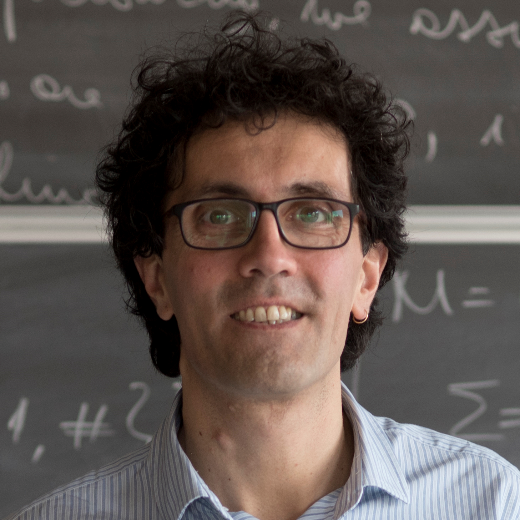
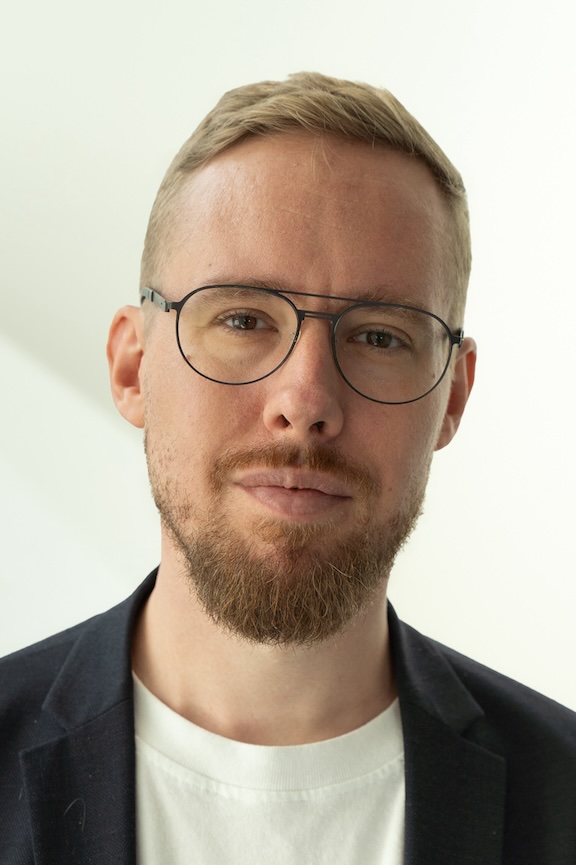
Paul-Eric DOSSOU is a Researcher at ICAM’s Grand Paris Sud campus, specializing in Societal and Technological Transitions of Companies. His work focuses on Industry 5.0, decision-aided systems, logistics optimization, and digital twin applications. He leads projects like Plateforme Life, Urban Logistics, and Healthcare 4.0, aiming to enhance SME efficiency through sustainable digital transformation. Expertise includes AI-driven supply chain management, cybersecurity for legacy systems, and robotic solutions for archaeology. He collaborates with industry partners to bridge theoretical research and practical applications, emphasizing human-centric automation and environmental sustainability. Contact: paul-eric.dossou@icam.fr | Mobile: +33 6 17 81 33 43 Research contributions span over 30 peer-reviewed articles since 2003, addressing topics from energy audits in the nautical industry to multi-agent systems in supply chain optimization.
Inigo Flores Ituarte is a Research Professor at Tampere University's Faculty of Engineering and Natural Sciences, affiliated with the Automation Technology and Mechanical Engineering department. He leads the Digital Design and Manufacturing (D2M) research lab, focusing on sustainable manufacturing and twin-transition strategies integrating digital and green technologies. His work emphasizes optimization-driven design, additive manufacturing innovations, and AI-driven expert systems to enhance energy efficiency and reduce environmental impacts. Key research pillars include: Pillar 1: Twin-transition in Engineering Design and Manufacturing Processes, addressing sustainable manufacturing and intelligent systems Pillar 2: Development of open D2M systems and Process-Structure-Property-Performance (PSPP) linkages in advanced materials His research explores multi-disciplinary optimization combining model-based simulations and data-driven techniques. Notable contributions include generative AI integration in CAD systems, cognitive manufacturing systems, and cost-effective process monitoring using CNN-based methods. Inigo's work emphasizes environmental sustainability, with a focus on reducing manufacturing's energy consumption (54% of global use) and CO2 emissions. He advocates for interconnected material systems, smart manufacturing processes, and AI-assisted decision-making to achieve cognitive intelligence in industrial operations. His D2M lab's overarching goal is to maximize product/process performance while improving cost-effectiveness and minimizing environmental footprints. Recent projects include railway bogie demonstrators via multi-material deposition and sensor systems leveraging IoT and ChatGPT integration.
Lars Hanson is a Professor of Product Design Engineering at the University of Skövde's School of Engineering Science. His research focuses on ergonomics, digital human modeling, and optimizing manufacturing systems with a strong emphasis on human well-being and sustainable production. He leads projects like LITMUS (Industry 4.0 to 5.0 transition) and has contributed to developing tools such as IPS IMMA for ergonomic simulations. Active in virtual verification of human-robot collaboration and smart textile systems for workplace safety Published extensively in journals like International Journal of Human Factors Modelling and Simulation and IEEE Access Editor of conference proceedings and contributor to industry standards in automotive and healthcare sectors Research interests include multi-objective optimization of factory layouts, musculoskeletal risk assessment, and integrating ergonomic evaluations into product design processes. Current projects address Industry 5.0 sustainability challenges through digital twin technologies and smart manufacturing solutions.
Diego Calvanese is a Full Professor in Computer Engineering at the Faculty of Engineering of the Free University of Bozen-Bolzano, Italy. He serves as Spokesperson of the Institute of Computer Science and Artificial Intelligence and Director of the Smart Data Factory technology transfer lab at NOI Techpark. As Coordinator of the Intelligent Integration and Access to Data (In2Data) research group, part of the Research Centre for Knowledge and Data (KRDB), he leads significant research initiatives in knowledge representation and data management. Calvanese's research focuses on virtual knowledge graphs for data access and integration, ontology-based data access, description logics, semantic web technologies, graph data management, and verification of data-aware processes. His work bridges theoretical foundations with practical applications through the Ontop framework, which enables SPARQL query answering over OWL 2 QL ontologies connected to external data sources. His research has substantial practical impact, powering the South Tyrol Open Data Hub Knowledge Graph and supporting numerous European and national research projects. With more than 400 refereed publications and over 39,000 citations (h-index 80), Calvanese's recent work demonstrates continued leadership in virtual knowledge graphs, ontology-based data federation, explainable AI through knowledge representation, and integration of complex data types including 3D city models and raster data. His publications show a clear trajectory from theoretical foundations toward increasingly practical and applied research addressing real-world data integration challenges across multiple domains. ACM Fellow (2019) EurAI Fellow (2015) AAIA Fellow Program Chair of PODS 2015 and KR 2020 General Chair of ESSLLI 2016 Calvanese has secured significant research funding through numerous competitive projects including EU H2020 INFRAEOS Project (INODE), Italian PRIN Project (HOPE), FESR Project (IDEE), and EU FP7 IP Project (Optique), totaling close to 6.4M Euro. As an originator and co-founder of Ontopic, the first spin-off of the Free University of Bozen-Bolzano, he has successfully translated research into commercial applications. He serves as Associate Editor of Artificial Intelligence (AIJ) and has participated in over 200 program committee roles for international conferences. As Director of the Smart Data Factory technology transfer lab and coordinator of the In2Data research group, Calvanese bridges academic research with industry applications, focusing on practical implementations of knowledge graph technologies. His work with the KRDB Research Center has established Bozen-Bolzano as a significant hub for knowledge representation and data management research in Europe.
Prof. LFM (Leo) Marcelis is a Professor and Chairholder at the Department of Horticulture and Product Physiology, Wageningen University & Research. His research focuses on plant physiology in controlled environments, energy-efficient horticultural systems, and vertical farming technologies. He leads major projects such as SKY HIGH and 'LED it be 50%', aiming to revolutionize plant production through smart lighting and sustainable practices. Key research interests include optimizing crop growth under LED lighting, closed-system agriculture, and enhancing resource use efficiency. Marcelis coordinates courses on plant physiology, greenhouse horticulture, and vertical farming. He actively collaborates with industry partners, governments, and international institutions to bridge academic research with practical applications in global horticulture. He serves as Vice Chair of the Leibniz Institute’s Science Advisory Board and as Chief Editor of the Crop and Product Physiology section in Frontiers in Plant Science . His work emphasizes interdisciplinary approaches, integrating physiology, engineering, and data science to address food security and sustainable agriculture challenges. Marcelis advises numerous PhD students on projects related to plant-light interactions, crop modeling, and vertical farming scalability. His research has contributed to advancing energy-saving technologies and improving crop quality in both greenhouse and urban agricultural settings.
Kevin Baum is a computer scientist currently serving as the deputy head of the Neuro-Mechanistic Modelling (NMM) department at the German Research Center for Artificial Intelligence (DFKI) since January 2023, and head of the Centre for European Research in Trusted AI (CERTAIN) at DFKI since December 2023. Based at the Saarland Informatics Campus in Saarbrücken, Germany, he completed his doctorate in philosophy in March 2024, combining technical expertise with philosophical depth. His work bridges computer science with ethics, focusing on making AI systems transparent and accountable to human users. Dr. Baum's research program centers on interdisciplinary questions concerning the explainability and transparency of AI systems. His work spans multiple significant projects including the Explainable Intelligent System (EIS) initiative and project E7 of the Transregional Collaborative Research Centre 248 "Foundations of Perspicuous Software Systems" (CPEC). He has developed frameworks for understanding stakeholder perspectives on explainable AI and investigated how different information types about automated systems affect user perceptions of fairness and justice. His approach consistently combines theoretical foundations with practical implementations across diverse contexts. Analysis of his publication trends reveals a clear trajectory from theoretical foundations in machine ethics toward practical implementations of explainability requirements in real-world contexts. His work demonstrates increasing focus on human oversight effectiveness, fairness monitoring, and ethical considerations across various AI applications. He has made significant contributions to both academic discourse and practical AI development guidelines, with publications spanning computer science, philosophy, psychology, and human-computer interaction venues. Award for Ethics for Nerds lecture series As a research leader, Dr. Baum contributes to shaping AI development practices through his departmental leadership and interdisciplinary collaborations. His current work with CERTAIN focuses on establishing European research standards for trusted AI development and deployment, emphasizing the practical implementation of ethical requirements in AI systems. He maintains active collaborations across multiple institutions and disciplines, reflecting his commitment to bridging technical and philosophical considerations in AI development. At DFKI, he leads research that combines neuroscientific insights with AI development to create more interpretable systems. The NMM department focuses on both theoretical research on explainable AI foundations and practical applications in various domains, with particular attention to how different stakeholders understand and require explanations from AI systems.
Michel Gendreau is a Full Professor in the Department of Mathematics and Industrial Engineering at Polytechnique Montréal . His research focuses on the application of Operations Research to Transportation , Telecommunications , and Energy Systems , with an emphasis on Stochastic Optimization and Real-time Planning . He co-directs the Intelligent Transportation Systems Laboratory and is affiliated with the CIRRELT , IVADO , and Trottier Energy Institute . Education : Ph.D. in Computer Science (1984), Université de Montréal His work includes developing metaheuristics for complex optimization problems and dynamic transportation systems . Recent projects address smart supply chains and real-time logistics . He has supervised over 40 doctoral and master's students, including notable graduates like Sanchez-Martinez, Guillen Reyes, and Parada Pradenas. Dr. Gendreau has been recognized with prestigious fellowships from IFORS (2022) and INFORMS (2010). His academic contributions span 420 publications, with recent studies appearing in Reliability Engineering and System Safety and Networks , focusing on stochastic programming , multiperiod routing , and UAV network design . He collaborates extensively with industry partners and has secured grants from organizations like FRQNT and CIRRELT . His research integrates machine learning with operations research to solve real-world challenges in transportation , energy , and logistics .
Prof. Dr.-Ing. Udo Fiedler is a faculty member at the Technical University of Central Hesse (THM), Department of Business Administration and Economics, where he serves as Head of the Production Engineering Laboratory and Member of the Senate. His academic work focuses on manufacturing engineering with specialization in high-speed machining, production processes, and machine tools. His research interests include: High-Speed Machining (HSC) and precision manufacturing Green machining of sintered parts in the green state Process optimization using statistical experimental design Machine tool technology and NC programming Industry 4.0 applications in manufacturing education Process monitoring and control for increased manufacturing safety Prof. Fiedler's publication record demonstrates an evolution from fundamental machining processes toward integrating AI with traditional manufacturing. His recent work shows strong emphasis on applying artificial intelligence to quality prediction, optimizing green machining processes, and implementing Industry 4.0 concepts through learning factory approaches, bridging traditional manufacturing engineering with modern digital technologies. His significant scientific contributions include: Development of methods for NC programming of complex workpieces Research on stability lobe diagrams for milling processes Studies comparing different production methods including HSC, EDM, and generative processes Work on mechatronic tool holders for process monitoring Applications in the ophthalmic industry for precision machining of spectacle lenses Prof. Fiedler teaches multiple courses at THM including Factory Planning/Ergonomics, Handling and Assembly Technology, Innovative Manufacturing Processes, and Machine Tools at the bachelor's level, and Learning Factory 1 and 2 at the master's level. He leads current research projects including Klag-Robotics (2023-2025), Loewe Project OST (2018-2021), and GrünSpan (2014-2015), demonstrating sustained research activity across multiple manufacturing domains.
Yang Cheng is an Associate Professor at the Department of Materials and Production, Aalborg University, Denmark. He holds a PhD in Mechanical Engineering from the same institution (2011), focusing on manufacturing strategy and network dynamics. His research spans supply chain management, sustainability, and global operations, with a focus on integrating technology and environmental policies into manufacturing systems. He leads or participates in high-impact projects like MAASive (2024–2026) and the Sino-Danish Center Research Project (2011–present), addressing resilience in value networks and global operations innovation. Research Interests: Supply Chain Management & Integration Sustainability & Green Technologies Manufacturing Strategy & Networks Technology Policy & Digitalization Global Operations & Cross-Border Collaboration Recent Work Trends: Prof. Cheng's 2025 articles emphasize blockchain in sustainable supply chains, green technology investments under carbon policies, and digitalization's ethical implications. His 2024 research explores smart factories, EU battery regulations, and robotization in manufacturing. These studies blend quantitative models with case-based analysis to address real-world challenges. Awards: 2024 Emerald Literati Awards – Outstanding Reviewer Advising & Grants: As PI for multiple Global Operations Management PhD programs (2019–2025), he guides research on digital transformation and university-industry collaboration. His projects receive funding from Danish and international grants, focusing on innovation and resilience in manufacturing networks. Labs/Teams: Collaborates with the Center for Industrial Production at Aalborg University and engages in international partnerships through the Sino-Danish Center. Active editorial roles include Production Planning & Control and Journal of Manufacturing Technology Management .
Ebru Turanoglu Bekar is a Senior Lecturer at the Department of Industrial and Materials Science, Chalmers University of Technology, specializing in Smart Maintenance and Production Systems. She contributes to the Production Service Systems & Maintenance research group. Research Interests: Total Productive Maintenance (TPM), Artificial Intelligence applications in manufacturing, Multi-Criteria Decision Making, Performance Measurement systems Recent Focus: Development of data-driven algorithms for predictive maintenance, integration of digital twins in industrial contexts Key Projects: Factory SensAI (2025–2028) - Data integration for AI in manufacturing Trustworthy Predictive Maintenance TPdM (2022–2025)
Christophe Danjou is an Associate Professor in the Department of Mathematical and Industrial Engineering at Polytechnique Montréal . He joined as a professor in January 2018 and serves as Scientific Director of the Poly-Industries 4.0 Laboratory since June 2021. His expertise spans Industrial Engineering , Industry 4.0/5.0 , Manufacturing Systems , and Blockchain . His research focuses on solving interoperability challenges in digital transformation through ontological approaches (OntoSTEP-NC) and blockchain technology. Key themes include strategic positioning frameworks for Industry 4.0/5.0, knowledge management , and smart manufacturing . Recent work explores digital twins for system-of-systems resilience , data integrity in IoT , and AI-driven food processing optimization . He teaches courses like Industry 4.0 and Manufacturing Processes . Under his supervision, 7 PhD and 6 Master’s students are advancing research in areas such as blockchain-based smart maintenance , distributed manufacturing , and carbon emission traceability . He is affiliated with institutions including IVADO (Member), CIRRELT (Member), and Data Intelligence Lab (Member). His publications highlight contributions to digital transformation across construction, agri-food, and SMEs, with 83 total publications (15+ recent articles shown).
Adriano Jorge Cardoso Moreira is an Associate Professor with Habilitation at the Department of Information Systems, School of Engineering, Universidade do Minho, Portugal. He is also a Senior Researcher at the Algoritmi Research Centre and Scientific Coordinator of the Urban and Mobile Computing department at Centro de Computação Gráfica. His research focuses on indoor positioning , mobile and context-aware computing , urban computing , and simulation of wireless networks . Research Interests : Indoor Positioning, Mobile Computing, Urban Mobility, Sensor Networks, Wi-Fi and UWB Localization, Smart Cities. Leadership : Coordinated the Computer Communications and Pervasive Media Group (2008-2016), Scientific Committee member (Director of MAP-tele PhD program in multiple terms), and leads the Master in Telecommunications and Informatics since 2021. Publications : Over 100 papers, including IEEE Transactions and Sensors journal articles, with an h-index of 23 and 2136 citations. Awards : First and second prizes in EvAAL-ETRI Indoor Localization Competitions (2015, 2016, 2017).
Professor Matthias Lederer serves as a faculty member at the Weiden Business School of Ostbayerische Technical University Amberg-Weiden, specializing in Business Informatics with a focus on Process Management. His academic position is complemented by extensive industry experience across multiple sectors including IT services, manufacturing, and consulting. Dr. Lederer's research spans four interconnected domains: process analysis and optimization, IT process management, agile process transformation, and didactics for process digitization. His work bridges theoretical frameworks with practical applications, particularly in business process management (BPM), digital transformation, and the integration of agile methodologies into organizational structures. His research demonstrates a clear trajectory toward increasingly sophisticated applications of data science and artificial intelligence in process optimization. Analysis of his recent publications reveals a strong focus on practical implementations of business process management, with particular emphasis on agile transformations, data-driven process design, and the application of AI in business contexts. His work consistently addresses the intersection of academic research and industry practice, with publications appearing in both academic journals and professional conference proceedings. The research demonstrates growing attention to digital platforms, smart manufacturing applications, and sustainable business practices. His scientific recognition includes: Best Program Director award from ISM International School of Management Project Award 'Innovative LernOrte' from OTH Award for Good Teaching from the Bavarian State Ministry Best Paper Award at the 2014 International Conference on Information Systems Multiple professional certifications including Lean Six Sigma Black Belt and OMG-Certified Expert in Business Process Management Professor Lederer has developed significant academic leadership through his role as Chairman of the Institute of Innovative Process Management. His teaching approach integrates practice-integrated methodologies, reflecting his belief in connecting academic concepts with real-world applications. His extensive consulting background with organizations like REHAU AG + Co. and the Bavarian Ministry of Justice informs his academic work and student mentorship.
Dr. Udayanto Atmojo is a Staff Scientist in the Department of Electrical Engineering and Automation at Aalto University. His research focuses on industrial automation systems, distributed control architectures, and IEC 61499 standard implementation. He holds a doctoral degree in Engineering from the University of Auckland. Research Focus: Distributed control systems using IEC 61499 standard OPC-UA integration for industrial interoperability Cybersecurity in Industry 5.0 environments Digital twin applications in industrial settings His publications demonstrate strong emphasis on industrial automation standards, secure data exchange, and virtual commissioning. Recent work addresses security challenges in human-intensive automated factories and confidential data sharing for life cycle assessments in process industries. Projects and Recognition: Principal investigator for TwinFlow project on distributed control systems (2024-2026) Contributor to CloViC project on cloud virtual commissioning Finalist in World Challenge Finland 2018 competition He develops laboratory test procedures for industrial applications and contributes to open science initiatives including FAIR principles for research software.
Dr. Md Noor-A-Rahim is an Assistant Professor (Lecturer-Above the Bar) at the School of Computer Science and Information Technology, University College Cork (Ireland). He previously served as a Senior Researcher and Marie Curie Fellow at the same institution. His academic journey includes a PhD from the University of South Australia (2015) and the prestigious Michael Miller Medal for his outstanding thesis on wireless communication systems. His research focuses on Intelligent Transportation Systems, Machine Learning, IoT, Wireless Networks, and DNA-based data storage. He has published extensively on topics like 6G-V2X systems, time-sensitive networking, and error characterization in DNA storage. His work integrates cutting-edge technologies such as intelligent reflecting surfaces (IRS), federated learning, and ultra-reliable low-latency communication (URLLC). Research Interests : Dr. Rahim's research bridges theoretical advancements and real-world applications in vehicular networks, smart manufacturing, and next-generation communication systems. He explores challenges in autonomous driving, edge computing, and bio-constrained data storage. His contributions include novel coding schemes for anytime transmission and frameworks for mitigating big vehicle shadowing in V2X communications. Key Publications : His recent work includes a comprehensive survey on wireless TSN (2025), analysis of 6G-V2X systems (2022), and breakthrough studies on DNA data storage error modeling (2023). These publications highlight his expertise in both foundational research and industry-relevant solutions. Awards : Recipient of the Michael Miller Medal (2015) for doctoral research excellence. Grants & Labs : While specific grants are not listed in the text, his research portfolio suggests involvement in collaborative projects with industry partners and funding bodies. He leads interdisciplinary efforts in smart manufacturing and vehicular communication systems.