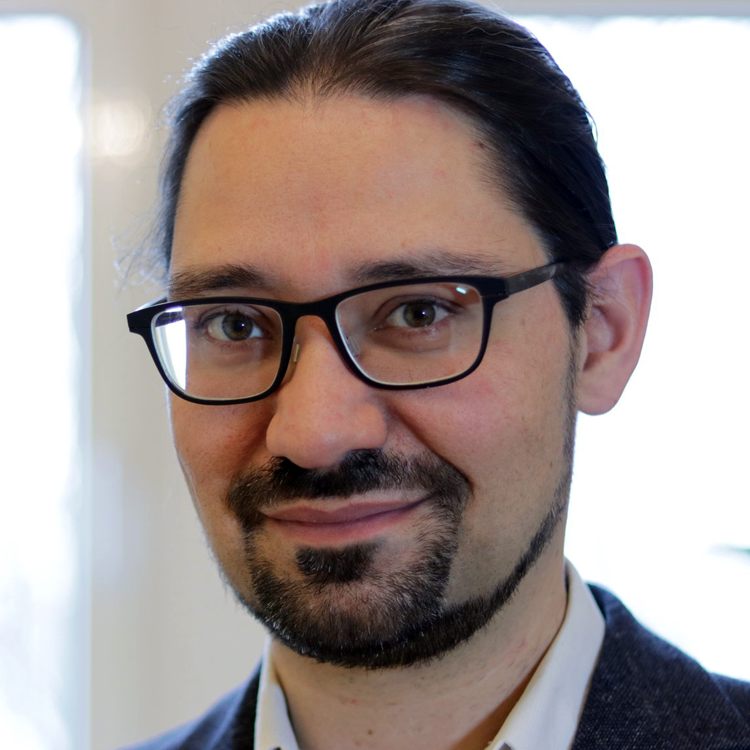
Jesper Bruun serves as an Associate Professor in the Department of Science Education at the University of Copenhagen's Faculty of Science, specializing in physics education research with emphasis on digital technologies and network analysis in upper-secondary and university contexts. Education PhD in Physics Education Research Cand. Scient. in Physics Research Focus : Bruun pioneers the application of network science to educational research, examining cognitive-social learning interplay, kinesthetic physics exercises, and Learning Analytics. His methodology leverages big data to map academic networks and optimize educational systems across levels, with recent expansion into AI-driven pedagogy. Current Research Trends : Recent publications (2025) demonstrate concentrated exploration of network-based analysis for student engagement patterns, AI chatbot integration in STEM instruction, and physical analogy development. These works bridge theoretical frameworks with practical classroom applications across Danish upper-secondary and university settings. Academic Leadership : Bruun actively supervises bachelor/thesis projects on digital education tools and kinesthetic methods while co-organizing major conferences (ESERA 2025, Unfinished Business 2025). His collaborative projects—including KA-STEM evaluation and scientist-teacher partnerships—highlight commitment to evidence-based educational transformation through cross-institutional teamwork.
Vito Foderà is Professor of Biophysics at the Department of Pharmacy, Faculty of Health and Medical Sciences, University of Copenhagen, Denmark. He leads a highly interdisciplinary research team working at the interface between physics, biology and pharmaceutical sciences. His laboratory, the Drug Delivery and Biophysics of Biopharmaceuticals group, focuses on understanding protein and peptide behavior to develop novel drug delivery systems and improve protein therapeutics. Professor Foderà received his PhD in Physics from the University of Palermo in 2009, followed by postdoctoral work at the Cavendish Laboratory, University of Cambridge. He joined the University of Copenhagen in 2009 and progressed from Research Associate to Assistant Professor (2014), Associate Professor (2016), and was promoted to Professor in June 2023. His research spans four main interconnected areas: Protein and Peptide Self-Assembly (since 2006), Biophysics of Protein-Membrane Interaction (since 2014), Biomaterials for Drug Delivery (since 2017), and Protein Particles in Drug Formulations (since 2018). He combines theoretical frameworks with experimental techniques including UV-Vis spectroscopy, X-ray and neutron scattering, and optical and electron microscopies. His work bridges fundamental biophysics with pharmaceutical applications, particularly in developing advanced materials for nanomedicine and understanding protein-related neurodegenerative diseases. Analysis of his recent publications reveals a strong trend toward understanding protein aggregation mechanisms, particularly insulin and α-lactalbumin systems, with increasing focus on pharmaceutical applications. His research integrates computational modeling with advanced experimental techniques to connect molecular-level interactions to macroscopic material properties. Key disciplines represented in his work include biophysics, structural biology, pharmaceutical sciences, and materials science, with growing emphasis on translational applications in drug delivery and protein formulation. Villum Young Investigator Award (2018-2025, 8.6 M DKK) Villum Young Investigator Plus Award (2023-2026, ~4 M DKK) Professor Foderà actively mentors a large research group including postdocs (Samuel Lenton, Mai Bay Stie, Marco Polimeni), PhD students (Kleopatra Kalouta, Xuedan Sun, Inna Brakti, Giorgia Puleo, Filippo Vitale, Xuezhi Zhou, Gabriele Lo Buglio), and numerous master's students. His research is supported by multiple significant grants including Villum Foundation awards, Novo Nordisk Foundation projects, China Scholarship Council funding, and industrial collaborations with Novo Nordisk A/S. His laboratory maintains strong connections with international collaborators in academia, large-scale facilities, and industry. The group is affiliated with CPHSAXS (Small Angle X-ray scattering facility), LINXS (Lund Institute of Advanced Neutron and X-ray Science), and ISBUC (Integrative Structural Biology at University of Copenhagen), providing access to advanced instrumentation and expertise.
Leila Lo Leggio is a Professor in the Department of Chemistry at the University of Copenhagen, Faculty of Science. She has been a professor since March 2018, previously serving as an Associate Professor from August 2003 to February 2018. She leads research in structural biology and enzymology, with a focus on carbohydrate-active enzymes and protein structure-function relationships. She is a member of the ISBUC Structural Biology and Medicinal Chemistry clusters at the University of Copenhagen and has authored 186 PDB entries. Her educational background includes: First class Honours Degree from the University of Bath, UK (1993), with professional placements at Babraham Institute, Cambridge, UK and Max-Planck Institute, Martinsried, München, Germany PhD obtained at Institute of Food Research, Reading, UK/Birkbeck College, London (1997) Professor Lo Leggio's research focuses on the structure-function relationship in proteins, with recent emphasis on carbohydrate-active proteins, DNA-binding transcription factors, and protein engineering/design. Her work primarily employs X-ray crystallography and small angle scattering techniques to investigate enzyme mechanisms, particularly lytic polysaccharide monooxygenases (LPMOs) and other biomass-degrading enzymes. Her research has significant implications for biomass conversion, sustainable chemistry, and industrial biotechnology applications. Her recent publications demonstrate a strong focus on understanding the molecular mechanisms of carbohydrate-active enzymes, particularly lytic polysaccharide monooxygenases and glucuronoyl esterases. Her work spans structural characterization, enzyme engineering, and applications in biomass conversion and sustainable technologies. A notable trend is the increasing interdisciplinary nature of her research, combining structural biology with quantum chemistry calculations and practical biotechnology applications, particularly in sustainable textile dyeing and biomass utilization. Professor Lo Leggio has secured significant research funding, including multiple grants from the Danish Independent Research Fund and Novo Nordisk Foundation. Her current projects include: DFF FTP grant 'HIPPO' (2025-2030, 6.2 million DKK) DFF FTP grant 'Prodrug production through enzymatic glycosylation' (2025-2029, 3.2 million DKK) Novo Nordisk Foundation project grant on time-resolved LPMO studies (2025-2027, 3 million DKK) HALRIC pilot project on time-resolved LPMO studies (2024, ~150K DKK) Radical Innovation Sprint project 'FRESHEN' (2024, ~300K DKK) She currently supervises 1 Postdoc, 1 PhD student, 1 guest PhD student, 1 Research assistant, 3 MSc students, and 2 BSc students. Previously, she has supervised 9 Postdocs, 10 PhD students, 28 M.Sc. students, 14 B.Sc. students, and numerous other research students and assistants. Professor Lo Leggio leads research within the ISBUC Structural Biology cluster and the Medicinal Chemistry cluster at the University of Copenhagen. Her laboratory combines structural biology techniques with biochemical and biophysical approaches to investigate enzyme mechanisms. Her team collaborates internationally on projects related to biomass conversion, enzyme engineering, and sustainable biotechnology applications.
Max Born Institute for Nonlinear Optics and Short Pulse SpectroscopyGermany
Dr. Christian Gollwitzer is a researcher at the Physikalisch-Technische Bundesanstalt (PTB), where he heads the X-ray radiometry working group since 2019. His work focuses on advancing precision measurement techniques in X-ray science with applications in biomedical research and materials characterization. Education: Studied physics at the University of Bayreuth and Charles University in Prague Received doctorate from University of Bayreuth in 2010 specializing in magnetic gels and liquids Dr. Gollwitzer's research spans Materials Science, X-ray Imaging, and Nanotechnology, with emphasis on developing innovative metrological solutions. His team pioneers methods in computed tomography, small-angle X-ray scattering, and radiography, particularly focusing on simplifying nanoparticle structural analysis through gradient-based contrast techniques. This work bridges fundamental physics with practical applications in medical imaging and advanced materials. He has advised doctoral researcher Raul Garcia Diez, whose dissertation on nanoparticle visualization earned the Adlershof Dissertation Prize in 2017. Dr. Gollwitzer's collaborative approach involves international partnerships to solve complex measurement challenges in socially relevant domains like biomedical technology. At PTB, he leads the X-ray radiometry working group, driving research in high-precision X-ray measurement standards. The team develops cutting-edge instrumentation for industrial and medical applications while maintaining PTB's role as Germany's national metrology institute for physical-technical standards.