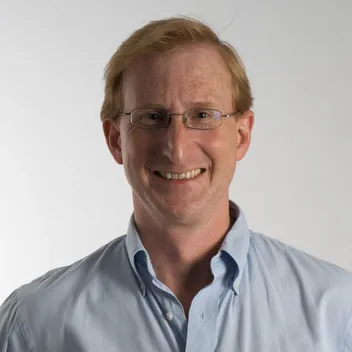
Bryan C Hunt, MD, is an Associate Professor of Pathology at the Medical College of Wisconsin (MCW). His clinical focus spans head & neck pathology, endocrine pathology, pancreaticobiliary tract pathology, and cytopathology, with active involvement in teaching medical students, residents, and fellows. Dr. Hunt collaborates with multidisciplinary clinical and basic science teams to advance pathology expertise in research projects. Education : Doctor of Medicine from Rosalind Franklin University of Health Sciences/The Chicago Medical School (2005) Training : Residency in Anatomic and Clinical Pathology at John H. Stroger Jr. Hospital (2005-2007), Yale-New Haven Hospital (2007-2009), followed by a Cytopathology Fellowship at MCW (2009-2010) His research emphasizes immunohistochemical and molecular applications in cytopathology, with publications analyzing diagnostic techniques for lung cancer, pancreatic tumors, and endocrine disorders. Dr. Hunt's work includes quality assessments for frozen section services and studies on PD-L1 testing variability. He has contributed to understanding rare entities like intraductal papillary squamous neoplasms and solitary fibrous tumors of the orbit. Recent publications (2022-2018) demonstrate expertise in anatomic pathology, cytopathology, and multidisciplinary collaboration. Key trends include applications of molecular diagnostics in cancer subtyping, interobserver variability in PD-L1 testing, and long-term outcomes of tumor management strategies. Dr. Hunt practices at Froedtert Hospital, specializing in anatomic pathology. He has no publicly listed scientific awards but maintains active participation in clinical and academic pathology through teaching and research.
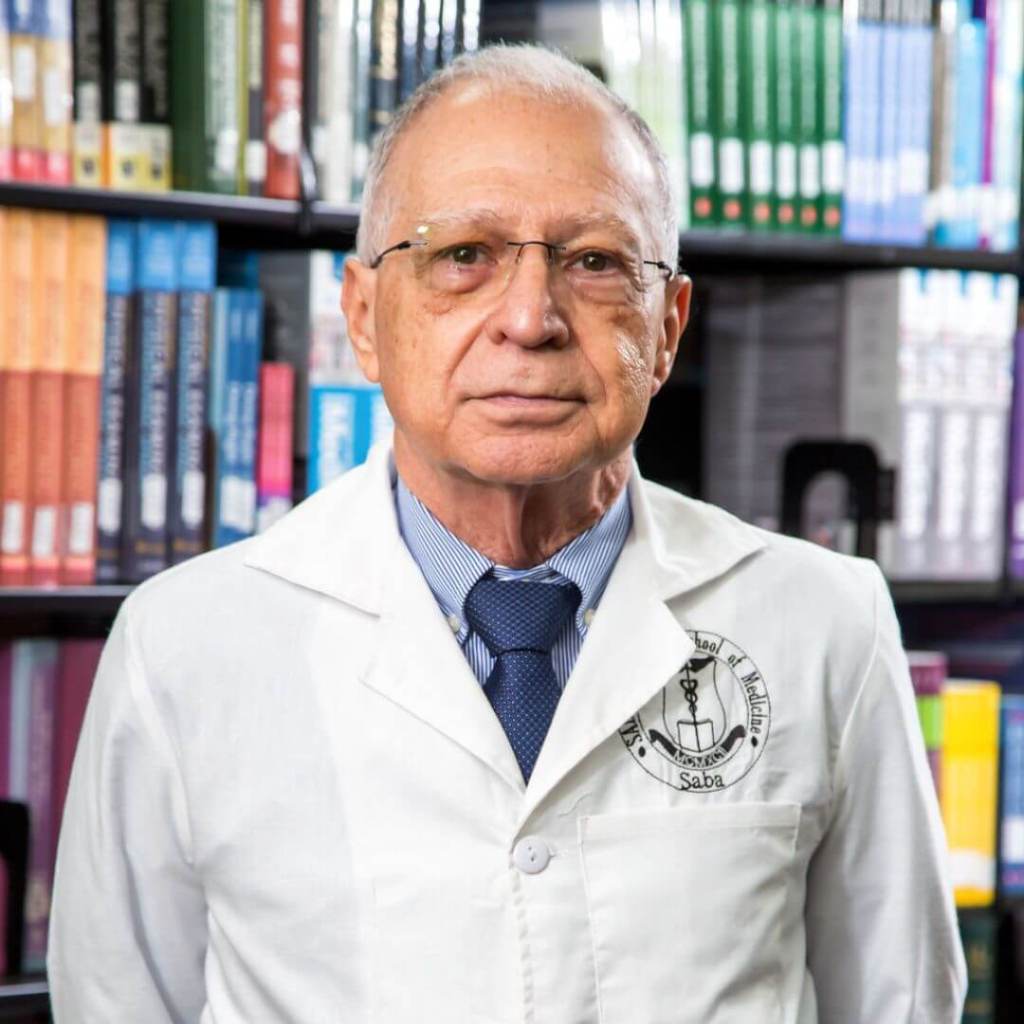
Victor M. DeLaCruz is a Professor and Chair of the Pathophysiology Department at Saba University School of Medicine. He is a board-certified Anatomic and Clinical Pathologist with extensive experience in Transplant Pathology and Cytopathology . His medical education includes an MD from Universidad de Caldas (1974) and postgraduate training at Jackson Memorial Hospital/University of Miami (Anatomic Pathology Residency, Fellowships in Immunopathology/Transplant Pathology, Cytopathology) and Universidad Javeriana (Anatomic and Clinical Pathology). He has held leadership roles such as Assistant Medical Director at the University of Miami Transplant Laboratory and Medical Director at his private laboratory in Colombia. His research focuses on organ rejection mechanisms in transplants, including contributions to the Banff Working Group Project on antibody-mediated rejection in liver allografts. His work spans multivisceral transplant pathology , mouse model toxicity studies , and cytology technique validation . His publications and presentations address small intestinal transplant rejection , multivisceral transplant pathology , and cytopathology techniques . He has collaborated with institutions like the University of Pittsburgh, UTMB, and the University of Miami. Scientific Awards : Diplomate, American Board of Pathology (ABP) Diplomate, American Board of Medical Specialties (ABMS) He has taught medical students at Saba University School of Medicine (2011–2015) and Universidad Metropolitana, Colombia (1984). His administrative roles include membership in the Transplant Committee for Heart and Kidney Transplants in Colombia and histology lab oversight at the University of Miami.
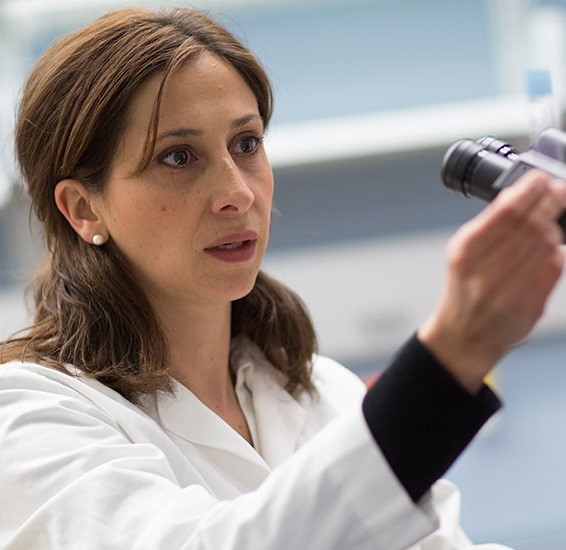
Dr. Camille Ehre is an Associate Professor at the University of North Carolina at Chapel Hill School of Medicine, where she conducts research on the biophysical and biochemical properties of mucus in airway diseases. Her laboratory is affiliated with the Marsico Lung Institute and focuses on understanding mucus alterations in cystic fibrosis (CF), chronic obstructive pulmonary disease (COPD), and primary ciliary dyskinesia (PCD), as well as studying SARS-CoV-2 infection pathways in airway cells. Dr. Ehre's research centers on the polymeric gel-forming mucins MUC5AC and MUC5B, which are among the largest glycoproteins in the animal world. The viscoelastic properties of mucus rely on these molecules, and she has established specialized assays to study mucin-mucin and mucin-DNA interactions using confocal imaging, fluorescence-based quantification, and multi-angle light scattering analysis. Her work demonstrates that mucus concentration in disease leads to airflow obstruction, bacterial infection, and chronic inflammation, with her laboratory developing new pharmacological approaches to restore lung health. Analysis of Dr. Ehre's publications from 2022-2025 reveals a strong focus on mucus properties in cystic fibrosis, SARS-CoV-2 infection mechanisms, and potential therapeutic approaches to improve mucus clearance. Her research spans multiple disciplines including respiratory medicine, biochemistry, virology, and biophysics, with particular emphasis on understanding how mucin organization affects disease progression and developing treatments targeting mucus abnormalities. Dr. Ehre conducts preclinical studies testing compounds aimed at improving mucus clearance, initially testing new pharmacological reagents in vitro using primary human bronchial epithelial cells and human specimens (sputum or bronchoalveolar lavages), with subsequent testing of drug efficacy and toxicity in vivo using mouse models of airway diseases such as the βENaC model. Her SARS-CoV-2 research includes detailed examination of viral production and structure using scanning electron microscopy in BSL-3 laboratory settings.
Guoping Cai, MD, is a Professor in the Department of Pathology at Yale School of Medicine, where he also serves as Associate Director of Cytopathology. His clinical and research work spans cytopathology, thoracic pathology, and genitourinary pathology, with a strong emphasis on molecular diagnostics and cancer biomarker discovery. He is affiliated with the Yale Cancer Center and actively contributes to interdisciplinary programs in cancer signaling networks and pancreatic diseases. Department: Department of Pathology School: Yale School of Medicine University: Yale University Specialties: Cytopathology, Thoracic Pathology, Genitourinary Pathology Dr. Cai's educational background includes an MD and MS from Wenzhou Medical College, followed by residency and fellowship training in Pathology and Laboratory Medicine at New York University Medical Center. He is board-certified in Anatomic and Clinical Pathology. His research interests focus on improving diagnostic accuracy through fine needle aspiration biopsy, rapid on-site evaluation, and molecular testing. Key areas include lung, pancreatic, thyroid, and bladder cancers, where he investigates biomarkers with diagnostic, prognostic, and therapeutic implications. His work integrates clinical pathology with advanced molecular techniques and machine learning applications. The recent publications reflect a strong trend in translational pathology, emphasizing the integration of cytology, histology, molecular data, and imaging to refine cancer diagnosis and prognosis. His work frequently explores immunomarkers, gene fusions, and algorithmic approaches to diagnostic challenges in cytopathology. Scientific honors include: Honorary Master of Arts degree from Yale University (2020) Dr. Cai is actively involved in clinical research, contributing as a sub-investigator in a trial on mechanisms of sensitivity and resistance to anti-cancer therapy in advanced lung cancer. While no formal advisees are listed, he collaborates extensively with researchers including Adebowale Adeniran, Minhua Wang, and Tong Sun. His laboratory and clinical work are supported by institutional resources at Yale and the Yale Cancer Center.
Leonardo Pagnotta is a Full Professor in Mechanical Design and Experimental Mechanics at the University of Calabria (UNICAL), where he serves in the Department of Mechanical, Energy and Management Engineering (DIMEG). He has held significant leadership positions including Director of DIMEG (2015-2021), member of the university's Academic Senate (2015-2021), and Coordinator of the PhD program in Mechanical Engineering. Currently, he heads both the Laboratories of Mechanical Engineering and the Laboratory of Mechanical Characterization of Materials at UNICAL. Professor Pagnotta earned his Degree in Industrial Technology Engineering (Mechanical specialization) from the University of Calabria in 1984, followed by a PhD in Mechanics of Materials from the University of Pisa in 1990. His academic career progressed from University Researcher (1994-2000) to Associate Professor (2000-2006), and finally to Full Professor since 2006 in the Scientific Sector ING-IND/14 "Mechanical Design and Machine Construction". His research focuses on numerical methodologies for stress analysis, reliability design, structural optimization, and experimental mechanics techniques. Key areas include residual stress measurement, elastic properties characterization of isotropic and anisotropic materials, fracture mechanics, and non-destructive testing. He has extensively worked on thermal barrier coatings (TBCs), metallic coatings, and mechanical characterization at micro- and nano-scales. Recent research explores nanostructured coatings, graphene-based composites, SMART materials, and applications in hydrogen energy systems, including fluid dynamics in hydrogen transport pipelines and hydrogen-powered trains. Professor Pagnotta's recent publications reveal a strong trend toward sustainable energy applications, particularly hydrogen infrastructure and storage systems. His work bridges traditional mechanical engineering with cutting-edge materials science, with significant focus on additive manufacturing technologies and their material challenges. The research demonstrates a clear evolution from fundamental mechanics to applied sustainable energy solutions, reflecting contemporary engineering priorities in clean energy transition. Professor Pagnotta has received numerous prestigious awards throughout his career: 2023: Best Poster Award for "On Fatigue Behavior Nanostructured Epoxy Composite Materials" at the 8th World Congress on Advanced Materials 2013: JMST Best Paper Award for "Mechanical Characterization of Materials at Small Length Scales" 2010: WSEAS Best Paper Award for "Evaluation of Squeeze-film Damping Effects in MEMS Perforated Plates" 1996: AIAS Award for "Lifetime Reliability Evaluation of Ceramic Components by a Finite Element Post-Processor" 1993: AIAS Award for "Influence of Specimen Planarity Errors in Biaxial Flexure Tests on Ceramic Materials" 1987: AIAS Award for "Application Possibilities of Holographic Interferometry in Residual Stress Measurement" As an academic advisor, Professor Pagnotta has supervised numerous theses across Mechanical, Management, and Biomedical Engineering programs, mentored student internships at companies and research centers worldwide, and served as scientific supervisor for multiple PhD dissertations. His research has been supported by significant grants including AQUAGENIUS, SAFE H2D, AGE-IT, INSPIRATION, ARIA, PICO-e-PRO, and other competitively funded projects. He has served as Principal Investigator for research agreements with ENEL, AEROprogetti, and IRPE, and contributed to collaborations with ALENIA, BREDA, and FOS. Professor Pagnotta leads several research laboratories at UNICAL, including his current role as Coordinator of the Mechanical Laboratories Cluster at DIMEG (2024-present). He previously co-founded and headed "MechLab" at DIMEG (2015-2023) and founded the "Material Characterization Laboratory (LCM)" in 2012. His laboratory work focuses on mechanical measurements, materials characterization, and advanced experimental techniques, supporting both research and educational activities in mechanical engineering.
Ermile Gaganidze is a Group Leader at the Karlsruhe Institute of Technology (KIT) within the Mechanics of Materials and Interfaces department. His research focuses on neutron irradiation effects on structural steels and tungsten alloys, modeling irradiation defect nucleation and growth, and developing material databases for fusion applications. Key trends in his publications include neutron irradiation effects on reactor materials, dislocation loop analysis, quantitative microstructure characterization, and multiscale modeling. His work addresses fusion reactor components like ITER specification tungsten and RAFM steels. He actively collaborates in labs such as IAM-MMI Mechanics of Materials and Interfaces, Additive Manufacturing, and Fusion Materials Laboratory. His research contributes to reactor safety and fusion material standards.
Jason Swedlow is a Professor and Chair of Quantitative Cell Biology at the University of Dundee's School of Life Sciences. His primary research focuses on cell division mechanisms, bioimaging technologies, and the development of open-source tools for managing and sharing imaging data. He leads the Open Microscopy Environment (OME), which includes software like Bio-Formats and OMERO, and co-founded Glencoe Software to commercialize these technologies. His work on the Image Data Resource (IDR) has established a global repository for bioimaging data. Collaborations include projects with EMBL-EBI and RIKEN, advancing data integration in life sciences. Research interests include the role of oxygen-sensing enzymes in mitotic spindle assembly and high-throughput screening for contraceptive development. Notable awards include the OBE (2021) and Fellow of the Royal Society of Edinburgh (2012). He holds leadership roles in initiatives like the NIH-funded 4D Nucleome project and chairs the Bill & Melinda Gates Foundation's sperm-targeting contraception program. Awards: OBE, Royal Society of Edinburgh Fellowship, BBSRC Innovator of the Year Grants: NIH, Gates Foundation, Wellcome Trust Labs/Teams: OME Consortium, National Phenotypic Screening Facility, Glencoe Software
Dr. Will Harrison is a Senior Lecturer in Mechanical Engineering at Swansea University, affiliated with the School of Aerospace, Civil, Electrical and Mechanical Engineering. He specializes in computational methods for structural engineering, particularly focusing on linking numerical trends to micromechanical phenomena. His research includes creep and fatigue modeling of aerospace materials, additive manufacturing, and automotive body-in-white design using high-performance computing. He completed his PhD on creep in nickel and titanium alloys (2007) and postdoctoral work at the Rolls-Royce UTC in Structural Materials. Research Interests: Finite Element Analysis (FEA), material characterization (creep/fatigue), optimization, additive layer manufacturing (ALM), and formability of thin sheet metals. Current collaboration with Crown Holdings on metal packaging forming. Awards: 2013 Royal Society MP/Civil Servant Pairing Scheme Teaching: Modules include Finite Element Method (EG-323, EGIM09) and Mechanical Engineering Design 2 (EGA214). He emphasizes hands-on engineering design and innovative teaching methods. Research Themes: Recent work focuses on creep modeling of nickel-based superalloys (e.g., Waspaloy), miniaturized testing techniques for steel formability, and bioinspired design (e.g., pelican mandible-inspired vehicle structures). His publications span 2002–2025, addressing topics like titanium alloy fracture mechanics and HPC-driven optimization.
Nadine Baluc is a researcher at the École Polytechnique Fédérale de Lausanne (EPFL), affiliated with unit PH-SB. Her work focuses on advanced materials for fusion energy applications, including oxide dispersion strengthened (ODS) ferritic steels and precious alloys. She investigates microstructural evolution, mechanical properties, and thermal behavior under extreme conditions. Key areas include the influence of thermo-mechanical processing on gold alloys and the development of fusion reactor materials tested in facilities like IFMIF and ITER. Research interests span materials science, nuclear engineering, and metallurgy. Her studies often involve synchrotron X-ray diffraction, high-heat-flux testing, and mechanical alloying techniques. Collaborations with units like SPc and CRPP highlight interdisciplinary efforts in fusion technology and material fabrication. Publications emphasize ODS steel optimization, precipitation kinetics, and radiation-resistant materials. Recent work explores ordered nanodomains in gold alloys and high-frequency magnetic sensors for ITER diagnostics. Nadine’s contributions bridge fundamental materials research with practical fusion energy applications.
Dr. Sebastian Schmelzle is a researcher at the Department of Biology, Technische Universität Darmstadt , where he works on functional morphology and biomechanics of arthropods. Since 2022, he has also served as CEO of Small World Vision GmbH . His academic career includes a magna cum laude PhD in Biology (2015) and research roles in DFG- and BMBF-funded projects like LIS, Waldklimafonds, NOVA, and ASTOR. He specializes in 3D imaging techniques, particularly synchrotron microtomography , and has contributed to open-source platforms like Biomedisa . Education : PhD in Biology (2015, TU Darmstadt), Diploma in Biology (2008, Eberhard Karls University Tübingen) Research interests focus on arthropod defensive mechanisms , notably the ptychoid defense in oribatid mites. His work explores how evolutionary lineages independently develop exoskeletal and muscular adaptations for survival. He bridges entomology , materials science , and computational imaging to study biomechanics, surface chemistry, and structural efficiency. Publications highlight his expertise in 3D microtomography (e.g., analyzing ant mandibles, insect cuticular hydrocarbons, and primate retinal structures). Collaborative projects span biomedical image segmentation , insect biomechanics , and synchrotron radiation applications . His recent work integrates machine learning and real-time data filtering for enhanced visualization. Additional contributions include public engagement initiatives like the AR Museum Station and Insect Excursions , aiming to democratize scientific knowledge through interactive exhibits and field studies.
Pradeep R. Guduru is a Professor of Engineering at Brown University's School of Engineering, specializing in experimental solid mechanics. He has been with Brown University since 2002, starting as an Assistant Professor, becoming Associate Professor in 2008, and achieving full Professor status in 2014. He previously held visiting professor appointments at UC Berkeley (2008-09) and Stanford University (2015-16). Professor Guduru received his Bachelor's degree in Mechanical Engineering from Sri Venkateswara University, India, and Master's degree in Aerospace Engineering from the Indian Institute of Science. He earned his Ph.D. in Aeronautics (with a minor in Materials Science) from California Institute of Technology in 2001, working under Professor Ares Rosakis. His research focuses on the intersection of mechanics with other disciplines, particularly on (i) mechanics of adhesion and friction in soft materials, (ii) coupled problems at the interface between mechanics and chemistry, (iii) dynamic behavior of heterogeneous materials, and (iv) mechanics of small scale structures. His work on coupled mechanics-chemistry problems has significant applications in electrochemical energy storage materials (particularly lithium-ion battery materials), heterogeneous catalysis in energy conversion systems, and energetic materials. His lab's approach combines controlled experiments on specimens of simple geometries with analytical modeling to capture essential mechanics and physics of phenomena under consideration. Analysis of Professor Guduru's recent publications reveals a strong focus on energy storage materials, particularly lithium-ion battery technologies. His work combines experimental approaches with theoretical modeling to understand the mechanical behavior of battery components during electrochemical cycling. A significant portion of his recent research investigates the solid electrolyte interphase (SEI), silicon anodes, and the coupled electro-chemo-mechanical phenomena in battery materials. He has also maintained research in dynamic failure mechanisms and shear banding in various materials. Professor Guduru has received numerous prestigious awards including: James R. Rice medal of the Society of Engineering Science (2020) Presidential Early Career Award for Scientists and Engineers (PECASE) in 2007 National Science Foundation CAREER award in 2006 William F. Ballhaus prize for outstanding doctoral dissertation in Aeronautics from Caltech (2001) He has served as principal investigator on numerous multi-disciplinary research teams funded by agencies including the Department of Energy (DOE), National Science Foundation (NSF), Air Force Office of Scientific Research (AFOSR), and Army Research Office (ARO). His lab has developed innovative experimental techniques and scientific instrumentation for studying coupled phenomena in materials. He has held editorial positions on the Journal of the Mechanics and Physics of Solids and Acta Mechanica Sinica, and served on the Executive Committee of the Applied Mechanics Division of ASME. Professor Guduru directs the Experimental Solid Mechanics Laboratory at Brown University, with lab spaces located at 634 Barus and Holley, 109 Prince Laboratory, and 113 Prince Laboratory. His lab is equipped with advanced facilities including a combined electrochemical and mechanical testing facility, multi-beam optical sensors, coherent gradient sensors, Hysitron Triboindenter, atomic force microscopes, and various microscopy and testing equipment. The lab's approach to experimental mechanics has been two-fold: (a) to devise experiments to discover and reveal new insights into coupled phenomena in materials systems of technological importance and (b) to develop new scientific instrumentation that can extend the envelope of spatial and temporal resolutions simultaneously to reveal mechanisms of deformation and localization in heterogeneous materials.