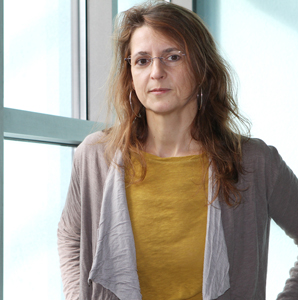
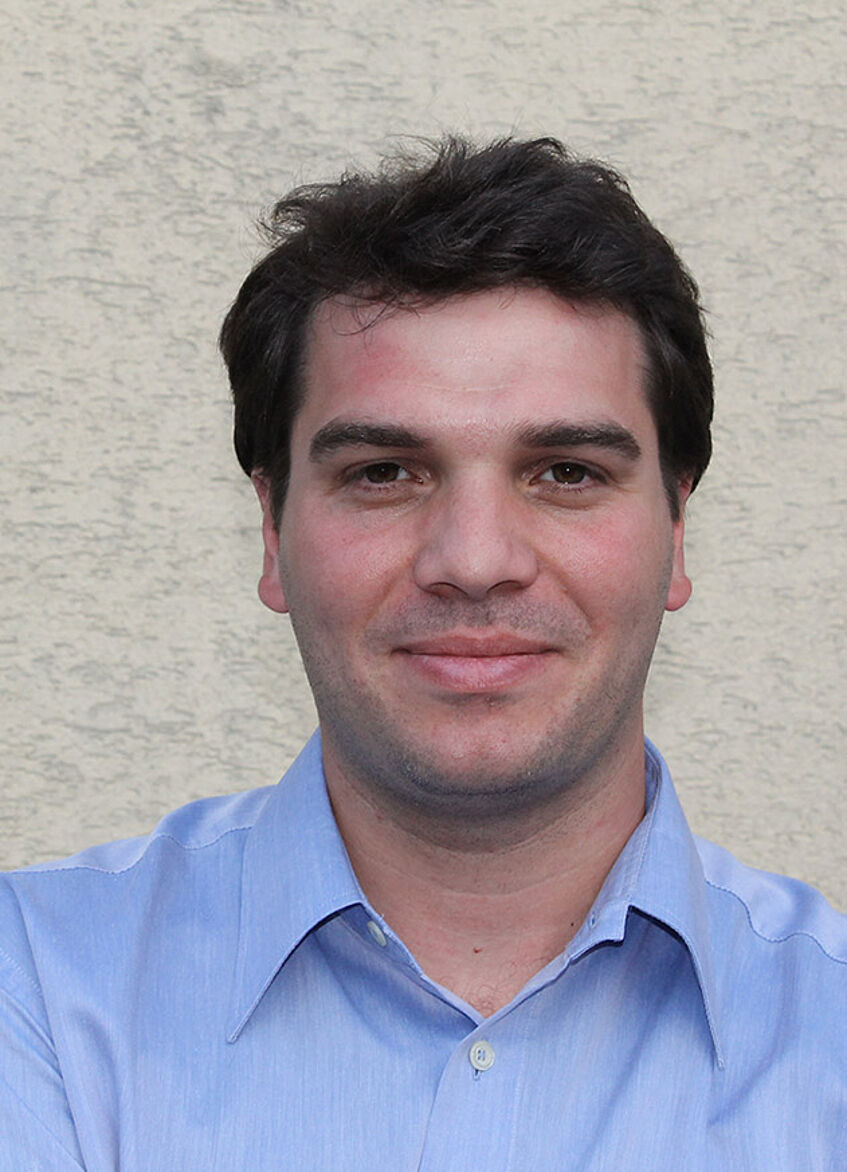
Professor Ronald van Rij holds the position of Professor of Experimental Virology and Head of the Laboratory of Experimental Virology at Radboud University Medical Center in Nijmegen, Netherlands. He also serves as a Guest Professor at the University of Pavia, Italy. His research focuses on antiviral mechanisms in insects, particularly the roles of RNA interference (RNAi) and piRNA pathways in Drosophila melanogaster and Aedes aegypti mosquitoes. He has pioneered studies on viral defense in insects and vector competence, with translational work on antiviral compounds against pathogens like Zika and SARS-CoV-2 through the international 'COVID Moonshot' project. Education includes a PhD from the University of Amsterdam (2002) and postdoctoral fellowships at UCSF (USA) and the Hubrecht Institute (Netherlands). He has received prestigious grants such as ERC Consolidator and VICI awards, and was honored as Lecturer of the Year (2019) and PhD Supervisor of the Year (2017). Awards: ERC Proof of Concept Grant (2020), NWO VICI (2017), ERC Consolidator (2014), NWO VIDI (2008), EMBO Fellowship (2002). Teaching: Coordinates courses on virology, non-coding RNA, and innate immunity at Radboud University. Labs: Manages a BSL-3 facility for studying vector-borne pathogens in mosquitoes. His work bridges basic science and translational medicine, with emphasis on small RNA pathways and arbovirus control.
Sebastian Falk is an Associate Professor at the Max Perutz Labs, part of the University of Vienna, within the Department of Structural and Computational Biology. His research focuses on the biogenesis and action of small RNAs, particularly piRNAs, employing structural biology and biochemical approaches to elucidate molecular mechanisms. He received the prestigious EMBO Young Investigator award in 2022. His lab investigates RNA surveillance pathways, mRNA splicing, and the interplay between RNA processing and degradation. Key projects include studying the MTR4-NRDE2-CCDC174 complex and piRNA processing factors in C. elegans. Falk has organized major symposia on RNA biology and contributed to high-impact publications in journals like Nature and Nucleic Acids Research . EMBO Young Investigator (2022) Grants: 'Characterization of piRNA processing factors in C. elegans' (2023-2026)
Pascale Romby is a leading French molecular biologist and CNRS Researcher based at the Institute of Molecular and Cellular Biology (IBMC) in Strasbourg. She serves as Director of CNRS Unit UPR 9002 since 2016 and Team Leader of the 'Bacterial regulatory RNAs and mRNAs' group since 2004. Specializes in RNA biology and bacterial gene regulation Current focus on RNA-protein interactions and stress response networks Member of international/national scientific societies Active editorial and supervisory roles Research Interests : Romby's work centers on regulatory RNAs in bacteria, particularly their roles in virulence, stress responses, and host-pathogen interactions. Her team investigates RNA degradation machineries, translation control mechanisms, and the impact of small RNAs on bacterial persistence and metabolic adaptation. Publications Trends : Her recent work focuses on RNA targetome mapping in Gram-positive pathogens, ribosome structure-function relationships, and multi-layered regulatory networks controlling bacterial virulence. These studies employ biochemical, structural, and systems biology approaches. Scientific Honors : Recipient of the prestigious Pasteur Medal (2018) Langevin Prize by French Academy of Sciences (2010) CNRS Silver Medal (2006) and Bronze Medal (2003) FEBS Fellowship (1984) and Choucroun Prize (1984) Supervision & Leadership : Has mentored 15 PhD students, 10 postdocs, and 23 visiting researchers. Organized two major Jacques Monod Conferences on RNA regulation and delivered over 45 invited seminars worldwide.
Mihaela Zavolan is a Full Professor at the Biozentrum, University of Basel, Switzerland, where she has held continuous faculty appointments since 2003 (Assistant Professor 2003-2008, Associate Professor 2008-2014, Full Professor 2014-present). She simultaneously serves as a Group Leader at the Swiss Institute of Bioinformatics since 2004, directing research on RNA regulatory networks. Her educational background includes: PhD in Computer Science, University of New Mexico (1996-1999) M.Sc. in Computer Science, University of New Mexico (1994-1996) M.D., University of Medicine and Pharmacy, Timisoara, Romania (1986-1992) Dr. Zavolan's research centers on computational RNA biology , with pioneering work in microRNA mechanisms, RNA splicing, RNA-binding proteins, and pre-mRNA 3' end processing. Her group integrates advanced computational modeling with high-throughput experimental data to dissect post-transcriptional gene regulation networks. Key methodological contributions include quantitative analysis of CLIP techniques and biophysical models of miRNA-mRNA interactions. Analysis of her publication record reveals consistent focus on developing and applying computational frameworks for RNA regulatory networks, with increasing emphasis on genome-wide mapping of RNA-protein interactions and quantitative modeling of regulatory dynamics. Her work bridges molecular biology, genomics, and systems biology through innovative algorithm development. Her major scientific awards include: ERC Starting Grant (2012) Young Investigator of EURASNET (2006-2009) Lita Annenberg Hazen Presidential Fellowship, The Rockefeller University (2001-2003) Presidential Fellowship, The Rockefeller University (2001) Burroughs Wellcome Fellow, The Rockefeller University (2000) Dr. Zavolan has secured competitive research funding including the ERC Starting Grant and maintains active grant support through her group leadership positions. She serves on editorial boards of Genome Biology, Bioinformatics, BMC Molecular Biology, and Cells, and has organized major conferences including the European Conference on Computational Biology (2012) and Computational RNA Biology Conference (2014). She leads parallel research groups at the Biozentrum (Computational and Systems Biology) and Swiss Institute of Bioinformatics (RNA regulatory networks), employing interdisciplinary teams that combine computational biology, molecular biology, and high-throughput data analysis to investigate RNA-mediated gene regulation mechanisms.
Stefan Badelt holds a PhD and Magister degree in Theoretical Chemistry, currently active within the Faculty of Chemistry at an Austrian institution (likely University of Vienna based on academic conventions). His research spans computational RNA biology, bioinformatics, and molecular engineering with continuous publication output from 2011 through projected 2025 activities. RNA Folding (100%) Protein Secondary Structure (67%) Transcription Processes (45%) Circular RNA Mechanics Alu Element Biology His research focuses on cotranscriptional RNA folding dynamics, developing computational tools like DrForna for visualization and DrTransformer for heuristic folding prediction. Recent work critically examines deep learning limitations in RNA structure prediction while advancing nearest-neighbor energy models. His fingerprint reveals strong specialization in RNA polymerase II dynamics and non-pseudoknotted structural systems. Publication trends show consistent output in high-impact bioinformatics journals, with 2022-2023 featuring significant algorithmic contributions. His work bridges computational methods with experimental validation, particularly in RNA folding pathways and DNA strand-displacement systems. While no specific awards are documented, his publications demonstrate substantial scholarly impact with multiple papers exceeding 10 Mendeley readers and significant citation metrics. Badelt actively mentors students through collaborative projects, evidenced by co-authored publications with Laurenz Miksch and others. His research receives support through computational biology grants enabling development of tools like the commit-and-delay model for RNA dynamics. Future work includes domain-level design of cotranscriptional folding pathways presented at upcoming 2024-2025 conferences. He operates within the Theoretical Chemistry research ecosystem, collaborating closely with Ivo Hofacker's group on RNA bioinformatics. Current activities focus on exact coarse-grained dynamics modeling and pseudoknot-free pathway design, positioning his lab at the intersection of computational biology and molecular engineering.
Annick Harel-Bellan serves as Research Professor at the French Alternative Energies and Atomic Energy Commission (CEA), leading the Laboratory of Epigenetics and Cancer within the Institute of Biology and Technology Saclay and the Unit of Integrative Biology and Molecular Genetics. Her career spans over three decades of research on molecular mechanisms governing cell proliferation and differentiation, with a focus on cancer pathogenesis. Her primary research integrates epigenetics, small RNA biology, and transcriptional regulation to investigate how cellular differentiation pathways are disrupted in cancer. She examines the balance between proliferation and differentiation at molecular levels, particularly through epigenetic modifications and non-coding RNA networks, seeking to elucidate fundamental processes underlying tumor development. Dr. Harel-Bellan has been honored with significant awards including: Fogarty fellowship (1986-1988) Prize from the "Ligue du Val de Marne" (1994) Prize from the "Ligue de l'Essonne" (1999) Prize from the Ligue de Paris (Olga Sain) (2001) Prize Rosen Foundation de la Recherche Médicale (2002) Membership in EMBO Membership in Academia Europaea She has maintained continuous leadership at CNRS/CEA since 1988, progressing from heading Transcriptional Regulations groups to directing the Epigenetics and Cancer Laboratory since 1999, establishing a sustained research program in molecular oncology.
Martin Crespi is a CNRS Researcher at the Institute of Plant Sciences Paris-Saclay (IPS2) since 2018 and has led the "Regulatory RNAs in root plasticity" team since 2003. He served as Director of IPS2 (2015-2024), Director of the Plant Genomics Unit (2014-2015), and held leadership roles at CNRS institutions since 1994. Current Position: Researcher, CNRS, IPS2 Leadership: 14-member team (7 permanent) His research focuses on non-coding RNAs, epigenetics, and root development, exploring how riboregulators interact with splicing/chromatin factors to modulate root adaptability. His work bridges plant molecular biology, symbiosis, and environmental stress responses. Recent publications highlight his contributions to understanding RNA-mediated regulation in Arabidopsis and Medicago truncatula, covering topics like alternative splicing, chromatin looping, and miRNAome plasticity. These studies integrate genomics and molecular biology to decode root-soil interactions. Scientific Awards: Prix Dr. Pedro Berdoy (Argentina), National Society of Experimental Biology Award (Argentina) He has supervised 18 PhD students, 43 postdocs, and 14 Masters while leading 61 projects (including 9 EU grants and 7 Marie Curie grants) and participating in over 30 international scientific committees or review panels.
Stefan Ameres is a full Professor at the Max Perutz Labs, affiliated with the Department of Biochemistry and Cell Biology. His research focuses on RNA biology, particularly microRNA biogenesis, RNA silencing mechanisms, and transcriptome dynamics. He holds significant roles including Vice Dean at Max Perutz Labs since 2024. Key research interests include RNA processing pathways, epitranscriptomics, and the role of non-coding RNAs in cellular regulation. He has pioneered methods like SLAMseq and Rnalib for transcriptomics analysis, and contributed to understanding RNA exosome function and post-transcriptional regulation. Awards: DOC Award of the City of Vienna (2008) Elected Member of the Austrian Academy of Sciences (Young Academy) (2015) Diploma Award for academic excellence (2003) Recent work highlights include studies on ERH-mediated interferon signaling, RNA exosome assembly, and development of open-source diagnostic assays. His lab actively collaborates on projects like RiboTrace (RNA silencing dynamics) and RNAdeco (RNA decoration technologies). Activities include organizing Microsymposium on RNA Biology and serving in academic leadership roles.
Udo Bläsi is a Professor at the Max Perutz Labs, affiliated with the Department of Microbiology, Immunobiology and Genetics. His research focuses on translational regulation, RNA-protein interactions, and bacterial pathogenesis, particularly in Pseudomonas aeruginosa and archaeal systems like Sulfolobus solfataricus . He leads projects on small RNAs, Hfq-Crc regulatory networks, and antimicrobial resistance mechanisms. Over 100 peer-reviewed publications span topics including ribonucleoprotein complexes, gene expression control, and bacterial physiology. Collaborations highlight global networks in microbiology and molecular biology. Research interests include: RNA regulatory mechanisms Translational control in bacteria/archaea Antimicrobial resistance Hfq-mediated riboregulation Archaeal translation machinery Notable projects (2020-2023) investigate small RNAs' role in antibiotic susceptibility and P. aeruginosa virulence. Recent articles emphasize structural biology of Hfq-Crc assemblies and CrcZ RNA's role in biofilm formation. Grants and collaborations fund explorations into metabolic regulation and bacterial genetics. Labs/teams: Active in Max Perutz Labs' microbiology and immunobiology divisions, with contributions to structural and functional studies of RNA-protein complexes.
University of Natural Resources and Life Sciences ViennaAustria
Johannes Grillari is Associate Professor at the Institute of Molecular Biotechnology, Department of Biotechnology and Food Science, University of Natural Resources and Life Sciences, Vienna (BOKU), and Director of the Ludwig Boltzmann Institute for Traumatology in collaboration with AUVA. His research bridges molecular biotechnology, aging, and regenerative medicine, with a focus on extracellular vesicles (EVs) and microRNAs in cellular senescence and tissue regeneration. Research Interests: Molecular mechanisms of cellular and organismal aging Role of miRNAs and EVs in senescence and regeneration Targeted delivery of EVs for regenerative medicine Discovery of biomarkers for aging and age-related diseases Senolytic therapies and ribosomal heterogeneity in aging His work has pioneered the understanding that EVs from senescent cells inhibit regeneration, whereas those from mesenchymal stromal cells have therapeutic potential. He has authored over 230 SCI publications and holds 15 patents, with recent research focusing on engineered EVs, EV-based diagnostics, and senolytic drug development. Scientific Awards: Walter Doberauer Prize for Aging Research (2012) Best Presentation Award, telomerase: a crystal ball for the future? (2011) Poster Prize at ECONAG 2006 Poster Prize at EMBO/Harden Conference 2004 Advising, Grants, and Leadership: Johannes Grillari leads multiple research projects funded by the Christian Doppler Research Society and the Austrian Science Fund (FWF), including the CD Laboratory for Multimodal Analytical Imaging of Skin Aging and Senescence. He is a co-founder of biotech companies in the field of senescence and EVs, and actively mentors students and early-career researchers. Labs and Research Teams: His research is conducted at the Institute of Molecular Biotechnology at BOKU and the Ludwig Boltzmann Institute for Traumatology. His team focuses on EV biology, miRNA signaling, skin and bone aging, and the development of novel therapeutic and diagnostic tools.
Assoc. Prof. Ovidiu Paun is an Associate Professor at the Department of Botany and Biodiversity Research within the Faculty of Life Sciences at the University of Vienna, Austria, where he has served since 2019 following a tenure-track Assistant Professor position (2015-2019). He leads the Plant Ecological Genomics research group, focusing on understanding why and how organisms diversify through fundamental evolutionary processes of adaptation and divergence. Paun earned his PhD in Evolutionary Biology from the University of Vienna (2005), with a dissertation on "Evolution of apomixis in the Ranunculus cassubicus group," supervised by Elvira Hörandl and Tod Stuessy. Prior to this, he completed a degree in Horticulture from the University of Agronomical Sciences in Bucharest, Romania (2000). His postdoctoral training included prestigious Marie Curie and Erwin Schrödinger Fellowships at Royal Botanic Gardens Kew (2006-2010). His research integrates molecular data with environmental context to investigate natural populations of both model and non-model organisms, exploring the origin of biodiversity and its dynamics. With particular interest in understanding the role of the environment in evolutionary processes, Paun has made significant contributions to the exploration of epigenetic variation in evolution. His integrative approaches, built upon a genomics core, aim to understand how lineages speciate and spread across niches, including novel environments. Analysis of Paun's recent publications reveals a strong focus on polyploidy, adaptation mechanisms, and speciation processes across diverse plant systems. His work spans from orchids (Dactylorhiza) to bromeliads (Tillandsia), examining parallel adaptation, epigenetic contributions to evolution, and the genomic basis of ecological divergence. A recurring theme is the investigation of how environmental factors shape evolutionary trajectories through both genetic and epigenetic mechanisms. 2013 START Prize from the Austrian Science Fund (FWF) 2009 Elected fellow of the Linnean Society, London 2007 Marie Curie Fellowship from the EU Commission 2006 Erwin Schrödinger Fellowship from the Austrian Science Fund (FWF) 2006 Best Presentation Award from the Systematics Association 2002 IAPT Award for young investigators in Plant Systematics Paun has secured substantial research funding including an FWF Stand-alone grant (P35275-B, 2022-2026, €600K), multiple Marie Curie Intra-European Grants (2022-2024, €359K total), and a prestigious START grant (Y661, 2013-2022, €1.2M). He serves as a reviewer for numerous funding agencies including ERC, NSF, and DFG, and has organized international symposia on evolutionary epigenetics and speciation genomics. His laboratory employs integrative genomic approaches to investigate adaptation mechanisms and speciation processes, with particular emphasis on how organisms respond to environmental challenges and how this shapes biodiversity patterns.