Chiara Mariani is a researcher associated with the NRG Group, supervising MSc students in nuclear engineering and thermal-hydraulic systems. Her work focuses on Small Modular Reactors (SMRs), power sector integration, and safety analysis using tools like RELAP5. She has advised students on topics such as SMR design, heat transfer in compact steam generators, and accident scenario simulations (SBO/LOCA). Students Supervised: Alessandro Passerin d’Entreves: Analyzed SMR integration in Bolivia's power sector (2023). Alessio Lamperti: Investigated heat transfer in compact plate steam generators (2023). Ashwin Bala Vidya: Designed and simulated a Nuward-like SMR for safety scenarios (2022, now at NINE Engineering). Her research emphasizes practical applications of nuclear technology, including thermal-hydraulic modeling and policy-oriented energy system analysis. No scientific awards or peer-reviewed articles are explicitly mentioned in the provided data.
Lydie GIOT is an Associate Professor at IMT Atlantique's SUBATECH Laboratory since 2006, specializing in reactor physics and nuclear safety. She holds a PhD in Nuclear Physics (2003) with a European Doctorate label from the Universities of Caen and Surrey. Her research focuses on decay heat calculations, nuclear data uncertainty propagation, and molten salt reactor modeling. She has led projects like ENDURANCE (2024–2028) and APRENDE (2024–2028), addressing Generation IV reactor challenges. She advises on EU nuclear safety initiatives and chairs the Nuclear Technology course for engineering students. Key roles include representing IMT Atlantique in the European Industrial Alliance for Small Modular Reactors and co-chairing the CNRS steering committee for MSR systems. Education: PhD in Nuclear Physics (2003), Marie Curie Fellowships (2002–2006) Teaching: Responsible for reactor physics courses and STAR engineering program (2009–2017) Recognition: Knight of the French Academic Palms (2022), SAMPO Fellowship (2015) Her work bridges fundamental physics (antineutrino oscillations in Double Chooz/SoLid experiments) with applied nuclear engineering, emphasizing decay heat safety for reactor design and waste management. Collaborations span CEA, IRSN, and international organizations like OECD/NEA.
Dr. Marcus Dahlfors is a Lecturer in the School of Computer Science and Engineering at Bangor University. His research focuses on neutron physics, nuclear reactor design, and astrophysical nucleosynthesis. He leads projects on neutron capture cross-section measurements, thermal-hydraulics, and advanced reactor technologies, with collaborations at CERN's n_TOF facility. Key contributions include studies on actinide behavior, small modular reactors, and fission dynamics. Affiliations: CERN n-TOF Collaboration, UK National Thermal-Hydraulics Facility Education: PhD in Nuclear Physics (implied by publications) Research interests include nuclear fuel cycles, neutron-induced reactions, and applications in energy and astrophysics. Over 50 peer-reviewed publications in journals like Physical Review C and Progress in Nuclear Energy .
Graeme Trundle is a doctoral student at KTH Royal Institute of Technology , affiliated with the Nuclear Science and Engineering Unit . His research focuses on reliability assessment of nuclear systems, particularly passive instrumentation and control systems (ICS) in small modular reactors (SMRs) through probabilistic safety assessment (PSA) methodologies. Research Interests : Nuclear reactor safety analysis Passive safety systems Reliability engineering Probabilistic risk assessment Small modular reactor (SMR) design
Dr. Sören Kliem is the Head of the Reactor Safety Department at the Institute of Resource Ecology, Helmholtz-Zentrum Dresden-Rossendorf (HZDR), a leading German research center in nuclear and environmental sciences. He holds a PhD from the Technical University Dresden and has been a key figure in reactor safety research since joining Forschungszentrum Rossendorf in 1994. He leads a department focused on advanced nuclear safety analysis, code development, and experimental validation. Education: PhD, Technical University Dresden, Faculty of Machinery Building, 2010 Diploma, Moscow Power Engineering Institute (MEI), 1992 His research interests include reactor dynamics, nuclear accident analysis, thermal-hydraulics, neutron kinetics, coolant mixing in PWRs, and the development and validation of coupled simulation codes such as DYN3D and ATHLET. He is actively involved in EU-funded projects like Horizon 2020 R2CA, McSAFER, and EURATOM EASI-SMR, focusing on the safety of conventional and innovative reactor designs, particularly small modular reactors (SMRs). The 15 most recent publications reflect a strong focus on reactor safety modeling, including boron dilution transients, severe accident management, code validation using experimental data (e.g., from ROCOM), and the application of high-fidelity simulation tools (CFD, coupled codes) to nuclear safety problems. His work emphasizes both numerical simulation and experimental benchmarking, particularly in the context of PWRs and VVER reactors. Scientific Projects: Horizon 2020 R2CA: Reduction of radiological consequences of design basis and design extension accidents (2019–2023) Horizon 2020 McSAFER: High-Performance Advanced Methods and Experimental Investigations for the Safety Evaluation of Generic Small Modular Reactors (2020–2023) Horizon EURATOM EASI-SMR: Ensuring Assessment of Safety Innovations for SMR (2024–2028) Kliem plays a central role in advising and leading collaborative research efforts, supervising junior researchers, and contributing to international benchmarking initiatives. He has no listed formal students, but his leadership implies significant mentoring. He is involved in multiple research facilities, including the ROCOM and TOPFLOW test facilities, which are critical for experimental validation of safety codes. Laboratories and Facilities: ROCOM (Rossendorf Coolant Mixing) test facility – for studying coolant mixing and boron dilution TOPFLOW facility – for two-phase flow and safety experiments DYN3D/ATHLET code development and validation environment
Emil Fridman is a Senior Scientist in the Reactor Safety Division at the Institute of Resource Ecology, Helmholtz-Zentrum Dresden-Rossendorf (HZDR). He has been with HZDR since 2008, progressing from Research Assistant to his current position since 2015, and previously served as Head of the Junior Research Group Reactor Physics from 2012-2014. Dr. Fridman earned his Ph.D. in Nuclear Engineering from Ben-Gurion University between 2004-2008. His academic background forms the foundation for his expertise in nuclear reactor systems and safety analysis. His research focuses on reactor physics and engineering, advanced nuclear fuel cycles, safety analysis of nuclear reactors, and nuclear waste management. Dr. Fridman has led and participated in numerous international projects including Horizon Europe ESFR-SIMPLE (2022-2026), Horizon 2020 McSAFER (2020-2023), and several IAEA Coordinated Research Projects on sodium fast reactor safety and benchmarking. His work bridges theoretical modeling with practical safety applications for next-generation nuclear systems. Analysis of Dr. Fridman's recent publications (2022-2025) reveals a strong emphasis on sodium-cooled fast reactors (SFRs), with particular focus on safety analysis, neutronics modeling, and code development/validation. His research frequently involves international collaborations across Europe and addresses critical challenges in reactor transient analysis, core deformation scenarios, and benchmark validation for next-generation nuclear systems. The consistent publication record demonstrates his leadership in advancing computational methods for nuclear safety analysis. Dr. Fridman has secured significant research funding through major international projects including Horizon Europe ESFR-SIMPLE, Horizon 2020 McSAFER, and multiple IAEA Coordinated Research Projects. His leadership in the Reactor Safety Division at HZDR involves mentoring junior researchers and coordinating international collaborations across European nuclear research institutions. As a key member of the Reactor Safety Division at HZDR, Dr. Fridman contributes to the development and validation of the DYN3D/ATHLET code system for reactor safety analysis. His work is integrated within HZDR's broader mission in resource ecology and nuclear safety research, collaborating with teams across the Institute of Resource Ecology and international partners in the European nuclear research community.
Mengqi Bai is a Lecturer in Advanced Nuclear Reactor Technology at the Department of Mechanical and Aerospace Engineering, focusing on advanced modular reactor systems, molten salt technologies, and nuclear hybrid systems with thermal energy storage. Their research aligns with UN Sustainable Development Goals, particularly in clean energy and climate action. Key affiliations include the Dalton Nuclear Institute and the Henry Royce Institute. Education includes a PhD in 2017 on small modular nuclear reactors for marine propulsion. Research interests span reactor design, thermal hydraulics, and low-carbon energy solutions. Over 5 peer-reviewed articles since 2019 address topics ranging from molten salt components to liquid air energy storage economics. No scientific awards are explicitly mentioned. Bai has secured industry-government research funding and leads MSc courses in Reactor Physics and Thermal Hydraulics. Supervision experience includes student training and software development in nuclear engineering. Collaborations involve institutions globally, emphasizing interdisciplinary approaches to nuclear innovation and sustainable energy systems.
Dr Ross Peel is a Research Fellow at King's College London's Department of War Studies and the Centre for Science & Security Studies (CSSS). His primary roles include leading research on nuclear security, safeguards, and the intersection of nuclear power with international diplomacy and conflict. He joined King’s in 2019 as a Research Associate and transitioned to his current role in 2020. Previously, he worked at Nuclear-21 Ltd as an Associate Partner, focusing on nuclear decision support. Education: PhD in Nuclear Science and Technology (University of Sheffield, 2017) MEng in Mechanical Engineering with French (University of Sheffield, 2011) Associate of King’s College in Theology (King’s College London, 2023) Dr Peel’s research emphasizes nuclear security for advanced reactors, strategic trade controls, and non-proliferation. His work critically examines risks in emerging nuclear technologies, including small modular reactors (SMRs) and floating nuclear plants. He also investigates the misuse of nuclear infrastructure in conflict, such as during the Russia-Ukraine war. His publications highlight themes like insider threat mitigation, nuclear safeguards-by-design, and the dual-use challenges in technology transfer. Recent work includes analyses of industry perspectives on SMR security and case studies on academic research organization safeguards. He contributes to policy discussions through events like 'Securing the Future of Nuclear Energy' and academic modules on open-source intelligence. Dr Peel’s advocacy for robust international frameworks addresses modern threats, including state-level sabotage and the proliferation risks of next-generation nuclear systems. His interdisciplinary approach bridges technical expertise with strategic policy recommendations.
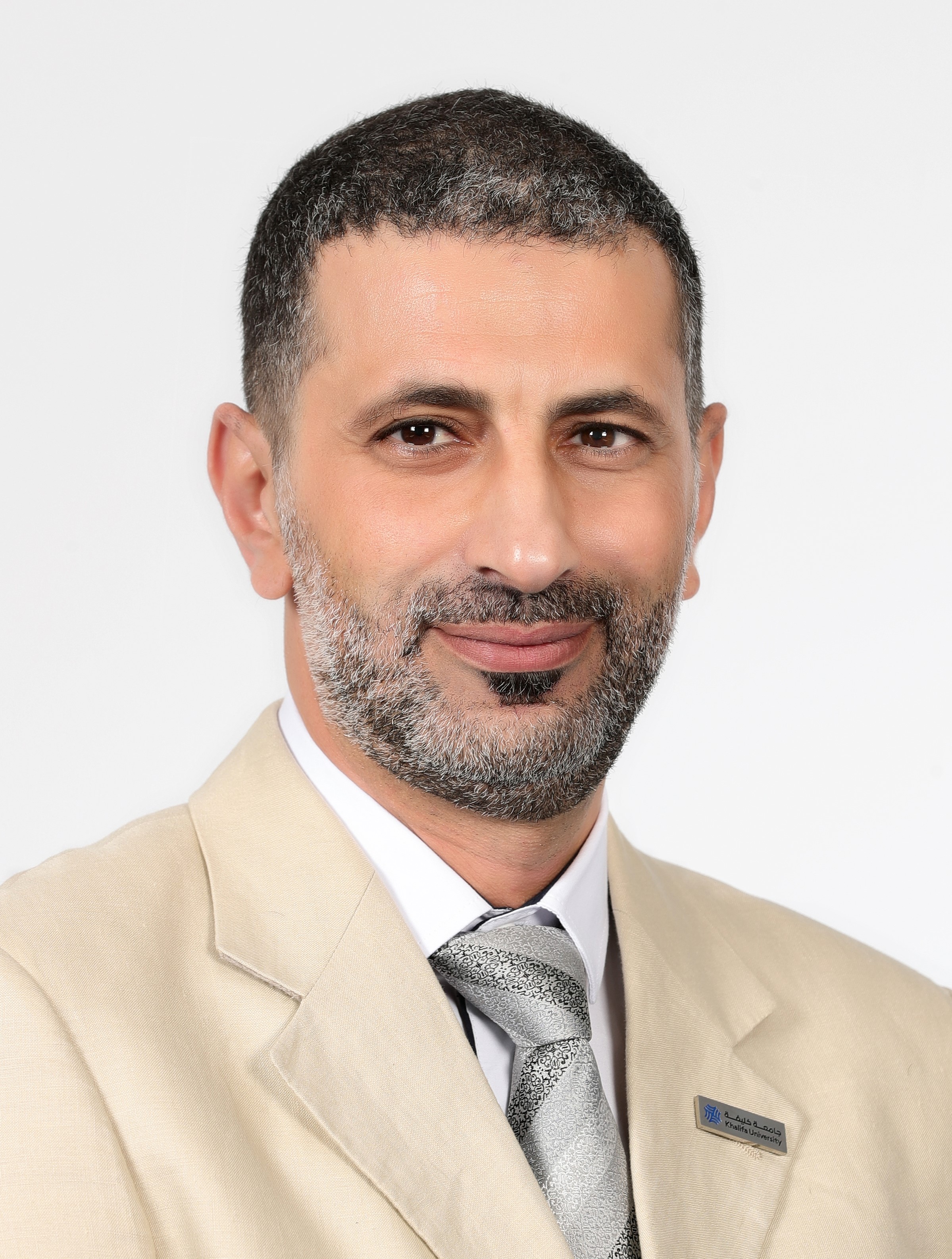
Dr. Yacine Addad serves as Associate Professor in the Mechanical and Nuclear Engineering Department at Khalifa University, UAE, and Deputy Director of the Emirates Nuclear Technology Center . With over 150 publications and $8.5 million in secured grants, he specializes in nuclear thermal-hydraulics, small modular reactors, and thermal energy storage for hybrid systems. Ph.D. in CFD and Turbulence Modeling (Manchester, 2004) M.Sc. in Thermal Power and Fluids Engineering (Manchester, 2000) Dip. Eng. in Marine Engineering (Oran, 1996) Research Focus: His work spans nuclear safety codes validation , molten corium-concrete interaction , and nanoscale surface modification for heat transfer . He leads projects on radionuclide dispersion , accident-tolerant cladding , and experimental thermal-hydraulics facilities . Recent Article Trends: 2022-2024 publications highlight deep learning for reactor safety , machine learning in condensation modeling , and multi-physics CFD for severe accidents . His work bridges thermal-hydraulic simulations with environmental radiation dispersion and nanomaterials in nuclear applications . Grants & Collaborations: Funded by FANR , ENEC , UK research councils, and ASPIRE , his projects address UAE nuclear program safety, decarbonization, and international standards through initiatives like OECD-ATLAS-III. Labs & Teams: Dr. Addad heads the Emirates Nuclear Technology Center's Theme-1 team and oversees experimental thermal-hydraulics facility development at Khalifa University. He mentors Ph.D. candidates in single/two-phase flow and radionuclide transport research.
Adam P. Balcerzak is an Associate Professor at the Faculty of Economic Sciences , University of Warmia and Mazury in Olsztyn. He also serves as a Research Fellow at the Centre of Sociological Research in Szczecin since 2022. Employment: University of Warmia and Mazury in Olsztyn (Faculty of Economic Sciences), Centre of Sociological Research (Szczecin) Research Focus: Energy economics, capital markets, SME financial management, sustainable development, and EU policy analysis. Grants: Principal investigator in EU-funded projects on energy innovation (2023-2027). His recent publications examine topics spanning nuclear energy economics , AI in financial management , renewable energy transition , and CSR implementation . He actively contributes to debates on EU sustainability regulations, blockchain governance, and post-pandemic economic recovery strategies.
Christopher Rääf serves as Professor in Medical Radiation Physics and Assistant Head of Department at the Department of Translational Medicine, Faculty of Medicine, Lund University. Based at the Malmö campus, his work bridges academic leadership with cutting-edge research in radiation safety and emergency response, maintaining active roles in institutional governance and national security initiatives. His research spans Radiation Physics, Dosimetry, and Radiological Emergencies, with emphasis on practical applications like using table salt (NaCl) for retrospective dose assessment in medical imaging and nuclear incidents. He investigates radionuclide behavior from facilities such as the European Spallation Source (ESS), develops Bayesian methods for radiation source localization, and contributes to national civil defense strategies against radiological threats through policy advocacy. Analysis of his recent publications reveals a cohesive trajectory toward deployable solutions for radiation emergencies—prioritizing accessible materials (e.g., salt pellets), environmental monitoring of nuclear facilities, and cross-disciplinary integration of medical physics with civil security. His work consistently addresses real-world implementation challenges in dose assessment and emergency preparedness. Professor Rääf leads significant research funding from the Swedish Radiation Safety Authority and Swedish Civil Contingencies Agency, including projects on Small Modular Reactor emergency protocols (2024–2027) and portable OSL dosimetry systems (2022–2026). His supervision portfolio includes three PhD candidates: Karampiperi, M. (OSL dosimetry), Dvornik, A. (radiation source localization), and Wallin, J. (Bayesian inference methods). He directs critical infrastructure including the Alpha and Gamma Spectrometry Laboratory and the Lund Luminescence Laboratory for Dosimetry, enabling advanced capabilities in radiation measurement, environmental sampling, and emergency response prototyping across medical and national security contexts.
Guglielmo Lomonaco serves as an Associate Professor in the Department of Mechanical, Energy, Management and Transport Engineering (DIME) at the University of Genoa, where he coordinates the Mechanical, Energy and Aeronautical Engineering Course Council. His teaching portfolio includes core courses such as Applied Energetics and Thermodynamics, Fundamentals of Energetics and Heat Transmission, Advanced Nuclear Plants, and Design and Optimization of Industrial Thermal Components across multiple mechanical engineering degree programs. His research focuses on next-generation nuclear systems, spanning Supercritical Water-Cooled Reactors (SCWR), High-Temperature Reactors (HTR), and Fusion-Fission Hybrid Reactors (FFHR). Key investigation areas include reactor safety analysis, hydrogen production integration, tritium breeding technologies, and energy conversion efficiency. His work bridges theoretical reactor physics with practical engineering applications for sustainable energy solutions. Recent 2025 publications demonstrate consistent specialization in nuclear technology readiness assessment and safety validation. The publication pattern reveals strong emphasis on Small Modular Reactors (SMRs), failure mode analysis for hydrogen production systems, and neutronics optimization for fusion applications. Cross-cutting themes include technology deployment challenges, thermal-hydraulic performance, and innovative blanket designs for fuel breeding.
Jan Emblemsvåg is a Professor at the Norwegian University of Science and Technology (NTNU) since 2020, affiliated with the Department of Ocean Operations and Civil Engineering. He holds a PhD (1999) and Master of Science (1995) from the Georgia Institute of Technology, along with a sivilingeniør in Mechanical and Industrial Engineering from Norges Tekniske Høyskole (1994). His research focuses on renewable energy (including nuclear), life-cycle costing, risk management, and lean methodologies in project-based industries. Emblemsvåg has extensive industry experience in top management roles at Vard, Rolls-Royce Marine, and Midsund Bruk. He advocates for practical, interdisciplinary research aligned with real-world applications. Key research areas include nuclear propulsion for shipping, lifecycle cost analysis, risk management under uncertainty, and sustainable energy policy. His publications emphasize critical evaluations of energy policies, nuclear power feasibility, and maritime sustainability. Recent articles address green fuels’ limitations, nuclear energy economics, and evacuation modeling for passenger ships. He has contributed to projects like NuProShip I, exploring small modular reactors for merchant ships. Emblemsvåg frequently engages in public debates on energy policy, advocating for evidence-based approaches to sustainability. His work bridges academic research and industrial innovation, emphasizing techno-economic analysis and lifecycle perspectives.
Roope Rudolf Marttila is a Doctoral Researcher at the Faculty of Law, University of Helsinki, specializing in energy law with particular focus on nuclear regulation. His research centers on small modular reactor siting and maritime nuclear regulation, bridging legal frameworks with energy policy development. His academic background includes advanced legal education from prestigious institutions: Master of Laws from Columbia Law School (awarded May 15, 2017) Comparative Law studies at Parker School of Foreign and Comparative Law (awarded May 1, 2017) Master of Laws from the Faculty of Law, University of Turku (awarded May 1, 2015) Marttila's research interests span across multiple interconnected domains within energy law, with particular emphasis on regulatory frameworks for emerging nuclear technologies. His work addresses the complex intersection of maritime law and nuclear safety protocols, focusing on the siting challenges for small modular reactors in coastal and maritime environments. This research contributes to broader discussions about energy transition pathways and sustainable energy infrastructure development. Currently, Marttila is actively involved in the "NS Finlandia - Co-Creation" project funded by Business Finland (April 1, 2025 - September 30, 2025), collaborating with researchers including Kokko, Kreus, Lehto, and Sarajärvi. His previous professional experience includes serving as a Research Associate from June 15, 2016 to June 1, 2018. His scholarly work operates at the critical intersection of law, energy policy, and environmental sustainability, addressing contemporary challenges in energy regulation during global transition periods.
Glenn Harvel is an Adjunct Associate Professor in the Department of Engineering Physics at McMaster University. His research spans nuclear engineering, thermal hydraulics, neutron radiography, and supercritical fluid dynamics, with a focus on reactor safety, decommissioning, and advanced cooling systems. Research Interests: His work integrates experimental and computational approaches to address challenges in nuclear technology. Key areas include: Thermal-hydraulic behavior of supercritical fluids in reactor cores Neutron radiography for non-invasive flow measurement Electrohydrodynamic applications in plasma-based systems Machine learning for nuclear maintenance optimization Small modular reactor (SMR) deployment for remote communities Publication Trends: Recent articles emphasize data-driven methods for nuclear maintenance, SMR feasibility studies, and decontamination tool development. Earlier work focused on experimental characterization of heat transfer fluids and CFD validation for supercritical water systems. Labs and Teams: Implied collaboration through conference papers and multidisciplinary topics (e.g., plasma physics, materials science, AI), though no specific labs or teams are named.