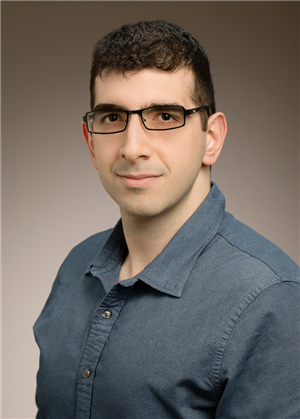
John-Paul OreView profile
Assistant Professor
- Robot Software Reliability & Testing
- Program Analysis for Cyber-Physical Systems
- Flying Robots for Environmental Monitoring
- +6 more
John-Paul Ore is an Assistant Professor in the Department of Computer Science at North Carolina State University's College of Engineering. His research bridges software engineering and field robotics, with a focus on program analysis, system testing, and high-resolution physical simulators for robotics systems, particularly those built with the Robot Operating System (ROS). He develops software engineering methods that improve the dependability of robotics systems through techniques for dimensional analysis without developer annotations, open-source tools like PHYS, and public datasets documenting dimensional inconsistencies in real-world systems. His educational background includes a Ph.D. from the University of Nebraska-Lincoln (2019) and a B.A. in Philosophy from the University of Chicago. His interdisciplinary background informs his approach to combining software engineering with robotics to address challenges in reasoning about full-system behavior across multiple layers of abstraction. Ore's research interests center on applying program analysis techniques to software that controls robots and interacts with the physical world. His work includes abstract type inference of physical unit types (like 'meters-per-second'), probabilistic techniques for combining semantic information in identifiers with code flow inference, and empirical measurements of how developers make decisions about robotic software. He focuses on program analysis and software testing that enhances system safety and reliability while remaining practical and economically efficient. His research has significant applications in environmental monitoring, addressing climate challenges, food production, and liberating people from dangerous, dirty, and dull work. His publication record shows a clear trajectory from foundational work on dimensional analysis in robotics software to increasingly complex applications in environmental monitoring and autonomous systems. The most recent publications demonstrate expansion into Large Language Models for code analysis while maintaining focus on practical robotics applications. His research consistently addresses the critical gap between theoretical program analysis and practical robotics system development. Best Tool Demonstration Award, ISSTA'17 for Phriky-Units ACM SIGSOFT Travel Award ($300) Othmer Fellowship 2014-2018 ($8K/year) UNL CSE Outstanding Master's Thesis Award 2015 RSS 2013 Travel Grant ($500) Ore actively mentors students, having served as research mentor for undergraduates Becca Horzewski (2016-17) and Lambros Karkazis (2018). His research is supported by significant grants including FARM BILL: NRI: INT ($1,018,596 from NSF), SHF: SMALL ($499,994 from NSF), and North Carolina Space Grant ($5,000 from NASA). He is currently recruiting PhD students for his lab focused on robotics and software engineering. His laboratory work combines robotics, software engineering, and environmental monitoring, with projects including autonomous aerial water sampling systems, UAV-based environmental sensing, and tools for improving robotics software reliability. His team develops both theoretical approaches and practical implementations, often creating open-source tools that bridge the gap between academic research and industry applications.