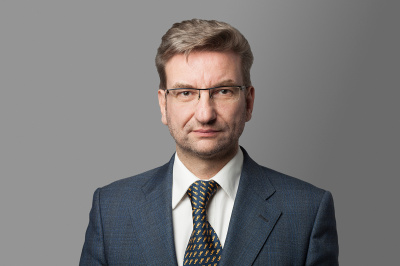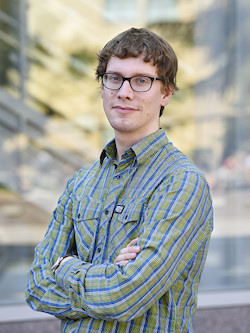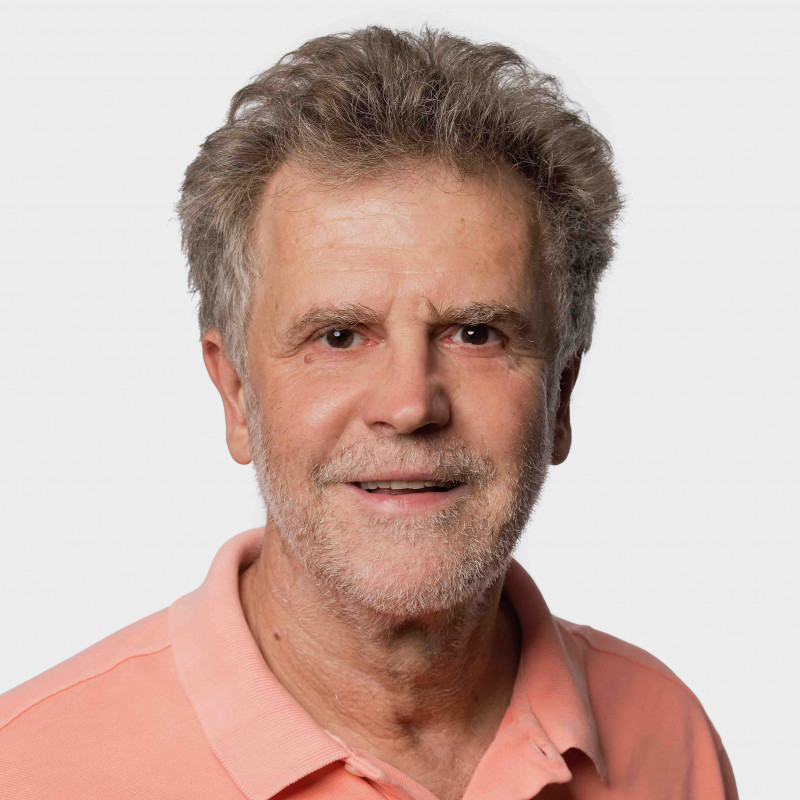
Gert SmolkaView profile
Professor
Gert Smolka is a Professor of Computer Science at Saarland University, affiliated with the Saarland Informatics Campus. He has established himself as a leading researcher in theoretical computer science with significant contributions to computational logic, type theory, and programming languages. Professor Smolka's research focuses on Computational Logic , Interactive Theorem Proving , Type Theory , and Programming Languages . His work bridges theoretical foundations with practical applications in formal verification. He has developed influential educational materials including Modeling and Proving in Computational Type Theory Using the Coq Proof Assistant , Introduction to Functional Programming and the Structure of Programming Languages using OCaml , and Programmierung - eine Einführung in die Informatik mit Standard ML , which have shaped teaching approaches in these specialized areas. Analysis of Professor Smolka's recent publications reveals a sustained focus on formal verification using the Coq proof assistant, with particular emphasis on mechanizing fundamental results in type theory, lambda calculus, and automata theory. His work consistently demonstrates how theoretical computer science concepts can be practically implemented and verified, creating a strong connection between abstract mathematical foundations and concrete verification techniques. Scientific recognition associated with Professor Smolka's academic lineage includes: ACP Doctoral Research Award 2010 (awarded to Guido Tack for his thesis) E.W. Beth Dissertation Prize 2008 (awarded to Marco Kuhlmann for his thesis) Professor Smolka has maintained an exceptionally productive doctoral supervision record spanning over 30 years, with students working on diverse but interconnected theoretical topics. His research group, the Programming Systems Lab at Saarland University, has been instrumental in advancing programming language theory and formal methods, particularly through their extensive work with the Coq proof assistant and related verification technologies. His Erdős number of 4 (via F. Baader -> K. Schlechta -> M. Magidor -> P. Erdös) reflects connections to broader mathematical research communities.