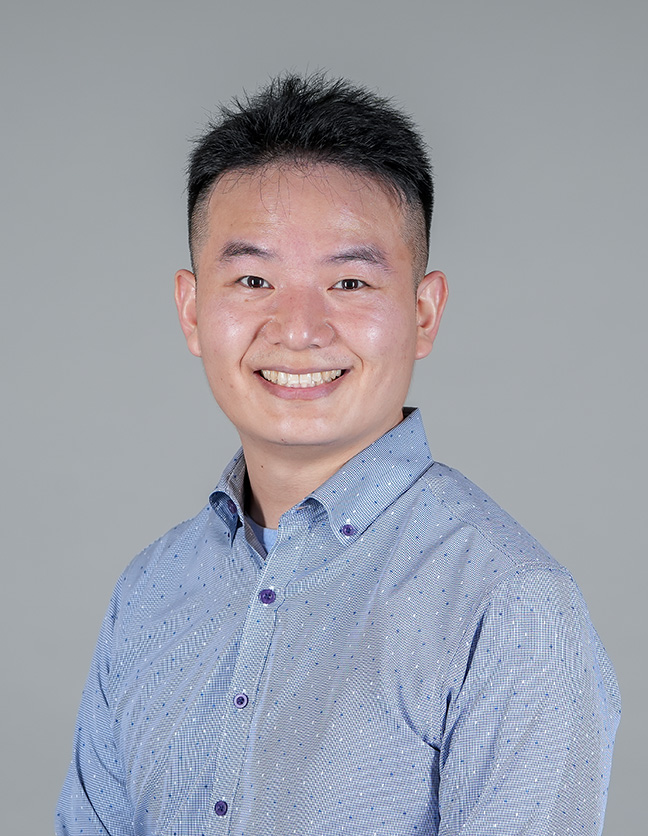
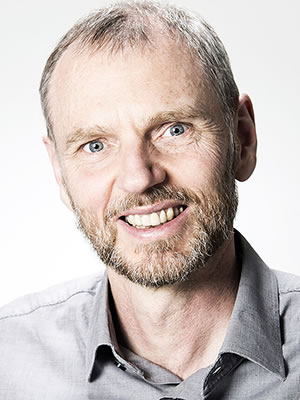
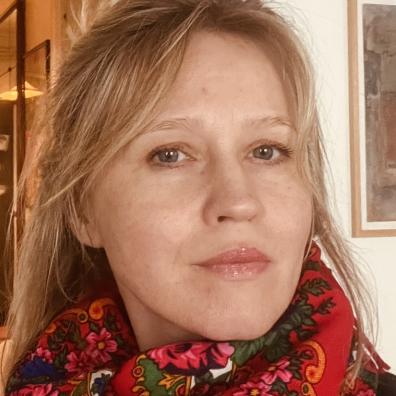

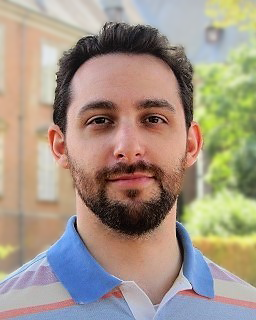
Dr. Paul Hangsan Ahn is an Assistant Professor in the Department of Communication at Hope College . His research focuses on organizational communication, group decision-making, persuasive messaging, and the intersection of social neuroscience with creative problem-solving . Ph.D. in Communication Science (minor in Quantitative Methods and Social/Affective Neuroscience), University of Wisconsin-Madison (2022) B.A. in Chinese Language and International Studies, Hankuk University of Foreign Studies (2011) Dr. Ahn develops the IDEA (Ideas Desire Early Acknowledgement) theory, examining how interpersonal needs influence idea-sharing in organizations. His work integrates experimental methods with qualitative analysis, spanning organizational creativity, reasoning norms, and neurocognitive influences on communication. Scientific Awards Top Four Paper Award (NCA, 2022) Dennis Gouran Research Award (NCA, 2021) Top Paper Award (ICA, 2020) Top Three Paper Award (NCA, 2019) Marketer of the Month (Hyundai, 2013)
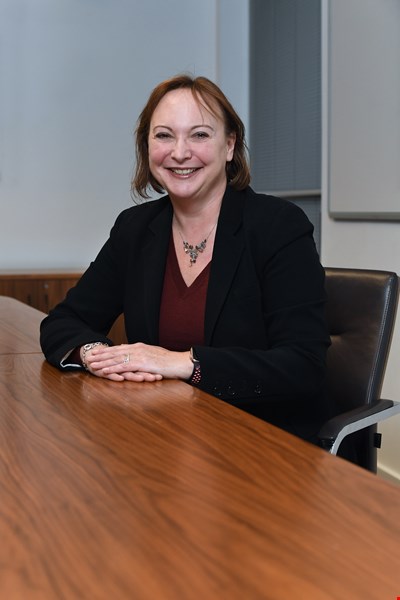
Professor Fiona Denney serves as Professor of Leadership and Business Education within the Organisations and People division at Brunel Business School, Brunel University London. With over 20 years of academic experience, she currently directs Executive Education and holds strategic leadership roles including external examiner positions at University of Lincoln and UCL. Her career spans business studies, academic staff development, and executive coaching in professional services sectors. Her educational background includes a PhD in consumer durable new product development (2004), MA in Management Studies, Postgraduate Certificate in Higher and Professional Education, and BA (Hons) in American and Canadian Studies. She maintains active professional affiliations as Principal Fellow of the Higher Education Academy and Fellow of the Royal Society for the encouragement of Arts, Manufactures and Commerce. Denney's research centers on human-centered leadership with specific focus on hybrid management systems and compassionate leadership practices across universities, public sector, and not-for-profit organizations. Current investigations examine third-space professionals in higher education through BA/Leverhulme funded research on hybrid managers' power dynamics and identity challenges. Her work integrates organizational compassion frameworks with post-pandemic recovery strategies and EDI implementation. Analysis of her publication trajectory reveals consistent exploration of leadership identity formation, with recent emphasis on third-space professional visibility, pandemic-era compassion experiences, and resilience modeling. Key thematic developments include the 'Golden Braid' leadership framework (courage-compassion-resilience integration) and organizational compassion perspectives for EDI advancement. Principal Fellow of the Higher Education Academy (PFHEA) Fellow of the Royal Society for the encouragement of Arts, Manufactures and Commerce (RSA) BA/Leverhulme Small Research Grant (2022-2024): Hybrid Managers in Higher Education Voices of Academia During Covid-19 Study (£3,714) Brunel-Tampere Grant: Building Support for International Student Employability (£8,000) As Director of Executive Education, Denney supervises four doctoral candidates researching compassionate leadership and toxic workplace interventions. Her consultancy portfolio includes Epigeum (Oxford University Press) for online training development and executive coaching for senior professionals. Significant professional service includes UK Council for Graduate Education Executive Committee membership (2017-2021) with Secretary role, plus Vitae collaboration on academic leadership development frameworks.
Vikram Iyer is an Assistant Professor in the Paul G. Allen School of Computer Science and Engineering at the University of Washington, where he also serves as co-director of the CS for Environment Initiative. He holds an adjunct appointment in Mechanical Engineering and leads interdisciplinary research connecting engineering domains to build end-to-end systems focused on environmental sustainability. His work has been recognized with prestigious awards including an NSF CAREER Award, a SIGMOBILE Dissertation Award, and a Marconi Society Paul Baran Young Scholar award. Dr. Iyer's research spans multiple areas including sustainable electronics, bio-inspired robotics, and wireless sensor systems. His group develops innovative technologies such as biodegradable and recyclable circuit boards, battery-free robots, wireless sensors that can disperse in the wind, and streaming cameras small enough to mount on live insects. His work on tracking invasive 'murder hornets' for the Washington Department of Agriculture resulted in the destruction of the first nest in the US. Current research focuses on circular fabrication, sustainable polymer design, and ecological human-computer interaction. His publications reveal a strong trend toward sustainable computing systems, with recent work emphasizing recyclable electronics, life-cycle assessment tools, and bio-inspired designs that minimize environmental impact. His research bridges computer science, mechanical engineering, and environmental science, creating novel approaches to sustainability challenges through interdisciplinary innovation. NSF CAREER Award recipient SIGMOBILE Doctoral Dissertation Award winner Marconi Society Paul Baran Young Scholar Amazon Research Award recipient (2022, 2023) Google Research Scholar Award recipient Sensys 2018 Best Paper Award SIGCOMM 2016 Best Paper Award Dr. Iyer actively mentors a diverse group of students including PhD candidates Kyle Johnson, Vicente Arroyos, and Qiuyue Xue, along with numerous master's and undergraduate researchers. His research has been supported by multiple grants including Amazon Research Awards, Google Research Scholar Award, and NSF funding through his CAREER award. His work has been featured in major media outlets including NPR, CNN, BBC, and Wired. His lab focuses on creating the next generation of sustainable, bio-inspired wireless systems, including the AGI Labs team working on AI agents and the development of battery-free microrobots and environmental sensors. Current projects include recyclable circuit boards, battery-free robots, origami microfliers, and dandelion-inspired sensors, all aimed at creating more sustainable computing technologies.
Dr.-Ing. André Pomp is a Scientific Researcher and Head of the Research Field 'Semantic Systems Engineering' at the Institute for Technologies and Management of Digital Transformation (TMDT), University of Wuppertal. His work focuses on semantic data integration, knowledge graphs, natural language processing, and machine learning in industrial contexts. PhD in Computer Science, RWTH Aachen University (2020) Bachelor’s and Master’s in Computer Science with minor in Business Administration, RWTH Aachen Research Assistant & PhD Student, Cybernetics Lab IMA & IfU, RWTH Aachen (2015–2019) Leader of Cognitive Computing & eHealth Research Group (2018–2019) His research interests lie at the intersection of semantic technologies and industrial digital transformation. He investigates semantic interoperability , flexible knowledge graphs , industrial NLP , and machine learning for data integration across domains such as logistics, smart cities, and production. His work emphasizes practical software architectures that support scalable and extensible data ecosystems. The recent publications show a strong trend toward integrating large language models with semantic modeling , advancing data interoperability in circular economy and dataspaces. He also contributes to applied AI in radar systems and IoT-driven business innovation, reflecting a balance between theoretical advances and real-world deployment. André Pomp has been actively involved in numerous R&D projects in logistics, mobility, telecommunications, and production, focusing on integration architectures and AI methods. While no formal advisees are listed, his leadership of research groups indicates supervisory experience. He has not received any explicitly mentioned scientific awards. He is associated with the 'Semantic Systems Engineering' research field at TMDT, contributing to interdisciplinary teams working on digital transformation challenges. His work often involves collaboration with industry and cross-domain applications of AI and semantic technologies.
Sumon Biswas is a tenure-track Assistant Professor in the Department of Computer and Data Sciences at Case Western Reserve University's Case School of Engineering. His research focuses on the intersection of Software Engineering and Artificial Intelligence, particularly in modeling, verification, and design of responsible AI systems. He employs both formal and empirical methods to ensure algorithmic fairness and safety in ML pipelines. Education: Postdoctoral Researcher at Carnegie Mellon University PhD in Computer Science from Iowa State University MS in Computer Science from Iowa State University Research Focus: His work centers on Responsible AI Engineering with specific emphasis on fairness verification of neural networks, compositional fairness in ML pipelines, long-term fairness analysis, and safety assurance of predictive systems. He develops techniques using formal verification, causal reasoning, and empirical analysis to address bias in data transformers and ensemble learning. Publication Trends: Biswas consistently publishes in top-tier software engineering venues (ICSE, FSE, ASE) with research evolving from empirical fairness studies to formal verification techniques and pipeline architecture design. Recent works focus on LLM-assisted technical debt management and long-term fairness guarantees in ML systems. Awards & Honors: Research Excellence Award from Iowa State University (2022) ACM SIGSOFT CAPS Grants (2021, 2022) Publication Award from ISU Computer Science Department Distinguished Reviewer for ACM TOSEM Academic Service: Actively serves on program committees for ICSE (2024-2025), ASE (2023-2024), and reviews for IEEE TSE, IEEE Software, and EMSE. Mentors students through ICSE SMeW and judges research competitions. Research Group: Leads a lab focused on Responsible AI Engineering and seeks motivated PhD/MS students to work on verification and design of fair/safe AI systems.
Јусуф Зеќири serves as a Professor at the Faculty of Business and Economics, South East European University (SEEU) in Tetovo, North Macedonia, where he has been employed since October 2005. His current full-time position follows progressive roles including Director of SEEU's E-Learning Center (2015-2020) and Prodean of the Faculty of Business and Economics (2009-2010), demonstrating sustained institutional commitment and leadership. His academic credentials feature dual doctoral degrees: a Doctor of Business Administration from SMC University, Switzerland (2007-2011) specializing in Marketing, and a Doctor of Economic Sciences from Ss. Cyril and Methodius University, Skopje (2009-2011) focused on International Business. Additional qualifications include a Master's in International Trade from Ss Cyril and Methodius University and University of Rennes, France (2002-2006), and foundational training in English Language and Literature from Al-Azhar University, Cairo (1990-1995). Zeqiri's research explores cultural intersections in consumer behavior , particularly examining how religious identity (Islamic contexts), digital transformation , and socioeconomic transitions shape market dynamics. His work spans green consumerism in Türkiye , halal tourism positioning , and pandemic-era e-learning adaptation across Balkan universities. This cross-disciplinary approach bridges Marketing, Entrepreneurship, and Higher Education through rigorous quantitative methodologies. Analysis of his 2021-2024 publications reveals three dominant trajectories: (1) digital commerce evolution examining social media's role in purchase decisions across fashion, food, and luxury sectors; (2) culture-driven consumer psychology investigating religious identity's impact on product adoption; and (3) institutional resilience in higher education during crises. His work consistently emphasizes comparative Balkan-Middle Eastern perspectives with methodological strengths in correspondence analysis and structural equation modeling. Scientific recognition includes: Extensive publication record in Scopus-indexed journals including Technological Forecasting and Social Change and British Food Journal Cross-national research spanning 15+ countries with focus on Muslim-majority markets Leadership in SEEU's digital education infrastructure through E-Learning Center directorship His advisory capacity remains unquantified in available records, though his 19-year academic career suggests significant mentorship of business students. Current research priorities appear focused on post-pandemic educational restructuring and ethical dimensions of Islamic marketing, leveraging his multilingual proficiency (Albanian native; English, French, Arabic fluent) for transnational collaboration. Zeqiri's institutional impact is anchored in SEEU's E-Learning Center development, where he pioneered blended learning frameworks validated during the COVID-19 transition. His team currently investigates AI-enhanced educational personalization and gender-inclusive entrepreneurship ecosystems in transition economies, maintaining SEEU's regional leadership in business education innovation.
Prof. Dr.-Ing. Kurt Sandkuhl serves as Professor and Chair of Business Information Systems at the Institute of Computer Science within the Faculty of Computer Science and Electrical Engineering at the University of Rostock. He concurrently holds the position of Dean of the Faculty and maintains active roles as Academic Advisor for the Business Information Systems Master's program, ERASMUS+ Coordinator, and member of the academic management of the Center for Entrepreneurship. His research centers on enterprise architecture, enterprise modeling, capability management, and digital business models, with significant contributions to knowledge-based systems, smart process management, and mobile/wearable information systems. Recent work demonstrates pioneering integration of artificial intelligence—particularly large language models—into enterprise modeling practices, addressing challenges in cybersecurity, sustainable business transformation, and public sector digitalization. Analysis of his recent publications reveals dominant trends in AI-augmented enterprise modeling, cybersecurity architecture for public administration, and circular economy transitions in manufacturing. His work consistently bridges theoretical modeling frameworks with practical implementations in SMEs, public transport, and energy management contexts, emphasizing usability and real-world impact. Prof. Sandkuhl advises the WIN M.Sc. program and coordinates international academic exchanges through ERASMUS+. His institutional leadership extends to the IT Initiative Mecklenburg-Vorpommern board and co-opted membership in the Interdisciplinary Faculty's Department of Ageing, while maintaining active affiliations with the German Computer Science Society and founding membership in the European Association for Software and Systems Technology. He directs the Business Informatics Enterprise Modeling Lab, which employs multi-touch tables and smart boards for participatory modeling research. The lab focuses on capability-driven enterprise architecture, digital business ecosystem design, and context-aware systems for quantified products, with notable projects in maritime dataspaces and demand-responsive public transport integration.
Dr. Angela Nyhout is a Senior Lecturer in Psychology at the University of Kent's School of Psychology, where she serves as Programme Director for the MSc in Developmental and Educational Psychology and Student Experience Lead. She joined the university in 2020 after completing her PhD at the University of Waterloo (Canada) and a postdoctoral fellowship at the University of Toronto. Her research focuses on cognitive development, particularly the development of hypothetical reasoning and children's learning through engagement with fictional worlds. Core research areas include: Counterfactual reasoning and mental simulation abilities Scientific hypothesis testing in children Influence of fictional narratives on beliefs and attitudes Relationships between different forms of possibility thinking Educational interventions to foster reasoning skills Her publications demonstrate consistent focus on cognitive development, with recent work expanding into moral understanding through media and experimental studies on open-mindedness. Research consistently explores how children mentally represent alternative possibilities and transfer learning across contexts. Dr. Nyhout has secured substantial research funding including: SSHRC Insight Grant (2022-2026): Counterfactual reasoning in science learning ($246,065 CAD) Templeton Religious Trust Grant (2022-2024): Art Opening Minds project (£169,435) BA/Leverhulme Small Grant (2021-2023): Mental simulation development (£9,822) SSHRC Canada Grant (2019-2021): Spontaneous counterfactual thinking ($46,965 CAD) She currently supervises PhD students Zeynep Genc (primary) and Sarah Lily Resanovich (tertiary), and leads modules in Child Development, Advanced Cognitive Development, and Science of the Imagination. She is an active member of the Imagination Research Group.
Anatoliy Goncharuk is a Professor at the Hauge School of Management, NLA University College, Kristiansand. His interdisciplinary research spans migration, healthcare, education, and energy policy. Public administration Biblical studies Music didactics Migration patterns Healthcare worker motivation Business sustainability His recent articles focus on refugee decision-making, religious influence on academia, and smart technology sustainability. Trends include cross-cultural comparisons, crisis-era healthcare resilience, and lifecycle management in food industries.
Philipp Krähenbühl serves as Associate Professor in the Department of Computer Science at the University of Texas at Austin, where he joined the faculty in 2016 as part of the university's Machine Perception Program expansion. His research bridges computer vision, machine learning, and computer graphics with significant contributions to deep learning methodologies. Academic background: Ph.D. in Computer Science, Stanford University Postdoctoral Research, UC Berkeley (2-year appointment) Dr. Krähenbühl's work centers on deep learning for visual understanding , with pioneering contributions in image segmentation , video analysis , and 3D scene reconstruction . Recent research extends into multimodal AI systems combining vision and language, autonomous driving technologies through traffic simulation, and bioinformatics applications for protein structure modeling. His methodology emphasizes efficient model design and leveraging large-scale data. Analysis of his publication trajectory reveals a strategic evolution from core computer vision problems toward interdisciplinary applications. Current work demonstrates strong convergence of vision-language models with autonomous systems, alongside unexpected cross-pollination into structural biology through protein modeling research. Award highlights: NIPS Outstanding Student Paper Award (2011) NSF CAREER Award (2016-17) Multiple Olympiad medals (International Informatics Silver 2005, Swiss Informatics/Mathematics 2004-2005) Research funding includes the NSF RI: SMALL grant for Recognizing objects in images and their properties over time (2020). While specific advisees aren't documented in source materials, he actively mentors graduate students within UT Austin's Computer Science department. His laboratory contributes to the university's Machine Perception Program through cutting-edge work in generative modeling and simulation frameworks. The research group maintains strong industry connections while pursuing fundamental advances in visual representation learning, with current projects focusing on robust autonomy systems and multimodal foundation models.
Kesa Katerina is a Lecturer in Baltic civilization at the Institut National des Langues et Civilisations Orientales (INALCO), affiliated with the Europe-Eurasia Research Center (CREE EA 4513). She specializes in Political Science with a focus on the Baltic region, particularly Estonia, Latvia, and Finland. Institution: Institut National des Langues et Civilisations Orientales (INALCO) Research Center: Europe-Eurasia Research Center (CREE) Academic Role: Lecturer in Baltic Civilization Dr. Kesa Katerina's research focuses on transnational dynamics in the Baltic region, evolution of political parties since 1990, extreme right movements in Baltic Europe, Nordic-Baltic relations, and the transfer of political expertise among post-Soviet states. Her expertise spans Political Science, International Relations, and European Studies with particular emphasis on small state diplomacy, Baltic exceptionalism, and post-Soviet political development. Her recent publications demonstrate a clear trend toward analyzing contemporary geopolitical challenges facing the Baltic states, particularly in relation to Russian aggression and European integration. The articles reveal a consistent focus on how small Baltic states navigate vulnerability through niche diplomacy while maintaining European identity. Her work increasingly examines the transnationalization of political movements, especially far-right populism across the Baltic-Nordic space. Dr. Kesa Katerina serves as co-responsible for the seminar 'Baltic Spaces' at the Europe-Eurasia Research Center and co-responsible for the seminar 'History, Politics and Culture of Central Europe (HPCEM)' of the Europe Department. She is also co-editor-in-chief of the magazine 'Nordiques'. Her teaching encompasses Societies and political systems of the Baltic States, External action of the European Union, Geography of the countries of the Baltic area, History of the Baltic region, and Estonian language of the media and specialist texts. She is fluent in Estonian, which enables her to conduct primary research using local sources.
Carolina Ramírez García serves as Associate Professor in the Department of Financial Economics and Accounting at Pablo de Olavide University, where her work bridges business administration, social sciences, and technology applications. Her research examines organizational dynamics through the lens of management control systems and risk perception in inter-firm relationships. Education: PhD from Pablo de Olavide University (2010) with thesis "Management control systems and perceived risk in relationships between companies," supervised by Dr. Concha Álvarez Dardet and Dr. María Luisa Vélez Elorza. Her research program spans three interconnected domains: risk management in franchising networks, ICT applications for social inclusion and poverty reduction, and innovative accounting pedagogy. She investigates how control mechanisms mitigate perceived risks in franchise relationships while exploring technology's role in socioeconomic development, particularly in Andalusia. Her educational research focuses on integrating team-based learning, case studies, and problem-based approaches in accounting instruction. Analysis of her 2015-2024 publications reveals consistent thematic progression from foundational work on management control systems toward contemporary studies of international business models and educational innovation. The interdisciplinary nature of her output—spanning business journals, social science publications, and educational research—demonstrates her position at the intersection of academic disciplines. She actively contributes to the "Information, Environment and Organizational Change" research group, where her work on Delphi methodology for assessing ICT's poverty reduction impact exemplifies her applied approach to socioeconomic challenges. Her current research trajectory shows increasing emphasis on international business dynamics within the agrifood sector and evidence-based management practices.
Guido de Boer (born 1988) is an independent visual artist and educator currently teaching Letters at the Graphic Design department of the Royal Academy of Art, The Hague (KABK) since 2016. His professional identity bridges artistic practice and pedagogy, with additional teaching experience at art academies across the Netherlands, Nanjing University of the Arts in China, and ELISAVA Barcelona. De Boer's work fundamentally explores the intersection where written language becomes visual experience and visual forms convey textual meaning. His creative research focuses on: Typography as expressive visual language Handmade lettering and calligraphic traditions Monumental text-based installations The experiential qualities of written communication Public space interventions through textual-visual hybrids Contemporary applications of traditional lettering techniques De Boer's recent output reveals a sophisticated evolution from pure visual-textual experimentation toward more socially engaged practice, exemplified by his "FOR RENT" project which creates a subscription model connecting artistic development directly with audience participation. His work consistently appears in major Dutch institutions including the Kröller-Müller Museum, Stedelijk Museum Schiedam, HEM, and GEM/Kunstmuseum, demonstrating significant recognition within the contemporary art field. As an educator, de Boer has developed distinctive approaches to teaching typography that emphasize its experiential dimensions rather than purely technical aspects. His collective "High on Type" organized innovative Letter and Calligraphy festivals from 2016 to 2019, creating dynamic platforms for performance, exhibition, and workshop experiences that actively tested the boundaries of what writing and letters can be in contemporary culture. Based in Utrecht, Netherlands, de Boer maintains an active studio practice where he develops both commissioned works and autonomous projects that challenge conventional distinctions between reading and seeing, text and image, communication and expression.
Santiago Paternain is an Assistant Professor in the Department of Electrical, Computer and Systems Engineering at Rensselaer Polytechnic Institute's School of Engineering. He joined RPI in 2020 after completing his Ph.D. and postdoctoral work at the University of Pennsylvania, where he developed foundational algorithms at the intersection of machine learning and control theory. His research bridges theoretical rigor with practical applications in robotics, power systems, and autonomous vehicles. His academic credentials include: B.Sc. in Electrical Engineering, Universidad de la República, Uruguay (2012) M.Sc. in Statistics, The Wharton School, University of Pennsylvania (2018) Ph.D. in Electrical and Systems Engineering, University of Pennsylvania (2018) Paternain's research centers on reinforcement learning and control of dynamical systems, with emphasis on safety guarantees, optimization, and real-world deployment. He develops algorithms that integrate model-based control with data-driven methods to overcome limitations of pure reinforcement learning, particularly for constrained and safety-critical applications. Current projects explore in-context learning for robotics, physics-guided AI for power grids, and multi-agent coordination in uncertain environments, always prioritizing theoretical soundness and practical viability. Analysis of his 15 most recent publications reveals a dominant focus on constrained reinforcement learning (60% of works), with growing applications in power systems (20%) and robotics (15%). A clear trend shows increasing integration of foundation models with control theory, particularly for safety-critical decision making. His work consistently addresses scalability challenges while maintaining rigorous safety guarantees, reflecting his commitment to bridging theoretical and applied research. His scientific contributions have earned significant recognition: Best Student Paper Award at ICASSP 2020 Joseph and Rosaline Wolfe Best Doctoral Dissertation Award (2019) Best Student Paper Award at CDC 2017 Best Student Paper Award at I2MTC 2014 Best Teaching Assistant at University of Pennsylvania (2017) CTL's Graduate Fellowship for Teaching Excellence (2018) Paternain actively mentors six doctoral students across diverse research areas including safe reinforcement learning, multi-robot systems, and power grid applications. His research is supported by substantial funding including multiple RPI-IBM Future of Computing Research Collaboration grants (quantum computing and LLM reasoning), a DOE grant for EV battery assessment, an ONR grant for autonomous helicopter refueling, and industry partnerships with Boeing and ARM. He leads a high-impact research group that organizes influential workshops like "Learning under Requirements" at premier conferences including AAAI and L4DC. His laboratory focuses on translating theoretical advances into industrial applications through partnerships with GE Research, The Boeing Company, and national laboratories. Current projects include autonomous helicopter aerial refueling systems, real-time power grid stability assessment tools using graph neural networks, and safety-certified multi-robot coordination frameworks, all emphasizing deployable solutions for critical infrastructure challenges.
Marco Peressotti is an Associate Professor of Computer Science at the University of Southern Denmark, where he is a member of the Department of Mathematics and Computer Science and the Section of Artificial Intelligence, Cybersecurity, and Programming Languages. He also serves on the Communication Group of the Microservices Community, an international research network. His academic career focuses on making concurrent and distributed systems more effective and robust through formal methods and programming language techniques. Dr. Peressotti received his Ph.D. in Computer Science from the University of Udine in 2017. His educational background forms the foundation for his current research in formal methods and distributed systems. Peressotti's research centers on choreographic programming, formal methods, and concurrency theory, with a unifying mathematical perspective rooted in Logic and Category Theory. His work aims to make programming and analysis of concurrent systems more effective and robust. He has made significant contributions to the development of choreographic programming languages, particularly through the Choral language, which integrates object-oriented programming with choreographic abstractions. His research spans theoretical foundations to practical implementations, with applications in microservices, cybersecurity, and distributed systems. His recent publications demonstrate a strong focus on advancing choreographic programming, with particular attention to handling communication failures, out-of-order execution, and practical applications in microservices architectures. His work increasingly intersects with cybersecurity concerns, particularly in supply chain security for small and medium enterprises. The trend shows growing engagement with practical policy implications of his theoretical work, as evidenced by numerous opinion pieces in Danish media outlets. Dr. Peressotti actively supervises students, with Valentino Picotti recently defending a PhD thesis on "Language Support for Microservices Development" under his co-supervision. His research has practical applications in software verification, as demonstrated by his introduction to Software Verification with TLA+ for participants of the Danish Cyber Championships. He collaborates extensively with researchers including Fabrizio Montesi and Jan Stentoft on cybersecurity awareness and supply chain risk management. As a member of the Section of Artificial Intelligence, Cybersecurity, and Programming Languages, Peressotti contributes to research groups focused on formal methods for distributed systems. His work with the Microservices Community connects him to an international network of researchers advancing service-oriented computing paradigms.