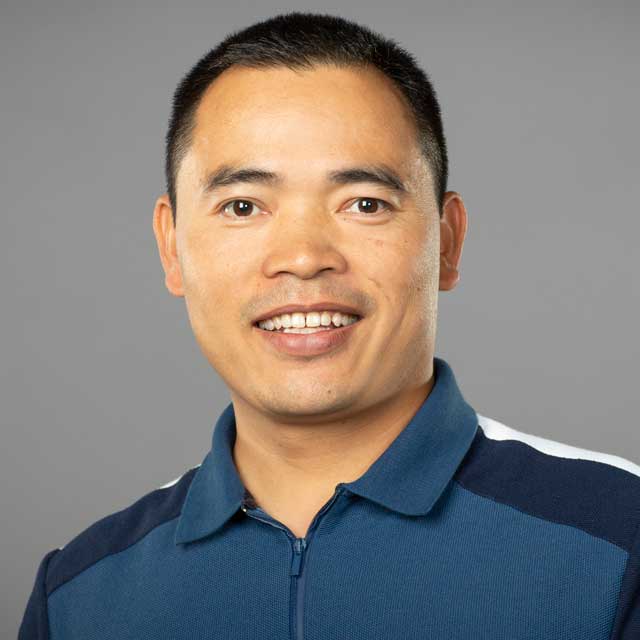
Dr. Karol Kyslan serves as Associate Professor and Vice-Dean for Research at the Faculty of Electrical Engineering and Informatics, Technical University of Košice, where he leads research initiatives and doctoral education programs. His academic profile centers on advanced control systems for electrical drives, with institutional affiliation deeply rooted in industrial automation applications. His research expertise spans sensorless control of Permanent Magnet Synchronous Motors (PMSM) , finite control set model predictive control , and sliding mode observers , addressing critical challenges in low-speed operation, fault tolerance, and industrial implementation. Key application domains include material processing lines, rotary shears, and steel production systems, where his work bridges theoretical control algorithms with practical machinery dynamics. Analysis of his 2021-2025 publications reveals a strategic evolution toward integrating machine learning for fault diagnosis while maintaining core focus on high-frequency signal injection techniques. Recent work demonstrates increasing sophistication in torque ripple compensation and real-time optimization, with growing emphasis on multiphase machine control and hardware-in-the-loop validation for industrial deployment.
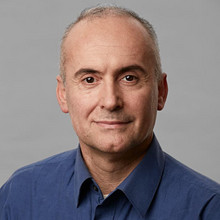
Dr Euan W McGookin is a Senior Lecturer in Autonomous Systems & Connectivity at the University of Glasgow, based in the Aerospace Sciences division of the James Watt Building South. He coordinates Glasgow-delivered aerospace degree programmes in Singapore and serves on the IFAC Technical Committee on Marine Systems, underlining his sustained engagement with both local and international academic activities. Education: 1st Class Honours Master of Engineering in Avionics, University of Glasgow PhD in Optimisation of Sliding Mode Controllers for Marine Applications, University of Glasgow (1997) Research Interests Dr McGookin’s core expertise lies in the design, simulation, control and physical realisation of autonomous robotic systems. His work spans Autonomous Underwater Vehicles (AUVs) , Unmanned Aerial Vehicles (UAVs) , Planetary & Terrestrial Rovers , and Biomimetic Robotics . He is particularly recognised for applying biologically inspired principles to robotic locomotion, navigation and control. Complementary themes include advanced control methodologies—Sliding Mode Control, H-infinity, Inverse Model Control—optimisation heuristics, guidance & navigation, fault detection & isolation (FDI), and system health monitoring for both terrestrial and space applications. Publication Trends Across 80 publications from 1995 to 2025, his work has evolved from early genetic-algorithm-based controller optimisation for marine vessels to cutting-edge multi-rover mission planning and health monitoring for planetary exploration. Recent outputs (2022–2025) concentrate on micro-rover coordination, friction modelling for planetary soils, reinforcement-learning-driven sensor fusion, and robust health-monitoring architectures, reflecting a strategic pivot toward space robotics while retaining strong roots in control theory and autonomous systems. Scientific Awards & Fellowships Member, IFAC Technical Committee on Marine Systems Grant & Advising Narrative While specific grant values are not disclosed, his continuous funding stream is evidenced by sustained publication output, international conference leadership, and ongoing supervision of postgraduate projects. Dr McGookin advises a steady cohort of PhD and MSc students whose theses align with his research themes—ranging from rover fault diagnosis to biomimetic AUV coordination—thereby fostering the next generation of control and robotics engineers. Laboratory & Team Dr McGookin heads research activities within the James Watt Building South, leveraging interdisciplinary laboratories that integrate simulation suites, rapid-prototyping facilities for AUV and UAV subsystems, and dedicated test rigs for biomimetic propulsion and rover mobility studies. Collaborative networks extend across the University of Glasgow’s Aerospace Engineering group, Singapore Institute of Technology partners, and international consortia such as ESA and IFAC.
Hung La is an Associate Professor in the Department of Computer Science and Engineering at the University of Nevada, Reno's College of Engineering. He directs the Advanced Robotics and Automation Lab, focusing on robotic systems for infrastructure inspection (culverts, bridges), autonomous navigation, and control systems. His research integrates computer vision, machine learning, and multi-agent systems to develop field-deployable robotic solutions. La's publications demonstrate expertise in robotic perception (3D registration, SLAM), control systems (quadrotors, climbing robots), and secure machine learning. Recent work emphasizes practical applications in civil infrastructure inspection, warehouse automation, and medical robotics. His research consistently combines theoretical advances with hardware implementations for real-world deployment.
Karim Ahmadi Dastgerdi is a Lecturer at the School of Architecture, Technology and Engineering at the University of Brighton. His work spans aerospace engineering, marine engineering, and robotics, focusing on adaptive control systems and fault-tolerant design for unmanned vehicles. Research focus areas: Adaptive control strategies for dynamic environments Fault-tolerant systems in multi-rotor UAVs Obstacle avoidance for marine vehicles and autonomous crafts Geometric path planning under uncertainty Image-based navigation and velocity estimation Collision risk assessment in multi-vessel encounters Publication trends (2019–2024): His research output includes 15 recent works on adaptive velocity obstacle avoidance, fault-tolerant control, and geometric planning for quadcopters, marine vehicles, and Mars rovers. These publications reflect interdisciplinary work in control theory, computer science, and aerospace/marine engineering. Collaborative networks: Active collaborations with researchers like W. Naeem, N. Athanasopoulos, and B. Singh in control systems and autonomous navigation.
Sam Roozbehani serves as a Postdoctoral Research Fellow at the Department of Engineering Technology and Didactics Energy Technology and Computer Science, Technical University of Denmark (DTU), Ballerup campus. His research in power systems engineering directly supports UN Sustainable Development Goals for affordable and clean energy, with expertise spanning microgrid stability, inverter control, and advanced power system protection mechanisms. His primary research domains include Microgrid Engineering, Inverter Engineering, and Reactive Power Engineering, with specialized focus on fault ride-through coordination, grid-forming/grid-following inverter architectures, and advanced control techniques like fractional-order sliding mode control. Current investigations address critical challenges in renewable integration resilience, particularly voltage stability during grid faults and optimal control of hybrid photovoltaic-battery systems in microgrids. Analysis of his 2025 publications reveals concentrated efforts on real-time solutions for inverter-based microgrid stability, with significant contributions to fault management protocols and frequency regulation in industrial energy clusters. His work demonstrates consistent emphasis on practical implementations of control algorithms for wind turbine systems and eco-industrial applications. Dr. Roozbehani actively contributes to two major research initiatives: Electric weed control in seed crops - Developing electrical methods for sustainable agricultural weed management GRACE project - Creating grid capacity-aware investment frameworks for eco-industrial clusters to optimize sector coupling and renewable integration These projects involve cross-disciplinary collaboration with DTU researchers in energy systems and environmental engineering, targeting near-term industrial implementation.
Pengfei Li is a prolific researcher affiliated with multiple academic institutions, including Harbin Medical University, Yale University, Beihang University, Zhejiang University, and others. His work spans interdisciplinary domains such as machine learning, robotics, remote sensing, and biomedical engineering. Research interests focus on Machine learning and deep learning for industrial and medical applications Signal processing and sensor technologies Remote sensing and geospatial data analysis Robotic control systems and exoskeleton design Code search and software engineering optimization His recent publications highlight trends in FPGA-based real-time systems, multimodal machine learning, and AI-driven diagnostics. While awards and student advising details are absent in the provided data, his contributions to IEEE journals and conferences underscore his expertise in algorithm design and applied informatics.
Péter Korondi is a Professor at the University of Debrecen in Hungary, affiliated with the Department of Electrical Engineering and Mechatronics . His work spans robotics, control theory, and industrial automation, with a focus on bio-inspired systems and human-robot interaction. Research Interests : Robotics, Mechatronics, Control Theory, Human-Robot Interaction, Industrial Automation, Sensor Fusion Recent Article Trends : Sliding mode control, friction compensation in micro-telemanipulation, path planning for mobile robots, smart industrial systems Collaborations : Co-authored works with Gabor Sziebig, Ferenc Tajti, Géza Szayer, and international researchers in IEEE Transactions , Sensors , and Acta Polytechnica Hungarica . Technological Focus : Development of rehabilitation devices, holonomic drive systems, and ethorobotics models inspired by animal behavior.
Kun Qian is a Lecturer in Robot-assisted Manufacturing at the University of Manchester. He holds a B.Eng. and M.S. from the University of Leeds (2016-2017) and a Ph.D. in Rehabilitation Robotic Control (2022). Prior to joining UoM in 2024, he worked at Heriot-Watt University (2023-2024) and the University of Leeds (2022). His research focuses on control and machine vision technologies for advanced manufacturing systems. Key areas include additive manufacturing quality control, vision-based environment sensing, and AI-driven human-robot collaboration. His work addresses scalability, productivity, and adaptability in manufacturing through interdisciplinary approaches. Dr. Qian has published over 20 peer-reviewed papers and collaborates with industries via funding from EPSRC, STFC, and ISCF. He is actively mentoring PhD students in topics like human-in-the-loop collaboration and 3D reconstruction for quality control. Notable research contributions include iterative learning control, robotic assembly optimization, and medical robotics innovations. His work aligns with UN Sustainable Development Goals related to industry, innovation, and infrastructure.
Kranthi Kumar Deveerasetty is a Research Assistant Professor at the Eagle Flight Research Center, Embry-Riddle Aeronautical University, Daytona Beach, Florida. He has held significant research positions internationally, including at Osaka University, Kochi University of Technology, and the Shenzhen Institutes of Advanced Technology, Chinese Academy of Sciences. Education: Ph.D. in Control Systems, Indian Institute of Technology (BHU), Varanasi (2016) M.Tech, Indian Institute of Technology (BHU), Varanasi B.E., Andhra University (2008) His research focuses on flight control for unmanned aerial vehicles, model order reduction, stability of interval systems, machine learning, and sliding mode control. These interests align with aerospace engineering and control systems theory, with strong applications in autonomous flight and dynamics. Dr. Deveerasetty has published 32 journal and conference papers, with recent work recognized via the Best Application Paper award at ICMIC-2019. His editorial roles reflect his academic standing in measurement, control, and open science. Scientific Awards: Best Application Paper award, ICMIC-2019 He serves as an Academic Editor for PLOS ONE and Associate Editor for Measurement and Control (SAGE). He is also a Technical Committee Member for the American Institute of Aeronautics and Astronautics Vertical and Short Take-off and Landing Aircraft Systems (AIAA V/STOL ASTC), and was a member of the Vertical Flight Society (2023–2024). He teaches AE 434: Spacecraft Control at Embry-Riddle. His ongoing editorial, committee, and teaching activities indicate active engagement in research, academic service, and education within the aerospace and control systems community.
Paolo Mercorelli is a Professor and Chairholder of Control and Drive Engineering at Leuphana University Lüneburg (Germany) since 2012. He has held concurrent Visiting Professorships at Lublin University of Technology (2024/25), University of Miskolc (2024), and Chandigarh University (2023). His work spans production engineering, control systems, and digital transformation in Industry 4.0. Education: Diplomingenieur (Bologna, 1994-1998), European Commission Post Doctoral Fellowship (1998-2001) Research focuses on control systems design , model-based property optimization in manufacturing processes, and AI-driven production technology . His projects explore 5G-enabled process optimization , sensor fusion , and functionally graded materials for advanced forming techniques. Notable publications include: 2024 : Robust Control using Extended Kalman Filter and Sliding Mode Control (IPTS) 2019 : State and Parameters Estimation with Kalman Filters (University of Miskolc) Scientific recognition: 2019-2024: World's Top 2% Scientists (Elsevier) Marie Skłodowska-Curie Post Doctoral Fellowship (1998-2001) Teaching initiatives include: USAC lectures in the U.S. (2020-2025) Course development: Kalman Filters, Control of Nonlinear Systems, Analog Circuit Modeling Active in innovation networks through EU-funded projects like PROMINT_40 and TrICo, with technical expertise in extrusion press optimization and deep-drawing tool surface design .
Dr. Yiqin Xue is a Lecturer at the Cardiff University School of Engineering . With a focus on control systems and mechatronics, their work bridges automotive engineering, energy recovery systems, and combustion dynamics. Research spans 2001-2024 with recent work on sliding mode control optimization for linear DC motors. Key collaborations include Industrial Vision Systems Ltd and Harman Becker Automotive Systems . Research Interests include: Advanced control algorithms for mechanical systems Energy recuperation in regenerative braking Combustion instability mitigation Hydraulic/pneumatic system modeling Publications (2001-2024) demonstrate expertise in: Electro-hydraulic actuator control Combustion-acoustic interaction Neural network predictive modeling Automotive system optimization Time-delay system compensation Energy-efficient actuation methods Grants & Collaborations : Multiple Royal Academy of Engineering travel grants (2001-2005) Institution of Mechanical Engineers conference support Industrial projects with Harman Becker Automotive Systems and Industrial Vision Systems
Dr. Mokhtar S Mohamed is a Researcher at the Interface Analysis Centre, University of Bristol. His work focuses on nuclear engineering, control systems, and fluid dynamics, particularly in modeling steam flow in nuclear power plants. Research Interests: Specializes in adaptive control algorithms for nuclear power systems, with expertise in terminal sliding mode observer design and disturbance estimation for U-tube steam generators. Recent Work: Author of a 2025 study published in IET Control Theory and Applications , introducing an adaptive integral terminal sliding mode observer for steam flow rate modeling. This work contributes to improved control systems in nuclear power plants. Key Collaborations: Collaborates with researchers like I. Pierce and X. Yan on thermal-hydraulic analysis and power plant efficiency optimization.
Fangzhou Liu is currently a Professor at the Research Institute of Intelligent Control and Systems, School of Astronautics, Harbin Institute of Technology, China (2022–Present). He previously held a postdoctoral position (2019–2022) and completed his PhD (2014–2019) at the Chair of Automatic Control Engineering, Technische Universität München, Germany. His academic journey includes a visiting PhD stint at the University of Groningen (2018) and degrees from Harbin Institute of Technology: M.Sc. (2012–2014) and B.Sc. (2008–2012) in Control Science and Engineering. Research Interests: Focus on control of complex systems, including diffusion processes over complex networks, opinion dynamics, networked control systems, model predictive control, and sliding mode control. Key themes: large-scale systems, dynamic optimization, and robust control. Publication Trends: Recent works emphasize robotic control (reinforcement learning, barrier functions), switched systems (parameter estimation, identification), and epidemic modeling (deep transfer learning for forecasting). Collaborations with Martin Buss and others span robotics, control algorithms, and optimization. Awards: PhD Award 2019 of the Department of Electrical and Computer Engineering Labs & Teams: Affiliated with the Chair of Automatic Control Engineering (Technische Universität München) and Harbin Institute of Technology’s Research Institute of Intelligent Control and Systems. Collaborates on projects involving intelligent control, robotics, and networked systems.
Júlio Manuel Sousa Barreiros Martins is an Associate Professor at the Escola de Engenharia of Universidade do Minho and a Senior Researcher at Centro ALGORITMI. He is affiliated with the IE R&D Group and GEPE R&D Lab , focusing on power electronics, smart grids, and renewable energy systems. His research spans multiple domains, including: Hybrid AC/DC power grid architectures Power quality monitoring systems FPGA-based motor control solutions Electric vehicle charging infrastructure Microfluidic devices for biomedical applications Active power filtering technologies Publications demonstrate expertise in predictive control, sliding mode algorithms, and multilevel converter topologies. No scientific awards are listed in the available data. His work emphasizes experimental validation and practical implementation of energy systems.
Michael Ruderman is a Professor in the Department of Engineering Sciences at the University of Agder, Norway, where he has been working since June 2020 (previously as Associate Professor from October 2015 to June 2020). He is currently on sabbatical from January 2025. Prior to his position at UiA, he held academic appointments at Nagaoka University of Technology, Nagoya Institute of Technology, and Technical University Dortmund. His research focuses on: Motion control and robotics Mechatronics systems Nonlinear systems with memory Nonlinear, hybrid, and robust control methodologies Ruderman's work centers on the analysis and compensation of kinetic friction in robotic and mechatronic control systems, culminating in his 2023 book 'Analysis and Compensation of Kinetic Friction in Robotic and Mechatronic Control Systems'. His research bridges theoretical control concepts with practical engineering applications, particularly in hydraulic systems, robotic actuators, and systems with hysteresis and friction effects. His recent publications (2024-2025) demonstrate a strong emphasis on advanced control techniques for complex mechanical systems, with particular focus on sliding mode control, nonlinear damping, hysteresis compensation, and oscillation control. Many of his papers address real-world challenges in hydraulic actuators, robotic systems, and mechanical interfaces with friction. Professionally, Ruderman serves on the editorial boards of IEEE Transactions on Control Systems Technology, IFAC Control Engineering Practice, IFAC Mechatronics, and IEEE/ASME Transactions on Mechatronics. He previously chaired the IEEE-IES Technical Committee on Motion Control (2018-2021) and served on the Management Committee of IEEE/ASME Transactions on Mechatronics (2020-2023). Ruderman has been actively involved in numerous research projects including DAAD mobility grants, H2020-MSCA-RISE projects on robust control, and several Research Council of Norway (RCN) projects focusing on fractional-order systems, nonlinear control methods, and compensators for non-minimum phase systems. He teaches courses including Control Theory (MSc), Advanced Control and Robotics (PhD), Electromagnetic Modeling (PhD), and Feedback Control Systems 1 (BSc), demonstrating his commitment to educating the next generation of control engineers and robotics specialists.