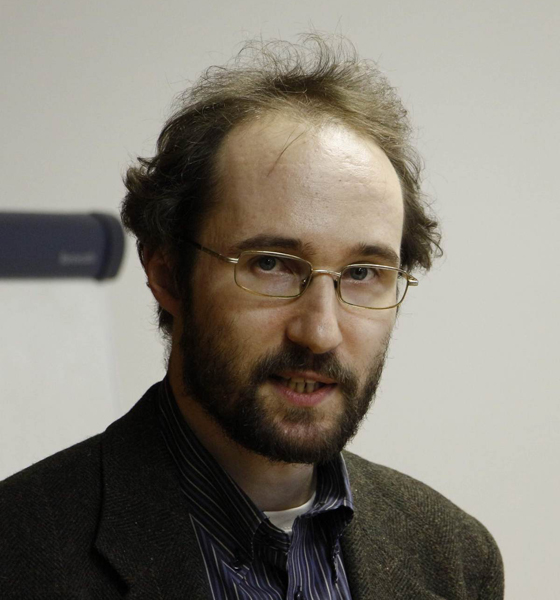
Svitlana Antonyuk-Yudina serves as a Lise Meitner senior postdoctoral researcher at the University of Graz, Austria, within the Institute of German Studies under the Austrian Science Fund (FWF) project M 3361-G "Deriving Discourse Configurationality of (East) Slavic" led by Prof. Victor Edgar Onea Gaspar. Her research centers on syntax-semantics interfaces , argument structure , and information structure in East Slavic languages (Ukrainian and Russian), with specific expertise in quantification, Instrumental syntax, Object Shift phenomena, and the realization of Givenness/Focus. Current investigations explore aspect-argument structure relations in East Slavic and cross-linguistic scope freezing, while her interests increasingly extend to generative typology and contact-induced language change. Dr. Antonyuk-Yudina holds the prestigious Lise Meitner Fellowship from the Austrian Science Fund (FWF). She is actively engaged in the FWF project M 3361-G and co-edits two Special Collection volumes for Glossa: a journal of general linguistics , with experimental work mapping East Slavic syntactic structures to prosodic realization upcoming.
Östen Dahl is a Professor in General Linguistics at Stockholm University since 1980, with a focus on linguistic typology and semantics. He holds a Ph.D. in Slavic languages from Göteborg University (1970) and has been a Docent in General Linguistics there from 1970-1980. Honors include the Ann-Kersti and Carl-Hakon Swenson Prize (2007), and memberships in prestigious institutions such as the Royal Swedish Academy of Sciences (since 1997) and Academia Europaea (since 2006). He also served as Dean of the Faculty of Humanities at Stockholm University (1990-1993) and held leadership roles at the Institute for Interpretation and Translation Studies. His academic career spans significant editorial contributions, including Section Editor for the Encyclopedia of Language and Linguistics and membership on the editorial boards of journals like Journal of Semantics and Linguistics.
Thede Kahl is a University Professor for Southern Slavic and Southeastern European Studies at the University of Jena, Germany, and director of the Department of Slavistics and Caucasus Studies (until 2016). He leads major research projects such as BalkanNOMAD, IRDICH, and LaZAR, focusing on intangible cultural heritage, data archiving, and interethnic dynamics. His career includes roles at the Austrian Academy of Sciences, the Austrian Institute of East and Southeast European Studies, and teaching positions at Phillips University of Marburg and the University of Münster. Fields of expertise: Cultural relations of Southern Slavs, endangered dialects, interethnic coexistence, and minority studies in Southeast Europe. Notable awards: Dr. honoris causa (2015), Medal of Merit of Gagauzia (2016), and membership in prestigious academies. His research integrates fieldwork, sociolinguistics, and historical analysis, with projects funded by FWF, DFG, EU, and private entities like Henkel. He has authored/co-authored over 10 key publications on Balkan linguistics, cultural heritage, and minority communities.
Stefan-Michael Newerkla is a University Professor of West Slavic Linguistics at the Department of Slavonic Studies, Faculty of Philology and Cultural Studies, University of Vienna. He has served as Head of the Institute of Slavic Studies since 2022, following previous leadership roles as Deputy Head (2018-2022) and Head (2005-2008). His academic leadership extends to significant positions including Member of the Academy Council of the Austrian Academy of Sciences (2022-2026), Member of the International Board of Palacký University Olomouc (2022-2026), and Member of the Scientific Council of the Czech Academy of Sciences (since 2013). Professor Newerkla earned his doctorate in 1998 with a dissertation on "Intended and actual linguistic reality in Bohemia. Diglossia in the school system of the Czech-speaking countries of the Habsburg Monarchy 1740–1918 using the example of the West Bohemian district town of Plzeň (Pilsen)" and completed his habilitation in 2003 on "Language Contacts Czech – German – Slovak. German Loanwords in Czech and Slovak: Historical Development, Evidence, Previous and New Interpretations." His academic journey began with studies in Slavic Studies, English Studies, and American Studies at the University of Vienna from 1992-1998. His research focuses on West Slavic linguistics with particular emphasis on contact linguistics, areal linguistics, linguistic geography, and historical sociolinguistics. He investigates the development of linguistic contacts between German, Hungarian and Slavic languages, examining Central Europe as a linguistic area with special attention to Austriazisms and Internationalisms research. His work also explores the school system and language teaching in the Habsburg Monarchy, analyzing language legislation versus language reality and diglossia or polyglossia in the educational system. Additional research interests include the National Renewal in the Bohemian Lands, Vienna's role in the Czech National Renewal, the Slovak national awareness process, and the grammatology and grammarography of West Slavic languages. Analysis of his recent publications (2023-2025) reveals a continued focus on historical language contact in Central Europe, particularly examining multilingualism in the Habsburg Monarchy and linguistic heritage. His work increasingly incorporates interdisciplinary approaches, connecting linguistic analysis with historical, educational, and cultural studies perspectives. Recent publications show particular attention to Czech language in Austria, language teaching methodologies, and the reconstruction of historical language contact phenomena, with several multilingual publications reflecting his expertise in cross-cultural communication. Professor Newerkla's scientific achievements have been recognized with numerous prestigious awards: Medal of the Minister for Foreign Affairs of the Czech Republic (August 7, 2024) for Services to Diplomacy Premia Bohemica for 2023 for outstanding contribution to promoting Czech literature abroad Josef-Dobrovský-Ehrenmedaille of the Czech Academy of Sciences (April 25, 2017) Full member of the Austrian Academy of Sciences (since 2018) Corresponding Member of the Austrian Academy of Sciences (since 2014) Member of the Academic Assembly of the Czech Academy of Sciences (since 2010) Award from University of Vienna for Innovative Teaching (June 22, 2001) As an academic leader, Professor Newerkla has supervised numerous theses across various levels of study. His research is supported by significant grants, most notably his role since 2016 as consortium member and board member of the Special Research Programme "German in Austria. Variation – Contact – Perception" (SFB F 60-G23), where he heads Task Cluster C and subprojects 05 and 06. He also led the research project "Slavists in Exchange: Austria and Russia 1849-1939" (2021-2025). His administrative roles have included Chairman of the Curricular Commission of the Senate of the University of Vienna (2010-2016) and Member of the Senate of the University of Vienna (2009-2016). Professor Newerkla is actively involved in multiple international research teams and collaborations, including the Permanent Conference of Austrian and Czech Historians on Common Cultural Heritage (SKÖTH), which he has co-chaired since 2009. His research group at the University of Vienna's Institute of Slavic Studies focuses on West Slavic linguistics, with particular expertise in historical language contact phenomena and the linguistic heritage of Slavic languages in Central Europe. He has also served as editor for numerous publications including the Vienna Slavic Yearbook (New Series) since 2013.
Ingunn Lunde is a full-time Professor of Russian at the Department of Foreign Languages , Faculty of Humanities , University of Bergen, Norway. She also holds a part-time (20%) Professor II position in Russian literature and culture at the University of Tromsø (2012–2019). Research Focus: Russian sociolinguistics, Slavic medieval culture, 19th–21st-century Russian literature, Byzantine hagiography, and digital media. Leadership: Head of the Research Group for Contemporary Russia at the University of Bergen. Projects: Principal Investigator for Landslide of the Norm (2005–2008) and The Future of Russian (2008–2013), funded by the Research Council of Norway. Publications: 85 works including 3 monographs, 56 articles, and 13 edited books. Notable works: Language on Display (2018), Fragmenter av fortid (2019), and Digital Russia (2014). Founding editor of the Slavica Bergensia book series (2000–present). Scientific Awards: Ugleprisen (2020) FUND-status (2019) Spurveugleprisen (2017) Fellowship at Wissenschaftskolleg zu Berlin (2014/15) Meltzer Prize for Young Researchers (2000) Outreach: Regular public speaker, media commentator, and contributor to the Great Norwegian Encyclopaedia on Russian literature.
Stefano Quaglia is an Assistant Professor at the Institute of Romance Studies , University of Graz. His research focuses on syntax and its interfaces with morphology and semantics , using Italian as a comparative framework within and beyond Romance languages. Email: stefano.quaglia@uni-graz.at Office: Room 003303056, Merangasse 70/III, Graz, Austria Consultation Hours: Wednesday, 3:30-4:30 p.m. Research interests include: Spatial expressions and functional sentence structure Long-distance dependencies Language contact phenomena Particle verbs and clausal organization Wh-movement and information structure Cross-linguistic syntactic analysis Recent publications highlight empirical and theoretical work on verbal theme vowels , Slavic prefix ordering , and L3 transfer dynamics . His studies integrate synchronic analysis with diachronic and contact linguistics frameworks. Articles demonstrate trends in: Syntax-morphology interfaces : Allomorphy, prefix stacking, particle systems Comparative Romance-Slavic analysis : Extraction patterns, convergence phenomena Language acquisition : CLI effects in bilingual/multilingual contexts Prosodic constraints : Stress and phrasing in particle verbs Information structure : Wh-questions in Romance
Priv.-Doz. Dr. Ingeborg Jandl-Konrad is an Assistant Professor for South Slavic Literatures and Cultures at the Department of Slavonic Studies, University of Vienna, where she holds the Venia Docendi (Habilitation) in Slavic Literatures and Cultures. She completed her habilitation on photographic and narrative discourses on war trauma in post-Yugoslav literatures, focusing on theoretical categories like 'photo-text' and 'speaking.' Her doctoral thesis on Gajto Gazdanov's works earned the DOC fellowship and the Ingeborg Ohnheiser Dissertation Award. Education: Russian and French Philology, Psychology, and Philosophy from Graz, Odesa, Moscow, and Sarajevo. Research interests include intermediality, narratology, verse theory, and literature/ethics intersections. She has edited volumes on trauma, body concepts, and transculturality, and authored monographs on Tsvetaeva’s verse dramas and post-Yugoslav trauma narratives. Awards include the DOC fellowship and ÖGSl award. Her work spans Slavic literatures with a focus on interdisciplinary approaches. She co-organizes academic events, such as a guest lecture series on Yugoslav war memory and masculinity. Active in academic networks, her research bridges literature, psychology, and cultural studies, addressing themes like trauma, identity, and ethical representation.
Roman Krivko is an Associate Professor at the Department of Slavonic Studies , University of Vienna. His research focuses on Old Church Slavonic , Byzantine hymnography , and historical linguistics of Slavic languages. Specializes in medieval Slavic epigraphy and liturgical text analysis Key contributor to studies on Christian traditions in Slavic contexts Active editor and researcher in international Slavic studies Research Themes include: Quantitative analysis of loanwords in Slavic Gospels Textological studies of service menaia and kontakia Historical development of Old Bulgarian language Linguistic networks in Central/Eastern Europe Scientific Contributions span Editorial work on Slověne journal Notable publications on the Temnić inscription and Samuil's epigraph Collaborations with institutions like Vinogradov Russian Language Institute
Igor Maver is a Full Professor of Literatures in English at the Department of English, Faculty of Arts, University of Ljubljana since 2001. He chairs the literature section and heads the American Studies Interdisciplinary PhD Programme (jointly with the Faculty of Social Sciences). His academic career includes visiting professorships at over 20 global institutions, including UC Davis, University of Edinburgh, and University of Bologna. Education: Bachelor of Arts in English and French (1984), University of Ljubljana Master of Arts in Literature and Cultural Mediation (1988), University of Ljubljana PhD in English Literature (1990), University of Ljubljana (thesis on Australian literature) Bachelor of Economics (1986), University of Ljubljana Research Interests: Maver specializes in post-colonial literary theory, diasporic studies, and transnational Anglophone literatures. His work bridges literary analysis with socio-economic contexts, particularly in Canadian, Australian, and Slovenian emigration studies. He has pioneered cross-cultural frameworks for studying transborder literatures and cultural mediation. Publications: His 3 monographs, 2 essay collections, and over 200 scholarly articles reflect his focus on post-colonial literatures, transnational authorship, and cultural hybridity. Recent work examines diasporic subjectivity and crossborder literary networks in English. Awards & Leadership: 2011 Royal Society of Edinburgh Research Award 8-year term as Scientific Committee Member/PRESIDENT for Slovenian Emigration Theses Awards International member of Italy's National Academic Committee (ASN) Grants & Collaboration: Funded by Slovenian Research Council and bilateral programs with Austria, France, Turkey, and Scotland. Leads interdisciplinary research on intercultural literary studies. Academic Service: Editor of Acta Neophilologica (since 1998), and member of editorial boards for TransPostCross (Bologna) and Il Tolomeo (Venice). Organized major conferences like the 1994 Bled Conference on Ethnic Literatures.
Vladimir Plungian is a distinguished Russian linguist currently serving as Professor and Head of the Department of Theoretical and Applied Linguistics at Moscow State Lomonosov University's Faculty of Philology. He also holds significant leadership positions as Deputy Director of the Vinogradov Institute for Russian Language and Head of the Department of Linguistic Typology at the Institute of Linguistics, all part of the Russian Academy of Sciences. Plungian earned his undergraduate and graduate degrees at Moscow State Lomonosov University and The Institute of Linguistics of the Russian Academy of Sciences. His academic career spans several decades with continuous appointments at Moscow State University since 1989, progressing from Junior Research Fellow to full Professor. His research encompasses a remarkably broad spectrum of linguistic fields including general linguistics, morphology, grammatical typology, corpus linguistics, and poetics. Plungian has conducted extensive fieldwork on diverse language families including Slavic languages, African languages (particularly in Mali), languages of the Caucasus, and Austronesian languages. His work demonstrates a unique intersection between theoretical linguistics and practical language documentation. An analysis of his recent publications reveals a continued focus on grammatical typology, corpus linguistics, and the documentation of lesser-studied languages. His work spans both theoretical explorations of grammatical categories and practical applications in corpus construction, with particular attention to Slavic languages, Pamir languages, and Armenian. The Eastern Armenian National Corpus represents one of his major collaborative achievements. Full member, Russian Academy of Sciences (Department of History and Philology), 2016 "Prosvetitel" Prize (Humanities) for best popular-scientific book publication in Russian, 2011 Corresponding Member, Russian Academy of Sciences (Department of History and Philology), 2009 Plungian has played a significant role in developing major linguistic resources, most notably as one of the creators of both the Russian National Corpus and the Eastern Armenian National Corpus. Since 2016, he has served as editor-in-chief of Voprosy Jazykoznanija, the leading Russian linguistics journal. His international collaborations include work at scientific centers across Europe (Belgium, Germany, Norway, France) and fieldwork in Africa and various regions of the Russian Federation. Plungian leads multiple research teams across different institutions, including the Department for Corpus and Poetic Studies at the Vinogradov Institute for Russian Language, where he has directed research since 2003. His work bridges theoretical linguistics with practical applications in language documentation and corpus construction, creating a unique research environment that connects Slavic linguistics with the study of African and Caucasian languages.
Davor Dukic is a Full Professor in the Department of Croatian Language and Literature at the Faculty of Humanities and Social Sciences, University of Zagreb. He has held academic positions since 1993, progressing from Assistant to Full Professor by 2009. His career includes roles as Vice Dean for Education (2004–2005) and editor-in-chief of Umjetnost rijeci: Journal of Literary, Theatre and Film Studies since 2013. He has led major research projects, including the 2007–2013 initiative on imagological analysis of 16th–19th century Croatian literature. Education highlights include a BA in History and Comparative Literature (1989), MA and PhD in Philology (1993 and 1998, respectively) from the University of Zagreb. He held a Herder Scholarship at the University of Vienna (1991–1992) and an Alexander von Humboldt Fellowship at the University of Munich (2005–2006). His research focuses on Cultural Imagology , Early Modern Croatian Literature , and South-Slavic Modern Cultures . Notable works include studies on Ottoman imagery in Croatian literature, Hungarian-Croatian cultural exchanges, and Dalmatian identity. His publications bridge comparative literature, cultural history, and methodological debates in imagology. Major awards include membership in the Academy of Europe (since 2014) and prestigious fellowships. His academic contributions span editorial roles, international collaborations, and foundational research in Slavic and comparative literary studies.
Peter Arkadiev is a Senior Researcher at the Department of Slavic Studies, Universität Potsdam (since December 2024). His academic career includes positions such as Professor at the Russian State University for the Humanities (2020–2022), Research Professor at Vilnius University’s Philological Faculty (2018–2022), and extensive research roles across institutions in Russia, Germany, Lithuania, and Switzerland. He holds a PhD from the Institute of Slavic Studies of the Russian Academy of Sciences (2006) and a habilitation from the same institute (2019). His research focuses on linguistic typology, case systems, Baltic and Slavic languages, morphology, and areal linguistics. Notable contributions include studies on prefixal perfectivisation and typological analysis of grammatical relations. Education: 1999–2004: Specialist in theoretical/applied linguistics (summa cum laude), Russian State University for the Humanities 2004–2006: PhD student at Institute of Slavic Studies, Russian Academy of Sciences 2019: Habilitation on areal typology of prefixal perfectivisation Arkadiev’s work emphasizes cross-linguistic comparisons and historical perspectives. His recent projects explore morphological typology and syntax-morphology interfaces in Caucasian and Baltic languages. He has received the prestigious title of Professor of the Russian Academy of Sciences (2022). Awards: Professor of the Russian Academy of Sciences (2022) Grants/Funding: Marie Curie Senior Fellowship (Freiburg Institute for Advanced Studies, 2023–2024) ANR-DFG and DFG-funded research (Germany) EU Social Fund grants (Lithuania) Active in academic communities, he participates in the Association of Linguistic Typology, Societas Linguistica Europaea, and Academia Salensis.
Dijana Simic serves as Lecturer for Slavic Literary and Cultural Studies and Gender Studies at the University of Graz, holding dual appointments at the Department of Slavic Studies (since 2019) and Coordination Office for Gender Studies (since 2022). Her academic trajectory at the institution spans over a decade, including previous roles as University Assistant (2013-2019) and Student Assistant (2012-2013). Her doctoral research at the University of Graz, supported by the 2017 Marietta Blau Scholarship, culminated in the dissertation "Intimate Counterpublics. A gender-oriented analysis of Bosnian-Herzegovinian prose of the New Sensibility," with fieldwork conducted at Central European University in Budapest and multiple locations across Bosnia and Herzegovina. Dr. Simic's research program critically examines Migration, Gender, and Memory Studies within post-Yugoslav contexts, with specialized focus on Bosnian/Croatian/Serbian literary production. Her scholarship investigates how marginalized communities construct intimate counterpublics and identity narratives through literary expression. As an Elisabeth List Fellow (2020-2021), she participated in the international "Intimate Readings" affect research group, advancing interdisciplinary methodologies at the intersection of gender theory and literary analysis. Her publication record reveals consistent engagement with gendered migration narratives and transcultural identity formation in Slavic contexts. The works demonstrate methodological sophistication in connecting literary analysis with sociopolitical frameworks, particularly regarding how displaced communities negotiate belonging through narrative strategies. Her scholarly recognition includes: Elisabeth List Fellowship for Gender Research (2020) Marietta Blau Scholarship from the Austrian Federal Ministry (2017) Additional research support has facilitated academic engagement in Ljubljana, Olomouc, Yerevan, and Moscow. Professional service includes: Member of MESEA - Society for Multi-Ethnic Studies: Europe and the Americas (since 2018) Member of Austrian Society for Gender Research (since 2017) Member of Young Forum Slavic Literary Studies (since 2014) Member of Austrian Society for Slavic Studies (since 2013) She previously coordinated the international CEEPUS network "Slavic Philology and Its Cultural Contexts" (2014-2019), fostering academic collaboration across five European institutions. Her research is formally affiliated with the University of Graz's "Heterogeneity and Cohesion" research network, which investigates social integration processes in diverse societies through interdisciplinary approaches.
Gertraude Zand is an Assistant Professor at the Department of Slavonic Studies, University of Vienna, where she has been employed since 2003. Previously, she served as an assistant at the same institute (1994–2002) and held academic roles at the Technical University of Prague and University of Economics in Prague. Her educational background includes a PhD in Czech (1997), a Diploma in Czech (1993), and an M.Phil in History, Philosophy, Psychology, and Education (1987), all from the University of Vienna. Her research specializes in Czech and Slovak literature, with emphases on underground literature during Stalinism (1948–1953), baroque literary traditions, and Czech-German cultural intersections. She explores themes of exile, identity, and linguistic hybridity, often through the works of authors like Egon Bondy, Jáchym Topol, and Božena Němcová. Her scholarship bridges literary analysis with historical and cultural contexts, revealing how literature reflects socio-political transformations. Zand's publications demonstrate a consistent focus on dissident movements, symbolic representations of space, and transnational literary dialogues. Her recent work increasingly examines the role of German language in Czech poetry and the mythological reconstruction of cultural figures. She received the Premia Bohemica award from the Czech Ministry of Culture in 2024 for her contributions to Bohemian studies.
Heinrich Pfandl is an Associate Professor at the Institute of Slavic Studies, Alpen-Adria-Universität Klagenfurt. His academic role involves teaching and research within Slavic Studies, focusing on areas such as cultural analysis, linguistics, and literary traditions. He maintains active consultation hours via email, preferred on Fridays. While specific research projects led by Pfandl are not detailed, he is affiliated with the Institute of Slavic Studies, which engages in interdisciplinary work. His professional activities include academic advising and contributions to scholarly discussions in his field. No specific grants, awards, or recent publications are explicitly mentioned in the provided text. He is reachable at heinrich.pfandl@uni-graz.at for official correspondence, as noted in institutional guidelines.