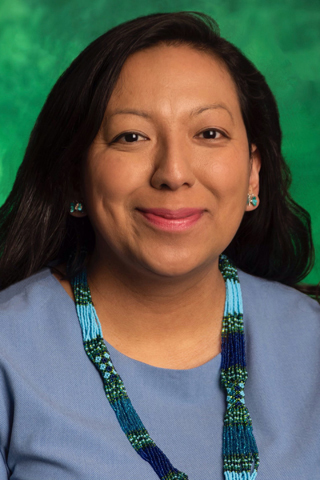
Jennifer Gómez Menjívar is Professor and Director of the M.A. in Media Industries and Critical Cultural Studies at the University of North Texas. Her research examines historical and ethno-linguistic movements influencing text production, circulation, and reception across print media, screen cultures, and digital communities. With over 18 years of teaching experience, she previously held positions at international organizations including the UNECE and UNDP. Her scholarly interests span media linguistics, film adaptation, digital activism, hemispheric animation histories, Indigenous sovereignty media, and Spanish-language media. Her publications demonstrate interdisciplinary work bridging media studies, cultural history, and postcolonial theory. Her extensive publication record includes books such as Tropical Tongues: Language Ideologies, Endangerment, and Minority Languages in Belize (2018) and Black in Print: Plotting the Coordinates of Blackness in Central America (2023), as well as co-edited volumes on Indigenous technology and hemispheric Blackness. She received a Senior Research Fellowship at Freie University Berlin for her upcoming work on Indigenous sovereignty media. Gómez Menjívar teaches courses including Introduction to Graduate Studies in Media Arts, Women in Film, and Global Media. She also mentors students in critical media analysis and serves as faculty advisor for media research projects.
Leo J. Garofalo is the Virginia Eason Weinmann '51 Professor of History at Connecticut College, where he joined in 2002. He coordinates the Social Justice and Sustainability Pathway and co-directs the Mellon Mays Undergraduate Fellowship program. His scholarship focuses on colonial Latin America with emphasis on racial dynamics and cultural exchange. Education: B.A. in History and Hispanic Studies from Brown University M.A. from Boston College Ph.D. from University of Wisconsin at Madison Research Focus: Garofalo investigates the intersection of African and Indigenous cultures in colonial Peru, examining how marketplaces, taverns, and religious practices shaped Afro-Andean identities. His current work traces West African diaspora routes to the Andes and analyzes Afro-Iberian influences on witchcraft traditions. He utilizes Inquisition records and Spanish imperial archives to reconstruct transatlantic cultural networks. Awards: Virginia Eason Weinmann '51 Professorship (endowed chair) Social Science Research Council Grant Fulbright-Hays Research Grant Academic Leadership: Garofalo has organized campus events featuring Afro-Peruvian performers (Negrura Peruana) and activists like former Colombian Governor Luis Murillo. In 2010, he co-led a Study Away Teach Away program in Oaxaca, Mexico, examining immigration and indigenous rights movements.
Marcela Echeverri Muñoz is an Associate Professor in the Department of History at Yale University, affiliated with the Faculty of Arts and Sciences. Her scholarship bridges history, anthropology, and political theory, with a focus on Latin America, the Atlantic World, and the Spanish Empire. She is recognized for her interdisciplinary approach to understanding political subjectivities, state formation, and social transformation during the Age of Revolutions. PhD in Latin American and Caribbean History, New York University, 2008 MA in History of the Hispanic World, Fundación MAPFRE-Tavera and CSIC, Madrid, 2006 MA in Social and Political Theory, The New School for Social Research, 2001 BA in Anthropology, Universidad de los Andes, Bogotá, 1997 Her research centers on the interplay of race, gender, law, and political theory in colonial and 19th-century Latin America. She investigates how enslaved and Indigenous peoples navigated imperial and republican transitions, particularly through royalist affiliations. Her work challenges peripheral narratives of Spanish America in Atlantic slavery studies, positioning the region as a central site of abolitionist and constitutional experimentation. The trends in her recent publications reveal a sustained focus on slavery, abolition, and political transformation in the Spanish American mainland. She analyzes how anti-slavery movements were intertwined with republicanism, citizenship, and state formation, especially in Gran Colombia. Her scholarship spans legal history, Atlantic processes, and transimperial dynamics, often highlighting marginalized voices in revolutionary contexts. She frequently contributes to major reference works and edited volumes on Atlantic revolutions and Latin American independence. Her scientific awards and fellowships reflect her standing in the field: James Alexander Robertson Prize Michael Jiménez Prize Bolton-Johnson Prize Honorable Mention Yale Heyman Prize for Outstanding Scholarly Publication Alexander von Humboldt Research Fellowship MacMillan Research Fellow, Yale Mellon Residential Fellow, CUNY NEH Summer Institute Participant, Johns Hopkins Fellowships from John Carter Brown Library, CSIC, Fundación Mapfre, and Instituto Colombiano de Antropología e Historia Echeverri has secured significant research grants from Harvard’s Atlantic History Seminar, CUNY Research Foundation, and Yale. She has co-edited special issues on Gran Colombian history and Spanish American abolition, and led key academic initiatives including the Race and Slavery in the Atlantic World Working Group and the Early Modern Empires Workshop at Yale. Though student advising is not explicitly detailed, her role as a senior scholar implies mentorship of graduate students. She is affiliated with several research networks and has been a visiting scholar at institutions such as Freie Universität Berlin. Her ongoing book project on Gran Colombian slavery underscores her commitment to redefining the hemispheric significance of Latin American abolition. She remains an active contributor to both scholarly and pedagogical conversations in Atlantic and Latin American history.
Claire Priest is the Simeon E. Baldwin Professor of Law and Professor of History at Yale University, holding dual appointments in the Yale Law School and the History Department. She specializes in legal and economic history, with a focus on property laws, credit systems, and institutional development in early America. Her seminal work Credit Nation (2021) redefines American economic history by examining how colonial credit laws shaped capitalism and slavery. Education: B.A. (Yale, 1994), J.D. (Yale Law School, 2000), Ph.D. in History (Yale, 2003). Roles: Co-director of Yale Law School’s Latin American program (SELA) and Yale’s Council on Latin American and Iberian Studies advisory committee. Her research bridges law, economics, and slavery, appearing in top journals like Harvard Law Review and Law and History Review . She has held visiting posts at Columbia and Harvard Law Schools and clerked for the U.S. Court of Appeals for the Second Circuit. Recipient of the 2021 Yale Law Women’s Faculty Excellence Award, she teaches courses on property, American legal history, and political economy in the Age of Revolution.
Rhenish Friedrich Wilhelm University of BonnGermany
Stephan Conermann serves as Professor of Islamic Studies and Dean of the Faculty of Arts and Humanities at the University of Bonn, where he has held continuous academic appointments since 2003. His institutional leadership includes directorship of the Annemarie Schimmel Kolleg (2010-2022), Bonn Center for Transcultural Narratology, and significant administrative roles culminating in his current deanship since 2023. Academic Background: Doctorate in Oriental Philology/Islamic Studies (Kiel University, 1996, magna cum laude) Magisterstudium in Asian History, Oriental and Slavic Philology (Kiel University, 1992) Conermann's research examines pre-modern Islamic societies through narrative strategies in historiography, with specialized focus on Mamluk Sultanate governance (1250-1517), Delhi Sultanate/Mughal transitions, and Transottomanica mobility dynamics. His work uniquely connects asymmetrical dependencies (particularly slavery systems), power structures, and global entanglements across South Asia, Middle East, and Eastern Europe. His extensive publication portfolio shows consistent thematic evolution toward comparative frameworks analyzing slavery beyond Eurocentric models, narrative construction of power across cultures, and mobility as historical catalyst. Recent scholarship increasingly integrates transcultural methodology with digital humanities approaches. Academic Leadership: Supervised 290+ theses (59 PhD, 96 Magister, 47 Master, 88 Bachelor) Acquired ~9 million euros in third-party funding (DFG, BMBF, DAAD) Editor of 15+ publication series including Mamluk Studies and Dependency and Slavery Studies Conermann directs the Bonn Center for Transcultural Narratology and co-leads the EXC 2036 'Beyond Slavery and Freedom' cluster, fostering interdisciplinary research on pre-modern dependency systems through international collaborations across Europe, Asia, and the Americas.
Arthur Weststeijn is an Assistant Professor in Political History at Utrecht University, specializing in the history of the Dutch Republic and its colonial empire, the history and contemporary politics of Italy, and the history of Spain and Latin America. He is affiliated with the Department of History and Art History within the Humanities faculty and is part of the Research Institute for History and Art History, focusing on International and Political History. Dr. Weststeijn's educational background includes: PhD in History, European University Institute, Florence (2010) RMA in History, European University Institute, Florence (2006) MA in Philosophy, University of Amsterdam (2005) MA in History, University of Amsterdam (2004) Erasmus Exchange, Universidad de Sevilla (2000-2001) His research focuses on the intellectual history of power, particularly examining ideas that express and contest political authority through two main themes: colonialism (how ideas have shaped European colonialism and resistance against it) and republicanism (how resistance to autocratic rule has given rise to ideas of liberty, citizenship, and democracy). His work spans early-modern Dutch colonialism, anticolonial thought, the history of democracy, and connections between ancient and modern forms of settler colonialism. He has published extensively on early modern republicanism, the political uses of classical heritage, and the making of modern Italy. Weststeijn's scholarly output demonstrates a consistent focus on the intersections between political thought, colonial history, and republican theory. His work often examines how historical ideas continue to shape contemporary political discourse, particularly regarding democracy, citizenship, and colonial legacies. He frequently engages with both European and transatlantic intellectual traditions, showing particular expertise in Dutch and Italian political thought. His notable awards and fellowships include: Fellow, Huntington Library, San Marino, California (Summer 2022) Fellow, John Carter Brown Library, Providence, Rhode Island (Spring 2019) Director of Historical Studies, Royal Netherlands Institute in Rome (2011-2017) Dr. Weststeijn has served as a visiting researcher at prestigious institutions including the Cambridge Centre for Political Thought, University of Southern California, University of Wisconsin at Madison, and University of Padua. He frequently appears as an expert commentator on Italian culture and politics in Dutch media and maintains an active public intellectual presence. He is involved in multiple research initiatives including the IOS research themes on Contesting Governance, Futures of Democracy, and Longtermism and Institutional Change. His work often involves interdisciplinary collaboration with archaeologists, classicists, and scholars from various humanities disciplines.
Greg Grandin is the Peter V. and C. Vann Woodward Professor of History at Yale University, where he has been affiliated since returning from New York University after nineteen years. His work focuses on Latin American and U.S. history, with an emphasis on empires, colonialism, indigenous peoples, and social-political dynamics. He has authored seven books, including award-winning titles such as The Blood of Guatemala , The Empire of Necessity (winner of the Bancroft and Beveridge awards), and The End of the Myth (Pulitzer Prize winner). Grandin is a member of prestigious academic societies like the American Academy of Arts and Sciences and contributes to journals like The Nation and London Review of Books . His research explores the interplay between U.S. interventions and Latin American resistance, reshaping understandings of hemispheric relations. Recent publications include America, América (2025), a sweeping re-evaluation of North and South American histories. His academic awards include the Pulitzer Prize, Bancroft Award, and multiple fellowships. Grandin’s work often bridges scholarly and public engagement, reflected in his editorial roles and media appearances. He has co-edited volumes like The Guatemala Reader and his writings address contemporary political issues through historical lenses.
University of Illinois Urbana-ChampaignUnited States
Craig M. Koslofsky is a Professor of History at the University of Illinois at Urbana-Champaign, with additional affiliations in Germanic Languages and Literatures, the European Union Center, and the Program in Medieval Studies. His research focuses on early modern Europe, particularly the history of everyday life and human skin in the early modern era (1400–1800). He explores topics such as medical practices, slavery’s impact on indigenous populations, and supernatural beliefs in colonial contexts. His research interests span the Atlantic World, British Empire, and medieval Europe, reflecting interdisciplinary approaches to historical analysis. Recent publications address the intersection of skin studies and colonialism, the cultural history of ghosts in Enlightenment America, and the Reformation’s local manifestations. He has edited works on transatlantic slave trade surgeons and early modern religious debates. Koslofsky holds a Ph.D. and is based in Gregory Hall. His work bridges global and local histories, emphasizing the material and cultural dimensions of early modern life. He collaborates across disciplines, engaging with medical history, literary studies, and colonial studies.
Jose Luis Belmonte Postigo is an active researcher and faculty member at the University of Seville, specifically in the Department of American History within the Faculty of Philosophy, Arts and Humanities. His academic career spans over a decade, with research activity documented from 2010 to the present. He earned his doctorate from the Pablo de Olavide University with a thesis on slavery in Santiago de Cuba (1780-1803), supervised by Dr. Juan Marchena Fernández. Belmonte Postigo's research focuses on the history of slavery in the Spanish Caribbean and Latin America, with particular attention to Cuba, Puerto Rico, Peru, and the broader Atlantic World. His work examines the social, economic, and cultural dimensions of slavery, including enslaved people's resistance strategies, social mobility, and the complex relationships between masters and slaves. He has conducted extensive research on how enslaved individuals navigated systems of power, sought freedom, and maintained cultural practices across the colonial period. His publications reveal a strong interest in the microhistories of enslaved individuals and communities, analyzing how they negotiated their circumstances within rigid colonial structures. Belmonte Postigo has made significant contributions to understanding the regional variations of slavery across the Spanish Empire, particularly examining how local contexts shaped slave societies in different parts of the Caribbean and Latin America. Belmonte Postigo has received recognition for his scholarly work, with a substantial following on academic platforms like Academia.edu where he has 938 followers. He collaborates with scholars across Latin America and Spain, contributing to edited volumes and participating in international research projects focused on slavery and colonial history. In addition to his research, Belmonte Postigo has demonstrated commitment to academic service through peer reviewing and contributing to scholarly journals. His expertise in colonial slavery has positioned him as a key contributor to ongoing scholarly conversations about the legacy of slavery in Latin America and the Caribbean.
Glenda R. Carpio is the Powell M. Cabot Professor of English and Professor of African and African American Studies at Harvard University. She holds a Ph.D. in English from UC Berkeley and a B.A. from Vassar College. Her research focuses on African American literature, humor studies, and intersections of race, immigration, and cultural identity. She has published critically acclaimed works like Laughing Fit to Kill and co-edited African American Literary Studies . Her teaching spans Harvard, NYU, and Compton schools through Teach for America. Notable awards include the Harvard Abramson Teaching Award and a Fulbright Fellowship. She is affiliated with the W.E.B. Du Bois Institute and has advised initiatives like Fuerza Latina. Current projects explore immigration narratives in American literature. Her interdisciplinary work bridges literature, art, and historical memory, with contributions to Daedalus , American Literature , and Chronicle of Higher Education . She advises Harvard undergraduates and engages in public discourse on race and culture.
Jeremy Schipper is a Professor at the University of Toronto with a cross-appointment in the Department for the Study of Religion. His research focuses on the Hebrew Bible/Old Testament, particularly examining themes of disability and race within biblical texts. Education PhD, Princeton Theological Seminary MDiv, Princeton Theological Seminary BA, Azusa Pacific University Research Interests Dr. Schipper's work bridges biblical studies and contemporary social issues, including: Hebrew Bible exegesis Disability representation in ancient scripture Racial interpretations of biblical narratives Intersectional analysis of religious texts Scientific Awards Guggenheim Fellowship for biblical scholarship
Paul Downes is a Professor in the Department of English at the University of Toronto, with a focus on eighteenth- and nineteenth-century American literature and its intersection with political philosophy. He holds a BA from York University and a PhD from Cornell University. His research spans literature and political philosophy, Marxist theory, and environmental humanities, often analyzing canonical texts through critical theoretical frameworks. Education: BA, York University; PhD, Cornell University Fields of Interest: American Literature, Environmental Humanities, Literary and Critical Theory, Literature and Political Philosophy, Marxist Theory Downes’ research examines the relationship between literary works and political ideologies, particularly in early American literature. His recent work explores the politics and aesthetics of protection from the 18th to 21st centuries. His publications highlight themes of sovereignty, democracy, and ethical intervention in texts by authors like Herman Melville and Charles Brockden Brown. His journal articles and book chapters frequently bridge literary analysis with philosophical and political discourse. Notable trends in his publications include critical engagements with Thomas Hobbes’ theories in colonial contexts, the role of political theology in shaping early American narratives, and the interplay between democracy and terror in Gothic fiction. His work also interrogates energy ideologies in Melville’s Moby Dick and historical parallels between revolutionary texts and modern events. No scientific awards or honors were mentioned in the provided text. He has not explicitly listed any formal advisees or students in the available materials.
Nicholas Guyatt serves as Professor of North American History in the Faculty of History at the University of Cambridge and is a Fellow of Jesus College. He joined Cambridge in 2014 after teaching positions at Princeton University, Simon Fraser University, and the University of York. His academic foundation includes a BA and M.Phil. from the University of Cambridge and a Ph.D. from Princeton University under Daniel T. Rodgers. Guyatt's research centers on race, national identity, and state formation in 18th-19th century America, with core expertise in colonial history, the Atlantic World, and intellectual history of American imperialism. His work critically examines racial segregation, maritime history, and evolving concepts of citizenship and world order. Analysis of his recent publications reveals consistent thematic focus on racial ideologies, colonization projects, and imperial thought across the early republic and Civil War eras. His scholarship demonstrates methodological breadth spanning political, intellectual, and social history with particular attention to African American experiences and transnational connections. His distinguished recognition includes: Stanford Humanities Center Faculty Fellow (2009-2010) British Academy Mid-Career Fellow (2013-2014) Senior Visiting Research Fellow at Oxford's Rothermere American Institute (2013-2014) He actively supervises M.Phil. and Ph.D. candidates in 18th-19th century American/Atlantic history, especially welcoming research on Native Americans, African Americans, slavery/abolition, and empire. His editorial leadership with Zed Books' 'Global History of the Present' series reflects commitment to diversifying historical scholarship beyond Eurocentric frameworks. Current major projects include co-authoring 'Jefferson's Wolf: The Struggle to End Slavery in the Founding Era' (Harvard University Press, 2026) and editing 'The Oxford Illustrated History of the United States' (OUP, 2026), demonstrating sustained scholarly productivity through collaborative academic networks.
Naomi Murakawa is an Associate Professor in the Department of African American Studies at Princeton University, School of Arts and Sciences. Her research focuses on the reproduction of racial inequality in American politics, particularly in the realms of crime policy and the carceral state. Her scholarly work bridges political science, critical race theory, and legal studies. Key areas of interest include mass incarceration, racial liberalism, the historical development of crime control, and the paradoxes of reform within the criminal justice system. Her research, reflected in publications such as The First Civil Right: How Liberals Built Prison America and numerous journal articles, reveals how ostensibly progressive policies have contributed to the expansion of the prison system. Themes across her work include the racialized foundations of state power, the limitations of liberal reform, and the structural persistence of racial inequality in law and governance. Scientific Awards and Fellowships: Fellowship from Columbia Law School’s Center for the Study of Law and Culture Fellowship from Robert Wood Johnson Foundation’s Health Policy Research Program Professor Murakawa has advised graduate students and contributed to major scholarly and public conversations on race and justice. Her work has been supported by significant research grants and fellowships, enabling deep historical and theoretical analysis of the American carceral state. She is a leading voice in interdisciplinary debates on decarceration, abolition, and transformative justice. She is affiliated with research initiatives focused on race, law, and inequality, contributing to collaborative teams examining the intersections of policy, history, and social movements. Her ongoing scholarship continues to challenge conventional narratives about crime, punishment, and racial progress in the United States.
Louis Nelson is Professor of Architectural History and Vice Provost for Academic Outreach at the University of Virginia, serving as Associate Dean in the School of Architecture. His scholarship focuses on the built environments of the early modern Atlantic world, with specialized expertise in the American South, Caribbean, and West Africa. His educational background includes a PhD and M.A. from the University of Delaware and a B.A. from The College of William and Mary. Nelson's research examines architecture's role in shaping human experience through material and textual evidence, particularly in contexts of slavery and empire. His work on spaces of enslavement spans West Africa and the Americas, including a major initiative documenting the University of Virginia as a landscape of slavery. He has directed decade-long fieldwork in Jamaica through the Falmouth Field School, resulting in systematic documentation of Caribbean architecture and Afro-Caribbean cultural transitions. His publications reveal consistent engagement with colonial religious architecture, material religion, and imperial power structures. The 2017 monograph Architecture and Empire in Jamaica synthesizes violence, empire, and identity in eighteenth-century British colonial contexts, while his earlier work on South Carolina Anglican churches explores regional identity through sacred spaces. Nelson's scholarly recognition includes: John Brickerhoff Jackson Prize (2017) Abbott Lowell Cummings Prize (2017) SESAH Best Book Prize (2010) SESAH Best Article Prize (2008) University-wide teaching award (2007) As an educator, he has mentored over one hundred students through Caribbean field programs and served as senior co-editor of Buildings and Landscapes . His research integrates archaeological collaboration and GIS documentation through the Falmouth Project. He leads the Falmouth Field School and Falmouth Project—a GIS-based repository for Caribbean architectural data—while continuing fieldwork across the American South and Caribbean to document landscapes of slavery and freedom.