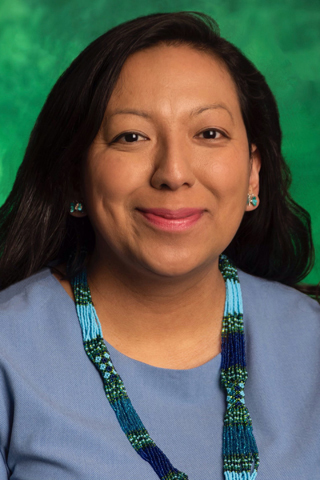
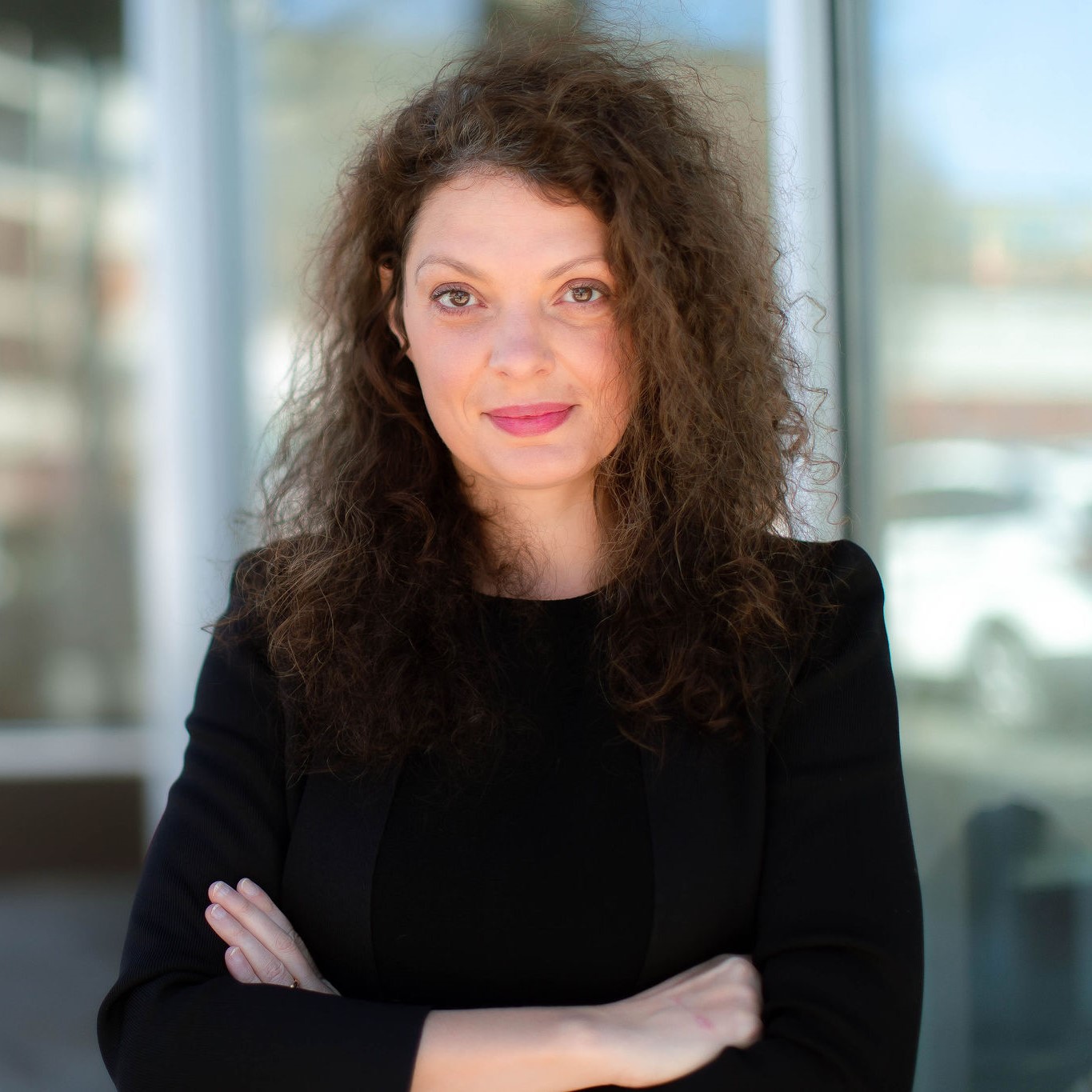
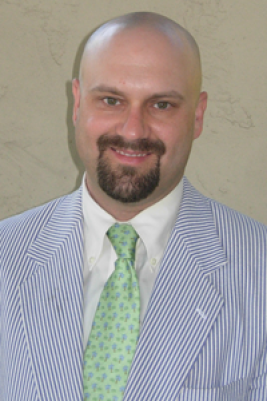
Jennifer Gómez Menjívar is Professor and Director of the M.A. in Media Industries and Critical Cultural Studies at the University of North Texas. Her research examines historical and ethno-linguistic movements influencing text production, circulation, and reception across print media, screen cultures, and digital communities. With over 18 years of teaching experience, she previously held positions at international organizations including the UNECE and UNDP. Her scholarly interests span media linguistics, film adaptation, digital activism, hemispheric animation histories, Indigenous sovereignty media, and Spanish-language media. Her publications demonstrate interdisciplinary work bridging media studies, cultural history, and postcolonial theory. Her extensive publication record includes books such as Tropical Tongues: Language Ideologies, Endangerment, and Minority Languages in Belize (2018) and Black in Print: Plotting the Coordinates of Blackness in Central America (2023), as well as co-edited volumes on Indigenous technology and hemispheric Blackness. She received a Senior Research Fellowship at Freie University Berlin for her upcoming work on Indigenous sovereignty media. Gómez Menjívar teaches courses including Introduction to Graduate Studies in Media Arts, Women in Film, and Global Media. She also mentors students in critical media analysis and serves as faculty advisor for media research projects.
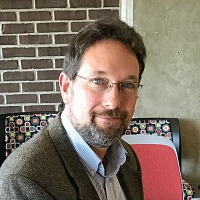
Leo J. Garofalo is the Virginia Eason Weinmann '51 Professor of History at Connecticut College, where he joined in 2002. He coordinates the Social Justice and Sustainability Pathway and co-directs the Mellon Mays Undergraduate Fellowship program. His scholarship focuses on colonial Latin America with emphasis on racial dynamics and cultural exchange. Education: B.A. in History and Hispanic Studies from Brown University M.A. from Boston College Ph.D. from University of Wisconsin at Madison Research Focus: Garofalo investigates the intersection of African and Indigenous cultures in colonial Peru, examining how marketplaces, taverns, and religious practices shaped Afro-Andean identities. His current work traces West African diaspora routes to the Andes and analyzes Afro-Iberian influences on witchcraft traditions. He utilizes Inquisition records and Spanish imperial archives to reconstruct transatlantic cultural networks. Awards: Virginia Eason Weinmann '51 Professorship (endowed chair) Social Science Research Council Grant Fulbright-Hays Research Grant Academic Leadership: Garofalo has organized campus events featuring Afro-Peruvian performers (Negrura Peruana) and activists like former Colombian Governor Luis Murillo. In 2010, he co-led a Study Away Teach Away program in Oaxaca, Mexico, examining immigration and indigenous rights movements.
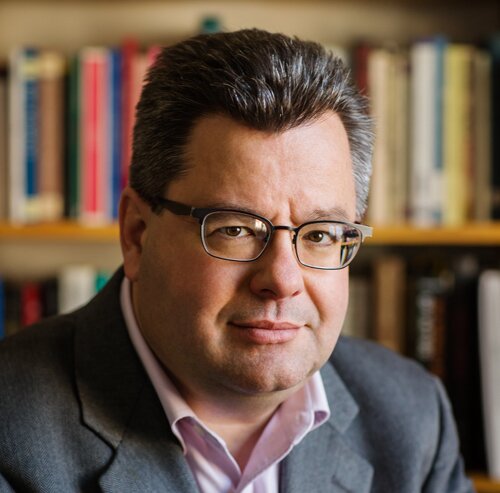
Marcela Echeverri Muñoz is an Associate Professor in the Department of History at Yale University, affiliated with the Faculty of Arts and Sciences. Her scholarship bridges history, anthropology, and political theory, with a focus on Latin America, the Atlantic World, and the Spanish Empire. She is recognized for her interdisciplinary approach to understanding political subjectivities, state formation, and social transformation during the Age of Revolutions. PhD in Latin American and Caribbean History, New York University, 2008 MA in History of the Hispanic World, Fundación MAPFRE-Tavera and CSIC, Madrid, 2006 MA in Social and Political Theory, The New School for Social Research, 2001 BA in Anthropology, Universidad de los Andes, Bogotá, 1997 Her research centers on the interplay of race, gender, law, and political theory in colonial and 19th-century Latin America. She investigates how enslaved and Indigenous peoples navigated imperial and republican transitions, particularly through royalist affiliations. Her work challenges peripheral narratives of Spanish America in Atlantic slavery studies, positioning the region as a central site of abolitionist and constitutional experimentation. The trends in her recent publications reveal a sustained focus on slavery, abolition, and political transformation in the Spanish American mainland. She analyzes how anti-slavery movements were intertwined with republicanism, citizenship, and state formation, especially in Gran Colombia. Her scholarship spans legal history, Atlantic processes, and transimperial dynamics, often highlighting marginalized voices in revolutionary contexts. She frequently contributes to major reference works and edited volumes on Atlantic revolutions and Latin American independence. Her scientific awards and fellowships reflect her standing in the field: James Alexander Robertson Prize Michael Jiménez Prize Bolton-Johnson Prize Honorable Mention Yale Heyman Prize for Outstanding Scholarly Publication Alexander von Humboldt Research Fellowship MacMillan Research Fellow, Yale Mellon Residential Fellow, CUNY NEH Summer Institute Participant, Johns Hopkins Fellowships from John Carter Brown Library, CSIC, Fundación Mapfre, and Instituto Colombiano de Antropología e Historia Echeverri has secured significant research grants from Harvard’s Atlantic History Seminar, CUNY Research Foundation, and Yale. She has co-edited special issues on Gran Colombian history and Spanish American abolition, and led key academic initiatives including the Race and Slavery in the Atlantic World Working Group and the Early Modern Empires Workshop at Yale. Though student advising is not explicitly detailed, her role as a senior scholar implies mentorship of graduate students. She is affiliated with several research networks and has been a visiting scholar at institutions such as Freie Universität Berlin. Her ongoing book project on Gran Colombian slavery underscores her commitment to redefining the hemispheric significance of Latin American abolition. She remains an active contributor to both scholarly and pedagogical conversations in Atlantic and Latin American history.
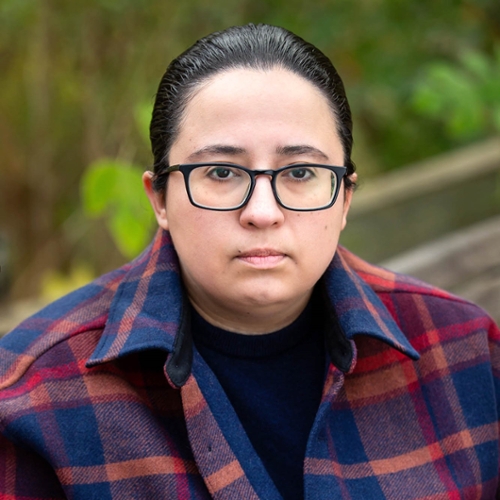
Claire Priest is the Simeon E. Baldwin Professor of Law and Professor of History at Yale University, holding dual appointments in the Yale Law School and the History Department. She specializes in legal and economic history, with a focus on property laws, credit systems, and institutional development in early America. Her seminal work Credit Nation (2021) redefines American economic history by examining how colonial credit laws shaped capitalism and slavery. Education: B.A. (Yale, 1994), J.D. (Yale Law School, 2000), Ph.D. in History (Yale, 2003). Roles: Co-director of Yale Law School’s Latin American program (SELA) and Yale’s Council on Latin American and Iberian Studies advisory committee. Her research bridges law, economics, and slavery, appearing in top journals like Harvard Law Review and Law and History Review . She has held visiting posts at Columbia and Harvard Law Schools and clerked for the U.S. Court of Appeals for the Second Circuit. Recipient of the 2021 Yale Law Women’s Faculty Excellence Award, she teaches courses on property, American legal history, and political economy in the Age of Revolution.
Greg Grandin is the Peter V. and C. Vann Woodward Professor of History at Yale University, where he has been affiliated since returning from New York University after nineteen years. His work focuses on Latin American and U.S. history, with an emphasis on empires, colonialism, indigenous peoples, and social-political dynamics. He has authored seven books, including award-winning titles such as The Blood of Guatemala , The Empire of Necessity (winner of the Bancroft and Beveridge awards), and The End of the Myth (Pulitzer Prize winner). Grandin is a member of prestigious academic societies like the American Academy of Arts and Sciences and contributes to journals like The Nation and London Review of Books . His research explores the interplay between U.S. interventions and Latin American resistance, reshaping understandings of hemispheric relations. Recent publications include America, América (2025), a sweeping re-evaluation of North and South American histories. His academic awards include the Pulitzer Prize, Bancroft Award, and multiple fellowships. Grandin’s work often bridges scholarly and public engagement, reflected in his editorial roles and media appearances. He has co-edited volumes like The Guatemala Reader and his writings address contemporary political issues through historical lenses.
University of Illinois Urbana-ChampaignUnited States
Craig M. Koslofsky is a Professor of History at the University of Illinois at Urbana-Champaign, with additional affiliations in Germanic Languages and Literatures, the European Union Center, and the Program in Medieval Studies. His research focuses on early modern Europe, particularly the history of everyday life and human skin in the early modern era (1400–1800). He explores topics such as medical practices, slavery’s impact on indigenous populations, and supernatural beliefs in colonial contexts. His research interests span the Atlantic World, British Empire, and medieval Europe, reflecting interdisciplinary approaches to historical analysis. Recent publications address the intersection of skin studies and colonialism, the cultural history of ghosts in Enlightenment America, and the Reformation’s local manifestations. He has edited works on transatlantic slave trade surgeons and early modern religious debates. Koslofsky holds a Ph.D. and is based in Gregory Hall. His work bridges global and local histories, emphasizing the material and cultural dimensions of early modern life. He collaborates across disciplines, engaging with medical history, literary studies, and colonial studies.
Glenda R. Carpio is the Powell M. Cabot Professor of English and Professor of African and African American Studies at Harvard University. She holds a Ph.D. in English from UC Berkeley and a B.A. from Vassar College. Her research focuses on African American literature, humor studies, and intersections of race, immigration, and cultural identity. She has published critically acclaimed works like Laughing Fit to Kill and co-edited African American Literary Studies . Her teaching spans Harvard, NYU, and Compton schools through Teach for America. Notable awards include the Harvard Abramson Teaching Award and a Fulbright Fellowship. She is affiliated with the W.E.B. Du Bois Institute and has advised initiatives like Fuerza Latina. Current projects explore immigration narratives in American literature. Her interdisciplinary work bridges literature, art, and historical memory, with contributions to Daedalus , American Literature , and Chronicle of Higher Education . She advises Harvard undergraduates and engages in public discourse on race and culture.
Naomi Murakawa is an Associate Professor in the Department of African American Studies at Princeton University, School of Arts and Sciences. Her research focuses on the reproduction of racial inequality in American politics, particularly in the realms of crime policy and the carceral state. Her scholarly work bridges political science, critical race theory, and legal studies. Key areas of interest include mass incarceration, racial liberalism, the historical development of crime control, and the paradoxes of reform within the criminal justice system. Her research, reflected in publications such as The First Civil Right: How Liberals Built Prison America and numerous journal articles, reveals how ostensibly progressive policies have contributed to the expansion of the prison system. Themes across her work include the racialized foundations of state power, the limitations of liberal reform, and the structural persistence of racial inequality in law and governance. Scientific Awards and Fellowships: Fellowship from Columbia Law School’s Center for the Study of Law and Culture Fellowship from Robert Wood Johnson Foundation’s Health Policy Research Program Professor Murakawa has advised graduate students and contributed to major scholarly and public conversations on race and justice. Her work has been supported by significant research grants and fellowships, enabling deep historical and theoretical analysis of the American carceral state. She is a leading voice in interdisciplinary debates on decarceration, abolition, and transformative justice. She is affiliated with research initiatives focused on race, law, and inequality, contributing to collaborative teams examining the intersections of policy, history, and social movements. Her ongoing scholarship continues to challenge conventional narratives about crime, punishment, and racial progress in the United States.
Louis Nelson is Professor of Architectural History and Vice Provost for Academic Outreach at the University of Virginia, serving as Associate Dean in the School of Architecture. His scholarship focuses on the built environments of the early modern Atlantic world, with specialized expertise in the American South, Caribbean, and West Africa. His educational background includes a PhD and M.A. from the University of Delaware and a B.A. from The College of William and Mary. Nelson's research examines architecture's role in shaping human experience through material and textual evidence, particularly in contexts of slavery and empire. His work on spaces of enslavement spans West Africa and the Americas, including a major initiative documenting the University of Virginia as a landscape of slavery. He has directed decade-long fieldwork in Jamaica through the Falmouth Field School, resulting in systematic documentation of Caribbean architecture and Afro-Caribbean cultural transitions. His publications reveal consistent engagement with colonial religious architecture, material religion, and imperial power structures. The 2017 monograph Architecture and Empire in Jamaica synthesizes violence, empire, and identity in eighteenth-century British colonial contexts, while his earlier work on South Carolina Anglican churches explores regional identity through sacred spaces. Nelson's scholarly recognition includes: John Brickerhoff Jackson Prize (2017) Abbott Lowell Cummings Prize (2017) SESAH Best Book Prize (2010) SESAH Best Article Prize (2008) University-wide teaching award (2007) As an educator, he has mentored over one hundred students through Caribbean field programs and served as senior co-editor of Buildings and Landscapes . His research integrates archaeological collaboration and GIS documentation through the Falmouth Project. He leads the Falmouth Field School and Falmouth Project—a GIS-based repository for Caribbean architectural data—while continuing fieldwork across the American South and Caribbean to document landscapes of slavery and freedom.
Isadora Moura Mota is an Assistant Professor of History at Princeton University, specializing in Brazilian slavery and the Atlantic world. Her research focuses on modern Brazilian history, comparative slavery, abolitionism, literacy among enslaved populations, and the African diaspora in Latin America. She holds a PhD from Brown University (2017) and previously taught at the University of Miami. Key research areas include the role of Afro-Brazilians in shaping abolition movements, transnational connections during the 19th century, and the intersection of literacy with emancipation struggles. Her book Freedom’s Horizon examines abolitionism as a grassroots movement anchored in enslaved communities. Her work has been supported by the Social Sciences Research Council, Brown University’s Center for the Study of Slavery and Justice, and Brazil’s CNPq. Future projects explore intellectual histories of Afro-Brazilian literacy and labor struggles between European colonists and enslaved peoples. She has received an ACLS Fellowship and authored articles in Slavery & Abolition and Hispanic American Historical Review . Currently on leave through 2024–2025, her office is Dickinson Hall at Princeton.
Tamika Nunley serves as Research Professor of History at Duke University within the Arts & Sciences division, holding the prestigious William & Sue Gross Professorship. Her scholarly work centers on the intersection of slavery, gender, and early American history, with particular expertise in African American women's experiences during the 19th century. Her research interests focus on the history of slavery , African American women's and gender history , the early Republic , and the American Civil War . Through meticulous examination of nineteenth-century newspapers, government documents, letters, abolitionist records, legislation, and memoirs, she reconstructs how Black women navigated oppressive systems to develop conceptions of liberty, self-respect, and power. Her work reveals enslaved and free Black women as active agents in shaping Washington D.C.'s history and broader nineteenth-century transformations. Analysis of her publications shows consistent focus on gendered experiences within legal frameworks , Black intellectual traditions , and resistance strategies across her monographs and journal articles. Her scholarship bridges legal history, gender studies, and African American intellectual history through examination of freedom suits, clemency petitions, and literary production. Her scientific recognition includes: 2021 Letitia Woods Brown Book Prize for best book in African American women's history 2021 Pauli Murray Book Prize for best book in Black intellectual history 2021 Mary Kelley Prize for best book in women, gender, or sexuality in the Early American Republic 2023 Cary and Ann Maguire Chair in Ethics and American History from the Library of Congress Nunley's scholarly impact extends through editorial service on Civil War History , The Journal of Southern History , and The Journal of the Civil War Era , alongside committee work for major historical associations. Her research has received substantial support from the Andrew Mellon Foundation, Woodrow Wilson Foundation, American Association of University Women, and Bright Institute Fellowship program. As a lifetime member of the Association of Black Women Historians, she actively contributes to academic communities focused on African American women's historical experiences and intellectual traditions.
Maria R. Montalvo is an Assistant Professor at Emory University. Her research focuses on the intersection of slavery, capitalism, and law in 19th-century America, particularly analyzing archival records to understand enslavers' strategies and the lived experiences of enslaved individuals. Her current book project, 'The Archive of the Enslaved: Power, Enslavement, and the Production of the Past,' examines legal and archival tactics used in antebellum New Orleans. Education: B.A., University of Texas at Austin, 2012 M.A., Rice University, 2014 Ph.D., Rice University, 2018 Her work addresses the historical and ongoing impacts of slavery and its documentation. She currently advises graduate student Sonia Wind and can be reached at mmonta7@emory.edu or in Bowden 114.
Vincent Brown serves as the Charles Warren Professor of American History and Professor of African and African American Studies at Harvard University, based in the Center for Government and International Studies (CGIS) South Building. His academic work centers on Atlantic history with a focus on the African diaspora and slavery in the Americas. His research expertise spans Atlantic History, African Diaspora Studies, and Slavery, with deep engagement in Digital History methodologies, Early American History, Imperial History, and Race studies. Brown examines power dynamics, resistance movements, and cultural identity formation within 17th-18th century Atlantic contexts, particularly in the Caribbean. His interdisciplinary approach integrates spatial analysis and digital tools to reinterpret historical narratives of slavery and empire. Analysis of his publications (2011-2024) reveals sustained focus on slave revolts as transnational phenomena, spatial history through digital mapping, and multimedia scholarship. His work demonstrates evolution from textual analysis in The Reaper's Garden (2008) to immersive cartographic projects like the Jamaican slave revolt mapping (2012-2016), culminating in documentary production ( Herskovits at the Heart of Blackness , 2009; The Bigger Picture , 2022). Recent outputs show increasing engagement with public history and interdisciplinary connections between political geography, racial terror, and cultural memory. The source materials do not specify details regarding student advising, grant funding, or laboratory teams.
Adriana Chira is an Associate Professor of Atlantic World History at Emory University. She holds a Ph.D. from the University of Michigan, an M.A. from Cornell University, and a B.A. from Cambridge University (UK). Her research focuses on race, law, and property in Cuba and Puerto Rico during and after slavery. Her award-winning book Patchwork Freedoms examines how enslaved and free Afro-descendants navigated legal systems to claim land and freedom in 19th-century Cuba. Dr. Chira’s work has been supported by the National Endowment for the Humanities and fellowships at Yale and Harvard. She teaches courses on global history, Cuba, Puerto Rico, and the Caribbean. She also leads a study abroad program in Cuba focused on food sovereignty and environmental history. Her current research includes projects on labor markets in 18th-century Cuba/Colombia, land ownership theories in Cuba, and 20th-century Puerto Rican land policies. She has published widely in journals like the American Historical Review and Law and History Review , and her work has earned multiple prizes, including the James A. Rawley Prize and Elsa Goveia Prize. Education: B.A. Cambridge University (2005), M.A. Cornell (2008), Ph.D. University of Michigan (2016) Key Awards: Outstanding First Book Prize (ASWAD), James A. Rawley Prize (AHA), Peter Gonville Stein Award (ASLH) Teaching: Courses include Human Trafficking in World History , Globalization: The Atlantic World , and Cuba in World History
Hoyt Bleakley is an Associate Professor of Economics at the University of Michigan, where he conducts research at the intersection of economic development, human capital, economic history, and health economics. He also holds positions as a Research Associate Professor at the Institute for Survey Research and a Research Associate at the National Bureau of Economic Research. For the 2024-2025 academic year, he is an Emma and Carroll Roush National Fellow at The Hoover Institution. Bleakley earned his B.A. in Economics from the Massachusetts Institute of Technology in 1995, followed by a Ph.D. in Economics from MIT in 2002. His academic journey has included teaching positions at the University of Chicago Booth School of Business and the University of California, San Diego before joining the University of Michigan faculty. His research focuses on economic development , human capital formation , and economic history , with particular attention to how health interventions, education, and language skills impact long-term economic outcomes. His work often employs historical natural experiments to identify causal relationships in development economics. A significant portion of his research examines the economic effects of disease eradication programs, particularly for hookworm and malaria in the Americas, and how these health interventions affected human capital accumulation and economic development. He has also made important contributions to understanding the economic impacts of slavery, portage and path dependence in economic geography, and the assimilation patterns of immigrants based on language acquisition. Bleakley's publications reveal a consistent focus on using historical data to address contemporary development questions. His recent work has increasingly examined American economic history, with studies on slavery, institutional development, and geographic determinants of economic activity. His research methodology often combines rigorous econometric analysis with deep historical context, resulting in publications in top economics journals including the Quarterly Journal of Economics, Review of Economics and Statistics, and American Economic Journal: Applied Economics. Bleakley serves as a referee for numerous economics journals and has contributed to the profession through his scholarly publications and research. His work on malaria eradication received significant attention in both academic and policy circles. At the University of Michigan, Bleakley teaches courses on Economic Development (ECON 461 for undergraduates and ECON 665 for PhD students) and Human Capital in Historical Perspective (ECON 664). His teaching reflects his research interests, connecting historical economic patterns to contemporary development challenges.