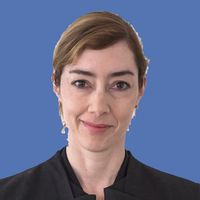
Parastoo Abtahi is an Assistant Professor in the Computer Science Department at Princeton University. She leads the Situated Interactions Lab (Ψ Lab) as part of the Princeton HCI Group, focusing on AR/VR and spatial computing. Prior to Princeton, she worked at Meta Reality Labs Research. PhD in Computer Science from Stanford University BSc in Electrical and Computer Engineering from University of Toronto (Engineering Science program) Her research explores wearable interactive technologies that augment human intelligence in physical contexts through: Input on-the-go: Low-effort, privacy-preserving multimodal interfaces Intelligent output: Timely, minimal multisensory systems Situated AI: Personalizable, predictable, safe physical-digital interaction Recent publications analyze: Drone-based haptic illusions for AR/VR Microgestures for mobile AR input Interactivity in explainable AI systems Temporal dynamics in VR haptics Awards include: 2025 Google Research Scholar Award CHI 2019 & 2018 Honorable Mentions She teaches courses like: COS 436: Human-Computer Interaction COS IW: AR Meets AI
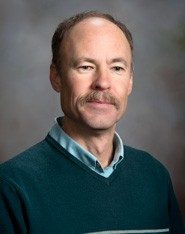
Associate Professor Mohsen Kalantari is a Geospatial Engineering academic at the University of New South Wales (UNSW) School of Civil and Environmental Engineering , with concurrent roles as co-founder of the startup Faramoon . His career spans roles at the University of Melbourne's Department of Infrastructure Engineering and Victorian government's land administration initiatives through DELWP. Education : PhD in Geomatics Engineering (2008, University of Melbourne), Master of GIS Engineering (2004), Bachelor of Surveying Engineering (2001) His research bridges geospatial engineering with construction automation , focusing on 3D cadastre , BIM-GIS integration , and smart cities . Recent publications show trends in underground land administration , digital twins , and LADM standard implementations . Scientific Awards : National educational recognition (2019), Victorian educational grants (2018), and prestigious fellowships (2012) As a supervisor , he guides PhD candidates in topics ranging from BIM for waste management to underground cadastral systems . His industry engagement includes partnerships with the United Nations , Open Geospatial Consortium , and Singapore Land Authority .
David L. Schwartz serves as the William G. and Virginia K. Karnes Research Professor of Law at Northwestern University's Pritzker School of Law, where he joined the faculty in 2015 and served as Associate Dean of Research & Intellectual Life from 2019-2022. His interdisciplinary work bridges legal scholarship, data science, and technology policy with emphasis on patent systems and judicial transparency. His educational foundation includes a BS from the University of Illinois at Urbana-Champaign and a JD cum laude from the University of Michigan Law School. Professor Schwartz specializes in empirical analysis of intellectual property systems , particularly patent litigation dynamics and court record accessibility. His research leverages computational methods to transform legal scholarship through projects like SCALES OKN, where he examines how technological interventions can democratize access to justice. This work situates him at the nexus of legal informatics , patent policy , and court system innovation , challenging traditional methodologies in legal academia. His publication trajectory reveals a decisive shift toward technology-driven legal transparency since 2018, with recent work focusing on large-scale court record analysis and open justice infrastructure. The 2024 Northwestern University Law Review article represents the culmination of his NSF-funded SCALES initiative, demonstrating how machine-readable litigation data can reshape legal scholarship and practice. As Co-Principal Investigator of the NSF-funded Systematic Content Analysis of Litigation EventS Open Knowledge Network (SCALES OKN), he leads a multidisciplinary consortium developing tools to convert opaque court records into structured, analyzable datasets. This $1.2M grant supports collaboration between legal scholars, computer scientists, and data engineers to build public infrastructure for judicial transparency. The SCALES OKN project operates as a cross-institutional research collective involving Northwestern faculty, data scientists from multiple universities, and partnerships with legal technology organizations. It maintains active development teams for natural language processing pipelines, litigation event databases, and public-facing analytical interfaces serving legal practitioners and researchers.
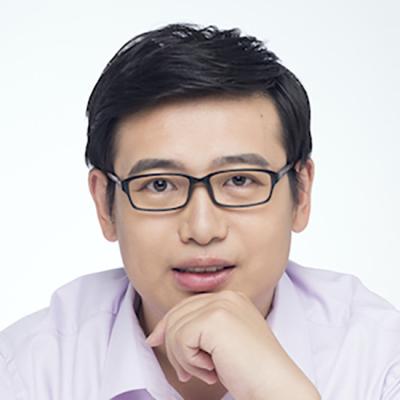
Tan Chuan Hoo is an Associate Professor (tenured) and Deputy Head of the Department of Information Systems and Analytics at the National University of Singapore's School of Computing. With a distinguished academic career spanning multiple continents, he brings expertise in digital transformation, healthcare informatics, and enterprise systems to his teaching and research. His educational background includes: B.Sc. (1st Class Honours, National University of Singapore) M.Sc. (Accelerated, National University of Singapore) Ph.D. (National University of Singapore) Professor Tan's research focuses on digital transformation, particularly designing, deploying, and evaluating technological innovations. His work centers on two critical areas: digital commerce (provision of digital services such as online shopping aids) and digital organization (ensuring operational efficiency and performance). His research has significant implications for healthcare institutions, corporations, and crisis preparedness and response organizations. He conducts comprehensive analyses using various scientific methodologies including field experiments and mixed methods to understand how digital technologies reshape business operations and enhance societal well-being. His publication record shows a consistent focus on information systems, with recent articles (2020-2025) emphasizing healthcare informatics, digital transformation, and open innovation. His work demonstrates a clear trajectory toward understanding how technology intersects with organizational effectiveness and societal implications, with increasing attention to healthcare applications and digital crisis management. Professor Tan has received numerous prestigious awards for his contributions to the field: Faculty Teaching Excellence Award, NUS (2024, 2017) Information Management Research Award, China Information Economics Society (2023) Reviewer Hall of Fame, Journal of AIS (2020) Outstanding Associate Editor Award, MIS Quarterly (2016) Best Reviewer Award, Journal of AIS (2016) INFORMS ISS Design Science Award (2013) Honorable Mention, Journal of AIS (2015) He has successfully advised PhD students and collaborated with public and private entities on research projects. His editorial service as Associate Editor for Information Systems Research and MIS Quarterly, along with board memberships at other leading journals, demonstrates his significant influence in the field. Professor Tan has secured research grants supporting projects on digital crisis preparedness, disaster response technology, and healthcare digitalization. His research group focuses on understanding how technology can be designed and implemented to support organizations in crisis situations, enhance healthcare services, and improve digital commerce. Current projects include examining digital crisis management, technology for disaster response, and the digital transformation of healthcare services.
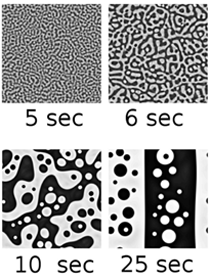
Frank L. H. Brown is a Professor at the University of California, Santa Barbara with joint appointments in the Department of Physics and Department of Chemistry and Biochemistry. His research focuses on theoretical and computational approaches to understanding biomembrane dynamics and related biophysical phenomena, situated within the College of Letters and Science. Dr. Brown's research interests span the interface between physical chemistry and biophysics. He employs a variety of theoretical tools including statistical mechanics , hydrodynamics , elasticity theory , and quantum mechanics to study complex biological systems. His work particularly emphasizes the dynamics and structure of biomembranes and the interpretation of various spectroscopy experiments including single molecule fluorescence, neutron spin echo, and flicker spectroscopy. Analysis of his publication record reveals a consistent focus on computational modeling of lipid bilayers, membrane proteins, and related phenomena, with particular emphasis on developing novel theoretical frameworks for understanding membrane behavior across multiple scales. Dr. Brown leads an active research group that includes current members Ehsan Noruzifar (Postdoctoral Researcher) and Sean Cray (Graduate Student). His former group members include numerous successful scientists such as Grace Brannigan, Brian Camley, Lawrence Lin, and Max Watson who completed their graduate studies under his supervision, along with several postdoctoral researchers. His research has been supported by funding that enables theoretical and computational investigations of biomembrane systems. The Brown Research Group operates at the intersection of physics, chemistry, and biology, with facilities connected to the Biomolecular Sciences & Engineering Program and the California NanoSystems Institute (CNSI) at UCSB. Their work combines advanced computational techniques with theoretical physics to address fundamental questions about soft and living matter systems, particularly at biological interfaces.
Gerd Bruder is an Associate Professor at the University of Central Florida , affiliated with the Department of Computer Science . He previously held positions as a Research Associate Professor at UCF's Institute for Simulation and Training (2016-2022), Post-Doc at University of Hamburg (2014-2016), and Post-Doc at University of Würzburg (2011-2014). Habilitation : Computer Science, University of Hamburg (2017) Ph.D. : Computer Science, University of Münster (2011) M.Sc. : Computer Science (minor in Mathematics), University of Münster (2009) Research Interests : Gerd Bruder's work focuses on Extended Reality (XR) systems, spanning Virtual Reality (VR) , Augmented Reality (AR) , and Mixed Reality (MR) . Key areas include human factors , digital twins , 3D user interfaces , and perceptual modeling , with applications in healthcare, military operations, architecture, and smart environments. Recent Publications highlight innovations in XR locomotion , trust calibration with autonomous agents, spatial cognition , and haptic-visual integration . His 2025 articles address task-switching efficiency in XR and collaborative mixed reality design. Scientific Awards : Best Paper at ACM VRST 2023 2021 TechConnect Innovation Award Best Demo at ACM SUI 2021 Multiple Best Paper Awards (2016-2023) Best Poster & Demo Awards (2015-2020) Patents include systems for medical simulation , smart environment interruption management , and adaptive AR interfaces . His work bridges academic research and practical applications across VR, AR, and MR domains.
Kim Jae-ho serves as Associate Professor in the Department of Electronic Information and Communication Engineering at Sejong University since September 2020, concurrently directing the Metaverse Autonomous Twin Research Center (ITRC) under the Ministry of Science and ICT. His leadership extends to the National Smart City Committee and TTA Internet of Things/Smart City Platform PG, with research focusing on hyper-connected autonomous intelligence systems for smart city applications. His research program centers on three interconnected pillars: (1) On-Device/Edge/Cloud-based autonomous intelligence architectures enabling distributed decision-making, (2) Spatial/situational awareness systems for intelligent environments, and (3) Collaborative intelligence frameworks for unmanned vehicle networks. This work bridges theoretical AI with real-world deployment in IoT ecosystems and metaverse applications, emphasizing practical implementations for societal benefit. Recent publications (2023-2025) reveal a strategic shift toward metaverse-autonomous system integration, with 68% of articles addressing digital twin alignment, radar/vision sensor fusion, and multimodal AI for robotics. Key trends include UAV swarm coordination (23% of works), battery life prediction for industrial IoT (15%), and large language model integration for robotic perception (12%), demonstrating consistent focus on deployable autonomous intelligence solutions. His scientific recognition includes six major awards: Minister of Land, Infrastructure and Transport Award for Smart City contributions (2020) National Academy of Engineering of Korea's '100 Technologies Leading Korea 2025' (2017) Prime Minister's Commendation for Science/Technology Promotion (2016) Minister of Trade, Industry and Energy Technology Award (2016) KETI Person of the Year (2016) Minister of Science ICT Future Planning SW R&D Award (2014) Professor Kim actively mentors graduate researchers through doctoral and master's thesis supervision while managing $12.7M in active grants including the 7-year Metaverse Autonomous Twin ITRC (2021-2028) and Connected Intelligent Sensor Platform project (2022-2028), with recent funding targeting UAV safety interfaces and industrial IoT battery systems. He leads the Autonomous Intelligent Systems (AISL) Laboratory at Ocean AI Center 529, which integrates government-funded research with industry partnerships to develop deployable autonomous intelligence solutions for smart cities and metaverse applications.
Dr. Yuzhang Lin is an Assistant Professor in the Department of Electrical and Computer Engineering at NYU Tandon School of Engineering. Previously, he held an Assistant Professor position at the University of Massachusetts Lowell (2018–2023). He earned his Ph.D. from Northeastern University and B.Eng./M.S. from Tsinghua University. His research focuses on smart grids, renewable energy systems, cyber-physical resilience, and machine learning applications. He leads editorial roles for IEEE Transactions on Power Systems and chairs IEEE PES Task Forces on standard test cases and distribution system operations. Dr. Lin’s research has been funded by NSF, DOE, ONR, and others. He is a recipient of the NSF CAREER Award and Northeastern’s Graduate Student Outstanding Research Award. His work emphasizes data-driven solutions for grid resilience, including state estimation, cyber-physical defense, and distributed energy integration. The Lin Group actively seeks PhD candidates interested in advancing smart grid technologies. Education: Ph.D. (Northeastern University), B.Eng./M.S. (Tsinghua University) Grants: NSF, DOE OE/EECE/CESER, ONR, NYSERDA, MassCEC Service Roles: IEEE PES Task Force Co-chair (Standard Test Cases), Secretary (Distribution System Operations Subcommittee) Publications span top journals/conferences, focusing on state estimation, inverter-based resource control, and machine learning for grid systems. His lab develops cutting-edge tools for power system resilience and renewable energy integration.
Prof. Dr. Pia Knoeferle is a leading academic at Humboldt-Universität zu Berlin , where she serves as a Professor in the Department of German Language and Linguistics . She is a principal investigator in the Collaborative Research Center (CRC 1412) focused on register phenomena and leads the Reaction Time, Eye-tracking, and EEG Laboratories . Her research spans psycholinguistics , cognitive neuroscience , and computational modeling of language , with a central interest in how real-time language comprehension interacts with social context , formality-register congruence , and morphosyntactic processing . Appointments: Professor at Humboldt-Universität (2024), CRC 1412 member Methodologies: Eye-tracking, EEG, Visual World Paradigm, ERP Her work investigates lifespan language processing (children, adults, older adults) through contextual cue integration , including emotional , spatial , and social context such as gender cues , eye gaze , and facial expressions . Key questions include: How do pragmatic and contextual factors modulate lexical and grammatical processing ? What representations underlie register sensitivity in spoken and written comprehension ? Recent articles (2022-2024) focus on register congruence effects in German sentence processing, age-related differences in formality-register anticipation , and interactions between register and morphosyntactic knowledge . Using eye-tracking and visual world paradigms , her team examines incremental integration of socially-situated context with verb-argument relations and grammatical constraints . Findings suggest subtle late-stage register effects and interference between pragmatic and syntactic processing . Her lab collaborates with researchers like Katja Maquate , Valentina Nicole Pescuma , and Camilo Ronderos , contributing to the Frame text of the Second Phase Proposal for CRC 1412 (2020) and subsequent reviews in Frontiers in Psychology (2023). The work emphasizes complementary methods to model register variability across languages , modalities , and cultural contexts .
Dr. Kevin Kochersberger is an Associate Professor in the Department of Mechanical Engineering at Virginia Tech , with a career spanning academic research, technical innovation, and educational leadership. His work focuses on autonomous aerial systems , robotic control , and applied aerodynamics , particularly through the Uncrewed Systems Laboratory . Kochersberger's research has pioneered UAV-based radiation detection , 3D terrain mapping , and low-resource drone applications , including establishing the African Drone and Data Academy in Malawi . Education: Ph.D., Mechanical Engineering, Virginia Tech (1994) M.S., Mechanical Engineering, Virginia Tech (1984) B.S., Mechanical Engineering, Virginia Tech (1983) A.S., Engineering Science, Jamestown Community College (1981) Kochersberger's publications demonstrate expertise in UAV path planning , smart material actuation , and radiation source localization , with over $9M in research funding. His scientific awards include AIAA Associate Fellow (2009) and Aviation Week Aerospace Laureate (2003). Notable projects involve helicopter-deployable robotic systems and urban canyon navigation without GPS. Recent articles highlight BVLOS drone simulators , 2.5D terrain mapping , and autonomous negative obstacle traversal , reflecting his focus on real-time adaptive control and heterogeneous robotic systems . He teaches Drone Technology and Flight Operations and Advanced Design Projects , emphasizing student-driven innovation and industry collaboration .
Chuang Gan is an Assistant Professor at the University of Massachusetts Amherst, affiliated with the College of Information and Computer Sciences and the Department of Computer Science. His work focuses on advancing artificial intelligence, robotics, computer vision, and embodied agents through interdisciplinary research combining neural networks, physical simulations, and multimodal learning. Research interests include generative models, reinforcement learning, vision-language integration, and scalable autonomous systems. He explores topics like world modeling for robots, adaptive policy learning, and physics-driven AI. His projects often involve creating systems that learn from visual, auditory, and tactile inputs to perform complex tasks such as object manipulation, navigation, and decision-making in dynamic environments. Recent research trends emphasize embodied AI systems capable of long-horizon planning, compositional reasoning, and efficient learning from limited data. His work bridges theory and practice, with applications in robotics, simulation platforms, and multimodal generation. Key contributions include frameworks for 3D scene understanding, adaptive world models, and novel training paradigms for large language models. His research has been applied to robotics platforms like RoboDreamer and UBSoft, focusing on unbounded soft environments. Collaborations involve designing benchmarks for physical scene understanding (e.g., Physion++), and creating tools like DiffTactile for tactile simulation. His work often integrates principles from differential geometry, PDE dynamics, and game theory. Chuang Gan’s research group develops open-source tools and benchmarks, such as the SoftZoo robot co-design platform and the SOK-Bench situated reasoning benchmark. His team emphasizes scalable alignment methods beyond human supervision and explores ethical AI through principles like symmetry-enhanced training.
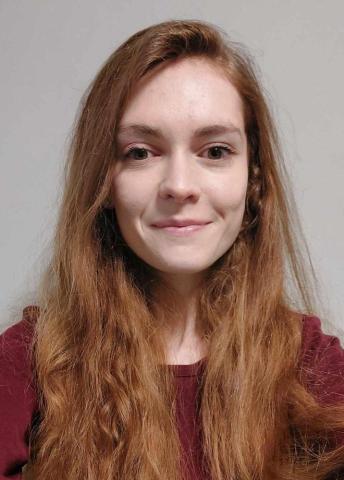
Keely Dugan serves as an Assistant Professor in the Department of Psychology at the University of Missouri, directing the Personality, Attachment, and Change (PAC) Lab in McReynolds Hall. She holds a PhD in Social/Personality Psychology from the University of Illinois at Urbana-Champaign (2023) and completed an NIMH T32 Postdoctoral Fellowship at the University of Minnesota (2024). Her research investigates dynamic changes in personality traits and attachment styles across time, life experiences, and social contexts. Using advanced statistical methodologies, she examines how individual differences manifest in everyday environments, emphasizing how cumulative "little moments" shape long-term development. This work bridges personality psychology, attachment theory, and contextual behavioral science. Recent 2024 publications reveal three interconnected research strands: quantifying life events' impact on personality trajectories, testing attachment theory's canalization hypothesis through within-subject variations, and conducting systematic reviews of queer/minority identities in relationship science. These studies demonstrate her interdisciplinary approach combining longitudinal analysis, computational modeling, and inclusive relationship research. Dr. Dugan's scientific recognition includes: NIMH T32 Postdoctoral Fellowship (2024) She actively recruits graduate students for Fall 2025 and teaches PSYCH 9330 (Graduate Research Methods), PSYCH 8620 (Graduate Seminar in Personality Psychology), and PSYCH 2320 (Introduction to Personality Psychology). Current projects include NIH-funded personality-environment interaction studies and development of AI-assisted coding methodologies for behavioral research. The PAC Lab, located in McReynolds Hall's Lower Level, currently spearheads a groundbreaking project analyzing 3D living room scans to predict personality traits through environmental cues. This initiative employs both human coders and machine learning algorithms to examine how physical spaces reflect and influence individual differences in attachment and personality expression.
Suzanne Stevenson is a Professor in the Department of Computer Science at the University of Toronto, affiliated with the Cognitive Science Research Community (CoRC). She holds a BS in Computer Science and Linguistics from William & Mary and MS/PhD in Computer Science from the University of Maryland. Before joining UofT in 2000, she was faculty at Rutgers University with joint appointments in Computer Science and Cognitive Science. Her research focuses on computational cognitive models of language acquisition and processing, integrating insights from linguistics, psycholinguistics, and machine learning. Key areas include semantic/syntactic learning from text, probabilistic computational models of word learning, and cross-situational learning. Notable awards include the NSERC University Faculty Award (2000) and NSF CAREER Award (1997). Her work bridges computational linguistics and cognitive science, emphasizing multidisciplinary approaches. Recent publications (2014–2018) explore topics like probabilistic perspective models in language production, bilingual word associations, and semantic search algorithms. She advises on computational linguistics and cognitive modeling, with grants supporting investigations into language acquisition dynamics and semantic networks. Active in teaching, she previously offered courses on computational linguistics and the computational lexicon. Her lab’s research themes include child language acquisition, ambiguity resolution, and computational modeling of linguistic phenomena.
Karl Henrik Johansson is a Professor at the School of Electrical Engineering and Computer Science, KTH Royal Institute of Technology in Stockholm, Sweden, where he also serves as the Founding Director of Digital Futures. He is a Fellow of both IEEE and the Royal Swedish Academy of Engineering Sciences, and has held leadership positions including Immediate Past President of the European Control Association and IEEE Control Systems Society Vice President Diversity, Outreach & Development. Dr. Johansson earned his MSc in Electrical Engineering and PhD in Automatic Control from Lund University. His academic journey includes visiting positions at prestigious institutions such as UC Berkeley, Caltech, and NTU. His research focuses on networked control systems and cyber-physical systems with applications in transportation, energy, and automation networks. His work investigates fundamental challenges in connecting physical world systems through communication networks, exploring how wireless communication and sensor technology can enhance system robustness, reliability, energy efficiency, and safety. Current research directions include security of cyber-physical systems, distributed optimization, multi-agent systems, and applications to intelligent transportation and energy networks. Analysis of his recent publications reveals a strong focus on distributed optimization algorithms, secure networked control, multi-agent systems, and applications to transportation and energy networks. His work increasingly integrates machine learning techniques with traditional control theory, addressing challenges in privacy-preserving distributed computation, resilient state estimation, and resource allocation in complex networked systems. IEEE Control Systems Society Hendrik W. Bode Lecture Prize (2024) Swedish Research Council Distinguished Professor (2018-2027) Wallenberg Scholar (2009-2026) IFAC Young Author Prize IEEE CSS Distinguished Lecturer (2017-2019) IFAC Outstanding Service Award IEEE Fellow Dr. Johansson has supervised over 100 postdocs and PhD students, with many now holding prominent positions at institutions worldwide. His research has been supported by significant grants including the Swedish Research Council Distinguished Professor Grant (2018-2027), multiple Wallenberg Foundation grants, and numerous EU and national research projects. He has directed major research centers including ACCESS Linnaeus Centre (2009-2016) and Strategic Research Area ICT TNG (2013-2020). His research group operates within the Digital Futures initiative and maintains strong connections with industry partners through projects like the Integrated Transport Research Lab (supported by Scania and Ericsson) and Smart Mobility Lab. The group actively collaborates with international institutions and participates in major EU-funded projects addressing challenges in cyber-physical systems, transportation, and energy networks.
Oscar Tomico Plasencia is an Associate Professor at the Department of Industrial Design at Eindhoven University of Technology (TU/e), specializing in Design Research Methodologies for Posthuman Sustainability. His research challenges anthropocentric design paradigms by positioning designers within complex ecological systems and exploring collaborations with non-human actors like plants. Education: MSc in Industrial Engineering and PhD cum laude from Polytechnic University of Catalonia (Spain). Prior Roles: Assistant Professor at TU/e (2007–2023), Head of Industrial Design Bachelor’s program at ELISAVA (Spain), Co-director of Design for Emerging Futures Master Program, and Co-editor-in-chief of Temes de Disseny Journal . His research focuses on decentering human agency in design through First-person methodologies for ecological engagement Design practices for multi-species cohabitation Regenerative socio-ecological-technical systems Critical fabulation with non-human stakeholders Temporal analysis of design events Recent publications analyze plant studios as dynamic constituencies (2025), backyard practices for urban sustainability (2025), and nature-entangled methodological repositories (2024). His work emphasizes transparency in experimental design processes and ecological accountability. Scientific Awards & Funding: NSERC Discovery Grant #RGPIN-2023-04600 SSHRC Insight Grant #435-2024-0783 Collaborative projects involve institutions across Spain, Japan, Sweden, and New Zealand. He leads the Making With… research group at TU/e and contributes to the EAISI (Eindhoven Artificial Intelligence Systems Institute).