Professor Antonella De Santo is a distinguished experimental particle physicist at the University of Sussex's School of Mathematical and Physical Sciences, where she became the institution's first female Professor of Physics in 2013. She holds a Royal Society Wolfson Research Merit Award (2017-2022) and maintains affiliations with Sapienza University of Rome as a Visiting Professor, while also serving as External Examiner for the University of Oxford and University of Edinburgh. Her research explores: Fundamental particle physics through the ATLAS experiment at CERN Dark matter detection via multileptonic signatures Development of next-generation liquid xenon detectors Beyond-Standard-Model physics and neutrino oscillations She secured major grants including STFC funding for ATLAS upgrades and dark matter research, totaling over 15 projects since 2014. Honors include: Royal Society Wolfson Research Merit Award (2017) She leads the Sussex ATLAS research team and contributes to teaching advanced particle physics courses. Current modules include: Frontiers in Particle Physics (PGT/PGR) Thermal and Statistical Physics
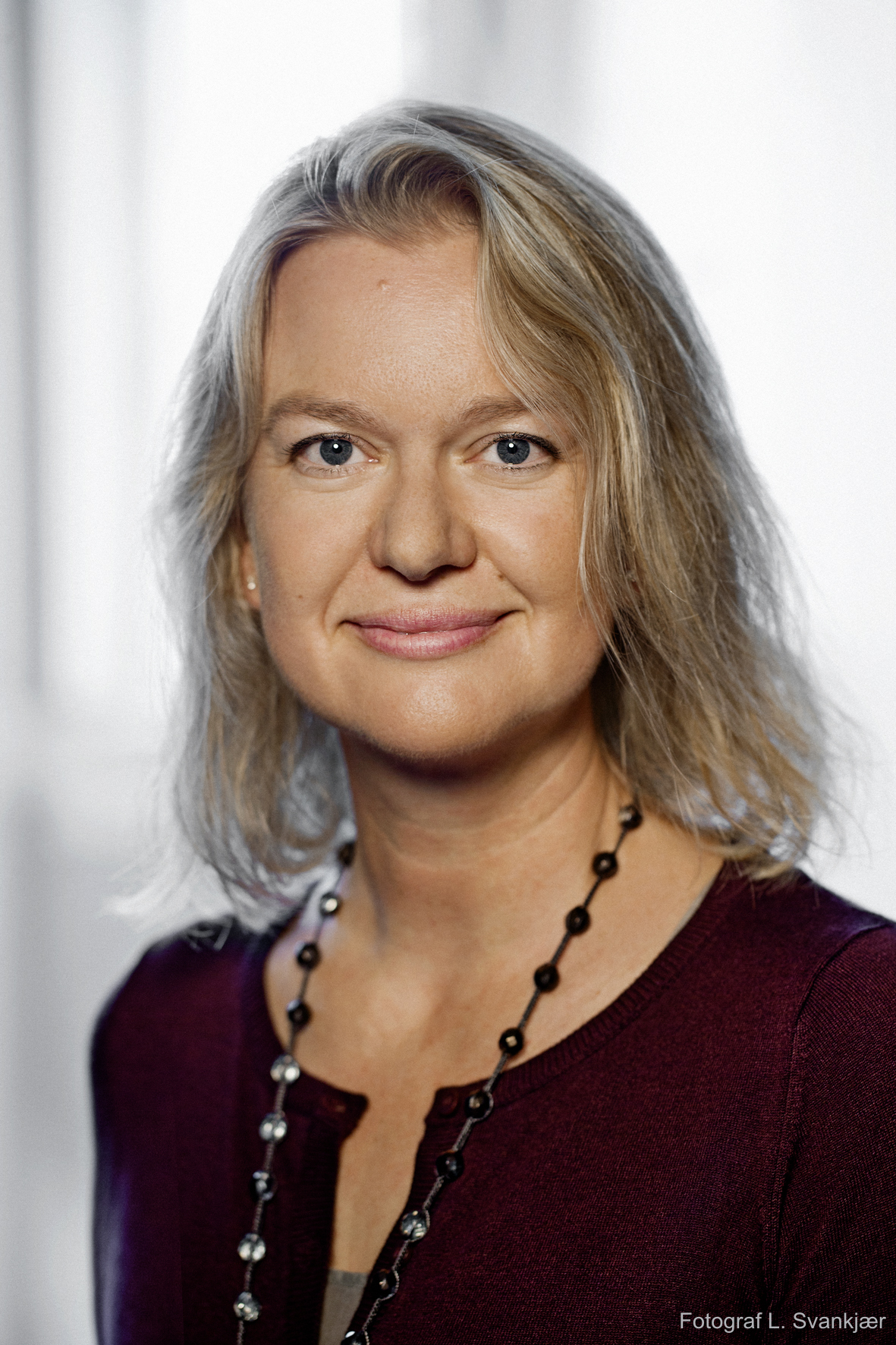
Dr. Kate Shaw is an Associate Professor in Experimental Physics within the School of Mathematical and Physical Sciences at the University of Sussex, UK. She also serves as a staff scientist at the International Centre for Theoretical Physics (ICTP) in Trieste, Italy, a position she has held since 2010. Additionally, she is the Deputy Director of International Affairs for MPS at the University of Sussex. Her educational background is not explicitly detailed in the provided text, but her current positions indicate extensive training in experimental particle physics. Dr. Shaw's research focuses on experimental particle physics , specifically working on the ATLAS Experiment at the Large Hadron Collider (LHC) and the DUNE experiment at Fermilab. Her primary research areas include Top Quark Physics (studying the heaviest known fundamental particle), Higgs Physics , luminosity calibration at ATLAS, and event reconstruction for neutrino experiments. She has made significant contributions to Higgs boson studies following its discovery in 2012. Analysis of Dr. Shaw's publication record shows consistent output in high-energy physics, with numerous papers focusing on Higgs boson properties, top quark physics, and searches for new physics phenomena. Her recent work (2025) demonstrates strong engagement with both theoretical analysis and practical computing challenges in large-scale particle physics experiments. Active participant in multiple major grants including STFC funding for particle physics research Principal investigator on University of Sussex PhD Studentship for DUNE Neutrino Experiment (2024-2028) Lead on DUNE Education and Outreach Coordination project (2022-2025) Co-investigator on multiple STFC Consolidated Grants supporting particle physics research Dr. Shaw is deeply committed to physics outreach and communication. She founded and coordinates the ICTP Physics Without Frontiers program, which promotes physics in developing countries. She previously served as ATLAS outreach coordinator for 5 years and is the current lead on the ATLAS Open Data project, which she initiated in 2014 to make real LHC data accessible to educators and students worldwide. Her work emphasizes diversity and inclusion in physics, and she has been featured in media outlets like The Guardian and New Scientist for her outreach efforts.
Dr. Benedict Allbrooke is a Senior Research Fellow in Physics and Astronomy at the University of Sussex, within the School of Mathematical and Physical Sciences. He has been an active member of the ATLAS collaboration since 2015, contributing significantly to the experiment's trigger systems and physics analysis programs. His research focuses on experimental particle physics, with particular expertise in trigger system development, Higgs boson physics, and Standard Model validation. Dr. Allbrooke has played key roles in the ATLAS Hardware Track Trigger upgrade project and currently serves as the ATLAS Trigger Configuration and Database co-ordinator, managing critical infrastructure for data acquisition and analysis. Analysis of his recent publication record reveals a strong emphasis on Higgs boson properties, top quark physics, and searches for physics beyond the Standard Model. His work spans precision measurements of Standard Model processes and innovative searches for new phenomena, often requiring sophisticated trigger strategies to capture rare events. Dr. Allbrooke supervises PhD students and leads software development efforts for trigger configuration tools, providing opportunities for students to engage with cutting-edge high-energy physics research and international collaboration within the ATLAS experiment.
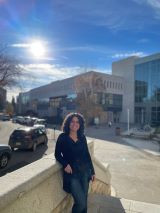
Dr. Asmahan AbuArish is an Assistant Professor in the Department of Anatomy, Physiology and Pharmacology at the University of Saskatchewan. Her educational background includes: PhD in Quantitative Molecular Biophysics, McMaster University MSc in Material Sciences, Weizmann Institute of Science BSc Honors in Physics & Mathematics, Bethlehem University Her research program investigates molecular mechanisms underlying hyperinflammatory pulmonary diseases like COPD and cystic fibrosis. She focuses specifically on NLRP3 inflammasome assembly in human airway epithelial cells using advanced biophysical approaches including fluorescence correlation spectroscopy and quantitative live-cell imaging. Her work aims to decipher spatio-temporal regulation of inflammation to identify novel therapeutic targets. Dr. AbuArish maintains an active research program recruiting graduate students to study pulmonary inflammation mechanisms. Her recent publications demonstrate expertise in: CFTR protein dynamics and membrane organization Ion transport mechanisms in airway epithelia Quantitative analysis of protein mobility and interactions Biophysical characterization of disease mechanisms
Lene Broeng Oddershede is a Professor and Group Leader of the Optical Tweezers Group at the Niels Bohr Institute, University of Copenhagen. She serves as Principal Investigator of the interdisciplinary Danish Grundforskningsfond Center of Excellence, StemPhys, which focuses on stem cell decision making and operated from 2015 until 2021. Her research spans the intersection of physics and biology, with particular expertise in investigating physical properties of biological systems across multiple scales—from single molecules to whole cells. Her laboratory utilizes state-of-the-art force-scope optical tweezers, single particle tracking, and advanced fluorescence techniques including subdiffraction imaging. Dr. Oddershede maintains a strong research focus on nanoparticle plasmonics alongside her biological physics work. Her laboratory at the Niels Bohr Institute represents a significant research hub for biophysical investigations in Denmark. She has established herself as a leading researcher in optical manipulation techniques applied to biological systems, with her work contributing significantly to our understanding of cellular mechanics and molecular interactions.
Nikos Hatzakis is a Professor in the Department of Chemistry at the University of Copenhagen, Denmark, based at Universitetsparken 5, 2100 København Ø. He maintains an active research profile through the Hatzakis Lab (https://www.hatzakislab.com) and contributes to interdisciplinary biophysical research with international collaborations. His research spans critical areas in modern biophysics and biochemistry: Single-molecule dynamics and diffusion analysis Protein aggregation in neurodegenerative diseases and diabetes Super-resolution microscopy development and application Deep learning for biological data interpretation Drug delivery mechanisms across biological barriers Recent publications reveal a strong trend toward computational innovation in experimental biophysics, particularly GPU-accelerated tools for single-particle tracking and real-time observation of molecular processes. His work bridges physics, computer science, and biology to decode protein function-aggregation relationships. The Hatzakis Lab drives methodological advances in chemical biology, utilizing cutting-edge imaging to address fundamental questions in cellular biophysics and therapeutic development, with significant cross-institutional partnerships evident in high-impact publications.
Megan C. King is Professor of Cell Biology and of Molecular, Cellular and Developmental Biology at Yale School of Medicine, where she also serves as Co-Leader of the DNA Damage and Genome Integrity Program and Associate Cancer Center Director for Basic Science at Yale Cancer Center. Her primary appointment is in the Department of Cell Biology with a secondary appointment as Associate Professor on Term in Therapeutic Radiology. She is a key member of multiple research programs including Cytoskeletal Dynamics, DNA Damage and Genome Integrity, and the Molecular Cell Biology, Genetics and Development Track. Dr. King's research focuses on fundamental aspects of nuclear structure and function. Her lab investigates how macromolecular complexes embedded in the nuclear envelope physically couple the cytoskeleton to the nucleus (LINC complexes), defining the mechanisms underlying nuclear force response. They also study genome organization through the lens of chromatin dynamics, using innovative live cell assays to examine how nuclear cell biology impacts genome integrity. Her work spans from basic molecular mechanisms to implications for diseases including hereditary breast and ovarian cancer syndrome. Analysis of Dr. King's recent publications (2021-2025) reveals a strong emphasis on nuclear mechanics, chromatin organization, and nuclear pore complex dynamics. Her work integrates approaches from biophysics, cell biology, computational modeling, and genetics, with publications appearing in top journals including Nature Cell Biology, Cell, and Genome Biology. A notable trend is the increasing interdisciplinary nature of her research, combining advanced microscopy techniques with computational approaches to understand nuclear architecture. Allen Distinguished Investigator (2020) from the Allen Institute for pioneering research in nuclear biology NIH New Innovator Award (2011) supporting innovative early-career research Searle Scholar (2011) recognizing exceptional promise in biomedical research Dr. King maintains an active research program with consistent high-impact publications and significant collaborations, particularly with C. Patrick Lusk (co-leader of the LusKing Lab), Ivan Surovtsev, and other Yale researchers. Her lab provides training opportunities for students and postdocs interested in nuclear cell biology, with research spanning from fundamental mechanisms to potential therapeutic applications. The LusKing Lab emphasizes both scientific discovery and creating an inclusive research environment that values diverse perspectives and experiences.
Prof. Maria Dienerowitz is a Professor at Ernst Abbe University of Applied Sciences Jena specializing in laser technology and biophotonics. She teaches core courses including Laser Technology, Quantum Optics, and Vacuum Technology across Bachelor's and Master's programs while leading three major research initiatives: BioLOC (Carl-Zeiss-Stiftung-funded Lab-on-a-Chip system for molecular dynamics), OPTO (historical spectacle lens analysis with the German Optical Museum), and TOOLS (DFG-funded tailored optics for life sciences). Her research centers on advanced optical manipulation techniques including the ABEL trap for single-molecule studies without surface binding and holographic optical tweezers for nanoparticle control. Key focus areas encompass real-time enzyme kinetics of molecular motors like F-ATP synthase, single-molecule FRET dynamics , and nanoparticle characterization in biological contexts. This work bridges fundamental physics with biomedical applications through innovations in trapping methodology and optical instrumentation. Analysis of her 15 most recent publications reveals strong continuity in optical trapping methodologies with increasing biomedical applications since 2020. Her work demonstrates consistent contributions to single-molecule biophysics (particularly molecular motor studies), nanoparticle manipulation , and optical instrumentation development , with growing emphasis on life science interfaces evident in her Carl-Zeiss-Stiftung and DFG-funded projects. Prof. Dienerowitz currently oversees a research team comprising scientific staff members working across the BioLOC, OPTO, and TOOLS projects, including Dr. Jakub Malohlava (TOOLS), Maryam Shahrezaei (BioLoc), and Frederic Braun (TOOLS). Her laboratory infrastructure supports optical trap development, nanoparticle characterization, and molecular dynamics studies through equipment funded by the Carl-Zeiss-Stiftung and German Research Foundation.
Philip J. S. Stork, M.D., is a Senior Scientist at the Vollum Institute with a joint appointment in the Department of Cell, Developmental and Cancer Biology at Oregon Health & Science University's School of Medicine. He earned his B.S. from Harvard University (1977), M.S. from Stanford University (1978), and M.D. from Columbia University (1984). His training includes a residency in Pathology at Harvard Medical School and a fellowship at Tufts-New England Medical Center. Dr. Stork began his academic career as an Assistant Professor at Tufts University (1988) before joining the Vollum Institute in 1990, where he progressed to Scientist (1997) and Senior Scientist (2005). His research employs molecular and biochemical approaches to investigate signal transduction mechanisms, focusing on how hormones and growth factors regulate cellular responses through pathways involving: Small G proteins (Ras/Rap1) MAP kinase cascades (ERK/B-Raf) cAMP-dependent protein kinase signaling Membrane domain organization Oncogene-induced senescence Dr. Stork's publications demonstrate consistent focus on kinase signaling dynamics, membrane protein trafficking, and metabolic regulation in cancer and neuronal contexts. His laboratory develops innovative techniques including fluorescent biosensors and high-throughput single-particle tracking to study real-time cellular processes. He served on the Editorial Board of Molecular Cell Biology (2008-2020). The Stork Laboratory maintains active investigations into fundamental signal transduction principles, particularly the spatiotemporal regulation of signaling cascades and their pathological disruptions.