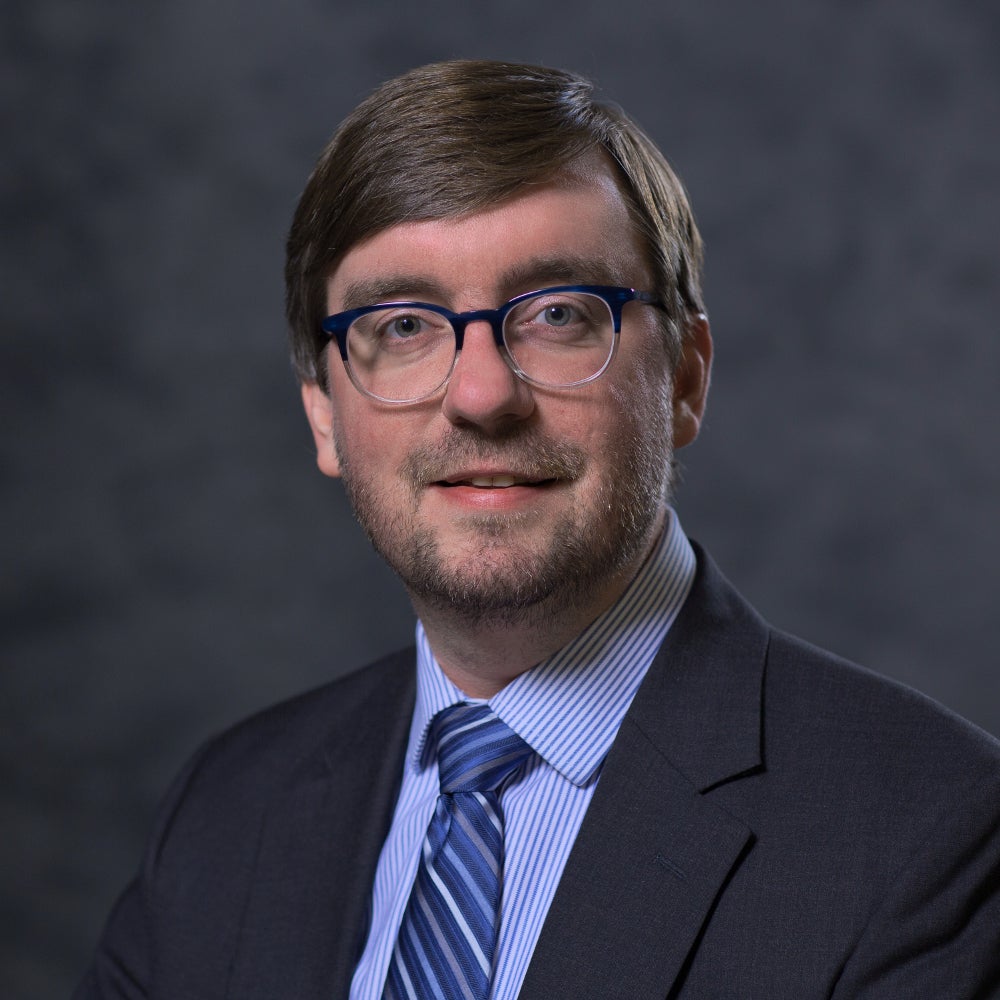
Trey Porto is an Adjunct Professor at the University of Maryland, affiliated with the Joint Quantum Institute (JQI) and NIST. His research focuses on ultra-cold atoms, quantum optics, and quantum information science. He leads projects on Rydberg atoms, optical lattices, and quantum networking, leveraging cold atom systems to explore novel quantum phenomena and control strategies. Research areas include ultra-cold Rb/Yb mixtures for studying Bose-Einstein condensates and engineered dissipation, as well as photon-photon interactions using Rydberg-dressed polaritons. His work bridges quantum simulation, quantum computing, and precision measurement, with applications in quantum networking and many-body physics. Key achievements include the 2023 UMD Quantum Invention of the Year Award for developing photon-counting methods that preserve quantum states. Porto collaborates with groups such as RQS and JQI, contributing to advancements in subwavelength optical potentials and Floquet-engineered systems. He mentors graduate students in experimental and theoretical aspects of cold atoms and quantum technologies. Publications highlight breakthroughs in Rydberg blockade enhancement, prethermal Bose-Einstein condensation, and compact auto-alignment systems for experimental setups. His lab is based in the Physical Sciences Complex on the UMD campus, with ongoing projects exploring quantum dissipation and photon-atom hybrid systems.
John Diffley is a Principal Group Leader and Associate Research Director at The Francis Crick Institute in London, UK, where he leads research on DNA replication mechanisms. His work focuses on understanding how cells precisely duplicate their DNA during cell division and how errors in this process contribute to cancer development. Diffley obtained his PhD from New York University in 1985 and completed postdoctoral training with Bruce Stillman at Cold Spring Harbor Laboratory until 1990. He established his research group at the Clare Hall Laboratories (originally Imperial Cancer Research Fund, then Cancer Research UK) before moving to The Francis Crick Institute in 2015. His research spans DNA replication initiation, cell cycle control, replication fork checkpoints, and epigenetic inheritance. Diffley's lab has pioneered methods to reconstitute chromatin replication using purified proteins, providing unprecedented insights into chromosome biology. His team combines genetics, cell biology, and biochemistry to study the molecular 'machines' that copy DNA in yeast and human cells. Analysis of Diffley's recent publications reveals a strong focus on structural mechanisms of DNA replication, particularly using cryo-EM to visualize replication machinery. His work examines helicase loading and activation, replication fork stability under stress, and the connection between replication errors and cancer development. The research spans model organisms to human cells, with increasing emphasis on structural approaches in recent years. FRS (Fellow of the Royal Society) FMedSci (Fellow of the Academy of Medical Sciences) Diffley actively mentors a diverse team of postdoctoral researchers and PhD students, investigating various aspects of DNA replication. His lab has received substantial funding to support their work on replication mechanisms, with projects spanning basic biochemical reconstitution to studies of replication errors in cancer contexts. The lab maintains multiple technical platforms including structural biology, biochemistry, and cell biology approaches. His research group operates within The Francis Crick Institute's collaborative environment, utilizing shared facilities for structural biology, microscopy, and genomics to advance understanding of DNA replication mechanisms and their implications for genome stability and disease.
Christopher E. Carr is an Assistant Professor at the Daniel Guggenheim School of Aerospace Engineering in the College of Engineering at Georgia Institute of Technology, with a secondary appointment in the School of Earth and Atmospheric Sciences in the College of Sciences. He runs the Planetary eXploration Lab (PXL) and is a member of the Space Systems Design Lab (SSDL). His work focuses on searching for and expanding the presence of life beyond Earth while enabling a sustainable human future in space environments. Dr. Carr's research interests include: Astrobiology and space biology Development of life detection instruments Microbial habitability in extreme environments Molecular evolution and biosignature detection Miniaturization and integration of scientific instrumentation Interplanetary mission design Micro and nano device engineering for space applications His recent publications demonstrate a strong focus on life detection technologies, planetary exploration, and space biology. The articles span topics from developing biosignature detection methods to analyzing microbial survival in extreme environments, with particular attention to Mars, Venus, and Europa exploration. Scientific awards and recognitions include: Scott M. Johnson Fellow in the U.S. Japan Leadership Program Dr. Carr's laboratory affiliations include: Planetary eXploration Lab (PXL) Space Systems Design Lab (SSDL) He is affiliated with the Center for Space Technology and Research at Georgia Tech.
Jeff S Abramson is a Professor of Physiology in the David Geffen School of Medicine at the University of California Los Angeles (UCLA). His research focuses on the structural and functional characterization of membrane transport proteins, particularly sugar transporters and mitochondrial channels. He maintains an active laboratory investigating the molecular mechanisms of cellular transport processes. Dr. Abramson's primary research interests center on membrane transport proteins, with particular emphasis on sugar symporters and voltage-dependent anion channels (VDACs). His work combines structural biology, biophysics, and biochemistry to understand the molecular mechanisms of transport, including conformational changes during transport cycles, substrate recognition, and regulation by membrane potential. His research has significant implications for understanding metabolic disorders, mitochondrial function, and potential therapeutic targets. Analysis of Dr. Abramson's publication record reveals a consistent focus on membrane protein structure-function relationships over the past two decades. His work demonstrates expertise in X-ray crystallography, cryo-electron microscopy, and functional assays to characterize transport proteins. Recent publications show increasing emphasis on mitochondrial biology, particularly VDAC structure and function, while maintaining his longstanding interest in sugar transport mechanisms. His research bridges fundamental biophysical principles with potential biomedical applications in metabolic diseases. Dr. Abramson has been awarded multiple NIH grants supporting his research, including the R35GM135175 grant titled 'Deciphering molecular details of cellular sugar transport and their roles in disease' (2020-2024), R01GM124783 'Functional and structural studies of unique pathogenic transporters involved in glycobiology' (2017-2021), and R01GM078844 'Structural and functional characterization of sugar transporters in health and disease' (2006-2020). As Principal Investigator, Dr. Abramson has mentored numerous graduate students and postdoctoral researchers. His laboratory has made significant contributions to understanding the structure-function relationships of membrane transport proteins through collaborations with researchers across multiple disciplines. The lab utilizes advanced techniques including X-ray crystallography, cryo-EM, electrophysiology, and computational modeling to address fundamental questions about membrane protein mechanisms. Dr. Abramson's laboratory is part of UCLA's broader research ecosystem focused on structural biology and membrane protein research. His work intersects with several research centers at UCLA including those focused on metabolic diseases and structural biology. The lab maintains active collaborations with researchers specializing in biophysics, computational modeling, and disease mechanisms to translate basic findings into potential biomedical applications.
Beat Fierz is an Associate Professor at École Polytechnique Fédérale de Lausanne (EPFL) in the School of Basic Sciences (SB), affiliated with the Institute of Chemical Sciences and Engineering (ISIC) and the Laboratory of Biophysical Chemistry of Macromolecules (LCBM). He holds additional roles as Director of the Doctoral Program in Chemistry and Chemical Engineering (EDCH) and oversees doctoral education within the SCGC teaching unit. His research focuses on chromatin dynamics, epigenetic regulation, and chemical biology approaches to study histone modifications and protein interactions. He has supervised over 14 PhD students and teaches courses in advanced chemistry and chemical biology. His work bridges molecular mechanisms of chromatin structure with cellular processes like DNA repair and transcriptional regulation. Research Interests: Dr. Fierz investigates how post-translational modifications of histones (e.g., ubiquitylation, acetylation) regulate chromatin compaction, silencing, and accessibility. He employs single-molecule techniques and chemical synthesis to reconstitute and analyze chromatin states, with applications in understanding epigenetic diseases, aging, and CRISPR-Cas9 genome editing dynamics. Recent studies highlight mechanisms of HP1α-mediated heterochromatin assembly and pioneer transcription factor invasion into compact chromatin. Doctoral Program Leadership: As Director of the EDCH program, he oversees training in chemistry and chemical engineering, ensuring academic rigor and interdisciplinary collaboration. His lab collaborates extensively with EPFL's Chemical Biology NCCR and contributes to initiatives like the Chemical Biology Seminar Series. Lab & Teams: The LCBM lab uses innovative tools like 'MagIC beads' and semisynthetic nucleosomes to study chromatin modifications. Current projects include exploring how ubiquitin signals modulate DNA repair proteins and how histone aging impacts chromatin stability. Collaborations span biophysics, biochemistry, and synthetic chemistry.
Daniel Sage is a Lecturer and Scientific Advisor at École polytechnique fédérale de Lausanne (EPFL) , affiliated with the Biomedical Imaging Laboratory (LIB) under the College of Engineering (STI) and School of Life Sciences (SV) . He specializes in bioimage informatics , structured-illumination microscopy , and deep learning applications for biomedical imaging. His work spans algorithm development for single-molecule localization microscopy (SMLM) , fluorescence imaging , and 3D reconstruction . His research group has developed open-source tools like FlexSIM for light inhomogeneity correction, DeepImageJ for integrating deep learning in ImageJ, and Steer'n'Detect for orientation-accurate template detection. His publications focus on correcting multiple-blinking artifacts in PALM, optimal transport metrics for SMLM evaluation, and contextual feature analysis for xenograft cell classification. He mentors PhD students and contributes to interdisciplinary education through courses such as Bioimage Informatics and Fundamentals of Image Analysis , emphasizing practical software solutions and Java programming for bioimage processing. His collaborations include institutions like Howard Hughes Medical Institute and Centre National de la Recherche Scientifique (CNRS) .
Thomas Walter is a Professor at Mines ParisTech and Director of the Centre for Computational Biology (CBIO) , a research group affiliated with the Institut Curie and INSERM . His work focuses on applying Machine Learning and Computer Vision to biomedical image analysis, particularly in high-content screening and computational pathology . He also serves as Deputy Director of the Computational Oncology (U1331) unit and leads the Statistical Learning and Modeling of Biological Systems team. PhD in Medical Image Analysis (2003, Mines ParisTech) Postdoctoral work at EMBL (European Molecular Biology Laboratory) Director of CBIO since 2018 Holder of a PRAIRIE Chair (Paris Artificial Intelligence Research Institute) since 2019 Dr. Walter's research bridges biomedical imaging , machine learning , and cancer genomics . Key areas include: Statistical reconstruction of biological networks Prediction of tumor progression at genomic/transcriptomic levels Development of deep learning methods for cell cycle analysis Integration of multi-omics data for precision oncology Tools for spatial transcriptomics (e.g., autoFISH, RNA2seg) Recent publications highlight his work in spatial transcriptomics , immunotherapy outcome prediction , and deep learning for digital pathology . His team has developed open-source tools like FISH-quant and pyHiM for single-molecule RNA imaging analysis. Scientific Honors: PRAIRIE Chair (2019) for AI research in life sciences Dr. Walter actively contributes to teaching deep learning for image analysis in multiple graduate programs across France, including courses at Mines ParisTech , Université Paris-Saclay , and Institut Curie . His software tools (FISH-quant, pyHiM) and methodological frameworks (e.g., Cut-Detector, PointFISH) have become standard resources in bioimage informatics.
Sean Andersson is a Professor in Mechanical Engineering and Systems Engineering at the College of Engineering, Boston University, and serves as Director of the BU Robotics Lab. His research bridges systems and control theory with applications in nanotechnology , atomic force microscopy , and robotics . His work in nanobioscience focuses on single molecule tracking and high-speed imaging in atomic force and fluorescence microscopy, leveraging control theory to enhance imaging capabilities. In robotics, he develops stochastic control methods for autonomous systems operating in complex environments, emphasizing multi-agent systems , sparsely sampled data , and symbolic control frameworks . Recent publications highlight trends in receding horizon control , persistent monitoring , neural style transfer for imaging , and stochastic policy optimization . The Andersson Lab also explores compressive sensing and optimal control for sensor networks and nanoscale fluid dynamics.
Prof. Dr. Petra Schwille is a Director at the Max Planck Institute of Biochemistry and former C4 Professor of Biophysics at Dresden University of Technology . Her work spans molecular and cellular biophysics, synthetic biology, and single-molecule techniques. Academic disciplines: Natural sciences, biological sciences, physical sciences Key roles: Editorial Board member (Nature Methods, Biophysical Journal), Governing Council of Biophysical Society Research Focus includes membrane biophysics, protein interactions, and microfluidic systems. Her publications emphasize Fluorescence Correlation Spectroscopy (FCS) , receptor-ligand dynamics, and self-organization in bacterial cell division. Developed in vitro models for spatial regulation in cells Explored calmodulin availability and morphogen gradient formation Scientific Recognition includes prestigious awards like the Gottfried Wilhelm Leibniz Prize (2010) and the Biofuture grant (1998) . Max Planck Fellow (2005) Young Investigator Award (2003) Leadership & Service involves roles such as Dean of Studies for Nanobiophysics at TU Dresden and Vice Dean of the Dresden International Graduate School for Biomedicine and Bioengineering (DIGS-BB) . She also contributes to editorial and advisory boards in biophysics and science policy.
Robert C. Dunn is a Professor in the Department of Chemistry at the University of Kansas, where he leads an active research group focused on developing novel optical and spectroscopic techniques for chemical and biological analysis. His laboratory specializes in single-molecule detection methods, high-resolution microscopy, and advanced capillary electrophoresis systems. Professor Dunn's research interests span analytical chemistry, biophysics, and nanotechnology. His group develops instrumentation including backscatter interferometry, near-field scanning optical microscopy, and scanning resonator microscopy to study biological systems at the nanoscale. Key research areas include membrane biophysics (investigating lipid domains and protein dynamics), nuclear pore complex function, and the development of ultrasensitive detection methods for clinical diagnostics and biochemical analysis. His recent publications demonstrate strong focus on miniaturized separation and detection platforms, particularly high-speed capillary electrophoresis systems integrated with novel optical detection schemes. Research trends show advancement towards point-of-care diagnostic tools, with innovations in refractive index sensing, femtoliter-volume detection, and label-free biosensing applications. Professor Dunn mentors graduate and undergraduate researchers in his group, with current students including Prabhavie Opallage (graduate student), Stanslaus M Kariuki (undergraduate), and Mei Ling Upp (undergraduate). His laboratory is developing new chemical analysis approaches using optical techniques including whispering gallery mode sensing, scanning resonator microscopy, and single-molecule fluorescence imaging.
Dr. Richard Y. Zhao is a tenured Professor in the Department of Pathology and Microbiology-Immunology at the University of Maryland School of Medicine. His research combines molecular biology, fission yeast genetics, mammalian biology, and virology to study virus-host interactions, particularly for HIV and Zika virus. He previously held academic positions at Northwestern University and Columbia University and has contributed to over 120 peer-reviewed articles. B.S., China Oceanography University (1981) M.S., Oregon State University (1995) Ph.D., Oregon State University (1991) Postdoctoral Training, Columbia University (1991-1992) Dr. Zhao's research focuses on: Virus-host interactions and pathogenicity High-throughput drug screening for antivirals Role of viral proteins in neuroinflammation and cancer Translational genomics in precision medicine His recent publications highlight SARS-CoV-2 ORF3a, Zika envelope proteins, and HIV protease inhibitors, emphasizing host-pathogen mechanisms across species. He has served on NIH panels and editorial boards for journals like Cell Research and Retrovirology . Scientific awards include: Fellow, American Academy of Microbiology (2019) Bernard L Mirkin Endowed Chair (2001-2004) Honorary Director, Shandong Gallo Institute (2009) Distinguished Service from SCBA (2015) Outstanding Service from CBA-USA (2016) Dr. Zhao also contributes to clinical diagnostics and personalized medicine through molecular testing and pharmacogenetics programs.
Hongyi Xu is a Senior Lecturer at the Australian National University's Research School of Chemistry and a researcher/principle investigator at Stockholm University (0.2 FTE). He holds a PhD in Materials Engineering from the University of Queensland (2013) and a Bachelor of Engineering (Mechatronics) from the same institution (2008). His research focuses on developing electron crystallography methods for studying materials, small molecules, peptides, and macromolecules, with applications in drug design and structural biology. He has pioneered MicroED techniques, including solving the first new protein structure using this method and demonstrating protein-inhibitor binding analysis. Key research areas include electron crystallography methodology, multidimensional electron microscopy toolkits, metalloenzyme charge state analysis, and fragment-based drug design. He has secured grants such as the Swedish Research Council Starting Grant and has collaborated with over 25 international groups. Notable achievements include the development of SerialED and contributions to cryo-EM advancements like Single Particle Analysis (SPA) and cryo-ET. Recent publications highlight advancements in perovskite photovoltaics, electrocatalytic hydrogen peroxide production, and zeolite structural analysis. His work bridges materials science and biology, addressing challenges in structural determination through innovative microscopy techniques. Awards include the Dean’s Accommodation for Academic Excellence (2013) and the Best Thesis Award (2013).
Scott Forth is an Associate Professor in the Department of Biological Sciences at Rensselaer Polytechnic Institute's School of Science. He specializes in biophysics, focusing on microtubule networks in cell division and neuronal development. Ph.D. in Physics from Cornell University (2009) B.S. in Physics and B.M. in Music Performance from Oberlin College (2002) Postdoctoral Fellow at Rockefeller University (2010-2016) His research combines optical trapping and fluorescence microscopy to study how forces are transmitted across biopolymer networks. Key areas include: Mechanics of mitotic microtubule networks PRC1-mediated force resistance in cell division Kinesin motor protein dynamics Single-molecule biophysical methods Neuronal cytoskeleton organization Recent work analyzes force generation in reconstituted microtubule bundles and mechanical roles of proteins like PRC1 and kinesin-5. Scientific Awards Ruth Kirschstein National Research Service Award (NIH postdoctoral F32) Rensselaer School of Science Outstanding Teacher Award Rensselaer School of Science Early Career Research Award Biophysical Society Early Career Award (Motility and Cytoskeleton Subgroup) Dr. Forth's lab studies how nanometer-scale proteins coordinate to create micron-scale cellular mechanics. Current projects focus on microtubule network organization during cell division and neuronal development.
Dr. Golo Storch is a Junior Fellow and Research Group Leader at the Technical University of Munich (TUM), where he leads the Emmy Noether Research Group funded by the German Research Foundation and holds an ERC Starting Grant. He is affiliated with the TUM School of Natural Sciences and the Department of Organic Chemistry I, focusing on flavin-based catalysis for organic synthesis. Dr. Storch completed his undergraduate and graduate studies in Chemistry at Heidelberg University (2007-2012), followed by a doctorate in 2016 under Prof. Oliver Trapp, focusing on stereodynamic ligands and self-amplifying catalysis. He then conducted postdoctoral research at Yale University (2016-2018) with Prof. Scott Miller, exploring quinone redox-interconversion and peptide ligands for site-selective catalysis. Since 2019, he has led his independent research group at TUM. Dr. Storch's research centers on designing molecular flavin catalysts for selective organic transformations, inspired by flavoenzyme chemistry. His work focuses on position- and stereoselective catalysis, particularly using non-covalent interactions to control catalytically active sites. Key research directions include photochemical excitation of flavins for oxidation/reduction reactions, activation of molecular oxygen for selective oxygenation, and applications in modifying peptide natural products and complex organic molecules. His group combines synthetic methodology, photochemistry, DFT calculations, and spectroscopy to develop sustainable alternatives to precious metal catalysts. Dr. Storch's recent publications demonstrate significant contributions to flavin catalysis, showing how tailored flavin structures can enable diverse chemical transformations including hydrogen atom abstraction, C-H functionalization, selective oxygenation, and deracemization reactions. His work bridges photochemistry and organocatalysis, with applications in natural product modification and sustainable synthesis. Research Award of the Dr. Otto Röhm Memorial Foundation (2023) ERC Starting Grant 2023 (2023) ADUC Prize of the German Chemical Society (2023) Member of the Young College of the Bavarian Academy of Sciences and Humanities (2023) Exploration Grant, Boehringer Ingelheim Foundation (2024) ORCHEM Award 2024, German Chemical Society Emmy Noether Programme, German Research Foundation (since 2021) Liebig Fellowship, Chemical Industry Fund (2019-2021) Dr. Storch actively mentors PhD and Master's students in his research group, with several successful PhD completions. His research is supported by multiple prestigious grants including the ERC Starting Grant "BifurCAT," the DFG Emmy Noether Programme, and the Boehringer Ingelheim Foundation Exploration Grant for hybrid macrolide natural products research. He is also an Associate PI at the Catalysis Research Center (CRC) and participates in the newly funded CRC 392 on Molecular Evolution. The Storch Lab, part of the TUM Catalysis Research Center, focuses on "Designed Flavins for Catalysis" with the motto "Tailor-Made Catalysts - New Reactivity - Selective Editing." The group collaborates extensively with other research teams at TUM, including the de Vivie-Riedle group, Hauer lab, Bach group, and Dreuw labs, demonstrating strong interdisciplinary connections within the university's chemistry and physics departments.
David B. Bensimon is a world-leading biophysicist and Professor in the Department of Chemistry and Biochemistry at the University of California, Los Angeles, holding the prestigious Regent's Professor title since 2007. He maintains a dual academic position, serving as Directeur de Recherche at the French National Center for Scientific Research (CNRS) at the Ecole Normale Supérieure (ENS) in Paris while teaching and conducting research at UCLA for one quarter each year. His academic journey began with a Ph.D. from the University of Chicago in 1986 under Leo Kadanoff, followed by postdoctoral research at Bell Laboratories and ENS Paris. Professor Bensimon's research spans multiple frontiers in biophysics and molecular biology, with particular expertise in single-molecule studies of nucleic acids and their proteins. His laboratory pioneered the Magnetic Trap technique for manipulating individual DNA molecules, enabling groundbreaking investigations into DNA mechanics, topoisomerase interactions, and molecular combing. His recent work has expanded into optogenetics, developmental biology using zebrafish models, and cancer research, with significant contributions to understanding how single-cell oncogene activation leads to tumorigenesis. His research output shows remarkable breadth across disciplines, with recent publications spanning biophysics, developmental biology, cancer research, and genomic technology development. Bensimon's work on opto-chemical tools has particularly transformed how researchers can control biological processes with unprecedented spatiotemporal precision, especially in zebrafish models. His laboratory has developed photoactivatable versions of key molecular tools including Cas9 (OptoCas9) and cyclofen systems that allow precise control of protein activity at the single-cell level. 2007 Regent's Professor at UCLA 1997 Vinci of Excellence Award for phospholipid vesicle research 1994 Jacques Monod Prize for Molecular Combing discovery Special Prize of the French Physical Society for DNA mechanics work ICAM Fellow KITP-UCSB Representative Bensimon has made significant contributions to both basic science and translational applications, co-founding Depixus for nucleic acid sequencing and epigenetic analysis. His laboratory continues to push boundaries in single-molecule biophysics while expanding into developmental biology and cancer research, with recent work demonstrating that activation of kRas in dedifferentiated cells increases tumorigenesis probability by two orders of magnitude. His mentorship has produced notable researchers including X. Michalet, and his theoretical work extends to the philosophical unification of scientific disciplines as evidenced by his book "The Unity of Science".