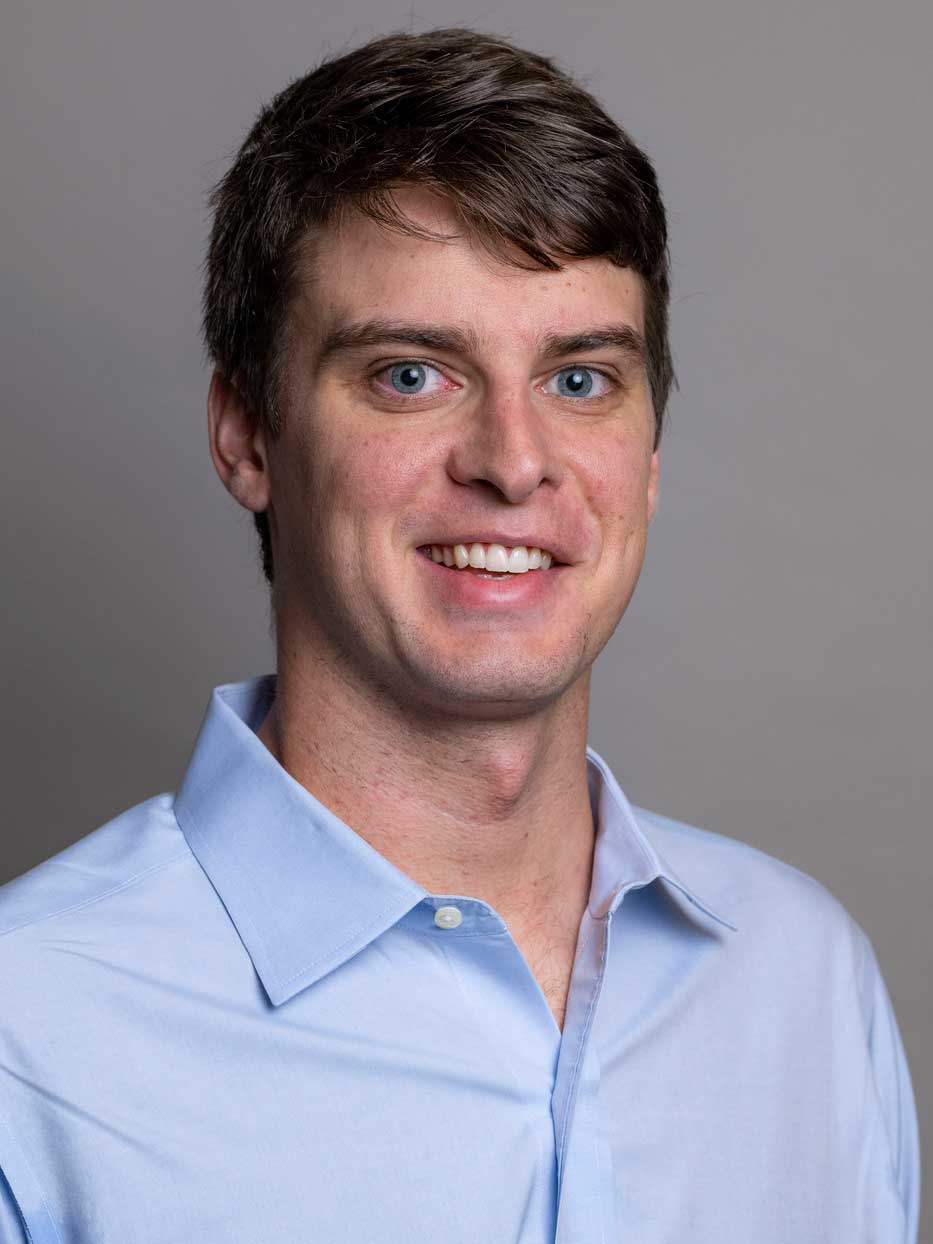
Keith LeGrand is an Assistant Professor in the School of Aeronautics and Astronautics at Purdue University, part of the Cislunar Space Initiative. He holds a Ph.D. in Aerospace Engineering from Cornell University (2022), an M.S. (2015), and a B.S. (2014) in Aerospace Engineering from Missouri University of Science and Technology. His research focuses on multi-object tracking, spacecraft navigation, space domain awareness, and intelligent sensor control. Key projects include developing probabilistic filters for cislunar space object tracking and information-driven autonomy systems. LeGrand leads the Sensing, Controls, and Probabilistic Estimation (SCOPE) Group, which advances space surveillance and autonomous systems. Notable awards include the 2025 AFOSR and ISIF Young Investigator Awards, 2023 AMOS Best Paper Award, and the E.F. Bruhn Teaching Award for excellence in undergraduate instruction. LeGrand advises a diverse group of graduate and undergraduate students in astrodynamics and space applications. His work is supported by grants from AFOSR, ISIF, and partnerships with institutions like Sandia National Laboratories and Draper Labs. The SCOPE lab collaborates on projects such as lunar landing navigation, satellite proximity operations, and multi-sensor fusion for space surveillance.
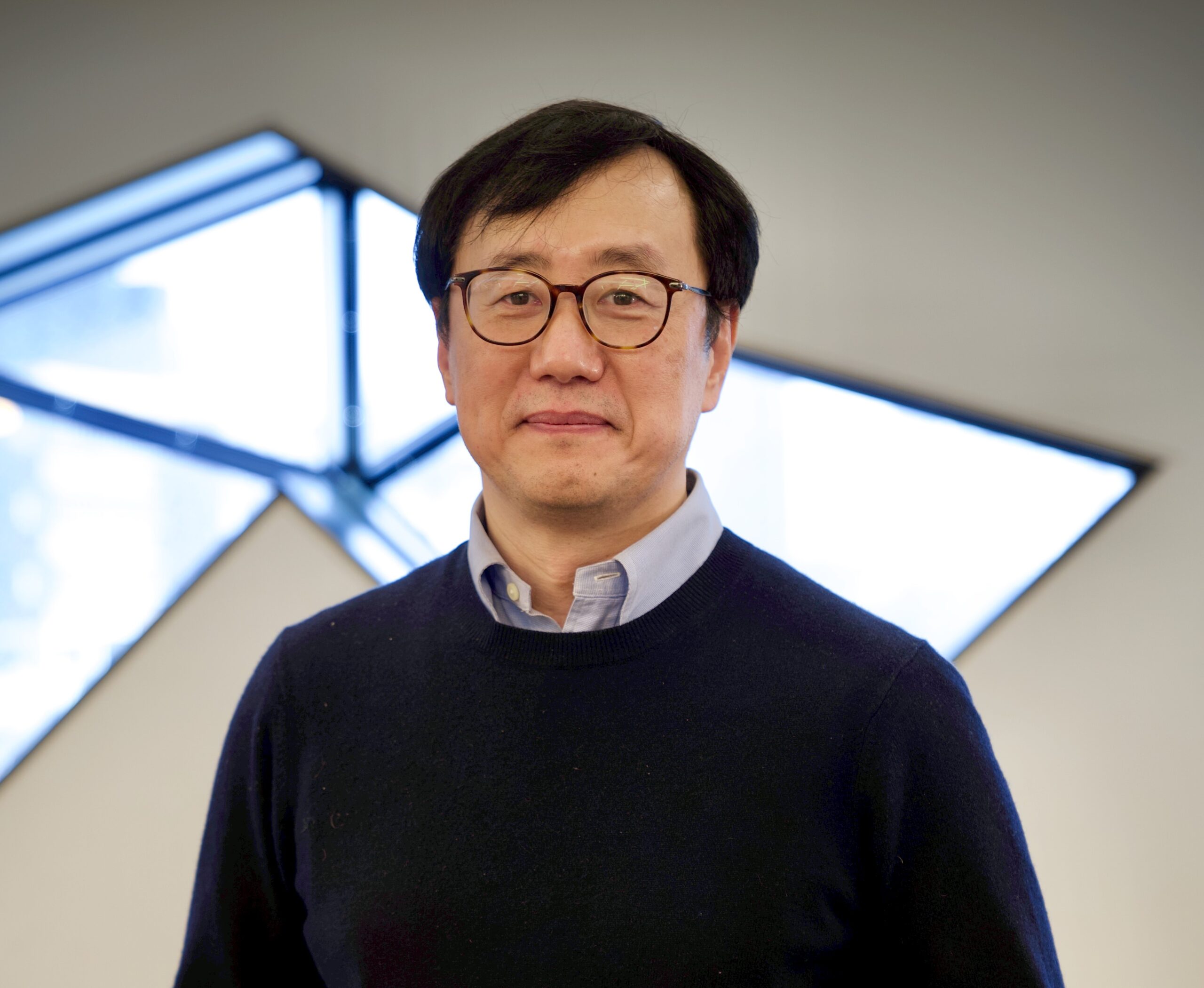
Lingxi Li is a Professor at the Elmore Family School of Electrical and Computer Engineering at Purdue University's Indianapolis campus. His research focuses on modeling complex systems, connected and automated vehicles, intelligent transportation systems, and parallel intelligence. He holds a Ph.D. from the University of Illinois at Urbana-Champaign (2008), and master's and bachelor's degrees from the Chinese Academy of Sciences (2003) and Tsinghua University (2000). Research Interests: Dr. Li's work bridges control systems, transportation engineering, and AI, with emphasis on human-machine interaction, autonomous vehicle systems, and scenario-based traffic modeling. His projects include developing frameworks for Industry 5.0 collaboration, enhancing traffic flow prediction through parallel learning, and advancing safety in micro-mobility systems like e-scooters. Recent Publications: Over 15+ articles (2023-2025) explore topics such as game-theoretic vehicle interaction modeling, vision-language systems for autonomous driving, and acoustic SLAM technologies. These studies reflect a focus on real-world validation and system integration in smart transportation. Labs & Initiatives: Leads research in autonomous mining systems and scenario engineering for intelligent vehicles, leveraging parallel intelligence concepts. Collaborates on projects like ParallelWorkforce (Industry 5.0 frameworks) and SceNDD++ (naturalistic driving datasets).
David Hästbacka is an Associate Professor (tenure track) at the Department of Computing Sciences, Faculty of Information Technology and Communication Sciences at Tampere University. His research focuses on software engineering, industrial automation, and energy systems, emphasizing system architecture, interoperability frameworks, and dependable IoT solutions. He leads a research group exploring edge and cloud computing, semantic integration, and smart energy systems. Education & Professional Background : While specific educational details are not provided, his academic career includes roles such as Postdoctoral Researcher in the SEMIS project (2017-2020) and extensive involvement in EU-funded initiatives like COCOP (EU H2020) and Horizon Europe projects. Research Projects : Active in high-impact projects like Hedge-IoT (Horizon Europe, 2024-2027), TwinfFlow (Business Finland), and TRINEFLEX (Horizon Europe), with a focus on industrial automation, distributed systems, and energy grids. Past projects include FEMMa (Business Finland), DisMa (Academy of Finland), and Arrowhead (ECSEL). Teaching & Supervision : Specializes in Web/Cloud architectures, IoT systems, and dependable automation technologies. Supervises students in topics like edge computing frameworks and MLOps pipelines. Technical Contributions : Develops frameworks for industrial interoperability (e.g., OPC UA PubSub integration), edge-cloud toolchains, and MLOps methodologies. His work addresses challenges in microservices, Kubernetes distributions, and semantic data integration. Labs & Teams : Leads a research group advancing automation technologies through interdisciplinary collaboration, with partnerships in industry and academia to bridge theory and practice in smart systems.
Karthik Dantu is an Associate Professor in the Department of Computer Science and Engineering at the University at Buffalo, State University of New York, within the School of Engineering and Applied Sciences. His research focuses on mobile sensor networks, robot networks, networked embedded systems, mobile computing, wireless networks, and embedded operating systems. He leads the Distributed Robotics and Networked Embedded Sensing (DRONES) Lab and has received significant funding including an NSF CAREER Award. Dr. Dantu's educational background includes: PhD in Computer Science from University of Southern California (2009) BE in Computer Science from Sri Jayachamarajendra College of Engineering (1999) His research interests center on algorithmic and systems challenges in Edge Computing Systems, with particular focus on enabling seamless vision sensing in cloud-edge environments. Dantu's work bridges mobile systems and robotics, developing novel approaches for UAV software, visual SLAM, and distributed sensing. His research addresses critical challenges in resource-constrained environments, security, and real-time performance for mobile and robotic systems, with emphasis on practical implementations that solve real-world problems in autonomous systems. Dr. Dantu's publication record shows a strong trajectory in mobile systems and robotics research, with increasing focus on edge computing applications for visual sensing. His recent work demonstrates expertise in adapting visual SLAM to edge environments, securing mobile systems through technologies like Rushmore, and developing novel approaches for UAV software reliability and depth sensing. The research spans theoretical algorithms and practical system implementations, with particular strength in bringing academic research to practical applications in robotics and mobile computing. Dr. Dantu has received several scientific honors: NSF CAREER Award on Enabling Seamless Vision Sensing in Cloud-Edge Systems Outstanding service award from the Office of International Services NSF Travel Grant for SenSys 2005 Conference Travel Grant for SIGCOMM 2002 As an advisor, Dr. Dantu has mentored numerous PhD students to completion, with graduates now working at companies like Samsung Research and Zoox Inc., or continuing academic careers as Assistant Professors. His research is supported by substantial grants including a DARPA OFFSET Sprint 4 award ($470k), an NSF CAREER award ($550k), and multiple NSF collaborative grants totaling over $1.5 million. He serves on numerous conference committees including Mobicom, MobiSys, and ICRA, demonstrating leadership in the mobile systems and robotics research communities. Dr. Dantu leads the Distributed Robotics and Networked Embedded Sensing (DRONES) Lab at UB, which focuses on developing algorithms and systems for mobile sensor networks, robot networks, and embedded sensing applications. The lab's work spans theoretical foundations to practical implementations, with particular expertise in UAV systems, visual SLAM, and edge computing for robotics, maintaining strong collaborations with industry partners and other academic institutions to advance the state of the art in mobile and robotic systems.
Nicola Capodieci is an Associate Professor at the Department of Physical, Computer and Mathematical Sciences at the University of Modena and Reggio Emilia, specializing in Information Processing Systems (IINF-05/A). He actively teaches multiple courses including Object-Oriented Programming, Web Technologies, and General Computer Science across Computer Science and Mathematics degree programs. His research interests focus on GPU acceleration for embedded systems, autonomous vehicles, and real-time computing. Dr. Capodieci's work addresses critical challenges in heterogeneous computing platforms, particularly for automotive applications and smart city infrastructure. His research bridges theoretical computer science with practical applications in autonomous driving and urban mobility systems. Analysis of his recent publications reveals a strong focus on optimizing GPU performance for latency-sensitive applications, particularly in autonomous vehicles. His work spans path planning algorithms, memory interference management, and real-time scheduling on heterogeneous platforms. A significant portion of his research addresses practical implementation challenges in embedded systems where computational resources are constrained but timing predictability is critical. Dr. Capodieci's teaching portfolio demonstrates expertise in both foundational programming concepts and advanced topics in web technologies. His courses emphasize practical implementation skills while covering theoretical foundations of object-oriented programming, web development frameworks, and computational thinking.
Guoquan Huang is an Assistant Professor in the Department of Mechanical Engineering at the University of Delaware. He holds a B.Eng. in Automation from the University of Science and Technology, Beijing (2002), and M.Sc. and Ph.D. degrees in Robotics from the University of Minnesota (2009 and 2012). Prior to his current role, he was a Postdoctoral Associate at MIT's Computer Science and Artificial Intelligence Laboratory (CSAIL). His research focuses on robotics, computer vision, and autonomous systems, emphasizing probabilistic perception, estimation, and control for ground, aerial, and underwater vehicles. He leads the development of the OpenVINS platform for visual-inertial estimation and has contributed to advancements in SLAM (Simultaneous Localization and Mapping), sensor fusion, and multi-robot coordination. Education: B.Eng in Automation (Electrical Engineering), University of Science and Technology, Beijing, 2002 M.Sc. in Robotics, University of Minnesota, Twin Cities, 2009 Ph.D. in Robotics, University of Minnesota, Twin Cities, 2012 His research interests span robotics, computer vision, and autonomous systems , with a focus on: Visual-inertial navigation and SLAM Sensor fusion (LiDAR, IMU, camera) Autonomous vehicle control and safety Multi-robot cooperative localization His recent publications (2023–2025) emphasize robust algorithms for navigation in GPS-denied environments, real-time sensor calibration, and dataset development for aerial visual localization. He has pioneered techniques like decoupled error-state estimation and consistent parallel frameworks for SLAM. Labs/Teams: Leads the development of the OpenVINS research platform, focusing on visual-inertial state estimation. Collaborates on projects involving human-swarm interactions and resilient ground vehicle navigation.
Michael Everett is an Assistant Professor at Northeastern University with a joint appointment in the Department of Electrical & Computer Engineering and the Khoury College of Computer Sciences. He directs the Autonomy & Intelligence Laboratory, focusing on certifiable learning machines at the intersection of robotics, deep learning, and control theory. His research emphasizes safety, reliability, and efficiency in robotics applications like off-road navigation and social environments. Education: PhD in Mechanical Engineering, Massachusetts Institute of Technology (2020) SM in Mechanical Engineering, MIT (2017) SB in Mechanical Engineering, MIT (2015) Research Interests: Robotics and motion planning Control theory and neural network verification Reinforcement learning applications Certifiable safety guarantees for autonomous systems Navigation in dynamic/human environments Awards: Runner-Up: Best Paper Award (ICML 2022) Winner: Best Student Paper (IROS 2017/2023) Editors’ Top 5 Published Articles (IEEE Access 2021) Lab & Contributions: The Autonomy & Intelligence Lab develops algorithms for high-speed off-road autonomy, socially aware navigation, and neural feedback verification. His work includes the RAMP planning pipeline and Evora traversability learning framework. He collaborates with Google’s PAIR team on trustworthy AI.
Dr. Ramsey Faragher is a Senior Research Associate at the Computer Laboratory , University of Cambridge, and a Bye-Fellow at Queens' College. His work focuses on infrastructure-free indoor positioning systems, sensor fusion, and improvements to smartphone sensing capabilities. Academic Affiliation : University of Cambridge (Computer Laboratory) Professional Roles : Bye-Fellow at Queens' College, Senior Research Associate His research spans multiple disciplines within computer science and engineering, emphasizing innovative navigation solutions and signal processing techniques. Key areas include GNSS robustness, wireless security, and machine learning applications for positioning systems. Recent publications highlight advancements in supercorrelation for automotive GNSS, sensor data calibration, and motion-compensated signal processing. Articles frequently address challenges such as spoofing mitigation, urban navigation, and infrastructure-free localization. Scientific Recognition Fellow of the Royal Institute of Navigation Chartered Physicist (CPhys)
Nikolas Brasch is a PhD candidate and researcher at the Chair of Computer Aided Medical Procedures (CAMP) within the Department of Informatics at the Technical University of Munich. He is affiliated with the research group led by Prof. Nassir Navab and maintains his office at Boltzmannstr. 3, 85748 Garching b. München, Room 5613.03.039. Brasch's research centers on 3D computer vision with emphasis on SLAM (Simultaneous Localization and Mapping) and 3D scene understanding. His work bridges computer vision with medical applications, particularly in medical augmented reality and surgical robotics. He has developed innovative approaches for improving depth estimation in challenging environments and creating robust SLAM systems that maintain accuracy in dynamic settings. His publication record shows a consistent trajectory in advancing 3D vision techniques with practical applications in medical contexts. His research demonstrates particular strength in sensor fusion techniques and semantic understanding of 3D environments. Wild ToFu: Improving Range and Quality of Indirect Time-of-Flight Depth with RGB Fusion in Challenging Environments (2021) Structure-SLAM: Low-Drift Monocular SLAM in Indoor Environments (2020) Semantic Monocular SLAM for Highly Dynamic Environments (2018) As an educator, Brasch serves as a teaching assistant for the Praktikum on 3D Computer Vision course at TUM. He mentors students on various thesis projects related to 3D vision, human pose estimation, and semantic reconstructions, typically collaborating with Prof. Federico Tombari. His teaching activities reflect his research expertise and commitment to training the next generation of computer vision researchers.
Dr. Hung Cao is an Assistant Professor of Computer Science at the University of New Brunswick, where he directs the Analytics Everywhere Lab. His work focuses on interdisciplinary research in Cyber-Physical Systems (CPS), IoT, Edge/Fog/Cloud Computing, and Explainable AI, addressing societal challenges through data-driven solutions. Prior roles include PostDoc Fellow and Data Scientist at the People in Motion Lab, UNB, and Lecturer/Researcher at Vietnam National University. He holds a Ph.D. in Geomatics Engineering (specializing in Data Science) from UNB (2020), an M.Sc. in Computer Science from University College Dublin (2015), and a B.Eng. from Vietnam National University (2011). Research interests span Smart Cities, Embedded AI, TinyML, Federated Learning, and Real-time Systems. He has led projects with Cisco, NB Power, and other industry partners to develop scalable analytics frameworks for IoT applications. Dr. Cao actively contributes to technical communities (IEEE Smart City, Edge Computing, etc.), serving as a reviewer for journals and conferences, and a Topic Editor for Electronics Journal . His innovations include the Analytics Everywhere framework for spatio-temporal data analysis, MACeIP platform for smart cities, and energy-efficient IoT systems for environmental monitoring. Current work emphasizes human-centered AI for healthcare diagnostics and industrial inspection systems.
Dr. Sen Wang is an Associate Professor in Robotics and Autonomous Systems at Imperial College London's Department of Electrical and Electronic Engineering, affiliated with I-X (Imperial's AI initiative), the Grantham Institute, and the Robotics Forum. He directs the Sense Robotics Lab and founded the MSc in Artificial Intelligence Applications and Innovation. His research focuses on advancing robotic autonomy through probabilistic and machine learning methods, addressing challenges in unstructured environments such as underwater infrastructure inspection and climate change solutions. Key projects include leading the £18M UKRI ORCA Hub, developing underwater robotics for offshore energy infrastructure inspection, and achieving the first autonomous wind farm foundation inspection at EDF's Blyth site. He holds editorial roles at IEEE Transactions on Robotics and other journals. Research interests span robotics, computer vision, SLAM, and AI applications, with recent work emphasizing underwater systems, sensor fusion, and safety-critical autonomy. His publications bridge theoretical advancements with real-world deployments in marine robotics and environmental monitoring. Awards: 2024 AI Most Influential Scholar Award Honourable Mention Grants: £18M ORCA Hub funding (UKRI) Labs: Sense Robotics Lab, I-X AI Initiative
Gunho Sohn is an Associate Professor and Department Chair in the Earth and Space Science and Engineering (ESSE) Department at York University's Lassonde School of Engineering. His research focuses on advanced geomatics engineering applications, including 3D urban modeling, photogrammetric computer vision, and geospatial data integration. He specializes in developing innovative solutions for navigation systems, energy optimization, and autonomous robotics through interdisciplinary approaches. Dr. Sohn's work emphasizes practical implementations of remote sensing technologies, with notable contributions to LiDAR data processing, SLAM systems, and BIM-GIS integration. His research has addressed real-world challenges such as improving air quality models using industrial plume observations and creating inclusive pedestrian navigation tools using open geospatial datasets. Recent trends in his publications highlight advancements in deep learning for geospatial tasks, including semantic segmentation of aerial LiDAR data, noise reduction in sensor networks, and UAV positioning systems. His work also explores digital twin applications for simulating urban environments and optimizing building energy consumption through BIM data analysis. While no specific awards or grants are listed, his extensive publication record reflects significant contributions to the fields of geomatics and computer vision. His research group collaborates on large-scale datasets like YUTO MMS and Yuto Semantic, advancing mobile mapping and semantic understanding of urban infrastructure.
Brendan Englot is the Anson Wood Burchard Endowed Professor and Director of the Stevens Institute for Artificial Intelligence (SIAI) at Stevens Institute of Technology. He holds a Ph.D., S.M., and S.B. in Mechanical Engineering from MIT. His research focuses on perception, navigation, and decision-making algorithms for mobile robots in complex environments, particularly underwater and autonomous systems. He has held roles such as Professor (2024–present), Associate Professor (2020–2024), and Assistant Professor (2014–2020) at Stevens, and previously worked at the United Technologies Research Center and Yale University. Education: Ph.D., Mechanical Engineering, MIT, 2012 S.M., Mechanical Engineering, MIT, 2009 S.B., Mechanical Engineering, MIT, 2007 Research Interests: Englot’s work emphasizes robust autonomy for unmanned vehicles in degraded conditions, leveraging AI to enhance situational awareness and decision-making under uncertainty. Key areas include navigation algorithms for underwater, aerial, and ground vehicles, sensor fusion, and multi-agent systems. Awards: AMiner’s Top 100 Robotics Scholars (2023, 2024) Provost’s Award for Research Excellence (2021) NSF CAREER Award (2017) ONR Young Investigator Award (2020) Grants & Advising: Englot has secured over $5M in grants as PI, including projects on underwater exploration, reinforcement learning for navigation, and robotic inspection systems. He mentors students in robotics, autonomy, and AI applications. Labs & Teams: Leads the SIAI and collaborates on projects involving autonomous vehicles, SLAM systems, and marine robotics through Stevens’ interdisciplinary initiatives.
Dr. Allahyar Montazeri is a Senior Lecturer in Control and Electronics Engineering at Lancaster University's School of Engineering, specializing in advanced control systems and signal processing. His research focuses on adaptive signal processing, robust control, system identification, and applications in robotics, active noise/vibration control, and wave energy conversion. He has over 110 publications and serves on editorial boards such as Frontiers in Robotics and AI, and IFAC Technical Committees. Montazeri holds a Humboldt Research Fellowship (2011) and ERCIM Fellowship (2010). His industrial collaborations include Bosch for automotive noise control and Fraunhofer Institute. He has supervised PhD students in acoustic signal processing and leads projects on autonomous robotics and environmental monitoring. Notable awards include 'Outstanding Associate Editor' (2023) and 'Fellow of The Higher Education Academy.' He actively participates in conferences like IEEE CDC and chairs sessions on mechatronics systems. His work bridges theoretical control advancements with practical applications in extreme environments, including nuclear robotics and underwater systems.
Kangkang Yin is an Associate Professor in the School of Computing Science at Simon Fraser University (SFU). His research focuses on computer animation, computer graphics, humanoid robotics, machine learning, and multimedia analysis. He teaches courses such as Computer Animation and Scientific Computing, and holds a PhD from the University of British Columbia (2007), MSc from Zhejiang University (2000), and BSc from Zhejiang University (1997). His work bridges robotics and animation through projects like physics-based character controllers, motion diffusion models, and robotic manipulation. Key contributions include the SIMBICON biped locomotion framework and research into emotion-driven dance animation. Recent efforts emphasize reinforcement learning applications in motion synthesis and robust visual navigation for unmanned ground vehicles. Yin's publications span over two decades, addressing challenges in motion control, physics-based simulation, and machine learning applications. His lab contributes to both academic advancements and practical robotics solutions. Current research trends show strong emphasis on combining generative AI with traditional animation techniques, as seen in recent work on auto-regressive motion models (AAMDM) and physics-augmented reinforcement learning (PARC).