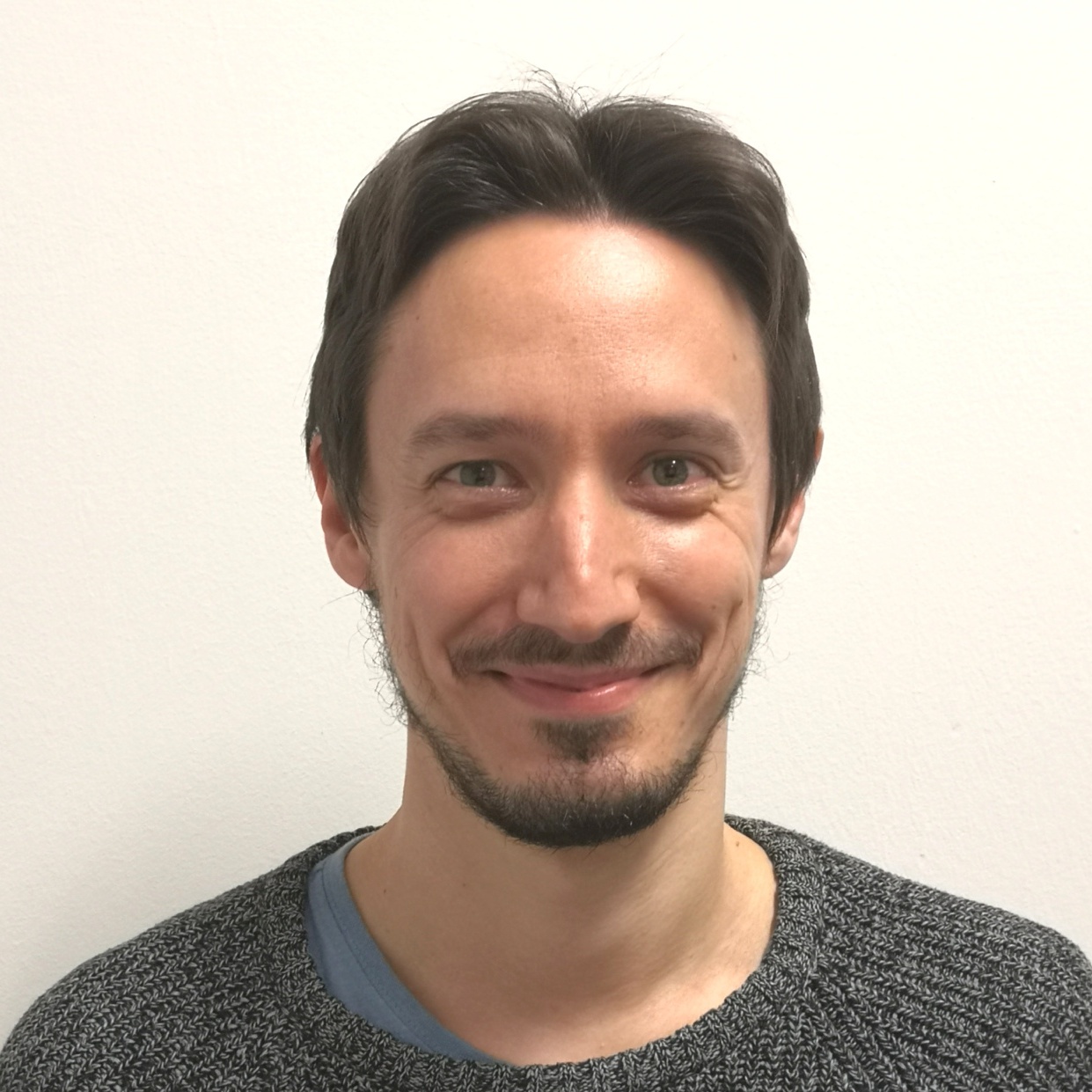
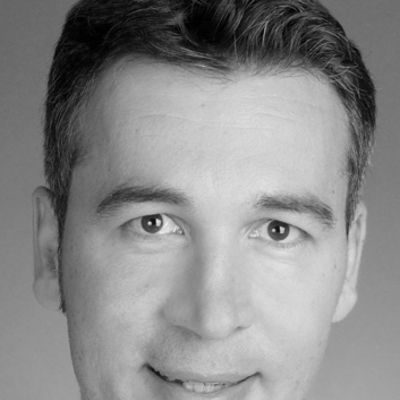
Saurav Agarwal is a Postdoctoral Researcher affiliated with MEAM and the Kumar Lab, focusing on robotics and intelligent systems. His work intersects advanced robotics, computer science, and applied mechanics, as evidenced by his contributions to publications like 3D Active Metric-Semantic SLAM under IEEE. Research interests include Simultaneous Localization and Mapping (SLAM) in robotics 3D spatial modeling and semantic analysis Active metric-semantic integration for autonomous navigation Applications of robotics in complex environments Interdisciplinary approaches combining mechanical engineering and computer science He is associated with the GRASP Lab, a leading robotics research facility, and participates in academic engagement through seminars and publications. His current role involves advancing robotics research and collaboration within the Kumar Lab.
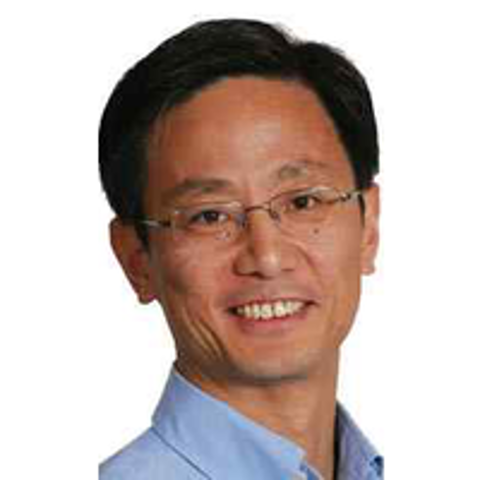
Professor Hong Zhang serves as Chair Professor in the Department of Electronic and Electrical Engineering at Southern University of Science and Technology (SUSTech) in Shenzhen, China, having transitioned from his full professorship at the University of Alberta where he maintains an adjunct appointment. He directs the Centre for Intelligent Mining Systems (CIMS) and affiliates with the Robotics Research Laboratory, establishing new robotics research groups at both institutions. His academic foundation includes a BSc from Northeastern University (USA), PhD from Purdue University, and postdoctoral training at the University of Pennsylvania, joined the University of Alberta in 1988. Zhang's research spans robotics, computer vision, and image processing with emphasis on visual navigation, simultaneous localization and mapping (SLAM), and biologically-inspired collective robotics. His work develops cooperative multi-robot systems for challenging environments like mining and underwater inspection, addressing practical industrial challenges through vision-based sensing and navigation solutions. Recent publications (2019-2020) demonstrate leadership in robotic perception, particularly moving object detection under illumination changes and HDR reconstruction from polarization data, reflecting consistent innovation in computer vision applied to real-world robotics. ASTech Award (2008) IEEE Millennium Medal Best Conference Paper at IEEE ROBIO 2019 2018 IROS Distinguished Service Award Fellow of Canadian Academy of Engineering (2015) Fellow of IEEE (2014) NSERC Industrial Research Chair (2003-2017) Mentoring notable students including Xuesong Wu, Sean, and Moein who produced award-winning conference papers, Zhang's research has secured substantial funding through a decade-long Syncrude Canada partnership (NSERC/Alberta Innovates), the NSERC Industrial Research Chair, and a recent $7.1M Alberta Government grant for the Centre for Autonomous Systems. He leads the Centre for Intelligent Mining Systems at the University of Alberta while establishing a new robotics research group at SUSTech focused on intelligent sensing systems for industrial automation and navigation.
Matteo Poggi is a Tenure-Track Assistant Professor at the University of Bologna, where he teaches courses on Logic Circuits and Computer Architectures. His academic career is deeply rooted in computer vision and 3D perception, with a focus on stereo vision, depth estimation, and SLAM systems. Dr. Poggi earned his MSc and PhD degrees from the University of Bologna in 2014 and 2018 respectively, working on stereo vision under the supervision of Prof. Stefano Mattoccia. His educational background has provided a strong foundation for his current research endeavors in computer vision and 3D scene understanding. Dr. Poggi's research primarily focuses on stereo matching, multi-view stereo, optical flow, single-image depth estimation, online adaptation, federated learning, and neural SLAM. His work bridges the gap between theoretical computer vision and practical applications, with particular emphasis on robustness in real-world scenarios. His recent publications demonstrate a growing interest in 3D Gaussian splatting, neural radiance fields, and environmental monitoring applications like river plastic detection. His scholarly output shows a consistent trajectory of high-impact publications at top computer vision conferences including CVPR, ICCV, and ECCV. The trend in his work reveals an evolution from traditional stereo vision techniques toward more advanced neural representations and applications in environmental monitoring. His research has significant implications for autonomous systems, robotics, and environmental science. Area Chair for CVPR 2026 Associate Editor for IJCV Outstanding Reviewer at CVPR 2025 Dr. Poggi actively collaborates with researchers across the globe, as evidenced by his extensive publication record. His GitHub profile shows active engagement with the research community through open-source implementations of his work. While specific grant information isn't provided in the available texts, his numerous publications in top venues suggest successful funding for his research endeavors. His work appears to be conducted within a vibrant research group at the University of Bologna, with connections to other researchers in the computer vision community as seen through his GitHub followers and collaborators. His research has practical applications in autonomous driving, robotics, and environmental monitoring.
Fabio Tosi is a Junior Assistant Professor (RTDA) at the Department of Computer Science and Engineering (DISI) at the University of Bologna, where he teaches the Master's course 'Accelerated Computing Systems' in the Computer Engineering program, focusing on CUDA programming. Previously, he served as an Adjunct Professor for 'Fundamentals of Computer Science' in the Mechatronics program at the Department of Electrical, Electronic, and Information Engineering. Dr. Tosi's research focuses on computer vision and machine learning, with particular emphasis on 3D reconstruction from images and deep stereo matching. His work bridges theoretical advancements with practical applications in depth estimation, neural radiance fields, and 3D scene understanding. He has made significant contributions to the field through his research on neural disparity refinement, stereo matching under challenging conditions, and the integration of NeRFs with traditional stereo techniques. His recent publications demonstrate a strong trajectory in advancing stereo matching techniques, with notable works including 'Stereo Anywhere: Robust Zero-Shot Deep Stereo Matching Even Where Either Stereo or Mono Fail' (CVPR 2025), 'Diffusion Models for Monocular Depth Estimation' (ECCV 2024), and 'Self-Evolving Depth-Supervised 3D Gaussian Splatting from Rendered Stereo Pairs' (BMVC 2024, Best Poster Award). His research shows a clear progression from foundational stereo matching techniques toward more robust, zero-shot, and multi-modal approaches that can handle challenging real-world scenarios. Dr. Tosi has received several prestigious awards including the Best PhD Thesis Award from the Italian Association for Research in Computer Vision, Pattern Recognition and Machine Learning (CVPL), the Best Poster Award at BMVC 2024, and multiple Outstanding Reviewer recognitions at major computer vision conferences including CVPR and ECCV. He serves as Associate Editor for the journal Pattern Recognition (Elsevier) and holds significant roles in major conferences as Area Chair for CVPR 2026, Associate Editor for IROS 2025, and Area Chair for ICIAP 2025. His leadership in the computer vision community extends to maintaining the 'Awesome-Deep-Stereo-Matching' repository, which has become a valuable resource for researchers in the field. Dr. Tosi completed his PhD at the University of Bologna in 2021 under Professor Stefano Mattoccia, following his Master's (2017) and Bachelor's (2014) degrees from the same institution. During his PhD, he was a visiting student at the Max Planck Institute for Intelligent Systems and the University of Tübingen in 2020, working with Professor Andreas Geiger in the Autonomous Vision Group.
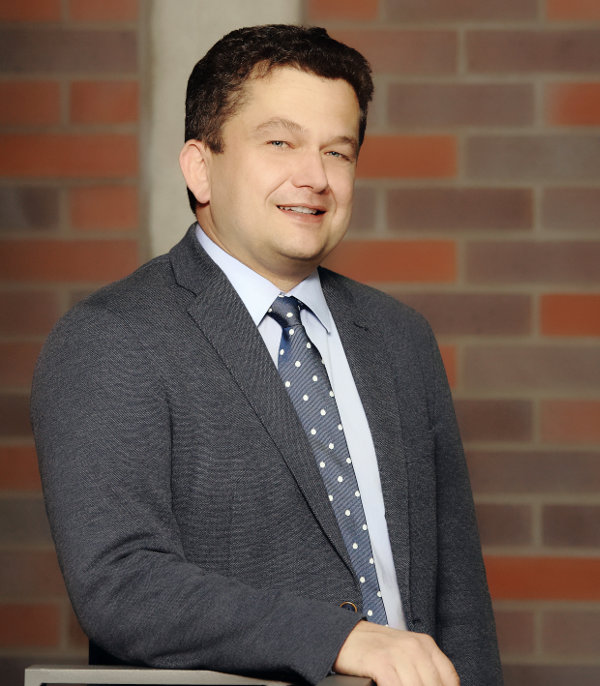
Professor Piotr Małka is affiliated with the Krakow University of Technology as a faculty member in the Department of Infotronics and Cybersecurity under the Faculty of Electrical and Computer Engineering . His work focuses on robotics, mechatronics, and infrastructure monitoring. Academic Rank: Professor Contact: piotr.malka@pk.edu.pl Research interests span mobile robot design for pipeline inspection , SLAM techniques in rough terrain, and intelligent infrastructure systems. His publications demonstrate expertise in: Robot kinematics and dynamics Control systems for tracked robots Structural health monitoring Smart water supply infrastructure Virtual prototyping of inspection systems Recent work shows increasing focus on autonomous navigation and cyber-physical systems integration for industrial applications.
Pascal Vasseur is a University Professor at the University of Picardie Jules Verne (UPJV) in the Faculty of Sciences, Computer Science Department. He leads the Robotics Perception group within the MIS Laboratory (Modeling, Information and Systems) and serves as a member of the National University Council (Section 61) since 2016. Additionally, he has been an Associate Editor for IEEE Robotics and Automation Letters since 2016, demonstrating his significant standing in the robotics research community. Professor Vasseur's research focuses on robotics perception systems, with particular expertise in vision (including omnidirectional and event-based cameras), Lidar, and Radar technologies. His work addresses fundamental challenges in pose estimation, mapping, and localization for robotics and automotive applications. His recent publications show a strong emphasis on advanced sensor technologies, multi-sensor calibration techniques, and practical implementations for autonomous systems. His publication record demonstrates consistent high-impact research output, with numerous articles in top robotics and computer vision venues including IEEE Robotics and Automation Letters, IEEE Transactions on Intelligent Vehicles, and CVPR. He has also authored two comprehensive books on Omnidirectional Vision (2023-2024), establishing himself as a leading expert in this specialized area of computer vision. Professor Vasseur has coordinated multiple significant research projects including ANR projects CaViAR and pLaTINUM, the international DrAACaR project, and PHC STAR and AMADEUS projects. He currently serves as scientific officer for the ANR CLARA Project, continuing his leadership in advancing robotics perception research. His research group actively contributes to solving practical challenges in automotive vision systems, drone navigation, and forest environment mapping, with applications spanning autonomous vehicles, robotics navigation, and environmental monitoring systems. The group's work bridges theoretical advances in computer vision with real-world robotics implementations.
Felipe Ramón Fabresse is a Researcher at the Service Robotics Laboratory (SRL - TIC255) within the University of Seville, Spain, specializing in robotics with emphasis on aerial systems and navigation technologies. His work operates under the broader domain of Information and Communication Technologies (ICT), focusing on practical robotic applications for real-world service environments. He earned his PhD from the University of Seville in 2017 with the thesis "A multi-hypothesis approach for range-only simultaneous localization and mapping with aerial robots," supervised by Dr. Aníbal Ollero Baturone and Dr. Fernando Caballero. This research pioneered methods for autonomous aerial vehicle navigation using sparse range measurements, addressing critical challenges in sensor-limited scenarios. His core research interests include: Robotics Aerial Robotics Simultaneous Localization and Mapping (SLAM) Service Robotics Information and Communication Technologies The Service Robotics Laboratory provides a collaborative framework for advancing robotic perception, control, and human-robot interaction. While specific grant details are unreported, the lab's alignment with ICT research indicates active development of deployable robotic solutions for industrial and service applications.
Prof. Dr.-Ing. Andreas Wenzel is a Professor at Schmalkalden University of Applied Sciences in the Faculty of Electrical Engineering, specializing in Embedded Systems. His office is located in Building M, Room 0401, and he can be reached at +49 3683 688 5113. With a distinguished research career spanning over two decades, Prof. Wenzel has established himself as a leading expert in embedded diagnostic systems with applications across multiple domains including biomedical engineering, industrial automation, and assistive technologies. Prof. Wenzel's primary research interests focus on the development and application of embedded diagnostic systems, with particular emphasis on neural networks for pattern recognition, fuzzy logic systems for classification problems, and real-time monitoring solutions. His work bridges theoretical machine learning approaches with practical engineering applications, resulting in innovative solutions for quality control in manufacturing processes, medical diagnostics, and mobility assistance technologies. He has made significant contributions to EEG data analysis for sleep stage and anesthesia depth monitoring, as well as developing smart systems for injection molding quality assessment and advanced mobility solutions for elderly individuals. Analysis of Prof. Wenzel's publication record reveals a consistent research trajectory focused on applying computational intelligence to solve practical engineering problems. His work demonstrates exceptional versatility across domains while maintaining a cohesive research theme centered on embedded diagnostic systems. From 2012-2016, his research output shows increasing focus on real-time embedded solutions with industrial applications, particularly in manufacturing quality control and assistive technologies, while continuing his foundational work in biomedical signal processing. The interdisciplinary nature of his research is evident in collaborations with medical professionals, industrial partners, and robotics specialists. Prof. Wenzel leads the Embedded Diagnostic Systems Research Group at Schmalkalden University of Applied Sciences, which maintains strong industry partnerships, particularly in plastics manufacturing and medical technology sectors. His team develops practical embedded solutions that address real-world challenges in production quality monitoring, medical diagnostics, and mobility assistance. The research group's work is characterized by its practical orientation, with many projects resulting in deployable systems rather than purely theoretical contributions. Prof. Wenzel's strategic focus on applied research ensures that his work has direct industrial relevance and practical impact.
Thanh Nguyen Canh is a Lecturer at University of Engineering and Technology, Vietnam National University (UET VNU) and Teaching/Research Assistant at Japan Advanced Institute of Science and Technology (JAIST), School of Information Science. Primary affiliation is with the Robotics Lab at both institutions where he conducts research in SLAM systems and computer vision. PhD in Information Science at JAIST (2024.10-present) MS in Information Science at JAIST (2022.9-2024.9) BS in Robotics Engineering at UET VNU (2018.8-2022.8) Research focuses on advancing SLAM technologies through semantic understanding and active exploration. Key specialties include Visual-inertial odometry , probabilistic semantic mapping , and multi-sensor fusion for UAV navigation. Current projects integrate deep learning with traditional SLAM pipelines to create robust environmental representations. Publication activity centers on practical robotics applications, with the 2023 ICCAIS paper demonstrating object-oriented semantic mapping for UAV navigation. Research output emphasizes implementable solutions with active GitHub repositories showing continuous development in SLAM systems and reinforcement learning. Supervision involves teaching robotics curriculum at UET while mentoring research assistants at JAIST. Current projects provide hands-on experience with ROS, point cloud processing, and deep learning frameworks. Laboratory work occurs within the Robotics Lab environment at JAIST/UET, utilizing GitHub-hosted tools like probabilistic_semantic_mapping and S3M_SLAM for collaborative development. The lab maintains strong focus on real-world robotics applications with particular emphasis on aerial vehicle navigation systems.
Prof. Reiner Marchthaler is a Professor at Esslingen University of Applied Sciences within the Faculty of Computer Science and Information Technology. He serves as Deputy Director of the Institute for Intelligent Systems (IIS), Scientific Director of the Green IT 2026 Conference, and Liaison Lecturer for the Friedrich Ebert Foundation. His academic leadership spans autonomous systems research and educational initiatives in embedded technologies. His research centers on Embedded Systems and Sensor Data Fusion, with pioneering work on Kalman filters for autonomous systems. He maintains the authoritative resource kalman-filter.de and has developed real-time capable SLAM algorithms, camera-based reference systems, and parking space detection frameworks. His expertise extends to entropy-based safety evaluation in autonomous driving and semantic segmentation using mixed real/synthetic data. Analysis of his 2020-2025 publications reveals dominant trends in autonomous driving systems, emphasizing real-time sensor fusion, deep learning for perception, and safety validation. Key subfields include adaptive Kalman filtering (ROSE-Filter), landmark-based navigation, neural network training with synthetic data, and maximum entropy safety frameworks. His work bridges theoretical innovation with automotive applications, particularly in model vehicle testing environments. Prof. Marchthaler leads research at the Institute for Intelligent Systems, directing the Green IT 2026 initiative and advising the Friedrich Ebert Foundation. His team develops ROS-based validation environments for autonomous algorithms and maintains the Kalman filter knowledge portal. Current projects focus on connected traffic systems using conventional infrastructure landmarks and entropy-optimized safety protocols for production vehicles.