Zhibo Pang is an Adjunct Professor at KTH Royal Institute of Technology's Department of Intelligent Systems (EECS) and Senior Principal Scientist at ABB Corporate Research Sweden. His work focuses on digital transformation in industry and healthcare, spanning robotics, AI, control systems, and wireless communication. He leads projects in embodied intelligence, Industry 4.0, and Healthcare 4.0, with 23 granted patents and over 120 journal papers. Education: PhD in Electronic and Computer Systems (KTH, 2013), MBA in Innovation & Growth (University of Turku, 2012). Key Roles: IEEE Technical Committee Chair, Editor of 6 IEEE journals, ABB Inventor of the Year (2016, 2018, 2021). Research Interests: Robotics safety, wireless automation, federated learning, digital twins, and IoT security. Recent Projects: Cloud-fog automation frameworks, robot skin systems for healthcare, and latency-aware industrial control. His work bridges academia and industry through cross-functional collaborations.
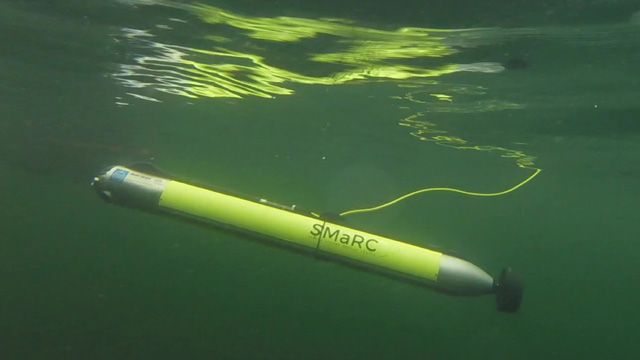
John Folkesson is an Associate Professor at the Department of Robotics, Perception and Learning at KTH Royal Institute of Technology. His research focuses on mobile robotics, underwater autonomous vehicles (AUVs), and Simultaneous Localization and Mapping (SLAM), particularly addressing challenges in dynamic underwater environments. He leads the AUV group within the Swedish Maritime Robotics Centre (SMaRC2.0) and supervises multiple PhD projects, including those funded by Ocean Infinity and Vinnova. Folkesson has pioneered work on sonar-based SLAM, bathymetric mapping, and autonomous underwater navigation without human intervention. He teaches courses such as Probabilistic Graphical Models (DD2420) and Applied Estimation (EL2320). Recent projects include developing neural rendering techniques for sidescan SLAM and automatic launch systems for AUVs in collaboration with Purdue University and SAAB. His research emphasizes long-term autonomy, environmental ambiguity, and sensor data interpretation in unstructured underwater scenarios. Education: PhD in Robotics (2005, KTH Royal Institute of Technology) Recent Funding: 2024 projects include ALARS (Vinnova), WASP WARA-PS, and industrial collaborations. Research Interests Folkesson's work spans underwater robotics, SLAM algorithms, and sensor fusion. Key areas include: Underwater SLAM and sonar modeling Bathymetric reconstruction using neural networks Autonomous decision-making in AUV missions Real-time terrain modeling and localization Articles Trends Recent publications emphasize neural networks for SLAM optimization, sonar data processing, and autonomous underwater systems. Themes include real-time bathymetric mapping, sensor fusion in dynamic environments, and neural rendering techniques for improving navigation accuracy. Folkesson's work bridges theory and practice, with applications in marine robotics and industrial surveys. Advising & Grants PhD supervision: AUV perception (2024), SLAM with Ocean Infinity, event-response AUV systems. Collaborations: Purdue University, SAAB, Ocean Infinity. Course responsibilities: Over 10 advanced robotics and engineering courses at KTH. Labs & Teams Lead of SMaRC2.0, KTH's official research center for maritime robotics. Active in developing AUV systems for long-duration missions, including ice-covered and deep-sea exploration.
Todor Stoyanov is a Senior Lecturer in Computer Science and an affiliated faculty member of the WASP program at Örebro University. He serves as the subject manager in computer science and is part of the Centre for Applied Autonomous Sensor Systems (AASS). His research focuses on autonomy for mobile robots, particularly perception algorithms and motion synthesis for manipulation. He holds a PhD in Computer Science from Örebro University (2012), specializing in autonomous robot navigation. Education: PhD in Computer Science, Örebro University, 2012 (Thesis: Reliable Autonomous Navigation in Semi-Structured Environments Using the 3D Normal Distributions Transform) Research Interests: Dr. Stoyanov's work spans autonomous mobile robots, robot perception, motion planning, and manipulation. Key areas include behavior trees for control, deformable object tracking, and reinforcement learning for knowledge transfer. His research often integrates advanced algorithms with real-world robotics applications in logistics, manufacturing, and environmental monitoring. Research Projects: Ongoing: Labour market effects of AI in knowledge-intensive services Ongoing: Dynamic Agile Production Robots (DARKO) Ongoing: TeamRob - Teams of Robots Working for and with Humans Completed: Action and Intention Recognition in Human-Robot Interaction (AIR) Completed: Autonomous Wheeled Loaders for Material Handling (ALL-4-eHam) Labs/Groups: He leads the Autonomous Mobile Manipulation Lab, focusing on full-body mobile manipulation and human-robot collaboration.
Isaac Skog is an Associate Professor in Communication Systems at KTH Royal Institute of Technology, part of the Digital Futures Faculty. He also holds adjunct positions at Linköping University (Automatic Control) and the FOI Swedish Defence Research Agency. His research focuses on underwater surveillance, signal processing, navigation systems, and sensor fusion, with a particular emphasis on autonomous systems and acoustic environments. Education: BSc and MSc in Electrical Engineering, KTH Royal Institute of Technology (2003, 2005) PhD in Signal Processing, KTH Royal Institute of Technology (2010) Research Interests: Underwater acoustic surveillance and tracking Navigation systems using magnetic fields and inertial sensors Autonomous underwater vehicles and multi-agent systems Sensor calibration and fusion techniques Machine learning for sensor data analysis Recent Projects: COAST Project: Complex Acoustic Surveillance and Tracking Joint Sensing, Localization, and Communication for Next-Gen Autonomous Underwater Systems (WASP-funded) Tensor-Field Based Localization Electromagnetic Navigation for Smaller Unmanned Underwater Vehicles Grants & Collaborations: Funded by CENIIT, WASP Sweden, Swedish Research Council, Vinnova, and industry partners like Saab Dynamics. Active collaborations with FOI, Lund University, and Indian Institute of Science. Technical Demonstrators: Lyra platform for elevator condition monitoring OpenShoe experimental platform for foot-mounted inertial navigation Tactical Locator (TOR) for first-responder tracking Movelo AB spin-off for smartphone-based traffic monitoring
Ignacio Torroba Balmori is a postdoctoral researcher at KTH Royal Institute of Technology, affiliated with the Department of Aerospace, Mobility and Naval Architecture and the Robotics, Perception and Learning (RPL) division. He holds a PhD from RPL under the supervision of John Folkesson, focusing on Simultaneous Localization and Mapping (SLAM) for autonomous underwater vehicles (AUVs). His current research emphasizes underwater SLAM with sonar and camera systems, path planning, control strategies, and system identification for AUVs operating in open waters and confined spaces. His work centers on applications such as autonomous seabed surveying, algae farm monitoring, and seaweed mapping. He is actively involved in developing the AUV SAM, Kongsberg Hugin, BlueROV2, USV FloatSAM, and the AUV Lolo. As a mentor, he has supervised master’s theses on topics including underwater SLAM algorithms and bathymetric informative path planning. He teaches courses like 'Introduction to Robotics' (assistant) and 'Underwater Technology' (teacher). Key technical contributions include system identification for hydrobatic AUVs using physics-informed machine learning and tools for bathymetric SLAM, such as the SubmapsRegistration repository. His research is hands-on, prioritizing field robotics and problem-driven solutions.
Takumi Shinohara is a postdoctoral researcher at the Division of Decision and Control Systems , KTH Royal Institute of Technology , under the supervision of Prof. Karl Henrik Johansson and Prof. Henrik Sandberg. He earned his B.E., M.E., and Ph.D. from Keio University in 2016, 2018, and 2024, respectively, advised by Prof. Toru Namerikawa.
Xuesong Cai is an Associate Professor (Docent) in the Department of Electrical and Information Technology at Lund University, Sweden. He serves as an Associate Senior Lecturer and holds roles in ELLIIT and the NEXTG2COM Competence Centre. His research focuses on radio propagation, millimeter-wave (mmWave), and terahertz (THz) channel modeling for 5G and beyond wireless systems. He has published over 70 peer-reviewed papers and leads projects like 'Breaking the Barriers of Terahertz Communications.' Education: B.S. and Ph.D. (Hons.) from Tongji University (2013, 2018), with internships at Huawei and postdocs at Aalborg University, Nokia Bell Labs, and Lund University. Recognized with awards including the EU Marie Skłodowska-Curie Fellowship and Swedish Research Council grants. Key research interests include high-resolution parameter estimation, channel emulation, and radio-based localization. He is an Associate Editor for IEEE journals and a Senior IEEE Member. Projects span distributed MIMO, channel sounding technologies, and 6G initiatives. Supervised research students include Xu Y. and Al-Ameri A. His work contributes to UN SDGs related to innovation and infrastructure. Current grants include funding from the Crafoord Foundation and Swedish Research Council.
Gustaf Hendeby is an Associate Professor and Docent in Automatic Control at Linköping University's Department of Electrical Engineering (ISY). His career spans academia and defense research, including a part-time role at the university and prior positions at the German Research Institute for Artificial Intelligence (DFKI) and the Swedish Defence Research Agency (FOI). Dr. Hendeby’s research focuses on statistical and model-based sensor fusion , particularly in target tracking, SLAM, positioning, and nonlinear estimation. He has contributed to Kalman filter approximations (EKF, UKF) and particle filter methodologies, aiming to enhance sensor data utilization and algorithm accessibility for non-experts. His recent publications address magnetometer-IMU calibration, magnetic-field SLAM, DVB-T signal localization, and adaptive basis function selection for efficient predictions. Collaborations include researchers like Isaac Skog and Chuan Huang, with applications in autonomous systems and sensor networks. Teaching : Lectures on Sensor Fusion (TSRT14) and supervises Master’s theses. Projects : Technical coordinator for EU’s COGNITO project; software integration for Trivisio GmbH’s Colibri IMUs.
Magnus Jansson is a Professor of Signal Processing at KTH Royal Institute of Technology, affiliated with the School of Electrical Engineering and Computer Science and the Division of Information Science and Engineering. He holds a Ph.D. from KTH (1997) and has held academic positions at KTH since 1998, progressing from Assistant Professor (1998-2003) to Associate Professor (2003-2013) before becoming a full Professor in 2013. His research focuses on statistical signal processing, machine learning, navigation systems, sensor array processing, and system identification, with applications in radar, communication systems, and sensor fusion. Education: M.Sc. (1992), Licentiate (1995), and Ph.D. (1997) in Electrical Engineering (Automatic Control) from KTH. Postdoctoral work at the University of Minnesota (1998-1999). Served as an editor for IEEE Signal Processing Letters, Elsevier Signal Processing, and EURASIP Journal on Advances in Signal Processing. Current roles include Associate Editor for Elsevier Signal Processing (since 2024). Research emphasizes model selection, low-rank matrix reconstruction, and Bayesian methods, with recent contributions to drone classification via CNNs, robust model selection in high-dimensional data, and navigation algorithms leveraging inertial and vision systems. His work bridges theoretical signal processing with practical applications in robotics, wireless localization, and radar systems. Teaching responsibilities include courses on estimation theory, stochastic signals, and adaptive signal processing. Active in collaborative research on positioning systems and sensor networks, with contributions to IMU-camera calibration and visual-inertial navigation. No specific grants or awards listed, but recognized for editorial roles and academic leadership.
Dr. Fan Jiang serves as an Associate Senior Lecturer at Halmstad University's School of Information Technology, where he leads research at the intersection of wireless communications and localization technologies. His academic profile reflects strong technical expertise in next-generation wireless systems with practical applications in vehicular networks and satellite communications. His research program focuses on integrated sensing and communication (ISAC) frameworks, with particular emphasis on: Massive MIMO and millimeter wave system design Wireless localization/synchronization algorithms Integration of sensing functionalities within communication protocols Applications for vehicular positioning and satellite networks Analysis of his 15 publications from 2022-2024 reveals consistent output in high-impact venues, with growing emphasis on satellite communications and reconfigurable intelligent surfaces. His work demonstrates strong mathematical rigor in channel modeling and algorithm design while addressing practical implementation challenges like synchronization errors and hardware constraints. Dr. Jiang maintains active research collaboration through co-authorship networks and participates in experimental validation efforts, as evidenced by his 2022 field study on 5G mmWave positioning. His technical approach balances theoretical innovation with real-world applicability across multiple wireless domains.
Olov Andersson is an Assistant Professor and WASP Fellow in AI for Autonomous Systems at KTH Royal Institute of Technology, leading the Division of Robotics, Perception and Learning. His research focuses on Embodied AI for autonomous robots and vehicles, combining advancements in Vision-Language Models (VLM), Large Language Models (LLM), and real-world navigation challenges. Key projects include the DARPA SubT Challenge-winning team CERBERUS and the EU H2020 Heron project for robotic road repair. He supervises multiple PhD students and postdocs, including Timon Homberger, Finn Lukas Busch, and Jesper Eriksson. Research interests emphasize full-stack autonomy in dynamic environments, including planning, mapping, and navigation. Notable contributions include the OneMap real-time open-vocabulary mapping system and self-supervised scene flow methods like Seflow. He has been recognized for technical leadership in autonomous systems through awards like the WASP Fellowship. Professional activities include co-chairing the 2024 IROS workshop on robot perception in dynamic environments and advising the Swedish Prime Minister’s AI initiative. Teaching roles span multiple graduate courses in machine learning, robotics, and systems engineering at KTH.
Zoran Sjanic is an Adjunct Associate Professor at Linköping University, affiliated with the Department of Electrical Engineering (ISY), working in the field of Automatic Control. His research primarily focuses on sensor fusion, visual-inertial navigation, and robotics perception systems. His research interests include: Visual-Inertial SLAM and Odometry Dense Optical Flow using Deep Learning Multi-sensor Image-based Navigation State Estimation and Filtering Robotic Perception and Autonomous Navigation Collaborative Environment Mapping The recent publications indicate a strong trend in integrating deep learning with classical estimation frameworks for improved robustness in navigation systems, particularly in GPS-denied environments. His work bridges computer vision, control theory, and robotics. Scientific contributions include advancements in optical flow evaluation, sliding window estimation, and collaborative qualitative mapping. Notable collaborations include researchers such as Gustaf Hendeby, Martin Skoglund, and Patrick Doherty. He has not listed any formal advisees or awards in the provided material. No information about grants or advising activities is available. There is no mention of lab or research team leadership in the current text.