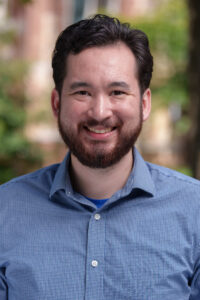
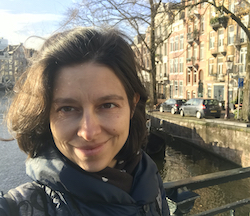
Professor Maaike Fobelets is affiliated with the Multidisciplinary Institute for Teacher Training at the Vrije Universiteit Brussel (VUB) , Belgium. Her research spans Midwifery , Professional Autonomy , Health Sciences , and Medical Education . She actively supervises doctoral students and participates in international collaborations . Research Focus: Professional Autonomy (100%), Midwifery (97%), End-of-Life Care (85%), Healthcare Simulation (77%), Chronic Pain Management (63%), Digital Literacy (51%) Recent Projects: EuroMAID (2025-2027): Medical Assistance in Dying across Europe Aha BOOST (2023-2027): Arm-hand therapy for stroke recovery InfoReady (2023-2025): Digital literacy for adults Scientific Awards: Editor's Choice (2023) Grant Collaborations: Funded by Erasmus+, Flemish Government, and Fundamental Brussels mechanisms Advocacy: Promotes interprofessional education and midwifery recognition through peer-reviewed publications and conference presentations Labs: Central contributor to simulation training platforms and data repositories
Professor Tomas Jansson serves as faculty at Lund University's Faculty of Engineering within the Department of Biomedical Engineering, holding concurrent roles as Supervisor, Head of Office for Biomedical Engineering, Project Manager for Medical Ultrasound, Director of Medicon Bridge, and member of both LTH's Engineering Health and LU's Light and Materials profile areas. His research centers on ultrasound-based diagnostic and therapeutic innovations, particularly utilizing iron oxide nanoparticles as ultrasound contrast agents for early cancer detection and surgical guidance. Current work also explores virtual reality systems for mobility assessment in visually impaired populations through the AUDOMNI sensory supplementation project. Key research domains include nanoparticle engineering, ultrasonics, transducer development, and lymph node imaging. Recent publications demonstrate dual research thrusts: (1) advanced ultrasound techniques for gastrointestinal disease diagnosis using ultra-high frequency imaging and nanoparticle-enhanced magnetomotive ultrasound, and (2) virtual reality-based mobility assessment tools with audio feedback systems for blind navigation. These efforts directly support UN Sustainable Development Goals in health and well-being. Professor Jansson actively supervises doctoral candidates including J. Berggreen (AI ultrasound applications) and J. Isaksson-Daun (AUDOMNI navigation system), while securing major funding from the Swedish Research Council and Mrs. Berta Kamprad's Cancer Foundation for prostate cancer nanotechnology projects extending through 2029. He leads the Ultrasound group infrastructure within Biomedical Engineering and participates in academic outreach through initiatives like the Medicinteknik i Skåne conference organization.
Ian Manock serves as an Adjunct Lecturer at Charles Sturt University's Australian Graduate School of Policing and Security in Bathurst. With extensive professional experience spanning emergency management, policing, and military service, he contributes specialized expertise in disaster response systems and resilience frameworks. Education: Graduate Certificate in Learning & Teaching Higher Education (2015, CSU) Master of Emergency Management (2002, CSU) Bachelor of Social Science (Emergency Management) (1997, CSU) Associate Diploma in Emergency Management (1995, University of Tasmania) His research centers on community resilience in post-disaster recovery, examining how social capital and economic systems interact during emergency management cycles. Current investigations explore digital communication channels in crisis response and interdisciplinary approaches to emergency education. His work demonstrates particular focus on Bangladesh flood case studies and Australian emergency management frameworks. Publications reveal consistent output in disaster management since 2003, with recent emphasis on gender dynamics in recovery processes and standardized education frameworks. His research portfolio shows strong integration of practical emergency response experience with academic rigor. Professional Affiliations: Australian Institute of Emergency Services International Association of Emergency Managers Royal Air Forces Association With prior roles as Regional Emergency Management Officer for Tasmania State Emergency Service and Senior Inspector in the Royal Hong Kong Police Force, Manock brings operational expertise to his academic work. His military background as a Royal Air Force officer further informs his interdisciplinary approach to emergency management education and practice.
Denny Yu is an Associate Professor at the Edwardson School of Industrial Engineering, Purdue University. His work bridges human factors, neuroergonomics, and healthcare safety through advanced sensor systems and AI. Primary Affiliation : Edwardson School of Industrial Engineering, Purdue University Research Themes : Surgical ergonomics, autonomous vehicle human factors, cognitive workload assessment, multimodal physiological sensing Dr. Yu's research focuses on neuroergonomics and human-robot interaction , particularly in surgical and transportation contexts. His team develops sensor-based systems for workload monitoring, including: EEG-eye tracking fusion for situation awareness Wearable exoskeletons for surgical posture support Computer vision tools for lifting task risk analysis Smart infusion pump usability frameworks AI-driven surgical coaching systems Recent publications emphasize deep learning applications in soft tissue deformation estimation and real-time adaptive systems for robotic surgery augmentation. His work spans both occupational health (veterinary surgeons, airport workers) and medical device innovation domains.
Dr Elisabeth Williams is a Senior Lecturer in Sport and Exercise Sciences at Swansea University's School of Engineering and Applied Sciences. Specializing in biomechanics, her research bridges contact sports injury prevention and forensic science, with particular focus on head impact dynamics in rugby union and bloodstain pattern analysis. She co-founded the traumatic head injury research network and led the 2020 Women's Rugby Union Global Survey with 2000+ responses across 62 countries. Her research spans two distinct domains: Sports Biomechanics : Developing instrumented mouthguards for head impact telemetry, analyzing sex differences in neck strength, and creating neck training interventions to reduce concussion risk in female athletes Forensic Science : Innovating in bloodstain pattern analysis through motorized droplet generation devices, computational modeling of blood dynamics, and standardizing forensic reconstruction techniques Dr Williams contributes to academic training through modules like SR-254 Technology and Innovation in Injury Mechanics and EG-238 Experimental Studies for Medical Engineers. She supervises multiple PhD and MSc projects related to head acceleration in men's and women's rugby, collaborating with Dr Hari Arora, Prof Melitta Mcnarry, and industry partners.
Chessa Massimo is a Professor at Università Vita-Salute San Raffaele, specializing in Cardiovascular Diseases within the field of Congenital Heart Disease. His work spans clinical research, interventional cardiology, and medical education, with a particular focus on adult congenital heart disease and transition care for adolescents. Research Interests Dr. Chessa's research explores: Interventional catheterization techniques for congenital heart defects Transition strategies for adolescent CHD patients 3D printing and mixed reality applications in cardiac anatomy Heart failure management in CHD populations Hypertension in pediatric and adult CHD patients Scientific Awards Fellow, European Society of Cardiology (2015-2018) Fellow, Association for European Paediatric and Congenital Cardiology (2014-2017) Fellow, ERN GUARD-Heart European Reference Network Teaching Activities Current teaching roles include: Cardiovascular System Diseases 3 (International MD Program, 2025) Keep Calm and Be Systematic: Practical Approach to Cardiology (2025)
Jon Heiselman is a Research Assistant Professor in the Department of Biomedical Engineering at Vanderbilt University School of Engineering. He serves as Associate Director of the Master of Engineering in Surgery and Intervention Program and leads research in image-guided surgical technologies. His work focuses on soft tissue deformation modeling, augmented reality applications, and computational frameworks for precision surgery. Education: PhD in Biomedical Engineering (Vanderbilt University, 2020) Advisor: Michael Miga, Harvie Branscomb Professor Research interests span image-guided surgical navigation, deformable registration algorithms, and digital twin modeling for therapeutic forecasting. Articles highlight advancements in soft tissue deformation correction, augmented reality integration, and machine learning approaches for real-time surgical guidance. Current affiliations include Vanderbilt's Biomedical Modeling Laboratory (BML) and the VISE Steering Committee. He contributes to NIH-funded training programs and has received recognition for his work in surgical data science and computational oncology.
Arianna Bisazza is an Associate Professor in the Computational Linguistics Group at the University of Groningen, where she leads the InClow research group focused on Interpretable, Cognitively inspired, Low-resource language models. Her work bridges computational linguistics, cognitive science, and language acquisition to develop more robust and interpretable language processing algorithms that can adapt to diverse linguistic phenomena worldwide. Dr. Bisazza's research interests span statistical modeling of human languages in multilingual contexts, with particular focus on improving language model performance for "challenging" or low-resource languages. Her work explores how insights from human language acquisition can inform better language modeling techniques, and she investigates methods to make state-of-the-art NLP systems more interpretable and transparent. As a cross-disciplinary researcher, she actively seeks to enhance our understanding of human language processing and evolution through computational modeling tools. Her recent publications reveal a strong emphasis on multilingual evaluation frameworks (like TurBLiMP and MultiBLiMP), interpretability of language models, and connections between human language acquisition and neural network learning. Her work consistently addresses the challenge of making language technology more robust across diverse linguistic structures and typological features. Outstanding Paper Award at the BabyLM Challenge (CoNLL'24 Shared Task) for "BabyLM Challenge: Exploring the Effect of Variation Sets on Language Model Training Efficiency" Dr. Bisazza currently leads a Vidi project funded by the Dutch Research Council (NWO) on improving low-resource language modeling through child language acquisition insights. She is also part of two national consortium projects funded by NWA-ORC initiatives: InDeep (Interpreting deep learning models for language, speech & music) and LESSEN (Low Resource Chat-based Conversational Intelligence). She supervises multiple PhD students, including two China Scholarship Council (CSC)-funded researchers working on simulating human patterns of language learning and change. Her earlier research was supported by a Veni grant (2017-2021) focused on understanding and improving the encoding of linguistic structure in Neural Machine Translation models. As head of the InClow research group, Dr. Bisazza oversees a team investigating interpretable, cognitively inspired approaches to low-resource language modeling. The group's work combines insights from cognitive science and linguistics with cutting-edge NLP techniques to develop language models that better reflect human language processing capabilities, particularly in resource-constrained settings.
David Roueche serves as the Gottlieb Associate Professor of Structural Engineering within the Department of Civil and Environmental Engineering at Auburn University's Samuel Ginn College of Engineering. His research focuses on structural performance under extreme wind events, forensic engineering methodologies, and improving building resilience against hurricanes and tornadoes through interdisciplinary approaches. Dr. Roueche's academic foundation includes advanced degrees from the University of Florida, with complementary physics training: Ph.D. in Structural Engineering, University of Florida M.S. in Civil Engineering, University of Florida B.S. in Civil Engineering, University of Florida B.S. in Engineering Physics, Jacksonville University His primary research explores extreme wind loads on low-rise buildings , post-disaster field investigations , and performance-based wind engineering , with specialized expertise in light wood-frame structures and surge/flood modeling. He integrates engineering analysis with social science through survivor interviews to reconstruct tornado events and identify vulnerabilities in residential construction, particularly for mobile and manufactured housing in the Southeastern United States. Analysis of his recent publications reveals a dominant focus on post-disaster assessment frameworks, field data collection protocols, and performance-based evaluation methods for wind-affected structures. His work increasingly emphasizes interdisciplinary collaboration—combining engineering, social science, and geospatial technologies—to develop comprehensive disaster response systems and improve building codes. Key trends include standardization of forensic engineering practices through organizations like StEER and application of computational modeling to predict structural failures. Dr. Roueche's significant recognitions include: Ginn Faculty Achievement Fellow designation NSF CAREER Award (2020) for advancing post-windstorm assessment methodologies He directs substantial research funding including a $500,000 USDA grant for timber-steel composite research and leads the Auburn Mass Timber Collaborative—an interdisciplinary initiative uniting forestry, architecture, and engineering faculty. Through the Structural Engineering Emergency Response (StEER) network, he coordinates Field Assessment Structural Teams for disasters like Hurricane Ian and the 2022 Arabi tornado, developing standardized protocols adopted nationally for post-disaster evaluations. His mentoring extends to doctoral students in civil engineering, with recent success in securing competitive fellowships for advisees. As a core member of StEER, Dr. Roueche develops and implements field assessment protocols used in rapid disaster response. He leads FAST teams deploying UAVs, LiDAR, and ground surveys to document structural performance after hurricanes and tornadoes, with datasets informing FEMA guidelines and building code revisions. His work with the Auburn Mass Timber Collaborative advances sustainable construction methods through experimental testing of innovative structural systems.
Prof. Dr. Haris Gačanin is a faculty member at RWTH Aachen University, affiliated with the Institute for Distributed Signal Processing under the College of Electrical Engineering. His research focuses on integrating machine learning with wireless communication systems, particularly in industrial IoT, edge computing, and network optimization. Current academic rank: Professor Contact: harisg@dsp.rwth-aachen.de Research Interests: Wireless systems, machine learning, signal processing, and network optimization. Key contributions include: Adaptive resource allocation in IIoT and vehicular networks AI-driven channel estimation and feedback mechanisms Security-oriented emitter identification via metric learning Federated/transfer learning for edge environments Hardware-efficient deep learning models for mmWave and THz communications Methodological Focus: Combines reinforcement learning, attention mechanisms, and robust neural architectures with practical implementations on FPGA and vehicular systems.
Barry Rowlingson is a Research Fellow at Lancaster University Medical School , affiliated with the Chicas Research Group and DSI-Health . He specializes in spatial statistics applied to disease epidemiology and geospatial software development . Teaches Geospatial Data module for MRes in Global Health Developed online course on Spatial Statistics in R with DataCamp Focuses on open-source geospatial tools for public health Research Interests: His work bridges spatial statistical methodology and infectious disease modeling , with applications in antimicrobial resistance mapping , wastewater-based pandemic surveillance , and health inequality analysis . Recent projects include modeling ESBL-producing bacteria in Malawi and developing spatio-temporal frameworks for COVID-19 wastewater monitoring . Scientific Contributions: Over 15 years, he has developed critical R packages like stpp for spatio-temporal analysis and rgdal for geospatial data abstraction. His 2023 publications address health workforce disparities and disease transmission dynamics using advanced statistical methods. Collaborations: Works with multidisciplinary teams across Lancaster Medical School , DataCamp , and SAVSNet Agile research projects. Supervises PhD student Charlotte Appleton in biostatistics.
Rachel Adler is an Associate Professor at the University of Illinois, affiliated with the School of Information Sciences, National Center for Supercomputing Applications (NCSA), Beckman Institute for Advanced Science and Technology, and the Siebel Center for Design. Her research focuses on accessibility in technology, particularly for individuals with disabilities and cancer survivors, alongside computational thinking and multitasking behavior. Her work emphasizes inclusive design, mHealth interventions, and educational approaches to accessibility. Notable projects include developing apps for cancer survivors and co-designing peer navigation systems. She has collaborated on studies analyzing occupational performance measures for survivors and assessing usability of health technologies. Research Highlights: Accessibility in software, health informatics, and educational technology. Key Collaborations: Beckman Institute, NCSA, Siebel Center for Design. Adler’s publications address topics like music experiences for the deaf community, digital inaccessibility challenges, and family workshops for accessibility education. Her interdisciplinary approach bridges computer science, healthcare, and education.
Jennifer Grandits is a Principal Lecturer in the Department of Psychology at Clemson University, affiliated with the College of Behavioral, Social and Health Sciences. She holds a PhD in Developmental Psychology from the University of Connecticut (2013), along with a Quantitative Research Methods Certificate, MA in Developmental Psychology (2010), and dual BA degrees in Psychology and Sociology from the University of Virginia (2007). Her research focuses on autism spectrum disorder interventions, implicit biases in healthcare, and aging workforce adaptation. She teaches courses in experimental psychology and lifespan development. Key research themes include sensory-based interventions for autism, cross-cultural stigma analysis, and leveraging machine learning for predictive modeling in health contexts. Her work bridges developmental psychology with practical applications in education and clinical settings. Expertise areas: Neurodiversity, child development, applied statistics Recent projects involve collaborations with autistic communities in curriculum design Teaching responsibilities include foundational psychology courses and advanced lifespan development studies. Her CV highlights contributions to inclusive education programs and technology adoption initiatives for older adults.
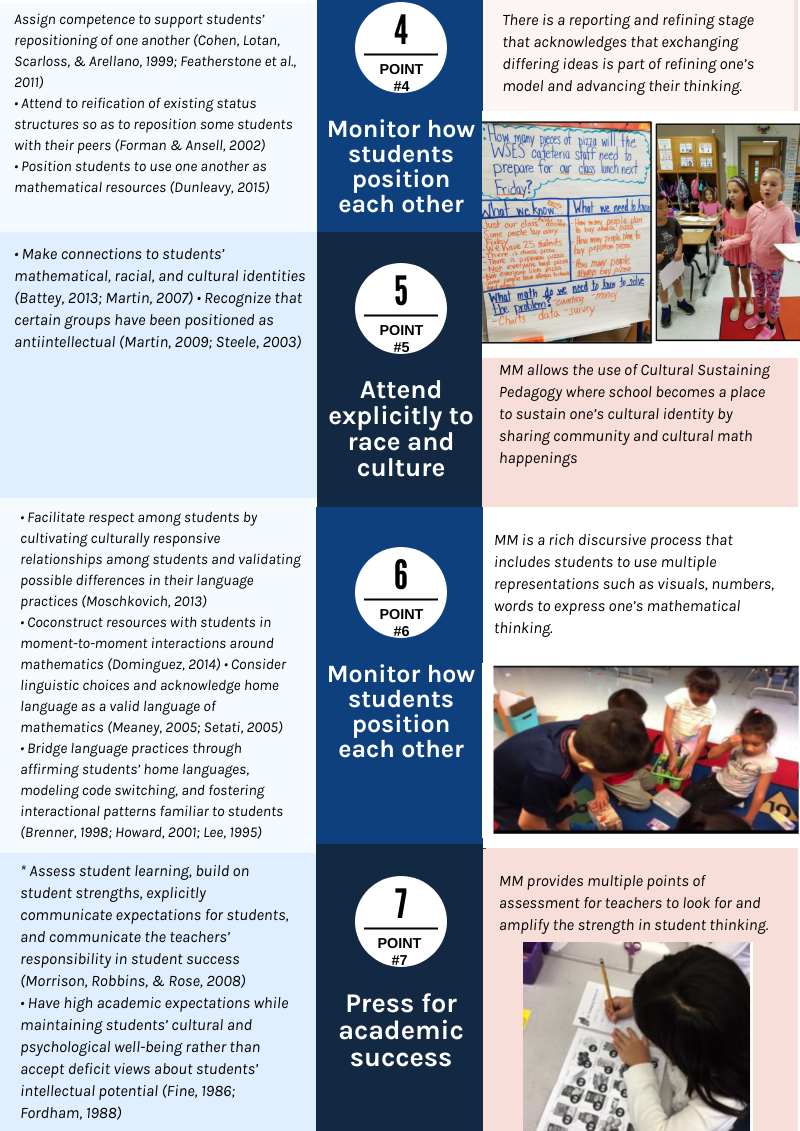
Dr. Jennifer Suh is a Professor of Mathematics Education at George Mason University’s College of Education and Human Development. She co-directs the Center for Outreach in Mathematics Professional Learning and Educational Technology (COMPLETE), a partnership between the College of Education and the College of Science. Her work focuses on elementary mathematics education, teacher development through lesson study, and equitable instruction using mathematical modeling and technology. PhD in Mathematics Education Leadership with a specialization in Instructional Technology (George Mason University, 2005) Bachelor of Arts (University of Virginia, 1994) Masters in Teaching (University of Virginia, 1994) Dr. Suh’s research centers on: Building pedagogical content knowledge via lesson study and collaborative partnerships Promoting representational fluency through physical/virtual manipulatives Designing STEM problem-based learning (PBL) environments Developing equity-centered frameworks for technology integration Mathematical modeling for social justice and community contexts Her recent publications highlight trends in algorithmic thinking with AI tools, culturally responsive pedagogy, and adaptive learning environments. She also explores interdisciplinary approaches to mathematical modeling and 21st-century skills. Scientific awards include: Nomination (2011) for the Rising Star Outstanding Faculty Award by Virginia institutions Dr. Suh supervises teacher interns through George Mason’s Professional Development School Program and collaborates with Northern Virginia school districts via the COMPLETE center. She emphasizes authentic problem-solving and teacher leadership development.
Dr. Daniel Berio is a researcher at Goldsmiths, University of London, specializing in computational models for human-like movement in digital art and robotics. His work bridges computer graphics, cognitive psychology, and robotic manipulation, focusing on stylized stroke generation, graffiti analysis, and kinematic modeling. He collaborates with Frederic Fol Leymarie and Rejean Plamondon, utilizing the Sigma Lognormal model to simulate human handwriting dynamics. Education : Doctoral thesis on AutoGraff (2021), exploring computational understanding of graffiti and calligraphy. Research Themes : Human-like motion in digital art, kinematic reconstruction from static traces, robotic graffiti generation, and perceptual fluency in aesthetic evaluation. Publications : 15+ works since 2015, spanning ACM Transactions on Graphics, British Journal of Psychology, and conferences like MOCO and IROS. Applications : Font stylization tools, synthetic graffiti generation, compliant robot control, and semantic typography systems.